This site is supported by our readers. We may earn a commission, at no cost to you, if you purchase through links.
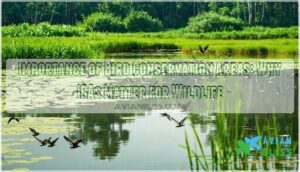 Bird conservation areas serve as critical sanctuaries that you can’t afford to overlook in our fight against biodiversity loss.
These protected habitats support millions of migratory birds while maintaining ecosystem balance that directly affects your local environment.
The importance of bird conservation areas extends beyond protecting feathered friends—they’re biodiversity hotspots that filter your air, control pest populations, and support pollination networks essential for food security.
With over 13,000 designated sites worldwide, these areas function like nature’s emergency response system, providing safe havens during climate shifts and habitat destruction.
Think of them as stepping stones that connect fragmented landscapes, allowing species to survive and thrive.
Understanding how these conservation efforts translate into real-world benefits reveals surprising connections to your daily life.
Table Of Contents
- Key Takeaways
- Bird Conservation Importance
- IBA Classification Criteria
- Audubon’s Role in IBA Protection
- Economic Value of IBAs
- Challenges and Conservation Strategies
- Frequently Asked Questions (FAQs)
- Why is bird conservation important?
- What are important bird areas?
- Why is the bird habitat important?
- What is a bird conservation region?
- How do citizen scientists contribute to IBA monitoring?
- What legal protections exist for designated IBAs?
- How are marine IBAs different from terrestrial ones?
- What funding sources support IBA conservation projects?
- How do IBAs connect to migratory flyway conservation?
- Conclusion
Key Takeaways
- You’re protecting critical ecosystem services – Bird conservation areas provide pest control, pollination, and air filtration that directly impact your local environment and food security.
- You’ll find significant economic benefits – These areas generate $39 billion annually in the U.S. through birdwatching tourism, creating thousands of jobs and boosting local economies by 20-25%.
- You’re supporting global migration networks – Over 13,000 IBAs worldwide function as stepping stones that connect fragmented habitats, allowing migratory birds to survive climate shifts and habitat destruction.
- You can actively participate in conservation – Through citizen science programs like eBird and local partnerships, you’ll contribute real data while helping monitor and protect these critical habitats in your community.
Bird Conservation Importance
You’ll discover that bird conservation areas protect some of America’s most treasured landscapes, from Alaska’s Arctic Slope to the Mississippi Delta’s sprawling wetlands.
From Alaska’s pristine slopes to Mississippi’s wetlands, these conservation areas safeguard America’s avian treasures.
These Important Bird Areas serve as essential havens where countless species find the food, shelter, and breeding grounds they need to survive in an increasingly challenging world, making them crucial for bird conservation.
Protecting Biodiverse Landscapes
You’re looking at America’s most precious natural treasures when you explore Important Bird Areas.
These bird conservation areas protect landscapes like Alaska’s Arctic Slope and the Mississippi Delta, serving as avian biodiversity hotspots.
Through Protected Area Management and Community Stewardship, these sites maintain Landscape Connectivity while supporting Habitat Restoration efforts that combat Invasive Species and guarantee biodiversity conservation across diverse ecosystems.
Essential Habitats for Birds
You’ll discover that bird conservation areas serve as nature’s apartment buildings, offering specialized nesting sites for different species.
These protected spaces maintain habitat connectivity, linking breeding grounds to wintering grounds through key migration corridors.
Within these avian biodiversity hotspots, you’ll find diverse food sources that sustain bird populations year-round.
Bird habitat protection guarantees these critical resources remain available, supporting the importance bird conservation efforts worldwide.
Global Conservation Efforts
You’re now part of a worldwide effort that spans continents and cultures.
International collaboration drives modern conservation success, with over 120 countries working together under agreements like the Convention on Migratory Species.
This teamwork creates powerful results:
- Transboundary conservation networks protect 900+ sites across borders
- Global policy frameworks coordinate $4 billion in annual funding mechanisms
- Species migration routes receive protection through multi-country partnerships
To address this, groups are promoting regenerative agriculture in Colombia.
IBA Classification Criteria
When you explore how IBAs are classified, you’ll discover a three-tier system that prioritizes conservation efforts based on scientific criteria.
These classifications help conservationists focus resources on sites with the greatest importance for threatened species, unique ecosystems, and significant bird concentrations, which is crucial for conservation efforts.
Global and Continental Priorities

BirdLife International coordinates global priorities through data-driven criteria, identifying over 13,000 Important Bird Areas worldwide.
Continental frameworks address regional flyways, protecting critical migration routes. You’ll find prioritization rationale considers threatened species presence and population concentrations, ensuring transnational conservation efforts receive proper funding allocation.
| Priority Level | Coverage | Focus Areas |
|---|---|---|
| Global IBAs | 330+ million acres | Threatened species habitats |
| Continental IBAs | 19 million acres | Major flyways and migration routes |
| Regional Networks | Varies by continent | Endemic species protection |
| Funding Priorities | International partnerships | Cross-border conservation projects |
State and Local Classifications
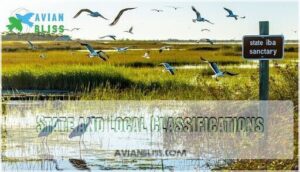
You’ll find that State IBAs represent the grassroots level of bird conservation, with 1,999 sites covering nearly 68 million acres across America.
These IBA Designations reflect regional differences in habitat management priorities, from prairie pothole wetlands to coastal marshes.
Local Conservation Groups work alongside state agencies to identify bird sanctuaries that matter most to their communities.
Community involvement drives these conservation programs, making bird area management a shared responsibility between scientists and neighbors who care about local bird conservation.
Many sanctuaries also rely on community capital campaigns to fund their operations.
Threatened Species and Ecosystems
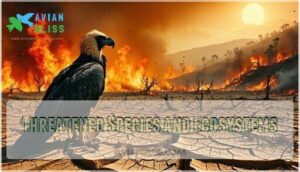
You’ll encounter threatened species like California condors and Florida scrub-jays when IBAs target Endangered Birds facing extinction.
These sites protect bird habitat conservation areas where Ecosystem Disruption threatens survival.
Habitat loss from development creates Conservation Overlap between species needs and human activities.
Climate Impacts alter ecosystems faster than birds can adapt, making Habitat Resilience critical for threatened species protection.
Audubon’s Role in IBA Protection
You can count on Audubon to lead America’s charge in protecting Important Bird Areas as the official U.S. partner of BirdLife International.
Working with 19 international partners across the Western Hemisphere, they’ve already identified 2,758 IBAs covering 417 million acres throughout the United States.
Collaboration With International Partners

Working together strengthens the Global IBA network through international cooperation among conservation organizations.
You’ll see conservation partnerships spanning 120 countries, pooling resources and expertise for shared conservation goals.
Here’s how transnational conservation works:
- Partner funding through programs like the Global Environment Facility commits over $1 billion for cross-boundary projects
- Data sharing enables real-time exchange through international databases and joint field surveys
- Policy coordination harmonizes legal frameworks across nations to protect migratory corridors
- Capacity building spreads best practices through workshops and exchange programs between conservation efforts worldwide
Identifying and Safeguarding IBAs

You’ll discover that Audubon identifies Important Bird Areas IBAs through data-driven analysis of bird populations and habitat quality.
The organization conducts systematic habitat monitoring across 2,758 sites, covering 417 million acres nationwide.
Through community stewardship programs, local chapters help gather field data essential for IBA designation.
Conservation funding supports ongoing bird conservation efforts, enabling threat mitigation strategies that protect these critical bird habitats, which is made possible by community stewardship programs.
Addressing Threats to Bird Habitats
After identifying critical bird habitats, you must tackle the mounting pressures threatening these sanctuaries.
Modern conservation faces three primary challenges:
- Habitat Fragmentation – Urban sprawl and agriculture slice continuous landscapes into isolated patches, disrupting migration corridors
- Invasive Species – Non-native plants and predators outcompete indigenous wildlife, altering ecosystem balance
- Pollution Impacts – Chemical runoff and plastic waste contaminate food chains, affecting reproduction rates
Targeted bird conservation strategies combat these threats through habitat conservation funding and community partnerships.
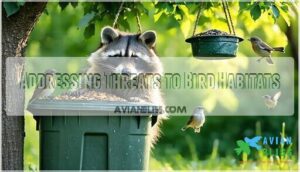
Securing trash cans, for example, is one of many ways of deterring raccoon predation.
Economic Value of IBAs

Bird conservation areas aren’t just good for wildlife—they’re economic powerhouses that pump billions into local communities.
You’ll find that these protected spaces create jobs, attract tourists, and generate serious revenue through birdwatching and outdoor recreation activities.
Ecotourism and Local Economies
Beyond Audubon’s protective efforts lies a thriving economic engine.
IBAs generate substantial revenue through sustainable tourism, creating jobs while funding conservation.
You’ll find these areas boost local economies by 20-25%, supporting guides, hotels, and businesses year-round.
| Economic Impact | Annual Value | Community Benefit |
|---|---|---|
| Tourism Revenue | $30B globally | 35% household income |
| Job Creation | 6,000+ positions | Guide & hospitality work |
| Business Growth | 20-25% increase | Local retail expansion |
| Infrastructure | Trail development | Improved rural access |
| Cultural Revival | Heritage programs | Artisan opportunities |
The economic benefits of these areas are significant, with tourism revenue generating $30B globally, and job creation supporting over 6,000 positions, including guide and hospitality work, which contributes to business growth and cultural revival.
Birdwatching and Outdoor Activities
You’ll find birdwatching transforms ordinary outdoor adventures into thrilling treasure hunts.
Bird conservation areas offer accessible trails where families can spot colorful species together.
These birding hotspots provide excellent photography opportunities, letting nature lovers capture stunning wildlife moments.
Conservation etiquette guarantees you respect habitats while enjoying peaceful encounters.
Selecting the right binoculars enhances viewing is crucial for a great experience.
From beginners to experts, bird tourism flourishes in these protected spaces, making it an enjoyable activity for all.
Job Creation and Revenue Generation
When you visit Important Bird Areas, you’re fueling a green economy that creates thousands of jobs.
Bird-related tourism generates $39 billion annually in the U.S., supporting local businesses from hotels to restaurants.
In Alaska alone, birdwatching tourism created 4,378 conservation jobs and delivered $271 million in economic impact, proving sustainable development works for both communities and wildlife.
Challenges and Conservation Strategies

You’ll face significant challenges when protecting bird conservation areas, from urban development erasing critical habitats to climate change disrupting migration patterns.
However, scientists have developed thorough monitoring frameworks and community-based strategies that help address these threats effectively.
Scientists have also developed strategies that are community-based.
Habitat Loss and Climate Change
You’ll witness habitat fragmentation tearing apart bird communities as urban sprawl divides forests into isolated patches.
Climate change brings extreme weather events, forcing wetlands to dry up while shifting ranges push species beyond familiar territories.
Invasive species compound these threats to birds, outcompeting native wildlife for resources.
Conservation adaptation requires immediate bird habitat restoration and thorough habitat protection strategies to counter these mounting challenges.
Monitoring and Assessment Frameworks
Effective bird conservation monitoring relies on systematic data collection frameworks that track changes across Important Bird Areas.
Scientists use three key indicator types to assess conservation effectiveness: Pressure indicators measure threats like agricultural expansion, State indicators evaluate bird populations and habitat quality, and Response indicators document conservation actions taken at monitoring sites.
Here’s how data-driven conservation monitoring works:
- Standardized Protocols – Point counts and transect surveys provide consistent, comparable data across different IBAs and years
- Multi-Level Assessment – Pressure-State-Response framework captures threats, current conditions, and management responses simultaneously
- Technology Integration – Remote sensing, acoustic monitoring, and GPS tracking expand coverage beyond traditional field surveys
- Citizen Science Networks – Programs like eBird contribute millions of observations, filling gaps in professional monitoring
- Adaptive Management – Regular indicator reviews guarantee monitoring systems evolve with changing conservation needs
This systematic approach enables conservationists to detect population declines early, triggering timely interventions before species reach critical thresholds.
Protecting habitats is crucial for flyways.
Tailored Conservation Efforts and Community Engagement
You can’t protect birds alone—that’s where Local Partnerships shine.
Community bird conservation thrives when neighbors join forces through Education Programs and Volunteer Opportunities.
Citizen Science projects let you contribute real data while bird conservation education builds lasting support.
Many groups also seek funding for conservation to further their conservation efforts.
When communities see Community Benefits firsthand, bird conservation engagement grows naturally, creating stronger local communities committed to protecting their feathered neighbors through Education Programs.
Frequently Asked Questions (FAQs)
Why is bird conservation important?
Bird conservation matters because you’re protecting ecosystems that provide essential services like pest control, pollination, and carbon storage while supporting biodiversity and economies through eco-tourism.
What are important bird areas?
Important Bird Areas (IBAs) are globally recognized sites that provide critical habitat for bird species conservation. You’ll find over 2,800 IBAs covering 417 million acres across America, identified using data-driven criteria since
Why is the bird habitat important?
Habitat destruction puts your feathered friends at risk.
These areas provide nesting sites, food sources, and migration stopover points that birds can’t survive without.
You’re protecting entire ecosystems when you safeguard bird habitats.
What is a bird conservation region?
Think of bird conservation regions as nature’s neighborhood watch – they’re large geographic areas where scientists focus their efforts to protect vulnerable bird populations.
These regions represent scientifically designated landscapes where researchers monitor bird species, identify threats, and coordinate conservation strategies.
You’ll find them spanning multiple states, encompassing diverse habitats that birds need throughout their life cycles.
How do citizen scientists contribute to IBA monitoring?
You’ll contribute by collecting bird sightings, monitoring habitat changes, and reporting threats during regular visits to Important Bird Areas, helping scientists track population trends and conservation needs.
What legal protections exist for designated IBAs?
Legally limited laws leave IBAs largely unprotected unless they’re within existing protected areas. Legal recognition and protection of IBAs that aren’t within existing protected areas varies by state and region.
How are marine IBAs different from terrestrial ones?
Marine IBAs focus on ocean habitats like seabird colonies and migration routes, while terrestrial ones protect land-based ecosystems.
You’ll find marine sites target seabirds, shorebirds, and coastal species rather than forest or grassland birds.
What funding sources support IBA conservation projects?
Bird conservation generates $39 billion annually through tourism in the U.S.
You’ll find funding through donations to organizations like Audubon, government grants, private foundations, and ecotourism revenue that directly supports IBA monitoring and protection efforts.
How do IBAs connect to migratory flyway conservation?
You’ll find IBAs strategically positioned along major migratory flyways, creating essential stepping stones where birds can rest, refuel, and breed during their incredible journeys across continents.
Conclusion
Like Noah’s ark weathering nature’s storms, bird conservation areas stand as modern sanctuaries protecting Earth’s winged passengers from extinction’s flood.
The importance of bird conservation areas extends far beyond single-species protection—they’re interconnected lifelines supporting entire ecosystems.
You can’t separate bird welfare from your own environmental health. These protected zones filter air, control agricultural pests, and maintain pollination networks that feed communities worldwide.
Supporting IBAs means investing in biodiversity insurance that benefits current and future generations through measurable ecological and economic returns, providing a form of environmental health and supporting entire ecosystems.