This site is supported by our readers. We may earn a commission, at no cost to you, if you purchase through links.
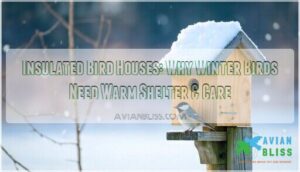 Insulated bird houses winter birds desperately need these thermal lifesavers when temperatures plummet.
You’ll boost survival rates by up to 60% during freezing nights with properly insulated shelters.
These houses feature cedar, pine, or polystyrene materials with double-wall designs that create heat-trapping air pockets.
Cavity-nesting species like chickadees and bluebirds rely on these warm refuges to conserve energy that would otherwise burn fighting the cold.
The insulation acts like a cozy sleeping bag, protecting against wind, moisture, and bitter temperatures.
Without proper shelter, your backyard birds face an uphill battle against winter’s harsh grip.
Smart placement and materials make all the difference in keeping feathered friends safe and providing them with thermal lifesavers to increase their chances of survival, by offering warm refuges and helping them conserve energy, ultimately boosting their survival rates during freezing nights.
Table Of Contents
Key Takeaways
- You’ll boost bird survival rates by 60% during freezing nights when you provide insulated birdhouses with proper materials, like cedar, pine, or polystyrene, that create heat-trapping air pockets.
- Double-wall construction works best for trapping warm air between layers, while you should ensure proper ventilation and drainage to prevent dangerous mold growth that can kill roosting birds.
- Cavity-nesting species, like chickadees and bluebirds, desperately need these thermal refuges to conserve energy they’d otherwise burn fighting cold temperatures, especially when multiple birds huddle together.
- You’ll need to winterize effectively by sealing drafts, adding natural insulating materials, like wood shavings, and positioning the entrance away from prevailing winds, while mounting it 5-8 feet high with predator guards.
Why Insulation Matters for Winter Birdhouses
When winter temperatures drop, your backyard birds face a life-or-death challenge that most people never consider.
Insulated birdhouses can boost survival rates by up to 60% during freezing nights, giving cavity-nesting species like bluebirds and chickadees the warm refuge they desperately need to make it through harsh weather, which can be a matter of survival.
When winter hits, smart shelter choices can be the difference between life and death for backyard birds
Protection From Cold Temperatures
When temperatures drop below freezing, birds face serious energy challenges that threaten their winter survival.
Cold weather impacts force birds to burn precious calories just maintaining body heat – that’s where insulated bird houses become lifesavers.
Your feathered friends rely on bird thermoregulation to stay warm, but harsh conditions drain their energy reserves fast.
Winter bird shelters with proper bird house insulation help protect birds winter by creating cozy refuges.
Smart roosting behavior leads birds to seek these warm havens for energy conservation during brutal cold snaps.
Reducing Heat Loss at Night
Birds lose precious body heat rapidly during frigid nights, but insulated bird houses create thermal pockets that dramatically reduce energy loss.
When cavity-nesting species exhibit roosting behavior inside well-designed shelters, their body heat gets trapped by materials with low conductivity. Multiple birds huddling benefits everyone through shared warmth.
Strategic box placement away from wind maximizes these thermal advantages, helping winter bird shelters maintain life-saving temperatures. Using wood at least 3/4 inches thick helps trap heat effectively, which is a key factor in winter bird shelters.
Shielding Birds From Wind and Moisture
Winter’s harsh winds and moisture pose serious threats to roosting birds.
Without proper windbreak placement and moisture control, even insulated bird houses can become death traps. Your birdhouse materials must shed water effectively while draft prevention keeps icy air out.
Smart ventilation design allows humidity to escape without creating freezing drafts. Quality bird house insulation and bird box insulation work together for protecting birds winter, making winter bird care successful when properly executed, using proper windbreak placement.
Impact on Bird Survival Rates
Research shows insulated birdhouses dramatically improve winter bird care outcomes.
Insulated birdhouses boost winter survival rates by 60%, giving birds the warm refuge they need during freezing nights
Your feathered friends face a 60% higher survival rate in subzero conditions when they’ve got proper shelter benefits.
These cozy refuges help with energy conservation, letting birds use 27% less calories to stay warm.
Population stability improves too—areas with good bird box insulation see 18-39% better winter survival rates.
Lower predation rates and reduced stress hormones make insulated winter birdhouses essential for species conservation and bird winter survival success, which relies on proper shelter benefits and energy conservation.
Essential Features of Insulated Bird Houses
When choosing an insulated birdhouse, you’ll need to focus on four key features that determine how well it protects winter birds.
The right materials, design elements, airflow systems, and safety features work together to create a cozy refuge that can mean the difference between life and death during harsh winter nights.
This combination of features is crucial as it provides a cozy refuge for the birds, making the birdhouse a vital shelter during extreme weather conditions.
Material Choices for Effective Insulation
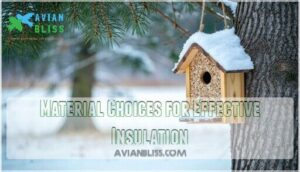
Four key building materials deliver superior thermal resistance for winter birdhouses.
Natural cedar and pine wood thickness of 1.5 cm reduces heat loss by 8°C compared to plastic.
High-density foam options like polystyrene provide R-5 insulation per inch.
Natural fibers including hemp and cork achieve comparable thermal mass while remaining eco-friendly.
For specialized needs, consider exploring birdhouse insulation products.
Recycled materials offer sustainable heat insulation without compromising bird safety.
Double-Wall and Reflective Designs
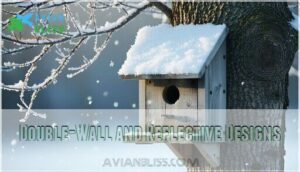
Advanced bird house designs featuring double-wall construction create an air pocket that dramatically improves heat insulation.
You’ll find these designs trap warm air between layers, reducing temperature fluctuations that stress winter bird species.
Reflective materials like white polystyrene shields deflect cold while retaining heat.
Modern bird house materials now incorporate foam insulation panels between walls, and these construction methods boost insulation effectiveness by up to 40%, helping regulate internal temperatures for roosting birds with improved heat insulation.
Proper Ventilation and Drainage
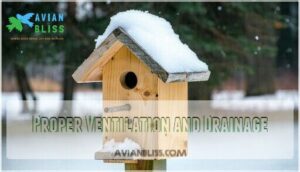
While double-wall designs trap heat, your bird box needs proper airflow to stay healthy.
Stagnant air creates moisture buildup that leads to dangerous mold growth inside the shelter.
Here’s how to balance warmth with essential ventilation:
- Position small holes near the roof – This allows hot air to escape while keeping rain out
- Add drainage holes in the floor – Quarter-inch holes prevent water from pooling inside
- Use breathable materials like untreated cedar – Natural wood wicks away excess moisture effectively
- Avoid sealing all gaps completely – Leave tiny spaces for gentle air circulation without creating drafts
Smart bird box ventilation prevents mold while maintaining the cozy environment birds need during freezing nights.
**Proper air circulation also reduces noise inside.
Predator Protection and Safe Placement
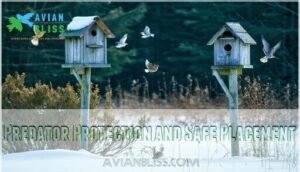
Beyond ventilation, your birdhouse’s location determines whether feathered friends survive winter’s harsh grip.
Smart bird house placement balances accessibility with protection—mount boxes 5-7 feet high with entrance holes facing away from prevailing winds.
| Placement Factor | Winter Requirement | Predator Prevention |
|---|---|---|
| Mounting Height | 5-7 feet ideal | Deters ground predators |
| Entrance Size | 1.25-1.5 inch diameter | Blocks larger threats |
| Location Visibility | Partial camouflage preferred | Reduces predator detection |
| Predator Guards | Pole baffles essential | Stops climbing mammals |
| Camouflage Options | Natural wood finishes | Blends with surroundings |
Position your insulated bird box where dense shrubs provide cover but allow easy monitoring.
Install predator guards below mounting poles—they’re your birds’ best insurance policy against raccoons and cats seeking an easy meal.
Bird Species That Benefit From Winter Shelter
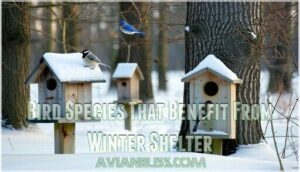
Many bird species rely on insulated shelters during winter months, when natural cavities become scarce and energy conservation becomes critical for survival.
You’ll find that cavity-nesting songbirds like chickadees, titmice, and bluebirds actively seek out warm roosting spots, while larger species such as screech owls and woodpeckers require specially designed boxes to accommodate their size and unique shelter needs, including insulated shelters.
Cavity-Nesting Songbirds
Small songbirds like chickadees, bluebirds, and wrens desperately need your insulated bird house during winter’s harsh months.
These cavity-nesting species exhibit fascinating roosting behavior, often huddling together in groups of ten or more inside a single bird box.
Their nesting habits shift dramatically from breeding season priorities to pure survival mode.
Winter diet changes force them to conserve energy, making warm shelter critical.
Species identification becomes easier when you know habitat preferences – chickadees prefer boxes near evergreens while bluebirds choose open areas, showcasing their unique habitat preferences.
Larger Species Like Owls and Woodpeckers
Larger owls and woodpeckers need spacious insulated bird houses with specific dimensions to survive winter.
Screech owls require roost boxes with 8"x8" floors and 4"x3" entrance holes, while woodpeckers prefer 7"x7" interiors with 2.5" circular openings.
Key features for larger species include:
- Thick walls (0.75"+) for superior insulation
- Bottom entrance holes that trap warm air
- 16"+ interior depth for predator avoidance
These species-specific designs dramatically improve owl roosting habits and woodpecker shelter needs during harsh weather. These boxes provide essential winter shelter for cavity-nesting birds.
Behavioral Patterns During Cold Months
When winter arrives, you’ll notice birds change their daily routines dramatically.
Roosting habits shift as birds seek insulated shelters, with species like wrens huddling together in groups of ten or more for energy conservation.
Their foraging changes too – they’ll spend more daylight hours searching for food.
Cold weather birding reveals how migration patterns affect local populations, making winter bird feeders essential for survival.
How to Winterize Your Birdhouse Effectively
Preparing your birdhouse for winter takes just a few simple steps that can mean the difference between life and death for roosting birds.
You’ll want to seal gaps, add insulation, and position the house to block harsh winds while maintaining proper airflow.
Sealing Drafts and Gaps
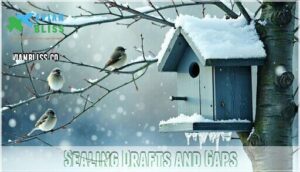
How can you turn your birdhouse into a winter fortress?
Start by checking for gaps around joints and corners where cold air sneaks in. Use outdoor caulk application to seal small cracks, while weatherstripping types like foam tape work perfectly for larger openings.
Draft detection is simple—hold your hand near suspected gaps on windy days. Gap filling with materials like wood putty prevents heat loss.
Proper application of birdhouse weather stripping can substantially improve insulation. Quality sealing materials guarantee your insulated bird house plans deliver maximum protection for winter bird watching enthusiasts.
Adding Insulating Materials
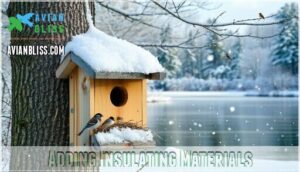
The right insulating materials can turn a cold birdhouse into a cozy winter retreat. Choose natural options like dried grass, wood shavings, or cotton batting for safe, effective bird box insulation resources.
It’s also essential to inspect birdhouses before winter arrives.
- Material Comparison: Wood shavings offer better insulation thickness than synthetic alternatives, while dried grass provides excellent natural materials for DIY insulation
- Cost Analysis: Pine needles and hay cost practically nothing but deliver professional-grade winter wildlife care results
- Installation Method: Layer materials on the floor and sides, leaving space for birds to move comfortably without overcrowding
- Safety Focus: Avoid plastic-based insulators that may release fumes, choosing only non-toxic natural materials for bird box winterization
Positioning for Maximum Shelter
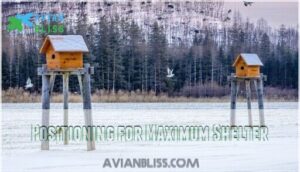
Smart placement makes all the difference for your bird shelter success.
Face the entrance away from prevailing winds while choosing ideal direction southeast for morning sun exposure without afternoon heat.
Mount your insulated bird house 5-8 feet high on poles with predator guards.
Avoid wind exposure by positioning near natural windbreaks.
Proper height placement and strategic sun exposure create perfect bird watching winter opportunities while ensuring effective bird box winterization and making the most of morning sun.
Maintaining Cleanliness and Safety
Once you’ve positioned your insulated bird house properly, keeping it clean becomes your next priority.
Regular hygiene importance prevents disease spread among roosting birds.
Clean your bird box cleaning schedule should include:
- Parasite control – Remove old nesting materials that harbor mites and lice
- Nest removal – Clear out debris before winter roosting season begins
- Safe materials – Use only bird-safe cleaning products without harsh chemicals
- Predator prevention – Check entrance holes and repair damage that attracts unwanted visitors
Your bird watching winter success depends on maintaining these standards year-round for ideal bird protection.
Supporting Birds With Ethical Birdhouse Choices
When you choose a birdhouse, you’re making decisions that affect both bird welfare and environmental impact.
Ethical choices involve selecting products made from sustainable materials with non-toxic finishes, supporting conservation efforts, and committing to proper maintenance that keeps birds safe year-round, which is crucial for environmental impact.
Sustainable and Safe Construction Materials
Choose eco-friendly timber like FSC-certified cedar for your insulated bird house – it provides natural insulation while resisting decay.
Recycled materials and non-toxic preservatives protect birds from harmful chemicals.
Cork or sheep’s wool offers natural insulation that’s safe and biodegradable.
Durable construction using sustainable materials creates warm shelter that lasts multiple winters.
Proper ventilation prevents moisture buildup, ensuring a healthy environment for the birds.
Non-Toxic Finishes and Bird-Friendly Designs
While selecting your birdhouse, prioritize Safe Preservatives that won’t harm feathered visitors.
Natural Materials like untreated cedar resist weather without toxic chemicals.
Consider these essential features:
- Ventilation Design – Proper airflow prevents dangerous moisture buildup
- Predator Deterrents – Entry hole guards keep unwanted visitors out
- Nesting Dimensions – Species-specific sizing guarantees comfort and safety
DIY bird house projects or best bird houses should avoid painted finishes near entrance holes, as birds can ingest flakes during use.
Supporting Conservation Through Purchases
When you buy from organizations supporting bird conservation, your money flows directly into habitat protection and research programs.
Look for certifications showing ethical sourcing and sustainable materials.
Companies partnering with wildlife groups often fund community impact projects that benefit local ecosystems.
Your insulated bird house purchase becomes an investment in long-term bird conservation efforts.
Ongoing Maintenance for Year-Round Use
Your birdhouse investment pays off when you maintain it properly throughout the year.
Clean out old nesting materials each fall to prevent pest control issues and disease spread.
Check structural integrity monthly, looking for loose joints or worn wood that needs repair strategies.
Material degradation happens faster in harsh weather, so seasonal checks help catch problems early.
Replace worn bird house accessories and consider adding a bird house heater for extra winter warmth.
Regular bird box maintenance and using bird box cleaning resources keeps your insulated shelter welcoming for returning birds.
Frequently Asked Questions (FAQs)
What heating sources work with insulated birdhouses?
Like birds of a feather seeking warmth, you shouldn’t add external heating sources to insulated birdhouses.
Natural insulation materials work best – wood chips, straw, or dry grass retain body heat safely without fire risks or electrical hazards, utilizing natural insulation to prevent hazards.
How often should winter birdhouse insulation be replaced?
Check your birdhouse insulation annually before winter begins. Replace natural materials like straw or wood chips if they’re moldy, compressed, or pest-infested. Synthetic insulation typically lasts several seasons unless damaged.
Whats the ideal entrance hole size for insulation?
Size matters when you’re creating the perfect winter bird shelter.
You’ll want a 25-inch entrance hole for most songbirds, as it’s small enough to trap warm air inside while keeping larger predators out completely.
Do insulated birdhouses require different cleaning schedules?
You’ll need to clean your insulated birdhouses more frequently than regular ones.
The extra materials and tighter construction trap more moisture, creating ideal conditions for bacteria and mold growth that can harm your feathered friends.
Conclusion
Picture a chickadee shivering through a winter night without shelter – it’s like camping without a sleeping bag in freezing temperatures.
Research shows insulated bird houses winter birds use can increase survival rates by 60% during harsh weather.
These thermal refuges create warm pockets that help cavity-nesters like chickadees and bluebirds conserve precious energy.
When you provide proper insulated shelters, you’re giving winter birds the tools they need to survive until spring arrives with warmer days ahead.
- https://green-backyard.com/blogs/how-to-winterize-your-birdhouse/
- https://nestwatch.org/news/winter-proofing-your-birdhouse/
- https://bluebirdnut.com/forums/topic/insulating-nest-box/
- https://coveside.com/products/coveside-convertible-bird-housewinter-roost
- https://thebackyardnaturalist.com/wordpress/backyard-birding-checklist-for-winter-bird-houses/