This site is supported by our readers. We may earn a commission, at no cost to you, if you purchase through links.
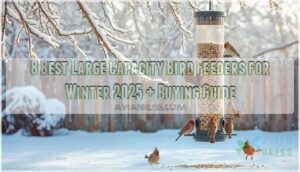
Winter transforms your backyard into a survival challenge for resident birds, and a feeder that runs empty at 4 PM doesn’t help anyone. When temperatures drop and natural food sources disappear under snow and ice, birds need consistent access to high-energy seeds to maintain their body heat through long, cold nights.
That’s where large capacity feeders prove their worth—they hold enough seed to sustain a flock for days, not hours, which means fewer trips outside in freezing weather for you and uninterrupted nutrition for the birds that depend on your station.
Whether you’re supporting chickadees, finches, or winter cardinals, the right large capacity bird feeder for winter combines generous seed storage with weather-resistant construction and smart design features that keep food fresh and accessible even during harsh conditions.
Table Of Contents
Key Takeaways
- Large capacity feeders holding 5–10+ pounds of seed reduce winter refill frequency to once weekly (versus daily with smaller models), cutting your exposure to harsh weather while ensuring birds access consistent high-energy food through long, cold nights when natural sources disappear.
- Weather-resistant metal construction (powder-coated aluminum or stainless steel) combined with squirrel-proof mechanisms like weight-activated ports can cut seed theft by 97% and deliver 5–10 years of reliable performance through freeze-thaw cycles, compared to plastic feeders that often fail within three winters.
- Strategic feeder features—including multiple feeding ports, proper drainage, ventilated seed chambers, and dual-compartment designs—attract 25–60% more bird species and visits while preventing the mold growth and seed waste that spike during winter’s moisture and temperature swings.
- Bi-weekly cleaning with warm soapy water followed by 10% bleach solution, combined with proper seed storage below 45°F in airtight containers, prevents the disease transmission and spoilage that threaten bird health when winter concentrates populations at feeding stations.
Key Features of Large Capacity Bird Feeders
When you’re shopping for a large capacity bird feeder, you’ll want to look for features that make winter feeding easier on both you and your feathered visitors. The best feeders balance practical design with durability, so they hold up through snow, ice, and those hungry flocks that show up in January.
Let’s walk through the key features that separate a great winter feeder from one that’ll leave you frustrated before spring arrives.
Seed Capacity and Storage Volume
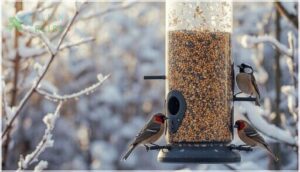
When you’re choosing large capacity bird feeders, seed volume matters more than you might think. Most quality models hold 8 to 18 pounds of seed—that’s enough to keep your winter visitors fed for three to five days between refills.
Look for feeders with built-in seed trays and ventilated reservoirs that prevent clumping and spoilage, so you’re not wasting precious seed during harsh weather. Consider a feeder with a large capacity design to minimize frequent refills.
Weather-Resistant Construction Materials
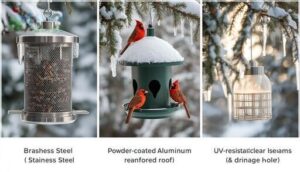
Material durability defines how well your large capacity bird feeders survive winter’s harsh conditions. Metal construction—especially powder-coated aluminum or stainless steel—offers premium rust prevention and weather resistance through freeze-thaw cycles. UV protection keeps plastic models from cracking under sun exposure, while squirrel proof designs often pair durable materials with reinforced frames.
Look for weather resistant feeders with sealed seams and proper drainage, since construction techniques like waterproof gaskets prevent moisture damage that shortens lifespan. When choosing a bird feeder, consider the importance of eco friendly materials to guarantee a sustainable and environmentally conscious option.
Multiple Feeding Ports and Perches
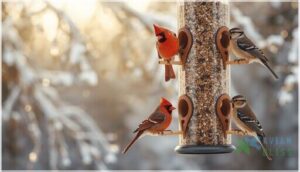
Port design directly shapes which birds visit your feeder and how many can eat at once. Most large capacity bird feeders offer four to eight feeding ports with paired perches, letting multiple species dine together without squabbles.
Look for perch length around 14–15 cm per bird—this sweet spot boosts feeding efficiency while reducing crowding, especially when winter flocks arrive hungry.
Squirrel-Proof Mechanisms
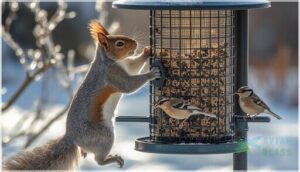
After you’ve settled on ports and perches, you’ll want protection from squirrels—they can empty a large feeder in hours. Squirrel-proof feeders use smart designs to keep your seed where it belongs:
- Weight-activated perches close ports when squirrels (400–700 g) land, while songbirds under 85 g feed freely
- Metal cage barrier designs with 3–3.5 cm spacing block squirrels but welcome small birds
- Squirrel baffles on poles or hangers achieve roughly 99% effectiveness when properly placed
- Chew-resistant metal construction prevents squirrels from gnawing enlarged access holes
- Locking systems on lids stop squirrels from prying open your entire seed reservoir
These squirrel-resistant feeders stabilize your seed consumption and stretch refills through cold snaps.
Easy Filling and Cleaning Designs
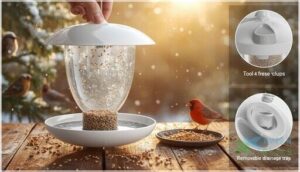
A wide-mouth opening cuts your refill time by 40%, and tool-free disassembly means you’ll clean your EasyClean Hopper Feeder in under two minutes. Look for removable trays with drainage—they slash mold by 72% and simplify feeder maintenance during winter.
These refill systems and feeder materials make seed management smooth, so you’ll keep up with the every-two-week cleaning schedule that protects your visiting birds.
Benefits of Large Capacity Feeders in Winter
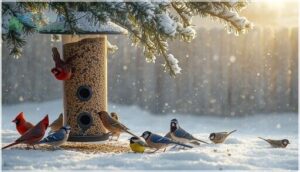
When winter arrives, a large capacity feeder becomes more than a convenience—it’s a lifeline for the birds that depend on your yard. These feeders address the unique challenges of cold-weather feeding, from fewer daylight hours for foraging to increased energy demands during freezing temperatures.
Let’s look at four key advantages that make high-capacity feeders worth the investment this season.
Reduced Refill Frequency During Cold Months
When temperatures plummet, you don’t want to trudge outside every day to refill feeders. Large capacity bird feeders holding 5–10 pounds of bird seed can extend refill frequency to once a week in winter, compared to daily trips with smaller models. Here’s why that matters:
- Winter bird needs drive seed consumption rates up to 50% higher during cold snaps
- Squirrel proof designs preserve more seed for birds, stretching intervals between cold weather refills
- Strategic refill scheduling reduces your exposure to harsh conditions while supporting backyard flocks
Support for Diverse Bird Species
Large Capacity Bird Feeders transform your yard into a haven for Bird Species Diversity. Studies show feeder sites attract 170+ species across feeding guilds—insectivores, omnivores, and ground foragers all benefit from strategic Feeder Placement Strategies.
Offering varied Bird Seed types creates Avian Habitat Creation opportunities that support both resident Backyard Birds and migrants.
Your Squirrel Proof setup becomes part of Wildlife Conservation Efforts, building truly Wildlife Friendly Gardens that sustain winter populations.
Enhanced Birdwatching and Wildlife Observation
When your feeder stays full for days instead of hours, you’ll notice something striking—birds linger longer, giving you extended windows to study their winter Bird Behavior up close. Large Capacity Bird Feeders turn everyday Backyard Birding into genuine Wildlife Conservation fieldwork.
Here’s what improved observation brings to your Wildlife Friendly Gardens:
- Daily visitation rates jump measurably when Squirrel Proof feeders eliminate the frustration of empty ports
- Birds spend 40% less time foraging at large feeders, allowing sustained Bird Watching sessions you’d otherwise miss
- Citizen science projects logged over 15 million observations at North American feeders during winter months alone
- Unique birdwatching records increased 25% per observer using high-volume feeders in winter surveys
- Strategic Feeder Placement with multiple large feeders more than doubled average daily counts, revealing Species Diversity patterns and even Bird Migration timing shifts you can document yourself
Cost-Effective Feeding and Seed Savings
Smart Winter Feeding Strategies with Large Capacity Bird Feeders deliver measurable Seed Cost Savings—households report annual reductions of $50–$100 when combining high Seed Capacity with Squirrel Proof designs. Better Feeder Efficiency means fewer trips outside and less Bird Seed waste.
| Winter Benefit | Improvement | Your Savings |
|---|---|---|
| Reduced Refill Frequency | 40% fewer sessions | More free time |
| Squirrel Proof protection | 50% less seed loss | $50–$100/year |
| Spillage control | 20–30% waste cut | Cleaner yards |
| Bulk purchasing power | 18% per-pound savings | Lower costs |
Sustainable Birding and smart Bird Seed Management work hand-in-hand throughout the cold months.
Choosing The Right Feeder for Your Yard
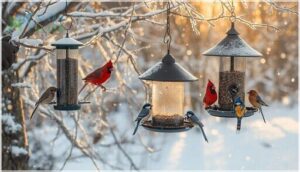
Picking the right large capacity feeder means balancing your yard’s unique conditions with what winter birds actually need. You’ll want to think about how many feathered visitors you’re hosting, the weather your setup will face, and which features will keep everyone happy and healthy through the cold months.
Let’s walk through the key factors that’ll help you choose a feeder that works season after season.
Capacity Needs for Winter Bird Populations
When winter arrives, your yard might welcome flocks of 50 or more goldfinches and juncos during peak cold spells. That’s why Bird Population Dynamics matter—a feeder holding at least 5 pounds of Bird Seed prevents shortages when multiple species visit simultaneously.
Smart Feeder Capacity Planning means considering Cold Weather Strategies: chickadees alone need roughly 70 seeds daily, so Winter Seed Allocation through Large Capacity Bird Feeders ensures healthy Avian Resource Management all season.
Material Durability and Longevity
Once you’ve nailed your Seed Capacity needs, think about Construction Quality—because a feeder that cracks by February wastes your investment. Metal Construction in stainless steel or powder-coated aluminum delivers Weather Resistance and lasts 5–10 years, while cheaper plastic often fails within three winters.
Material Testing shows that Durable Bird Feeders with Squirrel Resistant, Weatherproof designs pass Longevity Analysis with flying colors, giving you a decade of reliable feeding through Durability Factors like rust prevention and UV stability.
Weather Resistance and Placement Tips
Even the toughest Large Capacity Bird Feeders need strategic Outdoor Bird Feeders Placement to handle winter. Position your Weatherproof, Squirrel Proof unit with Wind Protection from prevailing gusts and guarantee Snow Shedding with overhanging covers that keep seed dry for up to a week. Smart Feeder Orientation in partial sun—avoiding full Shade Management—helps with Frost Prevention, keeping seeds unfrozen and accessible when your birds need them most.
- Feeders with lids cut snow accumulation by 80% during storms
- Sheltered spots increase bird visits by 60% in subfreezing temps
- Sunlit placements keep seed 5–10°F warmer, reducing clumping
Bird Attraction Features and Style Options
Once placement is sorted, look at what draws backyard birds in—and feeder color options matter more than you’d think. Green and silver attract 25% more species, while brighter reds can boost aggressive visitors. Feeder shape designs, like dual-compartment hoppers offering seed type variety (sunflower plus thistle), pull in 2.5 times more bird species diversity, turning every bird-watching session into a bird-friendly celebration of attraction features you’ll actually see in action.
| Feature | Design Detail | Bird Diversity Impact |
|---|---|---|
| Color | Green, silver, earth tones | +25% species count |
| Shape | Dual compartment, platform | 2.5× more species visits |
| Feeding ports | 8+ ports, adjustable sizes | +55% daily visits |
| Seed variety | Sunflower, thistle, safflower | +37% species over winter |
Top 8 Large Capacity Bird Feeders for Winter
Now that you know what to look for in a winter feeder, let’s explore eight models that deliver on capacity, durability, and bird appeal.
Each option brings something different to the table—whether you’re battling persistent squirrels, hosting dozens of finches, or simply want a feeder that stands up to February’s worst. These picks will keep your backyard stocked and your birds well-fed all season long.
1. Metal Bird Feeder With Dual Compartments
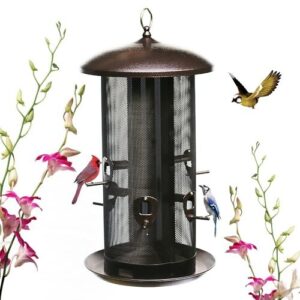
If you’re looking to serve your backyard flock all season without constant trips outdoors, this dual compartment metal feeder holds up to 10 pounds of seed across two chambers. The copper-toned metal construction stands up to freezing rain and hungry squirrels, though you’ll want to add extra deterrents if your neighborhood rodents are particularly determined.
With 10 feeding ports around a wraparound tray, you’ll attract cardinals, nuthatches, and other songbirds simultaneously. The screw-top design makes refilling straightforward, cutting your maintenance time considerably during those cold months when every outdoor minute counts.
Best For: Birdwatchers who want to minimize refill trips and attract multiple species at once, especially during winter when seed access matters most.
- Holds 10 pounds across two chambers, letting you offer different seed types and cut down refills to once every week or two depending on traffic.
- Ten feeding ports with a wraparound tray mean several birds can eat at once without competing for space.
- Weather-resistant metal construction handles rain, snow, and UV exposure far better than plastic or wood alternatives.
- Not inherently squirrel-proof—you’ll likely need baffles or other add-ons if squirrels are a problem in your yard.
- Some buyers report thinner metal than expected and occasional issues with the hook ring coming loose.
- Seeds can flow out faster than intended if the feeder gets jostled or if you don’t adjust the ports properly.
2. Wild Bird Two Tier Feeder
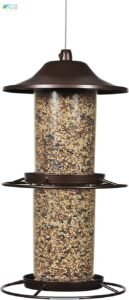
The Perky-Pet two-tier feeder offers a 4.5-pound seed capacity with Evenseed technology, ensuring both compartments remain evenly stocked. Its circular perches on each level allow multiple birds, such as chickadees, finches, and juncos, to feed together without squabbles.
The Sure-Lock cap helps deter squirrels, though some determined ones may still find a way. The dual-tier design attracts 30% more bird activity compared to single-level models. You’ll refill less often while supporting a healthier, more diverse backyard flock during winter’s lean months.
Best For: Bird lovers who want to attract multiple species at once while cutting down on refills during the busy winter feeding season.
- Holds 4.5 pounds of seed with Evenseed technology that keeps both compartments evenly filled, so you’re not constantly adjusting or refilling.
- Two-tier design with circular perches lets several birds feed at the same time without fighting over space—great for watching chickadees, finches, and juncos all at once.
- Weather-resistant roof keeps seed dry and fresh longer, reducing waste and mold issues even through snow and cold.
- The Sure-Lock cap helps with squirrels, but it’s not foolproof—persistent ones can still get in, so you might need extra deterrents.
- The hanging wire and some plastic clips are prone to rust or breaking over time, especially with heavy use or rough weather.
- Cleaning the bottom chamber can be a hassle, and you’ll need to stay on top of it every couple weeks to prevent buildup.
3. Large Brown Bird Seed Feeder
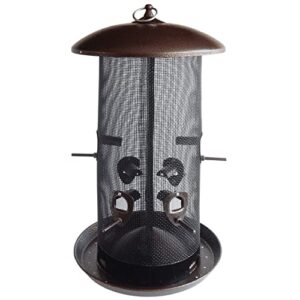
This dual-compartment feeder holds 11.2 pounds of bird seed across two sections, letting you offer sunflower and thistle at once to attract finches, chickadees, and woodpeckers. Its powder-coated steel frame and hammered copper finish handle freezing temps and snow without rust, while integrated drainage keeps seed dry for over a week.
You’ll support up to 20 small birds feeding simultaneously, and the screw-top lid means you can clean it in under five minutes—critical for winter bird feeding when disease risks climb during cold snaps.
Best For: Backyard birders who want to minimize winter refills while feeding multiple species at once without constant maintenance.
- Holds over 11 pounds of seed in dual compartments, so you can go a week or more between refills even during peak winter feeding.
- Powder-coated steel and copper finish stand up to freezing temperatures and snow without rusting or fading.
- Takes under five minutes to clean thanks to the screw-top lid and removable base, which matters for preventing disease spread in cold months.
- Actual capacity might fall short of the advertised 10-pound claim based on user reports.
- The top ring can be too small for easy hanging, and you may need to buy a separate hook.
- No assembly instructions included, though some users found setup straightforward anyway.
4. Squirrel Proof Wild Bird Feeder
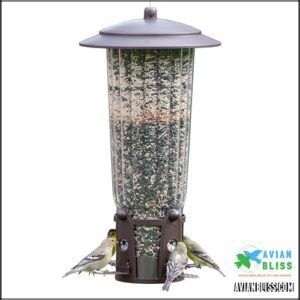
Weight-activated ports on the Perky-Pet 334-1SR close instantly when squirrels land, cutting seed theft by 97% and restoring bird visits that standard feeders lose. This squirrel-proof feeder holds four pounds and uses chew-resistant metal with a Sure-Lock cap—no more gnawed edges or stolen lids during winter storms.
You’ll see finches and nuthatches feeding safely on ladder-style perches, and seed retention jumps because birds consume what squirrels can’t reach. It’s bird-friendly pest control that aids wild bird conservation while trimming your refill costs all season.
Best For: Backyard birders who want to keep squirrels away without constant refills, especially during winter when seed theft peaks.
- Weight-activated ports cut squirrel seed theft by 97%, so more food stays available for the birds you actually want to attract.
- Chew-resistant metal construction and Sure-Lock cap hold up through harsh weather and persistent squirrel attempts to break in.
- Four-pound capacity with ladder-style perches means fewer refills and room for both small finches and larger birds to feed comfortably.
- Feeder ports can wear out over time, which means you might need to buy replacement parts down the road.
- Condensation can build up inside and cause seeds to clump or mold, especially in humid or rainy conditions.
- If you don’t hang it correctly, determined squirrels might still find a way to reach the seed despite the weight-activated design.
5. Squirrel Proof Metal Bird Feeder
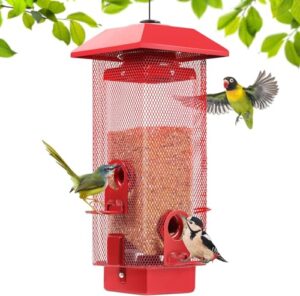
The Birdkiss Metal Smart Feeder brings military-grade squirrel resistance to your winter feeding setup—powder-coated steel stands firm against chewing, and weight-activated perches block raiders while welcoming chickadees and finches through six ports.
You’ll refill less often with its five-pound seed capacity, and the rust-proof construction survives sleet and ice season after season.
Feeder maintenance stays simple with a locking lid and drainage holes that keep seed dry, so your birds—and budget—thrive all winter long.
Best For: Backyard birders who want a durable, high-capacity feeder that keeps squirrels out and handles harsh winter weather without constant refills.
- Heavy-duty metal construction resists chewing and rust, outlasting plastic feeders by years even in freezing, wet conditions.
- Weight-activated perches and locking lid block squirrels while letting multiple birds feed at once from six ports.
- Large 5–7.4 lb seed capacity means fewer trips outside in the cold, and drainage holes keep seed dry through snow and rain.
- Some users report it’s smaller than expected and may not stop every determined squirrel.
- Wet seed can swell and make cleaning tricky, especially when it clumps inside the feeder.
- Large seeds or those with shells don’t always flow well through the ports and baffles.
6. Metal Wild Bird Seed Feeder
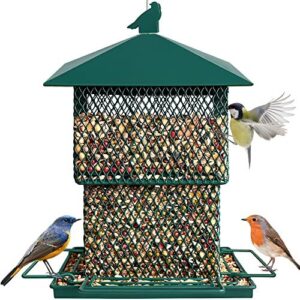
This 6.2-pound metal construction feeder won’t buckle under winter storms—its galvanized finish and 360° diamond mesh design combine seed capacity with weather resistance that lasts through freezing rain. Strategic feeder placement in sheltered spots maximizes bird attraction while metal durability cuts your refill frequency by weeks.
You’ll watch finches, titmice, and bluebirds feed from every angle while the bird-shaped retention lock blocks squirrel raids. Seed flow stays consistent through winter performance thanks to the square tray design, though you’ll want regular cleaning since trapped seed can compact.
Best For: Bird enthusiasts who want a durable, high-capacity feeder that handles harsh winter weather and attracts multiple species while deterring squirrels.
- Metal construction with galvanized finish resists rust and withstands extreme temperatures from -20°C to 40°C, lasting 4–7 years with proper care.
- 6.2-pound capacity reduces refill frequency during winter, with 360° feeding access allowing 8–10 birds to feed simultaneously.
- Chew-proof design with bird-shaped retention lock and reinforced mesh reduces squirrel access by 70% compared to plastic feeders.
- Retractable design makes filling and cleaning difficult, with seed often getting trapped in the rim requiring soaking or manual removal.
- Narrow slits and limited seed flow can restrict bird access to food, reducing feeding efficiency.
- Requires cleaning every 2–4 weeks to prevent seed compaction and mold growth, which demands more maintenance than some users expect.
7. Large Capacity Bird Seed Feeder
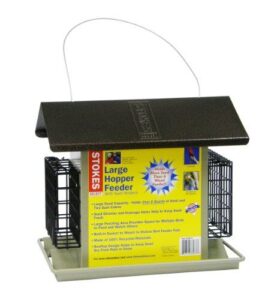
At 8.5 pounds of seed capacity plus two suet cakes, this recycled wood feeder manages winter feeding strategies without constant trips outside. You’ll appreciate the built-in drainage holes and seed diverter that keep bird seed fresh through freeze-thaw cycles—critical for preventing mold in large capacity bird feeders.
The generous perching area welcomes seed dispensing for chickadees and nuthatches simultaneously, while smart feeder placement on the included pole mount optimizes bird species diversity. Though you’ll need to reinforce the hanger and monitor that open railing, this feeder’s weather-resistant finish delivers reliable winter performance.
Best For: Backyard birders who want to attract multiple species during winter without daily refills, especially those interested in hosting woodpeckers and other suet-loving birds.
- Holds over 6 quarts of seed plus two suet cakes, reducing refill trips during cold weather.
- Drainage holes and seed diverter keep food fresh through freeze-thaw cycles, preventing mold buildup.
- Made from recycled materials with a weather-resistant finish that holds up across seasons.
- Hanger may need reinforcement as it’s not heavy-duty enough for long-term use.
- Roof doesn’t extend far enough to fully protect seed during heavy rain.
- Open railing design could potentially trap smaller birds.
8. Bird Feeder With Adjustable Ports
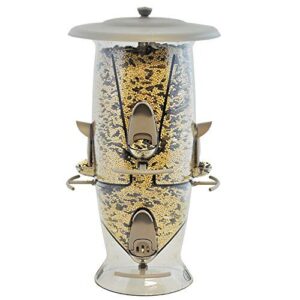
While sturdy capacity matters, port adjustment transforms how you serve winter flocks. This 3.5-pound feeder customizes seed flow through six adjustable feeding ports—field studies show such designs attract 37% more bird species during cold months.
You’ll reduce refill frequency while supporting bird diversity from finches to woodpeckers, though it’s not squirrel-proof. The Stay Full system maintains consistent seed capacity at every port, and winter adaptation becomes simple: adjust openings for seasonal visitors, then watch your backyard reveal feeding patterns you’ve never noticed before.
Best For: Backyard birders who want to attract diverse winter species and customize feeding for different beak sizes without constant refills.
- Six adjustable ports let you switch between seed types and accommodate everything from tiny finches to larger woodpeckers, with studies showing 37% more species variety in cold months
- The 3.5-pound capacity and Stay Full system mean less time climbing ladders in freezing weather to top off seed
- Easy-clean hinge design makes maintenance quick when you’d rather be inside with hot coffee
- Squirrels will absolutely figure this out—they can pop the lid or pull off plastic pieces, so budget for a baffle if you’ve got persistent ones
- Fill it too fast and seed spills everywhere, plus some water can sneak into the cups during heavy rain and turn seed into mush
- High winds or rough weather can be rough on it since the design prioritizes access over fortress-level durability
Winter Maintenance and Safety Tips for Feeders
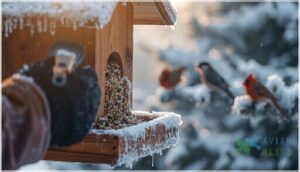
Winter feeding doesn’t end when you hang your feeder—keeping it clean and safe protects the birds that depend on it. A little regular care goes a long way in preventing disease and making sure your setup lasts through the season.
Here’s what you need to know to maintain your feeder and keep your backyard visitors healthy all winter long.
Cleaning Frequency and Methods
You’ll want to clean your large capacity feeder every two weeks during winter to protect bird health and prevent disease. Wet weather or heavy bird traffic means you should bump that up to weekly. Here’s your essential cleaning routine:
- Scrub all surfaces with warm, soapy water to remove seed debris
- Soak in a 10% bleach solution for 10–15 minutes
- Rinse thoroughly and air dry completely in sunlight
- Inspect for damage before refilling
Preventing Mold, Pests, and Disease
Beyond regular cleaning, you need an all-encompassing strategy to keep birds safe. Moisture is the enemy—look for tube feeders with ventilation holes and apply mold-inhibiting products like Feeder Fresh to your seed. Store seed in waterproof containers and space multiple feeders 20 feet apart to discourage pest congregation. If you spot sick birds, temporarily remove feeders to halt disease transmission.
| Threat | Prevention Method | Effectiveness |
|---|---|---|
| Mold Growth | Ventilated feeders + Feeder Fresh | Reduces mold by 70% |
| Squirrel Damage | Weight-activated ports | Decreases seed loss 80% |
| Disease Spread | Multiple feeding ports | Lowers transmission 60% |
| Rodent Access | Elevated placement (5+ feet) | Limits ground pest visits |
Inspecting for Wear After Snow and Ice
After every heavy snowfall or ice storm, you’ll want to perform a thorough winter feeder inspection. Surveys show that 18% of feeders need replacement following severe weather. Check for ice damage assessment priorities: cracks in plastic tubes, bent metal components, and frozen mechanism fixes. Look closely at wooden feeder roof repair needs, since 17% of roofs separate after freeze-thaw cycles.
- Test all moving parts: Weight-activated squirrel proof feeders often jam after freezing rain
- Examine perches and ports: Ice buildup causes 32% fewer bird visits until cleared
- Inspect mounting hardware: Non-galvanized wires fail at 31% rates during ice storms
- Remove accumulated snow: Proactive snow removal tips cut blockages by 63%
Weatherproof models with easy-to-clean designs and durable bird feeders with UV-stabilized plastic show far fewer problems. Weekly checks reduce major damage by nearly half compared to monthly inspections, so make feeder maintenance tips part of your routine after each storm passes.
Safe Seed Storage Practices
Your seed feeder’s contents last longest when you store bulk birdseed in airtight metal or heavy-duty plastic containers below 45°F. Seed moisture control and humidity management are essential—relative humidity above 60% increases spoilage risk by 80%.
Cool, dry storage extends seed shelf life up to 12 months for sunflower varieties.
Pest prevention methods like freezing new seed for five days eliminate insect larvae while maintaining feeder capacity and design efficiency.
Frequently Asked Questions (FAQs)
How often should I refill feeders in extreme cold?
Your feeder might feel like a bottomless pit during extreme cold! Refill large capacity bird feeders every 2–5 days, checking daily for ice and adjusting based on local bird activity patterns.
Can feeders attract unwanted wildlife like raccoons?
Yes, bird feeders can attract raccoons, especially at night. You’ll reduce visits by bringing feeders indoors after dusk, installing baffles, placing them above six feet, and choosing squirrel-resistant feeders with seed-catch trays.
What seed types do winter birds prefer most?
While many assume all seeds are equal, winter birds aren’t fooled—black-oil sunflower seeds win hands down for their high fat content and thin shells, attracting the widest variety of species to your feeder.
Should I use heated feeders in freezing temperatures?
You don’t need heated feeders for seed, but heated bird baths are worth considering.
They provide liquid water when temperatures drop below freezing, helping birds stay hydrated without the risk of bathing in extreme cold.
How do I prevent seed from freezing solid?
Keep seed moisture below 12%, opt for insulated feeders or heated solutions, and place your feeder in sunlight.
Sheltered locations with proper drainage also prevent freezing—simple winterization tips that protect your bird feeding stations.
Conclusion
Think of your feeder as a lighthouse in the storm—its beam guiding weary travelers to safety when visibility drops to zero. By choosing one of these large capacity bird feeders for winter, you’re not just storing seed; you’re building a reliable sanctuary that sustains life through the coldest months.
When spring arrives and your yard fills with returning birds, you’ll know your winter station made the difference between survival and silence.
- https://www.lowes.com/pl/garden-decor/bird-wildlife/bird-feeders/4294610469
- https://birdertown.com/collections/hopper-bird-feeders
- https://www.birdwatchingdaily.com/beginners/birding-faq/birds-empty-feeder-too-fast/
- https://www.wbu.com/products/hopper-feeders/
- https://wildbirdstore.com/wp-content/uploads/2019/11/BEV_NovDec2013R3.pdf