This site is supported by our readers. We may earn a commission, at no cost to you, if you purchase through links.
A feeder may pull in a few visitors, but shrubs do the heavy lifting. Plant the right ones, and your yard starts working like real habitat, with spring caterpillars for nestlings, summer berries for hungry fledglings, and thick branches that hide nests from prowling cats and jays. That’s why native shrubs attract songbirds so reliably: they feed them, shelter them, and fit the rhythms birds already know.
A serviceberry can spark early summer feeding, while winterberry and sumac keep flocks moving through the cold months.
Once you match those shrubs to your region and season, the whole landscape begins to sound different.
Table Of Contents
- Key Takeaways
- Top Native Shrubs for Songbirds
- Shrubs for Seasonal Food
- Shrubs for Nesting and Shelter
- Choosing Shrubs for Your Region
- Matching Shrubs to USDA Hardiness Zones
- Picking Species for Sun, Shade, and Soil
- Selecting Locally Native, Not Just “bird-friendly”
- Best Shrub Types for Northeast Gardens
- Best Shrub Types for Southeast Gardens
- Best Shrub Types for Midwest and Plains Gardens
- Best Shrub Types for Western and Southwestern Gardens
- Checking Mature Size Before Planting
- Planting a Songbird-Friendly Shrub Border
- Grouping Shrubs for Better Bird Use
- Replacing Invasive Shrubs With Native Options
- Avoiding Pesticides to Protect Insect Prey
- Leaving Leaf Litter Beneath Shrubs
- Adding Water Near Shrub Plantings
- Pruning After Nesting Season
- Combining Deciduous and Evergreen Shrubs
- Ready to Start Planning Your Songbird Habitat?
- Frequently Asked Questions (FAQs)
- Conclusion
Key Takeaways
- Native shrubs do more than feeders because they provide caterpillars, berries, and dense cover that supports songbirds through nesting, migration, and winter.
- The most useful shrubs include serviceberry for early fruit, elderberry and dogwood for summer food and insect support, viburnum and winterberry for cold-season berries, and ninebark or sumac for shelter and winter forage.
- You’ll get the best results by choosing shrubs that are truly native to your area and matching them to your hardiness zone, light, soil, and moisture conditions.
- bird-friendly shrub border works best when you layer and cluster plants, leave leaf litter, avoid pesticides, add nearby water, and prune only after nesting season.
Top Native Shrubs for Songbirds
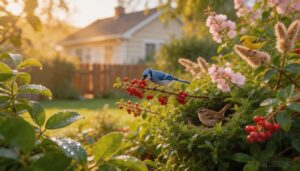
Some native shrubs do a lot more for songbirds than others, so it helps to start with the best ones. The picks below are shrubs that can bring feeding, cover, and nesting activity into your yard through the seasons.
If you need planting ideas, this guide to common Pacific Northwest songbirds helps match shrubs, shelter, and water to local visitors.
If you’re deciding what to plant first, this is a good place to begin.
Serviceberry for Early Summer Berries
A good Serviceberry Amelanchier spp shows why Seasonal fruiting plants and their importance to migratory birds matter.
Its Early Fruit Phenology, Berry Nutrient Content, Bird Energy Intake, Cultivar Fruit Yield, and Pollinator Support make it ideal Seasonal food sources for songbirds in thoughtful regional plant selection based on zip code and climate for bird and insect-friendly native trees and shrubs.
Planting success depends on a well‑drained soil requirement.
Elderberry for Dense Cover and Fruit
After serviceberry’s early feast, Elderberry Sambucus canadensis keeps birds close.
- Dense thickets hide nests.
- Late-season berries feed catbirds, thrushes, and waxwings.
- Layered stems improve shelter and Bird Corridor value.
- Strong roots bring Soil Erosion Control and Root System Benefits.
- Reliable bloom-to-fruit cycles support multi-year fruit production, using native plants to support bird populations and native shrubs and trees for nesting habitat.
Viburnum for Fall and Winter Feeding
After Elderberry, Viburnums carry the garden into cold weather. Their Persistent Berries, Color Contrast, Sugar Richness, and sturdy Branch Architecture help with Winter food provisioning for birds.
Choose Regional Varieties for Seasonal fruiting plants, and their importance to migratory birds.
Like Winterberry, they pair beautifully with Native shrubs and trees for nesting habitat, keeping songbirds fed well through hard winters.
Dogwood for Berries and Insect Support
After viburnums, Dogwoods shine for Dogwood Phenology and Dogwood Seasonal Foraging. As native insect host plants, they boost Dogwood Insect Diversity for hungry nestlings.
Their berries add Dogwood Fruit Antioxidants, and Dogwood Habitat Structure creates Shrubs providing cover and food for birds.
They also show why Seasonal fruiting plants and their importance to migratory birds matter in regional plant selection.
Winterberry Holly for Late-season Food
Because food runs thin in cold weather, winterberry stands out for Berry Persistence and Red Berry Visibility. With good Moisture Retention and decent Shade Tolerance, evergreen holly and winterberry for winter birds improve Bird Attraction, wintering bird habitat, and seasonal fruit availability.
In regional plant selection, pair them with bird and insect-friendly native trees and shrubs for lasting support there.
Chokeberry for Persistent Fruit
Because chokeberry holds fruit through the leanest months, it helps you provide:
- Berry Color Persistence, Winter Energy Source, Bird Foraging Patterns
- Serviceberry Fruit, Shrub plantings for winter berries and cover, Winter food provisioning for birds
- Pruning for Production, Soil Moisture Needs, Selection of native trees and shrubs for attracting birds, Seasonal fruiting plants and their importance to migratory birds nearby.
Ninebark for Nesting Thickets
Because ninebark forms dense, arching stems, it improves Bird Nest Microclimate, Bark Invertebrate Habitat, and Root Zone Stabilization.
In bird-friendly garden design, native trees and shrubs like this support providing nesting cover and shelter through shrub selection, plus seasonal food sources for songbirds.
Its Shade Tolerance Range, Fire-Resistant Structure, and Seasonal fruiting plants and their importance to migratory birds matter.
Sumac for Winter Forage
Think of Fragrant sumac as Winter Food Reliability in shrub form. Its Sumac Fruit Timing carries red drupes from fall into deep winter, giving birds a Bird Hydration Aid and Winter berry production for wildlife.
In birdfriendly garden design, this Drought Tolerant Shrub, with Seed-Head Retention nearby, strengthens Seasonal food sources for songbirds among native trees and shrubs, supporting flocks.
Shrubs for Seasonal Food
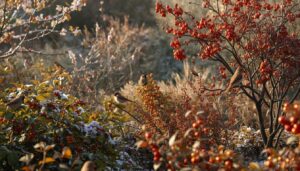
Songbirds don’t need the same food in every season, and your shrubs can help fill those gaps. Some feed birds when they’re raising young, while others matter most during migration or winter.
The shrubs below show how to keep food on the landscape from spring through the leanest months.
Spring Caterpillars for Nestling Protein
Here’s the spring secret: Host plant phenology in native trees and shrubs drives the insect abundance peak when chicks hatch each spring. Caterpillar protein content fuels feather growth, and soft prey boosts nestling feeding efficiency.
With more caterpillar abundance and microhabitat diversity, bird and insect-friendly native trees and shrubs highlight the role of native insects as food for nesting songbirds.
Summer Berries for Resident Birds
Nothing steadies a summer garden like ripe fruit and busy birds. Favor bird-attracting shrubs with strong Seasonal berry production for wildlife, especially Elderberry, Mulberry, Blackberry and Raspberry. Their Berry Energy Content and Summer Berry Hydration support Bird Foraging Patterns, while smart Berry Patch Layout improves cover.
Don’t overlook Insect-Berry Interaction, because berries and nearby insects feed growing resident songbirds together.
Fall Fruit for Migrating Songbirds
By fall, the buffet shifts. Elderberry and Mulberry linger, then Shadbush or Serviceberry, viburnums, dogwoods, and Hollies carry migratory birds through tight migratory stopover timing.
Energy-dense fruit matches bird fruit preference, while fruit phenology shifts can change peak feeding windows.
If you practice fruit abundance monitoring, you’ll spot which shrubs keep birds refueled longest during migration each busy autumn.
Winter Berries for Scarce-food Months
When frost settles, bird-attracting shrubs keep working: Winter berries for many wintering birds meet Bird Energy Needs with real Nutritional Benefits. The Benefits of evergreen holly and winterberry for winter birds include cover, Predator Avoidance, and food for many wintering birds.
Benefits of evergreen shrubs for year-round bird shelter, Seed Dispersal Mechanics, and nearby Winter Water Sources all matter, too.
Seed, Bud, and Leaf-litter Value
Beyond winter berries, bird-attracting shrubs keep feeding birds in quieter ways:
- Seed Nutrient Density carries finches through lean spells.
- Bud Protein Boost helps during nesting.
- Bud Chemistry Shifts draw insects that birds need.
- Decomposed Leaf Matter shelters prey below.
Good leaf litter management leaves seed heads for winter food, matching Seed Dispersal Timing and seasonal resource planning in native shrub borders.
Mixing Early-, Mid-, and Late-fruiting Shrubs
Pair leaf litter with a staggered fruiting strategy. Fruit phenology syncs and overlapping fruit windows give meals, while temporal niche complementarity promotes multi-seasonal fruiting in bird-friendly native habitats. Seasonal resource planning in native plant selections, using bird-attracting shrubs, seed-producing plants, and bird- and insect-friendly native trees and shrubs near your home.
| Timing | Shrub |
|---|---|
| Early | serviceberry |
| Mid | elderberry viburnum |
| Late | winterberry chokeberry |
Shrubs for Nesting and Shelter
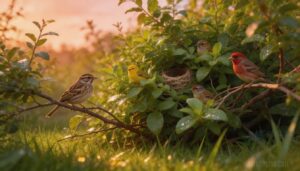
Food gets the attention, but shelter is what makes birds stay.
Food may draw songbirds in, but shelter is what convinces them to stay
The shrubs ahead are the ones that give songbirds better cover for nesting for nesting, resting, and moving through your yard. As you read, notice how shape, density, and placement matter just as much as the plant itself.
Dense Branching for Predator Protection
Think of dense twigs as living armor: Branching Complexity and Vertical Interlocking create a Dense Canopy that improves Predator Obstruction and opens quick Escape Pathways for small birds. That makes better bird nesting cover in bird-attracting shrubs and helps bird habitat restoration.
Choose bird and insect-friendly native trees and shrubs, even evergreen shrubs for year-round bird shelter, with woven branching.
Evergreen Shrubs for Year-round Cover
Although winter strips the garden bare, evergreen shrubs keep songbirds tucked into native vegetation, offering foliage density, microclimate regulation, and steady bird nesting cover.
- Holly winterberry berries linger
- Inkberry stays thick
- Yew gives Bird Perching Sites
- Boxwood shows Snowload Tolerance
- Roots protect Evergreen Soil Moisture
That’s one of the real benefits of evergreen shrubs for year-round bird shelter near home.
Multi-stem Shrubs for Secure Nest Placement
Because songbirds need safe places to tuck a nest, Multi-Stem Architecture matters. Serviceberry, elderberry, and other bird-attracting shrubs offer Twig Stiffness Benefits, Elevated Nest Placement, and Seasonal Leaf Retention that improve nest site provision.
Their branching creates layered habitat, reliable cover, and nesting habitat, plus Threat Deterrence Structure.
That makes bird and insect-friendly native trees and shrubs useful near homes.
Thorny Shrubs for Safer Nesting Sites
Safer nests start with thorns: choose bird-attracting shrubs for nest site provision and seasonal resource planning in native plant selections that shield eggs from cats and raccoons near homes.
- Thorny Shrub Architecture
- Predator Deterrence
- Seasonal Thorn Retention
- Thorny Shrub Spacing, Maintenance Pruning Strategies
- Benefits of evergreen holly and winterberry for winter birds, plus regional native plant recommendations for North America.
Layering Shrubs With Grasses and Trees
Layer planting like a woodland: Height Zonation Planning with native grasses, shrubs, and bird and insect-friendly native trees and shrubs builds Microclimate Creation and Edge Habitat Connectivity.
Mixed Species Planting, evergreen shrubs for year-round bird shelter, Integrated Water Features, seasonal resource planning in native plant selections, and regional native plant recommendations for North America help birds forage, hide, and nest.
Using Shrub Clusters as Habitat Corridors
Think of shrub clusters as green hallways: the right Corridor Width and Cluster Spacing turn bird-attracting shrubs into safe Movement Pathways.
Use a Stepping Stone Strategy to strengthen Habitat Connectivity and habitat connectivity, blending bird and insect-friendly native trees and shrubs with regional native plant recommendations for North America and seasonal resource planning in native plant selections for year‑round cover.
Choosing Shrubs for Your Region
The right shrub in the wrong place won’t do birds or you much good. Before you plant, it helps to match each option to your climate, light, soil, and the birds you hope to support.
The list below will help you sort through the best native shrub choices by region and growing conditions.
Matching Shrubs to USDA Hardiness Zones
Planning starts with your USDA plant hardiness zone, because bird-attracting shrubs live or fail by winter lows.
- Use Hardiness Zone Maps for Zone Range Matching.
- Make Microclimate Adjustments for wind, snow, and shelter.
- Check Cold Hardiness Ratings first.
- Compare Heat Tolerance Zones too.
That simple step promotes Biodiversity enhancement for songbird populations and guides Regional native plant recommendations for North America.
Picking Species for Sun, Shade, and Soil
After matching zone, use regional native plant recommendations for North America to compare Sun exposure tolerance, Shade tolerance, Soil drainage, Drought resilience, and pH suitability.
That helps you choose bird and insectfriendly native trees and shrubs, including birdattracting shrubs and birdfriendly shrubs, while seasonal resource planning in native plant selections keeps berries, cover, and insects coming through every single season.
Selecting Locally Native, Not Just “bird-friendly”
Once sun, shade, and soil line up, go a step further and choose truly local natives, not just bird-attracting shrubs. Genetic provenance, a Local seed source, and local ecotype seed improve Soil microbiome support, Insect host specificity, and Habitat connectivity for songbirds.
In the Eastern United States, seasonal resource planning works best when shrubs belong to your place and region.
Best Shrub Types for Northeast Gardens
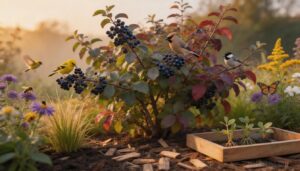
In the Eastern United States, seasonal resource planning in native plant selections often starts with Gray dogwood and Blackhaw viburnum. Both are low maintenance, offer seasonal color interest, and support songbird populations through insects, cover, and fruit.
Add simple soil amendment strategies, favor local propagation methods, and you’ll strengthen pollinator synergy while keeping Northeast plantings practical and regionally grounded too.
Best Shrub Types for Southeast Gardens
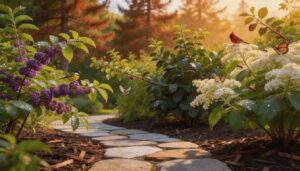
A Southeast garden sings louder with Pollinator-Friendly Shrubs like Beautyberry, American elder, Blackhaw viburnum, Wild plum, and Red cedar nearby. Choose for Soil Moisture Tolerance, Coastal Salt Tolerance, and Drought-Resistant Varieties, since Southern sites can swing hard between flood and heat.
These Low-Maintenance Plantings feed birds with berries, shelter nests, and keep your habitat steady through long seasons each year.
Best Shrub Types for Midwest and Plains Gardens
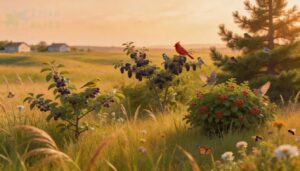
A Midwest yard works best with Prairie Adapted Shrubs and Drought Tolerant Shrubs.
Choose by Soil Moisture Preference:
- Serviceberry
- Elderberry
- Viburnum
- Red Cedar
These Low Maintenance Shrubs and Pollinator Friendly Shrubs support native plants and bird health, add seed‑producing plants, and show the benefits of evergreen shrubs for year‑round bird shelter in a bird‑friendly landscape across windy plains and suburbs.
Best Shrub Types for Western and Southwestern Gardens
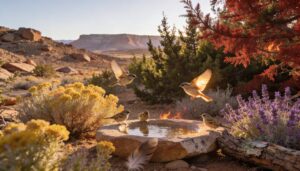
Think of this region as hard country for plants, yet a stop for birds when your shrubs fit the climate.
| Focus | Benefit | Notes |
|---|---|---|
| Juniper including redcedars | evergreen shrubs for year‑round bird shelter | Drought‑tolerant shrubs |
| Alkaline‑soil adapted | Fire‑resistant varieties | Heat‑wave bloom timing |
| Native plants and bird health | Southwest xeriscape and water features for bird attraction | Native seed propagation, Native seed mixes. |
Checking Mature Size Before Planting
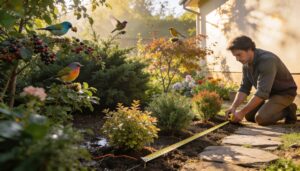
- Check Height and Width; leave room near paths and walls.
- Use Growth Rate Prediction with Soil Moisture Effects.
- Watch Sun Exposure Impact and Pruning Size Control.
- Prioritize native plants, seasonal food resources, and Benefits of evergreen shrubs for year-round bird shelter.
- Keep Evaluating USDA hardiness zones for plant selection locally for Biodiversity enhancement for songbird populations.
Planting a Songbird-Friendly Shrub Border
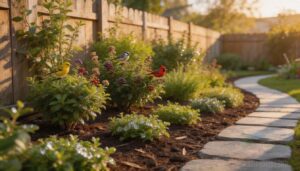
A good shrub border does more than look full; it gives songbirds’ food, cover, and safer places to rest.
The next points will show you how to plant and care for that border so birds actually use it.
If you’re starting from scratch or fixing an older planting, this is where the layout begins to come together.
Grouping Shrubs for Better Bird Use
Birds read shrub borders like maps; group rounded clumps, three to seven plants, six to twelve feet apart.
| Pattern | Purpose | Benefit |
|---|---|---|
| Irregular Planting | Sunlit Cluster Placement | songbird populations |
| Cluster Spacing Guidelines | Edge Habitat Buffers | seasonal food resources |
| Multi-Season Fruit Overlap | Designing layered habitat structures | Bird species of regional conservation concern |
| Native wildflowers, shrubs, and grasses | cover | movement |
Replacing Invasive Shrubs With Native Options
Start with Invasive Removal: swap burning bush, barberry, or ivy for climateadapted native species that strengthen Soil Health and Native Establishment. This kind of non-native plant removal and replacement with native species builds a birdfriendly landscape, especially with evergreen shrubs for yearround bird shelter.
It also matches seasonal diet variations of songbirds.
Funding Strategies and Community Outreach can replant together.
Avoiding Pesticides to Protect Insect Prey
Once native swaps are planted, avoid pesticides whenever you can. Integrated Pest Management relies on Threshold Spraying, Selective Insecticides, Rapid Breakdown Products, and careful Feeding Peak Timing, so caterpillars remain an insect food source.
The ecological benefits of avoiding pesticides show up fast around evergreen shrubs for year-round bird shelter, especially during the seasonal diet variations of songbirds nearby.
Leaving Leaf Litter Beneath Shrubs
Skip the rake under shrubs. Leaf Litter Decomposition builds Insect Overwintering Habitat, promotes Soil Nutrient Cycling, and forms a Moisture Retention Layer. Managing leaf litter for insect habitat also creates Predator Concealment Cover, ground-nesting bird cover, and an invertebrate food source.
That pairs with the benefits of evergreen shrubs for year-round bird shelter while quietly creating bird-friendly native habitats in place.
Adding Water Near Shrub Plantings
That leaf litter helps hold moisture; add water nearby, and shrubs become a refuge.
- Place a bird bath in partial shade.
- Try moving water features.
- Use Early Morning Watering.
- Pair drip lines with Mulch Moisture Retention.
- Practice Soil Moisture Monitoring and Deep Soak Timing, especially when integrating bird baths and moving water features near evergreen shrubs for year-round bird shelter.
Pruning After Nesting Season
Keep the bath filled, then handle pruning with Seasonal Timing: wait until nesting ends, then use Tool Sterilization, Light Thinning, and Branch Collar Cuts. Finish with Mulch Application.
You protect nesting sites, honor seasonal diet variations of songbirds, preserve benefits of evergreen shrubs for year-round bird shelter, and support Southwest xeriscape and water features for bird attraction, creating bird-friendly native habitats.
Combining Deciduous and Evergreen Shrubs
Blending deciduous and evergreen shrubs gives your border Seasonal texture contrast and steadier habitat through the year.
Use evergreen foliage at the back, then weave in serviceberry, viburnum, Coyote bush, and Baccharis for Vertical habitat layering, Microclimate buffering, Pollinator movement zones, Maintenance synergy, and roosting cover for songbirds among Native wildflowers, shrubs and grasses that feed insects and shelter nests.
Ready to Start Planning Your Songbird Habitat?
How do you begin? Start with Evaluating USDA hardiness zones for plant selection, Soil preparation, and a Seasonal planting schedule.
Focus on Creating birdfriendly native habitats with evergreen shrubs for yearround bird shelter, seedhead nutrition for winter birds, Microhabitat features, Supplemental feeding, Monitoring bird use, and Guidelines for creating birdfriendly gardens that fit your yard and local birds well.
Frequently Asked Questions (FAQs)
What plants attract songbirds?
Serviceberry, elderberry, viburnum, dogwood, and winterberry holly attract songbirds, especially with Native vines, Flowering perennials, Fruit trees, Groundcover grasses, and Wildflower meadows.
Add evergreen shrubs for year-round bird shelter, and you create food and cover.
How long until native shrubs attract songbirds?
That instant-results theory falls apart: Habitat colonization timeline follows a Shrub growth curve, with an insect food source for birds in year one, Berry fruit onset next, and Bird visitation lag often fading by year three.
Can native shrubs work in small yards?
Absolutely—small yards shine with compact species selection, dwarf cultivars, and container planting for root system control.
Edge planting, container-friendly native plants, evergreen shrubs for year-round shelter, native wildflowers, shrubs, and grasses create beautiful bird-friendly habitat.
Are straight species better than named cultivars?
Straight species offer Genetic uniformity, Local climate fit, Hybridization risk, Nursery sourcing ease, and Long‑term performance, strengthening native plants, habitat restoration, creating bird‑friendly native habitats, when indigenous plant databases and native seed mixes inform planting.
How much water do young shrubs need?
Not sprinkle, but a soak, initial watering frequency is daily for two weeks without rain, then every two to three days, easing to weekly.
Pair soil moisture checks, mulch moisture conservation, and seasonal water adjustments.
How can deer damage be prevented?
Use Physical Barriers, Deer-Resistant Species, Repellent Rotation, Habitat Modification, Fence Inspection.
southwest bird habitat: evergreen shrubs for year-round bird shelter, winter food sources for Northern Mockingbirds, and non-native plant removal and replacement with native species.
Conclusion
Imagine transforming your yard into a vibrant songbird haven. For instance, a homeowner in the Northeast might plant a mix of serviceberry, elderberry, and winterberry holly.
As native shrubs attract songbirds, this thoughtful selection provides a steady food supply and shelter, drawing in a variety of species. By choosing the right shrubs for your region and season, you’ll create a thriving habitat that benefits local bird populations, bringing joy and life to your outdoor space daily.
- https://tucsonbirds.org/
- http://tucsonaudubon.org/go-birding/tucson-audubons-paton-center-for-hummingbirds/
- https://fdcenterprises.com/contact/
- https://join.birds.cornell.edu/page/14522/donate?__hstc=75100365.220461ee62b578f48bb144cf431e8850.1712607354694.1718923664593.1719000227951.76&__hssc=75100365.6.1719000227951&__hsfp=3523199817
- https://www.gardenforbirds.org/