This site is supported by our readers. We may earn a commission, at no cost to you, if you purchase through links.
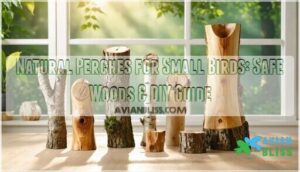 Your bird’s feet weren’t designed for smooth dowels. In the wild, small birds grip dozens of different branch diameters every day, flexing and strengthening muscles that keep their feet healthy. Studies show that captive birds on uniform perches develop foot disorders at rates up to 75% higher than those with varied natural perches. The difference comes down to texture, diameter variation, and the subtle give of real wood.
Switching to natural perches for small birds isn’t just about mimicking nature—it’s about preventing bumblefoot, pressure sores, and muscle atrophy. Safe wood selection matters because some beautiful branches contain compounds that poison birds when chewed. Creating the right perch setup requires knowing which woods protect your bird and which ones put them at risk.
Table Of Contents
Key Takeaways
- Captive birds on uniform perches develop foot disorders at rates up to 75% higher than those with varied natural perches, making diameter variation and natural texture essential for preventing bumblefoot, pressure sores, and muscle atrophy.
- Safe woods like apple, birch, manzanita, and bamboo provide nontoxic perching surfaces, while avocado, black locust, cherry, and treated lumber contain compounds that cause respiratory distress, organ failure, or poisoning when chewed.
- Natural perches trigger measurable health improvements including 45% fewer pressure sores, 23% stronger leg muscles, 14% higher bone density, and 40 repositioning events per hour compared to just 13 on smooth perches.
- Proper perch setup requires stainless steel hardware to prevent metal toxicity, three-quarters toe wrap diameter for secure grip, and weekly cleaning to reduce bacterial foot infections by 30%.
Choosing Safe Woods for Bird Perches
When you’re picking wood for your bird’s perch, the right choice can make all the difference between a healthy bird and a sick one. Some woods are perfectly safe, while others carry serious risks you can’t afford to ignore.
Let’s look at which woods work best and which ones to keep out of your bird’s cage.
Recommended Safe Woods for Small Birds
You can trust apple, birch, and manzanita wood for safe natural wood perches. These nontoxic trees support avian foot care and resist chewing. Bamboo offers excellent durability for small bird perch safety. Beech, ash, and grape vine also work well. Maple and elm are reliable sustainable perch options. Pine is acceptable if untreated and aged.
Always verify your wood source ethics—avoid pesticides and chemical treatments to prevent wood toxicity levels. Bird owners should also consider wood density when selecting perches.
Woods and Materials to Avoid
While safe woods give your bird healthy footing, toxic species can cause serious illness or death. Avocado, black locust, and azalea contain compounds that trigger bird health issues like respiratory distress and organ failure. Cherry and apricot branches release cyanide when chewed. Andromeda and rhododendron damage the heart. Contaminated branches from roadsides carry pesticides that increase bumblefoot risk.
Avocado, black locust, cherry, and roadside branches can poison birds through compounds that cause organ failure, cyanide release, or pesticide contamination
Avoid these dangerous materials:
- Teflon-coated hardware that releases deadly fumes when heated
- Galvanized metal perches containing toxic zinc levels
- Treated lumber or painted wood with harmful finishes
- Plastic perches that prevent natural grip and foot exercise
Proper Bark Removal and Wood Preparation
Once you’ve picked a safe branch, you’ll need to prep it properly before your bird grips it for the first time. Remove loose bark to avoid splintering and wipe down the natural wood for bird perches with a damp cloth.
For aging pine wood, let it sit outdoors for six months to eliminate sap. Use nontoxic trees without safe sealants.
Proper DIY bird perch construction guarantees bird perch safety and clean bird perch materials.
Importance of Stainless Steel Hardware
After you’ve prepped your branch, the next step is choosing hardware that won’t poison your bird over time. Stainless steel hardware provides corrosion resistance and toxicity prevention for secure attachment. Other metals can rust or leach harmful compounds.
Use stainless steel hanger bolts to maintain thread integrity and long-term durability. This simple choice greatly improves bird perch safety and guarantees proper bird perch construction with reliable bird perch materials.
Benefits of Natural Perches for Small Birds
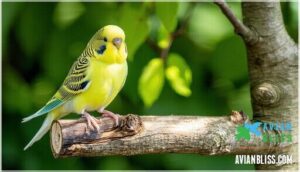
Natural perches aren’t just a nice touch for your bird’s cage—they’re essential for their health. The right perch design can prevent foot problems and support natural behaviors that keep your bird comfortable and active.
Here’s what makes natural perches so valuable for small birds.
Improved Foot Health and Muscle Strength
Natural wood perches act like a gym for your bird’s feet. Your bird’s toes constantly adjust their grip on irregular surfaces, and that simple act prevents a host of problems. Here’s what happens when you swap uniform dowels for natural branches:
- Foot disease prevention – Birds on natural perches show up to 75% fewer foot disorders, including bumblefoot, which affects 34% of birds on uniform surfaces. Pressure spreads more evenly across foot pads, cutting sores and calluses by 45%.
- Muscle use optimization and skeletal strength support – Variable perch diameter builds leg and foot muscles by up to 23%, while bones develop 14% higher mineral density. This enhanced strength reduces arthritis rates by 30%.
- Gripping and flexibility with circulation enhancement – Irregular surfaces encourage 40 repositioning events per hour versus just 13 on smooth perches. This constant movement boosts circulation, reducing swelling and ulceration by 21% while keeping foot tissue healthy.
The right perch diameter matters too. Your bird’s toes should wrap three-quarters around the surface for ideal proper parrot foot health. Providing several perches makes for proper parrot foot health.
Enhanced Comfort and Natural Behaviors
When your bird perches on rough bark and uneven surfaces, something notable happens—comfort becomes instinctive rather than forced. Over 80% of small birds showed increased preening behavior on rough-barked natural wood perches.
Varied textures trigger natural foraging opportunities as birds explore crevices and bark patterns.
These DIY bird perches reduce stress by mimicking wild environments, encouraging social interaction and authentic avian foot care routines that uniform perches simply can’t replicate.
Impact on Bird Activity and Well-being
Providing varied perch types delivers measurable musculoskeletal benefits—pullets showed stronger leg muscles and improved bone density at 11 and 17 weeks. Perch use patterns reveal birds engage in wing-flapping and jumping, promoting stress reduction through lower corticosterone levels.
These natural perches support foot health without increasing injury risk, while encouraging social behavior and synchrony.
Proper bird perch selection improves overall avian health and authentic pet bird care.
How to Make DIY Natural Bird Perches
Making your own natural perches isn’t complicated if you follow the right steps. You’ll need to source safe branches, gather a few basic tools, and secure them properly in your bird’s cage.
Here’s what you need to know to create perches that support your bird’s health.
Sourcing and Selecting Branches
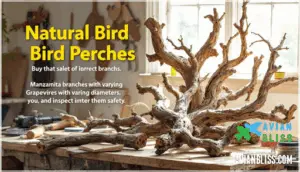
Finding the right branches isn’t about wandering into just any backyard—you need to know where to look and what to grab. Choose branches with natural diameter variations to promote foot health and check Branch Inspection carefully for mold or pesticide exposure.
Wild Harvesting from untreated areas gives you Manzanita Wood or Grapevine Perch options. Focus on Wood Density and Branch Size appropriate for your bird’s grip while sourcing Perch Materials through Ethical Sourcing practices before Woodworking begins.
Tools and Materials Needed
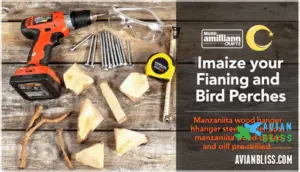
Before you start drilling and bolting, gather a few basic tools and materials to turn those raw branches into sturdy perches. You’ll need a drill with bits sized for your fasteners, stainless steel hanger bolts, measuring tools for proper diameter sizing, and safety gear like gloves and eye protection.
Skip wood finishes since birds chew perches. Manzanita wood and other perch materials only need predrilling to prevent splitting during woodworking for bird perches DIY projects.
Step-by-Step Construction Guide
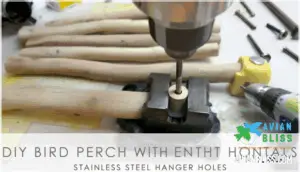
Once your tools are ready, the first step is to measure each branch and mark where you’ll drill your pilot holes for the hanger bolts. Drill slowly through the center of each marked spot to prevent splitting during branch preparation.
Thread your stainless steel hanger bolts into the predrilled holes and tighten them firmly for perch stability. Your wooden perches are now ready for cage integration, creating safe DIY projects that support healthy bird perches.
Tips for Secure Installation in Cages
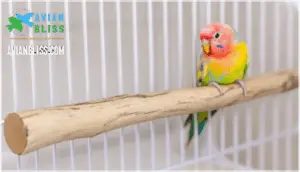
After your perch is built, proper cage attachment makes the difference between a wobbly branch your bird avoids and a stable spot they’ll use all day long. Tighten the hanger bolts through your cage bars and confirm cage compatibility before you place the bird inside.
Test stability by pressing down firmly on each mounted perch. Check that mounting hardware doesn’t create sharp edges that could damage your bird’s feet or feathers.
Maintaining and Cleaning Bird Perches
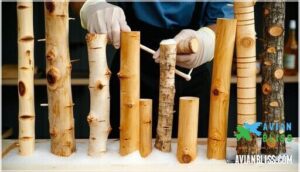
Keeping your bird’s perches clean isn’t just about tidiness—it’s about preventing foot infections and disease. Regular maintenance protects your bird’s health and extends the life of natural wood perches.
Here’s what you need to know about cleaning schedules, safe methods, and avoiding common problems.
How Often to Clean Natural Perches
You’ll need to clean your bird’s natural perches whenever you notice droppings or debris building up on the surface. Check your perches daily to catch problems early and prevent foot issues from developing.
Here are key cleaning frequency signs to watch for:
- Visible droppings coating the perch surface
- Food residue or sticky spots where your pet bird perches
- Discoloration or foul odors from bird cage accessories
- Rough texture from dried waste affecting grip
- Your bird avoiding certain perch areas in the cage
Regular bird cage maintenance keeps your small bird healthy and comfortable. Clean heavily soiled perches immediately rather than waiting for scheduled cage maintenance.
Safe Cleaning Methods and Products
When cleaning time arrives, start with plain hot water and a stiff brush to scrub away most buildup.
For deeper bird cage maintenance, use safe disinfectants like diluted white vinegar or mild dish soap on your bird perches. Scrub all surfaces thoroughly to remove bacteria that can cause foot problems.
Rinsing thoroughly is critical—residue from cleaning products can harm your pet bird. Let bird cage accessories air dry completely before returning them to prevent reinfection.
Preventing Disease and Foot Problems
Regular perch hygiene protects your bird from dangerous bacterial and fungal diseases. Dirty perches increase salmonellosis risk by up to 15% mortality in backyard birds and raise foot problems like bumblefoot and pressure sores. Your material choice matters too—dense woods like Java resist moisture better than soft woods, cutting infection rates by 30%.
Stick to these avian foot care practices:
- Clean perches weekly to keep bacteria below safe thresholds and support avian health and wellness
- Check foot size fit regularly—toes should wrap three-quarters around for proper foot health
- Inspect feet for lesions or swelling during disease monitoring
- Replace worn perches immediately to prevent pressure sores and maintain bird health
Strong cleaning regimens reduce foot disorders dramatically.
Enhancing Bird Environments With Natural Perches
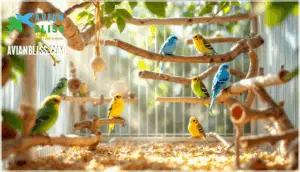
Natural perches transform your bird’s cage from a simple enclosure into an enriching habitat. The way you arrange and vary these perches can greatly impact your bird’s physical health and mental stimulation.
Let’s look at how strategic perch placement and selection can create an environment that encourages natural behaviors and bolsters your bird’s overall well-being.
Varying Perch Sizes and Shapes
Your bird’s feet work harder than you might think, and offering them different-sized perches is like giving them a full gym for their toes. Natural diameter variation in wood perches helps prevent arthritis and strengthens foot muscles while your bird grips different surfaces throughout the day.
Birds show more comfort behaviors when perch sizes match their foot size, wrapping three-quarters around each branch for secure avian foot care.
Placement for Climbing and Play
Positioning perches at different heights and angles transforms your bird’s cage into a playground that encourages natural climbing and active movement. Place bird perches horizontally for resting and diagonally for climbing encouragement. Leave safe distances between perches and bird toys to prevent injury.
Strategic placement in cage space lets your bird navigate like it would in the wild, strengthening muscles and keeping boredom away.
Using Perches to Encourage Natural Behaviors
Offering your bird perches that mirror the texture and variety found in nature unlocks preening routines, foot exercises, and the kind of confident movement you’d see among wild branches. Rough bark encourages natural preening behavior, while irregular surfaces promote exercise and strengthen foot muscles.
Wood perches with varied diameters create foraging opportunities and support social interaction when placed near favorite spots. This setup mimics wild conditions and can even trigger nesting simulation behaviors that keep your bird engaged and content.
Conservation Benefits in Wild and Captive Settings
Natural perches act like bridges between fragments of habitat restoration projects and the birds that scatter seeds across degraded landscapes. Seed dispersal increases dramatically when you position wood perches in restoration zones, with seedling abundance reaching up to 2.7 per square meter compared to just 1.7 without them.
This biodiversity impact extends to captive bird care, where natural perches reduce stress through varied textures that mirror wild bird habitat and encourage authentic bird behavior year-round.
Frequently Asked Questions (FAQs)
What diameter should perches be for small birds?
Finding the right fit isn’t just for shoes—your bird’s grip depends on it. Small birds need perches where their toes wrap about three-quarters around the diameter. This grip strength prevents slippage and promotes foot health and perch comfort across species variation.
Can I use branches from my backyard?
Backyard branches can work if you identify the species first and confirm it’s safe. Avoid pesticide-treated trees and prepare wood properly by cleaning and checking for toxic materials before use.
How many perches does a small bird need?
Most pet birds thrive with three to five bird perches positioned at various heights.
Cage size, bird species, activity level, and perch variety all influence how many wood perches you’ll need for best comfort and movement.
Do natural perches need to be sanded smooth?
Most bird perches don’t need sanding smooth. Bark texture and natural feel actually improve grip strength and foot health. Rough wood perches promote natural behaviors.
Only sand splintered areas for bird safety while preserving the wood’s character.
Whats the ideal perch placement height in cages?
Place perches at different heights to create climbing space and encourage natural movement. Highest perches should allow wing clearance from the cage top.
Position lower perches away from food bowls for dropping avoidance, protecting pet bird health and meeting species needs while preventing injury.
Conclusion
Healthy feet start with the right foundation. Natural perches for small birds give your companion what dowels never can: varied grip surfaces that strengthen muscles and prevent painful conditions.
You’ve learned which woods protect and which harm, how to craft safe branches, and why texture matters more than flawlessness.
Your bird’s feet will thank you with every confident step they take. The investment of time pays dividends in mobility, comfort, and years of active life. Start with one branch today.
- https://about.conservationevidence.com/2025/07/23/can-we-use-perches-to-attract-birds-and-increase-seed-dispersal-in-degraded-areas/
- https://pmc.ncbi.nlm.nih.gov/articles/PMC12166613/
- https://www.youtube.com/watch?v=iGRHDo6W1R0
- https://birdtricksstore.com/blogs/birdtricks-blog/why-your-parrot-needs-many-types-of-perches
- https://utia.tennessee.edu/publications/wp-content/uploads/sites/269/2024/07/W1257.pdf