This site is supported by our readers. We may earn a commission, at no cost to you, if you purchase through links.

A zinc-coated chain or a cedar perch can land a bird in a vet’s office faster than most owners expect.
That’s not a scare tactic—it’s what happens when material safety gets overlooked in favor of bright colors and low prices.
Bird toys sit at the intersection of instinct and environment, and what they’re made of shapes everything from beak health to hormonal balance.
The debate around natural vs synthetic materials in bird toys isn’t just about preference.
It’s about understanding what your bird chews, inhales, and spends hours gripping every single day.
The differences matter more than the label on the packaging.
Table Of Contents
- Key Takeaways
- Key Differences Between Natural and Synthetic Materials
- Safety Considerations for Bird Toy Materials
- Impact on Bird Health and Behavior
- Environmental and Sustainability Factors
- Choosing The Right Material for Your Bird
- Frequently Asked Questions (FAQs)
- What is the best material for bird toys?
- What kind of plastic is safe for birds?
- What metals are toxic to birds?
- Are plastic toys safe for parrots?
- Can birds develop allergies to natural toy materials?
- How do bird toys affect cage air quality?
- Which materials work best for outdoor aviaries?
- Do toy materials vary by bird age or size?
- How are bird toys tested for safety standards?
- Conclusion
Key Takeaways
- Zinc hardware and certain natural woods like cedar can poison your bird fast — always verify every material before it enters the cage, not just the toy itself.
- Natural materials like untreated wood and cotton rope biodegrade safely and support instinctive behaviors, while synthetic options like acrylic last longer but risk microplastic exposure and hormonal disruption from chemicals like phthalates.
- Your bird’s species and size should drive every material choice — a macaw needs dense hardwood and stainless steel, while a budgie does fine with soft balsa and natural fiber.
- No universal safety standard exists for bird toys, so the responsibility falls entirely on you to inspect hardware weekly, replace frayed or cracked parts immediately, and clean toys with vinegar rather than bleach.
Key Differences Between Natural and Synthetic Materials
bird toy materials are not created equal — and the gap between natural and synthetic options is wider than most people realize.
Natural materials like wood and rope are far safer for curious beaks, as bird toy safety and mental stimulation experts explain when breaking down what actually keeps parrots healthy and engaged.
Understanding where these materials come from and how they’re made helps you spot the difference between a safe toy and a risky one.
Here’s a closer look at what sets them apart.
Definitions and Common Examples
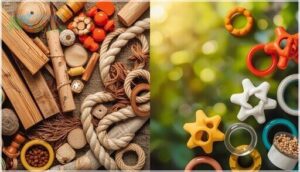
Bird toy materials fall into two camps: natural and synthetic.
Natural options include untreated wood types like pine, birch, and balsa, plus natural fiber ropes such as cotton, hemp, and sisal, and vegetable-tanned leather strips.
Synthetic materials cover bird-safe plastics like acrylic and polypropylene.
Both appear in common toy shapes — rings, perches, and puzzle feeders — but not all are nontoxic toys. Knowing the difference matters.
For safe choices, consider untreated wood options such as pine, birch, and balsa.
Sources and Manufacturing Processes

Where toy comes from matters as much as what it’s made of. Untreated woods like pine and balsa go through kiln drying — a heat process that kills bacteria without chemicals. Wood sourcing, rope production, and palm leaf harvesting all follow controlled steps:
- Hemp and sisal ropes twist from plant fibers grown pesticide‑free
- Palm leaves dry in open sun for three to five days
- Vegetable tanning cures leather safely over weeks, never hours
Synthetic molding uses high heat to shape nontoxic, food‑grade plastics into smooth, bird‑safe forms.
Safe bird toys can also include stainless steel chains.
Typical Uses in Bird Toys
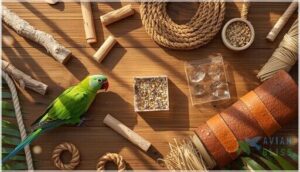
material earns its place based on what your bird actually does.
Untreated woods like pine and balsa become chewing branches that wear down beaks naturally.
Natural fibers twist into rope perches for climbing and grip training.
Hemp and sisal are especially popular choices, as covered in this guide to safe bird toys for small birds.
Acrylic foraging blocks hide treats for problem‑solving.
Leather swings invite preening and play.
Shreddable leaves satisfy the urge to destroy — without toxic materials sneaking into the mix.
Safety Considerations for Bird Toy Materials
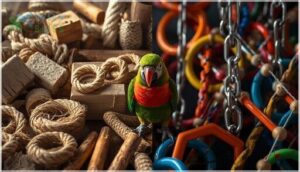
Picking the right toy material isn’t just about what looks fun — it’s about what’s actually safe to put in your bird’s beak.
Some materials that seem harmless can hide real dangers, from toxic coatings to choking risks.
Here’s what you need to know before you buy or build.
Toxicity Risks of Natural Vs Synthetic Materials
Both "natural" and "synthetic" can hide real dangers — and knowing which is which could save your bird’s life.
Regarding Bird Toy Materials Safety, toxicity shows up in five key ways:
- Pesticide Residues – Outdoor branches absorb agricultural spray drift; even rinsing won’t fully remove them.
- Heavy Metal Leaching – Galvanized hardware releases zinc; blood levels above 2 ppm can be fatal within days.
- Chemical Dye Toxicity – Synthetic dyes release carcinogens when gnawed, irritating delicate mucous membranes.
- Plastic Additive Hormones – Phthalates in soft PVC mimic estrogen, disrupting your bird’s reproductive system.
- Natural Wood Oil Irritants – Cedar emits phenols; cherry releases cyanide compounds during breakdown.
For genuine Bird Safety, choose NonToxic, ToxicFree materials — and verify every component before it enters the cage.
Choking, Inhalation, and Impaction Hazards
Even the safest‑looking toy can become a hazard once your bird gets to work on it.
| Hazard | Real Risk |
|---|---|
| Wood Splinters | Sharp fragments lodge in the throat |
| Fiber Fraying | Inhalation Fibers block airways fast |
| Plastic Shatter | Shards puncture internal organs |
| Small Part Size | Pieces under 31.7mm cause choking |
Inspect bird toys daily. Nonsolid plastics and frayed ropes aren’t bird‑safe — replace them immediately.
Safe Hardware and Fastening Methods
Hardware is where many "safe" toys quietly fail.
Skip zinc hardware entirely — it flakes when chewed and can poison your bird fast.
Stick with stainless steel chains featuring a welded link design, which eliminates pinch points and sharp edges.
Use nickel plated quick links to secure toys to cage bars.
Natural fiber ropes beat synthetic every time.
Run a regular hardware inspection weekly — worn parts get replaced, not ignored.
Impact on Bird Health and Behavior
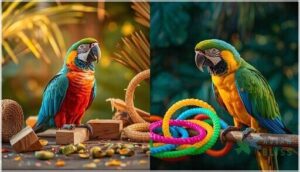
What your bird plays with directly shapes how it feels, moves, and thinks every single day.
The materials in their toys can either support healthy habits or quietly work against them.
Here’s how natural and synthetic options stack up regarding your bird’s health and behavior.
Mental Stimulation and Foraging Benefits
Wild parrots spend up to 80 percent of their waking hours foraging — your captive bird still carries that drive. Natural bird toy materials like vine, seagrass, and sola offer texture variety that sparks genuine cognitive enrichment.
Captive parrots still carry the forager’s drive, and natural textures are what truly feed their minds
Puzzle complexity matters too: synthetic materials in acrylic feeders pair well with natural inserts to extend foraging duration. Together, they support real problem solving and healthy cognitive development.
Chewing, Exercise, and Beak Health
Chewing isn’t just entertainment — it’s bird’s gym session. Soft balsa and palm deliver shreddable texture benefits that satisfy natural instincts, while harder manzanita drives jaw muscle activation and beak maintenance through controlled resistance.
Hardness matching matters: budgies need softer woods; macaws need density. Hardness matching. Rotating toy hardness weekly prevents uneven wear. Rotating toy hardness. This also triggers foot exercise as birds twist and brace, supporting beak overgrowth prevention through daily, active play.
Allergen and Chemical Exposure Risks
Some dangers in bird toys aren’t visible — they’re airborne or dissolved in saliva. Here’s what to watch for:
- Form Metal Ingestion — zinc from galvanized clips builds up in organs silently
- Formaldehyde Off‑gassing — plywood releases toxic substances that concentrate inside cages
- Plasticizer Leaching — soft synthetic materials bleed chemicals when chewed
- Dust‑Induced Respiratory Irritation — shredded natural fibers trigger sensitive airways
Mold Spore Exposure from damp rope or wood adds another layer. Prioritize birdsafe materials and rotate toys regularly.
Environmental and Sustainability Factors

The toys you choose for your bird don’t just affect your bird — they affect the planet too.
Material choices ripple outward, from how a tree was harvested to how long a plastic perch sits in a landfill.
Here’s what you need to know about where natural and synthetic options stand on sustainability.
Eco-Friendliness of Natural Materials
Natural materials aren’t just safer for your bird — they’re better for the planet too. Untreated wood, bamboo, hemp rope, and coconut shells all come from renewable sourcing, meaning they grow back.
They’re biodegradable, so shredded pieces can go straight into compost. Many eco-friendly bird toys also carry a low carbon footprint and sustainably sourced certification, making sustainable pet care genuinely simple.
Durability and Waste of Synthetic Options
Synthetic materials do last longer — thick acrylic longevity is real, with 3/16‑inch pieces resisting cracks for months. But here’s the tradeoff: worn synthetic materials don’t disappear. Microplastic release from chewed toys, recycling challenges with mixed‑component designs, and end‑of‑life disposal gaps all add up. Sustainable pet care means weighing those wear patterns honestly.
- Cracked acrylic goes straight to landfill — no second chances
- Microplastics shed silently into your home and beyond
- EcoFriendly bird toys skip this problem entirely
Choosing The Right Material for Your Bird
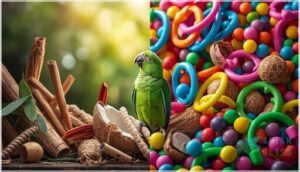
Picking the right toy material isn’t one-size-fits-all — your bird’s species, habits, and daily routine all play a role.
A few practical factors can help you narrow things down fast. Here’s what to think about before you buy or build.
Species-Specific Needs and Preferences
Every bird species brings its own set of quirks to playtime.
Macaw chewing strength demands thick hardwood blocks and heavy stainless steel — thin plastic simply won’t survive.
African grey puzzle preference leans toward multi-step natural wood-and-metal challenges.
Cockatiel texture choice often favors soft balsa and palm.
Conure rope preference and budgie foraging style both shine with natural fibers, making bird safety and avian enrichment genuinely species-driven.
Maintenance and Cleaning Requirements
Cleaning routines shift depending on what your bird’s toys are made of. Natural materials need a vinegar soak — equal parts white vinegar and water for 10–15 minutes — then sunlight drying for UV disinfection.
Rope brushing dislodges hidden grime before mold sets in.
Synthetic alternatives make plastic disinfection faster, but metal rust prevention matters: towel‑dry hardware immediately. Skip bleach entirely — it leaves toxic substances behind on porous surfaces.
Cost, Availability, and DIY Considerations
Budget shapes every choice here. Natural materials like pine and sisal run $5–$25 per toy — cheaper upfront but replaced every few weeks. Synthetic alternatives cost more initially, yet last months.
For DIY bird toys, bulk sourcing options online cut costs sharply: untreated wood blocks, cotton rope, and coconut shells make solid DIY bird toy ideas.
Watch for seasonal price fluctuations on specialty natural materials from boutique retailers.
Frequently Asked Questions (FAQs)
What is the best material for bird toys?
There’s no single best answer — it depends on your bird.
Safe materials balance chew durability, texture variety, and toxicity prevention. Untreated wood, natural fibers, and stainless steel consistently top the list.
What kind of plastic is safe for birds?
Food-grade acrylic and HDPE are your safest bets.
Look for BPA-free labeling, avoid soft PVC and PTFE-coated items entirely, and make sure any hard plastic piece is thick enough that your bird can’t snap off sharp shards.
What metals are toxic to birds?
Lead, zinc, copper, mercury, and cadmium are all toxic to birds. Even small exposures can trigger seizures, organ damage, or death.
Stick strictly to stainless steel hardware for safe bird toys.
Are plastic toys safe for parrots?
Plastic toys can be safe for parrots, but only when chosen carefully.
Prioritize birdsafe plastics with proper acrylic thickness, avoid BPA exposure and chemical leaching, use stainless metal hardware, and follow consistent cleaning protocols.
Can birds develop allergies to natural toy materials?
Yes, birds can. Wood dust irritation, fiber dermatitis, and respiratory reactions are real risks.
Species sensitivities vary — monitor daily for sneezing, feather plucking, or lethargy. Allergy monitoring keeps your bird safe.
How do bird toys affect cage air quality?
Bird toys stir up dust, shed fibers, and trap moisture — all of which quietly affect cage air quality. Dust emission, mold growth, VOC release, and poor ventilation impact avian health more than most owners realize.
Which materials work best for outdoor aviaries?
Outdoor aviaries demand tougher materials.
Durable wood like pine or manzanita, weather-resistant rope, UV-stabilized acrylic, and stainless-steel hardware hold up best.
plant-based foraging materials — coconut fiber, palm leaf — and you’re set.
Do toy materials vary by bird age or size?
Absolutely — age and size matter more than most people think.
Small birds need soft fibers and balsa wood, while large parrots require hardwood durability.
Juvenile wood choice and age-appropriate hardness protect developing beaks throughout every growth stage.
How are bird toys tested for safety standards?
Nobody officially requires bird toy safety standards — yet labs still test for heavy-metal migration, small-part clearance, mechanical drop tests, flammability certification, and toxicity screening to keep your bird safe.
Conclusion
Once upon a time, birds only had forest floors and tree bark to explore—now they’ve aisles of options, and that abundance demands discernment.
The debate over natural vs synthetic materials in bird toys doesn’t have a single winner. It has a right answer for your bird, your budget, and your commitment to safety.
Know your materials, read beyond the label, and let your bird’s health—not the packaging—make the final call.