This site is supported by our readers. We may earn a commission, at no cost to you, if you purchase through links.
Your bird spends most of its life standing on perches. If those perches are all the same smooth dowel, your bird’s feet press against the same spots all day. This constant pressure creates sores and can lead to painful infections.
Natural wood bird cage perches solve this problem with irregular shapes and varied diameters that shift pressure points with every grip. The rough texture also helps trim nails naturally and keeps leg muscles strong.
But not all wood is safe. Some species contain toxins that harm birds. Others splinter easily or harbor bacteria. This guide reviews the best natural wood perches and shows you how to choose materials that keep your bird healthy and comfortable.
Table Of Contents
Key Takeaways
- Smooth dowel perches create constant pressure on the same foot spots, leading to painful sores and infections, while natural wood perches with irregular shapes shift pressure points with every grip to prevent these problems.
- Not all wood is safe for birds—some species contain toxins, others splinter easily or harbor bacteria, so you must choose materials like manzanita, birch, and alder while avoiding treated woods, driftwood, and toxic species like cherry or cedar.
- Varying perch diameters is essential because a single uniform size forces repetitive gripping that causes joint pain and arthritis, while mixed sizes exercise different muscles and support healthy blood flow.
- Natural wood perches require proper installation with stainless steel hardware to prevent zinc toxicity, regular cleaning with bird-safe disinfectants, and replacement every 6 months or when you spot cracks, splinters, or deep grooves.
Best Natural Wood Bird Cage Perches Reviewed
Finding the right natural wood perch for your bird can feel overwhelming with so many options available.
The products below have been selected based on safety, variety, and practical design for different bird species. Each option offers something different, so you can choose what works best for your bird’s needs.
1. Natural Grapevine Bird Perch Variety Pack
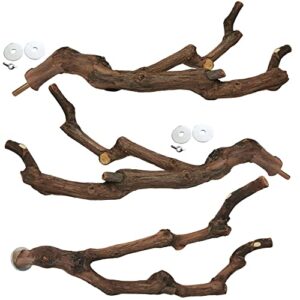
The kathson grapevine perch set gives your bird three natural branches that twist and turn like tree limbs. Each perch measures about 9 inches long with diameters ranging from 0.7 to 1.1 inches. The irregular shapes provide varied grip points that reduce foot pressure and encourage healthy exercise.
Your bird can also satisfy its natural need to chew the bark safely. The metal wing nut and built-in bolt make installation straightforward.
Clean these perches monthly with hot soapy water to prevent bacteria buildup and keep your bird healthy.
Best For: Small to medium bird owners looking for natural perches that promote foot health and satisfy chewing instincts.
- Natural grapevine provides varying diameters along each branch, helping prevent foot cramps and pressure sores
- Easy installation with included metal wing nut and bolt system
- Durable hardwood construction outlasts standard dowel perches and withstands moderate chewing
- Size variations from natural materials mean shapes may not match expectations
- May not support larger parrot species safely
- Requires monthly cleaning with hot soapy water to prevent bacterial buildup
2. Natural Wood Bird Perches Accessories Set
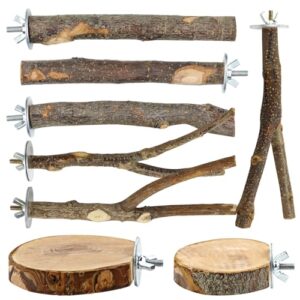
The CZWESTC 8-piece natural wood bird perches accessories set offers varied enrichment elements for small to medium birds. Set composition includes three to five irregular branches, one to two flat platforms, and swing accessories. Branch diameters range from 0.6 to 1.2 inches, suitable for parakeets and cockatiels.
Hardware materials feature stainless steel wing nuts and washers to prevent zinc toxicity. Market pricing ranges from $14.99 to $25.99.
User guidance recommends positioning perches at different cage heights. The multi-textured surfaces promote natural foot exercise and reduce pressure sores in your bird cage.
Best For: Bird owners with small to medium parrots like parakeets, cockatiels, or conures who want natural perching options that support foot health and provide climbing enrichment.
- Natural untreated wood with varied textures helps exercise your bird’s feet and prevents pressure sores from sitting in one position all day.
- Tool-free installation with stainless steel hardware means you can set it up quickly and safely without worrying about toxic metals.
- Eight-piece variety gives you multiple perches, platforms, and accessories so your bird has different spots to explore and rest.
- Size can be disappointing—some customers find the perches smaller than expected for their cage setup.
- Sturdiness is hit or miss, with reports that certain pieces feel flimsy or don’t hold up well for active birds.
- Wood quality varies, and a few buyers mention it feels more like plastic or isn’t as natural-looking as advertised.
3. Natural Wood Bird Perches Variety Set
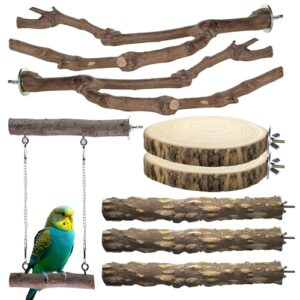
Natural wood bird perches variety sets generally include four to eight branches per package. Set composition offers multiple perch types: straight branches, forked pieces, and at least one platform. Wood species like beech, hazel, and birch are common choices. Mounting hardware features stainless steel wing nuts and washers for secure installation.
Functional benefits include irregular diameters that exercise your bird’s feet and reduce pressure sores. Cage compatibility varies, with lengths from 7 to 12 inches fitting most standard enclosures. These natural wood bird perches provide textured surfaces that promote healthy grip patterns in parrots and parakeets.
Best For: Bird owners looking to create a more natural cage environment with varied perch textures and diameters that promote healthy foot exercise for small to medium parrots like cockatiels, budgies, and conures.
- Multiple branch types and irregular diameters help prevent foot problems by exercising different toe positions
- Natural wood with bark intact creates a more enriching, tree-like habitat compared to uniform dowels
- Easy installation with included stainless steel hardware that’s safe and compatible with most standard cages
- Actual perch sizes can be smaller than expected, with some customers reporting dimensions that don’t match descriptions
- Quality varies between sets—some branches arrive with jagged ends or rough surfaces that may need sanding
- Natural variation means you can’t predict exact shapes or thicknesses, which may not fit all cage layouts
4. Natural Wood Bird Perch Variety Pack
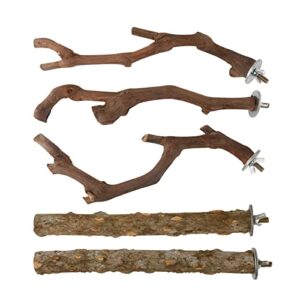
A five-piece variety pack delivers three grapevine perches plus two stands in brown tones. Pack composition gives your bird multiple resting spots with diameter variation from thin to moderate widths.
Wood treatment stays chemical-free and unpainted for safe chewing. Hardware safety comes from metal washers and screws that resist corrosion.
Health claims include anti-slip surfaces that support stable footing. These natural wood perches function as bird cage enrichment and decor while offering practical bird cage accessories your parakeet or cockatiel can grip comfortably.
Best For: Bird owners seeking a multi-perch setup with natural wood textures and varied diameters to promote foot health and cage enrichment for small to medium-sized birds like parakeets, cockatiels, and conures.
- Chemical-free grape wood with no paint or coatings makes it safe for birds to chew and perch on without exposure to toxins.
- Five-piece set with different shapes and sizes encourages natural movement and helps prevent pressure sores by varying grip positions.
- Corrosion-resistant metal hardware and anti-slip design provide secure, durable installation that holds up to daily use and bird activity.
- Actual perch sizes can be smaller than expected since natural wood dimensions vary, leading to some disappointment with the overall scale.
- Price point may feel high for a basic wood perch set, especially when compared to synthetic or single-perch alternatives.
- Natural white growth marks on branches require occasional cleaning and may not appeal to those wanting a uniform aesthetic.
5. Natural Wood Bird Perch Set
An eight-piece kit combines wooden stands, fork toys, hanging platforms, and hammock swings in brown tones to cover multiple activities. Set composition targets parakeets, budgies, and finches with diameter fit ranging from thin to moderate widths.
Biomechanical benefits include varied grip points that reduce pressure sores and encourage foot stretching. Hardware safety features durable, non-toxic metal attachments that resist corrosion.
Cleaning longevity remains straightforward with simple water rinses. These natural wood perches deliver bird cage enrichment while supporting bird health through textured surfaces that promote natural nail wear and stable footing for bird safety.
Best For: Bird owners with small species like parakeets, budgies, finches, or canaries who want an affordable multi-piece set that provides climbing variety and natural perching surfaces.
- Eight different pieces give your bird plenty of climbing, resting, and playing options in one set
- Natural wood construction is safe and non-toxic, plus the varied textures help keep nails naturally trimmed
- Easy to clean with just water and the hardwood holds up well over time
- Too small for larger birds like full-sized macaws or medium parrots—really only works for smaller species
- Some buyers report the perches arrive dirty or that the clamps slip off cage bars too easily
- Limited variety in perch lengths and the installation hardware could be sturdier
6. Natural Wood Bird Perches Variety Pack
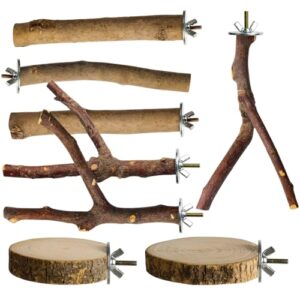
You’ll find multi-piece sets bundled with straight perches, fork branches, and platform styles to match different bird behaviors. Pack composition generally delivers four to ten wooden perches per box, with installation hardware like wing nuts and washers included for quick cage setup.
Wood sourcing pulls from manzanita, grapevine, and java branches that meet bird safety standards.
Market trends show natural wood bird perches claim over 40% of bird supplies revenue, driven by consumer preferences for textured surfaces that support foot health in bird cage environments.
Best For: Bird owners seeking affordable, natural perch variety to support foot health and reduce boredom in small to medium-sized birds like budgies, cockatiels, and conures.
- Eight-piece set offers diverse shapes and textures (branches, forks, platforms) that encourage natural climbing behaviors and help maintain nail and beak health
- Made from untreated natural wood with textured bark surfaces for secure grip, meeting the safety preferences that drive 40% of the bird perch market
- Easy installation with included hardware and budget-friendly $9.99 price point makes it accessible for most bird owners
- Thin sticks may not hold up for larger parrots, limiting use to smaller bird species
- Quality inconsistencies reported by users including crumbling wood, peeling bark, and occasional sharp edges that require inspection
- Flat round perches may be too small for comfortable sitting, and natural wood may need extra cleaning or treatment before use
7. Limio Natural Wood Bird Perch Set
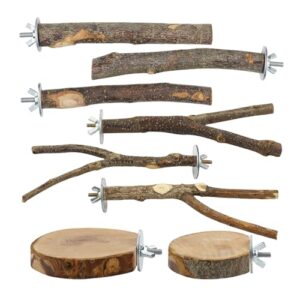
This four-piece bird perch set delivers two branch-style perches and two flat surfaces for small bird cages. Set composition uses natural wood with bark intact, giving budgies and lovebirds the irregular texture their feet need.
Hardware quality includes built-in bolts and wing nuts for secure cage mounting. Material safety meets standards with untreated wood and no toxic coatings.
Sizing suitability targets birds like cockatiels with perch diameters around one to one and a half centimeters. Maintenance needs include hand washing and periodic replacement as chewing wears softer wooden perches over time.
Best For: Owners of small parrots like budgies, lovebirds, and cockatiels who want a value pack with varied perch styles to promote healthy foot exercise and prevent pressure sores.
- Natural wood with bark creates irregular surfaces that let birds shift their grip and avoid constant pressure on the same spots
- Comes with secure bolt-and-wing-nut hardware that mounts firmly to cage bars without wobbling
- Includes both branch and platform perches so birds get different resting positions throughout the day
- Softer wood wears down faster from chewing, meaning you’ll likely replace these more often than harder wood options
- Perch diameter suits small birds only—medium and large parrots will need bigger sizes
- Hand-wash-only care takes more effort than perches you can quickly wipe down or rinse under a faucet
Types of Natural Wood Bird Perches
Natural wood perches come in several different styles. Each type has unique features that affect how you install it and how your bird uses it.
Here are the most common options you’ll find when shopping for your bird’s cage.
Manzanita Double Bolt Perches
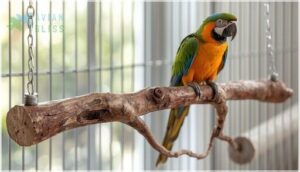
Manzanita perches stand out as the toughest natural wood option you’ll find. These double bolt models secure to both sides of your cage with stainless steel hardware. You’ll get varying perch diameters on each branch—usually 0.75 to 2 inches—which gives your bird’s feet the exercise they need. The dense wood durability means manzanita resists chewing and won’t splinter easily.
Manzanita bird perches offer a comfortable environment for birds. Proper cage placement helps promote healthy foot circulation.
Dragonwood Branch Perches
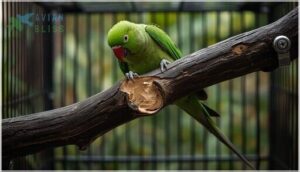
Dragonwood perches bring natural grip through dark rough bark your bird can chew safely. The wood hardness resists splintering while offering varied diameters that exercise feet naturally. You’ll need stainless steel hardware for installation safety. Bird comfort improves with the irregular surface texture. Cleaning methods are simple—these perches handle tub washing without breaking down. Dragonwood parrot stands are also available.
- Dark bark texture provides natural grip and chewing stimulation
- Wood hardness ensures durability and resists dangerous splintering
- Varied branch diameters exercise your bird’s feet effectively
- Stainless steel hardware prevents toxic metal exposure during installation
- Simple cleaning methods keep bird cage perches hygienic safely
Java Wood Perches
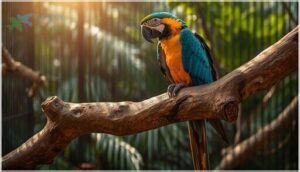
Ever wonder why Java Wood Perches stand out in bird cages? Their Java Hardness means they resist splinters and support even macaws. With twisted shapes, these bird perches challenge foot muscles—think of it as a natural gym for your bird.
Sourcing ethics matter too; Java wood comes from recycled coffee trees. See how Java compares:
| Feature | Java Wood Perch | Other Natural Wood |
|---|---|---|
| Hardness | High | Medium-Low |
| Toxicity Concerns | Very Low | Varies |
| Species Applications | All sizes | Size-limited |
Custom Cut Wooden Branch Perches
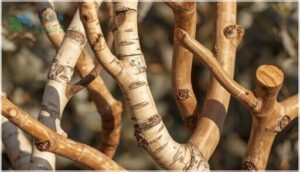
Java Wood’s durability makes it costly, but Custom Cut Wooden Branch Perches let you build safe perches from birch or untreated alder. Tailoring branch diameter to your bird’s foot size ensures comfort.
Follow these steps:
- Select safe wood species and check for chemical residues
- Cut branches 18–30 inches to match your cage width
- Drill pilot holes for stainless steel hanger bolts and washers
- Sand rough edges and bake at 200°F for 30 minutes
Natural wood selection rewards your bird with behavioral benefits.
Sandblasted Manzanita Single Bolt Perches
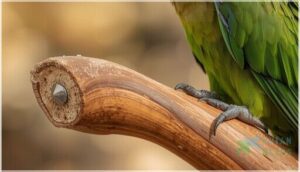
When your bird needs a single-bolt option that won’t splinter, sandblasted Manzanita perches deliver wood density that resists heavy chewing. The coarse surface texture helps trim nails while preventing pressure sores.
Hardware options include stainless steel hanger bolts for avian safety.
Market pricing starts at $3.10 for small diameters, with wholesale rates reaching $6.85 per foot for larger wooden bird perch materials.
Natural Wood Stick Perches With End Caps
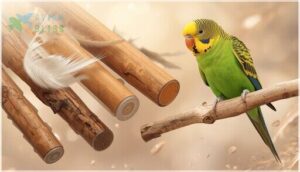
While single-bolt models work well for some cages, stick perches with slotted plastic end caps offer tool-free installation that simplifies cage setup. Trixie-Karlie manufactures these wooden bird perch materials with pre-fitted caps that protect exposed wood ends from chewing.
End cap safety depends on proper diameter considerations:
- Match cap size to your stick perch sourcing measurements
- Check for gaps that allow beak access
- Verify caps don’t restrict natural perches movement
- Use installation techniques that prevent loosening
- Address cleaning challenges by removing caps monthly
Choosing Safe and Healthy Perch Materials
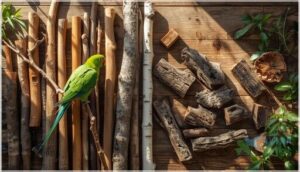
Not all wood is safe for your bird. Some species are toxic, while others may carry chemicals or contaminants that can harm your pet.
Let’s look at how to choose the right wood and avoid common dangers.
Identifying Safe Wood Species (Alder, Birch, Etc.)
You need to know which woods won’t harm your bird. Identifying safe wood species starts with cross-reference lists from veterinary sources. Maple, manzanita, birch, and alder wood bird perches appear on most safe charts when branches come from pesticide-free trees.
Birch wood safety is confirmed despite low salicylate levels in bark.
Always verify questionable wood species with an arborist consultation before cutting branches for nontoxic wood perches.
Avoiding Toxic and Treated Woods
Beyond identifying safe wood species, you must watch for toxic substances. Prunus toxicity from cherry and peach wood releases cyanide when chewed. CCA dangers lurk in pressure-treated lumber with arsenic. Phenol risks in cedar irritate airways. Tannin concerns make oak questionable. Paint hazards include lead and zinc.
Always inspect branches for chemical treatments before offering unsafe wood to your bird.
Cleaning and Preparing Natural Wood
Once you’ve sourced safe wood, strip the bark to reveal hidden pests and simplify routine cleaning. Scrub branches under running water, then soak them in a dilute bleach solution—about half a cup per gallon—for one to two hours. Rinse thoroughly until odorless.
For thermal treatment, bake at 175–200°F for 30–120 minutes. Allow complete air drying before installing your natural perches.
Dangers of Driftwood and Fertilized Wood
Unlike clean branches, driftwood and fertilized wood carry hidden dangers. Seawater driftwood absorbs salt—exposure studies show 100% mortality in birds given high-sodium water—plus petroleum residues and heavy metals from coastal pollution. Fertilized wood holds nitrogen compounds that cause internal burns and organ failure within hours.
Five critical hazards:
- Salt deposits trigger fatal osmotic imbalance
- Oil films impair thermoregulation
- Fungal biofilms harbor respiratory pathogens
- Ammonia from urea burns digestive tissue
- Pesticide residue accumulates during chewing
Always choose branches from untreated, inland trees.
Importance of Varying Perch Diameters
A single dowel forces your bird’s foot to grip the same way all day, every day. Over time, that repetitive pressure leads to sores, joint pain, and even arthritis.
In a study of 3,472 parrots, wrong perch size was a top cause of foot disease.
A study of 3,472 parrots found that incorrect perch size was a leading cause of foot disease
Varying diameters shifts pressure points, promotes musculoskeletal health, and keeps feet strong—preventive husbandry that protects your bird for life.
Installation and Maintenance Tips for Wood Perches
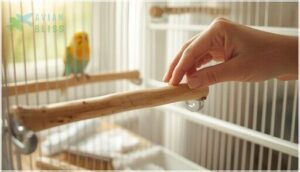
Installing your wood perch correctly keeps your bird safe and helps the perch last longer. You need the right hardware and a few simple steps to make sure everything stays secure.
Here’s what you should know about setup and ongoing care.
Selecting The Right Hardware (Hanger Bolts, Washers, Wing Nuts)
You need the right hardware pieces to keep your perch locked in place. Start by choosing hardware made from stainless steel to protect your bird from zinc toxicity. Here’s what works:
- Hanger bolts in 1/4-20 thread sizing—2 inches for thin branches, 3 inches for thicker wood.
- Fender washers with 1.5 to 2 inch outer diameter to spread pressure.
- Stainless steel wing nuts for easy hand-tightening and safe metal types.
- Two washers per perch—one inside, one outside the cage bars.
- Wing nut material must be zinc-free to prevent chewing hazards.
Tightening techniques are simple: thread the bolt through, add washers, then twist the wing nut until there’s no wobble.
Measuring and Drilling for Secure Fit
Before you drill, measure your cage bars and the branch diameter at three different points. Drill pilot holes to 70–80% of the hanger bolt’s core width to prevent wood splitting. Embed the bolt 25–30 mm deep for small birds, 40 mm for larger parrots.
Space hardware to match your cage bar spacing within 1 mm, avoiding wood cracks near knots or edges.
Preventing Zinc Toxicity With Stainless Steel Parts
Galvanized bolts and wing nuts contain zinc that birds ingest when they chew hardware. A weekly dose as low as 2 mg causes weight loss and lethargy. Use stainless steel washers, hanger bolts, and wing nuts instead—stainless steel benefits include no toxic coatings and zero flaking.
Inspect your perch hardware monthly for white rust or dull spots, signs that cheap metal is breaking down.
Smoothing Edges and Preventing Splinters
After choosing stainless steel hardware, you need smooth surfaces. Start with 80-grit sandpaper to remove rough spots, then progress to 150-grit for final smoothing. Round sharp edges with a router bit or fine-grit paper—splinters form where cuts meet bark. Run your hand along each perch before installation; tactile surface inspection catches invisible fiber separations that cause foot injuries.
- Apply food-grade mineral oil annually to seal wood and prevent moisture-induced cracking
- Replace perches immediately when you spot chewed sections or loose fibers during perch maintenance checks
- Focus edge rounding efforts on cut ends where cross-grain exposure creates the most splinter risk
Regular Cleaning and Disinfection Practices
Clean perches weekly with bird-safe disinfectant after wiping away visible feces daily. Remove all organic matter first—scrub with warm water and baking soda, then apply F10 or a similar avian-approved solution. Rinse thoroughly and air-dry completely in sunlight to prevent mold. This routine protects both bird health and your family, since 13% of owners in one survey tested positive for pathogens spread through contaminated cage surfaces.
| Cleaning Step | Method |
|---|---|
| Daily maintenance | Wipe visible feces from perches |
| Weekly disinfection | Scrub with bird-safe solution |
| Mechanical cleaning | Remove debris before disinfecting |
| Drying methods | Sun-dry completely after rinsing |
Health Benefits of Natural Wood Perches for Birds
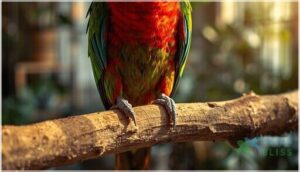
Natural wood perches do more than look good in your bird’s cage. They help keep your bird’s feet healthy and strong.
Here’s what the right perch can do for your feathered friend.
Promoting Foot Health and Preventing Pressure Sores
Natural wood bird perches work like a custom shoe for your bird’s feet. Varying perch diameter and surface texture help pressure redistribution across the foot, lowering bumblefoot risk and supporting avian health.
Here’s how they protect bird health and safety:
- Mixed diameters shift weight – Different sizes move contact points around, reducing pressure sores.
- Textured bark spreads load – Uneven surfaces increase contact area, preventing focal stress.
- Proper sizing matches your bird – Right fit ensures even weight distribution and foot health.
Encouraging Natural Climbing and Nail Maintenance
Offering textured surfaces and varied perch diameters lets your bird file nails naturally during daily climbing routes. Natural wood selection with bark creates gentle abrasion, reducing trim frequency by weeks.
Well-planned enclosure design with grooming perches at multiple heights boosts activity levels and bird enrichment, turning routine movement into effective nail maintenance. This avian safety approach encourages healthy nail wear through natural behavior and smart wood selection.
Reducing Risk of Footpad Dermatitis
Switching from smooth dowels to natural wood perches with diameter variation dramatically cuts footpad dermatitis risk. Varied perch surfaces shift contact points, preventing constant pressure that triggers lesions. Early detection matters—watch for redness or swelling. Strong hygiene practices keep bacteria at bay.
Bird cage perch varieties with textured bark reduce uniform pressure by 30% in studies. Natural grooming perches support avian health while delivering bird cage comfort through smart lesion prevention design.
Supporting Blood Flow and Leg Strength
Climbing and gripping natural branches exercises your bird’s legs in ways dowels never will. Multi-tier perch systems strengthen muscles and bones from repetitive jumping. Pullets with perch access showed greater muscle mass and bone density at 11 weeks. Java wood’s irregular surface keeps blood moving to feet and toes.
Key circulation and strength benefits:
- Muscle Mass – Perch timing matters; continuous access builds the strongest tibiae by 40 weeks
- Bone Density – Elevated perches increase vertical movement, loading joints and stimulating formation markers
- Cardiovascular Support – Regular climbing lowers heart rate and improves oxygen delivery to limbs
- Foot Problems – Varied diameters prevent focal pressure that compromises local circulation
- Wood Selection – Grippy textures like Java promote micro-movements that maintain joint mobility
Bird cage perch varieties with natural contours support avian safety through active stance changes. Safe trees offer the geometry your bird’s legs need for long-term health.
Sizing Perches for Different Bird Species
Your bird’s foot should wrap two-thirds around the perch size—not fully closed, not flat.
Finch perch size runs 3/8 to 7/8 inch; parrotlet perch size 1/2 to 1 inch.
Conure perch size spans 3/4 to 1 1/4 inch, macaw perch size 2 to 2.5 inches.
Juvenile perch size starts smaller and scales up.
Install multiple diameters in every bird cage so your pet bird habitat exercises feet naturally.
Frequently Asked Questions (FAQs)
How often should natural wood perches be replaced?
You should replace natural wood bird perches every 6 months with regular use, or sooner if you spot cracks, splinters, or deep grooves.
Cleaning frequency and your bird’s chewing habits affect replacement timing.
Can you reuse perches from wild-caught branches?
You can reuse wild branches after thorough disinfection methods like washing, baking, and sun-drying, but residual risks remain—complete sterilization is impossible.
Regular ongoing maintenance and careful wood selection from safe trees are essential for avian safety.
What are signs a perch is too slippery?
Sure, that acrylic branch looks modern—until your bird starts skating like it’s on ice. Watch for toe slipping, awkward stance shifts, white-knuckle grips, redness on foot pads, or your bird simply avoiding that perch altogether.
Do natural perches harbor more bacteria than plastic?
Wood porosity allows bacteria to hide in cracks and absorb moisture. Plastic perches show better cleaning efficacy in studies.
Proper disinfection practices reduce biofilm risk for both materials, protecting avian health and infection prevention in your bird cage.
Should perches be positioned horizontally or at angles?
You might expect steep angles to add challenge and enrichment, but research shows horizontal bird perches reduce landing impact forces on the keel bone and prevent fecal contamination of food in your bird cage setup.
Conclusion
A parrot named Rico developed bumblefoot after years on smooth dowels. His owner switched to natural wood bird cage perches with varied textures and diameters. Within weeks, the sores healed. His feet grew stronger. The rough bark trimmed his nails naturally.
Rico’s case shows what research confirms: natural wood isn’t just comfortable—it’s essential. Your bird’s feet weren’t designed for uniform surfaces. Give them the grip, texture, and variety they need to stay healthy.
- https://coffeewooddogchew.com/the-role-of-natural-perches-in-bird-foot-health-why-java-wood-is-ideal/
- https://pmc.ncbi.nlm.nih.gov/articles/PMC4374857/
- https://avianenrichment.com/index.php/learn/physical-needs/environment/perch-sizing?view=category&id=43
- https://birdsupplies.com/pages/parrot-foot-health
- https://lafeber.com/pet-birds/questions/wood-for-perches/