This site is supported by our readers. We may earn a commission, at no cost to you, if you purchase through links.
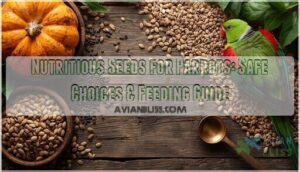
Your parrot’s seed dish isn’t just a snack bowl—it’s a pharmacy of minerals, healthy fats, and concentrated energy that can support everything from vibrant feathers to strong bones. But here’s the catch: not all seeds deliver equal nutrition, and some popular varieties can tip the scale toward obesity or nutrient gaps if you don’t know what you’re doing.
Seeds like pumpkin, chia, and flax pack impressive health benefits when used correctly, while others—like those deceptively appealing sunflower seeds—need strict portion control. Understanding which seeds truly nourish your bird and how to serve them safely transforms seed feeding from guesswork into a strategic part of complete avian care.
Table Of Contents
Key Takeaways
- Seeds like pumpkin, chia, flax, hemp, sesame, and coriander provide concentrated minerals, omega-3 fatty acids, and fiber that support feather health, digestion, and immune function when fed in appropriate portions.
- High-fat seeds such as sunflower and safflower must be limited to roughly one teaspoon daily for medium parrots to prevent obesity and liver disease, while toxic seeds from apples and stone fruits contain cyanide and should never be offered.
- Sprouting seeds increases nutrient availability and digestibility, but all seeds require proper rinsing, drying, and storage in airtight containers to prevent mold contamination and maintain freshness.
- Seeds should comprise only 10-15% of your parrot’s total diet, with the remaining nutrition coming from fresh vegetables, fortified pellets, and legumes to prevent deficiencies and support long-term health.
Why Seeds Matter in Parrot Nutrition
Seeds play a bigger role in your parrot’s health than you might think. Many bird owners have heard conflicting advice about whether seeds are helpful or harmful.
Let’s clear up the confusion and look at how seeds actually affect your parrot’s nutrition. Seeds are fine in moderation, but parrots actually need a more balanced diet—especially during molting, when the right bird food supports feather regrowth and overall health.
Role of Seeds in a Balanced Diet
Seeds bring concentrated energy and minerals to your parrot’s diet, but they can’t stand alone. When you pair seeds with fresh vegetables and fortified pellets, you create balanced diets that support feather quality and metabolic health.
Think of seed nutrition as one piece of parrot wellness—essential for dietary variety, yet never the whole picture. Proper nutrient balance requires diverse choices beyond seed selection for parrots.
Ensuring the accuracy of scientific information is vital, and tools like methodological audits can help verify the validity of research findings.
Common Myths About Parrot Seed Diets
You’ll hear plenty of parrot diet myths as you search for healthy seed options. Some owners believe seed nutrition facts support all-in diets, while others fear bird seed addiction in every flock. The truth about balanced feeding tips sits between these extremes—seeds aren’t complete nutrition, yet they won’t automatically harm your bird either. Many vets recommend pairing seeds with top-quality bird food pellets to cover the essential fatty acids and nutrients seeds often lack.
- Seeds alone don’t provide complete avian nutrition and diet requirements
- Not every parrot develops obesity from seed-based diets
- Different species need customized seed selection for parrots
- Commercial mixes aren’t inherently balanced for parrot health and wellness
- Fresh produce remains necessary despite regular seed offerings
Impact of Seeds on Parrot Health
When you add the right seeds to your parrot’s meals, you’ll notice improved feather health and beak strength from balanced seed nutrition. Too many high-fat varieties can lead to parrot obesity and digestive issues, while nutritious seeds in proper amounts support avian nutrition without triggering seed addiction. Keeping your parrot healthy also means watching for illnesses like polyomavirus, which you can help prevent with proper care and hygiene.
The right seeds improve your parrot’s feathers and beak, but too many high-fat varieties cause obesity and digestive problems
Your bird’s overall parrot health depends on thoughtful choices within a complete parrot diet and nutrition plan.
Top Nutritious Seeds for Parrots
Not all seeds offer the same nutritional value for your parrot. Some provide essential minerals and healthy fats, while others support digestion and feather quality.
Here are six nutritious seed options that can boost your parrot’s diet when offered in appropriate amounts.
Pumpkin Seeds – Minerals and Antioxidants
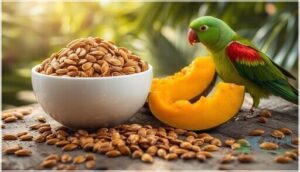
Your parrot’s body works hard during flight and daily activity, which is why mineral benefits matter so much. Pumpkin seeds deliver essential nutrients that support avian health:
- Magnesium aids muscle function and energy metabolism
- Potassium helps regulate fluid balance
- Zinc strengthens immune response
- Iron aids oxygen transport
- Antioxidants reduce cellular damage
You can serve them dried or lightly baked for maximum nutrient intake and digestion. Choosing organic, pesticide-free seeds ensures your parrot avoids harmful chemicals while getting the best nutritional value.
Chia Seeds – Omega-3s and Fiber
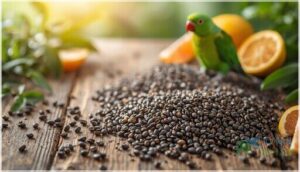
Your bird’s heart and digestive system benefit from chia seed benefits, which deliver plant-based omega-3 sources that support cardiovascular function. These tiny powerhouses pack dietary fiber content to aid parrot digestion while providing calcium, magnesium, and phosphorus.
You can sprinkle them whole over meals or grind them into powder for easier consumption. Seed sprouting enhances nutrient availability, making chia seeds a smart addition to your avian nutrition and health strategy when stored properly.
Flax Seeds – Feather and Digestive Health
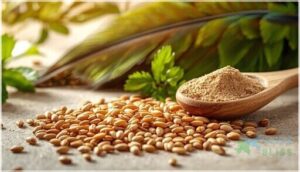
Golden flax seeds deliver alpha-linolenic acid (ALA), an omega-3 fatty acid that aids feather growth and nutrient absorption in your parrot’s body. Lignans offer anti-inflammatory effects while dietary fiber promotes digestive health through improved gut motility.
- Ground flax maximizes digestive enzyme activity and nutrient absorption
- Whole seeds pass through undigested, reducing flax seed benefits
- Store in refrigerator to prevent omega-rich foods from oxidizing
- Feed 1-2 times weekly as part of balanced avian nutrition
Sesame Seeds – Calcium and Iron
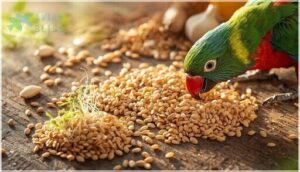
Small tan sesame seeds supply calcium and iron—two minerals your parrot needs for strong bones and healthy blood. Raw sesame delivers more nutrients than roasted varieties, though both work in moderation.
Sprouting sesame seeds boosts mineral availability and promotes balanced parrot nutrition.
Store in a cool, dry place to maintain seed quality and prevent rancidity.
Hemp Seeds – Protein and Balanced Nutrients
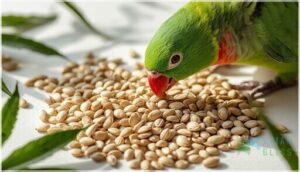
Hemp seeds deliver a balanced profile of protein and essential fatty acids that support feather quality and overall parrot nutrition. You’ll find these small seeds contain all nine essential amino acids your bird can’t produce on its own.
They offer a premium protein source without common seed allergies. Hemp seed benefits include improved nutrient absorption and prevention of nutritional deficiencies in avian nutrition.
Feed hulled varieties for easier digestion.
Coriander Seeds – Digestive Support
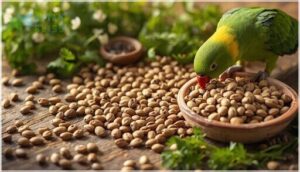
Coriander seeds act as gentle digestive aids that promote gut wellness in your parrot. These aromatic seeds contain compounds that support nutrient absorption and reduce gastrointestinal discomfort.
Coriander benefits include:
- Enhanced digestive enzyme activity for better food breakdown
- Anti-inflammatory properties that soothe intestinal tissue
- Prevention of nutritional deficiencies through improved mineral uptake
Offer coriander seeds whole or try seed sprouting to boost their digestive health value before feeding.
Safe Vs. Unsafe Seeds for Parrots

Not all seeds are created equal regarding your parrot’s safety. Some seeds offer nutritional value when fed sparingly, while others contain compounds that can seriously harm your bird.
Understanding which seeds to limit and which to avoid completely protects your parrot from preventable health risks.
Seeds to Feed in Moderation (Sunflower, Safflower)
Sunflower seeds and safflower seeds are excellent sources of vitamin E and healthy fats, but they contain 40-50% fat by weight. To prevent obesity and hepatic lipidosis in medium-sized parrots, limit portions to a teaspoon daily. Pair these seeds with pellets and fresh vegetables to create a balanced seed diet that supports feather quality without excess calories.
| Seed Type | Key Nutrients | Daily Limit (Medium Parrot) |
|---|---|---|
| Sunflower | Vitamin E, magnesium, selenium | ~1 teaspoon |
| Safflower | Oleic acid, protein | ~1 teaspoon |
| Combined seeds + produce | Balanced fats, vitamins, fiber | Varies by species |
| High-fat seeds alone | Excess calories, low calcium | Avoid as sole diet |
| Recommended approach | Seed moderation tips with pellets | 10% of total intake |
Sunflower seeds offer benefits such as improved skin health when fat content is carefully managed. Safflower seeds provide a similar nutritional profile with different fatty-acid ratios, making them a viable alternative. Always consult your avian veterinarian for tailored parrot nutrition and diet adjustments based on activity level and life stage.
Toxic Seeds to Avoid (Apple, Stone Fruit Pits)
Apple seeds and stone fruit pits—cherry, peach, plum, apricot—pose serious avian hazards due to amygdalin, which releases cyanide when chewed. Even small amounts can cause cyanide poisoning in your parrot. Remove all pits and cores before offering fruit. These toxic seed effects include respiratory distress and organ failure. Safe bird seed options never include fruit pits, so strict seed selection and preparation protects your bird from seed toxicity and fruit pit risks.
| Toxic Seed Source | Primary Danger | Prevention Method |
|---|---|---|
| Apple seeds | Cyanide release | Remove entire core |
| Stone fruit pits | Choking, toxicity | Pit fruit completely |
| Cracked kernels | High cyanogenic content | Discard all fragments |
Risks of Wild and Dyed Seed Mixes
Wild bird diet mixes and artificially colored seeds create avian health risks you can’t see. Seed contamination from mold growth and toxic seed additives—like artificial colorants—expose your parrot to chemical exposure and mycotoxins that damage liver function. Without proper seed selection and storage, toxic seed prevention becomes impossible. Choose safe bird seed options from trusted suppliers to protect against seed contamination and wild bird diet hazards.
| Risk Factor | Health Impact | Prevention Strategy |
|---|---|---|
| Mold and mycotoxins | Liver damage, immune decline | Buy from certified suppliers |
| Artificial colorants | Toxicity, allergic reactions | Avoid dyed seed products |
| Chemical residues | Chronic poisoning, GI upset | Choose organic sources |
| Invasive plant seeds | Digestive irritation | Use species-specific mixes |
| Unknown origins | Contaminant accumulation | Verify seed source quality |
Preparing and Serving Seeds Safely
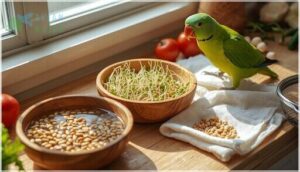
How you prepare seeds matters just as much as which seeds you choose. The right preparation methods release nutrients and reduce health risks for your parrot.
Let’s look at the key steps to serving seeds safely.
Sprouted Vs. Dry Seeds
You’ll find sprouted seeds offer higher seed moisture content and enhanced seed enzyme activation compared to dry options. Sprouting techniques boost nutrient retention methods and vitamin C availability in seeds like chia seeds and pumpkin seeds.
Dry seed storage keeps sunflower seeds shelf-stable longer, preventing mold.
Your seed selection depends on your parrot’s energy needs—sprouted for digestibility, dry for concentrated nutrition.
Proper Seed Preparation Techniques
Whether you choose sprouted or dry, proper seed preparation protects your parrot’s health. Rinse seeds under running water to remove dust and contaminants, then dry them completely to prevent mold growth.
Soaking protocols for chia and flax seeds—4 to 8 hours in cool water—improve digestibility.
Store prepared seeds in airtight containers, rotating stock regularly to maintain freshness and nutritional value.
Portion Size and Frequency Guidelines
Getting seed quantity right makes the difference between a thriving parrot and an overweight one. Aim for 10-15% of your bird’s total daily intake, adjusting based on activity level and species size.
- Large parrots need 1-2 tablespoons daily maximum
- Small to medium birds require only 1-2 teaspoons per serving
- Limit seed feeding to 3-4 days weekly for ideal dietary balance
- Never exceed 20% of total food intake on any single day
- Rotate high-nutrient seeds like hemp and flax with vegetables for complete parrot nutrition
Creating a Balanced Diet Beyond Seeds
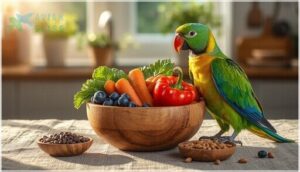
Seeds alone won’t give your parrot everything it needs to thrive. A healthy diet includes fresh produce, quality pellets, and protein-rich legumes that work together to prevent deficiencies.
Let’s look at each component and how to build a nutrition plan customized to your bird’s needs.
Importance of Fruits and Vegetables
Fresh produce benefits your parrot’s health in ways seeds alone can’t match. Fresh fruits and vegetables deliver essential vitamins and minerals that support metabolism and immune function.
Leafy greens like kale provide calcium and vitamin A precursors for vibrant feather color.
This vitamin supplement through fruit variety and nutrient balance creates dietary balance for parrots, supporting proper parrot nutrition while maintaining healthy weight and digestion.
Role of Pellets and Legumes
Pellets deliver consistent vitamin and mineral intake your parrot needs daily. These seed alternatives provide balanced nutrition through fortified formulations designed for species-specific requirements.
Legumes like lentils add plant-based protein and fiber that complement pellet nutrition. Together, they create nutrient supplements that reduce reliance on calorie-dense sunflower seeds and pumpkin seeds.
This approach bolsters parrot nutrition through balanced diets without nutritional gaps.
Consulting an Avian Veterinarian for Diet Planning
Your avian veterinarian provides nutrition planning customized to your parrot’s species, age, and health status. Veterinary guidance includes dietary supplements recommendations and portion targets based on body condition assessments.
Schedule nutrition counseling every 6–12 months to monitor health outcomes through weight trends and bloodwork. This avian care partnership ensures your parrot’s diet bolsters ideal bird nutrition while preventing deficiencies before they compromise your companion’s well-being.
Frequently Asked Questions (FAQs)
Can parrots eat seed shells safely?
Most parrots can handle seed shells in small amounts, but large quantities cause digestive upset or impaction. You’ll want to choose hulled seeds when possible and watch for signs of distress or abnormal droppings.
How to store seeds for maximum freshness?
Keeping your seeds viable means minimizing moisture ingress with airtight containers and cool storage between 4–10°C. Monitor humidity control below 50%, rotate stock using shelf life management, and inspect regularly for freshness.
Do different parrot species need different seeds?
Yes, different species have varying dietary needs based on their natural history. Large macaws prefer harder seeds, while granivorous species rely more on seeds than frugivorous types, requiring species-specific seed selection.
What signs indicate seed-related nutritional deficiencies?
Watch for dull feathers, lethargy, abnormal molting patterns, dropping changes, and poor beak health. These signs often reveal nutrient deficiencies from seed addiction, potentially leading to malnutrition or fatty liver disease if dietary needs aren’t met.
Can seeds help with specific parrot behaviors?
Imagine your bird’s attentive eyes brightening at foraging time. Seed enrichment encourages behavioral stimulation through natural foraging strategies, reducing stress while supporting social interaction.
Proper seed selection and nutrient balance within a balanced diet promotes calmer, healthier parrots overall.
Conclusion
Your parrot’s next meal could either fuel decades of vibrant health or quietly undermine it—the difference lies in choosing nutritious seeds for parrots with intention. Pumpkin, chia, and flax offer targeted benefits when portioned correctly, while sunflower seeds and toxic pits demand vigilance.
Seeds aren’t complete nutrition alone, but paired with vegetables, pellets, and veterinary guidance, they become part of a diet that sustains your bird’s energy, feathers, and longevity for years ahead.
- https://sciencing.com/do-birds-react-sesame-seeds-6660749.html
- https://www.ncbi.nlm.nih.gov/pmc/articles/PMC2835426/
- https://x.com/godofprompt/status/1990526288063324577
- https://www.linkedin.com/posts/bohdanlukianets_tasks-study-research-activity-7373377539521667072-UTEi
- https://www.sciencedirect.com/science/article/pii/S0749208123000268