This site is supported by our readers. We may earn a commission, at no cost to you, if you purchase through links.
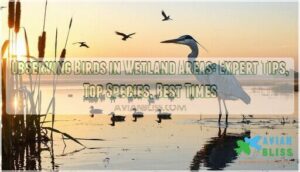 Observing birds in wetland areas offers you incredible opportunities to spot diverse species in their natural habitat.
You’ll find herons stalking through shallow waters, colorful warblers darting among cattails, and waterfowl gliding across open water.
Early morning hours typically provide the best viewing experiences when birds are most active.
Bring binoculars, dress in earth tones, and move slowly to avoid startling wildlife.
Wetlands serve as critical stopover points during migration, making them birding goldmines where you might spot species you won’t see elsewhere.
The key is patience – these ecosystems reward those who take time to observe quietly and respectfully.
Table Of Contents
- Key Takeaways
- Wetland Bird Habitats
- Birdwatching Tips
- Wetland Bird Species
- Conservation Efforts
- Bird Observation Strategies
- Frequently Asked Questions (FAQs)
- Why do birds like wetlands?
- What is it called when you observe birds?
- How to observe a bird?
- What do birds eat in wetlands?
- What weather conditions affect wetland bird visibility?
- How do water levels impact bird behavior?
- Which wetland zones attract different bird species?
- What sounds help identify hidden wetland birds?
- How do seasonal food sources influence sightings?
- Conclusion
Key Takeaways
- You’ll achieve best results by visiting wetlands during early morning hours and migration seasons when birds are most active and diverse species pass through these critical stopover points.
- You’ll need quality 8×42 binoculars, waterproof boots, and earth-toned clothing to observe birds effectively while maintaining respectful distances from wildlife.
- You’ll discover different wetland zones attract specific species – shallow marshes host herons and blackbirds, while deeper waters support diving ducks and loons.
- You’ll contribute to conservation efforts by practicing ethical birdwatching, staying on trails, documenting sightings through citizen science apps, and supporting habitat restoration programs.
Wetland Bird Habitats
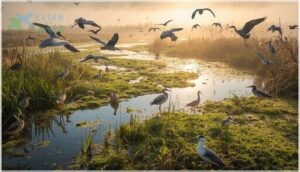
You’ll discover that wetlands aren’t just soggy patches of land—they’re bustling airports for birds, complete with different "terminals" like marshes, swamps, bogs, and fens.
Each type offers unique amenities that attract specific feathered travelers, from shallow-water snack bars in marshes to the acidic spa treatments of sphagnum bogs, providing a variety of services that make wetlands bustling airports for birds.
Types of Wetlands
You’ll discover five distinct wetland ecosystems, each offering unique birdwatching opportunities based on their specific characteristics and water chemistry.
- Freshwater marshes – Non-woody plants like cattails and reeds create ideal nesting spots for red-winged blackbirds and herons.
- Swamp forests – Woody vegetation including cypress trees support wood storks and prothonotary warblers in flooded conditions.
- Bog acidity – Acidic waters with sphagnum moss host specialized species like Lincoln’s sparrows in nutrient-poor environments.
- Fen alkalinity – Groundwater-fed wetlands with less acidic conditions support diverse birds including sedge warblers and marsh harriers.
- Peat accumulation – Both bogs and fens store carbon while providing critical stopover sites for migratory species.
Marshes and Swamps
You’ll find marshes teeming with cattails and reeds where shallow water meets emergent marsh vegetation, creating perfect bird nesting sites.
Swamps offer deeper waters surrounded by cypress trees, supporting diverse swamp ecology.
These varying water levels create habitat interdependence that attracts different wetland birds.
When wetland birdwatching in marshes and swamps, you’re witnessing nature’s apartments – each floor hosts different tenants perfectly suited for bird observation.
Marshes are critical habitats that support avian species.
Bogs and Fens
Acidic bogs and alkaline fens represent wetland extremes that’ll test your bird identification skills.
These peat-rich environments support unique flora like sphagnum moss, creating specialized habitats for wetland birds.
You’ll find species with bog adaptations – think secretive Snipe and declining Curlews – that thrive in these nutrient-poor conditions.
Wetland birdwatching here requires patience, as bird observation reveals fewer but highly specialized species perfectly suited to harsh bog environments.
Several species, including the ground-nesting Meadow Pipit, are well-adapted to these harsh bog environments.
Wetland Ecosystems
Wetlands function as nature’s powerhouses, delivering critical ecosystem services that support both wildlife and human communities.
These dynamic habitats orchestrate the hydrological cycle, regulate nutrient cycling, and showcase remarkable plant adaptations that create complex food webs essential for wetland birdwatching success.
- Water filtration systems – Wetlands purify millions of gallons daily, creating pristine bird habitats
- Carbon storage giants – These ecosystems lock away climate-warming gases for future generations
- Flood protection barriers – Natural sponges that shield communities from devastating storm surges
- Biodiversity hotspots – Home to 40% of all species while covering just 6% of Earth’s surface
Understanding these interconnected systems enhances your appreciation for avian ecology and supports meaningful bird conservation efforts during your wetland adventures.
Birdwatching Tips
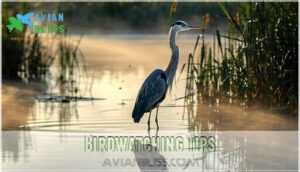
You’ll discover that successful wetland birdwatching combines the right timing with proper preparation and a keen eye for detail.
Whether you’re a weekend warrior with binoculars or someone who can spot a Great Blue Heron from a mile away, these practical tips will transform your marsh visits from hit-or-miss adventures into rewarding wildlife encounters, making wildlife encounters a reality.
Best Time for Birdwatching
You’ll strike gold during spring and fall migrations when over 70% of species pass through wetlands.
Dawn and dusk offer peak activity – that’s when 80% of bird vocalizations happen.
Clear, calm mornings work best for spotting feathered friends, while light rain brings birds to exposed perches.
Time your visits around weather fronts for bonus migration waves, for example, mild temperatures between 60-70°F can keep birds active and visible, making it an ideal time for bird watching with clear conditions.
Essential Gear and Equipment
You’ll need quality binoculars with at least 8x magnification for clear bird identification.
Choose 8×42 models offering excellent binocular quality and wide field of view.
Considering 8×42 binocular options can greatly enhance your viewing experience.
A spotting scope provides detailed observation of distant waterfowl.
Pack waterproof boots, layered clothing for weather protection, and insect repellent for clothing comfort.
Don’t forget your field guide—whether printed or app-based—for quick species identification during exciting wetland adventures.
Bird Identification Techniques
Getting good at wetland bird identification feels like solving fun puzzles.
You’ll crack the code faster by focusing on these key features:
- Bill shape and leg length – These reveal feeding habits instantly
- Size comparisons – Use familiar birds as reference points
- Plumage variations – Note seasonal changes and male/female differences
- Vocalizations – Each species has signature calls and songs
Watch feeding habits and nesting behaviors too.
Your bird identification guide becomes invaluable when you spot migration patterns during peak seasons.
Respecting The Environment
Everyone deserves clean air and thriving wetlands, so practice ethical birding by staying on trails to minimize disturbance to sensitive habitats.
Keep your distance from nests – those fluffy chicks need space to grow safely.
Reduce your impact by avoiding loud noises that might startle birds during feeding or mating, and remember, we’re guests in their home, so tread lightly and leave only footprints behind for future generations to enjoy, ensuring a safe space for future generations.
Wetland Bird Species
Wetland environments host an incredible diversity of bird species, each perfectly adapted to life around water.
You’ll discover everything from graceful herons wading through shallow marshes to colorful ducks diving for aquatic plants, with each species offering unique behaviors and characteristics that make every wetland visit an exciting adventure.
Waterfowl and Shorebirds
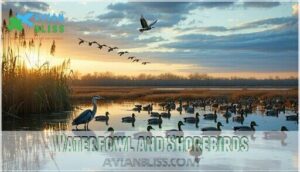
When you’re scanning wetland habitats, ducks steal the show with their vibrant duck plumage—mallard males sport emerald heads while females wear understated brown.
Watch for patient heron hunting behavior as these elegant waders stand motionless before lightning-fast strikes.
Goose migration brings V-formations overhead, while diverse shorebird diets create feeding frenzies along muddy edges where sandpipers probe and plovers pick.
Understanding wetland bird conservation is essential for protecting these habitats.
Songbirds and Raptors
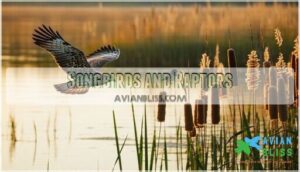
While waterfowl dominate wetland scenes, songbirds and raptors add musical charm and predatory drama.
Red-winged Blackbirds showcase striking plumage variation, males flashing scarlet shoulder patches during territorial displays.
Marsh Wrens build multiple dummy nests, confusing predators through clever nesting ecology.
Northern Harriers hunt low over reeds, their raptor hunting style distinct from perching hawks.
These wetland habitats support diverse songbird diets and varying conservation status across species, including the unique behaviors of species like the Northern Harriers.
Unique Bird Behaviors
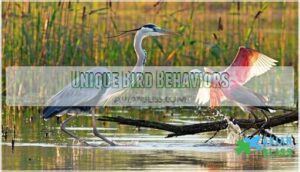
The wetland stage showcases nature’s most fascinating performers, each with signature moves that’ll make you laugh and marvel.
Watch pelicans execute dramatic plunge dives like Olympic high-divers, while spoonbills sweep their bills side-to-side like they’re painting underwater masterpieces.
Feeding strategies vary wildly—herons practice patience like zen masters, anhingas spread wings to dry like laundry on a line, and bitterns freeze motionless until danger passes.
These unique bird behavior patterns reveal incredible adaptations that make wetland bird observation absolutely enchanting for any bird behavior studies enthusiast, with signature moves that highlight their distinct characteristics.
Bird Migration Patterns
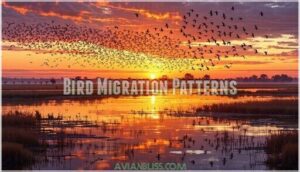
You’ll witness nature’s most incredible journeys when tracking bird migration patterns through wetlands.
Wetlands serve as nature’s GPS for millions of migrating birds navigating epic continental journeys.
These flyway routes serve as superhighways for millions of birds covering up to 20,000 km annually.
Migration triggers include daylight changes and food availability, while stopover ecology reveals how wetland birds refuel during epic travels.
Climate impacts are shifting timing by seven days per decade, affecting shorebirds’ traditional navigation methods and habitat use, which can be considered a significant climate impact on their migration patterns.
Conservation Efforts
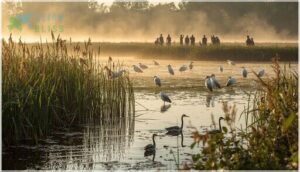
You’ll discover that enjoying wetland birds comes with important responsibilities—protecting these amazing habitats and the species that call them home.
Conservation efforts aren’t just for scientists; they’re something every birdwatcher can support through simple actions and smart choices in the field, which can also involve conservation.
Threats to Wetland Birds
Unfortunately, wetland birds face mounting pressures that threaten their survival.
Habitat Loss tops the list—over 35% of wetlands have vanished since 1970, mostly converted for farming and development.
Pollution Impacts wreak havoc through pesticide runoff and plastic debris ingestion.
Climate Variability disrupts breeding cycles and dries essential nesting sites.
Invasive Species outcompete native plants and increase predation.
Hunting Pressure remains unsustainable for many species, making bird conservation efforts more urgent than ever.
These efforts are bolstered by programs like the NAWCA grant programs, which support wetland restoration and help mitigate the effects of Habitat Loss, Pollution Impacts, Climate Variability, and Invasive Species.
Habitat Restoration and Protection
Restoring damaged wetlands brings back the birds you love watching.
These projects tackle habitat loss head-on, creating new homes for countless species.
Effective wetland restoration and protection strategies include:
- Wetland restoration through re-flooding dried areas and replanting native vegetation
- Pollution control measures that improve water quality for healthier bird populations
- Invasive species removal to protect native plant communities
- Climate change adaptation planning for long-term habitat sustainability
Federal programs invest $3.4 billion annually in these efforts, while restored sites show 40% higher breeding success rates for herons and egrets.
Community Involvement and Education
You’ll find wetland birdwatching transforms from solitary pursuit to community celebration through citizen science projects and educational programs.
Join local partnerships that create accessible trails and promote ethical birding practices.
Your observations contribute valuable data while bird education programs welcome newcomers into the birdwatching community, which helps to strengthen bird community involvement and expand conservation impact beyond individual experiences.
Sustainable Birdwatching Practices
Three simple steps make wetland birdwatching truly sustainable.
First, minimize disturbance by maintaining respectful distances and avoiding nesting sites during breeding season.
Second, practice ethical photography with telephoto lenses rather than approaching closely.
Bird Observation Strategies
Successful wetland birdwatching requires mastering observation techniques that turn fleeting glimpses into memorable encounters.
You’ll discover that combining the right timing with proper equipment use dramatically improves your chances of spotting and identifying the diverse species that call these rich ecosystems home, which is crucial for memorable encounters.
Patience and Timing
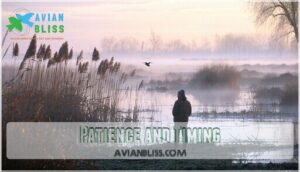
Bird watching in wetlands demands patience, as the best moments often unfold slowly.
Dawn and dusk offer prime seasons for activity when daily rhythms align with feeding patterns.
Successful wetland bird watching requires quiet observation and anticipating behaviors.
Allow at least two hours for birding duration, giving birds time to reveal themselves naturally.
Using Binoculars and Spotting Scopes
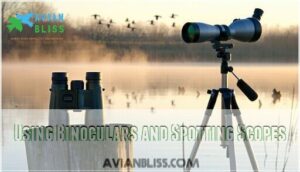
You’ll want quality birdwatching equipment that brings distant birds up close.
Magnification Matters: 8×42 binoculars offer perfect balance—enough zoom without shakiness. Field of View stays wide, letting you track moving birds easily.
Spotting Scopes excel for distant waterfowl identification. Lens Coatings reduce glare in bright wetland conditions.
Budget Options like basic 8×32 models work great for beginners exploring bird optics. Many enthusiasts find enhanced viewing capabilities invaluable.
Documenting Bird Sightings
Accurate records transform casual outings into meaningful contributions to wetland bird watching science.
Your observations matter when properly documented through various methods.
- Sighting Documentation Apps like eBird or Merlin help you log species, locations, and behaviors instantly
- Detailed Field Notes capture weather conditions, exact times, and unique bird behaviors you witness
- Photographic Evidence provides visual proof for difficult identifications and Rare Bird Reporting
- Sharing Sightings Online connects you with the birdwatching identification community for verification
- Wetland bird watching databases use your data for conservation research and population tracking
Many resources are available, including a helpful identification guide.
Enhancing Birdwatching Experiences
Transform your wetland bird watching into unforgettable adventures by sharpening your Sensory Awareness—listen for subtle calls while scanning for movement.
Embrace Digital Birding apps for real-time identification and join Citizen Science projects to contribute meaningful data.
Master Advanced Identification techniques by studying subtle plumage differences.
Practice Ethical Photography by maintaining respectful distances.
These birdwatching tips elevate ordinary outings into extraordinary discoveries at prime wetland bird watching locations.
Frequently Asked Questions (FAQs)
Why do birds like wetlands?
Wetlands offer birds abundant food like fish, insects, and aquatic plants. You’ll find them providing perfect nesting sites with protective vegetation and shallow waters for easy feeding access.
What is it called when you observe birds?
Birdwatching, birding, or bird observation – you’re stepping into a world where patience meets discovery, where quiet moments reveal nature’s secrets.
You’ll grab binoculars, field guides, and comfortable boots to identify species by their unique behaviors and calls.
How to observe a bird?
Grab your binoculars and find a comfortable spot with good visibility.
Move slowly, stay quiet, and watch for movement in trees or water.
Note the bird’s size, colors, bill shape, and behavior patterns to help with identification, focusing on complete concepts.
What do birds eat in wetlands?
Over 72% of wetland birds are omnivores, so you’ll see them munching on fish, insects, seeds, and aquatic plants. Ducks dabble for vegetation while herons strike at fish with lightning precision.
What weather conditions affect wetland bird visibility?
Foggy mornings and overcast skies reduce visibility, making birds harder to spot. Clear, calm weather with minimal wind provides ideal viewing conditions for identifying species and observing behaviors effectively.
How do water levels impact bird behavior?
Water levels act like a dinner bell for wetland birds.
You’ll see diving ducks in deeper areas, while shorebirds work the muddy shallows when levels drop, completely reshuffling feeding patterns.
Which wetland zones attract different bird species?
Deep waters attract diving ducks and loons, while shallow edges draw waders like herons and egrets.
You’ll spot different species based on water depth—marsh edges host songbirds, open water supports waterfowl.
What sounds help identify hidden wetland birds?
Like whispers through morning mist, sounds reveal wetland’s secret residents.
Listen for Red-winged Blackbird‘s "conk-la-ree," Marsh Wren’s bubbly chatter, bittern’s deep "pump-er-lunk," and rails’ distinctive clicking calls to identify hidden species.
How do seasonal food sources influence sightings?
You’ll spot different species as their food sources shift throughout the year.
Spring insects draw warblers, summer seeds attract blackbirds, fall berries lure thrushes, and winter aquatic invertebrates bring diving ducks to open water areas.
Conclusion
Stepping from bustling city streets into a serene wetland, you’ll discover observing birds in wetland areas transforms your understanding of avian diversity.
These remarkable ecosystems offer unmatched opportunities to witness everything from graceful herons to vibrant warblers in their element.
Your patience and respect for these delicate habitats will be rewarded with unforgettable encounters and deeper appreciation for wetland conservation efforts that protect these essential bird sanctuaries.
- https://www.ncwildlife.gov/bogs-and-fens-section-431pdf/open
- https://www.adirondackalmanack.com/2019/09/wet-wild-and-wonderful-bogs-and-fens.html
- https://www.fensforthefuture.org.uk/the-fens/wildlife
- https://www.ipcc.ie/a-to-z-peatlands/peatland-species/bogland-birds/
- https://data.jncc.gov.uk/data/ca6054c4-f12b-4107-8745-f9f3140d2150/ncc-birds-bogs-forestry.pdf