This site is supported by our readers. We may earn a commission, at no cost to you, if you purchase through links.
 A bird’s lifespan can stretch 12 to 20 percent longer when its diet hits the mark—a difference that often separates decades of vibrant health from years lost to preventable illness. Yet even experienced bird owners struggle to translate general feeding guidelines into the precise nutritional balance their specific species needs.
The gap between adequate nutrition and truly prime levels determines whether your bird merely survives or genuinely thrives, affecting everything from feather quality and immune strength to reproductive success and cognitive function.
Achieving peak avian nutrition levels requires understanding how water, protein, fats, carbohydrates, vitamins, and minerals interact across different life stages, species variations, and physiological demands. Getting these ratios right isn’t just about extending life—it’s about ensuring every year your bird lives is marked by energy, resilience, and well-being rather than the slow decline that follows chronic deficiency.
Table Of Contents
Key Takeaways
- Optimal nutrition can extend a bird’s lifespan by 12–20% while reducing premature mortality by up to 30%, making dietary precision the most controllable factor in avian health and longevity.
- Species-specific requirements vary dramatically—growing chicks need 18–23% protein, breeding birds require elevated calcium with a 2:1 Ca:P ratio, and molting birds demand methionine-rich diets to support feather regrowth.
- Seed-based diets create dangerous deficiencies in calcium, vitamin A, and essential amino acids, contributing to metabolic bone disease and hepatic lipidosis in up to 42% of captive parrots, making pelleted formulations essential for balanced nutrition.
- Water quality and freshness are non-negotiable, as even 10% dehydration impairs thermoregulation and flight endurance, while bacterial contamination and inadequate hydration compound other nutritional deficiencies.
Importance of Optimal Avian Nutrition
Your bird’s nutrition isn’t just about filling a bowl—it’s the foundation of their entire life. Getting it right means the difference between a bird that merely survives and one that truly thrives.
Your bird’s nutrition isn’t just filling a bowl—it’s the foundation determining whether they merely survive or truly thrive
Let’s look at three critical reasons why prime nutrition matters so much for your feathered companion.
Impact on Bird Health and Longevity
When you feed your bird a balanced diet, you’re investing in more than daily energy—you’re extending its life. Birds with optimal avian nutrition can live 12–20% longer than those facing nutrient deficiencies. Dietary adequacy directly strengthens immune function, lowers oxidative stress by roughly 15%, and bolsters metabolic health.
Understanding avian nutrient requirements is essential for conservation efforts and captive management programs. A well-rounded approach to bird health and wellness reduces premature mortality by up to 30%, proving that what fills the bowl shapes longevity itself.
Role in Growth, Reproduction, and Disease Prevention
Well-balanced avian nutrition directly shapes growth rate, reproduction success, and disease resistance across all life stages. When you provide adequate protein—18–23% for growing chicks—you’ll see weight gains improve by 15–20% compared to deficient diets.
Nutrient interactions matter too: vitamin A supplementation at 8,000 IU/kg slashes parasitic oocyst counts by over 50%, while vitamin E boosts sperm viability and fertilization rates.
Generational influences extend benefits beyond a single bird—parental diet quality affects offspring for two generations, improving feed conversion and survival rates. Early development influences long-term performance in livestock.
Nutrition as a Modifiable Wellness Factor
Genetics and environment influence your bird’s health, but dietary impact remains the factor you control most directly.
Proper nutritional requirements transform avian nutrition from guesswork into targeted immune support and longevity factors.
Balanced diet choices drive environmental adaptation, behavioral enrichment, and disease resistance—making essential nutrients your most powerful tool for maintaining a healthy bird throughout its life.
Essential Nutrients for Birds
Your bird’s body runs on a specific set of nutrients that work together like a well-tuned engine. Without the right balance of water, proteins, fats, carbohydrates, vitamins, and minerals, even the healthiest-looking bird can develop serious problems over time.
Let’s break down what each of these essential nutrients does and why your feathered companion can’t thrive without them.
Water and Hydration Requirements

Water stands as the cornerstone of avian nutrition, accounting for 55–75% of a bird’s body mass. You’ll need to make certain your bird has constant access to fresh, clean water because even 10% dehydration impairs thermoregulation and flight endurance.
Consider these critical hydration factors:
- Small birds lose 4–8% of body weight daily through respiration and excretion in arid conditions
- Water quality matters—keep bacterial counts below 1,000 CFU/ml and pH between 6.5–7.8
- Daily intake rates vary dramatically: zebra finches consume 3.8–5.4 ml daily, while broiler chickens increase from 5.4 to 54 gallons per 1,000 birds over 23 days
- Species variations affect needs—desert birds rely on metabolic water for up to 35% of requirements
- Behavioral adaptations like nocturnal torpor reduce evaporative losses by 20–30% during water scarcity
High temperatures and low humidity quadruple dehydration risk, making water availability non-negotiable for your bird’s dietary requirements and overall wellness.
Protein and Essential Amino Acids
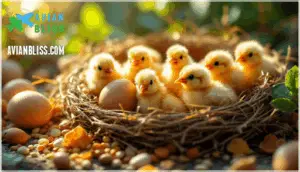
Protein and amino acids are essential building blocks for feather development, immune response, and egg production in birds. Growing chicks require 18–23% dietary protein, while poults need 26–30% for optimal growth. Birds must obtain ten essential amino acids, including lysine, methionine, and threonine, from their diet, as they cannot synthesize them internally.
Protein deficiency can slow growth and weaken disease resistance, while a proper amino acid balance has been shown to increase clutch size by 18% in some species. Poor feathering and reduced weight gain are common signs that a bird’s protein intake is inadequate.
Fats and Essential Fatty Acids
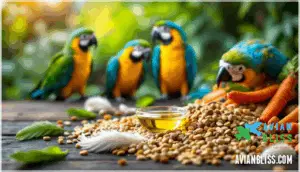
Fats serve as concentrated energy sources and enable absorption of fat-soluble vitamins in your bird’s body. Psittacine diets generally require 5–12% dietary fat levels, with at least 1% as polyunsaturated fats to meet essential fatty acids needs.
Omega-3 benefits include improved immune function and cellular membrane integrity, though conversion efficiency from plant sources remains under 10% in most species.
Species variation matters—hyacinth macaws tolerate higher fat intake due to their palm nut diet, while sedentary pet birds need reduced fat levels to prevent obesity and liver disease.
Carbohydrates and Energy Needs
Carbohydrates provide your bird’s primary energy source, composing 70–85% of feedstuffs like grains and seeds. Glucose metabolism fuels flight, thermoregulation, and daily activity—hummingbirds derive 95% of hovering energy from recently consumed sucrose.
Starch sources such as corn, wheat, and rice deliver efficient energy, while dietary fiber aids digestive health without contributing calories.
Energy regulation varies by species: nectarivorous birds need simple sugars, whereas granivorous species thrive on complex carbohydrates. Energy expenditure and carbohydrate metabolism in birds are influenced by flight demands and environmental temperature.
Vitamins and Minerals
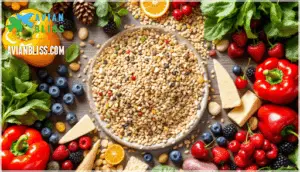
Your bird’s health depends on the role of vitamins and minerals—these micronutrients power everything from bone formation to immune defense. Vitamin A prevents tissue abnormalities; deficiency causes nasal discharge and hyperkeratosis, treatable with 33,000 U/kg IM supplementation. Calcium balance requires a 2:1 calcium-to-phosphorus ratio and adequate vitamin D3, synthesized from 11–45 minutes of daily sunlight.
B-complex vitamins drive metabolism—thiamine deficiency triggers paralysis, while riboflavin shortage causes curled-toe syndrome. Trace minerals like zinc and selenium support enzyme function, though mineral imbalances create absorption interference.
Seed-only diets lack critical vitamins and minerals for birds, necessitating supplementation with pelleted formulations or spirulina.
Species-Specific Nutritional Requirements

Not all birds eat the same way, and what works for a canary won’t necessarily keep a macaw healthy. Your bird’s nutritional needs depend on its species, age, and what’s happening in its life right now.
Let’s break down how these factors shape the diet your feathered companion requires.
Variations Among Pet and Wild Birds
You’ll notice wild birds and pet birds have vastly different nutritional requirements driven by metabolic rate and foraging behavior. Wild birds expend up to 10 times more energy daily, consuming 200–400% more food to sustain flight and thermoregulation. Meanwhile, captive parrots and finches show 30–60% lower resting metabolic rates, requiring denser diets per gram.
Diet composition shifts dramatically too—wild avian diets feature 40–70% natural seeds and 10–30% insects, while pet birds often lack sufficient vitamins A and D3, leading to deficiencies in up to 90% of clinical cases.
Life Stage and Physiological Needs
Your bird’s nutritional requirements shift dramatically across lifestages—what works for a growing chick won’t sustain a breeding hen or aging parrot. Growing chicks need 18–23% protein to fuel rapid cell division and feather formation, while breeding birds demand elevated calcium and 18–20% protein for egg production. During molting, metabolic demands spike as birds synthesize keratin-rich feathers, requiring 18% protein with methionine supplementation. Maintenance diets for adults drop to 15% protein, and aging birds benefit from antioxidants like vitamins A, C, and E to combat cellular degeneration.
- Growth phase: Chicks consume yolk-sac reserves for 1–3 days before external feeding begins
- Breeding season: Hens mobilize 20–40% of calcium directly from medullary bone reserves
- Molting period: Fat supplementation increases to 6% to support feather regrowth
- Senior years: Metabolic rates decline, requiring calorie adjustments to prevent obesity
Protein and Calcium Needs During Growth and Molt
Understanding growth protein and molt calcium requirements helps you avoid costly deficiencies. Young birds need 18–22% crude protein and 1% dietary calcium with a 2:1 Ca:P ratio for bone development.
During molt, feather formation demands 16–20% protein enriched with methionine and cystine—amino acids that compose 9% of feather structure and accelerate regrowth by 25% when properly supplemented in avian nutrition.
Evaluating and Choosing Bird Diets
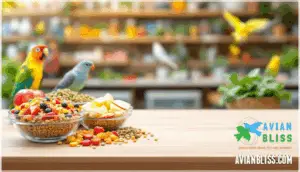
Choosing the right diet for your bird can feel overwhelming when you’re faced with so many options on the market. The key is understanding what each type of diet offers and where it falls short, so you can make an informed decision that benefits your bird’s long-term health.
Let’s look at the main dietary options available and how to switch your bird to a better nutrition plan.
Commercial Formulated Diets (Pellets, Extruded)
Commercially formulated foods offer you the most reliable path to balanced nutrition for your bird. These pelleted diets and extruded pellets provide consistent nutrient profiles, with formulated diet advantages including proper calcium-to-phosphorus ratios and complete vitamin coverage.
Extrusion processing effects include improved carbohydrate digestibility, though heat can reduce some vitamins—manufacturers compensate through fortification. Cold-pressed benefits include better vitamin retention, preserving up to 90% of natural nutrients.
Diet adjustment strategies generally succeed over four to six weeks.
Seed-Based Diets and Their Limitations
While pellets provide complete nutrition, seed-based diets fall short. Seed diets lack adequate calcium, vitamin A, and essential amino acids like lysine and methionine—nutrient deficiencies that contribute to metabolic bone disease and poor feathering.
Excessive fat from sunflower and safflower seeds leads to obesity and hepatic lipidosis in up to 42% of captive parrots. The mineral imbalance, with calcium-to-phosphorus ratios below 0.5:1 instead of the recommended 2:1, creates serious health impacts.
Your bird’s behavioral tendencies worsen these seed diet disadvantages, as parrots preferentially consume high-fat seeds while rejecting balanced alternatives.
Fruits, Vegetables, and Supplemental Foods
Fresh foods balance your bird’s diet beyond seeds and formulated products. You should offer 20%-40% fresh produce to support vitamin A intake, calcium absorption, and digestive health. Safe feeding practices matter—wash produce thoroughly, remove toxic seeds from stone fruits, and choose organic options when possible.
- Brightly colored vegetables like bell peppers, carrots, and squash deliver beta-carotene for immune support and feather quality
- Leafy greens provide dietary calcium, particularly important for African Grey parrots prone to hypocalcemia
- Fresh or lightly steamed preparation preserves nutritional value better than boiled or canned alternatives
Supplement types vary from probiotics supporting gut health to mineral additives for beak development. Species variations exist—toucans and lories need specialized fruit-based diets, while parrots thrive on varied selection of foods.
Dietary enrichment through foraging with produce pieces prevents boredom while supporting natural behaviors.
Transitioning Birds to Optimal Diets
When seeds dominate your bird’s diet, you’ll need gradual methods to shift toward formulated diets without stressing your pet. Weight monitoring on a gram scale prevents dangerous drops beyond 10% body mass during conversion.
Behavioral conditioning—like keeping familiar dishes and letting birds play with pellets—builds acceptance.
Post-transition outcomes include better feather quality and stronger immunity within weeks. Veterinary roles guarantee safe pacing, especially for older birds adjusting to pelleted diets with improved palatability.
Recognizing and Preventing Nutritional Deficiencies
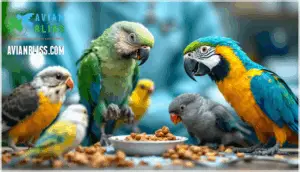
Even when you’re providing what seems like a complete diet, your bird can still develop nutritional problems that affect everything from feather quality to internal organ function. Recognizing the warning signs early gives you the best chance to correct deficiencies before they become serious health threats.
Let’s look at the specific indicators you should watch for, the health complications that can arise, and when it’s time to consult your avian veterinarian.
Common Signs of Deficiency and Toxicity
You’ll notice nutritional deficiencies in birds through distinct clinical signs: Feather Abnormalities like ruffled plumage or pigment loss, Behavioral Changes including listlessness and depression, Organ Dysfunction affecting liver and kidney function, Skeletal Issues such as deformities and lameness, and heightened Infection Susceptibility.
Vitamin deficiencies often manifest as respiratory distress and tissue lesions, while mineral deficiencies produce growth retardation and metabolic disruption.
Health Issues Linked to Poor Nutrition
When nutritional imbalance occurs, your bird faces serious health consequences. Vitamin A deficiency affects 60–80% of seed-fed birds, causing respiratory infections and tissue damage. Calcium imbalance leads to metabolic bone disease in up to 50% of indoor birds, while fatty liver disease strikes 30% of obese parrots.
Malnutrition triggers immunosuppression, reducing immune response by 30–50% and shortening lifespan by 25–30% in geriatric birds.
Role of Veterinary Guidance in Diet Management
When you partner with an avian veterinarian, you’re tapping into specialized expertise that can prevent up to 75% of diet-related illnesses. Veterinary healthcare teams use data-driven models and nutritional assessments to design species-specific feeding plans, improving dietary compliance by over 40%.
Avian clinicians detect deficiencies early through routine testing, enabling disease intervention before symptoms appear. With training standardization through organizations like the AAV, proper husbandry and feeding practices become achievable, supporting avian health and disease prevention throughout your bird’s life.
Frequently Asked Questions (FAQs)
How often should I change my birds water?
You should change your bird’s water daily to prevent bacterial growth and disease transmission. In hot weather or when contamination is visible, change it immediately.
Clean water containers weekly with a mild bleach solution to remove biofilm.
What foods are toxic to pet birds?
Like a hidden trap in plain sight, certain foods can turn deadly for your feathered companion. Avocado toxicity, chocolate dangers, and heavy metals like lead and zinc top the list, alongside toxic plants, onions, garlic, and salt poisoning, all causing severe clinical signs from respiratory distress to cardiac arrest.
Can birds eat spicy foods safely?
Birds can safely eat spicy foods because they lack TRPV1 receptors that detect capsaicin, making them immune to the burning sensation.
Veterinary guidelines support offering chili peppers in moderation for their vitamin A content and nutritional benefits, though you should avoid toxic additives like onion, garlic, or excessive salt.
How do I store bird food properly?
While most of us think "cool and dry" covers food storage dangers, container material impact matters just as much.
Store your bird’s food in airtight containers at 4°C–10°C with humidity below 40% to prevent mold growth and preserve nutritional value—proper temperature control greatly extends shelf life.
What portion sizes are appropriate for different species?
Your bird’s portion size depends on species requirements and body weight. Small birds like budgerigars need roughly 15 grams daily, medium parrots require 10-20 grams, while large macaws consume about 60 grams of pellets plus fresh foods.
Activity level impact, breeding season diets, and environmental temperature effects also influence individual bird variations in intake.
Conclusion
Like a master watchmaker calibrating delicate gears, achieving ideal avian nutrition levels demands precision—each nutrient functioning in concert with others to power your bird’s vitality.
The difference between adequacy and superiority isn’t measured in grand gestures but in daily choices: the pellet formulation you select, the vegetable variety you rotate, the water freshness you maintain.
When you commit to understanding your bird’s specific requirements and adjust feeding practices accordingly, you’re not just preventing disease—you’re fostering years of vigorous flight, vibrant plumage, and the sharp-eyed alertness that defines true avian wellness.
- https://www.merckvetmanual.com/poultry/nutrition-and-management-poultry/protein-amino-acid-and-energy-deficiencies-in-poultry
- https://pmc.ncbi.nlm.nih.gov/articles/PMC11545641/
- https://news.uark.edu/articles/78681/study-finds-high-protein-diet-improves-birds-ability-to-tolerate-infection
- https://hari.ca/avian-care/avian-nutrition-trends-philosophies/
- http://lafeber.com/