This site is supported by our readers. We may earn a commission, at no cost to you, if you purchase through links.
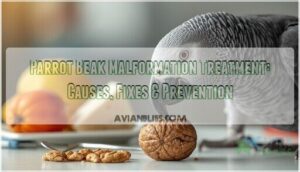
Your parrot’s beak should meet precisely at the tip, forming a smooth arc that allows easy cracking of seeds and preening of feathers. When that alignment goes wrong—whether from a childhood injury, vitamin deficiency, or genetic quirk—your bird faces a cascade of problems that go far beyond cosmetics.
I’ve treated parrots who couldn’t eat properly, developed painful pressure sores, and withdrew from their favorite activities because their beaks grew twisted or overgrown.
The good news? Most beak malformations respond well to treatment when you catch them early. Understanding what causes these deformities and recognizing the warning signs puts you in the best position to help your feathered companion regain normal function and comfort.
Table Of Contents
- Key Takeaways
- Causes of Parrot Beak Malformation
- Signs and Symptoms of Beak Malformation
- Diagnosing Parrot Beak Deformities
- Treatment Options for Beak Malformation
- Post-Treatment Care for Parrots
- Preventing Beak Malformation in Parrots
- Top Products for Parrot Beak Health
- Frequently Asked Questions (FAQs)
- How do vets fix parrot beak issues?
- What causes beak deformities in parrots?
- What is the life expectancy of a bird with PBFD?
- How do you treat parrot beak nail dystrophy?
- Can a bird with a deformed beak survive?
- What is a new treatment for parrot beak deformity of the toe?
- Does a parrot beak heal?
- What is a deformed beak on a parrot?
- Can beak malformations be completely cured permanently?
- How long does beak correction treatment typically take?
- Conclusion
Key Takeaways
- Most parrot beak malformations stem from genetic factors, nutritional deficiencies (especially vitamins A and D), infections like PBFD, or physical trauma—and catching these causes early gives your bird the best shot at full recovery.
- Treatment ranges from simple beak trimming and dietary adjustments to acrylic reshaping devices and surgical reconstruction, with your vet choosing the approach based on severity and underlying cause.
- Prevention centers on providing a balanced diet with 60-70% pellets and proper calcium sources, safe natural wood perches for natural wear, and monthly home inspections to catch overgrowth before it becomes a crisis.
- Even severe beak deformities can’t always be permanently cured since they involve persistent bone and keratin growth patterns, but regular veterinary care and maintenance trimming restore normal function and keep your parrot comfortable long-term.
Causes of Parrot Beak Malformation
Beak malformations don’t happen by accident—there’s always something behind them. Understanding what causes these problems is the first step in protecting your parrot’s health.
If you’ve noticed unusual growth or shape changes, understanding parrot overgrown beak problems helps you catch issues before they become severe.
Let’s look at the main factors that can lead to beak deformities.
Genetic Factors
Your parrot’s beak blueprint starts in its genes. Gene expression controls how beak bones form and mineralize, while heritable traits passed from parents can trigger beak abnormalities like overgrowth or misalignment.
Mutation risks increase when family history shows beak deformities. Genetic testing helps identify carriers of parrot beak problems, allowing you to anticipate issues and adjust care before parrot anatomy complications develop.
Nutritional Deficiencies
While genes set the stage, what you feed your bird shapes beak health day by day. Vitamin deficits—especially A and D—weaken keratin and slow calcium absorption, causing soft or brittle surfaces. Mineral imbalance, like too little calcium or zinc, creates crooked growth and dull coloring. Malnutrition effects show up fast in beak problems:
- Iron shortfall triggers fatigue and pale beak tissue
- Calcium deficiency increases fracture risk
- Inadequate zinc impairs keratin quality
- Poor vitamin D reduces bone integrity
Dietary supplements and varied parrot nutrition prevent these avian nutrition and diet pitfalls, ensuring proper nutrient absorption for strong beaks. For more on the effects of, see thorough medical guidance.
Infections and Diseases
Beyond diet, pathogens pose serious threats. Viral infections like Psittacine Beak and Feather Disease attack keratin-producing cells, causing necrosis and malformation. Bacterial diseases such as osteomyelitis destroy bone, creating crossed beaks. Fungal disorders—aspergillosis and candidiasis—trigger inflammation and tissue damage. These avian pathogens create beak lesions that worsen without prompt avian disease diagnosis. Importantly, certain parrot species are especially susceptible to, leading to further complications.
| Infection Type | Primary Pathogen | Beak Impact |
|---|---|---|
| Viral | Circovirus, Polyomavirus | Thickening, necrosis |
| Bacterial | Osteomyelitis agents | Bone deviation |
| Fungal | Aspergillus, Candida | Overgrowth, cracks |
Injuries and Trauma
Accidents happen fast—ceiling fans, mirrors, and rough play can all lead to beak fractures or beak trauma. Direct blunt impacts may cause bleeding, cracks, or even beak loss, turning routine preening into an emergency care situation.
If you see jagged edges or hear clicking sounds, that’s a trauma response signaling parrot beak problems. Don’t wait—avian surgery and injury prevention start with quick action.
Jagged beak edges or clicking sounds demand immediate veterinary attention to prevent serious complications
Environmental Factors
From poor air quality to cage design flaws, your parrot’s surroundings shape beak health more than you’d think. Environmental toxins like cleaning fumes irritate beak tissue, while inadequate lighting effects disrupt normal growth patterns.
Human interaction matters too—stress from household chaos or other pets can trigger beak abnormalities.
Regular vet visits catch these parrot beak problems early, preventing minor issues from becoming serious beak deformities.
Signs and Symptoms of Beak Malformation
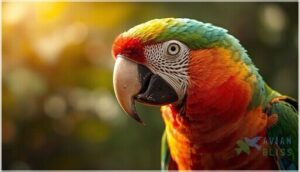
Spotting beak problems early can make all the difference in your parrot’s health and quality of life. You’ll want to watch for physical changes in the beak itself, but also pay attention to how your bird eats, grooms, and behaves day-to-day.
Here are the key signs that something might be wrong with your parrot’s beak.
Overgrown or Misshapen Beak
When you notice your parrot’s upper beak curving too far over the lower one or growing unevenly to one side, you’re seeing classic overgrown beak signs. This misalignment makes shredding fruits and seeds difficult, forcing your bird to struggle with normal feeding.
Switching to a certified organic pellet like Harrison’s can help naturally wear down the beak while delivering balanced bird nutrition and diet support your parrot needs.
Monthly visual checks help you catch these beak deformities early, so professional beak trimming can restore healthy parrot beak health before complications develop.
Discoloration or Softening
Beak discoloration—yellow, green, or bluish patches—signals tissue stress from nutrient deficiencies or beak fungal infections that need your attention. When you press gently on a soft beak, it may indent instead of feeling firm, especially near the tip where wear resistance drops.
These parrot beak problems often stem from environmental factors like excess moisture or calcium shortages, making early veterinary assessment essential for preventing deeper beak health issues.
Difficulty Eating or Grooming
Your parrot may struggle to grip pellets or crack seeds when beak deformities create misalignment, turning mealtimes into frustrating battles. Overgrown beaks cause eating struggles and grooming issues—you’ll notice incomplete preening, matted feathers, or your bird avoiding toys entirely. Beak pain emerges when chewing triggers flinching or withdrawal.
These feeding difficulties signal parrot beak problems needing beak trimming and nutrition advice to restore parrot beak health.
Changes in Behavior
When your bird starts avoiding social interaction or suddenly stops vocalizing, beak discomfort might be the hidden culprit. Behavioral signs like feeding changes, stress factors, and social withdrawal often reveal parrot behavior problems linked to malformation.
Watch for altered vocalization patterns or reluctance to play—these parrot behavior and psychology shifts demand avian behavior modification through prompt veterinary care.
Diagnosing Parrot Beak Deformities
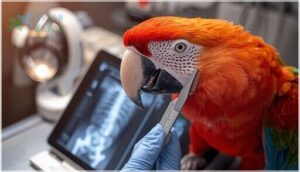
Getting to the root of your parrot’s beak problem starts with a proper diagnosis from an avian veterinarian. Your vet will use a combination of tools and tests to understand what’s causing the deformity and how severe it is.
Here’s what you can expect during the diagnostic process.
Visual Inspection by Veterinarian
Your avian vet starts with a thorough visual diagnosis, checking beak length, shape, and symmetry against the opposite side. This bird inspection reveals cracks, color changes, or overgrowth that signal parrot beak problems needing attention.
- Beak examination evaluates surfaces for flaking, gouges, or darkened areas suggesting infection
- Beak assessment includes observing feeding behavior and jaw movement during veterinary checks
- Early beak care through regular inspections prevents complications requiring avian beak surgery later
Radiographs and Imaging
When visual checks aren’t enough, your vet orders beak X-rays to see what’s happening beneath the surface. Radiograph techniques capture bone density, hidden fractures, and growth patterns that explain beak deformities.
Imaging protocols may include avian CT scans for complex cases, revealing structural details that guide treatment for psittacine beak conditions and determine whether avian beak surgery is necessary.
Blood Tests and Diagnostic Workups
Beyond imaging, your vet orders blood analysis to uncover nutritional gaps and organ problems fueling beak deformities. Lab results reveal vitamin D deficiency, calcium imbalances, or liver issues that weaken beak structure. Diagnostic imaging combined with medical histories creates a complete picture of your parrot’s health:
- Complete blood count detecting infections
- Chemistry panels evaluating liver and kidney function
- Vitamin levels confirming nutritional deficiencies
These veterinary exams guide targeted avian beak care and surgery decisions.
Treatment Options for Beak Malformation
Once your vet has diagnosed the beak malformation, you’ll work together to create a treatment plan customized to your parrot’s specific needs. The approach depends on the severity of the deformity, what’s causing it, and how it’s affecting your bird’s daily life.
Here are the main treatment options your avian veterinarian might recommend.
Beak Trimming and Shaping
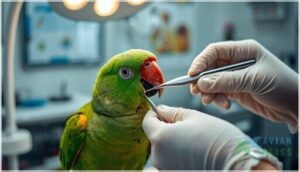
When your parrot’s beak grows beyond healthy proportions, trimming and shaping can restore proper function. Your avian veterinarian will use mechanical or hot blade trimming tools to carefully reshape the beak, creating smooth, blunt tips that allow normal eating and grooming.
This aspect of avian dentistry tackles beak problems without requiring full surgery. Most beak care and maintenance sessions take just minutes, though you’ll need follow-up monitoring to prevent regrowth.
Physical Therapy and Acrylic Devices
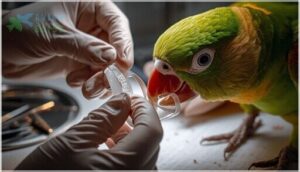
For more complex beak deformities, physical therapy paired with custom acrylic aids can gradually improve beak alignment without invasive avian beak surgery. During therapy sessions, your vet uses molded acrylic devices to guide gentle beak strengthening exercises and correct positioning.
These transparent tools allow close monitoring of progress while device sanitization between uses prevents infection. This approach works best when parrot beak problems are caught early.
Surgical Intervention
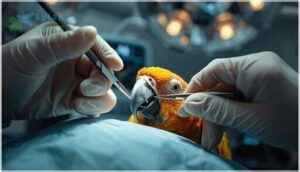
When trimming and physical therapy aren’t enough, your avian vet may recommend avian beak surgery. This delicate procedure tackles severe parrot beak problems through beak reconstruction, reshaping the underlying bone to restore proper function. Anesthesia risks exist but are minimized with careful monitoring.
- General anesthesia ensures your bird feels no pain during the procedure
- Specialized surgical tools precisely contour the beak’s bony structure
- Postop care includes soft foods and close monitoring for complications
- Follow-up visits every 2-4 weeks track healing and beak growth
Medication and Dietary Adjustments
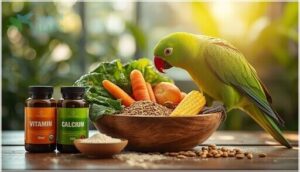
Sometimes fixing beak deformities requires more than surgery—your vet may prescribe vitamin therapy and dietary supplements to aid healing. Nutrient interactions matter: calcium won’t help without adequate vitamin D3, and timing medication around meals affects absorption.
Here’s how nutrition addresses parrot beak problems:
| Nutritional Component | Role in Beak Health |
|---|---|
| Vitamin D3 & Calcium | Strengthens beak bone structure |
| Methionine & Biotin | Aids keratin production |
| Omega-3 Fatty Acids | Reduces inflammation during healing |
| Zinc & Magnesium | Maintains tissue integrity |
Balancing mineral balance through parrot nutrition and diet gives your bird’s body the tools it needs for repair. Your avian health team will monitor blood levels to prevent deficiencies that worsen beak deformities.
Post-Treatment Care for Parrots
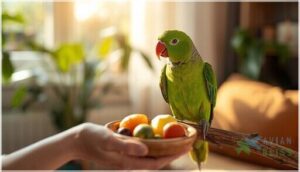
After your parrot receives treatment for beak malformation, the real work begins at home. Your bird will need consistent monitoring and care to guarantee proper healing and prevent future problems.
Let’s look at the key steps you’ll need to follow during recovery.
Regular Veterinary Checkups
After any beak procedure, your parrot needs ongoing veterinary care to guarantee proper healing and prevent complications. Regular health evaluations help catch problems early, keeping your bird’s recovery on track. Here’s what consistent vet checkups provide:
- Physical palpation to detect swelling or tenderness around the beak area
- Weight monitoring to guarantee your parrot maintains proper body condition during recovery
- Beak inspection to assess healing progress and alignment
- Blood work and urinalysis to screen organ health and nutritional status
- Dietary review to enhance bird nutrition and support tissue repair
These preventive measures give your avian vet the chance to adjust treatment plans before small issues become serious setbacks.
Monitoring Beak Growth
You’ll want to watch how fast your parrot’s beak grows after treatment. Track length with beak measurement tools from nostril to tip every few weeks—healthy growth runs about 0.2 to 0.5 millimeters daily.
Check for beak symmetry and any signs of beak overgrowth or new beak deformities. If growth tracking shows sudden changes, contact your vet for guidance on whether beak trimming is needed.
Providing a Balanced Diet
Your parrot’s recovery depends heavily on what goes into the bowl each day. Aim for a balanced diet that delivers 15 to 25 percent protein from legumes or pellets, plus calcium-rich greens and whole grains for steady energy.
Add dietary supplements like vitamin A and D3 if your vet recommends them. This nutrient balance promotes beak health and proper tissue repair.
Ensuring a Safe Environment
Recovery doesn’t stop at the cage door—your home becomes part of the healing process. Remove hazards that could worsen beak trauma or complicate avian health and wellness. Toxin-free homes support ideal parrot care during this vulnerable period.
Focus on three essentials:
- Safe perching with natural wood branches prevents additional beak problems
- Environmental hygiene through weekly cleanings reduces infection risk
- Climate control between 65 and 80 degrees promotes steady healing
Pair these steps with emergency preparedness plans for complete protection.
Preventing Beak Malformation in Parrots
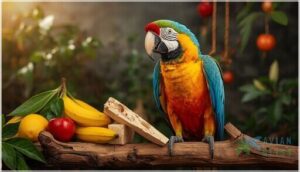
Preventing beak problems is always easier than treating them. Most beak malformations can be avoided with a few simple daily habits and smart choices about your parrot’s environment.
Let’s look at the key steps you can take to keep your bird’s beak healthy and strong.
Nutritional Best Practices
Good nutrition is your first line of defense against beak malformation. Offer a balanced diet with 60-70% pellets and 30% fresh produce like leafy greens and bell peppers to support beak health.
Provide calcium intake through cuttlebone and monitor vitamin balance carefully. You’ll need nutrient supplements only when your vet identifies specific deficiencies—over-supplementation can harm your bird’s avian nutrition profile.
Safe Perches and Chew Toys
Beyond diet, perch material options and chew toy safety play a critical role in avian beak care. Choose natural wood benefits like beech perches with rough sides for gentle beak trimming tools action, plus smooth tops for parrot foot health.
Add non-toxic chew toys to condition your parrot’s beak naturally—this daily wear prevents beak problems without stress, supporting overall parrot care and long-term beak health.
Early Detection and Intervention
Catching beak deformities early makes all the difference. Regular beak inspection at home—watching for length changes or flaking—lets you spot nutritional signals before feeding becomes difficult. Schedule rapid screening with your avian vet for intervention therapies like gentle trimming or dietary adjustments. Early alerts mean you can prevent parrot beak health issues from worsening, keeping your bird comfortable and healthy.
- Check your bird’s beak monthly for overgrowth or unusual curves
- Note any cracked or flaking tissue and report it immediately
- Ask your vet to assess calcium and vitamin levels during wellness visits
- Start treatment within 24 to 48 hours of detecting beak abnormalities
Avoiding Environmental Hazards
Your home should be a safe haven that protects against Beak Trauma and Beak Deformities. Keep Hazardous Materials like cleaning products in labeled, closed containers away from cages to maintain Air Quality. Store pesticides outdoors, use Non Toxic Products for cleaning, and enforce a no-smoking policy.
These Parrot Safety and Accident Prevention steps build Toxic Free Homes where Safe Environments support healthy Parrot Beak development and prevent Beak Problems.
Top Products for Parrot Beak Health
Keeping your parrot’s beak healthy doesn’t have to be complicated when you have the right products on hand. The following items can support proper nutrition, assist with feeding challenges, and help maintain ideal beak condition throughout your bird’s life.
Let’s look at three essential products that veterinarians and experienced parrot owners recommend.
1. Harrison’s Organic Bird Food Formula
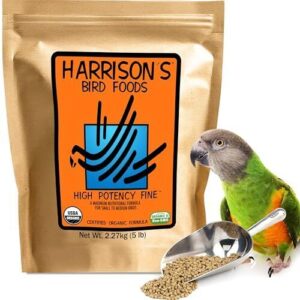
When your parrot’s beak health matters most, you need nutrition that works from the inside out. Harrison’s Organic Bird Food Formula delivers certified organic, non-GMO ingredients with 20% minimum crude protein—essential for building strong beak structure.
This vet-developed formula includes ground soybeans, lentils, and fortified vitamins A, D3, and E, plus calcium carbonate for proper beak and bone development.
It’s designed as a complete diet for all life stages, making it particularly valuable during molting, recovery, or when addressing nutritional deficiencies that contribute to beak problems.
| Best For | Parrot owners looking for a certified organic, vet-developed formula to support beak health, molting, and overall wellness across all life stages. |
|---|---|
| Brand | Harrison’s Bird Foods |
| Primary Material | Organic ingredients |
| Target Age | All Life Stages |
| Item Form | Nugget |
| Weight/Size | 5 lb (2.27 kg) |
| Ease of Cleaning | Standard |
| Additional Features |
|
- Certified organic and non-GMO with high-quality protein (20% minimum) for strong beak and bone development
- Vet-developed complete nutrition suitable for all life stages, including molting, recovery, and breeding
- Rich in balanced Omega 3 & 6 fatty acids and fortified vitamins without pesticides or herbicides
- Higher price point compared to conventional bird food options
- Some birds may be picky eaters and refuse the food initially
- Requires gradual introduction to prevent digestive issues and careful attention to expiry dates
2. Hari Tropican Hand Feeding Bird Formula
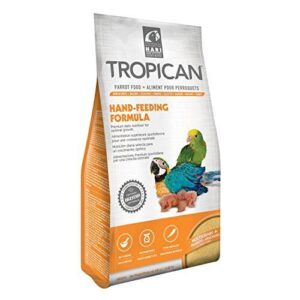
Young parrots with beak deformities often struggle to eat, which is where Hari Tropican Hand Feeding Formula becomes essential. This micro-ground formula delivers 22% minimum crude protein and 11% fat to support proper beak development during critical growth stages.
It includes calcium carbonate and dicalcium phosphate—nutrients your bird needs for strong beak structure. The extruded formula mixes smoothly for syringe feeding and provides 400-450 kcal per 100 grams, ensuring babies get concentrated nutrition when they can’t eat normally. It’s designed for all psittacine species through fledgling age.
| Best For | Bird owners hand-feeding young parrots with beak deformities who need a nutrient-dense formula that’s easy to syringe-feed during critical growth periods. |
|---|---|
| Brand | Hari |
| Primary Material | Extruded formula |
| Target Age | All Life Stages |
| Item Form | Dry powder |
| Weight/Size | 14 oz |
| Ease of Cleaning | Standard |
| Additional Features |
|
- Micro-ground texture mixes into a smooth consistency that works well for syringe feeding birds with eating difficulties
- Contains calcium carbonate and dicalcium phosphate to support proper beak development and bone structure
- High calorie density (400-450 kcal per 100g) ensures babies get enough nutrition even with smaller feeding volumes
- Some users report lumps forming when mixing despite following instructions carefully
- Requires precise temperature control and mixing technique to achieve the right consistency
- May take extra effort to prepare compared to other formulas due to occasional clumping issues
3. Lilys Pet Bird Feeding Syringe
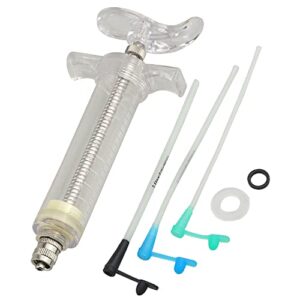
Hand-feeding a parrot with beak deformities requires precision, and the Lilys Pet Feeding Syringe delivers that control. This 20 ml syringe includes four interchangeable hoses (2 mm to 3 mm) to fit birds from hatchlings to fledglings.
The clear plastic body lets you monitor intake accurately, while the removable plunger with O-ring prevents leaks during crop feeding. It’s heat-resistant for safe sterilization between uses.
You’ll find it especially helpful when administering liquid medication or formula to birds recovering from beak surgery.
| Best For | Bird owners hand-feeding parrots with beak deformities or administering medication to young or recovering birds who need precise portion control. |
|---|---|
| Brand | Generic/Unbranded |
| Primary Material | Plastic and perspex |
| Target Age | Young birds |
| Item Form | Syringe with hoses |
| Weight/Size | 20ml capacity |
| Ease of Cleaning | Easy to clean |
| Additional Features |
|
- Comes with four different hose sizes (2mm to 3mm) so you can adjust as your bird grows or based on their specific needs
- Clear plastic body lets you see exactly how much formula or medication you’re giving, which is crucial for accurate feeding
- Heat-resistant material means you can sterilize it between uses to keep things sanitary
- The feeding hoses can become loose or fall off after you disinfect them, which gets annoying
- Only works well with thin liquids—thicker formulas will clog the smaller hoses
- The hoses are fairly delicate and can break if you’re not careful when cleaning or handling them
Frequently Asked Questions (FAQs)
How do vets fix parrot beak issues?
Like adjusting a Victorian typewriter, vets trim overgrown beaks using careful grinding tools, apply protective acrylic shields, and occasionally perform surgery to reshape severe deformities while ensuring your bird can eat comfortably.
What causes beak deformities in parrots?
Genetic mutations, poor nutrition, infections like PBFD, physical trauma, and unsuitable environments can all trigger beak deformities. Often multiple factors combine, so you’ll need a thorough veterinary workup to pinpoint the real culprit.
What is the life expectancy of a bird with PBFD?
Most parrots with PBFD die within six months to two years after symptoms appear. Some adults with chronic forms survive longer with careful management, but young birds often deteriorate rapidly despite treatment.
How do you treat parrot beak nail dystrophy?
Your vet will start with regular trimming to restore the beak’s shape. They’ll also adjust your parrot’s diet, adding calcium and vitamin supplements, while prescribing medication if infection is present.
Can a bird with a deformed beak survive?
Yes, with proper care your bird can thrive despite beak challenges. Supportive feeding, regular vet visits, and customized nutrition help many feathered friends adapt and enjoy full, comfortable lives.
What is a new treatment for parrot beak deformity of the toe?
A new surgical technique uses a single flap that includes the nail plate, nailbed matrix, and proximal skin fold. This flap is pushed back to correct the deformity without needing additional grafts.
Does a parrot beak heal?
Minor cracks or chips can heal over weeks to months with proper care.
Severe tissue loss or bone damage may not regrow fully, sometimes requiring protective patches or prosthetics for your bird’s comfort.
What is a deformed beak on a parrot?
A deformed beak occurs when your parrot’s upper or lower mandible grows irregularly, misaligned, or bent. This malformation interferes with eating, preening, and gripping, often worsening as your bird matures.
Can beak malformations be completely cured permanently?
Most beak deformities can’t be completely cured because they involve bone and keratin growth patterns that persist.
You can manage them with regular trimming and care, restoring function and comfort long-term.
How long does beak correction treatment typically take?
Treatment timelines vary widely depending on severity. Simple trimming takes one visit, while acrylic devices need three to six months of adjustments. Surgical cases usually show improvement within one to three months.
Conclusion
When your parrot’s beak loses its natural harmony, the path forward doesn’t have to feel overwhelming. Armed with knowledge about parrot beak malformation treatment—from recognizing early warning signs to working alongside your avian vet—you’re equipped to restore your bird’s quality of life.
Whether it’s adjusting diet, scheduling regular trims, or creating a safer cage environment, each small step protects the companion who depends on you for everything.
- http://redheadedcatbirds.com/
- https://www.beakschool.com/free-5-day-membership-trial
- https://www.msdvetmanual.com/exotic-and-laboratory-animals/pet-birds/nutritional-diseases-of-pet-birds
- https://onlinelibrary.wiley.com/doi/abs/10.1111/j.1751-0813.1984.tb15520.x
- https://www.birdexoticsvet.com.au/factsheets/2020/6/6/birds-with-overgrown-upper-beaks