This site is supported by our readers. We may earn a commission, at no cost to you, if you purchase through links.
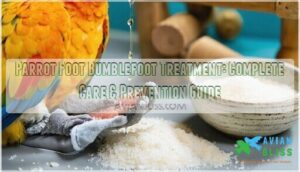 Parrot foot bumblefoot treatment requires immediate action to prevent serious complications.
You’ll need to clean the affected area with warm water and antiseptic, apply antibacterial cream, and provide Epsom salt soaks twice daily.
Remove rough perches and replace them with natural branches of varying diameters.
Keep your bird’s cage spotless and monitor their diet for adequate vitamin A.
While mild cases respond well to home care, don’t hesitate to contact an avian veterinarian if you notice spreading infection, deep lesions, or your parrot won’t bear weight on the foot.
The right combination of medical treatment and environmental changes can make all the difference in your feathered friend’s recovery timeline.
Table Of Contents
- Key Takeaways
- What is Bumblefoot
- Bumblefoot Causes and Risk
- Recognizing Bumblefoot Symptoms
- Treating Bumblefoot Effectively
- Preventing Bumblefoot Recurrence
- Managing Bumblefoot in Parrots
- Seeking Veterinary Care
- Frequently Asked Questions (FAQs)
- How do you treat a Bumblefoot in a parrot?
- How do you get rid of bumblefoot in birds?
- How to treat Bumblefoot?
- How often should I give Bumblefoot to birds with pododermatitis?
- What causes bumblefoot in parrots?
- How do you prevent Bumblefoot?
- How to get rid of bumblefoot at home?
- Can you put hydrogen peroxide on bumblefoot?
- What ointment to put on bumblefoot?
- What to put on parrot feet pressure sores?
- Conclusion
Key Takeaways
- Act fast with proper cleaning – You’ll need to immediately clean the infected area with warm water and antiseptic, then apply antibacterial cream twice daily to prevent serious complications from spreading.
- Replace harsh perches with natural branches – You should swap out rough plastic or sandpaper perches for natural wood branches of varying diameters to eliminate pressure points that cause foot injuries.
- Maintain spotless cage conditions – You’ll prevent reinfection by keeping your bird’s cage meticulously clean, changing substrate frequently, and disinfecting surfaces regularly to eliminate bacterial buildup.
- Don’t hesitate to contact an avian vet – You should seek professional help immediately if you notice a spreading infection, deep lesions, or your parrot won’t bear weight on the affected foot, as severe cases require prescription antibiotics or surgery.
What is Bumblefoot
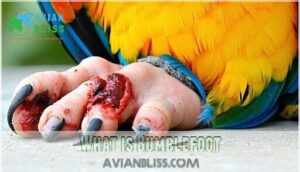
Bumblefoot is a bacterial infection that creates painful sores and lesions on your parrot’s feet, causing serious discomfort and mobility issues.
This condition, also called pododermatitis, develops when bacteria like Staphylococcus aureus infect damaged foot pads through cuts or pressure wounds, leading to a condition that can be described as a bacterial infection.
When tiny cuts become doorways for dangerous bacteria, your parrot’s feet pay the painful price.
Bacterial Infection Causes
Your parrot’s foot becomes a gateway for trouble when bacteria like Staphylococcus aureus slip through tiny cuts or abrasions.
Poor husbandry creates the perfect storm—dirty perches harbor environmental bacteria while compromised skin barriers from pressure sores invite infection entry.
Secondary infections often follow when hygiene factors aren’t addressed promptly, leading to secondary issues that can be detrimental to the parrot’s health.
Symptoms and Progression
Recognizing bumblefoot symptoms early can mean the difference between a quick recovery and a lengthy battle.
You’ll notice your parrot favoring one foot, shifting weight constantly, or refusing to perch normally.
Your parrot’s uneven stance signals bumblefoot’s painful grip on their daily comfort.
- Early Detection – Shiny, reddened skin appears before visible lesions develop
- Discoloration Signs – Foot pads turn pink, then red, progressing to purple or black
- Progression Speed – Grade 1 lesions can advance to severe infections within days
- Pain Levels – Lameness in parrots increases as foot swelling worsens
Foot Lesions and Inflammation
Footpad discoloration marks the beginning of parrot bumblefoot’s visible progression.
You’ll notice inflammation stages ranging from mild redness to severe tissue blackening as sore development advances.
Lesion severity increases when bacterial infection penetrates deeper tissue layers.
Avian pododermatitis creates distinct patterns of swelling and darkened areas that require immediate bumblefoot treatment and proper parrot foot care attention, including addressing the issue of inflammation.
Bumblefoot Causes and Risk
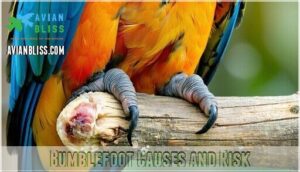
Understanding what triggers bumblefoot helps you protect your parrot’s feet from this painful bacterial infection.
Poor perch choices, inadequate nutrition, and environmental factors create the perfect conditions for foot pad injuries that allow harmful bacteria to take hold, leading to a situation where inadequate nutrition can exacerbate the problem.
Unsuitable Perches
Hard plastic perches create constant pressure points that damage your parrot’s delicate foot pads, leading to parrot bumblefoot.
Sandpaper perches worsen the problem by abrading skin while unsuitable perches lack proper perch diameter variation.
Choose natural wood with varied perch material and maintain perch hygiene. Strategic perch placement with perch variety prevents bumblefoot causes from developing.
Wire Flooring
Wire flooring creates constant pressure points that damage your parrot’s delicate foot pads.
These metal grids trap bacteria and waste, increasing infection risks while preventing proper healing.
Replace wire flooring dangers with cage bottom liners or solid surfaces.
Alternative flooring options like paper, fleece, or specialized mats reduce foot trauma risks and improve hygiene concerns for better infection control.
Such flooring can lead to bacterial and fungal diseases, which are discussed in more detail at bacterial and fungal diseases, and pose a significant threat to your parrot’s health, emphasizing the need for proper healing.
Vitamin a Deficiency
Unfortunately, vitamin A deficiency frequently compromises your parrot’s immune system and epithelial health, creating perfect conditions for bumblefoot development.
When your bird lacks adequate vitamin A, keratinization problems occur, weakening foot pad integrity and allowing bacterial infections to take hold.
- Dietary sources: Include carrots, sweet potatoes, leafy greens, and red peppers in your parrot’s balanced diet
- Supplementation risks: Avoid over-supplementing vitamin A as toxicity can occur with excessive amounts
- Nutritional deficiency signs: Watch for thickened, rough foot pads indicating vitamin A shortage
- Parrot health impact: Deficient birds show compromised wound healing and increased infection susceptibility
- Prevention strategy: Switch from seed-only diets to vitamin A-enriched pellets for ideal nutritional support
Overgrown Claws
When your parrot’s claws grow too long, they create uneven pressure points that increase bumblefoot risk.
Overgrown claws prevent proper weight distribution across foot pads, forcing birds to shift stance awkwardly.
Regular claw trimming using safe methods prevents injury and maintains parrot health.
Professional grooming guarantees proper technique, while claw grinding offers smooth edges that reduce bird foot problems during perching.
Recognizing Bumblefoot Symptoms
You’ll notice the first signs of bumblefoot when your parrot’s foot pads become shiny and red, often accompanied by small lesions that signal the infection’s early stages.
Watch for behavioral changes like limping, favoring one foot over the other, or reluctance to perch normally, as these symptoms indicate your bird is experiencing discomfort from developing foot sores.
Early Signs and Detection
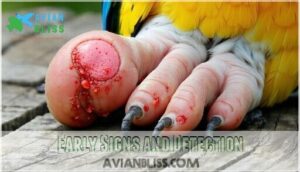
Catching bumblefoot early can save your parrot from serious complications.
Watch for subtle redness on the footpad’s surface, which appears as the first warning sign.
You’ll notice shiny skin texture where healthy scales normally appear rough.
Initial lesions develop as small, circular spots that feel warm to touch.
Behavioral changes include favoring one foot over another during perching.
Footpad discoloration ranges from pink to bright red in these beginning stages, indicating a need for prompt treatment.
Limping and Lameness
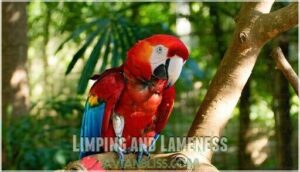
When limping becomes your parrot’s new walk, it’s time for immediate gait analysis and pain assessment.
Treating bumblefoot requires recognizing these mobility changes across severity stages:
- Favoring one foot while perching
- Reluctant movement or reduced activity
- Uneven weight distribution when walking
- Difficulty gripping with affected foot
Exercise impact worsens lameness, making pododermatitis more painful without mobility aids.
Recognizing signs of injury early is vital for effective intervention.
Swollen Feet and Lesions
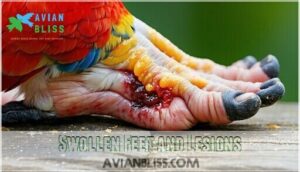
Visible swelling transforms your parrot’s foot into a puffy, tender area that’s clearly inflamed tissue.
You’ll notice lesions appearing as red, open sores with distinct foot discoloration ranging from bright pink to dark purple.
These infection stages progress from mild pododermatitis to severe painful foot swelling, requiring immediate pain assessment and attention to lesion severity.
Loss of Appetite
When your bird stops eating, it’s signaling that something’s seriously wrong beneath the surface.
Loss of appetite often accompanies bumblefoot as pain and infection take their toll on your parrot’s overall well-being.
- Nutritional deficiencies worsen as your bird refuses favorite foods
- Weight monitoring becomes critical during appetite decline
- Underlying illnesses may compound the bumblefoot condition
- Supportive feeding with appetite stimulants helps maintain strength
Consult an avian vet immediately when parrot diseases affect eating habits, as bird health care requires prompt parrot antibiotics intervention.
Treating Bumblefoot Effectively
When your parrot develops bumblefoot, quick treatment prevents the infection from worsening and causing permanent damage.
You’ll need to clean the affected area, apply proper medications, and monitor your bird’s progress while working with an avian veterinarian.
Cleaning and Antiseptic Care
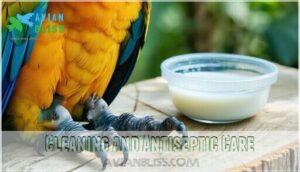
Start by gently cleaning your parrot’s affected foot with warm water to remove debris and bacteria.
Use antiseptic solutions like diluted betadine or chlorhexidine for wound irrigation, ensuring proper infection control. You can find avian betadine solution online.
Pat the area dry with a clean cloth before applying treatment. Maintain preventative hygiene by keeping your bird’s cage spotless, as bacterial buildup worsens bumblefoot conditions substantially.
Antibacterial Cream Application
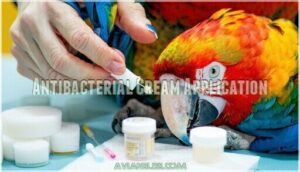
After cleaning the wound thoroughly, you’ll apply antibacterial cream as your next critical step in wound care. Choose creams with safe ingredients like bacitracin, neomycin, or polymyxin B, avoiding toxic additives like lidocaine.
Photodynamic therapy has shown promise as an alternative treatment.
- Clean the wound completely before each cream application frequency of twice daily
- Apply cream liberally to fill the wound cavity and cover surrounding tissue
- Secure with proper bandaging technique using sterile gauze to prevent contamination
- Monitor cream effectiveness by checking for reduced swelling and improved healing
- Watch for cream resistance concerns and consult your vet if progress stalls after several days
Epsom Salt Soaks and Bandaging
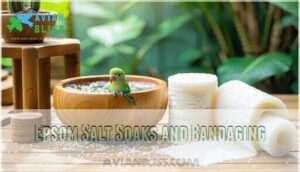
Epsom salt soaks provide effective relief for infected foot pads.
Mix one tablespoon of Epsom salts per cup of warm water for proper salt concentration.
Soak your parrot’s foot for fifteen minutes daily, ensuring complete submersion of affected areas.
The soak duration allows osmotic action to reduce swelling and draw out infection.
You can easily find Epsom salt at many online retailers.
After soaking, apply sterile gauze as wound dressing, then secure with non-adhesive bandage types like Vetrap.
This home application works best during the early infection stage, improving healing rates substantially.
Veterinary Examination
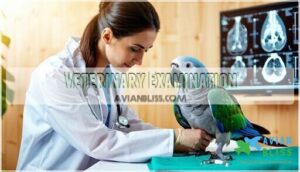
While home care helps minor cases, professional veterinary intervention becomes necessary when bumblefoot progresses beyond early stages.
Your avian veterinarian will conduct a thorough physical examination to assess the infection’s severity and develop an appropriate treatment plan.
Here’s what to expect during your visit:
- Physical Examination – Complete foot assessment including lesion grading and mobility evaluation
- Diagnostic Imaging – X-rays to check for bone involvement or foreign objects
- Lab Work – Bacterial cultures to identify specific pathogens and antibiotic sensitivity
- Avian Diagnostics – Blood tests to evaluate overall health and immune function
- Treatment Plan – Customized therapy based on diagnosis and early detection findings
Preventing Bumblefoot Recurrence
Once you’ve successfully treated your parrot’s bumblefoot, preventing it from coming back becomes your top priority.
The key lies in addressing the root causes that led to the infection in the first place, creating an environment where healthy foot pads can thrive.
Clean Cage Environment
Your parrot’s health depends on maintaining impeccable cage sanitation through consistent waste removal and proper disinfecting agents.
Daily cleaning prevents bacterial buildup that leads to foot infections.
Smart substrate choices like paper towels allow easy monitoring, while proper air quality guarantees your bird’s environment stays fresh.
| Daily Tasks | Weekly Deep Clean | Monthly Maintenance |
|---|---|---|
| Remove droppings and food debris | Disinfect all surfaces with bird-safe cleaners | Replace substrate completely |
| Change water and food bowls | Wash and sanitize perches thoroughly | Deep clean food/water stations |
| Spot-clean cage bars | Vacuum around cage area | Inspect cage for damage |
| Check for spilled seeds | Rotate and clean toys | Update cleaning supply inventory |
Clean cage maintenance isn’t just about aesthetics—it’s your first line of defense against bumblefoot.
Bacteria thrive in dirty environments, turning minor foot scrapes into serious infections.
You’ll want to establish a routine that becomes second nature, because consistency beats perfection every time.
Proper Perch Selection
Your parrot’s feet need the right foundation for healing and prevention.
Choose natural perches made from non-toxic woods like manzanita or apple branches. Vary perch diameter from half-inch to two inches to prevent constant pressure spots.
Secure attachment prevents wobbling that causes falls and injuries. Natural branches with bark intact offer texture variety while promoting healthy grip and natural claw maintenance.
Selecting safe parrot perches is essential for your bird’s health.
Balanced Nutrition and Diet
Your parrot’s diet serves as the foundation for preventing bumblefoot recurrence.
Vitamin supplements containing vitamin A strengthen skin integrity, while proper mineral intake supports healing.
Focus on dietary variety through fresh fruits, vegetables, and quality pellets to prevent obesity and boost parrot nutrition.
Maintain consistent hydration importance for ideal parrot health management and overall parrot wellbeing.
Regular Foot Checks
Examine your parrot’s feet weekly for early detection of bumblefoot symptoms.
Look for redness, swelling, or small cuts on foot pads during routine parrot care.
Check between toes and around nails for identifying issues before they worsen.
Frequent foot health monitoring supports preventative care and overall parrot wellbeing.
Regular check frequency helps catch problems when they’re easiest to treat, maintaining proper cage hygiene and parrot nutrition alongside these parrot owner tips, which is crucial for parrot wellbeing.
Managing Bumblefoot in Parrots
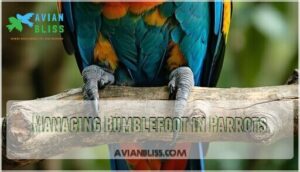
Once you’ve successfully treated your parrot’s bumblefoot, managing the condition becomes your ongoing mission to keep those precious feet healthy.
You’ll need to create an environment that supports healing while preventing future flare-ups through careful attention to perching, hygiene, and daily monitoring.
Improving Perching and Hygiene
Creating the right environment prevents bumblefoot recurrence through strategic perching choices and consistent cleanliness practices. Your bird’s feet need proper support and sanitary conditions to heal completely.
- Perch Material Variety: Mix natural wood, rope, and textured rubber perches
- Natural Perch Benefits: Branches provide varying diameters and textures
- Cage Cleaning Frequency: Clean surfaces daily, deep clean weekly
- Disinfectant Types: Use bird-safe cleaners like diluted vinegar solutions
- Reducing Fecal Contact: Replace substrate frequently, position perches strategically
Reducing Pressure and Injury
Beyond maintaining clean perches, you’ll need to minimize pressure points that worsen bumblefoot. Strategic perch placement and proper foot care create the foundation for healing damaged tissue while preventing new injuries from developing.
One key element in recovery is to guarantee proper treatment, including immobilization techniques, for any fractures.
| Pressure Reduction Strategy | Implementation | Expected Outcome |
|---|---|---|
| Perch Padding | Wrap existing perches with soft vet wrap or foam | Reduces direct pressure on sore spots |
| Perch Variety | Mix natural wood, rope, and textured rubber surfaces | Distributes weight across different foot areas |
| Weight Management | Monitor diet and encourage foot exercise | Decreases overall pressure on foot pads |
Focus on perch size that allows your bird’s feet to wrap comfortably without strain. Hard plastic perching surfaces should be replaced immediately.
Regular claw trimming prevents overgrown nails from altering your parrot’s natural grip. Soft cage flooring helps cushion any accidental landings during recovery.
Promoting Healthy Foot Pads
Daily exercise routines and perch variety work together to strengthen your parrot’s footpad tissue and prevent future infections.
Weight management through regular movement reduces pressure on sensitive areas, while natural remedies like omega-3 supplements support healing.
Make certain constant hydration benefits overall pad health, and rotate perching surfaces to distribute weight evenly across different foot areas.
Monitoring for Setbacks
Vigilantly watch for infection signs during your parrot’s recovery period, as setbacks can occur unexpectedly.
Delayed healing, behavioral changes, or recurring symptoms indicate treatment efficacy issues that require immediate attention from your avian health professional.
- Monitor foot condition daily for increased swelling, discharge, or worsening lesions
- Watch for limping, reluctance to perch, or favoring the affected foot
- Assess environmental factors like cage cleanliness and perch suitability affecting recovery, to ensure a smooth healing process and prevent setbacks.
Seeking Veterinary Care
When your parrot shows signs of bumblefoot beyond the earliest stages, professional veterinary care becomes essential for proper diagnosis and treatment.
An avian specialist can provide advanced treatments like surgical debridement, prescription antibiotics, and specialized wound care that home remedies simply can’t match.
Finding an Avian Specialist
Start by searching for board-certified avian veterinarians through the Association of Avian Veterinarians directory.
Look for Specialist Qualifications in exotic pet medicine and avian podiatry. Many practitioners offer Telehealth Options for initial consultations.
Your regular vet can provide Avian Referrals to experienced specialists. Research Cost Considerations beforehand, as specialized care varies widely by location and severity.
What to Expect During Visit
Once you’ve found your avian veterinarian, prepare for a thorough visit. The vet will conduct thorough physical assessments, examining your parrot’s feet under magnification.
They’ll discuss treatment options ranging from wound irrigation to surgical debridement, explain recovery timeline expectations, and provide cost discussion details upfront.
What Your Avian Vet Will Cover:
- Exam Details – Complete foot pad inspection using specialized magnification equipment
- Physical Assessments – Weight check, overall health evaluation, and gait analysis
- Bacterial Culture – Sample collection to test for specific infection types and antibiotic sensitivity
- Treatment Options – Conservative care versus surgical intervention based on severity grade
- Recovery Timeline – Realistic healing expectations and follow-up appointment scheduling
Your exotic pet medicine specialist will create a customized treatment plan.
They’ll explain each procedure clearly, helping you understand why certain approaches work best for your bird’s specific condition.
Diagnostic Tests and Treatment
Your veterinarian’s diagnostic approach will reveal bumblefoot’s true scope through culture sensitivity testing and radiography usage.
They’ll identify the specific bacterial infection causing foot lesions, then determine if surgical intervention is needed.
Advanced medications like targeted antibiotics and antiinflammatory medications address deep infections.
For severe cases, surgical debridement removes damaged tissue while laser therapy accelerates wound healing.
Follow-up Care and Recovery
How will your parrot bounce back after treatment? You’ll need to follow your vet’s medication schedule precisely and handle postoperative bandage changes with gentle care.
Activity levels should remain limited during wound healing, allowing gradual perch reintroduction as recovery progresses.
Long-term monitoring becomes your safety net against recurrence prevention, ensuring your feathered friend achieves full recovery and maintains longterm wellbeing.
Frequently Asked Questions (FAQs)
How do you treat a Bumblefoot in a parrot?
Like tending a wounded wing, you’ll clean the infected footpad with warm water and antiseptic, apply antibacterial cream, and bandage gently.
Improve perch variety and nutrition while monitoring healing progress closely.
How do you get rid of bumblefoot in birds?
Clean wounds daily with warm water and antiseptic, apply antibacterial cream, improve perches to natural wood, make certain proper nutrition with vitamin A, and maintain cage cleanliness to prevent reinfection.
How to treat Bumblefoot?
Early intervention works best – thoroughly clean the affected area with warm water and antiseptic, apply antibacterial cream.
This approach helps to prevent recurrence and should be combined with improving your bird’s perching conditions with natural wood branches.
How often should I give Bumblefoot to birds with pododermatitis?
I need to clarify your question. Bumblefoot is pododermatitis – they’re the same condition.
You don’t "give" bumblefoot to birds; it’s a bacterial infection that affects their feet.
Treatment frequency depends on severity: mild cases need daily cleaning and soaks, while severe infections require immediate veterinary care with antibiotics and possible surgery.
What causes bumblefoot in parrots?
Back in medieval times, even castle birds faced foot troubles.
Hard perches, vitamin A deficiency, poor hygiene, obesity, and injuries create ideal conditions for bacterial infections like Staphylococcus aureus to invade your parrot’s footpads, which can lead to severe health issues due to Staphylococcus aureus.
How do you prevent Bumblefoot?
Prevent bumblefoot by providing varied natural wood perches, maintaining clean cages, ensuring proper nutrition with adequate vitamin A, avoiding hard plastic perches, and regularly trimming overgrown claws.
How to get rid of bumblefoot at home?
Like a detective examining crime scene evidence, you’ll need gentle cleaning and proper wound care to solve this foot mystery.
Clean wounds with warm water and antiseptic, apply antibacterial cream, use Epsom salt soaks, and improve perching materials immediately.
Can you put hydrogen peroxide on bumblefoot?
You shouldn’t use hydrogen peroxide on bumblefoot as it can damage healthy tissue and delay healing. Use gentle antiseptics like diluted betadine or chlorhexidine instead for safer wound cleaning.
What ointment to put on bumblefoot?
Apply triple-strength antibacterial ointment like silver sulfadiazine or mupirocin directly to cleaned bumblefoot lesions. These prescription-strength treatments combat stubborn bacterial infections more effectively than over-the-counter options.
What to put on parrot feet pressure sores?
For pressure sores on parrot feet, clean wounds gently with warm water and apply antiseptic.
Follow with antibacterial ointment like triple antibiotic cream.
Improve perch variety and maintain proper hygiene to prevent recurrence.
Conclusion
Better safe than sorry in the case of parrot foot bumblefoot treatment.
Swift action with proper cleaning, antibacterial care, and environmental changes can save your bird from serious complications.
Replace rough perches with natural branches, maintain spotless cage conditions, and provide adequate vitamin A nutrition.
Monitor healing progress closely, watching for spreading infection or deep lesions.
Don’t hesitate to consult an avian veterinarian if symptoms worsen, as consistent care and prevention measures guarantee your feathered companion’s healthy recovery, ensuring a healthy recovery.
- https://www.youtube.com/watch?v=7rbl294W0io
- https://corvid-isle.co.uk/wp-content/uploads/2021/04/Pododermatitis-Bumblefoot-Diagnosis-Treatment-and-Resolution-IVIS.pdf
- https://vetericyn.com/product/vetericyn-plus-poultry-care/
- https://hari.ca/avian-care/symptoms-treatment-of-bumblefoot-in-parrots/
- https://education.nsw.gov.au/teaching-and-learning/animals-in-schools/animals-in-schools-resources/information-and-fact-sheets-about-animals/bumblefoot-plantar-pododermatitis