This site is supported by our readers. We may earn a commission, at no cost to you, if you purchase through links.
A parrot’s beak should naturally wear down through daily activities like cracking seeds, climbing, and chewing on branches. When that balance breaks, overgrowth happens faster than you’d expect, and suddenly your bird is struggling to eat or preen properly.
Parrot overgrown beak problems signal something deeper—nutritional gaps, lack of proper enrichment, or underlying health conditions that need attention. The good news is that most cases are preventable with the right diet, environmental setup, and early monitoring. Recognizing the warning signs early makes all the difference between a minor adjustment and a serious health complication that requires veterinary intervention.
Table Of Contents
- Key Takeaways
- What Causes Parrot Overgrown Beak Problems?
- Recognizing Signs of Beak Overgrowth
- Preventing Overgrown Beak Issues in Parrots
- Treatment Options for Overgrown Parrot Beaks
- Long-Term Beak Care and Maintenance
- Frequently Asked Questions (FAQs)
- What happens if a parrots beak is too long?
- How to help a bird with an overgrown beak?
- What causes a bird’s beak to overgrow?
- What happens if a bird’s beak gets too long?
- What does an unhealthy beak look like?
- Can overgrown beaks cause permanent beak damage?
- How often should professional beak trimming occur?
- What emergency steps for severely overgrown beaks?
- Are there specific beak trimming tools available?
- Can beak overgrowth indicate serious diseases?
- Conclusion
Key Takeaways
- Beak overgrowth signals deeper health issues like nutritional deficiencies, lack of natural wear through chewing, or underlying health conditions such as liver disease and metabolic disorders that require veterinary attention.
- Prevention centers on providing a calcium-rich diet, natural wood perches and chewable toys for daily beak wear, and weekly inspections to catch abnormal growth before eating or grooming becomes impaired.
- Professional veterinary trimming using infrared methods or hot blade methods safely corrects overgrowth, while addressing root causes through blood work, dietary adjustments, and targeted supplementation prevents recurrence.
- Early warning signs include visible length changes, difficulty grasping food, beak discoloration or cracking, and grooming struggles—catching these early makes treatment simpler and protects your bird’s long-term quality of life.
What Causes Parrot Overgrown Beak Problems?
Your parrot’s beak should naturally maintain itself through daily activities like eating, chewing, and climbing. When overgrowth occurs, it’s usually a red flag pointing to something amiss in their diet, environment, or overall health.
A well-planned pet bird meal schedule helps prevent obesity-related issues while naturally supporting proper beak wear through appropriate food textures.
Let’s look at the most common culprits behind overgrown beaks so you can tackle the underlying issue, not just the symptom.
Imbalanced Diet and Nutritional Deficiencies
Nutritional deficiencies are one of the most common triggers for beak overgrowth in parrots. When your bird’s diet lacks essential vitamins and minerals, the beak can’t develop properly, leading to structural weaknesses, abnormal growth patterns, and impaired nutrient absorption that compound the problem over time.
Key dietary factors affecting parrot health and beak overgrowth include:
- Calcium balance — inadequate calcium weakens beak structure and disrupts mineralization during growth and repair
- Vitamin deficit — particularly vitamin A deficiency causes dry, cracking beak surfaces and increases infection risk
- Mineral supplements — zinc shortages impair keratin production, while excess iron stresses liver function
- Dietary planning — phosphorus-heavy diets without balanced calcium worsen avian nutrition and beak integrity
- B vitamin insufficiency — reduces cellular energy needed for healthy beak tissue regeneration and maintenance
Understanding the role of essential nutrients for birds can help you provide a complete diet and minimize beak problems.
Lack of Natural Wear and Chewing
Beyond diet, your parrot needs consistent beak abrasion through natural wear and chewing to prevent beak overgrowth. Without gnawing substrates like natural wood perches and chew toy options, the beak doesn’t receive mechanical friction necessary for beak shaping and beak maintenance.
Regular natural foraging activities and varied contact with hard surfaces provide controlled beak trimming through daily use, which is fundamental to proper parrot beak care.
Genetic Predispositions in Parrot Species
Some parrot species carry inherited traits that make beak abnormalities more likely, even with proper care and diet. Genetic factors influence beak growth rates, keratin production, and structural alignment, which means certain lineages may develop beak overgrowth or malformations regardless of environmental conditions.
Species variations in parrot genetics create different susceptibilities, so understanding your bird’s background helps you recognize when parrot beak problems stem from hereditary causes rather than husbandry alone.
Chronic liver disease is also recognized as a significant cause of abnormal beak growth in birds.
Underlying Health Conditions and Diseases
While genetics play a role, systemic illnesses often drive beak overgrowth in parrots. Respiratory Issues, Metabolic Disorders like hypothyroidism, Autoimmune Diseases, and Infectious Agents such as Psittacine Beak and Feather Disease all disrupt normal beak maintenance, creating Beak Abnormalities that won’t resolve without veterinary intervention.
Conditions affecting liver or kidney function alter nutrient processing, leading to Beak Deformities and irregular growth. Avian Health Issues demand early detection, as chronic disease worsens Beak Overgrowth and complicates treatment when left unaddressed.
Trauma, Injuries, and Environmental Factors
When a parrot crashes into a ceiling fan or slips on wet flooring, beak fractures and facial trauma can disrupt normal wear patterns, triggering overgrowth months later. Environmental hazards like open windows, dangling cords, and temperature extremes increase injury risk, demanding fall prevention and prompt injury response to support trauma recovery and protect your parrot’s beak.
Choosing the right bird perches for large parrots helps maintain natural beak wear and reduces the strain that injured birds face during recovery.
| Common Hazard | Beak Impact |
|---|---|
| Ceiling fans, glass windows | Fractures alter alignment, growth |
| Slippery surfaces, cold exposure | Falls cause facial injuries |
| Noise stress, open doors | Panic flights lead to crashes |
Recognizing Signs of Beak Overgrowth
Catching beak overgrowth early can make all the difference in your parrot’s health and comfort.
You’ll want to watch for several telltale signs that indicate your bird’s beak isn’t wearing down naturally. Here are the key changes to look for during your regular inspections.
Visible Changes in Beak Shape and Length
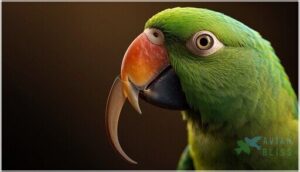
You’ll often spot beak overgrowth by checking for visible asymmetry, increased curvature, or excessive length that interferes with normal function. Beak shape analysis reveals whether the tip has become too pointed or unevenly worn, while beak length measurement helps you identify abnormal beak growth before it worsens.
Watch for beak tip problems like misalignment, and note any deviation from your parrot’s typical beak symmetry.
Difficulty Eating or Grooming
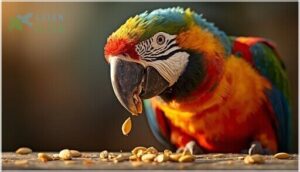
When beak overgrowth affects beak alignment, you’ll notice your parrot struggling to grasp food or avoiding harder items that require precise bite force. Watch eating habits closely—dropping seeds, favoring softer foods, or reduced intake signals beak sensitivity issues.
Grooming techniques also suffer, since the overgrown parrot beak can’t reach feathers properly, leaving plumage dull and unkempt despite your bird’s efforts at beak maintenance.
Discoloration, Cracks, and Flaking
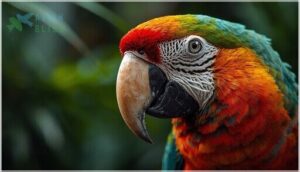
Surface changes tell a bigger story about your parrot’s beak health than length alone. Watch for these warning signs that demand veterinary attention:
- Beak discoloration—yellowing suggests liver stress, while pale whitening indicates keratin health issues from malnutrition affecting beak hydration
- Cracks deeper than 1mm—require crack prevention strategies to avoid infection
- Frequent flaking—reveals flaking causes like poor diet impacting bird beak health
Preventing Overgrown Beak Issues in Parrots

Preventing beak overgrowth is far easier than treating it, and the key lies in creating the right environment and habits from day one. Simple daily choices about what you feed your parrot, what toys you provide, and how closely you monitor changes can make all the difference.
Preventing beak overgrowth starts with daily choices in diet, toys, and monitoring—far easier than treating problems later
Let’s look at the specific steps you can take to keep your parrot’s beak healthy and properly worn.
Providing Chewable Toys and Natural Perches
You can prevent beak overgrowth by giving your parrot chewable toys and natural perches that encourage beak wear. Hardwood branches, untreated wooden toys, and rope perches offer varied textures that promote natural foraging and beak trimming.
These enrichment strategies support bird beak health while reducing the need for veterinary beak trimming. Always make certain chew toy safety by inspecting perch materials for splinters or harmful coatings before use.
Ensuring a Balanced, Nutrient-Rich Diet
Your parrot’s beak depends on proper avian nutrition and diet to grow strong, wear evenly, and resist overgrowth. A balanced diet prevents nutritional deficiencies that weaken keratin, while dietary variety ensures your bird receives essential minerals and vitamins from fresh vegetables, fruits, whole grains, and quality pellets.
- Calcium-rich foods like leafy greens strengthen beak structure
- Vitamin enrichment through fortified pellets promotes keratin growth
- Mineral supplements address gaps in food quality
- Nutrient balance across protein sources maintains parrot diet integrity and bird nutrition
Regular Beak Inspections and Monitoring
Once you’ve established proper avian nutrition and diet, you need to watch for changes with routine parrot beak inspections. Check weekly during cage cleaning, comparing symmetry and length with beak inspection tips from your avian veterinarian.
This monitoring frequency catches beak overgrowth early, giving you owner awareness to prevent complications before beak trimming becomes necessary, making beak care proactive rather than reactive.
Creating an Enriching Environment
Your parrot’s surroundings shape beak wear just as much as diet does. Environmental design that promotes natural foraging and behavioral enrichment helps prevent beak overgrowth through daily use.
- Rotate bird toys weekly to maintain interest and encourage active chewing
- Provide varied perch textures that promote different grip pressures
- Incorporate puzzle feeders that stimulate natural foraging behaviors
- Make certain safe social stimulation through supervised interaction time
These enrichment activities keep your parrot’s beak naturally trimmed while supporting healthy parrot behavior.
Treatment Options for Overgrown Parrot Beaks
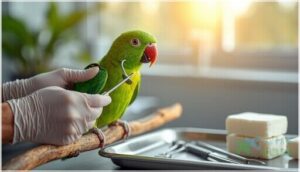
When your parrot’s beak has overgrown beyond what natural wear can manage, you’ll need professional intervention to restore proper function and prevent complications.
Treatment approaches range from direct veterinary trimming to addressing hidden medical issues that might be fueling abnormal growth. Let’s walk through the key treatment options your avian vet will likely recommend, along with safe steps you can take at home to support your bird’s recovery.
Veterinary Beak Trimming and Shaping
Professional veterinary procedures offer several beak trimming methods to correct overgrowth safely. Your avian vet will choose the best approach based on your bird’s specific needs, using techniques like infrared trimming to minimize discomfort and promote healing.
| Trimming Method | How It Works | Key Benefits |
|---|---|---|
| Infrared Trimming | High-intensity infrared source treats tissue without contact | Reduces regrowth, minimizes open wounds, lowers acute pain |
| Hot Blade Trimming | Heated blade cuts beak to create blunt tip | Creates predictable results, cauterizes during cutting |
| Mechanical Trimming | Physical blade or scissors shorten beak | Direct control, quick procedure |
| Beak Shaping | Gentle smoothing after initial trim | Prevents snagging, improves comfort |
| Anesthesia Support | Local anesthesia during procedure | Reduces initial discomfort, calms bird |
Proper beak shaping creates a smooth, blunt tip aligned with natural curvature, ensuring your parrot can eat comfortably. Avian dentistry requires specialized training—never attempt aggressive trimming yourself, as you risk damaging sensitive nerves and blood vessels. Trained professionals use vet-approved beak shaping tools to trim the upper beak slightly more than the lower, maintaining proper bite alignment. Post-procedure monitoring detects bleeding or infection early, while pain management protocols keep your bird comfortable throughout recovery.
Addressing Underlying Medical Problems
Once your vet trims the beak, they’ll investigate deeper medical interventions to stop the problem from returning.
Beak infections, liver disease, and nutrient deficiencies often drive overgrowth, so your avian veterinarian will run blood work, oral swabs, and imaging to pinpoint parrot health issues.
Treating kidney dysfunction, thyroid imbalances, or chronic inflammation tackles root causes, while targeted beak overgrowth prevention through veterinary care for parrots ensures long-term beak abnormalities treatment and improved avian health.
Dietary Adjustments and Supplementation
Adjusting your bird’s diet becomes the cornerstone of beak overgrowth prevention and long-term parrot health maintenance. Your vet will prescribe balanced nutrition strategies that target nutrient absorption and support avian health:
- High-quality pellets paired with fresh vegetables for complete avian nutrition and diet
- Vitamin supplements and mineral support customized to deficiencies revealed in bloodwork
- Probiotic benefits that boost digestive health and improve bird nutrition and diet outcomes
Safe At-Home Supportive Care
Home safety measures and gentle handling form the foundation of supportive beak care between veterinary visits. You’ll want to clean perches daily to maintain beak hygiene, provide non-toxic chewables for environmental enrichment, and monitor your parrot during brief inspection sessions.
Never attempt aggressive beak trimming yourself, as this risks damaging vascular tissue and compromising avian health and parrot health outcomes.
Long-Term Beak Care and Maintenance
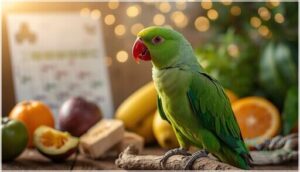
Once you’ve addressed an overgrown beak, your work isn’t finished.
Long-term management requires consistent effort, including regular vet visits, proper nutrition, and vigilant monitoring to catch problems early. Let’s walk through the key strategies that’ll keep your parrot’s beak healthy for years to come.
Routine Veterinary Check-Ups
Scheduling twice-yearly parrot health checks allows your avian veterinarian to catch beak problems before they interfere with eating or grooming.
During these veterinary exams, the vet measures beak length, inspects alignment, and checks for early signs of overgrowth, cracks, or discoloration.
Regular checkups also include blood work and fecal screening, helping identify underlying conditions like liver disease that contribute to abnormal beak growth.
Ongoing Diet and Enrichment Strategies
Keeping your parrot’s beak health long-term depends on consistent nutrient balance and daily beak exercise through food variety and chew toy rotation. Consider these ongoing strategies:
- Feed high-quality pellets with fresh fruits, vegetables, and limited nuts to support beak maintenance and avian nutrition
- Rotate safe wood perches and mineral blocks weekly for environmental stimulation
- Use puzzle feeders to encourage natural foraging and strengthen beak muscles
Monitoring for Recurrence and Early Intervention
Regular veterinary checkups every four to eight weeks let you catch beak regrowth before it spirals into full overgrowth.
As a parrot owner, watch for early warning signs like difficulty eating, new cracks, or rapid length increases beyond two millimeters in two weeks. Prompt intervention timing and careful post-trim care reduce recurrence rates and keep beak problems manageable.
Importance of Owner Education and Awareness
Your role as a parrot owner extends far beyond providing food and water. Owner empowerment through education resources and awareness programs builds beak health literacy that directly reduces preventive care strategies failures.
Consider these essentials:
- Learn to spot early beak overgrowth before it affects eating
- Understand avian nutrition and diet fundamentals for beak strength
- Recognize when beak trimming techniques require professional help
- Join community workshops addressing parrot beak problems
Knowledge transforms you from observer to advocate.
Frequently Asked Questions (FAQs)
What happens if a parrots beak is too long?
When a parrot’s beak becomes too long, feeding difficulties arise quickly, making it hard to crack seeds or grasp food properly, which leads to weight loss, malnutrition, and potentially serious beak infections.
How to help a bird with an overgrown beak?
Bring your bird to an avian veterinarian for professional beak trimming, then improve diet with nutrient-rich pellets and vegetables while adding chewable toys and natural perches to promote healthy wear.
What causes a bird’s beak to overgrow?
A bird’s beak overgrows when it lacks hard foods that naturally wear down keratin, when nutritional deficiencies weaken beak structure, or when underlying liver disease, trauma, or environmental factors disrupt normal growth patterns.
What happens if a bird’s beak gets too long?
When a beak grows too long, your bird struggles to pick up food, groom properly, and maintain balance, which can lead to malnutrition, poor hygiene, and even behavioral changes requiring immediate veterinary attention.
What does an unhealthy beak look like?
Spotting trouble early matters. An unhealthy beak shows texture issues like flaking, keratin problems such as soft spots, beak deformities including scissor beak, color changes, beak cracks, or visible asymmetry indicating underlying beak problems.
Can overgrown beaks cause permanent beak damage?
Yes, prolonged beak overgrowth can cause permanent deformity if untreated.
Structural damage, misalignment, and weakened tissue may require beak reconstruction through avian dentistry, though early intervention substantially reduces the beak damage risk.
How often should professional beak trimming occur?
There’s no one-size-fits-all schedule—Growth Factors, Species Differences, and Age Influence determine timing.
Most parrots with proper Enrichment Role and beak care need professional Trimming only when overgrowth appears, not routinely.
What emergency steps for severely overgrown beaks?
If your bird’s overgrown beak prevents eating or causes bleeding, contact an avian veterinarian immediately for emergency trimming under sedation, while offering soft foods and minimizing stress at home.
Are there specific beak trimming tools available?
Ironically, most beak trimming tools aren’t meant for your hands at home.
Veterinarians use diamond-coated rotary files, cordless electric grinders with variable speeds, and gentle emery boards for safe, controlled beak shaping without damaging delicate tissue.
Can beak overgrowth indicate serious diseases?
Absolutely—beak overgrowth often signals underlying liver health issues, Psittacine Beak and Feather Disease, or metabolic disorders, making veterinary care essential to identify these serious avian pathology concerns and protect your bird’s long-term wellbeing.
Conclusion
Your parrot’s beak is a window into health, revealing nutritional gaps and lifestyle issues long before they become crises. Addressing parrot overgrown beak problems early means fewer vet visits, less stress for your bird, and a better quality of life overall.
Stay vigilant with diet, enrichment, and regular inspections, and you’ll catch issues while they’re still minor. Prevention isn’t complicated—it just requires consistency and attention to the details that matter most.