This site is supported by our readers. We may earn a commission, at no cost to you, if you purchase through links.
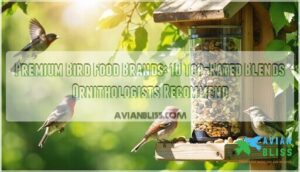 If you want the best for your backyard birds, premium bird food brands like Kaytee, Wagner’s, and Lyric deliver exceptional blends packed with quality.
Look for ingredients like sunflower hearts for energy, peanuts for protein, and mealworms for a natural insect boost. Some blends even include dried fruits and nyjer thistle seeds, which finches absolutely adore.
These foods attract a variety of species, reduce waste, and provide essential nutrients to keep birds healthy and thriving. Invest in high-quality mixes, and you’ll soon notice a livelier, more colorful yard.
Curious which blend fits your local birds best? There’s more to explore.
Table Of Contents
- Key Takeaways
- Key Ingredients for Premium Nutrition
- Benefits of Choosing Premium Bird Food
- Selecting The Right Premium Blend
- Maintaining a Healthy Bird Feeding Station
- Frequently Asked Questions (FAQs)
- What is the best brand of bird food?
- What is the best pet bird food brand?
- What is the best food to feed a bird?
- What kind of bird seed does the Audubon Society recommend?
- What is the top of the bird food chain?
- What is the healthiest thing to feed birds?
- What are birds best food?
- What is the best bird food for winter?
- Are organic bird foods worth the cost?
- How to store birdseed to prevent pests?
- Conclusion
Key Takeaways
- You’ll attract more bird species with premium blends containing sunflower hearts, peanuts, and mealworms that provide energy, protein, and essential nutrients.
- Premium bird food reduces waste, keeping your feeders cleaner and minimizing ground mess that might attract pests.
- Choose specific seeds like Nyjer thistle for finches or peanuts for woodpeckers to match local species’ preferences and keep them coming back for high-quality birdseed.
- Fresh, nutritious meals stored properly in airtight containers ensures birds get safe, nutritious meals every time.
Key Ingredients for Premium Nutrition
You’ll notice dramatic improvements in backyard bird activity when you provide food with nutrient-rich ingredients like sunflower hearts, peanuts, and mealworms instead of cheap fillers.
Dramatically boost backyard bird activity with nutrient-rich ingredients like sunflower hearts, peanuts, and mealworms—your feeders will become irresistible bird havens!
Premium blends contain these essential components that supply the energy, protein, and vitamins your feathered visitors need for healthy plumage, strong flight muscles, and successful breeding, with essential components being crucial for their well-being.
Sunflower Hearts: Energy Source
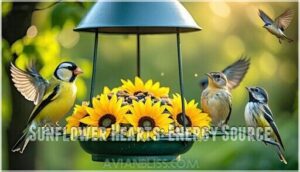
Sunflower hearts, the undisputed champions of high-energy bird food, deliver maximum nutrition without the waste of shells.
You’ll notice finches, chickadees, and cardinals flocking to your feeder when you offer these premium kernels. They’re packed with healthy fats and proteins that birds need, especially during cold months when energy demands soar.
Consider buying sunflower hearts to attract more birds. Unlike whole sunflower seeds, these pre-shelled gems create less mess while providing superior nutritional value.
Peanuts: Protein Powerhouse
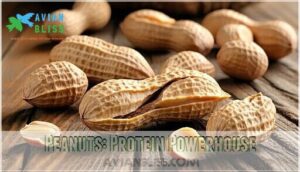
When looking for premium bird food, you’ll find that peanuts are true protein powerhouses for your backyard birds.
They’re packed with essential fats, protein, and nutrients that larger species like woodpeckers, jays, and chickadees can’t resist.
You can offer them shelled or in-shell, depending on your feeder setup.
Just make certain they’re fresh and aflatoxin-free to keep your feathered friends healthy and coming back for more.
It’s also important to avoid salted varieties, as salt can be toxic to birds, and ensure they are fresh.
Mealworms: Natural Insect Protein
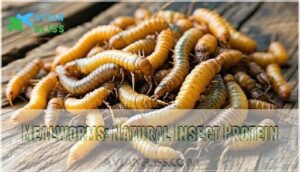
While peanuts satisfy larger birds, mealworms offer incredible protein that mirrors what birds naturally hunt for.
You’ll find these nutritional powerhouses in top bird food brands.
Mealworm nutrition facts:
- Dried mealworms pack 53% protein and 28% fat
- Live mealworms contain 20% protein and are juicier
- They attract insect-eating songbirds that seeds won’t
For best results, limit feeding frequency to small amounts.
You can find various mealworm products online.
Quality nutritious ingredients like these keep your feathered friends coming back for more!
Dried Fruits and Nuts: Variety and Vitamins
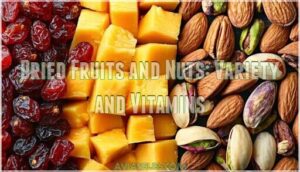
Premium blends regularly feature an assortment of dried fruits and nuts that deliver essential nutrients birds crave.
Dried fruits and nuts offer irresistible nutrients, making your backyard a vibrant hotspot for healthy, happy feathered visitors.
You’ll find cranberries packed with antioxidants alongside raisins, mango, and papaya in top-quality mixes.
Various tree nuts—almonds, pistachios, pecans, and more—provide healthy fats and proteins your feathered visitors need.
This vitamin-rich combination supports bird nutrition while the varied textures appeal to different feeding styles, making your backyard a popular dining destination.
Nyjer Thistle Seeds: Finch Favorites
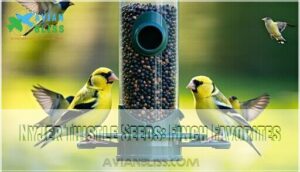
The tiny black Nyjer thistle seeds are pure gold for finch attraction.
You’ll find these high-oil, nutrient-dense seeds in premium blends like Kaytee Nyjer Thistle Seed, specially designed for finch food.
They’re a must-have for tube feeder types with small ports.
Remember, proper seed storage in cool, dry places maintains their freshness.
Purity standards guarantee you’re getting quality thistle that finches can’t resist, making these seeds a valuable resource for finch attraction.
Benefits of Choosing Premium Bird Food
You’ll boost your backyard’s biodiversity when you upgrade to premium bird food, attracting everything from finches to woodpeckers with nutritionally complete blends that contain no fillers.
Premium seed mixes provide essential nutrients that support birds’ health and energy levels, while keeping your feeders cleaner and reducing waste that attracts unwanted pests, which is a key aspect of using nutritionally complete blends.
Attracting a Wide Variety of Birds
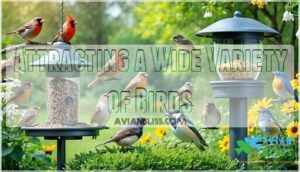
Your backyard’s bird population will explode with diversity when you offer premium seed mixes.
Quality bird food attracts numerous species that budget brands simply can’t match.
- Black oil sunflower seeds draw cardinals, chickadees, and titmice
- Nyjer thistle brings finches flocking to your feeders
- Mealworms invite bluebirds, warblers, and thrushes
With strategic feeder placement and quality seed, you’ll transform your space into a bird-watching paradise throughout seasonal changes and bird migration.
Providing Essential Nutrients
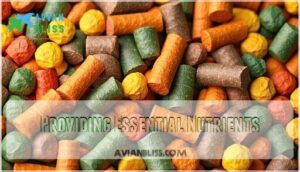
When birds visit your feeders, they’re looking for more than just a quick snack.
Quality bird food delivers the essential nutrients they need for survival and thriving. Premium bird food brands offer balanced nutrition that supports avian health year-round.
A nutrient-rich diet is essential for a bird’s immune health and overall well-being.
| Nutrient | Benefit | Bird Food Source | Supporting Need |
|---|---|---|---|
| Protein | Muscle development | Mealworms, peanuts | Molting needs |
| Fats | High-energy reserves | Sunflower hearts | Cold weather survival |
| Calcium | Bone/eggshell strength | Specialty seeds | Breeding season |
| Vitamins | Immune support | Dried fruits, nuts | Year-round vitality |
Reducing Waste and Mess
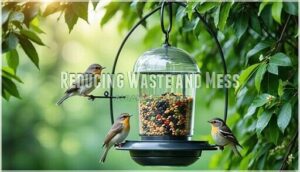
You’ll spend less time sweeping under feeders with no-waste bird seed blends.
Premium shell-free options eliminate hulls that often litter the ground, while specialized seed mixes prevent picky birds from tossing unwanted seeds.
Many top brands now feature nowaste formulations that maintain feeder cleanliness longer.
Consider adding seed catchers beneath feeders to minimize spillage, making ground cleanup a breeze rather than a chore.
Supporting Local Bird Populations
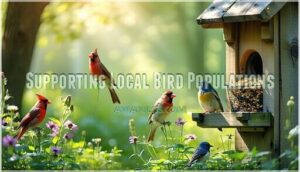
Through premium bird food, you’re directly contributing to bird conservation efforts in your community.
Quality seed blends support birds during critical migration patterns and challenging seasons.
- Create backyard sanctuaries that serve as essential refueling stations
- Provide essential avian nutrition when natural food sources are scarce
- Help maintain healthy bird populations during habitat preservation challenges
- Support biodiversity by attracting native species with wild bird seed
- Join a community involvement network of caring bird enthusiasts
Enhancing Bird Watching
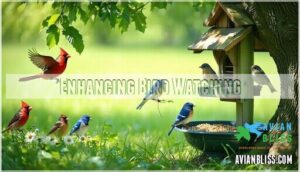
When you provide premium food, your bird watching experiences will transform dramatically.
You’ll notice increased variety and duration of visits, enhancing your identification skills and photography opportunities.
Quality birdseed creates a vibrant habitat where you’ll enjoy countless hours observing fascinating bird behavior up close.
Selecting The Right Premium Blend
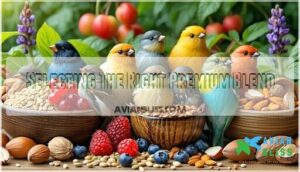
You’ll need to match your backyard visitors with the right premium blend by considering your local species and their bill shapes, just like finding the perfect shoe fit.
Premium seed blends from trusted brands like Duncraft and Wild Birds Unlimited contain high-quality ingredients without fillers, attracting more colorful visitors while keeping your feeders cleaner, which is a key aspect of using high-quality ingredients.
Identifying Local Bird Species
Before selecting premium bird food, you’ll need to know who’s visiting your backyard.
Watch for field markings, listen to birdsong identification, and note behavior patterns. Sketch details or use apps like Merlin Bird ID to confirm sightings.
Northern Cardinals, American Goldfinches, and Black-capped Chickadees have different habitat preferences and feeding habits. Recognizing these differences begins with bird identification basics.
Understanding these seasonal changes helps you choose the perfect birdseed blend that’ll have your feathered friends fighting for dinner reservations!
Considering Bird Preferences
Once you’ve spotted your local visitors, understanding their seed preferences becomes your next step.
Different bird species have distinct tastes – cardinals love sunflower hearts and peanuts, while finches can’t resist Nyjer thistle seeds.
Your feeder choices should match these preferences, accounting for seasonal diets and habitat needs. Watch which bird food attracts the most activity, and you’ll soon know exactly which premium seed mixes to stock.
Understanding Bill Shapes
After noticing your birds’ preferences, it’s time to look at their bills – nature’s perfect tools for eating.
A bird’s bill shape reveals which foods it can easily handle:
- Cone-shaped bills (finches, grosbeaks) crack seeds efficiently
- Thin, pointed bills (warblers) extract insects with precision
- Chisel-like bills (woodpeckers) need high-protein options
- Tubular bills (hummingbirds) require nectar-based food
Match your premium bird food to these natural adaptations for happier backyard visitors!
Choosing Compatible Feeders
Every premium bird food deserves the perfect home. Your feeder choice directly impacts which birds visit and how effectively they can access their food.
| Feeder Type | Best For | Compatible Brands |
|---|---|---|
| Tube Feeders | Small birds | Duncraft, Kaytee |
| Platform Feeders | Larger species | Wild Birds Unlimited |
| Hopper Feeders | Mixed flocks | Harrison’s, Wild Delight |
Consider using specialized feeders for smaller birds. Match your feeder material and size to your target birds—plastic works for most, while metal deters squirrels and stands up to larger visitors.
Prioritizing Fresh Seed
Your bird’s health depends on seed freshness—stale or moldy seed can harm feathered visitors.
To guarantee premium quality:
- Check expiration dates before purchasing any brand
- Store seed in airtight containers away from moisture
- Perform regular visual inspections for signs of pests
- Trust your nose—any musty smell means it’s time for replacement
Premium brands maintain higher quality standards, making your seed storage routine simpler while keeping birds healthy and happy.
Maintaining a Healthy Bird Feeding Station
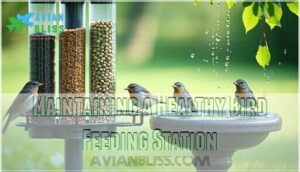
Keeping your bird feeding station clean and well-stocked is essential for attracting healthy, happy birds.
By offering fresh water, proper seed storage, and predator protection, you’ll create a safe and welcoming space for them to thrive.
Cleaning and Maintaining Feeders
Feeder hygiene isn’t just for looks—it’s for bird health.
Scrub feeders weekly with warm water and vinegar to prevent mold.
Use materials like metal or UV-resistant plastic for durability.
Location matters too; place feeders in shaded spots to keep bird food fresh.
A clean feeder means fewer pests, better seed quality, and safe, happy birds visiting your yard, which is crucial for maintaining happy birds.
Storing Birdseed Properly
Storing birdseed properly guarantees it stays fresh and nutritious.
Use these tips:
- Store in airtight containers to keep pests out.
- Control moisture to avoid mold.
- Keep in a cool, dry space to reduce temperature effects.
- Rotate stock regularly to maintain shelf life.
- Check for contaminants to protect seed quality and your feathered friends, ensuring the seed remains nutritious.
Offering Fresh Water
Offering fresh water boosts bird diversity at your feeding station. Use bird baths or shallow dishes as bird attractants, guaranteeing water depth safety (1-2 inches is best).
Clean water dishes regularly to prevent algae growth. During winter, try heated bird baths for easy winter water solutions.
A varied water source guarantees hydration while enhancing bird watching experiences. To guarantee bird health, consider the importance of essential bird nutrients.
| Type | Key Benefit | Cleaning Frequency | Seasonal Tip |
|---|---|---|---|
| Shallow Bath | Safe for smaller birds | Weekly | Add small rocks for grip |
| Heated Bird Bath | Winter water solutions | Bi-Weekly | Prevents freezing |
| Hanging Water Station | Space-saving option | Every 3 days | Position near feeders |
| Ground Dish | Accessible for all sizes | Weekly | Keep shaded in summer |
Creating a Bird-Friendly Habitat
A bird-friendly habitat starts with native plants that provide food, shelter options, and nesting sites.
Add reliable water sources for hydration and bathing—birds appreciate that kind of luxury!
Surround your bird feeders with bird-friendly gardens, offering cover and safe zones.
Thoughtful wild bird care turns your yard into a paradise for birdwatching and guarantees they keep coming back to enjoy the bird-friendly habitat.
Being Mindful of Predators and Pests
Keep bird feeding hassle-free with a few smart moves.
To avoid mistakes:
- Use predator deterrents like baffles to stop squirrels and raccoons.
- Practice pest control by placing feeders away from deer paths.
- Choose thoughtful feeder designs for safe placement and habitat management.
Proper planning protects your birds while ensuring your feeding station stays safe and welcoming.
Frequently Asked Questions (FAQs)
What is the best brand of bird food?
Finding the best bird food is like choosing a fine wine—brands like Duncraft or Kaytee stand out.
They offer high-nutrition blends without fillers, catering to diverse bird species while ensuring health, energy, and satisfaction.
What is the best pet bird food brand?
Harrison’s Bird Foods stands out as the best pet bird food brand for its organic, high-nutrition formulas formulated to meet the needs of every bird species.
Trusted by avian experts, it prioritizes health, sustainability, and premium quality blends.
What is the best food to feed a bird?
Choose high-quality bird food with no fillers, like sunflower hearts, peanuts, or mealworms.
These provide energy, protein, and nutrients, attracting diverse species to your feeder while keeping them healthy and active year-round.
What kind of bird seed does the Audubon Society recommend?
The Audubon Society recommends bird seed blends with sunflower hearts, Nyjer seeds, and peanuts.
These provide high energy, attract diverse species like finches and cardinals, and support bird health without fillers.
Opt for high-quality options!
What is the top of the bird food chain?
At the pinnacle of the bird food chain are nutrient-rich blends like sunflower hearts, mealworms, and peanuts.
These provide unmatched energy, protein, and appeal for most bird species, making them the ultimate feeder choice.
What is the healthiest thing to feed birds?
Picture colorful feathers fluttering to your feeder—birds thrive on sunflower hearts, mealworms, and peanuts.
These protein-packed, energy-rich snacks attract diverse species, support health, and provide the perfect boost for their busy, chirping days.
What are birds best food?
Birds thrive on nutrient-rich options like sunflower hearts, peanuts, mealworms, and Nyjer seeds.
These foods provide energy, protein, and essential nutrients, attracting diverse species to your feeder while supporting their health and daily activity, which is crucial for their health.
What is the best bird food for winter?
When winter bites, choose high-energy bird food like sunflower hearts, peanuts, and mealworms.
These nutrient-packed options deliver warmth and energy, helping birds survive the cold while keeping your feeders bustling with vibrant activity.
Are organic bird foods worth the cost?
Organic bird foods can be worth it if attracting healthy, vibrant birds matters to you.
They’re free from harmful chemicals, ensuring better nutrition and sustainability.
While pricier, their superior quality helps support birds and the environment.
How to store birdseed to prevent pests?
Store birdseed in airtight, pest-proof containers like metal or heavy-duty plastic bins.
Keep it in a cool, dry place off the ground.
Regularly clean storage areas to deter pests, and use fresh seed to avoid attracting insects, keeping the area pest-proof.
Conclusion
Bird feeding is like planting seeds of joy—what you offer shapes what you’ll see.
By choosing premium bird food brands, you’re providing more than just a meal; you’re offering energy-packed sunflower hearts, protein-rich peanuts, and irresistible mealworms that draw vibrant species to your yard.
These blends reduce waste, fuel healthy birds, and create a lively sanctuary for local wildlife.
Invest in top-rated mixes, and watch your backyard transform into a bustling haven of color and song.