This site is supported by our readers. We may earn a commission, at no cost to you, if you purchase through links.
Your backyard birds don’t stop needing water when temperatures drop. A chickadee still needs about 2 ml of water daily just to survive the cold. The problem is that standard bird baths turn into solid ice blocks overnight when winter hits. This leaves birds struggling to find liquid water for drinking and preening their feathers.
The good news is you can prevent bird baths from freezing using simple methods that don’t require expensive equipment. Some approaches work better than others depending on your climate and setup. The key is understanding what causes water to freeze and choosing strategies that match your situation and budget.
Table Of Contents
Key Takeaways
- Birds need about 2 ml of liquid water daily in winter because melting snow costs them twice the energy of drinking from an unfrozen source, making accessible water critical for survival.
- Heated bird baths and de-icers are the most reliable methods to prevent freezing, using 50-150 watts with thermostat controls that activate near 32°F to keep water liquid without wasting energy.
- Placement matters as much as heating—position your bird bath in sunny, wind-protected spots near your house to use natural warmth and solar heat while making daily maintenance easier.
- Never add salt, antifreeze, or alcohol to bird baths because these substances cause rapid toxicity and death in small birds, even in tiny amounts.
Why Bird Baths Freeze in Winter
Water freezes when temperatures drop below 32°F and your bird bath is no exception. Several factors determine how quickly this happens and why some baths freeze faster than others.
Understanding these factors helps you keep water available for birds when they need it most.
Factors Affecting Water Freezing
Water freezes when ambient temperature drops to 0°C, but your bird bath might freeze sooner. Water volume matters—shallow basins lose heat faster than deep ones. Air movement speeds up cooling through evaporation. Impurity levels slightly lower the freezing point, though not enough to prevent ice formation.
Solar radiation helps during the day, warming water temperature. Even with above-freezing temperatures, water can still freeze. Cold temperatures combined with wind accelerate freezing, making it harder to keep water available for your backyard birds.
The Importance of Unfrozen Water for Birds
Birds need liquid water year-round, not just in summer. A 20-gram songbird requires about 2 ml daily for hydration needs and thermoregulation. Snow won’t cut it—melting ice demands twice the energy of drinking liquid water.
Birds need liquid water year-round because melting snow demands twice the energy of drinking from an unfrozen source
Access to unfrozen bird baths aids feather maintenance through bathing, which keeps insulation intact. Studies show winter bird care with open water boosts survival rates by 20% and increases habitat use across more species.
Providing liquid water attracts more birds.
Choosing The Best Bird Bath for Winter
Not all bird baths are built to handle freezing temperatures. The right material and design can make a real difference in keeping water accessible for birds all winter long. Here’s what to look for when choosing a winter-ready bird bath.
Material Selection for Cold Weather
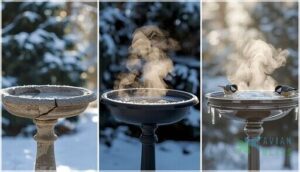
Your choice of material makes all the difference when temperatures drop below freezing. Plastic and metal bird baths resist the repeated freeze-thaw cycles that crack concrete and ceramic within one or two seasons.
Plastic’s frost resistance withstands ice expansion without breaking. Metal stays intact through cold snaps. Skip concrete unless you seal it and store it indoors.
Dark-colored birdbath surfaces absorb more heat and slow ice formation naturally.
Shallow Vs. Deep Bird Baths
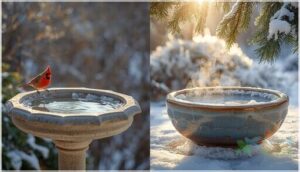
Depth changes everything when ice starts forming. Shallow basins—around 2.5 to 5 cm deep—freeze faster but thaw quicker in sunlight. Deep bowls hold more thermal mass yet can trap expanding ice that cracks the basin.
For bird safety and easier ice removal, stick with shallow designs. Small songbirds prefer wading depth, and you’ll spend less time breaking thick ice blocks each morning.
Features That Prevent Freezing
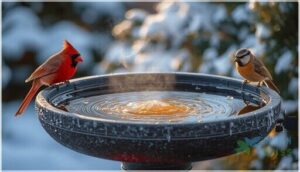
Look for built-in heating elements rated between 50 and 120 watts—these thermostatically controlled features activate only when water approaches freezing, preventing bird bath freezing without wasting energy. Heated bird bath options in dark plastic or resin combine solar absorption with frost resistance.
Water agitation benefits include delayed ice formation, while larger water volume slows freezing.
Bird bath deicer accessories with automatic shutoff add safety to heated bird bath options you already own.
Effective Methods to Prevent Freezing
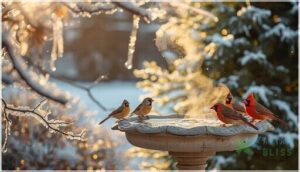
You can stop a bird bath from freezing using a few proven techniques that really work. Some methods use heat while others rely on clever tricks that keep water moving or help it absorb warmth from the sun.
Here are five effective ways to give birds access to water all winter long.
Installing Heated Bird Baths
A heated bird bath is the most reliable way to keep water ice-free all winter. Here’s what to keep in mind:
- Choose the right heater wattage: 50 watts works for small plastic baths; 120–150 watts for larger or concrete models to handle sub-freezing nights.
- Look for thermostat control: Units activate near 32°F and shut off around 40°F, saving electric power while maintaining a heated basin.
- Check material safety: Select BPA-free plastic or insulated metal heated bird bath options that won’t crack in freeze-thaw cycles.
- Plan cord management: Use outdoor-rated cords with GFCI outlets and protect connections from moisture for safe, energy-efficient operation year-round.
Using Bird Bath De-Icers
If you already own a bird bath, a de-icer drops right into the basin and melts ice on demand. Most bird bath de-icer solutions run 50–150 watts and activate near 32°F via thermostat limits, so they’re smart about safe bird bath practices and energy use.
Look for UL-listed units with non-stick coating materials, and always plug into GFCI outlets to protect your heated bird bath setup.
Adding Water Agitators or Fountains
Moving water resists freezing better than still water because circulation delays ice formation by 1–3°C below zero. A small fountain or agitator keeps birds hydrated when natural sources freeze, and you’ll find these water movement techniques boost winter bird visits by more than 40%.
- Choose a 5–10 watt pump to balance agitator energy use and ice prevention
- Expect partial freeze protection down to about −4°C before complete surface ice forms
- Check pump intakes weekly since debris clogs flow and accelerates freezing
- Solar fountains work intermittently in winter, limited by short daylight hours
- Consider a simple drip system using a jug and shallow dish as a budget option
Placing Dark Materials to Absorb Heat
Ideal placement means direct sun exposure—shade eliminates color advantages. This passive method works best on sunny winter days but won’t prevent freezing during prolonged cold or clouds.
Floating Icebreakers (e.g., Small Balls)
Adding an icebreaker like a small ball creates constant surface movement that disrupts ice formation. Even light winds move a ping pong ball enough to break up thin ice before it solidifies.
- Ball size matters: Use 3–6 ping pong balls or tennis balls for medium baths
- Material safety: Choose non-toxic plastic or rubber floats
- Float movement: Position balls centrally for maximum coverage
- Wind effects: Tennis balls stay put better than lightweight options during gusts
Smart Bird Bath Placement Strategies
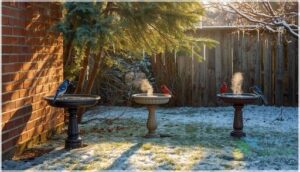
Where you put your bird bath matters just as much as what you put in it. The right spot can cut down on freezing and keep water accessible for birds all winter long.
Let’s look at three simple placement strategies that work.
Locating in Sunny or Sheltered Spots
When you position your birdbath to catch sunlight, you’re using solar exposure to slow ice formation. Choose a sunny spot that also offers wind protection from nearby walls or hedges. This creates heat retention that keeps water warmer. Seasonal repositioning helps as sun angles shift in winter.
Natural cover like shrubs provides a windbreak without blocking all light. The right birdbath location makes all the difference.
Avoiding Windy or Shaded Areas
Wind chill effects can accelerate freezing by up to 50%, so avoid windy corners. Shaded microclimates keep water colder longer, blocking solar heat gain that could prevent ice. Strategic relocation away from these spots is key—winter placement factors matter.
Consider these location fixes:
- Move away from prevailing wind paths
- Avoid dense tree shade
- Use walls as a natural windbreak
- Choose partial sun over deep shade
- Relocate from windy, shaded corners
Moving Bird Baths Closer to The House
Buildings radiate stored heat into the air around them—this urban heat island microclimate effect can keep nearby water a few degrees warmer than open yards.
Moving your bath closer to the house gives you easier monitoring access and boosts maintenance frequency too. Just follow the 3-foot or 30-foot rule from windows to reduce collision risks while taking advantage of that location’s warmth.
Safe Maintenance and Winter Care Tips
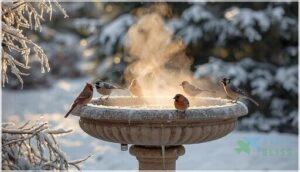
Keeping your bird bath working through winter means more than just preventing ice. You need to maintain the water properly and avoid common mistakes that can harm the birds you’re trying to help.
Here’s what you should do—and what you should never do—to keep your feathered visitors safe all season long.
Filling With Warm (Not Hot) Water
You can keep your bird bath liquid in winter by refilling it with warm water daily. Use water that’s comfortable to your touch—below 120°F—to avoid cracking stone or ceramic baths.
Gradual filling works best and prevents thermal shock. This simple method delays freezing for up to 90 minutes and is completely safe for birds when you skip the boiling temperatures.
Regular Cleaning Without Chemicals
Making cleaning a habit keeps your bird bath safe all winter. You don’t need bleach or alcohol-based disinfectant—just use these steps:
- Scrubbing tools like a stiff brush
- Vinegar solutions (9:1 water to vinegar)
- Rinsing importance—flush thoroughly
- Water changes every week or two
- Pathogen prevention by removing biofilm
Skip harsh chemicals; birds prefer mild detergent or natural methods.
Keeping Bird Baths Full
Topping off your bird bath daily makes all the difference. Full basins freeze slower than shallow ones because volume matters—larger water bodies resist ice formation better. Providing water for birds in winter through methods to prevent freezing starts with simply staying full.
In winter bird bath maintenance, you’ll need to refill often since evaporation and bird splashing drop levels fast. Keeping bird baths ice-free depends on adequate depth for heated baths and bird bath deicer solutions to work.
What Not to Do (Salt, Additives, Space Heaters)
While you want to help birds survive, some shortcuts backfire fast. Never add these to your bird bath:
- Salt or antifreeze – Salt toxicity kills small birds within an hour, and glycerin disrupts feather insulation. Both are deadly even in small amounts.
- Alcohol or chemicals – Isopropyl alcohol causes respiratory distress and poisoning within 30 minutes of exposure.
- Space heaters – Heater risks include fires and electrical shock in wet outdoor conditions. Stick with outdoor-rated safe alternatives instead.
Frequently Asked Questions (FAQs)
How often should I change winter birdbath water?
You should change your birdbath water every two to three days in winter.
When freezing conditions arrive or bird usage increases, refill more often to maintain fresh water and prevent disease through proper winter hygiene.
Can birds drink from partially frozen water?
Yes, birds can drink from partially frozen water when liquid patches remain on the surface. However, consuming ice internally demands high melting energy costs and increases thermoregulation risks, making liquid water safer for avian hydration in winter.
Do heated birdbaths attract more bird species?
Heated birdbaths do attract more bird species. Backyards with open water access see 20–30% more avian species in winter than those with food alone, including robins, bluebirds, and waxwings that rarely visit feeders.
What temperature triggers birds to seek water sources?
Like a thermostat sensing room temperature, birds respond to dehydration thresholds rather than specific temperatures. Winter weather below 0°C and heat above 35°C both trigger water-seeking, making providing water for birds important for avian health during temperature extremes and water scarcity.
Are solar-powered birdbath heaters effective in winter?
Solar energy birdbath heaters work only in mild winters above 25°F with full sun. Below freezing, they can’t match plug-in heated bird bath models that reliably prevent freezing down to -10°F in harsh conditions.
Conclusion
Think of winter water as a lifeline stretched across frozen ground. Birds cling to it each day. Your job is simple: keep that line from snapping.
The methods you’ve learned to prevent bird baths from freezing aren’t just tips. They’re acts of stewardship. When you break ice or plug in a heater, you’re saying birds matter. That choice ripples through the ecosystem.
Keep their water flowing and they’ll keep your winters alive.
- https://www.youtube.com/watch?v=Cji3SwngfcY
- https://www.farmersalmanac.com/winter-bird-bath-ideas
- https://www.facebook.com/groups/910478769698143/posts/1777598056319539/
- https://shopping.yahoo.com/home-garden/outdoor/articles/unexpected-way-prevent-bird-bath-173000164.html
- https://pmc.ncbi.nlm.nih.gov/articles/PMC4581682/