This site is supported by our readers. We may earn a commission, at no cost to you, if you purchase through links.
Your parrot’s cage harbors invisible threats that multiply fastest in the spaces you clean least—the crevices around perch mounts, the rim of water dishes, and the corners where droppings accumulate unnoticed. Gram-negative bacteria like E. coli, Pseudomonas aeruginosa, and Klebsiella pneumoniae don’t announce their presence until your bird exhibits fluffed feathers, labored breathing, or watery droppings containing undigested seed.
By that point, bacterial colonies have already compromised mucosal barriers, and systemic infection may require weeks of antimicrobial therapy with agents like enrofloxacin or doxycycline. Preventing bacterial diseases in pet birds demands understanding the specific transmission pathways in your home, recognizing subtle clinical signs before they escalate, and implementing evidence-based husbandry protocols that support innate immune function.
Table Of Contents
- Key Takeaways
- Common Causes of Bacterial Diseases in Pet Birds
- Recognizing Signs of Bacterial Infection
- Essential Hygiene for Bird Health
- Best Husbandry Practices for Disease Prevention
- Veterinary Care and Zoonotic Risk Reduction
- Frequently Asked Questions (FAQs)
- How do pet birds get bacterial infections?
- How to prevent infection in birds?
- What are three ways to prevent bacterial infections?
- What is the best treatment for bacterial infection in birds?
- Can probiotics help prevent bacterial infections in birds?
- Should I quarantine new birds before introducing them?
- How often should birds receive wellness veterinary exams?
- Are certain bird species more prone to infections?
- What disinfectants are safest for cleaning bird cages?
- Conclusion
Key Takeaways
- Bacterial infections in pet birds stem from predictable transmission pathways—contaminated surfaces, stagnant water, airborne particles, and human contact—that you can systematically eliminate through targeted hygiene protocols and environmental controls.
- Early detection depends on recognizing subtle gastrointestinal signs (watery droppings with undigested seeds, bloody stool), respiratory distress (flared nostrils, abnormal breathing patterns), and behavioral changes (increased lethargy, feather deterioration) before infections require prolonged antimicrobial therapy.
- Prevention centers on two foundational practices: maintaining species-specific nutrition with vitamins A, D, zinc, and selenium to support immune barriers, and implementing stress reduction through environmental enrichment and consistent 12-hour light-dark cycles.
- Zoonotic disease risks from Chlamydia psittaci and mycobacterial species require strict biosecurity measures including 20-second hand washing, N95 respirators during cage cleaning, and 30-45 day quarantine periods for new birds before flock introduction.
Common Causes of Bacterial Diseases in Pet Birds
Bacterial diseases in pet birds don’t happen by accident—they result from specific home environment conditions and exposures. Understanding how bacteria reach your bird, which factors make infection more likely, and how different pathogens behave will help you prevent illness before it starts.
Recognizing early warning signs of bacterial infections in birds allows you to intervene quickly before minor contamination becomes a serious health crisis.
Let’s examine the three main pathways that put your bird at risk.
Transmission Pathways in Home Environments
In your home, bacteria reach your bird through multiple routes you mightn’t expect. Surface contamination occurs when droppings settle on perches, toys, and feeding dishes.
Waterborne pathogens multiply in stagnant bowls, while airborne transmission spreads through feather dust and respiratory droplets. Fomite spread happens via shared utensils and cleaning cloths.
Human contact introduces gram-negative bacterial infections, elevating zoonotic disease risk unless you practice proper hand hygiene. It’s important to understand that the home acts as a reservoir for environmental contamination risks that can contribute to the transmission of infectious diseases.
Risk Factors—Age, Stress, and Nutrition
Age susceptibility increases sharply in neonates and older birds due to diminished immune system function and organ changes affecting antibiotic processing.
Stress management matters because chronic cortisol elevation suppresses immunity, while nutrient deficiencies in vitamins A, D, zinc, and selenium compromise mucosal barriers against gram-negative bacteria.
Dietary balance supporting diverse gut microflora remains your most powerful tool for preventing avian bacterial infections through immune support.
A balanced diet supporting diverse gut bacteria is your most powerful tool for preventing bacterial infections in pet birds
Opportunistic Vs. Primary Bacterial Pathogens
Understanding pathogen classification helps you protect your flock.
Opportunistic bacterial pathogens like Pseudomonas aeruginosa and Staphylococcus aureus exploit weakened host defenses, requiring stress or malnutrition to establish infection. Primary pathogens possess intrinsic bacterial virulence factors enabling disease in healthy birds regardless of immune status.
Gram-negative bacteria dominate opportunistic avian bacterial infections, while infection mechanisms differ fundamentally between these categories, directly affecting your bird’s disease susceptibility and treatment outcomes.
Understanding how bacterial and viral infections differ in birds helps you recognize symptoms faster and choose the right veterinary intervention.
Increased antimicrobial resistance in emerging pathogens is an escalating threat that can hinder treatment success in both birds and humans.
Recognizing Signs of Bacterial Infection
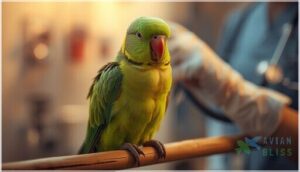
Bacterial infections in pet birds don’t always announce themselves with obvious symptoms, which is why you need to know what to watch for.
The earlier you spot the warning signs, the better your chances of preventing a minor infection from becoming life-threatening systemic disease. Let’s look at the specific gastrointestinal, respiratory, and behavioral indicators that signal your bird needs immediate veterinary attention.
Gastrointestinal Symptoms in Pet Birds
Your bird’s droppings tell a story that shouldn’t be ignored. Gastrointestinal symptoms from bacterial diseases in pet birds often start with diarrhea causes like gram-negative bacteria disrupting normal gut flora.
Watch for mushy feces, bloody or tarry droppings, frequent regurgitation, or undigested seeds—all signs of digestive infections requiring immediate fecal analysis. Avian bacterial infections targeting the gastrointestinal tract can quickly spiral into dehydration and life-threatening weight loss.
Respiratory Signs to Watch For
Respiratory distress in your bird demands immediate attention, as bacterial diseases in pet birds frequently target airways. Gram-negative bacteria and avian mycobacteriosis commonly trigger respiratory infections with unmistakable warning signs:
- Airway obstruction symptoms—flared nostrils, stridor, or visible chest retractions during inhalation
- Abnormal breathing patterns—rapid shallow respirations, prolonged expiratory phases, or apnea episodes
- Nasal discharge—crusting around nares with frequent sneezing clusters
- Altered lung sounds—crackles, wheezes, or diminished breath sounds on auscultation
Respiratory problems in birds escalate quickly without veterinary intervention.
Behavioral and Physical Changes
Lethargy signs and behavioral issues in birds often precede obvious physical symptoms of avian bacterial infections. You’ll notice your bird sleeping more during daylight hours, refusing favorite foods, or withdrawing from social interaction.
Feather condition deteriorates—expect dullness, abnormal molting, or excessive preening. These behavioral shifts, combined with reduced vocalization and altered sleep patterns, signal developing bacterial diseases requiring immediate veterinary assessment.
Essential Hygiene for Bird Health
You can’t prevent what you can’t control, and in the context of bacterial diseases in pet birds, environmental hygiene is your first line of defense. Maintaining a clean cage isn’t just about aesthetics—it’s about eliminating the breeding grounds where pathogens like E. coli, Pseudomonas, and Klebsiella thrive.
Here’s how to create a habitat that protects your bird’s health through proper sanitation and handling practices.
Proper Cage Cleaning and Disinfection
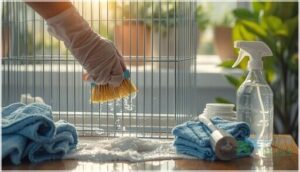
You’ll shield your bird from gram-negative bacteria and bacterial infections when you follow consistent hygiene protocols. Effective cage sanitizing and cleaning schedules prevent antimicrobial therapy down the line.
- Scrub all surfaces with 1:1 warm water and pet-safe detergent weekly
- Apply bird-safe disinfectant to corners and crevices monthly
- Rinse thoroughly to remove chemical residues
- Air dry completely before reintroducing your bird
- Replace soiled liners daily for ideal cleaning and sanitation for bird habitats
Safe Handling of Food, Water, and Supplies

Contaminated food and water remain the most overlooked culprits behind gram-negative bacteria outbreaks in captive psittacines.
Your preventive care strategy demands strict food safety tips: wash hands 20 seconds before handling supplies, rinse produce under running water, and replace contents every 1–2 days.
Water purification through daily changes and weekly supply sanitization with hot water and dish soap will reduce zoonotic diseases and eliminate the need for future antimicrobial therapy.
Reducing Environmental Bacterial Load
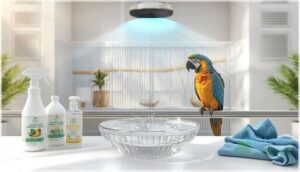
Think of your bird’s environment as a battlefield where gram-negative bacteria and gram-positive bacteria compete for territory—proper ventilation systems and air purification tip the scales in your favor.
To minimize avian bacterial infections and reduce reliance on antimicrobial therapy, implement these biosecurity measures:
- Increase air exchanges to 4–6 per hour using HEPA filtration
- Sanitize cage surfaces weekly with quaternary ammonium disinfectants
- Monitor water quality daily and swap to filtered sources
Best Husbandry Practices for Disease Prevention
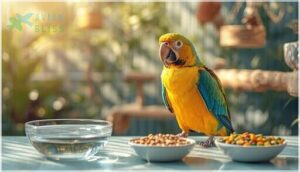
Preventing bacterial disease in your bird isn’t just about keeping the cage clean—it’s about creating an environment that promotes a healthy immune system from the inside out.
What you feed your bird and how you manage daily stressors can make the difference between a resilient companion and one that’s vulnerable to opportunistic infections. Let’s look at two foundational husbandry practices that strengthen your bird’s natural defenses.
Nutrition and Immune Support
Your bird’s immune system thrives on a balanced diet customized to its species-specific nutritional needs. Nutritional deficiencies compromise avian immunology, making birds vulnerable to opportunistic pathogens.
You’ll want to provide immune boosters through fresh vegetables, quality pellets, and targeted nutrient supplements when recommended by your veterinarian. Healthy feeding practices directly support gut health, which functions as your bird’s first defense against bacterial invasion.
Stress Reduction and Environmental Enrichment
Beyond nutrition, stress management and environmental enrichment form the cornerstone of preventive care in avian health. Chronic stress suppresses your bird’s immune defenses, increasing susceptibility to bacterial infection.
To promote behavioral wellness through habitat design, you should:
- Rotate safe toys biweekly and provide diverse perch textures to sustain curiosity
- Maintain predictable routines with 12-hour light-dark cycles supporting circadian health
- Enable supervised bird socialization while offering private retreat spaces
These environmental factors in bird health directly impact disease resistance.
Veterinary Care and Zoonotic Risk Reduction
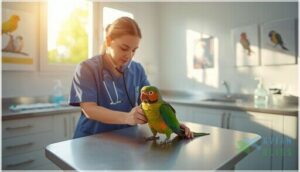
Your role in preventing bacterial disease doesn’t end with good husbandry—it extends to working closely with your veterinarian and protecting your own health.
Many avian bacterial infections, particularly Chlamydia psittaci and mycobacterial species, can spread from birds to humans, so understanding zoonotic risks is essential for both you and your family. Let’s examine how you can support effective treatment plans and minimize disease transmission in your household.
Following Treatment Protocols and Owner Compliance
Successfully managing avian bacterial infections hinges on strict medication adherence and dose timing to maintain therapeutic antimicrobial levels. Your veterinarian will establish clear treatment protocols customized to the identified bacterial pathogens, often requiring antibiotic therapy for 7 to 14 days.
Owner education drives treatment efficacy—you’ll receive written instructions, dosing charts, and follow-up schedules. Compliance strategies include daily medication logs and telemedicine check-ins to monitor your bird’s response.
Protecting Human Health—Safe Bird Handling Practices
While antimicrobial therapy controls infection in your bird, zoonotic disease risk and prevention demand equal attention to protect household members from salmonellosis and chlamydiosis.
Wash hands with soap for at least 20 seconds before and after bird handling. Wear protective gear—gloves and N95 respirators—when cleaning cages of suspected-infected birds.
Safe interaction protocols and hand hygiene minimize public health risks associated with pet birds.
Frequently Asked Questions (FAQs)
How do pet birds get bacterial infections?
Contaminated food, water, and shared feeding dishes introduce enteric bacteria directly into your bird’s gastrointestinal tract, while poor cage hygiene creates reservoirs of gram-negative organisms like E. coli and Klebsiella that opportunistically exploit weakened immunity.
How to prevent infection in birds?
You’ll prevent avian bacterial infections through daily biosecurity measures: disinfect cages with bird-safe solutions, provide fresh water, practice strict bird hygiene when handling supplies, and schedule routine veterinary checkups for early disease prevention.
What are three ways to prevent bacterial infections?
Think of disease management as building a fortress: daily cage cleaning removes droppings harboring bacteria, fresh water prevents gastrointestinal infections, and routine veterinary checkups catch avian bacterial infections early—essential preventive care for bird health.
What is the best treatment for bacterial infection in birds?
You’ll need culture-guided antimicrobial therapy customized to your bird’s infection.
Antibiotic choices like doxycycline or enrofloxacin target specific pathogens, while dosing regimens and monitoring response guarantee safe, effective avian bacterial infection treatment with supportive care.
Can probiotics help prevent bacterial infections in birds?
Probiotics containing Lactobacillus and Bifidobacterium strains support gut health and the bird microbiome by enhancing immune boosters, producing antimicrobial compounds, and helping resist gram-negative bacteria through competitive exclusion after antibiotic therapy.
Should I quarantine new birds before introducing them?
Absolutely—isolating newcomers for 30 to 45 days in a dedicated space with separate gear is your first line of defense against introducing bacterial pathogens before silent carriers expose your existing flock to zoonotic disease.
How often should birds receive wellness veterinary exams?
Your avian veterinarian should examine pet birds annually to establish a health baseline and detect subtle diseases early through routine veterinary care, though senior birds or those with chronic conditions may require more frequent preventive care schedules.
Are certain bird species more prone to infections?
Yes—parrots like Amazons and budgerigars face higher infection risk factors from stress and crowding, while canaries harbor Salmonella more readily.
Species susceptibility varies with genetics, housing density, and nutrition affecting bird immune systems substantially.
What disinfectants are safest for cleaning bird cages?
The strongest cleaners can harm your bird’s delicate lungs.
You’ll want F10SC disinfectant, diluted hydrogen peroxide, or quaternary ammonium products—effective against gram-negative and gram-positive bacteria while remaining avian-friendly when properly rinsed.
Conclusion
Bacterial burdens in aviaries aren’t inevitable—they’re entirely preventable through consistent application of evidence-based protocols you’ve now mastered. Preventing bacterial diseases in pet birds hinges on recognizing that pathogen transmission occurs through discrete, predictable routes in your home environment.
When you eliminate substrate moisture, disinfect perches weekly, and provide immunocompetent nutrition, you disrupt colonization before clinical disease emerges. Your vigilance transforms cage maintenance from routine chore into life-preserving intervention, safeguarding both avian patients and household contacts from zoonotic exposure.
- http://www.aphis.usda.gov/wps/portal/aphis/ourfocus/importexport?1dmy&urile=wcm%3apath%3a%2Faphis_content_library%2Fsa_our_focus%2Fsa_animal_health%2Fsa_import_into_us%2Fsa_entry_requirements%2Fsa_avian%2Fct_nonus_pet_bird
- https://vcahospitals.com/know-your-pet/recognizing-the-signs-of-illness-in-pet-birds
- https://www.avianempire.co.nz/pages/enteritis
- https://www.pets4homes.co.uk/pet-advice/digestive-problems-in-birds.html
- https://askavet.com/blogs/news/vet-health-2025-avian-gastric-yeast-megabacteria-in-birds-symptoms-testing-and-treatment