This site is supported by our readers. We may earn a commission, at no cost to you, if you purchase through links.
Your parrot’s perch setup can make the difference between strong, healthy feet and chronic pressure sores that require veterinary intervention. Most cage owners unknowingly create foot problems by using identical perch diameters or placing them too close to food bowls, where droppings accumulate on gripping surfaces.
Birds naturally shift their weight across varied perches throughout the day, exercising different foot muscles and preventing the fatigue that leads to bumblefoot and arthritis. Getting proper bird perch placement in cage right means thinking like your bird—creating distinct zones for eating, sleeping, and playing while leaving enough open space for short flights and wing stretches.
The layout you choose today shapes your bird’s physical comfort and behavioral well-being for years to come.
Table Of Contents
- Key Takeaways
- Understanding Bird Perch Types and Materials
- Strategic Perch Placement in Your Bird Cage
- Optimal Perch Spacing and Orientation Techniques
- Training Your Bird to Use Perches Properly
- Perch Maintenance and Safety Best Practices
- Frequently Asked Questions (FAQs)
- How many perches should be in a birdcage?
- Where should the highest perch in an aviary be placed?
- Do birds like their cages covered at night?
- How many perches does my bird actually need?
- Can perches be placed near cage doors safely?
- Should perches be removed at night for sleep?
- What perch angle promotes the best foot exercise?
- Conclusion
Key Takeaways
- Mix perch diameters and materials (wood, rope, concrete) to prevent foot fatigue and bumblefoot while naturally trimming nails and exercising different muscle groups throughout the day.
- Position perches at varying heights with at least 6 inches from cage walls and away from food bowls to prevent tail damage, contamination, and allow proper flight paths between levels.
- Clean perches weekly with bird-safe soap, inspect for cracks or fraying every maintenance session, and replace worn perches every 6-12 months based on chewing damage.
- Use 3-5 perches in most cages with gentle diagonal angles (10-15 degrees) to promote natural gripping and balance without overcrowding or blocking movement zones.
Understanding Bird Perch Types and Materials
Your bird’s feet spend all day gripping perches, so choosing the right materials isn’t just about comfort—it’s about health. Each perch type fulfills a different purpose, from keeping nails naturally trimmed to giving tired feet a softer place to rest.
Rotating between different perch materials prevents foot fatigue and ensures your bird’s muscles stay engaged throughout the day.
Choosing the right perch material protects your bird’s foot health, with each type serving a purpose from nail trimming to comfort
Here’s what you need to know about the main options and how they affect your bird’s well-being.
Natural Wood Perches for Nail Care
Natural wood perches use branches from non-toxic trees like manzanita, apple, or willow to give your bird’s feet the workout they need. These perches offer varying diameters and rough surfaces that promote natural nail trimming and strengthen foot muscles.
The uneven texture distributes pressure across the foot, preventing sores while keeping nails naturally filed. Always choose untreated wood to guarantee perch material safety.
For more details on selecting safe trees for perches, consult expert guidelines to keep your bird healthy.
Plastic and Rope Perch Options
Plastic perches offer lightweight convenience and easy cleaning, but watch for smooth surfaces that can wear down claws or cause slipping.
Rope perches bring soft, flexible grip that massages your bird’s feet while encouraging natural movements. However, you’ll need to inspect rope texture regularly for fraying or chewable strands that pose safety risks.
For best results, consider introducing multiple perch types and sizes to provide variety and prevent foot problems.
Concrete Perches for Nail Trimming
Concrete perches help manage nail trimming and beak health through their gritty, textured surfaces. These mineral perches reduce bacterial load by up to 90 percent with weekly bird-safe cleaners, but you’ll need to inspect them regularly for rust or mineral buildup.
| Perch Type | Primary Benefit | Maintenance Need |
|---|---|---|
| Cement | Nail and beak wear | Weekly disinfection |
| Mineral | Natural filing action | Buildup removal |
| Textured stone | Grip and trimming | Rust inspection |
| Pumice blend | Gentle abrasion | Regular cleaning |
| Sandy finish | Controlled wear | Monthly replacement check |
Position concrete perches away from food and water to prevent contamination.
Diameter and Texture Considerations
Beyond surface texture, perch diameter and materials directly impact your bird’s foot health and comfort. Small to medium parrots need perches between 0.75 and 1.25 inches to grip naturally without toe strain. Mix diameters and textures—natural wood for nail trimming, rope for massage—so your bird exercises different muscles. Avoid extremes: overly smooth surfaces cause slipping, while too-rough textures can create sores.
For a comprehensive breakdown of safe perch sizing across all bird species, check out this complete guide to choosing the right bird perch.
Perch Size Options for Healthy Feet:
- Small birds (0.5–0.75 inches): finches, canaries, budgies
- Medium birds (0.75–1.25 inches): cockatiels, conures, small parrots
- Large birds (1.5+ inches): macaws, cockatoos, African greys
- Variable diameters: rotate thin and thick to prevent pressure points
Strategic Perch Placement in Your Bird Cage
Where you put perches matters just as much as what they’re made of. Smart placement keeps your bird healthy, active, and safe from common cage hazards.
Let’s look at the key positioning strategies that’ll set up your bird’s space the right way.
Positioning Perches at Different Heights
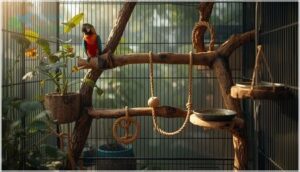
Think of perch height variations as your bird’s personal jungle gym. Place perches at different levels in your bird cage to create distinct activity zones—high spots for roosting, mid-level for play, and lower areas for eating.
This vertical space encourages climbing behaviors, promotes foot health by varying pressure points, and keeps your bird active throughout the day.
Avoiding Food and Water Contamination
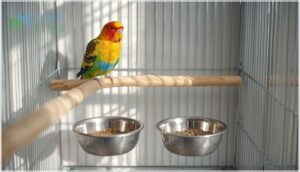
When perches sit directly above food and water dishes, droppings contaminate your bird’s meals—an invitation for bacteria and illness.
Position perches at least a few inches away from feeding stations to maintain clean water sources and safe food storage.
This simple cage setup adjustment protects your bird’s health through basic contamination control and smart hygiene practices in your overall cage design.
Preventing Tail Feather Damage
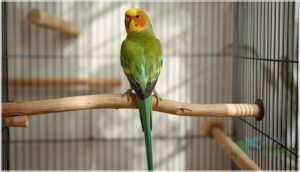
Your bird’s tail feathers need room to breathe—when they rub against cage walls or catch on rough perch edges, damage follows fast.
Protect those beautiful plumes with smart feather protection strategies:
- Space perches at least 6 inches from cage walls so tail feathers hang freely without brushing bars during normal movement.
- Choose smooth, rounded perch materials like natural wood or foam-covered options that won’t snag delicate feather shafts.
- Avoid placing perches in tight corners where tail guarding becomes impossible and feathers bend awkwardly.
- Check perch diameter fits your bird’s grip while allowing tail clearance—too wide forces unnatural positioning that stresses feathers.
Regular bird handling and cage design tweaks prevent costly feather care emergencies down the road.
Leaving Space for Movement and Flight
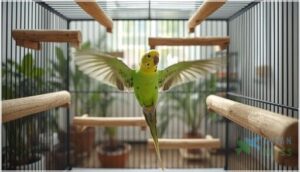
Flight Path Clearance isn’t optional—it’s essential for your bird’s daily well-being and physical health. Proper cage design and layout means leaving unobstructed air channels between perches so your bird can stretch its wing span without clipping bars or furniture.
| Movement Zones | Vertical Space Needed | Perch Height Adjustment |
|---|---|---|
| Takeoff area | 4 inches clearance | Position away from walls |
| Landing buffer | 3-4 inches behind perch | Stagger levels gradually |
| Flight corridor | 6-12 inches between perches | Avoid direct alignment |
| Wing extension | 2+ inches overhead | Keep below cage top |
Smart bird cage setup prioritizes movement over decoration—your bird will thank you with confident, healthy flight patterns.
Optimal Perch Spacing and Orientation Techniques
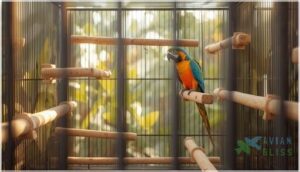
How you arrange perch setup matters just as much as where you place them. The angle, spacing, and positioning all affect your bird’s comfort and physical health.
Let’s look at the key techniques that create a safe and functional perch setup.
Horizontal Vs. Diagonal Perch Placement
Your cage layout gains an edge when you combine horizontal and diagonal perch placement. Horizontal perches let your bird land evenly and rest comfortably, while gentle diagonals at 15 to 30 degrees build balance and work leg muscles.
This perch orientation promotes foot health, encourages bird exercise, and keeps cage design engaging—just avoid steep angles that cause slipping.
Distance Between Multiple Perches
Spacing your perch design correctly transforms your cage design and layout into a safe landing zone. Keep at least 6 inches horizontally between perches to prevent tail brushing, and 8 inches vertically for smaller birds—larger parrots need 12 inches for comfortable flight path clearance.
Perch staggering helps too; avoid stacking more than two levels at the same perch height. This vertical spacing facilitates natural movement and reduces collision risks during cage maintenance.
Keeping Perches Away From Cage Walls
Your perch location needs breathing room from cage walls—aim for 2 to 3 centimeters of clearance. This wall clearance tips approach prevents tail feather damage and reduces rubbing injuries during movement.
Smart perch mounting systems use short extensions or adjustable brackets to maintain consistent perch distance guidelines. Proper cage wall design with off-wall perch placement protects your bird’s plumage while supporting natural turning and wing stretches in your cage setup.
Avoiding Overcrowding in Small Cages
When bar spacing and cage size shrink, smart perch placement becomes your best friend for space efficiency tips and crowding stress reduction.
Stick to one perch per 70 square inches of floor space in small cage design, positioning them in distinct zones for eating, roosting, and bathing.
This bird cage setup guide strategy spreads activity evenly, cuts territorial squabbles, and keeps your flock calm even when space is tight.
Training Your Bird to Use Perches Properly
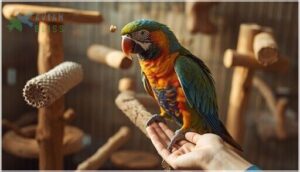
Getting your bird comfortable with perches takes patience and a gentle approach. You can’t force proper perching habits, but you can guide your bird toward safe spots using positive methods.
Here’s how to encourage healthy perching while steering them away from problem areas.
Encouraging Natural Perching Behavior
Your bird will learn best when you let them explore at their own pace. Offer perch variety—natural wood perches, angled orientations, and different textures—so they discover comfortable spots naturally.
Watch their bird behavior closely. When they choose a perch with good natural grip or practice climbing techniques, you’re seeing healthy foot health and bird exercise in action. Patience builds trust and encourages proper avian behavior and psychology through perch placement.
Using Treats and Positive Reinforcement
Once your bird shows interest in a perch, reward them within 1–2 seconds to lock in the connection. Small, bird-safe treats work best—think tiny seed bits or fruit pieces they can swallow quickly.
Pair each reward with gentle praise to reinforce positive reinforcement and behavior shaping. Short, frequent training sessions keep your bird engaged without frustration, building healthy avian behavior and psychology around safe perch placement.
Discouraging Unsafe Perching Spots
Prevention beats correction in terms of cage design and bird injury prevention. Block access to unsafe perch removal areas like corners where feathers snag or edges with perch material hazards.
Follow these perch safety tips:
- Move bowls away from high-traffic perching zones to prevent spills.
- Cover sharp cage corners with soft guards.
- Swap flat surfaces for varied perch height and perch orientation.
- Remove frayed rope before fibers loosen.
Smart perch placement and cage setup protect your bird naturally.
Perch Maintenance and Safety Best Practices
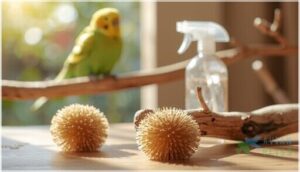
Keeping your bird’s perches clean and safe isn’t something you can set and forget. Regular maintenance protects your bird from infections, injuries, and unnecessary stress.
Here’s what you need to do to keep those perches in top shape.
Regular Cleaning and Sanitization Routines
Your bird’s health starts with clean perches, so let’s talk about cage cleaning routines that actually work. Clean perches at least once weekly with mild soap and warm water, then rinse thoroughly to remove all residue. Air dry completely before returning them to the cage to prevent mold growth.
| Cleaning Step | Best Practice |
|---|---|
| Frequency | Weekly minimum; more often with multiple birds |
| Sanitizing Methods | Bird-safe disinfectant with proper contact time |
| Cleaning Schedules | Track dates in a maintenance log |
| Disinfectant Types | Pet-safe products labeled for birds or wildlife |
| Perch Hygiene | Remove all perches before starting cage cleaning |
For stubborn residues during cage maintenance, switch to a bird-safe enzymatic cleaner. Always prioritize bird safety by avoiding bleach and essential oils, which can harm your feathered friend. Keep your bird cage setup guide handy and never mix cleaning products—one at a time does the trick.
Inspecting for Wear and Damage
Cracks, splinters, and wobbles don’t just appear overnight—they’re red flags waiting to injure your bird. During cage maintenance, run your fingers along each perch to feel for rough spots or grooves that catch skin.
Visual examination catches discoloration, fraying rope, or crumbling concrete. Safety checks should include wiggling attachment points to confirm they’re secure. Regular perch inspection keeps your bird cage setup guide’s damage assessment on track.
When to Replace Worn Perches
Replace worn perches every 6 to 12 months depending on your bird’s size and chewing habits. Deep grooves, cracks, or loose hardware mean it’s time for a swap—these perch wear signs compromise bird safety checks and foot health.
Track your bird cage maintenance tips by noting chew rates on different perch materials. Keep spares ready so replacement schedules don’t stress your bird.
Choosing Non-Toxic, Bird-Safe Materials
Your bird’s beak touches every perch surface, so non-toxic coatings and bird safe woods aren’t optional—they’re essential. Choose untreated hardwoods like maple or beech to avoid toxic material risks.
Skip plastic with hidden additives and rope dyed with questionable chemicals. Natural wood wins for both material durability and bird health. Clean perches weekly with mild soap to protect bird welfare without harsh residue.
Frequently Asked Questions (FAQs)
How many perches should be in a birdcage?
You’ll want 3 to 5 perches in most cages—enough variety without crowding. For single birds, 2 to 3 at different heights work well. Add one more per extra bird to maintain space.
Where should the highest perch in an aviary be placed?
Position your highest perch 12 to 18 inches below the cage top, away from walls and food dishes.
This placement ensures safe roosting, prevents tail damage, and maintains proper ventilation while supporting natural bird behavior.
Do birds like their cages covered at night?
Many birds benefit from cage covers at night because darkness promotes natural sleep cycles and prevents night frights.
However, individual preferences vary—some birds feel safer with partial coverage, while others prefer an open view.
How many perches does my bird actually need?
Think of perches as stepping stones across a stream—your bird needs at least two, but four varied perches support ideal foot health, cage dynamics, and natural movement based on species needs and bird size.
Can perches be placed near cage doors safely?
Perches near cage doors pose entrapment risks when doors swing or slide.
Maintain 2–3 inches clearance between perches and door edges, or position primary perches at least 6–8 inches away for safer cage design and layout.
Should perches be removed at night for sleep?
Your bird actually needs perches at night—removing them disrupts sleep quality and nocturnal behavior.
Secure resting habits depend on stable perch placement, offering comfort and safety while supporting healthy sleep patterns throughout dark hours.
What perch angle promotes the best foot exercise?
A slight downward tilt of 10 to 15 degrees on your perch incline encourages toe gripping and strengthens foot muscles.
This perch incline safety range improves bird posture without causing slips or tendon strain during your bird’s exercise routine.
Conclusion
Your bird’s feet will tell the story of the choices you make today. Proper bird perch placement in cage isn’t about flawlessness; it’s about variety, safety, and respect for natural movement.
Check those perches weekly, rotate materials regularly, and watch your bird thrive. Their comfort depends on the space you create, one perch at a time.