This site is supported by our readers. We may earn a commission, at no cost to you, if you purchase through links.
 You’ll protect wild birds from disease through consistent feeder maintenance and proper hygiene practices.
Clean your feeders weekly with a 10% bleach solution, rinse thoroughly, and air-dry completely.
Change birdbath water every two days to prevent pathogen buildup.
Space feeders at least 20 feet apart to reduce crowding and disease transmission.
Remove wet seed hulls and debris beneath feeders twice weekly—these become breeding grounds for deadly bacteria like Salmonella.
Rotate feeder locations every few weeks to disrupt soil contamination.
With over 300 bird species facing West Nile virus threats and highly pathogenic avian influenza affecting 485 species globally, your vigilance makes the difference between thriving populations and devastating outbreaks that decimate entire flocks.
Table Of Contents
Key Takeaways
- Clean your feeders weekly with 10% bleach solution and change birdbath water every two days to prevent deadly pathogen buildup that can devastate local bird populations.
- Space feeders at least 20 feet apart and remove wet seed debris twice weekly to reduce crowding and eliminate breeding grounds for bacteria like Salmonella.
- Remove feeders immediately when you spot multiple sick birds, dead birds near stations, or during official wildlife advisories to prevent disease outbreaks from spreading.
- Report sick or dead birds to state wildlife authorities right away and handle them with gloves and proper disposal methods to protect both wildlife and human health.
Common Diseases Threatening Wild Birds
Wild birds face multiple disease threats that can devastate local populations if left unchecked. Understanding these common pathogens helps you create safer environments for the birds visiting your yard.
West Nile Virus and Transmission
Over 300 bird species face West Nile Virus threats, with mosquitoes serving as primary transmission vectors.
Mosquitoes carry deadly viruses to hundreds of bird species worldwide
Corvids like crows show 80% mortality rates, making them key indicators for disease surveillance.
Peak virus spread occurs during late summer when mosquito populations surge.
Urban standing water increases transmission risk substantially.
While bird vaccines remain under development, effective mosquito control and monitoring sick birds helps protect wild bird conservation efforts, which is crucial for wild bird conservation and requires effective mosquito control.
Salmonellosis and Feeder Hygiene
Contaminated feeders become breeding grounds for Salmonella bacteria, causing severe gastroenteritis in wild birds.
You can prevent disease transmission through proper Feeder Cleaning and Hygiene Practices:
- Clean feeders weekly with 10% bleach solution
- Rinse thoroughly and air-dry completely
- Remove wet, moldy seed hulls beneath feeders
- Replace water in bird baths every two days
- Space multiple feeders at least 20 feet apart
Understanding disease transmission methods is essential for effective prevention strategies. These Salmonella Prevention measures protect bird species and support wild bird conservation efforts.
Avian Influenza Risks
Over 365 highly pathogenic avian influenza cases struck wild birds across multiple continents in 2025, affecting 485 species.
This devastating virus transmission occurs through saliva, mucus, and feces, making flu outbreaks particularly dangerous for waterfowl and raptors.
While bird vaccines aren’t available for wild populations, maintaining wild bird safety through proper avian health management helps protect bird species during these critical times.
Understanding the avian influenza spread is essential for effective conservation efforts.
Fungal and Parasitic Infections
Fungal spores and parasites create serious health challenges when moisture accumulates around feeding stations.
You’ll encounter three major threats:
- Aspergillosis from moldy seed hulls – deadly respiratory infections
- Bird mites and feather lice infestations – weakening immune systems
- Wing parasites causing beak deform – disrupting normal feeding behaviors
Proper bird disease prevention requires removing wet debris immediately.
Effective avian health management means keeping feeding areas dry, while bird flu protection starts with eliminating fungal breeding grounds for thorough wild bird welfare.
Essential Tips to Prevent Bird Diseases
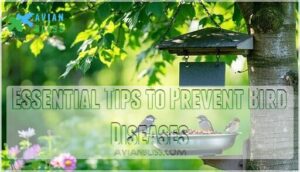
You can substantially reduce disease transmission among backyard birds by implementing proper feeder maintenance and hygiene practices.
These evidence-based prevention strategies will help protect wild bird populations from common pathogens while ensuring safe feeding environments.
Cleaning Bird Feeders and Baths
Weekly feeder sanitation prevents deadly outbreaks that devastate backyard bird populations. Clean feeders with 10% bleach solution, rinse thoroughly, and air-dry completely.
Bath maintenance requires fresh water every two days during peak activity periods. Regular maintenance is essential for feeder health checks to prevent the spread of diseases.
| Cleaning Task | Frequency | Method | Key Benefit |
|---|---|---|---|
| Feeder disinfection | Weekly | 10% bleach solution, 10-minute soak | Eliminates salmonella, aspergillosis pathogens |
| Water quality refresh | Every 2 days | Complete water replacement | Prevents mosquito breeding, bacterial growth |
| Seed cleaning removal | Twice weekly | Rake debris beneath feeders | Reduces fecal contamination, mold formation |
| Deep bath scrubbing | Weekly | Synthetic brush, mild soap | Removes biofilm, embedded pathogens |
Managing Seed Debris and Fecal Matter
Beyond feeder sanitation, accumulated organic matter beneath feeders creates ideal conditions for pathogen proliferation.
Regular seed removal and fecal cleanup substantially reduce contamination rates and wildlife disease control concerns. Effective use of a poop removal tool is essential for maintaining cleanliness.
- Rake debris twice weekly – Remove hulls, uneaten seeds, and droppings
- Focus on high-traffic areas – Clean directly under perches and landing zones
- Dispose waste properly – Bag organic matter for municipal composting
- Monitor ground conditions – Check for mold growth or bacterial films
- Maintain dry surfaces – Prevent moisture retention that encourages fungal development
Spacing and Rotating Feeders
Space multiple feeders at least twenty feet apart to reduce bird crowding and disease transmission risks.
Strategic feeder placement prevents large gatherings where pathogens spread rapidly through contact and contaminated surfaces.
Rotate feeder locations every few weeks, moving them at least twenty feet from previous spots.
This feeder rotation disrupts pathogen buildup in soil and vegetation beneath feeding areas, supporting effective wildlife disease control and seed management practices.
By implementing these strategies, you can help prevent the spread of diseases through common bird illnesses, which is crucial for maintaining healthy bird populations and promoting effective seed management.
Water Source Maintenance
Water quality directly impacts bird health, making regular birdbath cleaning non-negotiable for disease prevention.
Change water every two days during peak visitation periods to prevent pathogen buildup and mosquito breeding.
Clean drainage systems weekly using ten percent bleach solution, ensuring complete drying, and proper pond maintenance reduces contamination risks.
Proper faucet safety protocols and effective bird disease treatment strategies support thorough bird habitat preservation.
Safe Bird Feeding Practices
You can protect wild birds by strategically managing your feeding setup to prevent dangerous overcrowding and disease transmission.
Smart feeder placement and timing decisions create safer environments where birds can thrive without spreading pathogens that threaten entire populations.
When to Remove Feeders

Disease outbreaks trigger critical removal timing decisions that protect bird populations.
You’ll need to act swiftly when warning signs emerge.
Remove feeders immediately when you observe:
- Multiple sick birds – Lethargy, fluffed feathers, or swollen eyes signal active disease transmission
- Dead birds near feeding stations – Several deaths weekly indicate outbreak conditions requiring intervention
- Official wildlife advisories – State agencies issue removal recommendations during salmonellosis or avian influenza outbreaks
- Feeder cleaning failures – Contaminated stations with moldy seed or persistent debris become disease vectors
- Overcrowding conditions – Dense flocking accelerates pathogen spread, necessitating temporary feeding suspension
Bird Feeder Placement Guidelines
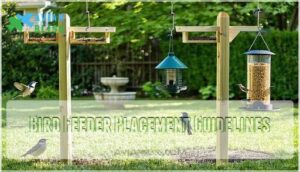
Position your feeders at least six feet from shrubs or cover where predators might lurk.
Feeder location directly impacts bird safety and disease prevention through proper feeder spacing.
Mount feeders on poles rather than hanging from trees to improve wild bird protection.
Strategic placement creates a bird sanctuary safety environment while supporting disease free birds through better airflow and visibility for wild bird care.
Using the right bird feeder types is essential for maintaining a healthy bird population.
Limiting Bird Crowding
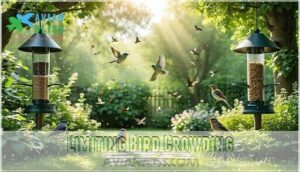
When birds gather too densely around feeders, you’re creating perfect conditions for disease transmission through respiratory droplets and contaminated surfaces.
Strategic feeder placement and crowding control measures substantially reduce pathogen spread while maintaining healthy bird populations.
- Feeder Placement: Position feeders at least 20 feet apart to prevent large flock gatherings and reduce disease transmission risks
- Bird Spacing: Install multiple small feeders rather than one large feeder to naturally distribute birds across your bird sanctuary safety zone
- Crowding Control: Monitor visitor numbers and temporarily remove feeders when overcrowding occurs to stop bird sickness
- Flock Management: Rotate feeder locations every few weeks to prevent established territorial disputes and excessive congregation
- Habitat Design: Create multiple feeding stations with varied seed types to attract different species and prevent bird illness through natural dispersal
What to Do if You Find Sick or Dead Birds
Discovering sick or dead birds in your yard requires immediate attention to protect both wildlife populations and your family’s health.
You’ll need to follow specific protocols for reporting, safe handling, and preventing disease transmission to pets and humans.
Reporting to Wildlife Authorities

Why wait when spotting sick or dead birds? Contact your state wildlife health agency immediately for Disease Reporting and proper bird health tips.
These Authority Contacts handle Bird Mortality investigations and Incident Logging to prevent bird illness outbreaks.
Wildlife Alerts help protect avian species through rapid response systems that stop bird sickness from spreading throughout local populations, utilizing rapid response systems and wildlife health agency for effective management.
Safe Handling Procedures
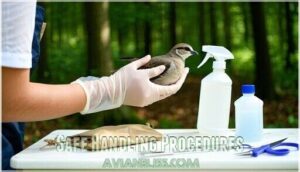
After reporting wildlife concerns, proper glove use prevents direct contact with pathogens.
Follow these bird health tips to protect from disease:
- Wear disposable gloves during feather handling and beak care procedures
- Use double-bagging method for secure carcass removal and nest sanitizing
- Disinfect tools immediately with 10% bleach solution after contact
- Practice thorough hand washing for 20 seconds post-handling to protect against harm
These bird protection methods safeguard both wildlife and protect the environment.
Understanding bird health sanitation is essential for preventing the spread of diseases among bird populations.
Protecting Pets and Humans

Keep pets away from sick or dead wild birds to prevent disease transmission.
Dogs and cats can contract avian influenza and other pathogens through direct contact or ingestion.
For human health protection, avoid touching infected birds without gloves and masks.
These protective measures safeguard both pet safety and public awareness while supporting avian conservation efforts.
The key to effective protection is maintaining a safe distance and using proper protective gear, ensuring public awareness is raised about the importance of these precautions.
Protecting Wild Birds Near Poultry

If you keep domestic poultry, you’ll need to create a barrier between your birds and wild visitors to prevent deadly avian influenza transmission.
Wild songbirds pose minimal direct risk to each other, but they can carry pathogens that devastate captive flocks with mortality rates approaching 100%.
Biosecurity Measures for Poultry Owners
When raising poultry, you’ll need robust defenses to protect domestic producers from disease outbreaks.
Install bird netting over outdoor runs and reinforce poultry fencing to block wild bird access.
Daily farm sanitation with EPA-approved disinfectants reduces pathogen loads by 80%.
Implement strict flock monitoring protocols and schedule regular disease testing every six months.
These biosecurity measures protect against danger while supporting broader avian conservation efforts through reduced transmission risks.
Reducing Contact Between Wild Birds and Flocks
Physical barriers prove your strongest allies in flock management.
Wild bird deterrents and poultry enclosures create disease barriers that protect from harm while supporting avian conservation efforts.
- Install bird netting over outdoor runs to block contact between wild birds and domestic flocks
- Position feeders strategically – keep poultry food sources inside enclosed areas away from wild bird access
- Secure water systems with covers or automatic dispensers that prevent wild birds from drinking alongside your flock
Following Local and State Guidelines
State regulations vary substantially across jurisdictions, making compliance with local ordinances and state laws paramount for poultry owners.
Guideline enforcement protects bird populations through coordinated community standards that conserve bird populations effectively. By implementing effective bird conservation methods, communities can better safeguard local wildlife from disease outbreaks.
| Regulation Type | Key Requirements | Enforcement Agency |
|---|---|---|
| State Laws | Mandatory feeder removal during outbreaks | Department of Agriculture |
| Local Ordinances | Distance requirements from poultry facilities | County Health Department |
| Community Standards | Reporting protocols for sick birds | Wildlife Conservation Office |
Frequently Asked Questions (FAQs)
Can wild birds transmit diseases to humans?
Like ticking time bombs, wild birds can transmit diseases to you through direct contact or contaminated surfaces.
West Nile virus and salmonellosis pose the greatest risks.
You’ll minimize exposure by avoiding sick birds, cleaning feeders regularly, and washing hands after handling bird-related equipment, which helps prevent the spread of diseases like West Nile virus.
Which bird species are most disease susceptible?
Waterfowl, poultry, and raptors show highest susceptibility to avian influenza outbreaks.
You’ll find songbirds and typical feeder visitors demonstrate relatively low infection rates and minimal virus shedding compared to these vulnerable species.
Do bird diseases affect migration patterns?
Disease acts like invisible chains, disrupting birds’ natural compass.
You’ll find that pathogens alter migration timing, weaken flight endurance, and force route changes as infected birds struggle with compromised navigation systems and reduced energy reserves, which can be seen as invisible chains.
Can bird diseases spread to garden plants?
Bird diseases rarely spread directly to garden plants, but contaminated surfaces like feeders, bird baths, or soil beneath them can harbor pathogens.
You’ll want to clean these areas regularly to prevent any cross-contamination risks in your garden ecosystem.
Are certain seasons riskier for bird diseases?
While you’d expect disease outbreaks year-round, spring and summer pose the greatest threats.
Warm temperatures accelerate bacterial growth in feeders, while migration increases transmission between bird populations.
You’ll need enhanced cleaning protocols during these peak seasons.
Conclusion
Like vigilant sentinels protecting their territory, you’re now equipped with science-based strategies to protect wild birds from disease.
Your consistent feeder cleaning, proper spacing, and water management create safe habitats that prevent pathogen transmission.
These prevention measures reduce mortality rates and support healthy populations facing threats like avian influenza and salmonellosis.
Regular maintenance isn’t just beneficial—it’s essential for conservation success and species survival in our shared ecosystems.