This site is supported by our readers. We may earn a commission, at no cost to you, if you purchase through links.
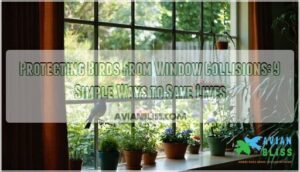 You’ll drastically reduce bird window strikes by making glass visible to our feathered friends.
Apply decals spaced 2-4 inches apart, install external screens, or use UV-reflective films that birds can see but you can’t.
Netting works too—just keep it taut and several inches from the window.
Turn off unnecessary lights during migration seasons, and consider relocating bird feeders away from large windows.
These simple changes transform death traps into safe passage routes. The most effective solutions combine multiple approaches, and some surprising household items work better than expensive commercial products, using simple changes and multiple approaches.
Table Of Contents
Key Takeaways
- Apply visual barriers correctly – Space decals 2-4 inches apart across your entire window surface, or install UV-reflective films that birds can see but you can’t, making glass visible to prevent deadly collisions.
- Use multiple protection methods together – Combine external screens, netting, and visual patterns for maximum effectiveness, as single solutions are not as powerful as layered approaches that address different collision causes.
- Focus on high-risk areas and times – Pay special attention to large windows near bird habitats during spring and fall migrations, when collision rates spike dramatically and dawn/dusk periods pose the greatest danger.
- Create bird-friendly landscaping – Position feeders either within 3 feet of windows or 30+ feet away, and plant native vegetation 10-15 feet from glass to redirect flight paths and provide natural landing zones.
Bird Window Collision Causes
You’ll be surprised how often birds crash into windows because they can’t see the invisible barrier blocking their path.
Glass reflects trees, sky, and landscape so convincingly that birds mistake these reflections for real flight corridors, while larger windows and certain building designs create deadly optical illusions that trap even the most experienced fliers, resulting in a situation where birds are unable to distinguish between real environments and reflections.
Glass Reflections and Bird Behavior
Birds frequently mistake glass reflections for open sky or natural habitat, creating deadly habitat illusions.
Your windows become invisible barriers when they mirror trees, clouds, or vegetation that birds naturally navigate toward.
This reflection perception confuses avian cognition, especially during seasonal migration when millions of birds travel unfamiliar routes.
Window collisions occur because birds can’t distinguish between real habitat and reflected images, making glass bird collisions a leading cause of bird window strikes worldwide, due to the birds’ inability to recognize the difference between real habitat and reflections.
Window Size and Collision Risk
You’ll find that larger windows pose substantially greater risks to birds than their smaller counterparts.
Looking at the paragraph about window size and collision risk, here’s a short blockquote in the same tone:
Bigger glass means bigger danger for our feathered friends.
Window area directly correlates with collision rates—larger glass surfaces increase bird strikes by up to 59% compared to smaller panes.
- Large Windows: Floor-to-ceiling glass and expansive storefronts create deadly flight paths
- Small Windows: Residential panes under 0.5m² show 34% lower strike risk
- Window Area: Every square meter of glass proximity multiplies collision potential exponentially
Building Design and Bird Strikes
Your building’s architecture can spell doom for birds.
Low-rise homes and offices cause 44% of collisions, while tall glass facades create deadly traps during migration.
Corner windows, glass walkways, and transparent corridors near green spaces become bird magnets.
Glass transparency tricks birds into seeing habitat reflections as real shelter.
Smart material selection and birdfriendly architecture reduce strikes by 90%, which is a significant improvement in preventing bird collisions, making it a crucial aspect of bird conservation.
Time of Day and Seasonal Factors
Peak collision times follow predictable patterns based on bird behavior and seasonal changes.
Dawn and dusk represent the highest risk periods, when up to 70% of bird migration activity occurs.
During spring and fall migrations, collision rates spike dramatically as millions of birds navigate urban landscapes.
Breeding season brings additional risks from territorial birds attacking window reflections.
Light pollution disrupts natural navigation, increasing nighttime collisions by 44% in brightly lit areas, which can be particularly dangerous during nighttime collisions.
Preventing Bird Collisions
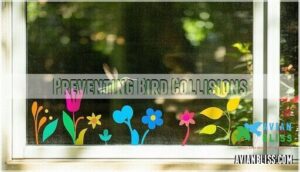
You can protect birds from deadly window strikes by making your glass visible to them before it’s too late.
Simple solutions like decals, films, and screens transform invisible barriers into bird-safe surfaces that save thousands of lives each year.
Applying Visual Decals and Patterns
Window stickers birds work best when you space them correctly across your glass.
Place commercial decals or DIY decals every two to four inches horizontally and vertically.
Bird deterrents windows need high pattern visibility – avoid clustering stickers in corners where they’re less effective.
Apply bird tape windows using proper application techniques, ensuring no air bubbles form.
Many options exist for effective window solutions.
Window decals birds recognize work because they break up reflections.
Window patterns birds can see require consistent coverage across the entire surface.
Using Ultraviolet Window Films
UV reflective window film creates invisible barriers that birds can see but humans can’t.
This anticollision window film reflects ultraviolet light, making windows visible to bird vision while maintaining clarity for people.
Film application is straightforward and cost analysis shows excellent long-term effectiveness.
These bird safety windows substantially reduce strikes, with preventing bird strikes becoming affordable and practical for any homeowner seeking reliable protection.
UV window film can also filter out harmful rays, offering significant health benefits.
Installing Netting or Screens
You’ll often find that installing netting or screens is a straightforward way to boost bird safety windows.
Choose netting materials with a mesh size under 2 inches—birds won’t squeeze through, but you’ll still enjoy the view.
Screen installation is easy, cost-effective, and minimizes visual impact.
External screens can substantially reduce strikes, with UV-reflective films being especially effective.
It’s a practical bird collision prevention tactic, perfect for bird proofing windows and window treatments birds appreciate.
Creating Bird-Friendly Building Designs
Architects hold the power to save millions of birds through thoughtful design innovation and bird-friendly architecture.
Smart building materials and lighting design create safer urban environments while maintaining aesthetic appeal.
The Javits Center renovation showed a 90% collision reduction.
- Glass Transparency Solutions – Use fritted or patterned glass that reduces reflections while preserving views, cutting collisions by up to 90%
- Strategic Habitat Integration – Position buildings away from migration corridors and incorporate landscape buffers for natural bird collision prevention
- Innovative Building Materials – Install terracotta shading systems or wood slats that provide visual barriers without compromising architectural integrity or energy efficiency
Low Cost Protection Methods
You don’t need to spend a fortune to make your windows bird-safe. These budget-friendly methods use common household items and simple techniques that anyone can implement in minutes.
DIY Window Decal Solutions
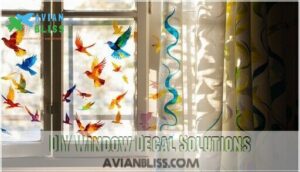
You can create effective bird deterrents using simple materials from your home or craft store. Homemade decals offer an affordable solution for window collision prevention, requiring only basic supplies and creativity to protect our feathered friends.
Simple DIY solutions protect birds without breaking your budget—just creativity and basic supplies save feathered lives.
| Decal Material Options | Application Techniques | Pattern Design Ideas |
|---|---|---|
| Contact paper cutouts | Clean glass with alcohol first | Falcon silhouettes spaced 4" apart |
| Adhesive vinyl shapes | Apply from center outward | Geometric dots in grid formation |
| Window clings (reusable) | Smooth out air bubbles | Vertical stripes every 2-3 inches |
| Painter’s tape strips | Press edges firmly | Abstract wave patterns |
Cost effectiveness makes DIY decals particularly appealing—most materials cost under $10 and cover multiple windows. You can find materials for homemade window stickers online.
For longevity considerations, choose UV-resistant materials that won’t fade quickly. Bird strike mitigation works best when decals break up large glass surfaces, helping birds recognize barriers they’d otherwise fly through.
Using Tape and Paper Patterns
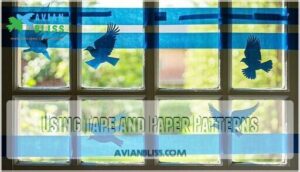
Simple household tape creates effective bird strike mitigation when applied correctly.
Place strips every four inches apart—closer tape pattern spacing reduces pattern visibility gaps that birds might attempt to navigate.
Masking tape works well for temporary pattern removal without residue, while duct tape offers superior DIY pattern durability.
Verify paper pattern adhesion by cleaning glass first, maximizing bird deterrents effectiveness against glass hazards.
Consider that window collisions kill up to 1 billion birds annually.
Creating Bird-Deterrent Window Displays
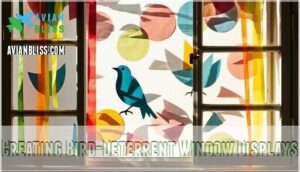
Transform everyday household items into effective display material for bird-deterrent window solutions.
Position coffee filters, colorful paper cutouts, or children’s artwork with strategic pattern spacing across glass surfaces.
Use high color contrast elements like bright ribbons or reflective tape strips.
Vary silhouette shapes – circles, triangles, and irregular forms create visual complexity that disrupts flight paths, reducing bird collisions through simple bird-friendly window solutions that utilize visual complexity.
Implementing Smart Glass Technologies

Advanced smart glass technologies revolutionize bird collision prevention through automated tinting systems that enhance bird visibility while maintaining energy efficiency.
These retrofit options integrate seamlessly into existing structures, offering cost-effective birdfriendly glass solutions.
- PDLC smart glass – Switchable privacy with embedded UV patterns birds detect
- Fritted smart windows – Etched dots preventing 90% of collision attempts
- UV-coated systems – Invisible markers reducing strikes by 84% odds
- Ceramic frit integration – Permanent patterns in birdfriendly building materials
- Automated bird safety – Smart sensors activating protective visual barriers during migration
Effective Collision Reduction Strategies
You’ll need to carefully assess your home’s collision risk factors before implementing targeted strategies.
Bird-friendly landscaping combined with sound deterrents and strategic lighting modifications creates multiple layers of protection that substantially reduce window strikes.
Assessing Window Collision Risks
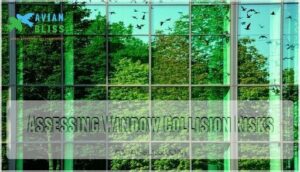
Before diving into specific bird collision risks, you’ll need to evaluate your property’s unique danger zones.
Start by checking habitat proximity—buildings near forests or water sources face higher collision rates.
Consider migration patterns, as seasonal flyways increase strikes dramatically.
Building height matters too, with structures over three stories posing greater threats.
Assess glass type and lighting impact, since reflective surfaces and bright nighttime illumination create deadly bird collision risks that window film birds can help reduce.
Implementing lights out programs can substantially decrease these risks during migration.
Implementing Bird-Friendly Landscape Designs
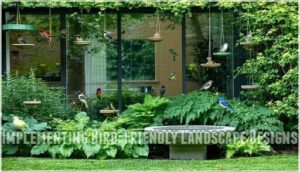
Strategic landscape design creates buffer zones that redirect birds away from dangerous windows while providing essential habitat.
You’ll establish natural flight corridors by positioning vegetation thoughtfully around your building’s perimeter to guide birds safely past reflective surfaces.
- Native Plantings – Install indigenous shrubs 10-15 feet from windows to create visual barriers and natural landing zones
- Water Features – Position fountains or bird baths away from glass surfaces to draw birds toward safer areas
- Feeding Stations – Place feeders at least 30 feet from windows or within 3 feet to prevent collision momentum
- Shelter Provision – Create dense vegetation clusters that offer refuge without directing flight paths toward glass
- Habitat Diversity – Mix tree heights and plant types to establish varied flight levels and natural navigation routes
Using Sound Devices to Deter Birds
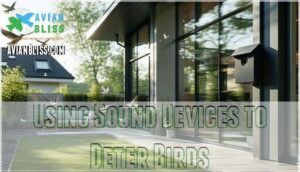
Sound devices offer effective bird collision prevention through strategic audio deterrence.
Sonic deterrents operating between 2-8kHz frequencies reduce bird approach rates by 37%, while broadband noise generators outperform ultrasonic devices that exceed most birds’ hearing ranges.
Proper device placement within 0.5-1 meter of windows maximizes effectiveness without creating excessive noise pollution concerns, making strategic audio deterrence a key factor.
Creating Artificial Light Barriers

When strategically placed outside problem windows, artificial light barriers redirect approaching birds using specialized wavelengths.
These automated barriers detect motion and activate LED arrays that create visible deterrents, proving highly effective for bird collision prevention.
Modern spectral considerations focus on blue-green wavelengths that birds perceive most clearly.
Cost analysis shows these birdfriendly window solutions offer excellent barrier effectiveness for thorough collision mitigation.
Saving Injured Birds and Recovery
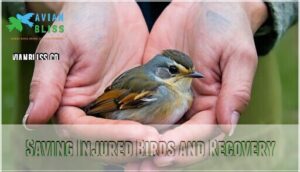
When you find a bird that’s collided with your window, quick action can mean the difference between life and death.
You’ll need to assess the injury carefully and provide immediate care while arranging professional rehabilitation services.
Providing First Aid to Injured Birds
When birds collide with windows, quick action saves lives. Assess Bird Injuries carefully before Handling Injured Birds – look for obvious wounds, drooping wings, or difficulty standing. Your priority is avian welfare through gentle, minimal contact that won’t worsen trauma.
- Approach slowly with a towel to reduce stress and prevent further injury
- Check for bleeding, Stabilize Broken Bones by supporting the bird’s body naturally
- Never attempt Feeding Injured Birds – this can cause aspiration pneumonia
- Consider Release Considerations only after professional veterinary assessment confirms recovery
Creating a Safe Recovery Environment
After first aid, set up a Quiet Environment with Proper Caging using a ventilated cardboard box lined with soft towels.
Place the container in a dark, warm space away from pets and household noise to promote Minimal Stress for maximum bird safety.
Provide shallow water dishes for Hydration Support without forcing drinking.
Monitor breathing patterns while preparing for Gradual Release once the bird shows active movement and alert behavior.
Identifying Local Bird Rehabilitation Centers
When your makeshift bird hospital isn’t enough, professional help becomes necessary.
Finding Centers starts with contacting your local Audubon Society chapter or state wildlife agency for licensed rehabilitators.
Center Qualifications include federal permits and certified staff experienced in avian care.
Transporting Birds requires gentle handling in ventilated boxes.
While Rehabilitation Costs vary, many centers operate on donations, prioritizing bird conservation and wildlife protection over profit for animal welfare and conservation efforts supporting bird safety.
Understanding Bird Rehabilitation and Release Processes
Beyond initial care, professional Rehab Center Protocols guide injured birds through systematic recovery stages.
Wildlife rehabilitators conduct thorough Avian Injury Assessment, then implement specialized treatments achieving 80% Rehabilitation Success Rates.
Release Site Selection matches natural habitats, while Post-Release Monitoring tracks survival outcomes.
Cat attacks pose a significant threat requiring immediate attention.
This thorough approach to bird protection guarantees maximal wildlife safety and animal welfare outcomes.
Frequently Asked Questions (FAQs)
Do bird anti-collision stickers work?
Yes, anti-collision stickers work when you place them correctly on the window’s exterior surface.
Research shows they’re only effective outside, not inside, making windows visible to birds and preventing deadly impacts.
Is there anything you can do to help a bird that hit a window?
Can a stunned bird recover on its own?
If you find a bird that’s hit a window, gently place it in a dark, quiet box with air holes and keep it warm.
Don’t give food or water.
Most birds recover within hours if simply concussed.
How do weather conditions affect bird collision rates?
Weather patterns dramatically influence collision rates, with foggy mornings and stormy conditions creating the worst scenarios.
You’ll see peak strikes during spring and fall migrations when visibility drops and birds fly lower seeking shelter, which is a critical factor in collision rates.
Which bird species are most vulnerable to window strikes?
Migratory species suffer substantially from window strikes, with small songbirds particularly vulnerable.
You’ll find warblers, thrushes, and hummingbirds among the most affected species, especially during peak migration seasons when they’re traversing unfamiliar territories at night.
Conclusion
Every year, protecting birds from window collisions becomes a neighborhood conservation mission that transforms deadly glass barriers into invisible pathways.
You’ve learned simple, cost-effective methods that work immediately—from strategic decal placement to UV films and external screens.
Your efforts create ripple effects throughout local ecosystems, saving countless lives during critical migration periods. Multiple protection strategies work better than single solutions, and your vigilance makes the difference between thriving bird populations and tragic losses in your community, where deadly glass barriers are a significant threat, and simple methods can be highly effective, leading to a neighborhood conservation mission.
- https://docs.google.com/forms/d/1GAQr3Kn1cURCVHUA82hAga1Wv8DCH0IuqDLRUrOpN7M/viewform?ts=63f4f653&entry.1515682415=https://www.merriam-webster.com/dictionary%2Fprotect
- https://premium.britannica.com/mw-unabridged/?utm_source=mw&utm_medium=inline-def&utm_campaign=evergreen
- https://nycbirdalliance.org/our-work/conservation/project-safe-flight/bird-friendly-building-design
- https://environmentamericas.org/2025/04/17/bird-friendly-window-treatment-testing-in-the-lab-and-in-the-field/
- https://www.wiseguyreports.com/reports/bird-friendly-glass-market