This site is supported by our readers. We may earn a commission, at no cost to you, if you purchase through links.
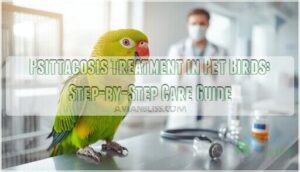
Your parrot’s sudden labored breathing and lime-green droppings aren’t just signs of a bad day—they could signal psittacosis, a bacterial infection that demands immediate veterinary attention. This zoonotic disease, caused by Chlamydia psittaci, affects both your bird’s health and poses transmission risks to your household.
The bacteria can persist in droppings and respiratory secretions for weeks, turning your bird’s environment into a reservoir of infection. Successful psittacosis treatment in pet birds requires a precise 45-day antibiotic protocol, usually involving doxycycline, combined with rigorous environmental management and protective measures for you and your family.
Understanding the complete treatment pathway—from recognizing early symptoms to confirming bacterial elimination—can mean the difference between recovery and chronic illness.
Table Of Contents
- Key Takeaways
- Recognizing Psittacosis in Pet Birds
- Diagnosing Psittacosis in Birds
- Effective Antibiotic Treatments for Psittacosis
- Supportive Care During Recovery
- Preventing Psittacosis Transmission
- Frequently Asked Questions (FAQs)
- How do I know if my bird has psittacosis?
- Should birds with psittacosis be isolated?
- How long can a bird live with a respiratory infection?
- How do birds get Chlamydia psittaci?
- How do you treat psittacosis in birds?
- What is the drug of choice for psittacosis in birds?
- How long can a bird live with psittacosis?
- Can pregnant birds safely receive psittacosis treatment?
- How much does psittacosis treatment typically cost?
- Are there natural remedies for psittacosis?
- Conclusion
Key Takeaways
- Psittacosis requires a strict 45-day doxycycline antibiotic protocol with no shortcuts, even when symptoms disappear within 24 hours, followed by post-treatment PCR testing to confirm bacterial elimination and prevent relapse.
- The infection presents as a combination of respiratory distress (tail bobbing, open-mouth breathing), lime-green droppings indicating liver involvement, and conjunctivitis, requiring immediate veterinary intervention since mortality reaches 40-50% without treatment.
- Successful recovery demands rigorous environmental management, including twice-daily cage disinfection, moistening droppings before removal to prevent airborne spread, and complete isolation of infected birds for the entire treatment duration.
- Owners must wear N95 respirators and disposable gloves during all contact with infected birds or contaminated materials, as Chlamydia psittaci poses serious zoonotic risks to household members, especially children, elderly individuals, and immunocompromised people.
Recognizing Psittacosis in Pet Birds
Recognizing psittacosis early can make all the difference in your bird’s recovery and protecting your household from potential exposure. Understanding what to watch for and when subtle changes become concerning gives you the control you need to act quickly.
If you notice any of these signs, learning about comprehensive parrot disease treatment options can help you respond effectively and safeguard both your bird and your family.
The symptoms don’t always announce themselves clearly, and some infected birds won’t show obvious signs until the disease progresses. The right moment to contact your avian veterinarian is crucial for timely intervention.
If your bird shows any unusual behavior or subtle changes in appetite, reach out to an avian vet right away—and while you’re monitoring their health, make sure you’re also aware of common foods that can harm birds to support their recovery.
Common Symptoms in Birds
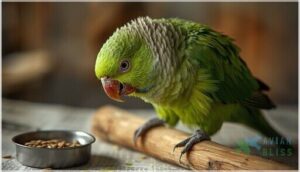
You’ll notice psittacosis symptoms span multiple body systems, making recognition vital for quick intervention. Respiratory issues like tail bobbing and open mouth breathing signal lung inflammation, while conjunctivitis creates puffy, weeping eyes with crusty nasal discharge. Watch for these physical signs:
Early detection saves lives, so familiarize yourself with common psittacosis symptoms and diagnostic procedures before your bird shows distress.
- Lime green or yellow abnormal droppings from liver involvement
- Fluffed feathers and reduced vocalization showing behavioral changes
- Watery eye discharge matting facial feathers
- Weight loss despite available food
- Sneezing in repeated bursts with clicking sounds
Digestive symptoms often appear alongside these eye problems. For more on how humans and birds can be affected, see the .
Birds experiencing these combined symptoms may struggle to absorb essential nutrients, which is why understanding the link between appetite loss and digestive issues becomes critical for proper treatment.
Early Warning Signs
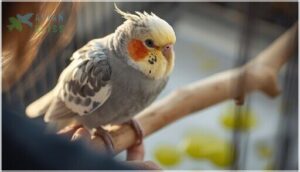
Before obvious psittacosis symptoms emerge, your bird may show subtle behavioral changes that signal trouble. Watch for unusual quietness, reduced interaction with family members, or prolonged fluffed posture while awake.
Early respiratory issues include slightly faster breathing with mild tail bobbing, occasional sneezing without nasal discharge, and faint clicking sounds.
Dropping colors shift to lime green or yellow-green, while the watery portion spreads more than usual, indicating early liver and gastrointestinal involvement. The appearance of these symptoms is linked to the presence of Chlamydophila psittaci infection.
When to Seek Veterinary Care
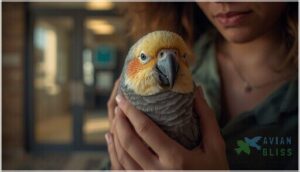
Once you spot those early warnings, knowing when to rush to an avian vet becomes critical. Psittacosis progresses quickly, and delays can turn manageable respiratory issues into life-threatening crises with zoonotic risks for your family.
Once you spot early warnings in your bird, rush to an avian vet—psittacosis progresses fast and delays can become life-threatening
Seek immediate veterinary care if your bird shows these emergency symptoms:
- Sudden collapse or severe weakness – Rapid deterioration signals respiratory failure requiring urgent intervention
- Labored, open-mouth breathing – This indicates the infection has severely compromised lung function
- Refusal to eat for 12-24 hours – Small birds develop critical dehydration and hypoglycemia fast, especially with severe infections
High-risk households with pregnant, elderly, or immunocompromised members need same-day evaluations when psittacosis, a dangerous zoonotic disease, is suspected.
Diagnosing Psittacosis in Birds
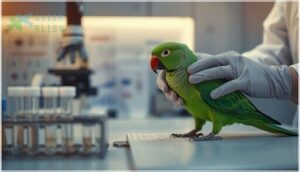
Diagnosing psittacosis requires a thorough veterinary assessment, as the symptoms often overlap with other avian illnesses.
Your veterinarian will use a combination of physical examination and specialized laboratory tests to confirm whether Chlamydia psittaci is present.
Understanding the diagnostic process helps you know what to expect and ensures your bird receives accurate, timely treatment.
Veterinary Examination Procedures
When you bring your bird to an avian vet, the veterinary care begins with a thorough medical history, including recent diet changes, new bird introductions, and any household illness, since psittacosis poses zoonotic risks.
Your vet may also recommend quarantine measures for any newly acquired birds, and you can find practical guidance on preventing common avian health issues to keep your entire flock safe.
The physical exam proceeds systematically from head to tail, evaluating clinical signs like respiratory effort, feather condition, and body weight. Your vet will palpate the keel and abdomen, auscultate the chest, and inspect droppings.
Diagnostic tests follow, with choanal, cloacal, or fecal swabs collected for PCR testing, blood drawn for laboratory results, and radiographs taken to evaluate organ size and air sac clarity.
Differentiating Psittacosis From Other Illnesses
Accurate symptom analysis distinguishes psittacosis from look-alike conditions, helping you and your vet pinpoint the true disease patterns. While many avian diseases cause respiratory distress or diarrhea, psittacosis shows unique combinations your vet will recognize.
Key diagnostic tests and clinical clues separate psittacosis from other illnesses:
- Green to yellow-green urates with respiratory signs point to psittacosis rather than simple bacterial bronchitis
- PCR testing detects Chlamydia psittaci DNA, confirming psittacosis diagnosis and ruling out viral infections
- Enlarged liver and spleen on radiographs suggest psittacosis over localized respiratory infections
Understanding zoonotic risks guides treatment outcomes and protects your household.
Effective Antibiotic Treatments for Psittacosis
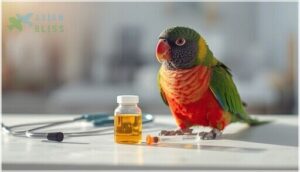
Once your veterinarian confirms psittacosis, antibiotic treatment becomes the cornerstone of your bird’s recovery. Doxycycline is the benchmark medication, but you’ll need to understand the specific protocols, alternative options, and monitoring requirements to guarantee successful treatment.
Let’s break down the antibiotic therapies that will help your bird overcome this infection.
Doxycycline Therapy Protocols
Doxycycline remains the benchmark antibiotic for treating psittacosis, a serious zoonotic disease in birds. Your avian vet will usually prescribe 25 to 50 mg per kilogram of body weight once daily by mouth, depending on species sensitivity.
Treatment duration runs a full 45 days to eliminate Chlamydia psittaci across multiple replication cycles. Medication safety demands careful bird monitoring throughout therapy, checking weight, appetite, and droppings weekly to verify antibiotic efficacy while catching side effects early.
Alternative Antibiotic Options
When doxycycline isn’t tolerated, your avian veterinarian may select macrolide therapy like azithromycin at 40 mg per kilogram every 48 hours, especially for small psittacines.
Fluoroquinolone use with enrofloxacin or rifampin treatment combined with macrolides offers alternatives, though antibiotic resistance concerns remain.
Chloramphenicol safety requires strict handling precautions due to human toxicity risks. Each alternative demands extended zoonotic disease treatment courses under close avian veterinary care supervision.
Duration and Monitoring of Treatment
Your bird’s psittacosis antibiotic treatment runs 45 consecutive days—no shortcuts allowed, even when symptoms vanish within 24 hours.
Schedule veterinary rechecks every 7 to 10 days to monitor weight, droppings, and breathing effort.
Post-treatment PCR testing 2 to 4 weeks after finishing doxycycline confirms therapy efficacy and relapse prevention, protecting your flock from ongoing infectious disease transmission.
Supportive Care During Recovery
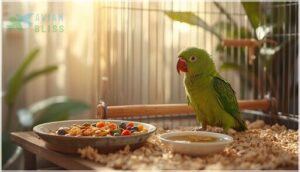
While antibiotics tackle the infection itself, your bird needs more than medicine to bounce back. Recovery demands focused attention on nutrition, environment, and keeping stress levels down.
Let’s walk through the three pillars of supportive care that will help your bird heal alongside antibiotic treatment.
Nutritional and Hydration Support
When your bird is fighting psittacosis, proper hydration methods and dietary adjustments become cornerstones of recovery. Fluid therapy often starts with warmed crystalloids at 30 ml per kg, delivered intravenously or subcutaneously to combat dehydration.
You’ll need to monitor caloric intake closely, offering easily digested foods while temporarily removing calcium sources that interfere with doxycycline absorption—a critical aspect of avian medicine and bird owner responsibility.
Environmental Modifications for Healing
Your recovering bird needs a healing sanctuary that aids respiratory recovery and minimizes secondary infections. Cage sanitization protocols involve twice-daily cleaning with bird-safe disinfectants to maintain ideal cage hygiene, while air quality improvements include 40-60 percent humidity and quiet filtration systems.
Lighting therapy at 3000 Kelvin mimics natural daylight, noise reduction through white noise masks sudden sounds, and strategic habitat enrichment with rotating safe toys promotes pet bird care without overstimulation during quarantine.
Stress Reduction Techniques
Minimizing handling to essential medication and cage cleaning prevents cardiovascular spikes that compromise antibiotic effectiveness in your recovering bird. Quiet rest in a stable location with consistent routines reduces anxiety during treatment, while social isolation from flockmates eliminates competition stress.
Comfort measures like perch-level food access and familiar cage layouts support bird health without triggering the behavioral stress responses that can delay healing.
Preventing Psittacosis Transmission

Preventing psittacosis from spreading requires a multi-layered approach that protects both your birds and your household. You’ll need to implement strict protocols for isolation, environmental hygiene, and personal safety to break the chain of transmission.
The following strategies address the three critical areas where intervention makes the most significant difference in containing this zoonotic infection.
Quarantining Infected and New Birds
When you suspect or confirm psittacosis in pet birds, immediate isolation becomes your first line of defense against disease transmission. Place infected birds in a separate room with closed doors to prevent airborne spread, and always handle healthy birds first to maintain proper avian hygiene.
Quarantine protocols usually require at least 30 days for new arrivals and 45 days during treatment, protecting your flock while reducing stress through quiet, stable environments that support bird health and hygiene.
Cleaning and Disinfecting Bird Environments
Proper cage sanitation begins with removing your pet birds, dishes, and toys before scrubbing all surfaces with household detergent and water. After rinsing thoroughly, apply a disinfectant like a 1:32 bleach solution or 1% Lysol, keeping surfaces wet for 5 to 10 minutes to inactivate Chlamydia psittaci.
For airborne prevention, moisten droppings with disinfectant before removal—never dry sweep—and double bag waste immediately to prevent contaminated dust from escaping during disposal.
Owner Safety and Zoonotic Risk Precautions
Beyond clean cages, zoonotic disease prevention requires you to wear disposable gloves and an N95 respirator whenever handling your psittacosis-positive bird or contaminated materials.
Wash hands for at least 10 seconds after each contact, avoid beak-to-mouth kisses, and isolate sick birds in a separate room away from high-risk household members—older adults, young children, and immunocompromised individuals should never enter treatment areas.
Frequently Asked Questions (FAQs)
How do I know if my bird has psittacosis?
Watch for respiratory distress, tail bobbing, or nasal discharge. Birds often fluff feathers, lose appetite, and produce green droppings.
Subtle lethargy or conjunctivitis can signal early infection before obvious symptoms appear.
Should birds with psittacosis be isolated?
Yes, birds with psittacosis must be isolated immediately. Infection control protects other pet birds and reduces zoonotic risks to bird owners.
Your avian vet will guide isolation methods, cage hygiene, and quarantine duration during treatment.
How long can a bird live with a respiratory infection?
A bird’s survival with a respiratory infection ranges from 24 hours in severe cases to years in mild chronic infections, depending on treatment, species susceptibility, and overall health before illness onset.
How do birds get Chlamydia psittaci?
Chlamydia psittaci spreads through fecal transmission when birds ingest contaminated droppings, airborne infection from dried feces and feather dust, direct contact with infected flock mates, vertical spread from hen to egg, and contaminated environments harboring viable bacteria.
How do you treat psittacosis in birds?
Doxycycline is the primary antibiotic for psittacosis treatment, usually administered orally or by injection for 21–45 days under veterinary supervision.
This is combined with supportive care, including fluid therapy, assisted feeding, and stress reduction.
What is the drug of choice for psittacosis in birds?
For treating this bacterial infection, doxycycline is hands down your go-to antibiotic. It targets Chlamydia psittaci effectively, shows minimal antibiotic resistance, and works safely across most psittacine species in avian medicine and surgery.
How long can a bird live with psittacosis?
Without treatment, mortality rates reach 40 to 50 percent within days to weeks.
With prompt doxycycline therapy, most birds recover completely and achieve normal life expectancy, though chronic infection may persist in some carriers.
Can pregnant birds safely receive psittacosis treatment?
Treating pregnant birds for psittacosis presents significant medication effects and pregnancy risks. While doxycycline therapy remains essential for avian health, breeding precautions include potential embryonic harm, making treatment efficacy versus bird safety a critical veterinary decision.
How much does psittacosis treatment typically cost?
Your total psittacosis treatment expenses generally range from $200 to $600 for a single bird, covering veterinary charges, diagnostic fees, and medication prices, though costs vary based on location and case severity.
Are there natural remedies for psittacosis?
Natural remedies like herbal blends, nutritional support, and homeopathic options can’t cure psittacosis—only prescription antibiotics eliminate Chlamydia psittaci.
However, environmental therapy and integrative approaches may support recovery alongside veterinary treatment.
Conclusion
When your feathered companion faces this challenging health battle, swift action transforms outcomes. Psittacosis treatment in pet birds demands unwavering commitment to the 45-day antibiotic course, thorough cage hygiene, and protective measures for your household.
Your veterinarian remains your strongest ally throughout this journey, monitoring progress and adjusting protocols as needed. Successful recovery isn’t just about eliminating bacteria—it’s about restoring your bird’s vitality while safeguarding everyone under your roof. Treatment today prevents complications tomorrow.
- https://vcahospitals.com/know-your-pet/chlamydophilosis-in-birds
- https://www.merckvetmanual.com/poultry/avian-chlamydiosis/avian-chlamydiosis
- https://pubmed.ncbi.nlm.nih.gov/20496604/
- https://www.ganeshdiagnostic.com/blog/psittacosis-what-do-bird-owners-need-to-know-to-stay-safe
- https://directorsblog.health.azdhs.gov/psittacosis-what-bird-owners-in-arizona-need-to-know-about-parrot-fever-and-staying-healthy/