This site is supported by our readers. We may earn a commission, at no cost to you, if you purchase through links.
 You’ll discover Virginia’s best quiet birding locations for solitude by exploring lesser-known wildlife refuges and secluded forest trails where crowds rarely venture.
Early morning visits to places like Back Bay National Wildlife Refuge or remote sections of Shenandoah’s backcountry offer pristine birding experiences.
These hidden spots provide the perfect backdrop for observing over 400 species without distractions.
You can’t beat the peace of watching warblers flit through cypress swamps or spotting raptors soaring above mountain ridges in complete silence.
The state’s diverse habitats create natural sanctuaries where you’ll feel like you’ve stumbled upon your own private birding paradise, and timing your visits strategically reveals even more rewarding encounters.
Table Of Contents
- Key Takeaways
- Finding Solitude Locations
- Best Birding Seasons
- Coastal Birding Havens
- Mountainous Birding Retreats
- Urban Birding Sanctuaries
- Frequently Asked Questions (FAQs)
- What is the birding capital of the United States?
- What is the best month for bird watching?
- What time of day offers quietest birding?
- How do weather conditions affect bird activity?
- Which equipment minimizes noise while bird watching?
- How far should I stay from nesting birds?
- What clothing colors avoid disturbing wildlife behavior?
- Conclusion
Key Takeaways
- You’ll find Virginia’s most peaceful birding experiences at lesser-known wildlife refuges like Back Bay National Wildlife Refuge and remote sections of Shenandoah’s backcountry, where crowds rarely venture and you can observe over 400 species without distractions.
- You should time your visits strategically, arriving during early morning hours between 5:30-7:00 AM when birds are most active and the world is still quiet, creating your own private birding paradise.
- You can discover diverse habitats across Virginia’s landscapes, from coastal marshes where Snow Geese and Tundra Swans gather to mountain retreats where Golden-winged Warblers and Peregrine Falcons soar above ridgelines in complete silence.
- You’ll maximize your solitude by practicing respectful birding techniques—moving slowly, speaking softly, wearing earth-toned clothing, and maintaining proper distances from nesting birds to avoid disturbing their natural behaviors and find complete silence.
Finding Solitude Locations

You’ll discover Virginia’s best-kept secrets when you venture beyond crowded parks to find peaceful birding spots where only bird songs break the silence.
These hidden locations offer you the chance to observe natural behaviors without competing with other birdwatchers, making each sighting feel like your own personal discovery.
Virginia’s Avian Diversity
Virginia’s 400+ avian species create a birder’s paradise where solitude meets scientific wonder.
You’ll discover endangered species thriving through habitat conservation efforts, while migration patterns shift with seasonal rhythms.
Regional variations across the state offer unique opportunities for avian research and quiet observation.
Here are Virginia’s top birding treasures:
- Endangered Red-cockaded Woodpeckers – rare forest dwellers
- Largest East Coast Bald Eagle population – soaring symbols of recovery
- Colorful Painted Buntings – vibrant coastal gems
- Golden-winged Warblers – mountain specialists facing decline
- Roseate Spoonbills – pink wading birds in marshlands
Birdwatching in National Wildlife Refuges
Discover peace at Virginia’s wildlife refuges, where conservation efforts create perfect birding sanctuaries.
These nature sanctuaries offer visitor access to quiet birding locations while supporting species protection through refuge management.
You’ll find solitude among diverse refuge habitats designed for both wildlife and peaceful observation.
Forest management, like thinning crowded stands, can further improve these habitats for bird populations.
| Refuge Name | Key Species | Best Season |
|---|---|---|
| Great Dismal Swamp | Prothonotary Warblers, Wood Ducks | Spring-Summer |
| Chincoteague | Snow Geese, Tundra Swans | Fall-Winter |
| Back Bay | Piping Plovers, Snow Geese | Migration Seasons |
| Eastern Shore | American Golden-Plover | Fall Migration |
| Presquile | Bald Eagles, Herons | Year-round |
Quiet Spaces in Forests and Mountains
Beyond wildlife refuges, Virginia’s forests and mountains offer the ultimate peaceful birding experience.
These quiet birding spots let you escape crowds while discovering mountain habitats filled with forest birdsongs.
You’ll find solitude benefits include better species identification and deeper connections with nature.
Many resources exist for those interested in Virginia birding products.
Practice ethical birding by staying on trails and maintaining respectful distances from nesting birds in these serene wilderness areas.
Best Birding Seasons

You’ll find Virginia’s birding calendar changes dramatically with each season, offering unique opportunities to spot different species in peaceful settings.
Spring brings colorful warblers and active migration, while winter provides excellent chances to observe bald eagles along quiet riverbanks without summer crowds.
Spring Migration Patterns
You’ll witness nature’s grand spectacle when spring’s warming triggers set Virginia’s migration patterns in motion.
Peak arrival times shift with climate impact, creating windows of opportunity at quiet birding spots.
Species distribution changes weekly as warblers and sandpipers use stopover habitats for rest.
These migration patterns transform solitary birding locations into bustling waypoints, offering birding solitude with incredible diversity.
Summer Breeding Seasons
When summer arrives, you’ll witness Virginia’s most intimate birding moments along quiet nature trails.
Nesting behaviors unfold as parents defend territories and select perfect habitat locations.
Watch fledgling care up close in secluded birdwaterching spots where food sources abound.
Territory defense becomes dramatic theater in peaceful birding environments, offering unmatched birding solitude for observing these tender family dynamics, with unmatched birding solitude.
Fall Migration Features
Fall’s crisp air triggers spectacular Hawk Migration along Virginia’s ridgelines, while Waterfowl Flyways bring thousands of ducks and geese to quiet wetlands.
You’ll witness incredible Warbler Waves in secluded birdwatching spots during Peak Dates from mid-September through October.
Peaceful birding becomes magical as Raptor Roosts form in tall trees, and migration patterns create unforgettable moments on quiet nature trails where birding in silence reveals nature’s autumn symphony.
Winter Birding Opportunities
While snow blankets Virginia’s landscapes, winter birding opportunities flourish in secluded birdwatching spots.
Winter’s quiet blanket reveals Virginia’s hidden birding treasures where solitude meets snowy serenity.
You’ll discover Winter Waterfowl gathering at ice-free waters and Raptor Roosts along quiet rivers.
Feeder Birds become more active near tranquil birding areas, making birding away crowds especially rewarding.
Pack Cold-Weather Gear for exploring Icy Habitats where birding in silence reveals species like nuthatches and Snow Buntings thriving in Virginia’s peaceful winter wonderland.
Coastal Birding Havens
You’ll find Virginia’s coast offers some of the state’s most peaceful birding spots, where salt marshes and quiet shorelines attract over 300 species including Snow Geese, Tundra Swans, and the occasional Roseate Spoonbill.
These coastal havens provide the perfect escape from crowds, letting you watch Great Blue Herons hunt in shallow waters while listening to nothing but gentle waves and bird calls, creating a serene atmosphere with quiet shorelines.
Chesapeake Bay Birdlife

Chesapeake Bay stands as America’s largest estuary, where Bay Waterbirds thrive in protected waters away from crowds.
This coastal paradise hosts diverse Migratory Species year-round, making it perfect for quiet birding locations.
Here’s what makes Chesapeake Bay special for waterbirds:
- Oyster Reefs – Natural feeding stations attract diving ducks and grebes
- Shallow marshes – Perfect nurseries for herons and egrets
- Protected coves – Offer sanctuary from Pollution Impacts
- Habitat Conservation – Guarantees sustainable coastal birdwatching experiences
Eastern Shore of Virginia
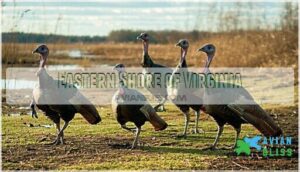
Wild turkeys strut through the Eastern Shore of Virginia National Wildlife Refuge, where over 300 bird species find sanctuary.
You’ll discover coastal migrations peak here during fall hawk-watches. This refuge diversity spans barrier islands to seaside sparrows’ preferred marshlands.
Remote birding locations offer unmatched solitude for birding peace in these serene birding spots.
| Shorebird Habitats | Peak Season |
|---|---|
| Tidal Marshlands | Fall Migration |
| Barrier Islands | Spring/Fall |
| Seaside Meadows | Summer Breeding |
| Remote Coves | Winter Quiet |
Virginia Beach Birding Spots
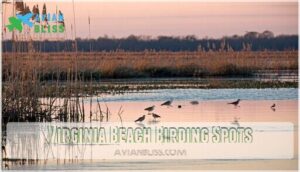
You’ll discover Virginia Beach offers exceptional birdwatching locations where coastal waterbirds gather year-round.
First Landing State Park and Back Bay Refuge provide serene birding spots perfect for quiet wildlife viewing.
During shorebird migration, you can spot seasoned sparrows and countless species in these peaceful sanctuaries.
These birdwatching locations blend solitude with incredible avian diversity along Virginia’s pristine coastline.
Consider also visiting Important Bird Areas for even more avian diversity.
Mountainous Birding Retreats
You’ll find Virginia’s mountains offer peaceful birding spots where Golden-winged Warblers and Cerulean Warblers nest among tall trees, far from crowded trails.
These high-elevation retreats let you listen for scarlet tanagers and watch Peregrine Falcons soar above ridgelines while enjoying the quiet that mountain forests provide.
Shenandoah National Park

Shenandoah National Park offers unmatched solitude for quiet wildlife viewing along Skyline Drive Birds corridors.
You’ll discover Warbler Diversity peaks during spring migration, while Hawksbill Raptors soar overhead.
The park’s Hiking Birding trails combine birding and mindfulness perfectly.
Park Conservation efforts protect nesting habitats throughout Shenandoah Valley, creating sanctuaries where you can truly connect with nature’s rhythm.
Consider exploring the Shenandoah birding trails for specialized gear.
Blue Ridge Mountains

Beyond Shenandoah’s boundaries, the Blue Ridge Mountains offer countless quiet locations for solitude seekers.
You’ll find Mountain Raptors soaring above High-Altitude Habitats while Warbler Varieties fill the air with song.
Scenic Overlooks along Hiking Trails provide perfect vantage points for mountain birdwatching.
These peaks create an intimate sanctuary where freedom meets belonging in Virginia’s most peaceful birding retreats. Birdwatchers can explore the Virginia Bird & Wildlife Trail for prime viewing spots.
Warbler Road Songbirds

You’ll find songbird paradise along Warbler Road’s thirteen-mile stretch, where twenty-five warbler species create nature’s symphony each May.
This winding forest route offers perfect solitude for warbler identification, with Black-throated Blue and Worm-eating varieties singing from eye-level branches.
The secluded meadows and forest edges provide ideal quiet locations for observing migration patterns and nesting habits undisturbed.
Urban Birding Sanctuaries

You don’t need to escape city limits to find peaceful birding spots that offer genuine solitude and diverse species.
Virginia’s urban parks and green spaces provide quiet sanctuaries where songbirds, waterfowl, and migratory species thrive just minutes from busy streets.
Urban Parks and Green Spaces
While mountain retreats offer wilderness encounters, you’ll find surprising urban habitats right in Virginia’s cities.
These green spaces provide quiet locations for solitude amid urban chaos, supporting remarkable bird diversity through thoughtful park conservation and green infrastructure planning.
Many enthusiasts rely on an urban birding guide for necessary supplies.
City birding in urban parks reveals unexpected treasures:
- Cemetery gardens with mature oak trees attract over 50 songbird species
- Neighborhood parks feature creekside trails perfect for early morning birdwatching
- Community green spaces offer secluded benches away from foot traffic
- Tree-lined walking paths create natural corridors for migrating warblers
Ponds and Water Features
Discovering tranquil ponds transforms your birding experience into something magical. You’ll spot diverse pond avian species like herons and kingfishers drawn to these constructed wetlands.
Water feature design creates perfect wetland bird habitats where ducks paddle quietly. These serene environments offer escape from city noise, while lakeshores provide ideal vantage points.
Water quality impacts which species visit these quiet locations daily, making it an important factor in the diverse range of species you can observe.
Serene Settings for Bird Watching
You’ll discover your best birding moments happen when you embrace quiet observation in serene environments.
These peaceful spots reward your patience with clearer sound identification and deeper connections to nature.
Practice respectful birding with minimal impact techniques—move slowly, speak softly, and let mindfulness guide your experience.
Birding for peace transforms ordinary outings into profound moments of solitude in nature’s cathedral.
Many species have adapted to urban food sources in order to survive, which is a key aspect of their ability to thrive in urban environments.
Frequently Asked Questions (FAQs)
What is the birding capital of the United States?
Like a beacon guiding passionate birdwatchers, High Island, Texas stands as America’s unofficial birding capital.
You’ll witness spectacular spring migrations when thousands of colorful warblers, tanagers, and other species converge in this legendary hotspot.
What is the best month for bird watching?
May offers the peak birding experience you’ve been waiting for.
Spring migration brings vibrant warblers, thrushes, and countless species through diverse habitats.
You’ll witness nature’s grand parade as birds showcase their finest plumage and songs.
What time of day offers quietest birding?
Dawn breaks like nature’s secret whisper, offering you the most peaceful birding hours between 5:30-7:00 AM.
Birds sing their hearts out while the world sleeps, giving you front-row seats to their private morning concerts.
How do weather conditions affect bird activity?
Weather dramatically impacts bird behavior – you’ll see increased activity before storms as birds feed urgently.
While high winds and rain send them seeking shelter, making sunny, calm mornings your best bet.
Which equipment minimizes noise while bird watching?
You’ll want lightweight binoculars with rubberized grips, padded camera straps, and soft-soled shoes.
Avoid clicking equipment together, use cloth bags instead of hard cases, and choose gear with matte finishes to prevent noise-making reflections.
How far should I stay from nesting birds?
Don’t put all your eggs in one basket—stay at least 15-20 feet from active nests.
You’ll avoid stressing parent birds while still enjoying their behaviors.
Use binoculars for closer views without disturbing their precious family time, and remember to respect their space to ensure a pleasant experience for both you and the birds.
What clothing colors avoid disturbing wildlife behavior?
Earth tones like brown, olive, and muted greens help you blend into nature’s backdrop.
Avoid bright colors, white, or reflective materials that catch birds’ attention.
You’ll become part of the landscape, letting wildlife behave naturally around you.
Conclusion
Whether you’re scanning cypress swamps for elusive warblers or watching hawks circle mountain peaks, Virginia’s quiet birding locations for solitude deliver unforgettable experiences.
You’ll find these hidden refuges scattered across coastal marshes, forest trails, and secluded valleys where silence amplifies every chirp and wingbeat.
Pack your binoculars, arrive early, and discover why experienced birders guard these peaceful spots so carefully.
Your next solitary adventure awaits in Virginia’s pristine wilderness, where nature’s soundtrack plays without interruption.
- https://www.nps.gov/shen/index.htm
- https://community.atlasobscura.com/t/where-do-you-find-your-waldeinsamkeit/4169
- https://dwr.virginia.gov/blog/birding-warbler-road-in-the-blue-ridge-mountains/
- https://bhic.org/painted-bunting-migration-patterns/
- https://www.chirpsandcheeps.com/WNY-Birding-Locations.aspx