This site is supported by our readers. We may earn a commission, at no cost to you, if you purchase through links.
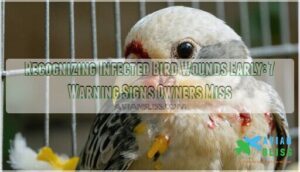 Recognizing infected bird wounds early requires watching for subtle changes that appear within 24-48 hours after injury.
You’ll notice increased redness spreading beyond the wound edges, unusual discharge colors like yellow or green, and persistent bleeding that won’t clot properly.
Your bird’s behavior changes first – they become quieter, eat less, or favor the injured area more than expected.
Fresh wounds should show gradual improvement daily, but infected ones worsen despite your care efforts.
The wound edges may feel warmer than surrounding skin, and you might detect a foul odor that wasn’t there initially.
Most owners miss these early signs because they’re expecting dramatic symptoms like severe swelling or obvious pus formation, which actually appear later in the infection process.
Table Of Contents
- Key Takeaways
- Wound Healing Factors
- Infection Signs and Symptoms
- Bird Infection Transmission
- Recognizing Infected Wounds
- Emergency Care and Prevention
- Frequently Asked Questions (FAQs)
- How do you know if a bird’s wound is infected?
- How to know if a bird has a bacterial infection?
- How do you tell if a bird is seriously injured?
- How long do infected wounds take to heal?
- Can infected wounds spread to other birds?
- What antibiotics work best for bird wounds?
- Should I remove scabs from healing wounds?
- When is surgery needed for infected wounds?
- Conclusion
Key Takeaways
- Watch for early infection signs within 24-48 hours – You’ll spot spreading redness beyond wound edges, yellow-green discharge, and persistent bleeding before dramatic symptoms appear.
- Monitor your bird’s behavior changes first – They’ll become quieter, eat less, and favor the injured area more than expected, often before physical symptoms show.
- Don’t wait for obvious symptoms like severe swelling – Most owners miss early signs because they expect dramatic symptoms that actually appear later in the infection process.
- Seek immediate veterinary care when you spot warning signs – Early intervention makes the difference between a quick recovery and life-threatening complications for your feathered friend.
Wound Healing Factors
Your bird’s wound healing speed depends on three critical factors that you can’t ignore.
Where the injury sits on your bird’s body, your pet’s age and species, plus the quality of care you provide all determine whether healing happens smoothly or complications develop.
Size and Location Impact
Wound depth creates the foundation for infection risk, with deeper injuries causing more extensive tissue damage and longer recovery timelines.
Deeper wounds create infection highways, turning minor injuries into dangerous bacterial breeding grounds.
Critical areas like wing joints and feet face unique healing challenges due to constant movement and blood flow limitations.
You’ll notice infected bird wounds develop faster in these vulnerable spots, where location factors substantially impact your bird’s ability to heal properly, especially considering the role of tissue damage.
Bird Species and Age Considerations
Your bird’s species and age dramatically affect wound healing speed.
Psittacine birds heal 40% slower than songbirds, while waterfowl face higher infection risks.
Juvenile wound care requires extra attention since young birds’ immune systems double healing times.
Senior bird risks include triple the complication rates.
Understanding breed predispositions helps you spot infected bird wounds faster, and knowing these factors can significantly impact the healing process, including infection risks and complication rates.
Quality of Care Influence
How profoundly does your daily care routine impact your bird’s recovery from wounds? The difference between basic and exceptional care can determine whether wounds heal smoothly or develop dangerous infections.
Your quality of care directly influences healing outcomes through these critical factors:
- Veterinary support – Professional guidance prevents minor wounds from becoming life-threatening infected bird wounds
- Hygiene practices – Clean hands and sterile supplies block bacteria from entering vulnerable tissue
- Stress reduction – Calm environments boost immune function and accelerate natural healing processes
- Environmental control – Proper temperature and humidity create ideal conditions for tissue regeneration
Nutrition plays a key role, as proper mineral balance supports tissue regeneration.
Infection Signs and Symptoms
When your bird’s wound starts showing trouble signs, you’re racing against time to prevent serious complications.
Recognizing infection early can mean the difference between a quick recovery and a life-threatening situation that requires emergency veterinary care.
Visual Indicators of Infection

Looking closely at your bird’s wound reveals telltale infection signs that many owners overlook.
Bright redness severity extending beyond the injury’s edges signals trouble brewing beneath the surface. Discharge color transforms from clear to yellow-green, while swelling extent increases rather than decreases daily.
Pus formation creates thick, foul-smelling drainage that healthy wounds don’t produce. When delayed closure occurs after seven days despite proper care, infection’s likely taken hold, requiring immediate veterinary attention.
Behavioral Changes in Birds
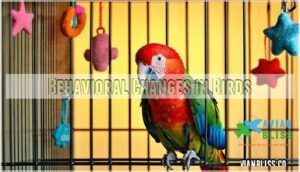
When infection takes hold, your feathered friend’s personality often shifts dramatically before physical symptoms appear.
Watch for sudden lethargy signs, decreased vocalization changes, and appetite loss – these early infection symptoms signal trouble.
Social withdrawal becomes obvious when previously interactive birds avoid contact, preferring cage positioning at the bottom rather than their usual perches, marking clear bird behavior changes that indicate infected bird signs requiring immediate attention.
Respiratory and Physical Symptoms
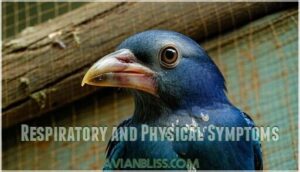
While behavioral changes raise red flags, your bird’s body will telegraph infection through unmistakable physical symptoms.
Watch for labored breathing or tail bobbing—these signal serious respiratory distress requiring immediate veterinary care.
Nasal discharge, eye swelling, and beak discoloration often accompany infected wounds.
Feather ruffling combined with foul-smelling discharge creates a telltale pattern you can’t ignore, especially when considering the overall health and indicating serious respiratory distress.
Bird Infection Transmission

Understanding how infections spread between birds helps you protect your feathered friend from dangerous pathogens that can turn minor wounds into life-threatening emergencies.
Birds can transmit infections through four main pathways: direct contact during fights or mating, contaminated surfaces like perches and food bowls, airborne droplets from sneezing or breathing, and insects that carry disease between hosts.
Direct Contact Transmission Methods
Through close quarters, birds spread infection faster than wildfire.
Close contact spreads infection like wildfire among birds.
Mating transmission occurs when infected partners exchange bodily fluids, while fighting spread happens as aggressive birds create fresh wounds.
Touching risks multiply when healthy birds contact infected feathers or skin, and beak contact during feeding or grooming transfers bacterial growth directly.
Feather transfer carries pathogens between birds, making direct contact transmission the primary route for bird wound infection and foul-smelling discharge development, which is a result of bacterial growth and can lead to infection.
Indirect Contact Transmission Routes
Your bird’s environment becomes a hidden highway for infection through fomite contamination.
Dirty cages, water dishes, perches, and toys harbor bacteria that spread wound infection between cleanings.
Poor cage sanitation creates bacterial growth hotspots, while neglected dish hygiene and skipped toy disinfection maintain infection cycles.
Regular perch cleaning disrupts this indirect contact transmission, protecting your bird’s healing wounds, which is crucial for preventing the spread of infection through bacterial growth.
Airborne Transmission Risks
Respiratory droplets carry airborne pathogens throughout your bird’s environment, making proper ventilation vital for preventing bird wound infection.
Infected birds release bacteria through coughing and sneezing, creating invisible health threats.
Essential airborne transmission controls:
- Maintain strong ventilation – Fresh air circulation dilutes airborne bacteria and reduces infection risks around healing wounds
- Control dust particles – Regular cleaning prevents bacteria-laden dust from settling on open wounds or respiratory systems
- Implement quarantine protocols – Isolate sick birds to prevent foul-smelling discharge particles from contaminating healthy birds
- Monitor aerosolized medications – Nebulized treatments can spread pathogens if equipment isn’t properly sterilized between uses
- Watch infection signs – Respiratory distress often indicates bird bacterial infections spreading through airborne transmission routes
Vector-Borne Transmission Factors
Mosquitoes and ticks don’t just annoy your bird—they’re disease vectors that turn minor wounds into serious infections.
These pests carry pathogens like West Nile virus and Borrelia, seeking open wounds for feeding. Vectorborne transmission increases infection risk by 30% compared to intact skin.
Watch for tick-borne diseases and mite infestations around healing areas, implementing preventative measures through proper wound recognition and early disease detection in birds consultation.
Maintaining a balanced diet can also strengthen their immune system against such threats.
Recognizing Infected Wounds
You’ll spot infected wounds faster when you know what healthy healing looks like versus the troubling signs that demand immediate attention.
Recognizing these critical differences can mean the difference between a quick recovery and a life-threatening emergency for your feathered companion.
Early Warning Signs of Infection
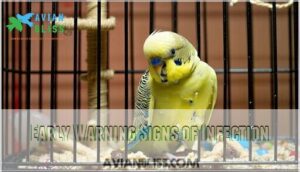
Without obvious signs like bleeding, subtle changes often reveal infection first.
You’ll notice appetite decline paired with lethargy signs – your bird sitting fluffed at the cage bottom instead of perching.
Feather changes include ruffled plumage and unkempt appearance.
Discharge analysis becomes essential: any foul-smelling discharge warrants immediate attention.
Bird wound recognition starts with monitoring these behavioral shifts, as avian wound care depends on early detection before visible symptoms appear.
Observing changes in droppings, such as discoloration, is also key, as these are important waste indicator signs.
Monitoring Wound Healing Progress
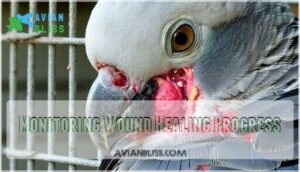
Progress tracking acts like a roadmap for recovery, helping you spot trouble before it escalates.
Healthy closure shows clean, dry edges gradually coming together, with pink tissue formation and swelling reduction occurring steadily.
You’ll notice improvement timeline changes within 48-72 hours when proper avian hygiene practices support natural healing stages and wound healing stages progress normally.
Initial healing involves inflammation and swelling as white blood cells fight infection, which is a critical part of the healing stages and natural healing process.
Identifying Delayed Healing Patterns
Something’s wrong when healing stalled becomes your bird’s new normal.
Chronic wounds that refuse to close after 7-10 days signal underlying conditions creating suboptimal conditions for recovery.
Monitor these delayed healing patterns:
- Scab formation issues – crusty, thick scabs that won’t shed
- Scar tissue building excessively around wound edges
- Foul-smelling discharge persisting beyond initial cleaning
- Complication risk increases with each stalled day
- Bird wound healing complications from poor nutrition or stress
Emergency Care and Prevention
When you spot infection signs, immediate action prevents life-threatening complications that can overwhelm a bird’s delicate system within hours.
Quick first aid, proper prevention strategies, and knowing when to seek emergency veterinary care make the difference between recovery and disaster.
First Aid for Infected Wounds
Once you’ve spotted bird wound identification signs, immediate wound cleaning with sterile saline removes debris and bacteria.
You can find a suitable sterile solution for this purpose.
Apply gentle antiseptic use around the injury, avoiding harsh chemicals, and use proper bandaging techniques with clean gauze, ensuring breathability.
Don’t rely on home remedies for foul-smelling discharge—this signals serious infection requiring professional pain management and veterinary antibiotics for effective bird first aid.
Preventing Infections in Birds
Since prevention beats cure every time, establishing quarantine protocols for new birds prevents disease spread by isolating them for 30-45 days.
Daily hygiene practices, including cleaning cages and disinfecting equipment, reduce pathogen loads by 85%.
Diet optimization with vitamin A supports immune function, while stress reduction maintains natural defenses against infection.
Effective bird care also involves using proper disinfectant spray to minimize the risk of infection.
Importance of Veterinary Intervention
Professional veterinary intervention becomes your lifeline when infections spiral beyond home remedies. You can’t diagnose bacterial infections or safely administer prescription antibiotics without professional expertise.
Essential veterinary services include:
- Medical diagnosis through laboratory testing and wound cultures
- Bird surgery for deep tissue infections or abscess removal
- Emergency response protocols for sepsis or systemic infections
- Wound treatment with specialized surgical cleaning and debridement
- Avian infection control through targeted antibiotic therapy and monitoring
Veterinary care transforms guesswork into precise treatment plans. Effective emergency care plans are vital for preventing and managing infections in pet birds.
Maintaining Good Hygiene and Sanitation
Clean hands prevent cross-contamination between birds and wound sites. Proper cleaning protocols protect healing tissue from bacterial invasion.
Regular cage sanitation eliminates pathogen reservoirs that threaten recovery. Effective bird disinfectant solutions are essential for maintaining a clean environment and can be found through bird care products.
| Daily Tasks | Weekly Requirements | Emergency Protocols |
|---|---|---|
| Hand washing before/after handling | Deep cage sanitation with disinfectant | Immediate quarantine and isolation |
| Fresh water quality checks | Food bowl sterilization | Enhanced bird hygiene measures |
| Wound care with sterile supplies | Perch and toy cleaning | Strict avian infection control |
Frequently Asked Questions (FAQs)
How do you know if a bird’s wound is infected?
That festering wound screams danger! You’ll spot bright red inflammation spreading beyond wound edges, thick yellow-green pus with foul odor, persistent bleeding, and your bird showing lethargy or decreased appetite.
How to know if a bird has a bacterial infection?
Watch for lethargy, fluffed feathers, decreased appetite, and sitting at the cage bottom. You’ll notice labored breathing, nasal discharge, swollen areas, or changes in droppings indicating bacterial infection.
How do you tell if a bird is seriously injured?
Look for emergency signs like huddled posture, lethargy, unresponsiveness, or lying at the cage bottom. Birds with respiratory distress, open-beak breathing, or blue discoloration need immediate veterinary care.
How long do infected wounds take to heal?
Strangely enough, infected bird wounds often take twice as long to heal as clean ones.
You’ll typically see recovery extending from weeks to months, depending on infection severity and your bird’s overall health condition.
Can infected wounds spread to other birds?
Yes, infected wounds can spread to other birds through direct contact, contaminated surfaces, and airborne droplets.
You’ll need to isolate the sick bird immediately and disinfect shared equipment to prevent transmission, which involves taking steps to ensure immediate isolation and proper disinfection.
What antibiotics work best for bird wounds?
When feathered friends face wound infections, you’ll need prescription antibiotics from an avian veterinarian.
Common choices include enrofloxacin, doxycycline, or amoxicillin-clavulanate, but proper diagnosis determines the right medication for your bird’s specific bacterial culprit.
Should I remove scabs from healing wounds?
Don’t remove scabs from healing bird wounds. They’re nature’s protective bandages that prevent bacteria from entering while new tissue forms underneath. Let scabs fall off naturally during the healing process.
When is surgery needed for infected wounds?
Surgery becomes necessary when infected wounds show deep tissue damage, abscesses, or systemic infection signs like fever and lethargy that don’t respond to antibiotics within 48-72 hours.
Conclusion
Like a vigilant sentinel watching over your feathered friend, recognizing infected bird wounds early becomes your most powerful defense against serious complications.
You’ve learned that subtle changes within the first 48 hours—spreading redness, unusual discharge, behavioral shifts, and persistent bleeding—signal trouble before dramatic symptoms appear.
When you spot these warning signs, don’t hesitate to seek veterinary care immediately, because early intervention makes the difference between quick recovery and prolonged suffering for your bird.
- https://education.nsw.gov.au/teaching-and-learning/animals-in-schools/animals-in-schools-resources/information-and-fact-sheets-about-animals/bumblefoot-plantar-pododermatitis
- https://flamingopetclinic.com/signs-of-sickness-in-birds/
- https://birdsupplies.com/blogs/news/a-closer-look-at-bird-eye-infections-and-how-to-treat-them
- https://vcahospitals.com/know-your-pet/recognizing-the-signs-of-illness-in-pet-birds
- https://grubblyfarms.com/blogs/the-flyer/fowl-pox-avian-pox-a-comprehensive-guide