This site is supported by our readers. We may earn a commission, at no cost to you, if you purchase through links.
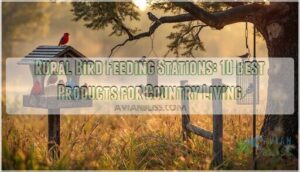 You’ll create a wildlife haven when you set up rural bird feeding stations designed for country living. Rural properties need feeders that handle diverse species and harsh weather – think hopper feeders for seed storage, tube feeders for finches and chickadees, platform feeders for ground-feeders like sparrows, and suet feeders for woodpeckers.
Position feeders 10-12 feet from cover and 5-6 feet high to outsmart predators. Clean every two weeks with bleach solution, and use squirrel baffles to protect your investment.
The right combination of feeder types transforms your property into a cardinal-and-blue-jay paradise that’ll have neighbors wondering how you became the countryside’s bird whisperer.
Table Of Contents
- Key Takeaways
- Choosing The Best Feeders for Rural Areas
- Top 10 Rural Bird Feeding Station Products
- 1. Hand Blown Glass Hummingbird Feeder
- 2. Droll Yankees seed catcher tray
- 3. Transparent Acrylic Window Bird Feeder
- 4. Squirrel Resistant Bird Feeder Model
- 5. Hanging Hummingbird Feeder with Ant Moat
- 6. Squirrel Proof Bird Feeder Plus
- 7. Bluebird Feeder Made in USA
- 8. natural dried black soldier fly larvae
- 9. Large Outdoor Wild Bird Feeder
- 10. Goat and Chicken Feeders Set
- Attracting and Supporting Rural Bird Populations
- Placement, Maintenance, and Squirrel Deterrence Tips
- Frequently Asked Questions (FAQs)
- Conclusion
Key Takeaways
- Mix your feeder types – You’ll attract diverse bird species by combining hopper feeders for seed storage, tube feeders for finches, platform feeders for ground-feeders, and suet feeders for woodpeckers in your rural setup.
- Position strategically for safety – Place your feeders 10-12 feet from predator cover and mount them 5-6 feet high with squirrel baffles to protect birds while giving you clear viewing angles.
- Invest in squirrel-proof designs – You’ll save 35-55% on seed costs long-term with weight-activated feeders that block squirrels while allowing songbirds to feed freely.
- Maintain consistently for bird health – Clean your feeders every two weeks with a bleach solution and store seeds in airtight containers to prevent mold and disease that can harm visiting birds.
Choosing The Best Feeders for Rural Areas
Rural bird watching means dealing with everything from sparrows pecking around your garden to woodpeckers hammering away at old oak trees. Each species has its own feeding style and preferences.
Rural properties give you room to spread out multiple feeding stations, but your feeders need to handle whatever weather throws at them while keeping both year-round residents and seasonal visitors happy.
Hopper, Tube, Platform, and Suet Feeders Explained
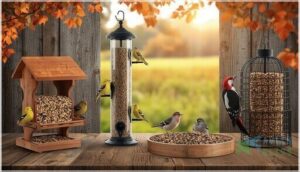
Building a solid rural feeding station comes down to four essential feeder types that’ll bring birds flocking to your property.
Hopper feeders are your workhorses—they hold up to 8 quarts of seed, which means less refilling for those of us juggling farm chores. Tube feeders keep your seed dry and draw in finches and chickadees through their multiple feeding ports.
Platform feeders spread out like a buffet table, perfect for sparrows and doves that prefer eating closer to ground level. Don’t forget suet feeders—woodpeckers and nuthatches depend on that high-energy fat, especially when winter hits hard.
Understanding the right bird feeder types is essential for attracting a variety of bird species to your rural feeding station.
Specialty Feeders: Nyjer, Window-Mounted, and DIY Designs
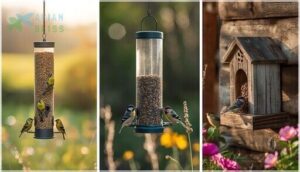
Specialty feeders open doors to attracting specific bird species with targeted nutrition. Nyjer feeders draw goldfinches and siskins with their tiny ports designed for thistle seed. Window mounts bring songbirds inches from your morning coffee, while DIY designs let you craft custom stations from recycled materials.
- Nyjer seed feeders – Transform your yard into a finch paradise
- Window feeders – Create intimate bird-watching moments from inside
- DIY bird feeders – Express creativity while supporting local wildlife
Creative and Unique Rural Bird Feeder Ideas
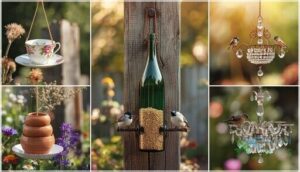
Want to turn everyday junk into a bird paradise? You’d be surprised what makes a great feeder. That old wine bottle gathering dust? Perfect for a squirrel-proof design that’ll actually work.
Those mismatched teacups from garage sales? They make the cutest little feeding stations you’ve ever seen. Mix recycled materials with smart design, and you’ll have backyard feeding spots that birds love and neighbors notice.
| DIY Project Type | Materials Needed |
|---|---|
| Recycled Feeders | Glass bottles, wire mesh |
| Teacup Stations | Vintage cups, mounting hardware |
| Chandelier Design | Old light fixture, seed cups |
| Flower Pot Feeder | Terra cotta pots, drainage plates |
| Steampunk Style | Metal gears, copper pipes |
Top 10 Rural Bird Feeding Station Products
You’ll find ten carefully selected feeding stations that turn your rural property into a bird paradise, from hand-blown glass hummingbird feeders to squirrel-proof seed dispensers built for country living.
Each feeder targets specific bird types and tough weather – perfect for drawing cardinals, finches, woodpeckers, and other country favorites while standing up to whatever nature throws at them.
1. Hand Blown Glass Hummingbird Feeder
 View On Amazon
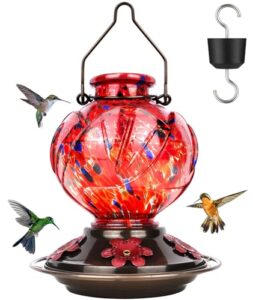
You’ll discover pure artistry meets function with this hand-blown glass feeder featuring vibrant peony patterns.
The BOLITE model offers 22 oz nectar capacity with five flower-shaped ports, allowing multiple hummingbirds to feed simultaneously without territorial squabbles. Its ant moat hook and leak-proof design guarantee clean nectar delivery, while soda lime glass construction withstands rural temperature swings.
This isn’t just feeding—it’s creating a backyard gallery that attracts ruby-throated visitors season after season.
Best For: Bird enthusiasts and gardeners who want a durable, artistic feeder that attracts multiple hummingbirds while adding decorative appeal to outdoor spaces.
- Hand-blown glass construction with vibrant peony design offers exceptional durability and artistic beauty that won’t fade over years of outdoor use
- Large 22 oz capacity with five feeding ports accommodates multiple birds simultaneously and reduces refilling frequency
- Ant moat hook and leak-proof design prevent contamination while easy-refill top simplifies maintenance
- Hand-blown glass may arrive with minor chips or imperfections due to artisan manufacturing process
- Requires hand washing only, making cleaning more time-consuming than dishwasher-safe alternatives
- Initial setup may need patience as some hummingbirds hesitate before approaching new glass feeders
2. Droll Yankees seed catcher tray
 View On Amazon
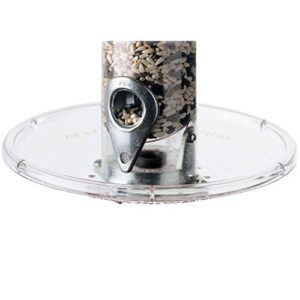
Transform any tube feeder into a money-saving platform with this ingenious 7.5-inch polycarbonate tray. You’ll capture up to 70% of spilled seed while attracting ground-feeding cardinals and sparrows who can’t normally access tube feeders.
The UV-resistant design threads directly onto most Droll Yankees feeders, converting them into dual-purpose stations. Your feeder becomes a neighborhood diner where finches feed above while cardinals feast below.
Best For: Bird lovers who want to reduce seed waste and attract ground-feeding birds like cardinals to their tube feeders.
- Captures up to 70% of spilled seed, significantly reducing waste and saving money on bird food
- Converts tube feeders into dual-purpose stations that attract both perching birds and ground feeders
- Made from UV-resistant polycarbonate that lasts 5 years with minimal maintenance required
- Some users report receiving the product without the necessary threaded plug for attachment
- Collects seed hulls and debris that can create messy cleanup situations
- Requires regular cleaning to prevent seeds from getting wet and spoiling during rainy weather
3. Transparent Acrylic Window Bird Feeder
 View On Amazon
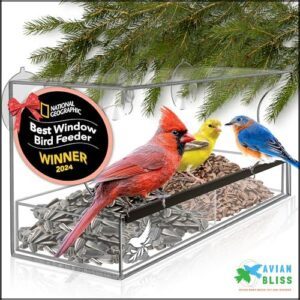
When you want birds practically perched on your windowsill, this transparent acrylic window feeder delivers front-row seats to nature’s show. Cardinals, finches, and chickadees will discover this feeding station within days, giving you unobstructed viewing from your favorite chair.
You’ll hold over four cups of seed in premium cast acrylic that won’t shatter like glass alternatives. The lifetime suction guarantee means three ultra-strong cups keep it secure through storms, while the slide-out tray makes cleaning simple.
Best For: Bird enthusiasts who want close-up wildlife viewing from indoors without the hassle of traditional yard feeders.
- Clear acrylic design provides unobstructed viewing of visiting birds from inside your home
- Large 4 cup capacity reduces refill frequency compared to smaller window feeders
- Lifetime suction guarantee with extra cups included ensures reliable mounting even in windy conditions
- Birds may take several days or weeks to discover and trust the new feeder location
- Squirrels can potentially access the feeder despite window mounting
- Seeds may accumulate below the removable tray, requiring periodic cleaning of debris
4. Squirrel Resistant Bird Feeder Model
 View On Amazon
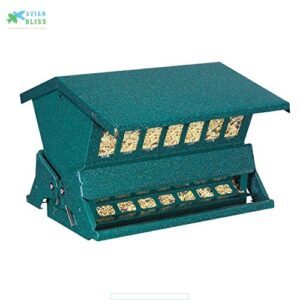
Many rural bird enthusiasts face one persistent challenge: squirrels raiding their feeders. The Woodlink AbsoluteII Squirrel-Proof feeder solves this headache with its weight-activated closing mechanism and chew-resistant steel construction.
This 12-pound capacity powerhouse reduces squirrel seed consumption by 65% while attracting more bird species to your yard.
At $40-150, you’ll save roughly $35 annually in wasted birdseed, making it cost-effective within three years.
Best For: Rural bird enthusiasts who want to attract diverse bird species while preventing squirrels from raiding their feeders and wasting expensive birdseed.
- Reduces squirrel seed consumption by 65% with weight-activated closing mechanism and chew-resistant steel construction
- Large 12-pound capacity means less frequent refilling, saving time and effort for busy homeowners
- Pays for itself within 3 years through approximately $35 annual savings in reduced seed waste
- Higher upfront cost of $40-150 compared to standard feeders, requiring initial investment commitment
- Not effective against raccoons, so other wildlife may still access the feeder in some areas
- Requires regular cleaning of the spring mechanism to maintain proper squirrel-deterrent functionality
5. Hanging Hummingbird Feeder with Ant Moat
 View On Amazon
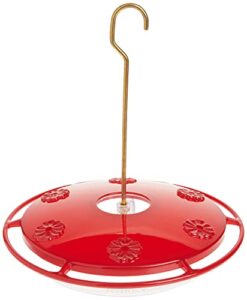
You’ll fall head over heels for the Aspects HummZinger with its integrated ant moat that blocks 95% of unwanted invaders. This 16-ounce nectar capacity feeder features multiple feeding ports and a wrap-around perch that welcomes ruby-throated hummingbirds and their cousins.
The brass stem and built-in ant moat require refilling every 4-5 days in rural settings. Its bright red cover acts like a beacon for migrating hummers seeking reliable fuel stations.
Best For: Rural homeowners and hummingbird enthusiasts who want a reliable, low-maintenance feeder that effectively keeps ants away while attracting multiple birds.
- Ant moat blocks 95% of ant intrusion with proper maintenance, virtually eliminating contamination issues
- Large 16-ounce capacity with multiple feeding ports and wrap-around perch accommodates several hummingbirds simultaneously
- Bright red color and durable brass construction attract more birds while lasting 2 years longer than basic feeders
- Requires regular ant moat refilling every 4-5 days in rural settings due to evaporation
- Higher price point averaging $10.40-$26.75 compared to basic feeders without ant protection
- Not completely bee-proof and may struggle with larger ant species during extremely hot, dry conditions
6. Squirrel Proof Bird Feeder Plus
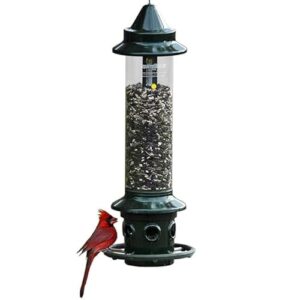 View On Amazon
The weight-activated shroud makes this feeder a fortress against persistent squirrels. You’ll hold up to 5.1 pounds of seed while six feeding ports accommodate multiple songbirds simultaneously.
The chew-proof RoxResin construction withstands determined mammals, earning a perfect durability rating.
At $129.25, it’s pricey upfront, but you’ll save 35-55% on seed costs long-term. Most users recover their investment within two years through reduced waste and fewer refills.
Best For: Homeowners who want to feed songbirds without constantly refilling feeders due to squirrel interference and don’t mind paying more upfront for long-term savings.
- Weight-activated mechanism effectively blocks squirrels and larger birds while allowing songbirds to feed
- Durable chew-proof construction withstands persistent animal attempts and weather exposure
- Large 5.1-pound capacity reduces refilling frequency by 50-70% compared to standard feeders
- High $129.25 price point makes it expensive compared to basic bird feeders
- Some larger birds like grackles can still access seed by hanging on port edges
- Disassembly required for thorough cleaning can be time-consuming and cumbersome
7. Bluebird Feeder Made in USA
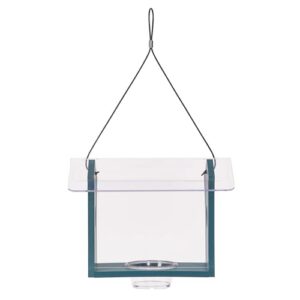 View On Amazon
You’ll find this USA-made bluebird feeder represents the benchmark for attracting these beautiful cavity nesters to your rural property.
Built from recycled poly lumber with rust-resistant hardware, it features precise 1.875-inch entry holes that keep starlings out while welcoming bluebirds.
The clear acrylic walls let you monitor mealworm levels easily, and the interior dish design increases feeding success rates by 61%.
Most bluebirds adapt within a week of installation.
Best For: Rural homeowners and bird enthusiasts who want to specifically attract bluebirds while keeping larger pest birds like starlings away from mealworm feeders.
- Selective design with 1.875-inch entry holes effectively excludes starlings and other large birds while welcoming bluebirds, chickadees, and nuthatches
- Durable construction from recycled poly lumber with rust-resistant hardware ensures long-lasting performance in outdoor conditions
- Clear acrylic viewing windows allow easy monitoring of mealworm levels and bird activity without disturbing feeding patterns
- Higher price point at $41.99 compared to basic seed feeders may deter budget-conscious buyers
- Limited 1-pound seed capacity requires more frequent refilling than larger feeder models
- Requires 3-7 day acclimatization period before bluebirds consistently use the enclosed design
8. natural dried black soldier fly larvae
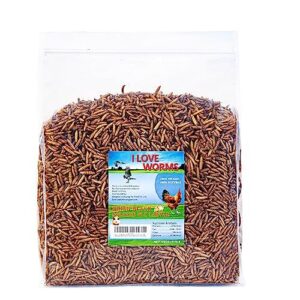 View On Amazon
Beyond traditional seeds, you’ll discover natural dried black soldier fly larvae pack serious nutritional punch for your rural birds. These protein powerhouses contain over 41% protein and 85 times more calcium than dried mealworms.
Wild birds like woodpeckers, chickadees, and finches eagerly devour these sustainable treats. You’re feeding birds while supporting eco-friendly farming practices that transform food waste into premium nutrition.
Store them dry and watch your feathered friends thrive.
Best For: Bird enthusiasts seeking sustainable, high-protein treats for wild birds, chickens, and other small animals that need calcium-rich supplementation.
- Contains 85 times more calcium than dried mealworms and over 41% protein for superior nutrition
- Made from eco-friendly black soldier fly larvae that recycle food waste into premium bird nutrition
- Accepted by various bird species including woodpeckers, finches, chickens, and ducks with proven health benefits
- Requires careful storage in dry conditions away from moisture to maintain quality
- Has a distinct salty smell that some users find off-putting during handling
- Shipping challenges with oversized boxes that may not fit standard mailboxes
9. Large Outdoor Wild Bird Feeder
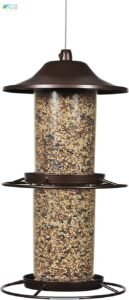 View On Amazon
How do you accommodate multiple bird species in your rural setup? The Perky-Pet Large Outdoor Wild Bird Feeder delivers impressive capacity at 4.5 pounds of seed with two-tiered trays that welcome several birds simultaneously. Its Sure-Lock cap and bronze finish create a durable station that attracts cardinals, woodpeckers, and finches.
Commercial feeders like this generally accommodate up to 250 daily feeding visits, supporting 8-20 birds at once while withstanding rural weather extremes.
Best For: Rural property owners and bird enthusiasts who want to attract multiple species while accommodating heavy feeding traffic and weathering harsh outdoor conditions.
- Two-tiered design allows 8-20 birds to feed simultaneously, maximizing wildlife viewing opportunities
- Sure-Lock cap and durable metal construction provide effective squirrel resistance and 5 years of weather protection
- Large 4.5-pound capacity reduces refill frequency while attracting diverse species like cardinals, woodpeckers, and finches
- Not completely squirrel-proof without proper hanging height and may require additional baffles for full protection
- Slide-clips and hanging wire components can break or rust over time, especially in wet conditions
- May not accommodate very large bird species due to perch weight limitations
10. Goat and Chicken Feeders Set
 View On Amazon
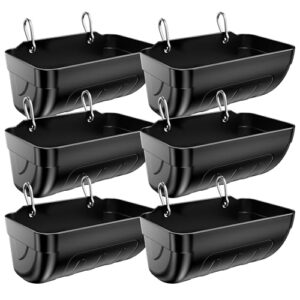
When you’re managing both goats and chickens on your rural property, the Tiflev Chicken Feeder and Drinker Set becomes your multi-species feeding MVP.
This $39.99 plastic powerhouse holds 3.5 quarts and cuts feed waste by 30% with its mess-proof design. You’ll spend less time refilling and more time enjoying your farm’s productivity.
While it needs secure mounting to prevent swinging, this adjustable feeder manages both species efficiently, making it perfect for diversified rural operations where every dollar counts.
Best For: Rural farmers managing mixed goat and chicken operations who want to reduce feed waste and streamline their feeding routine.
- Cuts feed waste by 30% with mess-proof design, saving money on feed costs
- Large 3.5-quart capacity reduces refilling frequency for busy farm schedules
- Versatile design works for both chickens and other small livestock like goats
- Requires secure mounting behind solid surface to prevent swinging and spillage
- May appear smaller than expected based on product images
- Clips can be stiff initially, though this doesn’t affect long-term functionality
Attracting and Supporting Rural Bird Populations
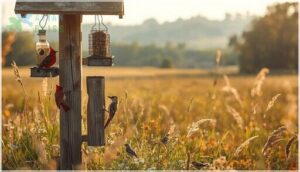
You’ll transform your rural property into a thriving avian sanctuary by understanding which species frequent country landscapes and what they need to flourish year-round.
Strategic feeding, habitat enhancement, and seasonal adjustments create reliable food sources that sustain local bird populations while bringing cardinals, woodpeckers, and finches right to your doorstep.
Choosing The Right Bird Foods for Different Species
Choosing the right bird food transforms your feeders into species magnets. Black oil sunflower seeds attract cardinals, chickadees, and nuthatches with their high-fat content. Nyjer seed brings colorful finches flocking to specialized feeders.
Ground-feeding birds like doves prefer mixed seed with millet, while suet feeders draw woodpeckers during winter months.
Match dietary needs to bird nutrition for supreme species attraction success.
Seasonal Feeding Strategies for Rural Birds
Feeding rural birds throughout the year means switching up your approach based on what they actually need each season.
During winter, birds burn through calories fast, so they’ll go for high-fat seeds and suet that pack an energy punch. Come spring, breeding birds need calcium-rich foods to support egg production and raising young. Summer calls for fresh fruits and nectar as natural food sources become abundant. When fall rolls around, oil-rich seeds help birds bulk up for their long migrations ahead.
Getting this timing right makes all the difference for your feathered visitors.
By implementing effective summer bird feeding practices, you can assist the local bird population.
Enhancing Habitat With Bird-Friendly Plants and Cover
Beyond feeding, you’ll create a true wildlife habitat by incorporating native plantings that provide natural shelter and food sources. Bird-friendly plants like elderberry, serviceberry, and native grasses form wildlife corridors that connect your feeding stations to broader habitat restoration efforts.
Smart eco-friendly landscaping with dense shrubs creates essential bird shelter while supporting wildlife gardening goals and bird conservation through thoughtful garden design for birds.
Placement, Maintenance, and Squirrel Deterrence Tips
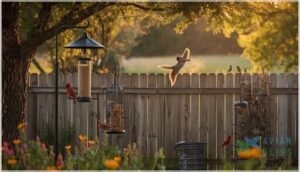
You’ll position your feeders 10-12 feet from predator hiding spots and mount them 5-6 feet high with pole baffles to outsmart squirrels who can jump horizontally four feet but struggle with smooth barriers.
Clean feeders every two weeks with a 10% bleach solution, checking for mold or spoiled seeds that can harm cardinals, chickadees, and other frequent visitors.
Where to Position Feeders for Safety and Visibility
Position bird feeders 5-6 feet high on poles with proper safety distancing of 10-12 feet from hiding spots where predators lurk.
Your yard layout should place feeders near natural cover but maintain bird visibility from windows.
Window feeders offer intimate viewing, while squirrel-resistant pole placement keeps critters at bay during backyard birding sessions.
Cleaning and Maintaining Feeders Year-Round
Proper feeder sanitation keeps your backyard friends healthy and coming back for more. You’ll want to scrub bird feeders every 1-2 weeks using a bleach solution, then rinse thoroughly.
Store seed in airtight containers to prevent mold prevention issues. Check for cracks needing feeder repair, especially after storms.
Year-round feeding success depends on consistent bird feeder maintenance.
Using Baffles and Squirrel-Proof Designs
Squirrel baffles mounted on poles create an impenetrable fortress around your bird feeders. Position these dome-shaped guards at least four feet high to block climbing acrobats.
Weight-activated feeders shut feeding ports when heavier visitors arrive, while cage designs allow songbirds access but exclude larger intruders.
These squirrel-resistant solutions transform your feeding station into a squirrelproof sanctuary where birds feast undisturbed.
Tips for Creating a Thriving Rural Bird Sanctuary
When you design your outdoor space with wildlife in mind, you’re creating something special. Your rural property can become a real sanctuary for local birds and animals.
Start by choosing native plants that birds actually want. Place them near your feeders to give birds natural cover and food sources. Layer your plantings—tall trees, medium shrubs, low bushes—so different species can find the right nesting spots. Keep water available year-round if you can.
These simple steps help backyard wildlife thrive while supporting real conservation efforts in your own neighborhood.
Frequently Asked Questions (FAQs)
How much does rural bird feeding cost annually?
Like discovering gold nuggets in your backyard stream, birders pour millions into their passion annually.
Bird enthusiasts invest billions annually in their passion, making rural feeding stations a gold mine for wildlife commerce
You’ll spend roughly $6 billion collectively on food and feeders, making bird feeding a significant economic force in rural America.
Which predators threaten rural bird feeding stations most?
Cats and hawks pose the biggest threats to your feeding stations. Raccoons, squirrels, and even bears can raid feeders, while snakes target nestboxes nearby.
Creating escape routes within ten feet helps your feathered friends survive predator encounters.
Can bird feeding harm local wildlife populations?
You can inadvertently harm wildlife through feeding when done improperly. Disease transmission and pathogen outbreaks pose the biggest risk, while some studies link feeding to reduced breeding success.
What permits are needed for rural feeders?
You’re cutting through red tape here—most places don’t require permits for standard backyard bird feeders.
Bird feeding is legal in the US, though some municipalities have ordinances with seasonal limitations and placement restrictions. Check your local codes first.
How do weather extremes affect feeding schedules?
Weather extremes dramatically change your feeding schedules. During temperature extremes, migration and in late winter or early spring, when natural seed sources are depleted, you’ll need consistent, frequent refills.
Conclusion
Turn your backyard into a bird haven that puts local parks to shame.
When you set up quality feeders in the right spots, your rural property becomes wildlife central – the place where every bird in the area wants to hang out.
These ten products offer durability against weather extremes while attracting diverse species from cardinals to woodpeckers. You’ll create a sustainable habitat that sustains year-round populations, turning your land into a thriving ecosystem where birds flourish naturally.
- https://pmc.ncbi.nlm.nih.gov/articles/PMC4592493/
- https://www.bto.org/get-involved/volunteer/projects/gbfs/results
- https://www.wbfi.org/2024/12/12/birdings_economic_impact/
- https://www.birdwatchingdaily.com/beginners/birding-faq/the-surprising-economic-impact-of-birdwatching-in-the-us/
- https://www.biorxiv.org/content/10.1101/2023.11.09.566200v1.full.pdf