This site is supported by our readers. We may earn a commission, at no cost to you, if you purchase through links.

Last winter, a blue jay died on my neighbor’s deck, just feet from her frozen bird bath. The autopsy revealed severe dehydration, not starvation. This taught me something most backyard birders don’t realize: birds can starve surrounded by seed, but they’ll die faster without liquid water.
When temperatures drop below freezing, finding unfrozen water becomes the difference between survival and death for wild birds. They need water not just for drinking, but for preening—maintaining the insulating properties of their feathers that keep them alive through subzero nights.
Safe bird bath heating solutions solve this critical problem, but choosing the wrong heater creates new dangers: electrical fires, burns, and toxic materials. The right heating system keeps water accessible without putting birds or your property at risk.
Table Of Contents
- Key Takeaways
- Why Safe Bird Bath Heating Matters in Winter
- Key Features of Safe Bird Bath Heaters
- Types of Bird Bath Heating Solutions
- Installation and Safety Best Practices
- Maintenance Tips for Heated Bird Baths
- Top 10 Safe Bird Bath Heating Products
- 1. K&H Original Birdbath Ice Eliminator
- 2. Heated Bird Bath Four Seasons Decor
- 3. API Heated Bird Bath
- 4. API Heated Bird Bath with Stand
- 5. API Utility Bucket De Icer
- 6. Farm Innovators Bird Bath De-Icer
- 7. Winter Bird Bath Heater Deicer
- 8. SYSAI Heavy Duty Birdbath De-icer
- 9. Farm Innovators Submersible Water De Icer
- 10. All Seasons Heated Bird Bath
- Frequently Asked Questions (FAQs)
- Conclusion
Key Takeaways
- Birds die faster from dehydration than starvation in winter because frozen water sources eliminate access to liquid water needed for both drinking and maintaining feather insulation that keeps them alive through subzero temperatures.
- Safe heated bird baths must include thermostat control that activates near freezing, GFCI protection, enclosed heating elements, and UL or CSA certification to prevent electrical fires, burns, and shock hazards while keeping water accessible.
- Proper installation requires GFCI outlets, outdoor-rated extension cords, elevated waterproof connections, and placement 3 feet from windows or beyond 30 feet to prevent collisions, plus daily water level checks since evaporation accelerates even in freezing conditions.
- Most heated bird baths cost $5-10 monthly to operate with 50-150 watt thermostatically controlled heaters that cycle on only below 35°F, keeping water ice-free down to -10°F or -20°F depending on the model while attracting 13+ species that won’t visit seed feeders.
Why Safe Bird Bath Heating Matters in Winter
When temperatures drop below freezing, finding liquid water becomes a survival challenge for birds in your backyard. A safe, heated bird bath can mean the difference between a thriving winter bird population and one that struggles to meet basic needs.
Let’s look at why keeping water accessible during cold months matters so much for the birds that depend on your care.
Providing Water Access During Freezing Temperatures
When temperatures drop at or below 32°F, most natural water sources freeze solid, leaving birds with limited options. You can help by providing an ice-free alternative. Heated bird baths with thermostat activation and safety certifications keep water accessible without the energy cost of melting snow:
- Prevent ice formation during freezing temperatures
- Offer reliable winter hydration for local species
- Include safety features like electrical shock hazards protection
To help guarantee bird safety, remember to choose a durable plastic bird bath for winter use.
Supporting Bird Survival and Health
Winter hydration becomes life-or-death when birds face cold, dry air that accelerates respiratory water loss. Clean, heated water also supports feather maintenance and hygiene practices that preserve insulation, while disease prevention through regular scrubbing reduces pathogen exposure. These safety features together boost winter bird survival.
In winter, heated water isn’t just convenient for birds—it’s often the difference between survival and death
You’re directly supporting energy balance by eliminating the caloric burden of melting snow—small birds already burn through reserves just staying warm. Providing fresh water access is essential for avian visitors.
Attracting a Diversity of Winter Birds
Open water availability acts as a magnet for species richness in your winter bird care efforts. You’ll draw cardinals, bluebirds, and goldfinches alongside covert species like hermit thrushes and brown thrashers that rarely visit seed feeders.
Urban refuges with heated baths recorded 13+ bird species during cold snaps—water attracts non-seed eaters, broadening your yard’s winter bird survival hub beyond what feeders alone achieve.
Preventing Ice Formation for Bird Safety
While diversity matters, ice formation risks turn bird baths into dangerous traps. Frozen surfaces prevent hydration—birds can’t break thick ice safely, and pecking at it wastes energy they need for survival. Bird bath heater safety with thermostat control keeps water liquid without overheating, preventing electrical hazards while conserving energy. Proper heating also stops material cracking in ceramic basins from freeze-thaw cycles.
- Thermostatic heating elements activate only below freezing, preventing electrical hazards and reducing power waste
- Maintaining liquid water cuts bird energy expenditure by 10-15% during winter through easier access
- Enclosed heating elements with waterproof connections make for safe operation in wet outdoor conditions
- Proper placement in sheltered, sunny spots enhances natural heat retention and reduces ice formation
Key Features of Safe Bird Bath Heaters
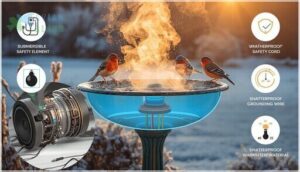
Not all bird bath heaters are created equal, and the difference between a safe product and a potential hazard often comes down to a few critical features. When you’re shopping for a heater, you’ll want to look for specific safety mechanisms and design elements that protect both the birds and your property.
Let’s break down the four essential features that separate reliable heaters from risky ones.
Thermostat Control and Automatic Shutoff
You’ll want a heater with built-in thermostat control that kicks on around 35°F and shuts off when water warms safely. This temperature regulation keeps ice from forming while preventing overheating that could harm visiting birds.
Thermostatically controlled models boost energy efficiency since they cycle on only when needed. Look for automatic shutoff mechanisms and safety standards like UL certification—these shutoff features cut power if water levels drop dangerously low, protecting your investment and birds alike.
Wattage and Power Requirements
How much power does a safe bird bath heater really need? Climate considerations and bath size guide your choice: compact 50-watt units handle mild winters and smaller basins, while 150- to 250-watt models suit larger baths or harsh cold.
Energy consumption matters—a 50-watt heater costs roughly $3.60 monthly at typical rates, barely affecting your electric bill. Circuit load remains minimal, and product examples show power consumption efficiency varies widely across brands.
Enclosed Heating Elements and Waterproof Connections
At the heart of every safe bird bath heater lies fully encapsulated element encapsulation—cast aluminum or stainless-steel housings isolate heating wires from water, eliminating shock risk. Look for “no exposed coils” labels and weatherproof casing with molded cord strain relief.
GFCI protection catches leakage currents within milliseconds, while connection waterproofing using IP65-rated gasket-sealed covers shields plugs from rain. Failure mitigation keeps birds—and you—secure.
Safety Certifications (UL, CSA) and Durability
When you see UL or CSA marks, you’re buying heaters that passed rigorous electrical safety testing—shock protection, fire resistance, and temperature limits under wet conditions down to −20°F. These safety certifications confirm enclosed elements, grounded cords, and weatherproof housings won’t fail mid-winter.
Material durability matters, too: cast aluminum resists corrosion season after season, while stainless guards protect birds and extend product lifespan, often backed by one-year warranties.
Types of Bird Bath Heating Solutions
You have several heating options to choose from, each with distinct advantages depending on your setup and budget. Some work as standalone units, while others integrate into existing bird baths.
Understanding these different types will help you select the safest, most practical solution for keeping water accessible to birds throughout winter.
Immersion and Submersible Heaters
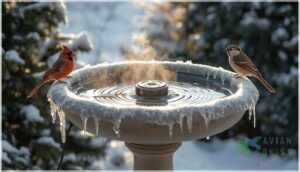
Immersion and submersible heaters sit directly in the water, using enclosed heating elements to prevent ice formation without raising temperatures far above freezing. Look for models with thermostat control that activate near 0 to 2 °C, limiting energy use.
Cast aluminum construction ensures safe heat distribution, while UL or cULus certification, GFCI outlets, and proper submersion depth protect birds and prevent electric shock in your backyard haven.
Pedestal and Deck-Mounted Heated Baths

Pedestal and deck-mounted heated bird baths integrate heaters directly into the basin, offering year-round use with built-in safety features. Most use thermostatically controlled 75–150 watt elements that keep water open to –20 °F, while mounting stability ensures they resist tipping in wind.
Basin depth generally stays around 1.5–2 inches for bird safety, and electrical grounding with GFCI outlets prevents shock.
Material durability matters—look for corrosion-resistant plastics or metals that handle seasonal freeze-thaw cycles.
Solar-Powered Bird Bath Heaters

Solar-powered bird bath heaters use panels ranging from 2.5 to 75 watts to run pumps that keep water moving, reducing mosquito breeding and attracting more species. Solar panel efficiency matters—look for units above 20% conversion.
Battery storage capacity extends operation roughly two hours past sunset, but winter performance issues limit freeze prevention during long, subfreezing nights.
Energy efficiency means zero operating costs after installation, though consistent heating still requires grid backup in harsh climates.
De-Icer Add-Ons for Existing Bird Baths
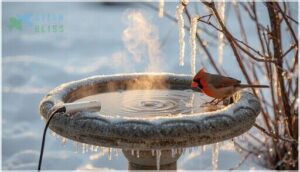
If solar-powered units don’t suit your climate, drop-in de-icer add-ons transform your existing bath into a year-round resource.
Farm Innovators economical birdbath de-icer models and Allied Precision bird bath de-icer units offer 50 to 250-watt options with thermostat accuracy that activates near 35°F.
Look for cast aluminum for material durability, cord protection against wildlife chewing, and UL or CSA safety certifications before buying any ice eliminator birdbath de-icer.
Installation and Safety Best Practices
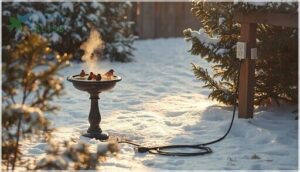
Setting up a bird bath heater correctly can mean the difference between a safe winter water source and a serious hazard. Even the best heater won’t protect birds if you skip basic electrical safety or place it in the wrong spot.
Let’s walk through the essential practices that keep both birds and your property safe.
Using GFCI Outlets and Outdoor-Rated Extension Cords
Before you plug in your bird bath heater, make sure you’re using a GFCI outlet—it’ll trip in milliseconds if it detects a ground fault, cutting power fast enough to prevent shock.
Pair it with an outdoor-rated extension cord marked SJTW or SJTOW, preferably 12‑gauge for heaters drawing several hundred watts. These cords resist moisture and cold, keeping your setup safe all winter.
Cord Management and Waterproof Connections
Once you have GFCI protection and an outdoor-rated cord, keep the plug connection off the ground—water pooling around junctions can corrode contacts and create electrical resistance. Use a weatherproof cover or “cord dome” to shield the plug from rain and snow.
Route your cord away from walkways and puddles, securing it with clips to prevent tripping and strain on the connections. Inspect for cracks or fraying regularly—damaged insulation is a documented fire risk.
Proper Placement and Setup for Maximum Safety
Beyond electrical safety, where you place your heated bath shapes both bird welfare and hazard risk. Position it either within 3 feet of a window or beyond 30 feet to reduce window collision risk.
Keep at least 10 feet from feeders to limit feeder proximity contamination, and site it a few meters from shrubs—close enough for predator avoidance cover, yet far enough to maintain ground stability and favorable microclimate effects.
Preventing Electrical Hazards and Fire Risks
Because heating equipment causes over 48,000 home fires annually in the U.S., treating your bird bath heater like any high‑wattage appliance is critical. Use GFCI protection and outdoor‑rated cords, maintain clearance from combustibles, and stay alert for recalls or overheating signs that signal a fire hazard.
Never run cords through walls or under rugs where heat can’t escape—roughly 3,300 extension cord fires occur each year.
Maintenance Tips for Heated Bird Baths

Keeping your heated bird bath running safely and efficiently requires regular attention, much like maintaining any outdoor equipment. A little upkeep prevents breakdowns, extends the heater’s life, and ensures birds always have access to clean, unfrozen water.
Here’s what you need to check throughout the winter season and beyond.
Regular Cleaning and Bacterial Prevention
Warm water doesn’t kill bacteria—it can actually speed up biofilm and algae growth if you don’t keep up with cleaning. You’ll want to scrub your heated bird bath every 1–3 days using a stiff brush to remove droppings, debris, and biofilm before disinfecting with a 1:9 bleach-to-water solution.
In winter, that routine matters even more since concentrated bird activity increases contamination quickly.
Inspecting Heating Elements and Cords
A frayed cord in winter isn’t just an inconvenience—it’s a direct path to shock or fire when moisture meets damaged insulation. Monthly inspection of your heater and cord protects both you and the birds relying on that open water.
Check these key safety features of bird bath heaters:
- Cord condition – Run your fingers along the entire length, feeling for soft spots, cracks, or exposed wire that signal immediate replacement.
- Plug integrity – Bent, burned, or loose prongs mean overheating has occurred.
- Strain relief points – Where the cord enters the heater housing, flexing in cold can crack insulation.
- Element housing – Look for water intrusion, discoloration, or damage around heating components.
Electrical hazards multiply outdoors. If you spot fraying, melted insulation, or any exposed conductor, replace the unit immediately—tape won’t cut it in wet conditions.
Off-Season Storage and Heater Longevity
Proper storage can double your heater’s lifespan. Once overnight lows stay above freezing for seven to ten consecutive days, unplug the unit and begin your annual cleaning routine.
Scrub away mineral deposits with a stiff brush and mild solution, rinse thoroughly, then let it dry completely before coiling the cord loosely.
Store in a dry garage or shed—never on damp floors—to preserve insulation integrity and warranty coverage for next season’s pre-season testing.
Monitoring Water Levels and Evaporation
Even on freezing mornings, evaporation can drain a shallow heated bath within 24 hours—wind, solar heat, and bird splashing all accelerate water loss.
Check your basin daily, more often during dry spells, because low-water conditions let immersion elements overheat, risking cord damage and fire.
Keep the element fully submerged, refill promptly, and you’ll maintain safe, reliable avian hydration all winter long.
Top 10 Safe Bird Bath Heating Products
You’ve learned the safety features, installation practices, and maintenance routines that protect both birds and your property.
Now it’s time to choose a product that meets your specific needs, whether you’re heating an existing bath or starting fresh with a complete unit.
The following ten options represent tested, certified solutions that balance performance, safety, and durability for winter bird care.
1. K&H Original Birdbath Ice Eliminator
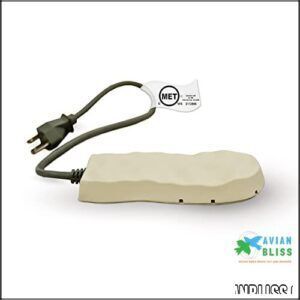
The K&H Pet Products Original Birdbath Ice Eliminator delivers reliable heating performance with its 50-watt, thermostatically controlled de-icer. This submersible model keeps water open down to around 20 °F below zero, using roughly half the electricity of typical heaters.
Its safety design features MET-certified construction, a durable enamel finish, and enclosed elements that won’t harm plastic baths or birds’ feet.
User feedback consistently praises its energy efficiency and multi-season durability, though you’ll want to fully submerge the unit and check water levels regularly for best results.
Best For: Bird enthusiasts in cold climates who want a low-energy, certified-safe de-icer that keeps birdbaths ice-free through harsh winters without breaking the bank on electricity.
- Uses only 50 watts—about half the power of typical de-icers—saving roughly $6 per month even in continuous cold while maintaining open water down to -20°F.
- MET-certified for outdoor safety with a durable enamel finish that resists rust and won’t melt plastic baths or burn birds’ feet.
- Thermostatically controlled to cycle on and off automatically, so you’re not heating water unnecessarily when temperatures rise.
- The 18-inch cord is pretty short and usually requires an outdoor extension cord to reach a GFCI outlet.
- Some units have failed within 1-2 seasons depending on water chemistry and climate, though most users report multi-year performance.
- In very large or shallow baths, edges may still ice over in extreme cold—the unit keeps a reliable opening around itself rather than the entire bath.
2. Heated Bird Bath Four Seasons Decor
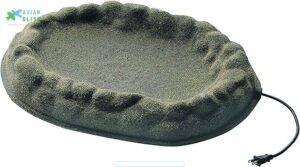
The Four Seasons Heated Bird Bath combines decor aesthetics with practical winter bird care through its integrated 70-watt thermostatically controlled heater. Its enclosed heating element and weather resistance meet CSA safety standards, while automatic activation near 35°F keeps water open without constant power draw.
You’ll find placement options that include ground mounting or EZ-Tilt deck rail installation, letting you position the sand-coated basin where it fits your yard best.
Design integration is fluid—the hidden electrical connection and natural finish complement most outdoor settings while delivering reliable freeze protection.
Best For: Bird lovers in cold climates who want a low-maintenance way to provide fresh water for wildlife year-round without dealing with frozen basins or separate heating equipment.
- The 70-watt thermostatically controlled heater kicks in automatically around 35°F and cycles off when not needed, keeping your energy costs down while preventing ice buildup.
- Multiple mounting options—ground stand, deck rail attachment, or post mount—give you flexibility to place it wherever birds naturally gather in your yard.
- CSA-certified enclosed heating element and weather-resistant design mean you can leave it outdoors all winter without worrying about electrical safety or weather damage.
- Some users report durability issues including cracks, leaks, and the sand coating wearing off after prolonged outdoor exposure.
- Requires regular cleaning to prevent algae growth and bacterial buildup, plus you need to keep it filled so the heating element stays properly submerged.
- May need to be weighted down in windy conditions since the 3.5-pound basin can shift or tip over during storms.
3. API Heated Bird Bath
The API Heated Bird Bath features a 150-watt thermostatically controlled element that keeps its 20-inch weather-resistant plastic basin ice-free down to -20°F. Heating performance kicks in automatically near freezing, maintaining water between 40°F and 50°F without overheating.
You’ll appreciate the enclosed element design, which protects birds from electrical contact while delivering reliable deicer function. Material construction resists cracking in subzero temps, and mounting options include deck rail or pedestal configurations.
Electrical safety meets UL and CSA standards with grounded connections, backed by a three-year warranty.
Best For: Backyard bird enthusiasts in cold climates who want to provide reliable winter water access without daily ice breaking.
- Thermostatically controlled heating maintains ice-free water down to -20°F while automatically cycling off in milder weather to save energy
- Enclosed 150-watt element keeps birds safe from electrical contact and protects components from debris and weather damage
- Three-year warranty and crack-resistant plastic construction deliver dependable multi-season performance with minimal maintenance
- Short 15-inch power cord requires purchasing a separate outdoor-rated extension cord to reach most outlets
- Some users report assembly challenges and stability concerns with the metal stand, particularly on uneven ground
- Mixed durability feedback suggests inconsistent build quality across units despite the three-year warranty coverage
4. API Heated Bird Bath with Stand
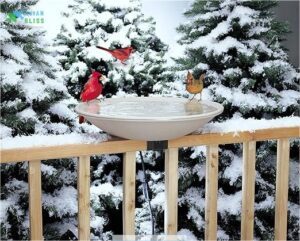
When you want the complete setup in one package, the API Heated Bird Bath with Metal Stand delivers a 150-watt heating element, 20-inch weather-resistant basin, and 30-inch metal stand that elevates water above snow.
Design features include enclosed heating, CSA and UL safety ratings, and mounting options for deck rails or ground stakes.
User reviews praise its ice-free performance down to -20°F, though some note the short cord requires outdoor extension.
Energy consumption runs roughly $29 per season with thermostatic control—considerably lower than 200-watt add-on de-icers.
Best For: Homeowners who want a ready-to-use winter bird bath with proven heating power and safety certifications without needing to buy separate stands or de-icers.
- Keeps water ice-free down to -20°F with a thermostatically controlled 150-watt element that costs about $29 per season to run
- Complete package includes a 20-inch basin, 30-inch metal stand, and multiple mounting options for deck rails or ground installation
- UL and CSA listed with fully enclosed heating element for safe outdoor use in freezing conditions
- Short 15-inch power cord requires an outdoor-rated extension cord to reach most outlets
- Some users report the metal stand legs could be sturdier or more stable in windy conditions
- Assembly and leveling can be tricky, with mixed feedback on installation ease and hardware quality
5. API Utility Bucket De Icer
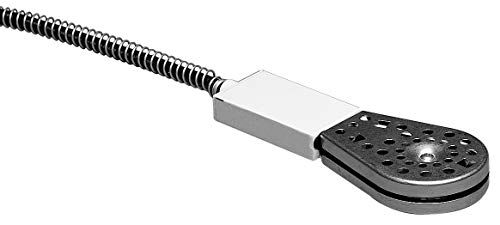
If you’re using deeper containers like five-gallon buckets or utility tubs for outdoor bird watering, the API Utility Bucket De-Icer adapts well to improvised bird baths. Its 250-watt output and thermostat control keep up to 30 gallons ice-free without spiking your electric bill—usually under $40 per season.
Safety features include cULus certification, finned aluminum elements that run cooler, and a 6-foot cord protected against animal chewing.
However, durability issues surface in some user reports, with units failing within months despite multi-year design claims.
Best For: People who need a reliable de-icer for makeshift bird baths in deep buckets or utility tubs and want thermostat control to keep energy costs low.
- Handles up to 30 gallons with 250-watt output and thermostatic control that cycles automatically, keeping seasonal electric costs around $40
- Runs cooler than standard compact heaters thanks to finned aluminum design, reducing mineral buildup and risk of overheating
- Includes safety certifications (cULus), anti-chew cord protection, and durable coated housing for outdoor animal environments
- Durability is inconsistent—some units fail within months despite claims of multi-year service life
- May not provide enough heat to prevent freezing in extremely cold temperatures or for water nipple systems
- Cord stabilizer doesn’t work well on rounded or uneven bucket surfaces, and mineral scale requires regular cleaning
6. Farm Innovators Bird Bath De-Icer
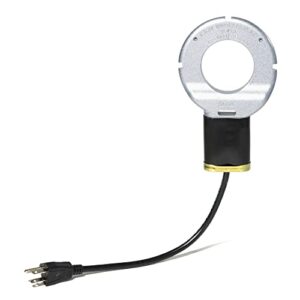
For budget-conscious backyard stewards, Farm Innovators offers a 44-watt deicer engineered for shallow baths—keeping water unfrozen down to 10 °F while drawing just pennies per day.
The unit’s aluminum build transfers heat efficiently, and thermostat control activates near 35 °F to prevent wasted energy.
Customer reviews average 9.3 out of 10, praising its freeze protection and safety features.
However, the 10-inch cord requires an outdoor extension, and you’ll need to monitor water levels since there’s no automatic dry-out shutoff.
Best For: Budget-conscious bird lovers with shallow baths who want reliable freeze protection without high energy bills.
- Low 44-watt power consumption keeps operating costs around $5/month while preventing ice down to 10°F
- Thermostat activates automatically at 35°F so you’re not wasting electricity when temperatures rise
- Strong 9.3/10 customer rating with 87% positive reviews confirms consistent performance
- 10-inch cord is too short for most setups and forces you to buy an extension cord
- No dry-out protection means you have to check water levels regularly or risk damage
- Only works in shallow baths—deeper basins need a higher-wattage unit
7. Winter Bird Bath Heater Deicer
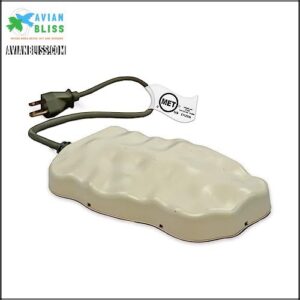
For multi-purpose winter water access, commercial-grade deicers deliver powerful heating in harsh climates—rated from 250 to 1,000 watts, these cast aluminum units maintain ice-free openings down to -10 °F.
Thermostat control activates near 35 °F and cycles off when water warms, conserving energy. Built-in guards shield birds from hot surfaces, and long cords simplify placement.
You’ll appreciate compatibility with plastic, ceramic, and glass basins, though you must keep the unit submerged and connect only to grounded GFCI outlets.
A descaling maintenance schedule with white vinegar preserves heat transfer and extends service life.
Best For: Bird enthusiasts in cold climates who need reliable water access for wild birds through freezing temperatures without constant monitoring.
- Automatic thermostat kicks in around 35°F and cycles off when water warms, so you’re not burning electricity all winter long.
- Works in brutal cold down to -10°F with commercial units, and the cast aluminum construction handles freeze-thaw cycles season after season.
- Compatible with plastic, ceramic, and glass bird baths, and the built-in guards keep birds safe from direct contact with hot surfaces.
- Must stay fully submerged to work properly and avoid overheating—shallow or poorly insulated baths won’t cut it.
- Higher-wattage models (250–1,000W) can drive up your electric bill during prolonged cold snaps compared to smaller residential heaters.
- Requires a grounded GFCI outlet and often an outdoor extension cord, plus regular descaling maintenance to prevent mineral buildup from killing efficiency.
8. SYSAI Heavy Duty Birdbath De-icer
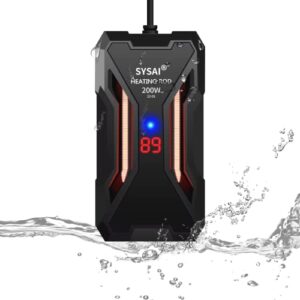
For compact birdbaths and small ponds, the SYSAI Heavy Duty Birdbath De-icer delivers 200-watt heating through die-cast construction that resists cracking in freezing weather. Temperature control activates near freezing and cycles off automatically, preventing energy waste while keeping water ice-free down to roughly −10 °C.
A 4-meter cord simplifies placement, though mixed reviews note durability concerns with the plastic housing. Always submerge the heater fully, connect to a GFCI outlet, and inspect cords before each season—waterproof design and enclosed elements protect visiting birds from electrical exposure.
Best For: Homeowners with small to medium birdbaths or decorative ponds who want an affordable, thermostatically controlled solution to keep water ice-free through moderate winter conditions.
- 200-watt heating element with automatic thermostat cycles on only near freezing, saving energy while maintaining ice-free water in birdbaths up to roughly 15 gallons.
- Die-cast metal construction resists cracking in freezing temperatures, and the waterproof design with enclosed heating elements protects birds from electrical exposure.
- Extended 4-meter power cord provides flexible placement options around outdoor birdbaths and ponds without requiring extension cords.
- Mixed user reviews report durability issues with the plastic housing components and heating element reliability over multiple seasons.
- May not perform adequately in extreme cold below −10 to −20 °C ambient temperature, limiting effectiveness in the coldest climates.
- Requires careful placement to ensure full submersion and avoid automatic shut-off, and some users found the unit’s height incompatible with standard shallow birdbaths.
9. Farm Innovators Submersible Water De Icer
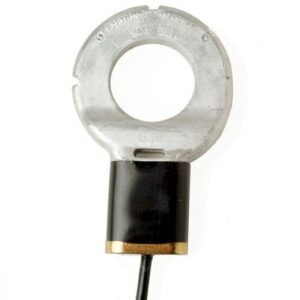
When you need reliable ice-free water for larger bird baths or stock tanks, the Farm Innovators Submersible Water De-Icer steps up with 500-watt power rated for containers up to 50 gallons. Thermostat control activates near 35 °F and cycles off around 42–47 °F, conserving energy while preventing ice.
UL-listed safety certifications, cast aluminum construction, and a 6-foot anti-chew cord deliver durability backed by a one-year warranty.
Always pair this submersible heater with a GFCI outlet, check waterproof connections seasonally, and clean regularly to extend product lifespan through multiple winters.
Best For: Owners of larger bird baths, livestock troughs, or small stock tanks who need a submersible heater that automatically prevents ice in containers up to 50 gallons during winter.
- Thermostat cycles on near 35°F and off around 42–47°F, so it only runs when needed and keeps your energy bill down
- UL-listed with cast aluminum build and a 6-foot anti-chew cord, meaning it’s tested safe for plastic, metal, and rubber containers
- Compact 8-inch design sits flat on the bottom without getting in the way, and the one-year warranty gives you some peace of mind
- Some users report durability issues or units failing after one season, so longevity can be hit-or-miss
- The 6-foot cord may be too short for your setup, requiring an extension cord and weatherproof outlet box
- Mineral buildup or reactions with softened water can create nodules on the heater, requiring regular cleaning to maintain performance
10. All Seasons Heated Bird Bath
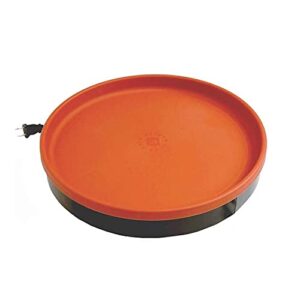
The Farm Innovators All Seasons 3-in-1 Outdoor Heated Bird Bath combines mounting flexibility with thermostatically controlled energy consumption, cycling its 75-watt heater only near freezing to keep water open down to –10 °F. You’ll appreciate the terra-cotta plastic basin, UL-approved heating element, and hidden electrical connections that reduce cord clutter.
User reviews averaging 4.7 stars confirm reliable winter performance. Safety features include automatic shutoff and non-conductive materials, backed by a one-year warranty.
This durable heater is flexible for deck, clamp, or ground mounts for varied backyard placement.
Best For: Backyard birders in cold climates who want a reliable heated water source that won’t spike their electric bill and can move around the yard as needed.
- Thermostat cycles the 75-watt heater automatically, so you’re only using power when temps drop near freezing—keeps costs under 30 cents a day even in winter.
- Three mounting options (deck post, clamp, or ground legs) let you reposition the bath wherever birds are visiting or switch spots between seasons.
- Keeps water ice-free down to –10 °F according to testing, with strong 4.7-star reviews backing up real-world winter performance.
- The 1.5-inch shallow basin holds only about a quart, meaning you’ll refill it more often—especially on windy days when evaporation picks up.
- Some users report the mounting bracket feels flimsy or tilts easily, so you may need to add weight or reinforce the setup for stability.
- At around $60–$100 retail, it’s pricier than basic bird baths, and a few reviewers feel the small size doesn’t justify the cost.
Frequently Asked Questions (FAQs)
Can heated bird baths harm or burn birds?
When used correctly, heated bird baths won’t burn birds—thermostat controls keep water just above freezing, not hot.
The real dangers come from misuse: overheating, exposed elements, or wet feathers refreezing in extreme cold.
How much does it cost to run one monthly?
Your electric bill won’t fly the coop—most heated bird baths cost between $5 and $10 monthly.
Wattage, thermostat savings, and local electricity prices determine actual energy consumption, keeping power consumption efficiency high and utility bills manageable.
Can I use a heated bird bath for other wildlife?
Yes, small mammals like squirrels and chipmunks will drink from your heated bird bath when other water sources freeze.
Keep it shallow, clean it daily, and never add salt—supporting bird survival means wildlife protection for multiple species.
Conclusion
That blue jay’s death was preventable. When you install safe bird bath heating solutions with thermostat control, GFCI protection, and UL-certified components, you’re not just preventing ice—you’re creating a lifeline.
Check your heater’s cord weekly, clean the bath every few days, and monitor water levels during cold snaps. These small actions determine which birds make it through winter and which don’t. The difference is that simple, and that significant.
- https://www.cpsc.gov/Recalls/2023/Backyard-Nature-Products-Recalls-Birds-Choice-Acrylic-Bird-Baths-Due-to-Fire-Hazard
- https://www.youtube.com/watch?v=gerX-OvwpAE
- https://naturehouseinc.com/images/pdfs/D14BHInstructions.pdf
- https://blog.nature.org/2022/01/31/should-you-provide-birds-water-in-winter/
- https://thebackyardnaturalist.com/wordpress/resources/why-heat-bird-baths/