This site is supported by our readers. We may earn a commission, at no cost to you, if you purchase through links.
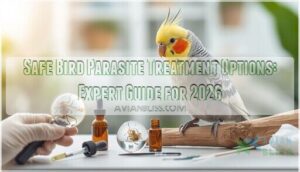
Your cockatiel’s sudden feather loss around her neck isn’t just molting—those tiny crawling specks near her eyes are mites, and they’re compromising her health right now. External parasites like mites and lice cause visible damage, but internal worms silently drain nutrients and weaken immunity without obvious symptoms until the infestation becomes severe.
The good news is that safe bird parasite treatment options have advanced markedly, with pyrethrin sprays, ivermectin formulations, and broad-spectrum anthelmintics offering targeted relief when dosed correctly. Choosing the wrong product or dosage can be toxic to your bird, so understanding which treatments work for specific parasites—and how to apply them without causing harm—makes the difference between effective eradication and dangerous complications.
Table Of Contents
- Key Takeaways
- Recognizing Parasite Infestations in Birds
- Safe Treatments for External Bird Parasites
- Effective Approaches for Internal Parasites
- Veterinary Guidance and Prescription Options
- Environmental Control and Cage Sanitation
- Preventing Future Parasite Infestations
- Natural and Alternative Treatment Options
- Frequently Asked Questions (FAQs)
- How to get rid of parasites in birds?
- What is an antiparasitic drug for birds?
- Is fenbendazole safe for birds?
- Is ivermectin safe for birds?
- How often should birds receive preventive parasite treatments?
- Can multiple bird species share the same medications?
- What are safe dosage calculations for different birds?
- How long do treatments take to show effectiveness?
- Are there medication interactions owners should avoid?
- Can parasites spread between different bird species?
- Conclusion
Key Takeaways
- External parasites like mites show visible symptoms (feather loss, skin crusts, excessive preening), while internal parasites (worms, protozoa) silently drain nutrients and weaken immunity until infestations become severe, making early detection critical for effective treatment.
- Pyrethrin sprays, ivermectin formulations, fenbendazole, and praziquantel offer targeted relief when dosed correctly under veterinary guidance, but wrong products or dosages can prove toxic—species-specific dosing isn’t optional, as what’s safe for one bird can kill another.
- Treating your bird without thorough environmental sanitation creates a losing battle against reinfection, since parasites and eggs survive in cage corners, perches, and substrate for weeks, requiring daily debris removal and proper disinfection between treatment doses.
- Prevention requires consistent quarantine procedures for new birds (30-day isolation with fecal testing), annual wellness exams with species-appropriate fecal screenings, daily cage cleaning, and nutritional support through balanced diets and probiotics to fortify immune defenses against parasitic loads.
Recognizing Parasite Infestations in Birds
Early detection makes all the difference regarding treating parasites in your bird. You’ll want to watch for specific physical symptoms, behavioral shifts, and changes in your bird’s overall condition.
If you’re unsure what to look for, this guide on recognizing signs of avian parasites breaks down the most common red flags.
Let’s walk through the key warning signs that signal it’s time to take action.
Poor feather quality, lethargy, or sudden weight loss often point to nutritional gaps that need expert bird nutrition and diet advice.
Common Symptoms of External Parasites
Feather damage and skin irritation give you the first clues about external parasites. You’ll notice excessive preening, broken feather shafts, and visible mite infestation around your bird’s head and chest.
If you spot crusty lesions forming on the beak or legs, check out this guide to avian parasite control and symptoms for identification and treatment options.
Ectoparasites like the scaly face mite create crusty, reddened patches—particularly around the beak and vent—while constant scratching against perches signals discomfort from plumage issues requiring immediate mite control intervention.
For effective treatment protocols and prevention strategies, refer to this comprehensive guide on controlling feather mites on birds.
Signs of Internal Parasite Infection
Unlike external parasites, internal invaders hide beneath the surface, making detection trickier. Watch for persistent fatigue despite normal activity levels, unexplained weight loss over several weeks, and fecal changes including mucus or blood.
Regurgitation patterns without clear cause, abdominal distension, and reduced appetite signal worms or protozoa at work.
These symptoms demand prompt avian health management, as internal parasites steadily compromise your bird’s condition if left untreated.
Behavioral Changes Linked to Parasites
Parasites also trigger parasite stress through subtle behavioral shifts you might overlook. Your bird may withdraw socially, vocalizing less or avoiding interaction altogether.
Watch for increased feather preening beyond normal grooming, along with repetitive scratching that signals irritation. Some birds develop stereotypic movements like pacing or head-bobbing.
These behavioral changes warrant immediate attention and consideration of parasite treatment options to restore avian health.
Physical Clues: Feather and Skin Issues
Beyond behavior, your bird’s physical appearance tells a detailed diagnostic story. Feather loss in patches—especially around the head, neck, or wings—often signals bird mites or scaly mites requiring immediate parasite control. You’ll notice skin irritation with visible crusts near follicles, dull feather sheaths from chronic parasitism, and scaly legs indicating severe infestation. Beak problems and excessive feather plucking confirm bird diseases needing professional bird parasite treatment.
- Flecking and irregular wear along feather barbs indicate mange or feather mite activity
- Ruffled plumage with patchy bald spots suggests external parasite irritation
- Crusty scaling around feather follicles points to scaly mite infestation
- Non-glossy, dull feathers correlate with malnutrition from chronic parasitism
- Head and under-wing feather loss requires veterinary confirmation for accurate diagnosis
Safe Treatments for External Bird Parasites
When you’ve confirmed that external parasites are affecting your bird, you need treatments that work without putting your pet at risk. The good news is that several safe, effective options are available, but proper selection and application make all the difference.
After treating your bird, disinfect cages and perches with a proper bleach solution using quality bird house cleaning supplies to prevent reinfestation.
Let’s look at the treatments you can trust and how to use them correctly.
Pyrethrin and Permethrin Sprays

When mites and lice take hold, pyrethrin sprays offer rapid knockdown—these chrysanthemum-derived compounds work fast, but permethrin provides longer-lasting parasite control. The good news is both can be effective when you follow species-specific dosing, though some parrots show sensitivity to pyrethroids. Toxicity risks are real if concentrations aren’t correct.
| Treatment Type | Key Consideration |
|---|---|
| Pyrethrin Spray | Fast-acting, minimal residual protection |
| Permethrin | Extended efficacy, higher toxicity potential |
| Application | Dilution precision prevents avian dosage errors |
Ivermectin Drops and Sprays
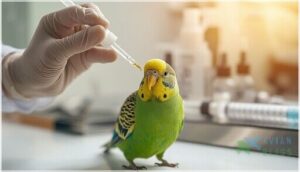
Topical ivermectin formulations deliver potent antiparasitic action directly to your bird’s skin, though dosage precision separates safety from toxicity. Veterinary products generally contain 0.5% to 1% ivermectin concentrations, applied at the neck base to prevent ingestion.
- Ivermectin dosage must match bird species weight and sensitivity
- Application methods include spot-on drops or light spray coverage
- Safety precautions require avoiding eyes, mucous membranes, excessive coating
- Treatment frequency depends on parasite lifecycle, product label instructions
Application Frequency and Best Practices
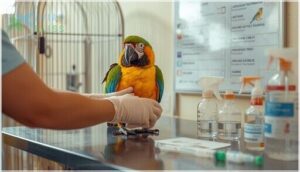
Correct dosing intervals form the foundation of parasite control and prevention without triggering medication safety concerns or parasite resistance. For external bird parasite infestations, ivermectin or pyrethrin-based parasite treatments require repeat applications after 10 to 14 days to break the life cycle—never more frequently.
Coordinate environmental sanitation with each treatment schedule, discarding wooden nest boxes and thoroughly cleaning cages to prevent reinfection while minimizing cumulative toxin exposure in avian medicine.
Effective parasite management also involves understanding bird parasite types to tailor treatments appropriately.
Avoiding Toxic and Outdated Treatments
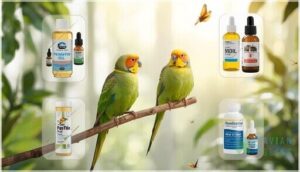
You must steer clear of paraffin oil, Dettol, and dog or cat flea products—all carry documented avian toxicology risks that can prove fatal.
Modern safe formulations of pyrethrins, permethrin, and ivermectin replace these outdated medications, but only when labeled for birds.
Veterinary guidance ensures parasite control and prevention without toxic treatment risks, protecting delicate hepatic and respiratory systems from harm.
Effective Approaches for Internal Parasites
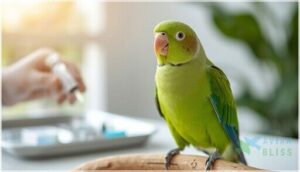
Internal parasites require targeted medication that works from the inside out, eliminating worms and protozoa that you can’t see or reach with sprays. The good news is that avian-safe antiparasitic drugs have documented safety margins when dosed correctly for your bird’s species.
Here are the most effective prescription treatments your avian veterinarian may recommend based on the type of internal parasite affecting your bird.
Oral and Injectable Ivermectin
Ivermectin stands as one of the most adaptable antiparasitic medications in avian medicine, effectively targeting roundworms, tapeworms, and external parasites when administered orally or by injection.
The use of ivermectin requires careful consideration of veterinary guidance to guarantee safe and effective treatment. Your avian veterinarian will determine the proper ivermectin dosage based on your bird’s species and weight, as dosing varies markedly across different bird types.
When administered correctly, treatment efficacy is high, supporting bird recovery while minimizing parasite resistance through appropriate parasite control and management protocols within avian medicine and treatment.
Fenbendazole for Intestinal Worms
Fenbendazole is a broad-spectrum anthelmintic commonly used in avian pharmacology, effectively targeting roundworms such as Ascaridia and hairworms (Capillaria).
Species-specific dosages are critical, typically prescribed at 20–50 mg/kg daily for three to five days in chickens. Incorrect dosing can compromise intestinal health and worm prevention.
Products like Worm Out Gel simplify administration, supporting long-term bird health and parasite prevention when used under professional guidance.
Praziquantel for Tapeworms
When tapeworms infest your bird, praziquantel stands as the benchmark cestocidal treatment. This agent disrupts calcium channels in tapeworm tissue, paralysing adult worms and exposing them to digestive breakdown.
You’ll administer 5–10 mg/kg orally or by injection as a single dose in most pet birds. Weight-based dosing is non-negotiable—narrow therapeutic windows demand precision to guarantee avian health and effective parasite control.
Metronidazole for Protozoan Infections
Protozoan parasites like Trichomonas gallinae respond to metronidazole, a nitroimidazole administered at 25–50 mg/kg orally every 12–24 hours for 5–7 days. This protozoal efficacy relies on precise metronidazole dosage, since treatment duration and weight-based calculation directly influence therapeutic success.
- Resistance patterns now affect 25% of isolates in some regions, reducing treatment outcomes
- Avian toxicity risks include neurologic signs and hepatic stress at excessive doses
- Bird diseases diagnosis confirms infection before therapy, preventing unnecessary exposure
- Veterinary care for birds ensures avian health and wellness through monitored administration
Veterinary Guidance and Prescription Options

When parasites strike, your first call should be to an avian veterinarian—not the pet store shelf. The right medication at the wrong dose can turn a treatment into a crisis, and bird species react differently to the same drugs.
When parasites strike, call an avian veterinarian first—the right medication at the wrong dose can turn treatment into crisis
Let’s look at why professional guidance matters and what you need to know about prescription treatments.
Importance of Avian Veterinarian Consultation
Accurate parasite diagnosis requires expertise you simply can’t find in a bottle. Avian veterinarians use species-appropriate fecal flotation, microscopy, and sometimes PCR to distinguish nematodes from protozoa—parasites your eye alone can’t identify.
Veterinary guidance ensures proper treatment planning and medication safety, preventing the dangerous guesswork that leads to toxicity or resistance.
Your bird’s wellness depends on professional veterinary care for birds, making that consultation your safest first step in parasite management.
Safe Dosage and Species Considerations
Species sensitivity demands precision—one bird’s safe dose can kill another. Ivermectin at 0.2 mg/kg suits most parrots, but finches tolerate only half that topically.
Weight-based dosing isn’t optional; even slight miscalculations in birds under 100 grams trigger toxicity risks.
Your veterinarian uses formulary guidance to titrate fenbendazole, praziquantel, moxidectin, and metronidazole specifically for your bird’s species and size, preventing the fatal errors that generic dosing invites.
Monitoring Birds During Treatment
Vigilance during therapy transforms medication safety into real recovery metrics. Your bird’s daily behavior, appetite, and droppings reveal treatment response more reliably than any schedule.
- Watch for lethargy, weakness, or stumbling—neurologic clinical signs demand immediate veterinary care
- Track feed consumption and body weight daily; declining numbers signal drug toxicity or inadequate response
- Monitor droppings for persistent diarrhea, which may indicate ongoing parasitism rather than healing
- Check comb color in poultry and activity levels in all species to assess anemia recovery
- Schedule follow-up fecal exams 10–14 days post-treatment to confirm parasite clearance and guide next steps
Risks of Over-the-Counter Wormers
Unregulated products often deliver disaster instead of relief. Over-the-counter wormers expose your bird to toxicity risks, dosing errors, and regulatory concerns that veterinary formulations avoid.
| Risk Category | Common Problem | Clinical Consequence |
|---|---|---|
| Toxicity Risks | Fenbendazole overdose in pigeons | Neurologic signs, seizures, death |
| Dosing Errors | Water-based ivermectin delivery | Inconsistent exposure, treatment failures |
| Resistance Development | Routine praziquantel without diagnosis | Parasite populations survive, multiply |
| Regulatory Concerns | Unapproved metronidazole products | Unknown potency, labeling deficiencies |
Misapplication breeds resistant parasites and delays the diagnosis of non-parasitic disease.
Environmental Control and Cage Sanitation

Treating your bird for parasites is only half the battle—if you don’t clean the environment thoroughly, you’re fighting a losing war against reinfection. Parasites and their eggs can survive in cage corners, perches, and substrate for weeks or even months, waiting to reinfest your bird the moment treatment ends.
Here’s how to sanitize your bird’s space effectively and break the parasite life cycle for good.
Thorough Cleaning Between Treatments
Between doses, your daily cage cleaning routine becomes critical for parasite removal methods and ectoparasite control. Think of environmental hygiene as your frontline defense—every speck of debris you eliminate prevents reinfection.
Here’s your sanitation protocols checklist for poultry health management and bird health and wellness:
- Remove all feces, feathers, and food debris daily to reduce parasite load
- Wet surfaces before cleaning to prevent aerosolizing contaminated dust
- Scrub removable trays, perches, and toys weekly with hot, soapy water
- Replace porous wooden items that harbor mites in cracks
- Clean healthy birds’ cages first, then infected ones to prevent cross-contamination
Daily attention to pest control methods and bird health education principles ensures your treatment actually works—because parasites lurking in dirty corners will sabotage even the best medication.
Disinfectants Safe for Birds
After scrubbing cages and accessories, you’ll need disinfectants that kill pathogens without poisoning your birds. F10 Disinfectants and Accelerated Hydrogen Peroxide formulations like Rescue offer broad-spectrum protection with low toxicity when properly diluted and dried.
Safe Bleach Use requires a 10% solution—1 part bleach to 9 parts water—followed by thorough rinsing.
Vinegar Solutions (50% white vinegar) provide gentler Bird Friendly Sanitizers for routine cleaning, though they need longer contact time than bleach.
Managing Substrate and Perches
Your cage furnishings can harbor mites and lice even after treating your bird with ivermectin or permethrin. Effective parasite prevention requires managing both substrate selection and perch materials:
- Replace paper liners daily during treatment to eliminate environmental sanitation gaps
- Discard heavily infested wooden perches—porous surfaces shelter scaly mites in crevices
- Choose nonporous alternatives like stainless steel for easier cage cleaning
- Remove all bedding between medication doses to break parasite life cycles
Preventing Reinfection in The Home
Treating your bird won’t stop parasites if your home environment keeps reintroducing them. Bird mite control demands thorough home sanitation that targets every potential reservoir.
| Environmental Hygiene Task | Frequency and Method |
|---|---|
| Vacuum areas near cages | Weekly; dispose of bags immediately |
| Wash bedding in hot water | After each treatment cycle |
| Seal cracks in housing | Once; use paint or silicone |
| Monitor with sticky traps | Biweekly for parasite monitoring |
Bird quarantine procedures and regular pest management protect your pet bird care investment.
Preventing Future Parasite Infestations

Once you’ve cleared a parasite infestation, your next priority is making sure it doesn’t come back. Prevention isn’t complicated, but it does require a consistent approach across several key areas.
Here’s what you need to focus on to keep your birds parasite-free long-term.
Quarantine Procedures for New Birds
Protecting your flock starts before new birds step into your home. You’ll need to isolate newcomers for at least 30 days in a physically separated space with dedicated equipment—this biosecurity measure prevents devastating disease transmission.
During this quarantine duration, complete these essential steps:
- Perform initial visual examination and baseline weight
- Conduct fecal testing twice to detect parasites
- Monitor weekly weight checks throughout isolation
- Contact your avian veterinarian immediately if illness appears
Regular Health Checks and Fecal Exams
Annual wellness exams are the cornerstone of avian health, as they enable the detection of parasites before symptoms appear. Your veterinarian will recommend fecal testing based on your bird’s exposure risk. Outdoor or flock-housed species require yearly screening, while indoor pets undergo targeted testing during quarantine or when clinical signs develop.
| Test Type | What It Detects |
|---|---|
| Fecal flotation | Roundworms, tapeworms, coccidia |
| Direct smear | Giardia, motile protozoa |
| Gram stain | Bacterial overgrowth, yeast |
Diagnostic testing accuracy relies on sample quality and laboratory methods. Research indicates that 53 percent of apparently healthy birds carry gastrointestinal parasites. Detection through routine fecal exams allows for early intervention before weight loss or diarrhea signals progressive disease.
Environmental Hygiene and Stress Reduction
Beyond testing, your bird’s living space directly influences parasite resistance. Studies confirm that daily removal of droppings and weekly disinfection with bird-safe products reduce oocyst survival by weeks.
Environmental enrichment—perches, foraging substrates—lowers chronic stress hormones and boosts mucosal immunity. Overcrowding elevates corticosterone levels, weakening defenses.
Clean cages combined with stress management create resilient birds less vulnerable to parasitic diseases and disorders.
Nutritional Support for Immune Health
A well-balanced diet fortifies your bird’s immune system against parasites just as effectively as environmental controls do. Probiotic supplements stabilize gut flora, while vitamin boosters—particularly A and E—strengthen epithelial barriers against avian health issues.
Mineral therapy with zinc and selenium bolsters immune boosting at the cellular level. Nutrient balance prevents the bird diseases and disorders that compromise ornithological health, especially in wildlife populations vulnerable to parasitic loads.
Natural and Alternative Treatment Options

Many bird owners ask about natural or herbal treatments for parasites, hoping to avoid chemical medications. While some alternatives exist, you need to understand their limitations and potential risks before using them on your bird.
Here’s what you should know about non-chemical approaches, their safety profiles, and how they fit into a complete treatment plan.
Herbal and Non-Chemical Approaches
Some herbal remedies and natural supplements claim antiparasitic effects, but you’ll find limited evidence supporting their safety or efficacy in avian health. Tea tree oil, neem oil, and essential oils can actually cause toxicity if inhaled or improperly diluted.
Instead, focus on stress reduction and environmental enrichment to support immune function—these non-chemical approaches complement veterinary-directed treatments for parasites and bird diseases without risking harm.
Safety and Efficacy of Home Remedies
Unfortunately, most home remedies lack controlled safety data in birds and carry real risks. Essential oil safety concerns include feather matting and respiratory toxicity when applied directly.
Diatomaceous earth works as an environmental dust against mites, but vinegar remedies and natural repellents provide minimal parasite elimination compared to veterinary-prescribed pyrethrins or ivermectin solution.
Home treatment risks often outweigh unproven benefits.
When to Use Natural Treatments
Natural remedies and integrative approaches can support mild external parasite issues—think mites you’ve just spotted—but only when you’ve confirmed the pest type first. Organic solutions work best alongside prescribed insecticides like pyrethrins, not as replacements.
If herbal therapies don’t reduce visible parasites within your monitoring window, you’ll need conventional alternative medicine from your avian veterinarian. Internal parasites always require professional ornithology-based intervention.
Integrating Alternatives With Veterinary Care
Integrative medicine for your bird means working hand-in-hand with your avian veterinarian, not going rogue with alternative bird care products. Alternative therapies show promise in ornithology research, but they require professional oversight to avoid drug interactions and dosing errors.
Your bird owner responsibilities include:
- Disclosing all natural remedies you’re using—even herbal supplements—so your vet can spot potential conflicts with prescribed ivermectin solution or other veterinary medicine for birds
- Following diagnostic protocols before adding alternative therapies, because guessing at parasites wastes time your bird doesn’t have
- Monitoring closely for adverse reactions when combining conventional and natural treatments for avian wellness
Frequently Asked Questions (FAQs)
How to get rid of parasites in birds?
Don’t let these freeloaders crash the party—eliminate parasites by identifying infestation signs, treating external mites and lice with ivermectin solution or pyrethrins, addressing internal worms with fenbendazole, and maintaining rigorous bird hygiene throughout treatment.
What is an antiparasitic drug for birds?
An antiparasitic drug for birds is a veterinary medication that targets endo- and ectoparasites through specific mechanisms.
Ivermectin disrupts nerve transmission, fenbendazole inhibits microtubule formation, and praziquantel increases calcium permeability in parasites.
Is fenbendazole safe for birds?
Fenbendazole demonstrates a wide safety margin in galliforms like pheasants and peafowl, but pigeons and doves face heightened toxicity risk.
Species-specific dosing considerations and veterinary oversight guarantee treatment efficacy while minimizing fenbendazole toxicity across bird species.
Is ivermectin safe for birds?
Ivermectin is generally safe for birds when dosed correctly under veterinary guidance. However, small passerines like finches have narrow safety margins and require conservative dosing—usually 200 µg/kg topically—to prevent serious neurologic toxicity.
How often should birds receive preventive parasite treatments?
Your bird’s wellness visits—think of them as a compass guiding you through prevention—should happen annually.
Fecal exams determine whether deworming or mite treatments are necessary rather than following rigid calendar-based schedules.
Can multiple bird species share the same medications?
Most medications aren’t safe across all bird species without veterinary oversight. Dosing variations, cross-species risks, and species specificity mean what works for poultry health may harm your pet bird—professional guidance protects against medication safety issues.
What are safe dosage calculations for different birds?
Your avian veterinarian calculates precise doses based on bird weight factors, species dosage requirements, and age considerations.
Medication interactions and dosing schedules vary markedly between pet bird species and poultry health applications.
How long do treatments take to show effectiveness?
When you’re traversing the maze of parasite control, timelines vary like chapters in a recovery story.
External treatments show visible mite reduction within 24-72 hours, while internal dewormers require 3-5 days for therapeutic response and measurable parasite clearance.
Are there medication interactions owners should avoid?
Combining ivermectin with azole antifungals like ketoconazole dramatically increases drug toxicity risk through metabolic interactions.
You’ll also want veterinary guidance before mixing antiparasitics with aminoglycosides, since these pharmaceuticals together can cause severe kidney damage in birds.
Can parasites spread between different bird species?
Yes, many parasites readily move between species. Northern fowl mites, chicken red mites, and Trichomonas gallinae all demonstrate cross-species transmission, particularly when different birds share housing, feeders, or contact wild bird vectors.
Conclusion
Just as Florence Nightingale revolutionized healthcare through rigorous hygiene protocols, your approach to parasite management hinges on combining targeted treatment with environmental control.
Safe bird parasite treatment options work only when you address both the infestation and its source—skipping sanitation invites reinfection, while skipping veterinary guidance risks toxicity.
Your bird’s recovery depends on executing each step precisely: correct medication, proper dosage, thorough cleaning, and consistent monitoring. That integrated approach transforms crisis into lasting health.