This site is supported by our readers. We may earn a commission, at no cost to you, if you purchase through links.
 Your parrot’s toy could pose a hidden risk you’ve never considered. Avian veterinarians see hundreds of preventable injuries each year from toys with entrapment hazards, toxic coatings, or improper sizing for specific species.
Selecting safe bird toys and accessories isn’t just about entertainment—it’s about protecting your companion from choking, entanglement, and long-term health complications.
The right combination of materials, construction quality, and species-appropriate design transforms playtime from potential danger into secure enrichment that fosters natural behaviors and mental wellbeing.
Table Of Contents
- Key Takeaways
- Why Safe Bird Toys Matter
- Key Features of Safe Bird Toys
- Essential Bird Accessories for Safety
- Top 10 Safe Bird Toys and Accessories
- 1. Parakeet Foraging Toy Cage Accessory
- 2. Colorful Bird Rope Perch Toys
- 3. Parakeet Bird Cage Toy Accessories
- 4. Parakeet toys and accessories set
- 5. Parrot Foraging Box Toy Set
- 6. Bird Parrot Swing Cage Toys
- 7. Bird Toys For Small Parrots
- 8. Natural Wooden Bird Perch Set
- 9. Bird Perch and Toy Accessories
- 10. Natural Wood Bird Perch Set
- Maintenance and Rotation for Bird Toy Safety
- Frequently Asked Questions (FAQs)
- Conclusion
Key Takeaways
- Choosing bird toys based on species-appropriate sizing and non-toxic materials (like untreated wood, stainless steel, and 100% cotton) prevents choking, entrapment, and poisoning injuries that account for hundreds of preventable vet visits annually.
- Safe enrichment toys directly improve birds’ physical and mental health by reducing stress-related feather plucking by up to 30%, supporting natural beak maintenance, and increasing daily problem-solving activity by an average of 42 minutes.
- Daily inspections for frayed ropes, sharp edges, and loose hardware catch safety hazards before they cause injuries, while weekly toy rotation prevents boredom and maintains engagement without overcrowding the cage.
- Proper perch selection with varied natural wood diameters (matching your bird’s foot size) promotes healthy circulation, naturally files nails to reduce grooming needs by half, and prevents arthritis and bumblefoot from developing.
Why Safe Bird Toys Matter
Choosing the right toys for your bird isn’t just about keeping them entertained—it’s about keeping them safe. The wrong toy can lead to serious injuries, health problems, or even behavioral issues that affect your bird’s quality of life.
Let’s look at three key reasons why safety should always come first when selecting toys for your feathered companion.
Preventing Injuries and Choking Hazards
When you look at the statistics—choking incidents, entanglements, and sharp-edge wounds—the reality becomes clear: the wrong toy can turn playtime into a medical emergency. Preventing bird injuries starts with understanding how toy size safety directly correlates with choking hazard prevention. Here’s what you need to watch for:
- Toy size must match your bird’s species—small toys pose choking risks to larger birds
- Avoid spaces where beaks or feet can become trapped—entanglement prevention saves lives
- Check for sharp edges, cracks, or splinters before offering any toy
- Select safe material selection options like untreated wood and non-toxic materials
- Skip poorly constructed toys with flimsy designs that break apart easily
Bird toy safety isn’t optional—it’s essential for preventing bird injuries during what should be enriching play.
Impact on Bird Health and Wellbeing
The line between physical safety and overall wellness is thinner than you might think. Safe bird toys directly influence avian health, from feather health to beak care. Birds need non-toxic materials to avoid poisoning, proper textures for natural beak maintenance, and mentally stimulating designs that support avian psychology.
Without safe bird toys, you’ll see stress behaviors, poor nutrition (foraging toys encourage natural eating), and declining parrot health and wellness. Using eco friendly materials is essential for providing a healthy environment for birds.
| Health Area | Impact of Safe Toys |
|---|---|
| Feather Health | Reduces stress-related plucking and preening disorders |
| Beak Care | Provides natural wear and prevents overgrowth |
| Avian Psychology | Prevents boredom, aggression, and depression |
| Social Interaction | Encourages play and bonding with owners |
Bird toy safety isn’t just about avoiding accidents—it’s foundational to your bird’s physical and mental wellbeing.
The Role of Enrichment in Avian Behavior
Enrichment shapes how birds think, feel, and interact with their world. Studies show that avian cognitive function improves with environmental stimulation—birds exposed to toys and varied activities displayed greater exploratory behavior and enhanced neurological development.
Behavioral modification through enrichment reduced stereotypic behaviors by 25% in macaws and damaging pecking in laying hens by half. Safe bird toys promote natural foraging, perching, and social interaction, addressing the core needs of avian behavior and pet bird care while supporting bird safety.
Providing birds with adequate cage size guidelines is essential for their overall welfare and can help reduce stereotypic behaviors.
Key Features of Safe Bird Toys
When you’re choosing toys for your bird, knowing what makes them safe isn’t just helpful—it’s essential. The right features protect your pet from injuries while keeping them entertained and engaged.
Let’s look at the three key characteristics every safe bird toy should have.
Appropriate Toy Sizing for Bird Species
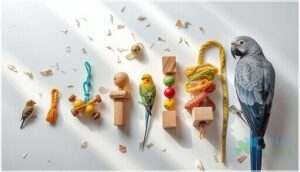
Choosing the wrong toy size for your bird isn’t just inconvenient—it’s dangerous. Whether you’re risking choking hazards with oversized components for a finch or entrapment risks with toys too large for a budgie to safely navigate, the consequences can be severe.
Think of toy selection as species safety first. Smaller birds like canaries need beak-friendly components under half an inch, while larger parrots require sturdy toys with dimensions exceeding two inches.
Matching toy dimension to bird size guidelines guarantees safe toys that won’t trap feet or pose choking hazards during play.
Non-Toxic and Durable Materials

Material selection determines whether bird toys protect or endanger your pet birds. Stick to safe woods like pine, balsa, or manzanita—these pass rigorous toxicity testing and provide durability without chemical hazards.
For metals, stainless steel remains the benchmark for nontoxic materials. Durable plastics like food-grade acrylics work well if they’re thick enough to resist splintering.
Natural fibers such as 100% cotton or sisal offer eco-friendly options for rope toys, ensuring safety through chemical-free processing.
Avoiding Entrapment, Sharp Edges, and Poor Construction
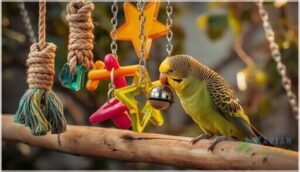
Design flaws in bird toys can turn playtime into an emergency—gaps that snag toes, jagged edges that tear skin, or weak joints that break into dangerous fragments.
Check for spaces narrower than your bird’s foot width to prevent entrapment risks. Run your fingers over surfaces to detect sharp edge prevention needs before offering any toy.
Quality construction means welded chain links, reinforced seams, and sturdy attachments that withstand vigorous play without creating hazards.
Essential Bird Accessories for Safety
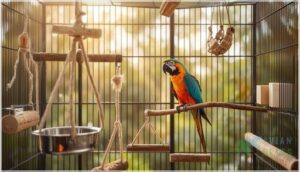
Beyond toys, your bird’s cage setup plays a huge role in keeping them safe and content. The right perches, grooming tools, and thoughtful layout can prevent injuries and support your bird’s physical health.
Let’s look at three essentials that form the backbone of a secure environment.
Perches—Types, Materials, and Placement
Your bird’s feet carry them through every moment of their day, so perches deserve careful thought. Choose varied diameters to exercise foot muscles—natural wooden perches work well since they offer irregular surfaces that promote avian ergonomics. Position perches at different heights in your bird cage to encourage movement without overcrowding.
- Material matters: Safe woods like pine and bamboo provide grip without toxicity risks
- Size appropriately: Perch diameter should let your pet bird’s toes wrap three-quarters around
- Strategic placement: Keep perches away from food and water dishes to maintain hygiene
Bird Baths and Grooming Tools
A healthy plumage doesn’t happen by accident—it’s the result of regular bathing and proper grooming that keeps your bird’s feathers, skin, and beak in top condition. Provide shallow bird baths for safe cleaning—most pet birds love splashing around.
Grooming essentials like nail files and beak conditioners support wing maintenance and feather care naturally. Regular pet grooming and hygiene routines prevent overgrowth issues and keep your companion healthy.
Cage Layout Tips for Maximum Safety
Think of your bird’s cage as a well-designed home—overcrowding the space with too many accessories can turn a safe haven into an obstacle course where injuries become far more likely. Smart Cage Optimization means leaving room for flight and movement while verifying Bird Visibility throughout. Check Bar Spacing matches your bird’s size to prevent escape or head entrapment.
Safe Bird Toys and thoughtful Toy Placement protect your companion:
- Position perches at different heights to encourage natural climbing without blocking flight paths
- Keep food and water stations away from perches to prevent contamination from droppings
- Verify Space Management allows your bird to spread wings fully without hitting accessories
- Follow Bird Toy Safety Guidelines by securing all toys firmly to prevent swinging hazards
- Rotate accessories weekly while maintaining clear zones for rest, play, and feeding
Top 10 Safe Bird Toys and Accessories
Now that you know what to look for in safe bird toys and accessories, let’s explore ten carefully selected options that meet these safety standards.
Each product below offers specific features designed to keep your feathered friend entertained while minimizing risks.
These recommendations cover everything from foraging opportunities to comfortable perches, giving you a solid starting point for creating a safe and enriching environment.
1. Parakeet Foraging Toy Cage Accessory
 View On Amazon
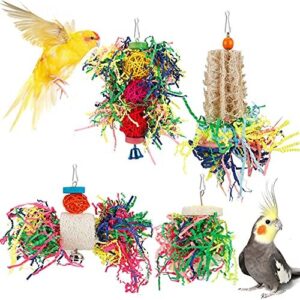
When your bird starts shredding those crinkly papers, you’re watching natural foraging techniques come alive. This parakeet foraging toy cage accessory combines loofah, rattan balls, wood, and colorful paper—all non-toxic materials that support bird enrichment without compromising pet safety.
The hand-woven design encourages hiding treats, keeping small to medium birds mentally engaged. At $9.99, it’s an affordable way to boost toy durability and bird toy safety guidelines compliance.
You’ll also get a flexible cotton rope perch that mounts easily with a ceiling hook. Just remember to check daily for paper scraps and frayed rope sections, following safe bird toys maintenance practices essential for pet bird care.
Best For: Small to medium bird owners (parakeets, cockatiels, conures) looking for an affordable, mentally stimulating toy that encourages natural foraging behaviors.
- Non-toxic materials including natural loofah, rattan, wood, and colorful crinkly paper make it safe for birds to chew and explore during play sessions.
- Encourages natural foraging instincts by allowing owners to hide treats inside the hand-woven design, keeping birds mentally and physically engaged.
- Includes a flexible cotton rope perch and easy ceiling-mount hook installation for just $9.99, offering great value for complete cage enrichment.
- Paper scraps fall off during use, creating cage mess that requires regular cleanup and monitoring.
- May not suit birds with specific health sensitivities, and some owners might have concerns about dyes used in the colored paper materials.
- Requires daily safety checks to ensure rope sections haven’t frayed and toy components remain secure for continued safe use.
2. Colorful Bird Rope Perch Toys
 View On Amazon
 Rope perch toys offer more than just a place to grip—they’re woven with bird enrichment opportunities. The cotton rope texture caters to natural preening instincts while promoting foot dexterity across varied diameters, from 0.6 inches for finches to 1.6 inches for larger parrot toys.
Rope toy safety demands daily inspection for fraying threads; over 90% of rope-related injuries stem from neglected fibers that birds ingest. Choose 100% natural cotton or sisal, avoiding synthetic blends that risk crop impaction. Replace immediately when knots loosen or threads unravel, keeping pet bird care proactive rather than reactive.
Best For: Bird owners seeking affordable enrichment toys for small to medium birds who are committed to daily safety checks and regular replacements.
- Promotes natural foraging, shredding, and preening behaviors that reduce boredom and feather plucking by up to 30%.
- Cotton rope perch provides varied texture for foot health and dexterity development across multiple grip positions.
- Budget-friendly at $11.98 with colorful, engaging design that includes five toys plus a chewable perch for mental stimulation.
- Requires daily inspection for fraying and immediate replacement when threads loosen, as over 90% of rope perch injuries involve neglected fibers.
- Not suitable for large birds or aggressive chewers due to small toy sizes and potential for rapid wear.
- Some units may arrive with chemical odors and lack transparency about rope material composition (natural vs. synthetic blends).
3. Parakeet Bird Cage Toy Accessories
 View On Amazon
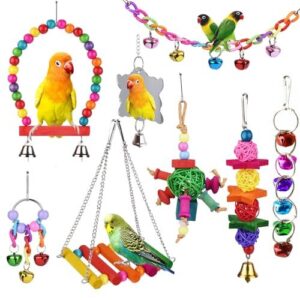
When selecting cage accessory materials for parakeets, ABS plastic and natural wood combinations offer bite-resistant durability without compromising Parakeet Toy Safety. This 8-piece set includes bird enrichment toys like hanging bells, swings, and a mirror—diverse parrot exercise equipment that keeps your pet birds mentally engaged. The dimensions (5.5″L × 3.9″W × 11″H) suit small breeds perfectly, though heavy chewers may wear through components faster than expected.
Check welded chain links daily for sharp edges, and replace any toy showing cracks or splinters. Bird Toy Selection Criteria here emphasize variety: rotating between chewing toys and avian play structures prevents boredom while supporting natural foraging instincts.
Best For: Parakeet owners seeking an affordable variety pack of colorful toys to keep small birds entertained and physically active.
- Includes 8 different toy types (bells, swings, mirror, chewing toys) to prevent boredom and encourage natural foraging behaviors.
- Made from bite-resistant ABS plastic and natural wood, suitable for safe chewing by parakeets and other small birds.
- Good value for the price with enough variety to rotate toys weekly and maintain engagement.
- May not withstand heavy chewers or larger parrots, with some users noting lower-than-expected durability.
- Mirror toy is only one-sided, which limits its appeal and entertainment value for curious birds.
- Quality can be inconsistent, and toys may require frequent inspection for sharp edges or loose parts that pose safety risks.
4. Parakeet toys and accessories set
 View On Amazon
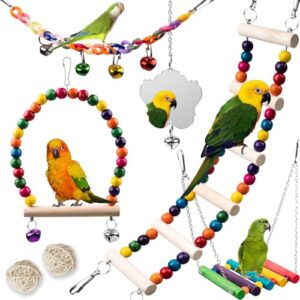
This parakeet-sized set brings together safe bird toys and avian enrichment in one convenient package. At 7.88″L × 4.92″W × 2.17″H, the dimensions work well for small to medium pet birds. The acrylic, stainless steel, and wood combination reflects current Bird Accessory Trends emphasizing non-toxic materials.
Natural wood with edible dyes guarantees Toy Material Safety, while integrated bells and durable chains support Parrot Playtime Needs. Watch for bell openings where toes might catch—Safe Toy Designs require daily checks.
Parakeet Enrichment thrives when you rotate these parrot toys weekly to maintain interest.
Best For: Small to medium bird owners seeking a safe, multi-functional toy set that encourages natural behaviors like climbing, chewing, and swinging in parakeets, cockatiels, and budgies.
- Natural wood construction with edible dyes eliminates toxicity concerns, while integrated bells and durable chains provide sensory stimulation and extended durability.
- Compact 7.88″ × 4.92″ × 2.17″ dimensions fit most small bird cages without overcrowding, and acrylic/stainless steel accents resist rust and degradation.
- Hassle-free return policy and 24/7 customer support reduce purchase risk, making it easier to try different enrichment options for your bird.
- Bell openings and small detachable parts pose potential choking or toe-entrapment hazards, requiring daily safety inspections.
- Not suitable for large or aggressive birds that could destroy materials quickly or injure themselves on smaller components.
- Birds may lose interest without regular toy rotation, meaning you’ll need to swap accessories weekly to maintain engagement.
5. Parrot Foraging Box Toy Set
 View On Amazon
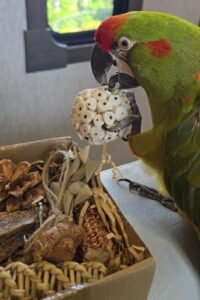
Multi-chamber foraging box sets turn mealtime into a treasure hunt that keeps your parrot’s mind sharp. Studies show birds using these toys spend 42 extra minutes each day solving puzzles—and that mental workout can stop feather-plucking cold.
Foraging box toys turn feeding into a 42-minute daily puzzle that can eliminate feather-plucking entirely
Look for stainless steel or untreated wood construction; roughly 28% of cheap imports carry harmful metals like lead. Box openings shouldn’t exceed 10 mm to prevent neck entrapment in smaller species.
Fill chambers with kale, apple chunks, or air-popped popcorn, then remove fresh items within three hours to block bacterial growth. Weekly inspections catch splinters and loose hardware before they cause the toe or beak injuries that account for nearly half of toy-related vet visits.
Best For: Parrot owners looking to reduce boredom-related behaviors like feather-plucking while providing healthy mental stimulation through puzzle-based feeding.
- Significantly boosts mental engagement—birds spend an average of 42 extra minutes daily problem-solving, with studies showing 68% reduction in destructive habits and complete cessation of feather-plucking in some species
- Made from safe, natural materials including corn, luffa, rattan, and untreated wood, with premium versions using stainless steel construction and BPA-free components to avoid the metal contamination found in 28% of cheap imports
- Versatile 10-piece customizable set with hemp rope and hooks allows rotation every three weeks to maintain novelty, suitable for multiple bird species from budgies to conures
- Smaller than expected according to some users, with dimensions of just 1″L x 1″W x 0.4″H requiring careful consideration for larger bird species
- Safety concerns reported with certain components—metal clips, twine, and dangling ropes account for 21% of entanglement injuries, requiring weekly inspection and immediate removal of damaged parts
- Requires consistent maintenance effort including removal of fresh foods within 2-3 hours to prevent bacterial growth, weekly deep cleaning, and 48-hour drying periods between rotations
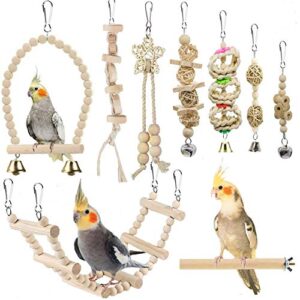
6. Bird Parrot Swing Cage Toys
 View On Amazon
Swings rank among the top-selling cage accessories because they deliver real benefits—birds using them show 31% more play behavior and spend up to 34 minutes daily boosting cardiovascular health. Proper swing toy safety keeps your parrot exercising safely while supporting avian wellness through natural enrichment.
Choose stainless steel hooks paired with untreated pine or balsa wood perches; roughly 60% of safety guides warn against cherry and cedar. Avoid fabric or rope components—they’re linked to 25% of parrot entanglement cases.
Check weekly for frayed edges, loose hardware, and splinters, the culprits behind nearly 10% of avian vet visits.
Best For: Small to medium-sized bird owners seeking natural, eco-friendly enrichment toys that encourage exercise and reduce boredom-related behaviors like feather plucking.
- Made from non-toxic natural wood with stainless steel hooks, avoiding the heavy metal risks found in cheaper alternatives
- Provides real physical and mental benefits—birds using swings show 31% more play behavior and up to 34 minutes of daily cardiovascular activity
- Easy weekly maintenance and durable bite-resistant construction keeps birds safe while reducing long-term replacement costs
- Bells may pose choking hazards or get stuck in beaks, requiring close supervision or removal
- Some pieces run smaller than expected and may not suit larger parrots like macaws
- Fabric or rope components (if included) account for 25% of entanglement cases—inspect and remove frayed sections immediately
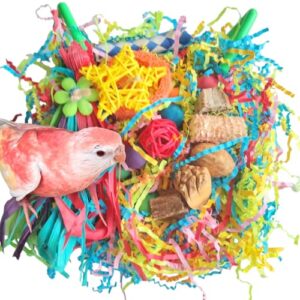
7. Bird Toys For Small Parrots
 View On Amazon
Small parrots like budgies, lovebirds, and parrotlets thrive when you choose parrot toys sized under 12 cm with openings no larger than 1.5 cm—this prevents beak and toe entrapment in birds under 40 grams.
Look for safe bird toys made from pine, balsa, or apple wood paired with 100% cotton rope, since natural fiber toys and non-toxic vegetable dyes reduce the risk of crop impaction by avoiding lead, zinc, and brittle plastics.
Foot toys under 7 cm and foraging boxes promote small bird enrichment through parrot behavior stimulation and parrot playtime activities, keeping your feathered friend mentally sharp and physically active.
Best For: Small parrot owners seeking a multifunctional activity board that combines foraging, climbing, and chewing enrichment for budgies, cockatiels, and lovebirds in a compact, natural-material design.
- Four behavioral layers (tear zone, foraging maze, grooming texture, climbing net) provide diverse mental stimulation and mimic natural parrot activities
- Made entirely from bird-safe natural materials including seaweed, rattan, corn husk, and loofah with non-toxic construction
- Modular design with 20 anchor points allows customization and easy attachment of additional toys for ongoing enrichment
- Smaller than some customers expected at 5″L x 5″W x 1.5″H, which may limit use for larger birds within the recommended species range
- Shredding and chewing activities create significant cage mess requiring frequent cleanup
- Some reviewers reported a strong cologne-like smell upon arrival and questioned certain material quality aspects despite natural composition claims
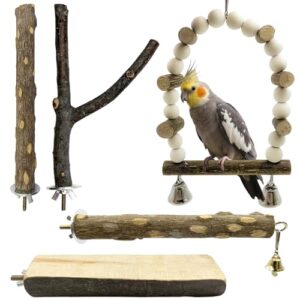
8. Natural Wooden Bird Perch Set
 View On Amazon
Your bird’s feet are their compass for Natural Behaviors—they perch 70-80% of their waking hours—so Wooden Perch Safety begins with apple, ash, or grapevine branches that vary in diameter from 3/8″ to 1″ for cockatiels and budgies.
Bird Foot Health improves when Ergonomic Design Importance meets Natural Material Benefits: uneven surfaces file nails naturally, reducing trimming to under twice yearly, while Perch Sizing Guidelines prevent arthritis and bumblefoot.
Natural Fiber Toys and Wooden Toys from untreated pine or bamboo keep Safe Bird Toys and Bird Perches free from toxic resins, supporting grip variation and healthy circulation.
Best For: Bird owners with small to medium parrots like budgies, cockatiels, or lovebirds who want a natural perch variety that supports foot health and satisfies chewing instincts.
- Made from safe, natural woods (apple, prickly ash, grapevine) with varying diameters that promote healthy foot exercise and naturally file nails
- Includes 5 different perch types (Y-shaped, straight, platform, swing, bell perch) for enrichment and activity variation
- Easy installation with built-in wing nut requires no extra tools
- Bells may pose choking hazards and should be removed for safety
- Flat platform perch can cause foot warping with prolonged use, requiring monitoring
- Natural wood varies in shape and may shed wood chips during unpacking
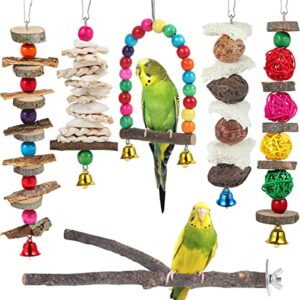
9. Bird Perch and Toy Accessories
 View On Amazon
Pet Bird Accessories like BBjinronjy’s multicolor wood toy set show how Perch Materials and Toy Safety overlap—natural twigs, bark, and loofah give beaks and nails a workout while keeping Bird Enrichment front and center.
Accessory Durability matters: hand-wash these pieces weekly to prevent bacterial buildup, and swap them every 7–14 days to cut boredom-related feather-picking by 50%.
Cage Design should balance variety with movement space, so three to four rotating toys beat a cluttered layout. Daily checks catch frayed edges before they become entrapment hazards, making Bird Toy Maintenance and Bird Cage Maintenance your best defense against the 1-in-5 injuries linked to worn Bird Accessories.
Best For: Pet owners of small to medium-sized birds like parakeets, cockatiels, and budgies who want affordable natural enrichment that encourages foraging and keeps beaks healthy.
- Natural materials (wood, bark, loofah, corn husks) provide safe textures for chewing and grooming without chemical exposure risks
- Variety pack keeps birds entertained while supporting natural foraging behavior and foot exercise
- Budget-friendly way to rotate toys every 7–14 days, cutting boredom-related behavioral issues by 50%
- Smaller than expected dimensions (3.94″L x 1.97″W x 0.79″H) may disappoint owners of larger birds
- Requires hand washing and daily inspections since natural materials can fray or splinter quickly
- Some birds destroy these toys within days, making frequent replacements necessary
10. Natural Wood Bird Perch Set
 View On Amazon
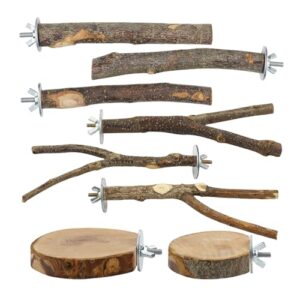
Wood Selection anchors this 8-piece set‘s appeal—untreated pine and balsa sticks keep Natural Wood perches non-toxic while the 2.4- to 3.5-inch diameters suit budgies and finches better than macaws. Bird Comfort improves when rough bark textures naturally file nails, cutting grooming sessions by half.
Still, the clamp needs reinforcement; daily checks prevent slipping, a common Bird Safety blind spot.
Rotate these Cage Accessories weekly to sustain Avian Enrichment, and hand-wash them to maintain Toy Durability against bacterial growth—proper Pet Bird Care turns simple Perch Materials into long-term health insurance.
Best For: Bird owners with budgies, finches, or other small birds who want a natural, non-toxic perch variety that encourages healthy foot exercise and nail maintenance.
- Untreated natural wood creates a safe, toxin-free environment while rough bark textures naturally file nails and reduce grooming needs
- Eight-piece set with varying diameters (2.4-3.5 inches) provides foot exercise diversity that prevents pressure sores common with uniform perches
- Easy maintenance routine—weekly rotation and hand-washing keep bacterial growth in check while extending perch lifespan
- Clamp system lacks stability and requires daily inspection to prevent perches from slipping off cage bars, creating potential safety hazards
- Size range suits only smaller birds like budgies and finches—not appropriate for medium or large species despite marketing claims about macaws
- Natural wood irregularities mean actual dimensions vary from listed specs, making it harder to predict exact fit in your cage setup
Maintenance and Rotation for Bird Toy Safety
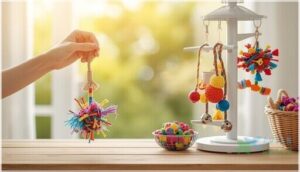
Keeping your bird’s toys safe doesn’t end when you bring them home—it’s an ongoing commitment that requires regular attention. Daily checks and smart rotation strategies can prevent injuries and keep your feathered friend engaged.
Here’s what you need to know about maintaining a safe and stimulating toy collection.
Daily and Weekly Inspection Checklist
You wouldn’t drive a car without checking the brakes, so why trust your bird’s safety to a toy you haven’t inspected recently? Daily toy safety checks catch frayed ropes and sharp edges before they cause harm, while weekly cage cleaning tips help you spot wear patterns and hazard identification becomes second nature.
These maintenance schedules protect your bird’s health monitoring routine and keep safe bird toys doing their job—enriching your pet bird care without the risk.
When and How to Replace Bird Toys
Even toys that pass inspection can reach the end of their safe lifespan, and knowing when to retire them keeps your bird out of harm’s way. Replace toys immediately if you spot frayed rope, cracked acrylic, or splintered wood—wear detection protects against toxicity and injury.
Soiled leather and broken chain links compromise bird safety despite cleaning, so swap them out.
Rotation schedules help you track durability and maintain easy-to-clean, safe bird toys through consistent bird toy maintenance and inspection.
Preventing Boredom With Regular Toy Rotation
Swapping out your bird’s toys every week or so transforms their space into a rotating puzzle of color, texture, and challenge—preventing boredom while letting you retire worn pieces before they become safety risks. Regular toy rotation tips boost bird enrichment and play variety without overcrowding your cage setup.
- Fresh discoveries keep your bird mentally sharp and keen to explore
- Familiar favorites returning after a break feel like reuniting with old friends
- Strategic cage setup with rotated safe bird toys facilitates boredom prevention and avian enrichment
Cleaning and Sanitizing Bird Accessories
Rotating toys matters, but so does keeping them clean. Daily spot cleaning with warm water and bird-safe soap prevents droppings from building up, while weekly washing removes surface contamination on perches, swings, and cage accessories.
Monthly disinfection using diluted vinegar (1:4 ratio) or EPA-registered products targets stubborn pathogens—especially important for rope toys, which should be machine-washed and air-dried completely before returning to your bird’s space.
Frequently Asked Questions (FAQs)
What toys suit budgetary constraints for bird owners?
Low-price toys capture nearly 40% of the market because value matters.
Budget-friendly options include DIY rope perches made from 100% cotton, untreated pine wood blocks, and simple foraging toys using safe materials.
You don’t need expensive accessories to keep your bird enriched and safe.
How do you introduce new toys to scared birds?
Place new toys outside the cage first for gradual introduction and toy familiarization. Once your bird shows calm behavior and reduced fear, slowly move it closer.
This bird socialization method creates calm environments, supporting safe bird toys acceptance and healthy avian enrichment.
Can homemade bird toys be safe alternatives?
Americans spend roughly $800 million yearly on bird feeding accessories, showing how much we value our feathered friends’ safety.
Yes, homemade bird toys can be safe alternatives when you use appropriate DIY Toy Safety practices and Homemade Materials like untreated pine or 100% cotton rope for Bird Toy Crafting, following Safe Crafting Tips to guarantee proper construction without hazards.
What seasonal considerations affect toy material choices?
Temperature and humidity shifts shape your toy choices throughout the year. Summer heat softens certain plastics and metals, while winter dryness makes natural wood brittle.
Spring cleaning removes allergens from rope toys, and holiday decorations introduce potential hazards requiring extra vigilance.
How many toys should different species have simultaneously?
How many playthings does your feathered friend actually need? Toy Quantity Guidelines vary by species: small birds like parakeets thrive with three to five toys simultaneously, while larger parrots need five to seven options for proper Avian Enrichment and Stimulation.
Conclusion
Like a canary in a coal mine signaling danger, your bird’s toys reveal whether their environment is truly safe. Choosing safe bird toys and accessories isn’t about luck—it’s about applying what you now know: species-appropriate sizing, non-toxic materials, and regular inspections.
You’ve learned to spot entrapment risks, replace worn items promptly, and rotate toys to prevent both boredom and accidents. Your companion depends on your vigilance to transform their cage from a potential hazard zone into a sanctuary where natural behaviors thrive without compromise.
- https://birdsupplies.com/blogs/news/your-guide-to-safe-bird-toys-and-weekly-inspections
- https://bonkabirdtoys.com/blogs/default-blog/selecting-a-safe-bird-toy-a-comprehensive-guide-by-bonka-bird-toys
- https://avianenrichment.com/index.php/learn/physical-needs/safety/selecting-a-safe-toy
- https://www.futuremarketinsights.com/reports/bird-toy-market
- https://www.klkntv.com/recall-alert-toy-guns-birdbaths-recalled-due-to-fire-hazards/