This site is supported by our readers. We may earn a commission, at no cost to you, if you purchase through links.
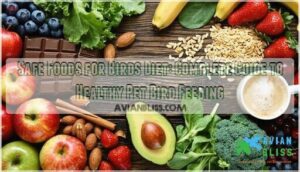 You’ll want to build your bird’s safe foods for birds diet around high-quality pellets as the foundation.
Fresh fruits like apples, berries, and bananas make excellent treats, while leafy greens such as kale and spinach pack essential nutrients.
Seeds and nuts are fine in moderation, but don’t overdo it.
Whole grains like quinoa and brown rice add variety.
However, certain foods spell trouble – chocolate, avocado, onions, and caffeine are absolute no-gos.
Think of feeding birds like cooking for a picky toddler who can’t tell you what’s wrong.
Understanding which specific foods boost health versus harm becomes vital knowledge.
Table Of Contents
Key Takeaways
- Feed your bird high-quality pellets as their main diet and supplement with fresh fruits, vegetables, nuts, seeds, and whole grains.
- Avoid toxic foods like chocolate, avocado, caffeine, onions, and garlic, as they can cause severe health issues or death.
- Offer fresh foods in bird-sized portions, rotate food for variety, and remove uneaten perishables within two hours to prevent spoilage.
- Consult an avian vet or nutritionist to tailor a balanced diet to your bird’s species, life stage, and health needs.
Safe Foods for Birds
You’ll find that choosing the right foods for your bird requires careful consideration of what’s safe and nutritious.
Fresh fruits, vegetables, nuts, seeds, and whole grains form the foundation of a healthy bird diet when selected properly.
Fresh Fruits and Vegetables
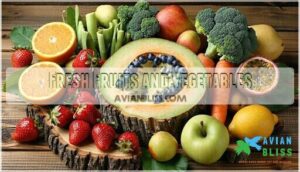
When choosing fresh produce for your feathered friend, you’re opening a world of nutritional possibilities.
Safe fruits birds love include apples (seeds removed), berries, bananas, and melons.
Safe vegetables birds thrive on are leafy greens, carrots, bell peppers, and broccoli.
Always wash produce thoroughly, chop into appropriate serving sizes, and remove any seeds or pits before offering these bird safe foods.
Nuts and Seeds
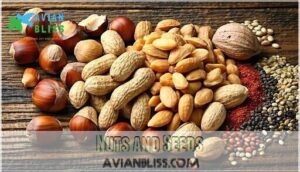
Safe nuts for birds include unsalted hazelnuts, peanuts, and sunflower seeds.
You’ll want to avoid salted or dry-roasted varieties that can harm your feathered friend.
Crush larger nuts for smaller birds and store seeds in airtight containers to maintain freshness.
Consider purchasing bird-safe nuts for guaranteed quality.
Birdseed mixtures often combine flax seeds and chia seeds, providing essential nutrients when served in proper portions.
Whole Grains
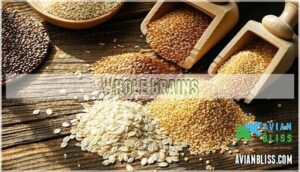
When feeding your feathered friend whole grains, you’re providing essential nutrients that support healthy digestion and energy levels.
These fiber-rich foods offer excellent nutritional benefits and should be part of every balanced bird diet.
- Brown rice and quinoa – Cook thoroughly and serve at room temperature
- Oats and barley – Offer raw or cooked, sprouted grains boost digestibility
- Whole wheat pasta – Choose gluten-free options for sensitive birds
Toxic Foods to Avoid
Keeping your bird safe means knowing which foods can harm or kill them.
Common household items like chocolate, avocado, and mushrooms contain toxic compounds that cause serious health problems in birds.
Chocolate and Caffeine
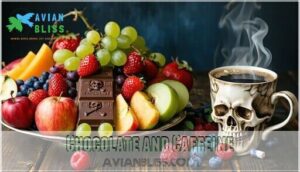
Never give your bird chocolate or caffeine – both contain theobromine toxicity that’s deadly to birds.
Even small amounts cause vomiting, diarrhea, seizures, and death.
Coffee, tea, soda, and energy drinks pose similar caffeine effects risks.
Watch for symptoms like trembling, rapid breathing, or weakness after accidental ingestion.
Offer safe alternatives like fresh fruits instead.
Avocado and Mushrooms
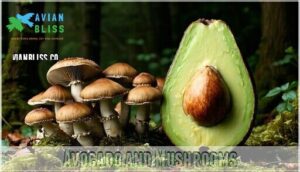
While chocolate poses serious risks, avocado toxicity presents an even deadlier threat to your feathered friend.
This creamy fruit contains persin, which can cause fatal collapse within hours.
Mushrooms create uncertainty since identifying bird-safe varieties proves nearly impossible for most pet owners.
Here’s what you need to know about these toxic foods birds should never consume:
- Avocado Toxicity: All parts contain persin, causing respiratory distress and heart failure
- Mushroom Risks: Wild varieties can be lethal, making identification dangerous
- Symptoms Recognition: Watch for difficulty breathing, weakness, and collapse
- Safe Alternatives: Offer berries, apples, and leafy greens instead
Prevention tips include keeping guacamole away from birds and avoiding any mushroom-containing dishes near your pet’s area.
Onions and Garlic
Beyond avocados and mushrooms, onions and garlic pose serious threats to your feathered friend.
These allium family members cause oxidative damage to bird blood cells, leading to anemia.
Even small amounts from cooking can harm birds through allium toxicity.
Different species show varying sensitivity levels, making complete avoidance essential for bird nutrition safety.
| Toxic Allium Foods | Safe Alternatives |
|---|---|
| Raw onions and garlic | Fresh herbs like basil |
| Cooked onion dishes | Parsley and cilantro |
| Garlic powder/salt | Oregano and thyme |
| Onion soup mixes | Bird-safe seasonings |
| Chives and scallions | Carrot and celery pieces |
Cooking concerns arise because even trace amounts in prepared foods avoid birds should consume.
Dosage effects vary, but no safe threshold exists for toxic foods birds shouldn’t eat.
Species sensitivity differs, making foods avoid birds lists vital for proper bird diet planning.
Nutritional Requirements
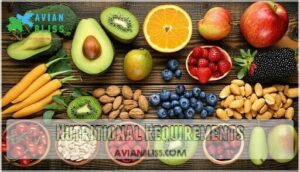
Your bird needs a balanced mix of proteins, fats, carbohydrates, vitamins, and minerals to stay healthy and strong.
Each species has different nutritional needs, so understanding what your feathered friend requires will help you create the perfect diet plan.
Proteins and Fats
Your bird’s body craves protein sources and healthy fats to thrive. Essential nutrients like protein build strong muscles and vibrant feathers, while fats provide energy.
However, fat moderation is vital since excess leads to obesity. Seed variety offers natural nutrition, and insect consumption supplies wild protein needs.
- Boiled eggs and cooked chicken deliver complete proteins
- Sunflower seeds provide balanced fats and essential nutrients
- Nuts like almonds offer protein but require careful portion control
Vitamins and Minerals
Essential avian vitamins and minerals work like building blocks for your bird’s health.
Vitamin A supports vision and immune function, while calcium strengthens bones and aids egg production.
Deficiencies can cause serious health issues, but over-supplementation poses risks too.
Here’s what your feathered friend needs:
| Vitamin/Mineral | Key Benefits |
|---|---|
| Vitamin A | Vision, immune system, feather health |
| Vitamin D | Calcium absorption, bone formation |
| Calcium | Bone development, egg production |
| Vitamin E | Overall wellness, reproductive health |
| B Vitamins | Energy metabolism, nerve function |
The key to maintaining your bird’s health is understanding the role of these vitamins and minerals, including Vitamin A, Calcium, and Vitamin D, in preventing deficiencies.
Carbohydrates and Fiber
Fuel your bird’s energy needs with complex carbs from whole grains like brown rice, oats, and quinoa.
These fiber sources provide steady energy provision while supporting healthy digestion. Grain variety guarantees proper digestibility factors in your bird diet.
Safe foods with adequate fiber help maintain gut health and prevent constipation. Choose birdsafe foods over processed options for ideal carbohydrate nutrition.
Bird Diet Basics
Your bird’s daily diet needs a solid foundation to keep them healthy and happy.
You’ll want to focus on three key components: a nutritionally balanced base diet with pellets, appropriate seed and nut mixtures, and fresh food supplements that provide essential vitamins and minerals.
Base Diet and Pellets
Your bird’s foundation starts with quality pellets that deliver consistent nutritional balance. Think of pellets as your feathered friend’s daily multivitamin packed into bite-sized pieces.
Quality pellets are your bird’s daily multivitamin – the perfect foundation for optimal feathered health.
- Pellet Introduction: Gradually mix pellets with current food over several weeks
- Lafeber Products: Combine seeds, pellets, and fruits for natural foraging behavior
- Commercial Pellets: Choose brands like Harrison’s or Roudybush without artificial colors
- Avian Nutrition: Pellets should comprise 60-70% of your bird’s daily diet
- Balanced Bird Food: Prevents nutritional deficiencies better than seed-only diets
Seed and Nut Mixtures
Creating your own birdseed mixtures gives you control over seed variety and nut ratios.
Safe seeds for birds include sunflower, safflower, and millet, while safe nuts like unsalted peanuts and hazelnuts add protein.
Store homemade mixes in airtight containers to prevent spoilage.
You can easily find pre-mixed birdseed options online.
Consider sprouting seeds for added nutrition, but maintain proper storage methods to keep ingredients fresh.
Fresh Food Supplements
Fresh supplements transform your bird’s basic diet into a nutritional powerhouse.
Organic produce like apples, berries, and leafy vegetables provides vitamins that pellets can’t match.
Seasonal variety keeps meals interesting while proper preparation methods guarantee safety.
Practice portion control by offering thumb-sized servings and focus on spoilage prevention by removing uneaten fresh foods within two hours.
Healthy Treats for Birds
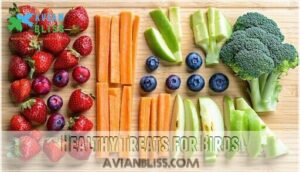
You can offer your bird healthy treats that provide essential nutrients while keeping mealtime interesting.
Fresh fruits like apples and berries, along with vegetables such as broccoli and carrots, make excellent snack options that support your pet’s overall health.
Fresh Fruits and Berries
Your feathered friend will love fresh fruits as healthy treats. Blueberries and blackberries pack Berry Antioxidants that boost immunity.
Mango provides excellent Fruit Hydration during hot days. Apples make Safe Fruits when you remove seeds first.
These Berry Varieties offer natural sweetness without harmful additives. Consider bird-safe fruit options for your feathered companions.
Proper Fruit Preparation means washing thoroughly and cutting into bird-sized pieces for easy eating.
Vegetables and Leafy Greens
Vegetables pack more nutritional punch than most fruits.
Load up your bird’s dish with safe vegetables like broccoli, carrots, and bell peppers.
Leafy green variety matters—spinach, kale, and cabbage deliver vitamin A and beta-carotene.
Always wash organic vegetables thoroughly and chop into bite-sized pieces.
Proper vegetable preparation guarantees your feathered friend gets maximum nutritional benefits from these healthy bird food options.
Feeding Routines and Tips

You’ll need to establish consistent feeding schedules to keep your bird healthy and happy.
Morning feeding works best when your bird’s hungriest, and you should provide fresh water daily while rotating different foods to prevent boredom.
Morning Feeding and Refills
Start your day right by offering your bird’s base diet when they’re hungriest each morning.
Watch for natural hunger cues like active begging or searching behaviors.
Fill food bowls with appropriate portion sizes, then monitor throughout the day for refill frequency needs.
Remove any leftover perishables within two hours to maintain freshness and prevent spoilage in your daily feeding routine.
Hydration and Water Quality
Water serves as your bird’s lifeline, supporting every bodily function from digestion to temperature regulation.
Clean, fresh water should be available 24/7 to maintain proper hydration and support ideal bird health.
Monitor these water quality essentials:
- Replace water daily to prevent bacterial growth
- Use filtered or bottled water in areas with poor water sanitation
- Clean bowls thoroughly with bird-safe disinfectants
- Watch for dehydration signs like lethargy or sunken eyes
- Provide separate water sources for drinking and bathing habits
Food Variety and Rotation
Rotating your bird’s menu prevents dietary monotony and guarantees complete nutrition.
Introduce seasonal foods gradually—spring greens, summer berries, fall squash—to mirror natural foraging patterns.
This dietary diversity keeps your feathered friend mentally stimulated while providing rotation benefits.
Swap different safe fruits weekly, alternate vegetable types, and vary grain offerings.
Food introduction should be slow, allowing your bird to adjust to new flavors and textures naturally, ensuring a smooth transition to new foods for optimal health.
Common Foods to Limit
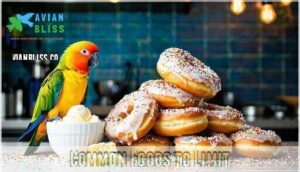
Some foods aren’t toxic to your bird but should be given sparingly to maintain proper nutrition.
You’ll want to limit bread, dairy products, and processed snacks because they’re low in nutrients and can fill your bird up without providing essential vitamins and minerals.
Bread and Dairy Products
Many bird owners wonder about sharing bread and cheese from their dinner table.
While plain bread won’t harm your feathered friend, it lacks essential nutrition your bird needs.
Dairy products like cheese pose lactose concerns since birds can’t properly digest milk proteins.
Skip the human food favorites and choose safe bird foods with proper bread nutrition and dairy alternatives instead.
Junk Food and Processed Snacks
Junk food spells trouble for your feathered friend.
French fries pack dangerous salt toxicity levels that can harm birds quickly.
Crackers and processed foods contain additives effects that disrupt normal digestion.
Chocolate remains absolutely toxic, while moldy bread introduces harmful bacteria.
These empty calories contribute to obesity risks and sugar overload without providing essential nutrients your bird needs for peak health.
High-Sodium and High-Sugar Foods
Beyond processed snacks, salt and sugar create serious health risks for your feathered friend.
Sodium toxicity can cause kidney damage, while sugar overload leads to obesity and diabetes.
Hidden sugars lurk in seemingly innocent human food, making processed treats particularly dangerous.
Consider these bird-safe alternatives instead:
- Fresh fruits without added sugars
- Unsalted nuts and seeds
- Plain cooked grains like quinoa
Bird Species Dietary Needs
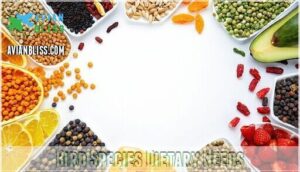
Different bird species have specific nutritional needs based on their size, metabolism, and natural feeding habits.
You’ll need to adjust your bird’s diet whether you’re caring for large parrots that require more protein and fats, or small finches that need frequent, energy-rich meals throughout the day, which can be a challenge.
Parrots and Large Birds
Why do parrots and large birds need different nutrition than their smaller cousins?
These magnificent birds require high-quality pellets as their foundation, not seed mixes.
Amazons, African greys, macaws, and cockatoos thrive on 2-5 tablespoons of species-specific pellets daily.
Fresh fruits and vegetables boost their parrot safe foods intake, while controlled Large Bird Treats support proper Macaw Nutrition and Cockatoo Diets effectively.
Small Birds and Finches
Small birds like finches and parakeets thrive on carefully portioned pellet diets that match their fast metabolism.
You’ll want to provide:
- Daily pellet portions: ½-1 teaspoon for finches, 2-3 teaspoons for cockatiels
- Quality finch seed mixes: High-grade blends with safe seeds birds enjoy
- Fresh supplements: Safe greens and small bird treats alongside clean water quality
Specialty Diets and Restrictions
Certain birds require specialty diets due to medical conditions or life stages.
Breeding diets support reproduction, while molting support helps feather regrowth.
Weight management becomes necessary for overweight birds, and allergy considerations matter when birds show reactions to specific foods.
Avian veterinarians recommend species-specific diets to prevent dietary deficiencies and address selective eating habits, ensuring peak health.
Importance of Proper Nutrition
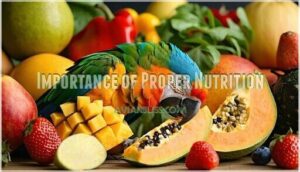
When you feed your bird the right foods, you’re supporting their physical health, bright feathers, and strong immune system.
Proper nutrition prevents common diseases and keeps your feathered friend active and happy for years to come, which is crucial for their overall well-being.
Physical and Mental Health
Proper nutrition creates a foundation for your bird’s physical health and mental well-being.
Quality bird diet health prevents nutritional deficiencies that cause lethargy, aggression, and depression.
Good bird nutrition and health supports natural foraging behavior, keeping minds sharp and bodies active.
Meeting exercise needs through dietary variety encourages social interaction, while balanced bird food and health choices reduce stress and promote happiness.
Feather and Beak Health
Your bird’s feathers and beak reflect their overall health status.
Quality bird food directly impacts feather brilliance and beak strength.
Birds with nutritional deficiencies often show dull plumage and weak beaks.
Here’s how proper bird diet supports feather and beak health:
- Protein builds strong feather structure during the molting process
- Vitamin A promotes healthy preening habits and natural oils
- Calcium strengthens beak composition and prevents cracking
- Omega fatty acids create glossy feather quality and vibrant colors
- Balanced avian nutrition supports consistent feather growth cycles
Immune System and Disease Prevention
A strong bird immune system depends on consistent Vitamin Support and Mineral Balance from quality foods.
Antioxidant Boost from fresh berries and vegetables helps your feathered friend fight off infections naturally.
Gut Health improves when you provide varied nutrition, while proper Hydration Benefits support overall wellness.
Preventing nutritional deficiencies through antioxidants and vitamins keeps bird disease prevention simple and effective.
Consulting a Vet or Nutritionist
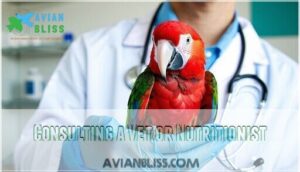
You should talk to a vet or bird nutritionist when you need help with your bird’s diet, especially if your pet has health problems or special needs.
Professional guidance guarantees you’re providing the right balance of nutrients and can help prevent serious health issues before they start, which is crucial for your bird’s overall well-being and requires professional advice.
Dietary Advice and Guidance
Getting professional guidance transforms bird nutrition from guesswork into science.
Avian veterinarians assess your bird’s Species-Specific Needs through detailed questionnaires about diet, environment, and daily activities.
They’ll help with Reading Food Labels, Supplementing Deficiencies, and Balanced Meal Prep.
Nutritionists create customized bird diet plans using laboratory reports, ensuring proper bird nutrition while addressing Gradual Food Introduction for ideal avian nutrition success.
Health Checks and Monitoring
Regular health checks help you catch nutritional problems before they become serious.
Your vet will track weight monitoring trends and conduct fecal analysis to assess digestion.
Watch for behavior changes, appetite changes, and feather condition shifts between visits.
These healthy diet indicators tell your avian nutritionists if adjustments are needed.
Bird health depends on consistent observation and veterinarian advice, which are key to making informed decisions about your bird’s nutrition.
Customized Diet Plans and Recommendations
Expert-crafted nutrition plans take your feathered friend’s unique needs into account.
Your avian nutritionist will consider species-specific diets, age-related requirements, and any health conditions when designing a balanced meal plan.
They’ll adjust portions based on your bird’s activity level and recommend seasonal diet changes.
This personalized bird diet planning guarantees that your bird’s nutritional requirements are met through professional bird food consultation, providing the best possible outcome.
Frequently Asked Questions (FAQs)
What food is safe for birds?
Like a chef carefully selecting ingredients for a loved one’s meal, you’ll want to offer your feathered friend safe options.
Fresh fruits like apples and berries, vegetables such as broccoli and carrots, plus quality pellets.
What is the healthiest thing to feed birds?
You’ll want to offer high-quality pellets as your bird’s main diet.
Then add fresh fruits and vegetables daily, think colorful variety—berries, leafy greens, and chopped apples keep them healthy and happy.
What is the best homemade bird food?
Funny how birds won’t appreciate your gourmet skills, but your best homemade bird food mixes seeds, unsalted nuts, cooked rice, chopped fruits, and veggies.
Toss in some boiled eggs for protein, and you’ve got birds delighted!
Can birds eat frozen or canned foods?
Birds can eat frozen or canned foods if prepared properly.
Thaw frozen foods completely and serve at room temperature.
Avoid canned foods with added salt, sugar, or preservatives, as these can harm their health.
How often should I change bird food?
Experts say birds eat roughly 10-15% of their body weight daily, so refresh their food dish each morning.
Discard uneaten fresh foods within a few hours to prevent spoilage, and refill dry food as needed.
What feeding schedule works best for birds?
Feed your bird twice daily—once in the morning and again in the evening.
Provide fresh food each time.
Small birds need frequent snacks, so monitor their food levels to prevent them from going hungry.
Are kitchen scraps safe for pet birds?
Not all kitchen scraps are safe for birds.
Avoid foods like chocolate, avocado, and salted items.
You can offer fruits, vegetables, grains, and unsalted nuts.
Always confirm safety and remove harmful seeds or peels.
Can birds share food with other pets?
Sure, birds can share food with other pets, but it’s tricky.
Stick to common safe options like plain fruits or veggies.
Avoid processed treats, chocolate, or salty snacks—they can harm birds and pets alike.
Conclusion
Picture your bird thriving, feathers vibrant, and energy boundless—all thanks to a well-rounded diet.
Prioritize high-quality pellets, fresh fruits, vegetables, and whole grains, while steering clear of toxic items like chocolate, avocado, and caffeine.
Balance is key—combine proper nutrition with hydration, variety, and routine.
Tailor the diet to your bird’s species and needs, ensuring its overall health and happiness, and when in doubt, consult your vet for guidance on maintaining ideal bird nutrition.