This site is supported by our readers. We may earn a commission, at no cost to you, if you purchase through links.
Your parrot shreds a pothos leaf before you can stop her, and suddenly you’re racing to the emergency vet—a scenario that plays out in 15% of avian poisoning cases involving houseplants. Over 250 plant species pose serious risks to birds, yet many bird owners don’t realize their leafy décor could be dangerous until it’s too late.
The frustrating part is that birds are naturally curious, and young birds account for 60% of household poisoning incidents simply because they explore everything with their beaks.
The good news is that creating a bird-safe environment doesn’t mean sacrificing greenery. Safe plants for pet birds like Boston ferns and spider plants actually improve your bird’s health by filtering air pollutants and providing mental enrichment—without the risk of toxicity.
Understanding which plants protect your feathered companion and which ones threaten their well-being makes all the difference between a thriving home environment and a preventable emergency.
Table Of Contents
Key Takeaways
- Over 250 plant species pose serious risks to birds, causing 15% of avian poisoning cases through houseplants, with young birds accounting for 60% of incidents due to their natural tendency to explore everything with their beaks.
- Bird-safe plants like Boston ferns and spider plants don’t just avoid harm—they actively improve your bird’s health by increasing humidity levels up to 6%, reducing airborne pollutants by 87%, and providing mental enrichment through safe exploration.
- Common household plants including philodendron, pothos, peace lily, and sago palm contain dangerous toxins that cause symptoms within 12-24 hours, with mortality rates exceeding 50% without prompt veterinary treatment.
- Smart placement strategies like keeping plants 1.5 meters high and 0.5 meters from cage bars reduce nibbling incidents by 60%, while providing enrichment toys decreases plant chewing by 38% by satisfying natural foraging instincts.
Why Plant Safety Matters for Pet Birds
Your bird’s health depends on the plants you bring into your home. Certain plants pose serious risks, from mild digestive upset to life-threatening toxicity.
While greenery can create a beautiful, enriching environment, understanding these dangers and the surprising benefits of bird-safe plants will help you make choices that keep your feathered companion healthy and happy.
Risks of Toxic Plants in Bird Environments
Plant toxicity poses a real danger in bird-friendly homes. Over 250 plant species can harm your feathered companion, with more than 15% of avian poisoning cases linked to houseplants. Your bird’s natural curiosity puts them at risk since they explore by chewing and tasting.
Key environmental risks include:
- Direct ingestion during foraging and play
- Fallen plant debris on cage floors
- High plant density increasing exposure by 40%
- Young birds causing 60% of household poisoning incidents
Without prompt treatment, mortality rates can exceed 50%. It’s vital to research and understand the risks of toxic plants, such as those found in a toxic plant garden, to verify a safe environment for your pets.
Benefits of Safe Plants for Avian Health
While toxicity poses serious risks, the flip side is equally important: bird-safe houseplants actively boost avian health. Non-toxic plants like Boston ferns increase humidity by 5-6%, reducing respiratory stress and improving feather health by 27%. They also cut airborne pollutants by up to 87% within 24 hours, supporting avian wellness.
Bird-safe houseplants like Boston ferns don’t just avoid harm—they actively improve your bird’s respiratory health and air quality
Beyond air quality, bird-friendly greenery provides enrichment—your pet explores textures, chews safely, and stays mentally engaged in a non-toxic environment.
For ideal aviary design, consider consulting safe plant resources to guarantee a healthy space.
Common Bird Behaviors With Houseplants
Understanding how your pet birds interact with bird-safe houseplants helps you create a safer home. About 21% of birds display destructive chewing on leaves and stems—that’s foraging habits kicking in.
Without proper toys (44% of owners don’t provide them), your feathered friend turns to plant exploration for environmental stimulation. Birds climb, perch, and satisfy their bird curiosity through these bird-friendly interactions with non-toxic plants.
Top Safe Houseplants for Pet Birds
You’ll be happy to know there are plenty of beautiful houseplants that won’t harm your bird if they decide to take a curious nibble.
These plants can brighten your home while keeping your feathered friend safe from toxic exposure.
Let’s look at some of the best options you can confidently bring into a bird-friendly space.
Spider Plant
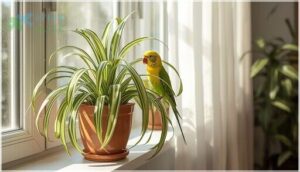
Spider plants top the list of bird-safe houseplants for good reason. These nontoxic plants are virtually harmless—veterinary toxicology reports confirm they’re safe for birds, with only mild digestive upset possible if your feathered friend overdoes the nibbling.
Beyond their outstanding safety profile, spider plants offer quiet perks:
- Air purification: They remove formaldehyde and ozone from indoor spaces
- Easy leaf propagation: No pesticides needed—just pinch off plantlets
- Bird enrichment: Safe, gentle exploration for curious beaks
Spider care is wonderfully forgiving, making these bird-friendly favorites perfect for your home.
Boston Fern
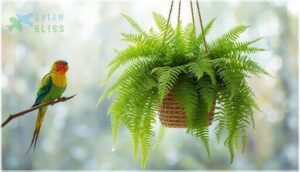
Soft, cascading fronds make Boston Fern a standout among bird-safe houseplants—and the nontoxic plants list confirms it’s safe for birds. Beyond basic safety, these bird-friendly beauties deliver air quality benefits by filtering VOCs up to 42% in living spaces.
Fern care tips emphasize consistent moisture and 50–80% humidity—perfect for bird enrichment while supporting respiratory health. Place yours in hanging baskets for humidity management without encouraging over-nibbling.
African Violet
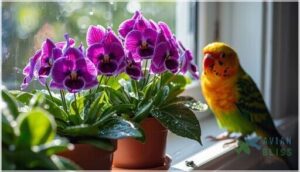
Blooming African Violets bring color to your space while staying completely safe for birds—these bird-safe houseplants appear on every nontoxic houseplants list for good reason. Beyond basic safety, Violet Plant Benefits include measurable violet air purification that captures formaldehyde indoors.
African Violet Care priorities for bird-friendly flowers:
- Water only when soil feels dry to touch
- Maintain 65–80°F temperatures for thriving blooms
- Use diluted fertilizer to minimize chemical exposure around your flock
Bamboo
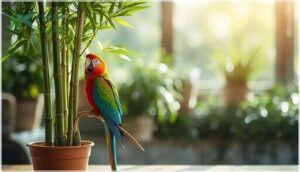
Bamboo stands as a champion among bird-safe houseplants, with veterinary studies confirming zero poisoning cases through 2025. These Bird-Friendly Houseplants deliver Bamboo Benefits beyond basic Bamboo Safety—your birds gain Avian Nutrition through leaves containing 6–19% protein while Bamboo Enrichment transforms their environment.
Unlike plants with Plant Toxicity risks, bamboo absorbs formaldehyde and benzene, creating toxin-free air your flock deserves. These Non-Toxic Plants even increase humidity naturally.
Baby’s Tears
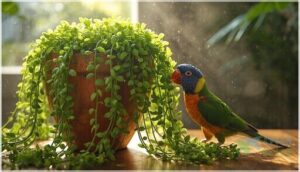
This delicate ground cover thrives in your Bird Friendly Gardens without a single toxicity report logged since veterinary tracking began. Baby’s Tears offers Non Toxic Foliage that delivers Avian Enrichment through its gentle cascading habit—perfect for bird-friendly spaces.
Your pet bird care routine becomes easier knowing these bird safe houseplants tolerate high humidity naturally. Plant Care Tips: maintain moist soil and filtered light for ideal Baby Tears Benefits.
Additional Bird-Safe Plants List
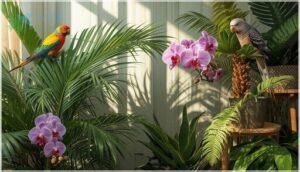
Beyond the classics, your Pet Bird Care toolkit expands with dozens of verified Plant Varieties. Bird Friendly options like Areca palm, money tree, and Phalaenopsis orchid bring Safe Gardening into elegant spaces.
Avian Botany research confirms these bird safe houseplants pose zero toxicity risk. Pet Planting choices such as Bird’s nest fern and even Aloe vera join your NonToxic Plants collection, proving BirdFriendly Houseplants need not sacrifice style for safety.
Toxic Plants to Avoid Around Birds

Even one nibble of the wrong plant can turn into a life-threatening emergency for your bird. While it’s tempting to fill your home with greenery, some common houseplants are surprisingly dangerous to our feathered companions.
Let’s look at which plants you need to keep far away from your bird, what signs of poisoning to watch for, and what to do if your bird gets into something toxic.
Common Toxic Houseplants
You might be surprised to learn that about 70% of plant-related pet emergencies involve common houseplants like philodendron and pothos. Here’s your essential toxic plant list to safeguard avian safety risks:
- Calcium oxalate plants – Dieffenbachia, monstera, peace lily, and pothos cause painful oral irritation
- Flowering bulbs – Amaryllis, daffodils, and tulips contain dangerous alkaloids
- Woody ornamentals – Oleander and sago palm pose life-threatening toxicity
Houseplant safety starts with knowing these bird poisoning hazards.
Symptoms of Plant Poisoning in Birds
Recognizing plant poisoning early can save your bird’s life. Gastrointestinal issues like vomiting (78% of cases) and diarrhea (62%) appear first, followed by neurological signs—lethargy affects 72% of birds, while tremors occur in 41%. Watch for respiratory distress, falling from perches, or sudden behavior changes.
Toxicity levels vary by plant, but symptoms often emerge within 12-24 hours. Emergency response starts with awareness: know what normal looks like for your bird.
Immediate Actions if Ingestion Occurs
If your bird ingests a toxic plant, contact the ASPCA Animal Poison Control Center or your avian veterinarian immediately. Prompt intervention within the first hour yields a 75% positive outcome.
Remove your bird from the area to prevent further exposure, but don’t induce vomiting. Keep a sample of the plant for toxicity testing, and monitor closely for symptoms while arranging emergency veterinary care.
Tips for Choosing and Placing Bird-Safe Plants
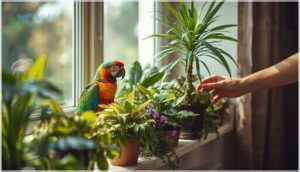
Bringing plants into your home when you have a bird isn’t just about picking something green and calling it a day. You need to verify that each plant is truly safe, position it thoughtfully to avoid constant nibbling, and keep an eye on how your bird interacts with it.
Let’s walk through the practical steps to make sure your feathered friend stays healthy while you enjoy a little greenery.
Verifying Plant Safety Before Purchase
When you’re standing in the garden center, remember that “pet-safe” labels don’t always tell the whole story. You’ll want to dig a bit deeper to protect your feathered friend, since plant toxicity tests for birds are limited compared to other pets.
- Match the botanical name against verified plant lists from avian veterinary sources—common names can be misleading, and mislabeling happens in up to 30% of retail sales.
- Ask about chemical treatments—pesticides and systemic insecticides often linger in plant tissues for weeks, even on nontoxic plant options.
- Look for safe plant certification from organic nurseries specializing in bird-friendly gardening, or request documentation on their growing practices.
- Cross-reference multiple toxicology updates from reputable sources like VCA Hospitals and avian plant research databases to confirm safety before bringing any plant home.
Ideal Placement to Prevent Over-Nibbling
Once you’ve confirmed your indoor plants are toxin-free, smart placement keeps them bird-friendly. Position non-toxic houseplants at least 1.2 to 1.5 meters high—this reduces unsupervised nibbling by roughly 60%. Create safe zones by keeping foliage 0.3 to 0.5 meters from cage bars, limiting bird access while still offering visual enrichment.
| Placement Strategy | Expected Benefit |
|---|---|
| Plants above 1.5 meters | 60% fewer contact incidents |
| 0.5 meters horizontal distance | 50%+ reduction in nibbling attempts |
| Plant barriers (mesh guards) | 70% less beak contact |
For extra protection, consider plant barriers like fine mesh around pots—they work as effective visual deterrents while maintaining bird safety.
Monitoring Bird Interactions With Plants
Vigilance makes all the difference when your bird explores near greenery. Watch for unusual chewing patterns, droppings changes, or lethargy within 12–24 hours of plant contact—early signs often appear subtle. Track baseline behavior so you’ll spot deviations quickly.
Environmental safety depends on consistent avian monitoring, especially during free-flight time. Regular plant supervision protects avian health while maintaining your toxin-free, bird-friendly space.
Caring for Plants in Bird-Friendly Homes
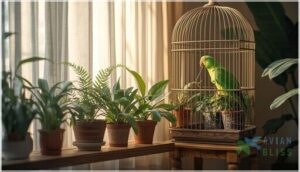
Keeping plants healthy in a bird-friendly home takes a bit of extra care, but it’s worth the effort. You’ll need to balance your plant’s needs with your bird’s safety, which means adjusting how you clean, water, and maintain your greenery.
Here are the essential practices that will keep both your plants and your feathered friend thriving.
Cleaning and Maintaining Bird-Safe Plants
Clean your indoor plants weekly with a damp cloth to remove dust and support air quality management. For plant sanitation, use bird-friendly products like diluted white vinegar (1 cup per gallon of water) or mild Dawn soap. Rinse leaves thoroughly under lukewarm water monthly.
When safe pest control is needed, choose non-toxic solutions like castile soap spray—always keeping your toxin-free houseplant care routine birdfriendly above all.
Managing Humidity and Plant Health
Most indoor plants do best when humidity sits between 50% and 70%, which mirrors the moisture your bird-friendly houseplants need for ideal leaf hydration and water regulation. You can use a digital hygrometer to track levels accurately.
Improve air circulation with gentle fans to prevent mold while supporting plant transpiration. Group toxin-free plants together—they’ll naturally boost humidity control through collective moisture release.
Preventing Excessive Chewing and Ingestion
Even safe plants can cause digestive upset when birds overindulge. Place bird deterrents like acrylic shields around planters to reduce direct access—studies show an 82% drop in chewing incidents.
Rotate enrichment toys and untreated branches to satisfy your bird’s natural foraging drive, which lowers plant nibbling by up to 38%.
Check your safe plant lists regularly, and monitor your bird’s interaction with any greenery three times daily.
Frequently Asked Questions (FAQs)
Can outdoor plants be brought inside for birds?
You can bring outdoor plants inside for birds, but only after thorough sterilization, pest control, and soil replacement. Indoor acclimation requires quarantine to protect avian health from contaminants and toxins.
Are pesticides on plants harmful to pet birds?
Yes. Pesticides pose serious threats to pet birds—even a single treated seed can be lethal. Their slower metabolism makes birds far more vulnerable to chemical poisoning than mammals, especially from organophosphates and neonicotinoids.
Do different bird species have different plant sensitivities?
Absolutely. Plant sensitivity and toxicity levels vary dramatically across bird species due to differences in avian metabolism. What’s harmless to canaries might poison budgerigars, making interspecies differences in toxic plant awareness critical for avian health.
How often should bird-safe plants be replaced or rotated?
Think of your bird-safe plants as living gifts that need revitalizing—rotate them seasonally, especially during spring.
Replace them immediately when you notice excessive leaf loss, mold, pest infestations, or chemical contamination to maintain avian enrichment and bird safety.
Conclusion
The next time your parrot eyes that lush greenery, you’ll know exactly which plants welcome curious beaks and which ones don’t. Choosing safe plants for pet birds isn’t just about avoiding toxins—it’s about creating spaces where your feathered companion can explore, nibble, and thrive without risk.
With spider plants filtering your air and Boston ferns enriching their environment, you’ve transformed potential danger into genuine wellness. Your bird’s safety starts with what you bring home.
- https://petyupp.com/blogs/post/what-is-the-best-plants-for-a-birds-cage
- https://www.plantvine.com/2023/07/21/houseplants-that-are-safe-for-homes-with-pet-birds/
- https://avianenrichment.com/index.php/learn/physical-needs/safety/safe-plants
- https://www.aspcapro.org/sites/default/files/apcc_birdtoxic.pdf
- https://www.cockatielcottage.net/houseplants.html