This site is supported by our readers. We may earn a commission, at no cost to you, if you purchase through links.
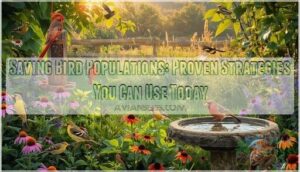
The North American bird population has dropped by nearly three billion individuals since 1970, according to thorough assessments conducted by Cornell Lab of Ornithology and partners—a staggering 29 percent decline that signals profound disruption across ecosystems.
While habitat destruction, pesticide contamination, and climate-driven shifts bear much of the responsibility for these losses, saving bird populations doesn’t require specialized degrees or institutional resources. You can implement evidence-based strategies right in your backyard, from establishing native plant corridors that support migratory songbirds to advocating for policies that protect critical breeding grounds.
These actions, when multiplied across communities, create measurable outcomes: restored migration pathways, stabilized nesting success rates, and ecosystems that once again hum with the diversity that sustains both avian life and human well-being.
Table Of Contents
- Key Takeaways
- Why Bird Populations Are Declining
- Protecting and Restoring Bird Habitats
- Effective Bird Conservation Strategies
- Community and Citizen Science Initiatives
- Economic and Well-Being Benefits of Saving Birds
- Frequently Asked Questions (FAQs)
- What can I do to help bird populations?
- Where have all the birds gone in 2025 in the USA?
- Are bird populations going down?
- What bird was saved from extinction?
- How to help local bird populations?
- What is the #1 threat to birds in America?
- Are any bird populations increasing?
- What is the best charity for bird conservation?
- How much funding is needed for bird recovery programs?
- How do climate change impacts affect migration patterns?
- Conclusion
Key Takeaways
- North America has lost nearly three billion breeding birds since 1970—a 29 percent decline driven by habitat destruction, pesticide contamination, climate shifts, and domestic animal predation, with grassland birds and common species experiencing the steepest losses.
- You can reverse bird population declines through backyard actions like planting native species that mimic natural ecosystems, keeping cats indoors to prevent the 2.4 billion annual bird deaths from predation, and choosing shade-grown coffee that maintains critical tropical habitats for migratory songbirds.
- Citizen science initiatives like eBird and Project FeederWatch transform everyday observations into datasets that guide continental conservation decisions, while community bird walks and advocacy for bird-friendly building ordinances multiply individual impact through collective action.
- Protecting birds delivers measurable economic returns—birding tourism generates $279 billion annually and supports 1.4 million U.S. jobs—while providing essential ecosystem services including pest control, pollination, and stress relief that directly benefit human health and environmental resilience.
Why Bird Populations Are Declining
North America has lost nearly three billion breeding birds since 1970, according to a thorough assessment published in the journal Science—a decline equivalent to losing one in four adult birds over just five decades.
Among the hardest-hit groups are black and white birds like warblers, which play a crucial role as insect controllers by consuming hundreds of millions of tons of pests each year.
North America has lost three billion breeding birds since 1970—one in four adults gone in just five decades
Sadly, this isn’t limited to rare or endangered species; common grassland birds, forest dwellers, and shorebirds have all experienced worrisome population losses driven by several interconnected threats. Understanding the primary factors behind these declines is essential if you want to take meaningful action to protect the birds in your own community and beyond.
Habitat Loss and Fragmentation
You can’t protect birds if you don’t understand what’s happening to their homes. Habitat loss and fragmentation slice once-continuous forests and grasslands into isolated patches, cutting core habitat by up to 70 percent in some landscapes.
These edge habitats raise predation risks, disrupt nesting microclimates, and create barriers that block movement between populations.
Thoughtful conservation planning and ecosystem connectivity through habitat restoration can rebuild the pathways birds desperately need. Efforts to address biodiversity loss from habitat fragmentation are central to successful conservation outcomes.
Pollution and Pesticides
Beyond broken habitats, toxic chemicals threaten birds at every turn. Pesticide regulation lags behind bird toxicology research, allowing broad-spectrum insecticides and herbicides to contaminate soil and water through runoff and leaching. Chemical exposure disrupts hormonal systems, affecting reproduction and development across multiple species.
Pesticide drift reduces forage availability in sensitive areas, while plastic pollution introduces additional environmental contaminants that accumulate in tissues over time.
- Pesticides kill the insects your backyard birds depend on to feed their young
- Endocrine-disrupting chemicals silently alter reproduction in species you’ll never see decline until it’s too late
- Runoff carries pesticide residues into rivers, contaminating drinking water for wildlife and communities downstream
- Persistent chemicals accumulate in sediments for decades, creating toxic legacies that outlive the farmers who applied them
European initiatives are working to address the risks of pesticide use to both wildlife and human health.
Predation by Domestic Animals
Toxic chemicals aren’t the only danger lurking in your neighborhood. Free-roaming cats kill more than 2.4 billion birds annually across the U.S. and Canada, targeting small songbirds during dawn and dusk feeding times. Dogs attack ground-nesting birds during breeding season, increasing nest failure by up to 40 percent in rural areas where supervision is lax.
| Domestic Animal Management | Impact on Bird Conservation Efforts |
|---|---|
| Cat Predation | Reduces native songbird diversity in fragmented habitats through targeted hunting within 100-200 meters of homes |
| Dog Predation | Elevates waterfowl egg and duckling mortality near wetlands, slowing recruitment rates in affected ponds |
| Roaming Pet Regulations | Local ordinances and leash policies reduce bird depredation incidents when paired with Bird Friendly Fencing and community education |
You can protect birds through responsible Pet Control Methods. Keep cats indoors or create a secure outdoor “catio” that satisfies their instincts without threatening wildlife. Leash your dog near nesting sites and wetlands. Urban Wildlife Conservation depends on these simple Habitat Conservation steps, and your choices directly influence whether songbirds thrive or disappear from your community. Conservation Strategies and Policies that restrict free-roaming times have proven effective in both urban and rural landscapes, demonstrating that Wildlife Preservation starts with the pets you love.
Climate Change Impacts
Rising global temperatures force birds to chase cooler climates, often pushing them into unfamiliar territories where food and shelter vanish. Climate shifts, sea level rise, and weather extremes disrupt ecosystems at rates that outpace natural adaptation, leaving many species struggling to survive.
Species like the Baltimore Oriole now arrive weeks earlier than historical norms, creating mismatches with peak insect abundance that threaten nestling survival.
- Heat waves dehydrate fledglings before they can fly
- Droughts shrink fat reserves essential for long migrations
- Hurricanes demolish coastal nesting islands overnight
- Phenological mismatches separate chicks from peak insect abundance
Temperature increases alter migration timing, creating dangerous gaps between breeding periods and food availability, while ecosystem disruption introduces novel predators into previously safe habitats.
Protecting and Restoring Bird Habitats
Birds need safe places to live, nest, and find food, but the right habitats are disappearing at an alarming rate across North America.
Protecting and restoring these essential spaces—from your own backyard to vast wild landscapes—represents one of the most effective ways you can reverse the troubling decline in bird populations. The following strategies demonstrate how targeted habitat improvements, whether implemented on a small scale or through large conservation initiatives, create meaningful refuges that support birds throughout their annual cycles.
Native Plant Landscaping

You can transform your yard into a powerful refuge for birds by choosing native plants that match your local climate and soil, reducing watering needs by up to 50 percent while increasing species richness.
Layering canopy trees, shrubs, and perennials mimics natural ecosystems, enhancing biodiversity enhancement and soil health.
This plant selection promotes habitat conservation, strengthens wildlife preservation, and advances bird conservation through thoughtful native gardens that sustain regional pollinators year-round.
Wetland and Grassland Conservation
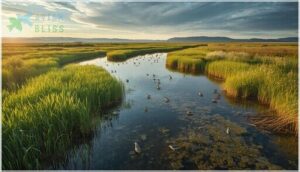
To safeguard wetland restoration and grassland ecology, you can protect large, connected expanses that sustain nesting shorebirds and grassland specialists year-round.
Habitat preservation relies on reestablishing natural hydrology, controlling invasive species, and using adaptive grazing regimes that mimic historical disturbances. These ecosystem management actions, guided by conservation planning frameworks, strengthen habitat conservation efforts, advance wildlife conservation, support ecosystem preservation, and deliver measurable biodiversity protection across continental scales.
Forest Management for Birds

Forest Restoration that prioritizes Bird Habitat depends on your commitment to tree thinning practices that create uneven aged stands, offering cavity nesters large diameter snags while supporting ground foragers in open canopy gaps.
Wildlife Corridors that connect forest patches reduce Habitat Loss and Degradation, and Ecosystem Management Practices grounded in disturbance regimes sustain diverse insect communities essential for Forest birds, advancing Wildlife Conservation and strengthening Ecosystem Balance through targeted Habitat Conservation Efforts.
- Retain mast producing oaks and hazelnuts for winter foraging
- Preserve standing dead wood to boost saproxylic insect abundance
- Space selective harvests temporally to minimize abrupt habitat disruption
- Implement bird friendly buffer zones around sensitive nesting areas
Reducing Light and Noise Pollution

You can shield birds from environmental degradation by addressing Light Pollution and Noise Reduction in your neighborhood through Sustainable Lighting choices, installing shielded warm color fixtures (2700K to 3000K) that direct illumination downward, preventing upward glare that disorients migrating species and contributes to habitat destruction.
Urban Planning initiatives requiring motion sensors, timers, and adaptive systems cut the environmental impact on bird populations while supporting Wildlife Conservation and reversing bird population decline through immediate conservation action.
Effective Bird Conservation Strategies
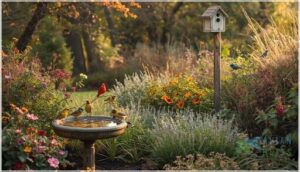
You don’t need a PhD or a hefty bank account to make a real difference for birds—sometimes the most powerful conservation strategies are the ones you can implement right in your own backyard or through everyday choices.
From supporting organizations that protect millions of acres of habitat to making thoughtful product decisions that reduce bird mortality, your actions create ripples that extend far beyond what you might imagine.
Here are four proven approaches that combine scientific evidence with practical accessibility, giving you concrete ways to contribute to the recovery of North America’s declining bird populations.
Supporting Conservation Organizations
When you back conservation organizations financially or with your time, you directly fuel the frontline work that protects birds and their habitats across continents. Here’s how your support translates into measurable impact:
- Donation Strategies – Monthly giving and endowment contributions fund long-term habitat restoration, while targeted grants address urgent threats like invasive species removal.
- Volunteer Management – Citizen science programs recruit and train observers who monitor populations, providing data that shapes wildlife preservation and management decisions.
- Fundraising Events – Annual campaigns and membership drives generate predictable revenue, enabling conservation efforts to scale from local wetlands to continental flyways.
- Corporate Partnerships – Cross-sector alliances with businesses and universities enhance technical expertise and funding for large-scale bird conservation initiatives.
- Community Outreach – Educational programs and public awareness campaigns mobilize neighbors and policymakers, strengthening the role of conservation organizations in securing protective legislation and land-use planning.
Transparent reporting and independent audits build trust, so you can see exactly where your contribution goes—whether it’s protecting 171,000 acres of new habitat or training the upcoming group of stewards.
Creating Bird-Friendly Spaces at Home
Your backyard can become a refuge when you layer native plants, install birdhouse designs at six to twelve feet, and position bird feeders three to ten meters from cover.
Add shallow water features and group flowering species in clusters of three to six to create the wildlife habitat that fosters bird conservation—mimicking the natural garden layout birds need to nest, feed, and thrive year-round.
Choosing Bird-Safe Products (e.g., Coffee, Glass)
Beyond your garden fence, your shopping choices shape bird conservation strategies worldwide. When you purchase Bird Friendly coffee—certified to maintain at least 40 percent shade cover, ten tree species, and chemical-free practices—you support migratory songbirds’ tropical habitats directly.
While eco glass options featuring UV patterns prevent window collisions that kill hundreds of millions of birds annually across North America.
Advocating for Bird-Friendly Policies
Your voice amplifies bird conservation strategies when you engage elected officials and planners. Attend public comment periods to advocate for bird legislation that protects critical habitats through zoning reforms, push for urban planning standards requiring collision deterrence features in new construction, and support government initiatives funding restoration projects.
Connect with conservation groups coordinating community outreach to multiply your conservation action, demonstrating that environmental sustainability and wildlife conservation strategies benefit everyone.
- Contact local representatives to champion bird-friendly building ordinances
- Submit testimony during planning reviews affecting wetlands or migration corridors
- Join coalitions advancing policy reform for habitat protection and lighting restrictions
- Request dedicated budget lines for monitoring and restoration in municipal proposals
- Share economic data linking bird conservation efforts to tourism and public health
Community and Citizen Science Initiatives
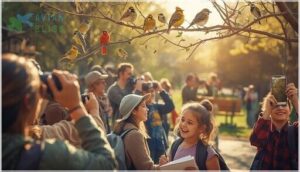
You don’t need a research degree or specialized equipment to make a meaningful difference for bird populations—citizen science projects welcome volunteers of all experience levels, transforming everyday observations into data that scientists use to track population trends, identify threats, and guide conservation decisions.
Monitoring bird populations is essential to help protect them, and joining projects like eBird or Project FeederWatch allows you to record observations that contribute to thorough assessments of avian health across North America.
Beyond data collection, you can mobilize others in your community through organized bird walks and awareness campaigns, building a network of concerned citizens who understand that their collective action can help reverse the worrisome decline of nearly 3 billion breeding birds since 1970.
Participating in Bird Monitoring Projects
You can join citizen science initiatives like eBird, Project FeederWatch, the Christmas Bird Count, the Breeding Bird Survey, or the International Shorebird Survey to contribute meaningful bird surveys and species tracking data.
These conservation efforts enable researchers to identify population trends, habitat needs, and at-risk species across North America by aggregating your observations into datasets used for data analysis, helping researchers.
Organizing Local Bird Walks
Once you’ve contributed your own observations through platforms like eBird, you can strengthen conservation efforts by bringing others into the field. Organizing local bird walks creates community involvement in conservation efforts while teaching participant engagement and safety briefings.
Scout your route two to three days ahead, map stops where bird watching activity peaks, and design a brief overview covering expected species. Group leadership grows when you invite newcomers to share binoculars, record sightings, and discover why protecting habitat matters.
Reporting Bird Sightings
Every bird sighting you document becomes a thread in the continent’s conservation tapestry. When you submit observations through eBird, the Cornell Lab of Ornithology’s reporting tool, you feed the sightings data that informs the US State of the Birds and guides habitat protection.
Your citizen science entries should include:
- Accurate species identification with clear photographs showing key field marks
- Precise GPS coordinates and time stamps for verification process integrity
- Behavior notes and habitat descriptions that enrich long-term bird watching records
Raising Awareness in Your Community
You can bolster conservation efforts by launching awareness campaigns that transform neighbors into allies. Start with simple flyers—reaching 2,000 households within two weeks in mid-sized towns—paired with multilingual materials serving diverse community members, then organize educational events like bird walks attracting 15-25 participants per weekend session.
| Community Outreach Strategy | Typical Reach | Impact Metric |
|---|---|---|
| Public library displays (4 weeks) | 180 visitors/week | Increased public engagement |
| Neighborhood bird walks | 15-25 participants/session | Enhanced bird watching participation |
| School micro-lectures | 5-8 classes/semester | Youth educational events |
| Monthly mini-workshops | Family attendance | Hands-on local activism |
These public engagement tactics strengthen the importance of habitat conservation while building grassroots support for bird populations facing decline, creating ripples that extend far beyond your initial circle and bolstering broader bird conservation strategies through sustained local activism.
Economic and Well-Being Benefits of Saving Birds

Protecting birds doesn’t just help the natural world—it brings measurable value to your community and your own well-being.
The economic impact of bird conservation spans tourism, jobs, and ecosystem health, while the personal benefits touch everything from mental wellness to the air you breathe. Let’s explore how saving birds creates real returns for both society and you as an individual.
Boosting Local Economies Through Birding
You might be surprised to learn that birding tourism pumps $279 billion into the U.S. economy annually, supporting 1.4 million jobs in communities across the country.
When you protect bird habitats, you’re not just advancing biodiversity conservation—you’re strengthening sustainable recreation that brings local job creation, eco-friendly infrastructure, and steady revenue to small towns where birdwatching has become a cornerstone of community engagement and economic vitality.
Ecosystem Services Provided by Birds
Birds do far more than brighten your morning walk—they deliver ecosystem services that keep entire landscapes functioning. You’re witnessing pollination services when hummingbirds fertilize flowers, seed dispersal when jays plant tomorrow’s forests, nutrient cycling through seabird colonies enriching coastal soils, and habitat creation wherever woodpeckers carve homes for dozens of other species. Healthy bird populations signal strong ecosystem health, biodiversity, and the resilience of species preservation efforts across every habitat type.
- Pest control: Birds reduce crop-damaging insects, cutting pesticide dependence.
- Pollination and regeneration: Nectar-feeders pollinate plants while frugivores spread seeds across fragmented habitats.
- Nutrient distribution: Migratory flocks deposit essential nutrients in wetlands and grasslands.
- Ecosystem indicators: Rapid population shifts warn you of habitat stress before broader collapse occurs.
Enhancing Human Health and Wellness
When you protect bird populations, you’re also protecting your own health. Regular exposure to birdsongs and green spaces delivers powerful stress relief and mental health benefits, encouraging physical activity through walks and birding outings.
Nature therapy in biodiversity-rich areas lowers blood pressure, improves sleep quality, and promotes ecosystem health that filters your air and water—wellness benefits that flow directly from environmental protection and species preservation efforts.
Frequently Asked Questions (FAQs)
What can I do to help bird populations?
When your neighbor turned their lawn into a wildflower meadow, bluebirds returned for the first time in years.
You can help by planting native species, joining monitoring projects, and supporting bird-friendly coffee growers.
Where have all the birds gone in 2025 in the USA?
Across the continental United States, urban expansion, agricultural development, and fragmented landscapes have driven widespread avian migration patterns shifts and habitat loss, contributing to ongoing bird population decline documented in the 2025 US State of the Birds report.
Are bird populations going down?
Sadly, yes—North America’s avian extinction crisis has accelerated, with thorough assessments documenting worrisome population trends indicating that nearly three billion breeding birds have vanished since 1970, representing a catastrophic biodiversity loss across multiple species.
What bird was saved from extinction?
Several bird species have made notable comebacks through dedicated conservation efforts.
The Mauritius Kestrel rebounded from near extinction through captive breeding programs, while the Pink Pigeon recovered thanks to habitat restoration and species preservation initiatives.
How to help local bird populations?
Think globally, act locally” rings true when protecting birds—you can support local species protection and urban bird conservation by planting native plants, creating bird-friendly gardens, and joining community engagement efforts that restore bird habitat restoration sites.
What is the #1 threat to birds in America?
Habitat Loss and Degradation stands as the most serious threat to bird species across America, with urban sprawl, agricultural expansion, and fragmentation removing critical nesting sites and food resources that your local bird populations need to survive.
Are any bird populations increasing?
Yes—while North American Bird Conservation Initiative data show overall declines, you’ll find encouraging Population Trends: wetland birds increased 46 percent since 1970 through Habitat Restoration, and raptors rose 35 percent, proving Species Recovery and Conservation Success work.
What is the best charity for bird conservation?
BirdLife International, the National Audubon Society, and American Bird Conservancy stand out for their transparency and measurable conservation grants, and volunteer opportunities that directly support avian conservation and research across critical wildlife habitats worldwide.
How much funding is needed for bird recovery programs?
Like seeds planted for a future forest, recovery investment requires steady nurturing.
Federal agencies, including the US Fish Wildlife Service, propose $10–25 million annually for Joint Ventures, with funding allocation supporting habitat protection and population monitoring coordinated through NABCI.
How do climate change impacts affect migration patterns?
Climate change disrupts migratory birds by altering temperature effects and habitat availability along traditional flyways.
Rising heat, droughts, and extreme weather force species to shift routes or timing, creating mismatches with food sources that threaten ecological balance and survival.
Conclusion
Every spring, a single grasshopper sparrow raises up to two broods of chicks across North American prairies—yet 70 percent of grassland birds have vanished since 1970, taking that reproductive potential with them.
Your choices reverse this trajectory. Installing native milkweed, switching to shade-grown coffee, or reporting observations to eBird transforms individual yards into lifelines. Saving bird populations isn’t abstract conservation work; it’s restoring the ecological rhythm that connects migratory warblers to backyard feeders, meadows to human communities.
- https://beyondpesticides.org/dailynewsblog/2025/03/latest-state-of-the-birds-report-highlights-population-declines-indicative-of-deteriorating-ecosystem-health/
- https://abcbirds.org/news/2025-results/
- https://www.audubon.org/news/22-actions-you-can-take-birds
- https://nationalzoo.si.edu/migratory-birds/7-simple-actions-live-bird-friendlyr
- https://www.birds.cornell.edu/home/bring-birds-back/