This site is supported by our readers. We may earn a commission, at no cost to you, if you purchase through links.
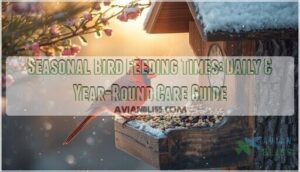
A cardinal lands at your feeder at 7 a.m. sharp on a January morning, fluffs its feathers against the cold, and consumes nearly a third of its body weight in seeds before noon. That’s not coincidence—it’s survival. Birds operate on precise internal clocks that align feeding behavior with seasonal energy demands, and understanding these rhythms transforms you from someone who tosses out seeds to someone who actively aids avian health.
Winter mornings and dusk become critical refueling windows when temperatures plummet, while spring shifts the schedule entirely as breeding birds need protein at dawn to fuel nestling care. Getting the timing right—and pairing it with season-appropriate foods—means the difference between birds merely visiting your yard and actually thriving there.
Table Of Contents
Key Takeaways
- Birds operate on precise internal clocks that align feeding times with seasonal energy demands, making early morning and dusk the most critical refueling windows in winter when temperatures drop and metabolic needs spike.
- Seasonal feeding schedules directly impact bird survival rates, breeding success, and migration patterns—spring birds need protein at dawn for nesting, while autumn birds require high-fat seeds to build energy reserves for long-distance journeys.
- Matching food types to seasonal needs is essential: winter calls for calorie-dense suet and black oil sunflower seeds, spring demands protein-rich mealworms for molting and chick-rearing, and summer requires fresh water and moisture-rich foods to prevent heat stress.
- Regular feeder maintenance—including seasonal placement adjustments, weekly cleaning in winter, twice-weekly sanitizing in summer, and proper seed storage in airtight containers—prevents disease transmission and keeps wild birds thriving year-round.
Why Seasonal Bird Feeding Times Matter
Feeding birds at the right times throughout the year isn’t just about keeping feeders full—it’s about understanding when your local species need help most. The rhythm of the seasons dictates everything from energy demands to breeding cycles, and your timing can make a real difference in whether birds thrive or merely survive.
Here’s why seasonal feeding schedules matter for the birds in your backyard.
Understanding when to start feeding birds helps you align your efforts with their natural migration and breeding patterns.
Impact on Bird Health and Survival
Consistent, high-quality bird nutrition directly boosts survival rates—especially when energy reserves run low during winter. Access to proper foods strengthens avian wellness, improving body condition and immune function while reducing stress hormones.
Meanwhile, disease prevention hinges on feeder cleanliness; contaminated seeds can trigger outbreaks that undermine bird health.
Your feeding routine isn’t just kindness—it’s a lifeline that sustains wild bird nutrition year-round. Ensuring the accuracy of scientific information, such as through methodological rigor, is vital for making informed decisions about bird care and nutrition.
Influence on Migration and Breeding
When you time feedings to match seasonal bird migration and breeding cycles, you’re doing more than filling a feeder—you’re shaping survival outcomes. Food availability during spring stopover sites can advance breeding habits by days or weeks, while mismatched feeding strategies may disrupt natural migration patterns.
Timing your feedings to match migration and breeding cycles directly shapes whether birds thrive or merely survive
Species adaptation depends on these aligned resources, making your seasonal bird behavior awareness a cornerstone of habitat conservation. Understanding language patterns is essential for effective communication about bird conservation.
Effects on Local Bird Populations
Your feeder doesn’t just feed birds—it reshapes Population Dynamics and Urban Ecology in your yard. Supplemental feeding boosts winter survival but may tilt Species Diversity toward adaptable backyard birds, crowding out specialists.
Concentrated Feeder Placement raises disease risk when too many birds share one spot.
Rotating summer-safe suet options across multiple feeding stations helps reduce crowding and keeps birds healthier in warm weather.
If you’re using bread or junk food, you’re harming bird health and nutrition instead of supporting seasonal bird migration and wildlife conservation tips.
Instead, choose nutrient-rich options like bird food that deters starlings to attract native species while supporting their dietary needs during migration.
Daily Feeding Schedules for Each Season

Your backyard birds don’t keep the same schedule year-round—their feeding times shift with the seasons, driven by temperature swings, daylight hours, and energy demands. Understanding when to fill feeders throughout the year helps you support their survival during critical periods like winter cold snaps and spring nesting.
A well-timed feeding schedule for birds ensures your feeders are stocked when energy needs peak during migration, breeding, and harsh weather.
Here’s how to time your daily feeding routine for each season.
Winter: Morning and Dusk Feeding
Winter bird survival hinges on two critical feeding windows—first light and dusk. You’ll notice finches and chickadees arrive within the first hour after sunrise, drawn by high-fat seeds and suet that support thermoregulation in freezing conditions.
For year-round guidance on matching seed blends to seasonal needs, check out this comprehensive guide to wild bird food nutrition.
Then, just before twilight, birds return to build fat reserves for cold-weather feeding through the night, maximizing their morning foraging tips and dusk feeding strategies for winter bird nutrition.
Spring: Early Refueling and Nesting Needs
As spring migration accelerates, you’ll want to refill feeders at dawn—courting pairs and nest-building adults depend on that early protein boost for nesting success. Offer mealworms and calci-worms to support fledgling nutrition and egg production, and keep fresh water available since bird hydration directly influences chick survival.
Strategic bird feeding strategies during this seasonal bird behavior shift can make or break backyard birding outcomes and strengthen your local bird nutrition efforts.
Summer: Timing to Beat The Heat
When summer heat peaks, you’ll need to adjust your bird feeding strategies to match summer bird activity patterns. Birds forage heavily at dawn and late afternoon, avoiding mid-day warmth.
Position feeders under shade to support warm weather nutrition and heat stress prevention. Refill early morning with fresh water for bird hydration needs, and clean stations every two days to prevent spoilage during summer feeding season.
Autumn: Pre-Migration Feeding Patterns
As autumn arrives, you’ll witness dramatic shifts in bird feeding strategies—birds ramp up fat storage to fuel fall migration journeys ahead.
Energy reserve management becomes critical; many species pack on 10–30% of their body mass through autumn foraging on high-fat seeds and berries.
Support pre-migration diet needs by offering black oil sunflower seeds and suet at dawn and dusk, when migratory fueling activity peaks.
Choosing The Right Foods by Season
What you fill your feeders with matters just as much as when you fill them—birds’ nutritional needs shift dramatically as the seasons turn. Winter demands calorie-dense foods to fuel survival through freezing nights, while spring calls for protein to support nesting and feather growth.
Here’s how to match your offerings to what birds need throughout the year.
High-Fat Seeds and Suet for Winter
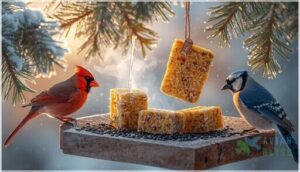
When temperatures drop, birds burn through calories at an astonishing rate—sometimes doubling their energy needs just to stay warm. To support winter survival, offer suet cakes and black oil sunflower seeds, both packed with fats that fuel cold weather foraging and fat storage.
Here’s how to choose the best energy supplements:
- Select pure beef suet or rendered fat cakes without fillers
- Provide black oil sunflower seeds for accessible calories
- Add high-energy seed mixes rich in nyjer and safflower
- Replace spoiled suet weekly to prevent mold growth
- Place suet feeders in sheltered spots for easier access
These suet benefits extend beyond warmth—they support thermoregulation and help resident birds build reserves for harsh nights.
Protein-Rich Foods for Spring and Molting
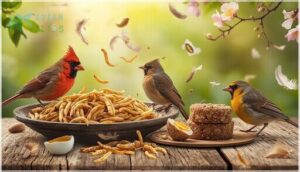
As feathers shed and new plumage emerges, bird nutrition demands shift from fat to protein—mealworm benefits become essential now.
Offer dried or live mealworms, cooked scrambled eggs on occasional feeders, and high-protein suet blends with insect protein. You can even introduce small legume options or commercially prepared suet that includes insect meal.
These egg supplements and diverse sources support molting, nesting, and chick-rearing without relying solely on sunflower seeds.
Hydration and Soft Foods in Summer
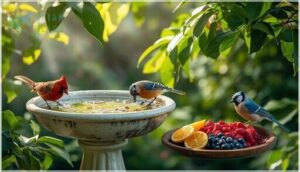
When the heat climbs, birds need more than seeds—they need water and moisture-rich diets to stay healthy. Set up hydration stations with fresh, shallow water in shaded feeders, and offer soft food options like soaked fruit or mashed berries.
These summer watering habits support bird health and bird nutrition during peak summer bird activity. Follow these seasonal bird feeding and bird feeding tips to keep visitors cool and thriving.
Energy-Boosting Seeds for Autumn

As leaves turn, birds start packing on reserves for long journeys ahead. Stock feeders with black oil sunflower seeds—fat contents hit 40-50%—alongside nyjer seeds for quick fuel. Sunflower hearts and high-energy seed mixes support autumn migration by delivering dense calories per gram.
Proper seed storage in airtight containers keeps these energy boosters fresh, ensuring your seed selection meets birds’ pre-flight nutritional demands.
Maintaining Healthy and Safe Feeding Stations
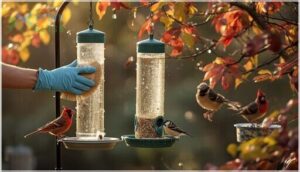
You’ve stocked your feeders with the right foods at the right times—now it’s time to make sure those stations stay safe and sanitary. Where you place your feeders, how often you clean them, and how you store seed all directly affect bird health and visitation rates.
Let’s walk through the essential maintenance practices that keep your feeding stations working for birds across every season.
Feeder Placement for Seasonal Activity
Where you position your feeders shifts with the seasons—and getting it right means healthier backyard birds year-round. Consider these placement factors for seasonal bird behavior and ideal feeder height:
- Bird shelter: Place near evergreens in winter; shade trees in summer for microclimate management
- Predator control: Mount 4-6 feet high with clear sightlines during nesting periods
- Seed visibility: Guarantee open approach paths for migrating species
- Weather protection: Shield from harsh winds and rain
- Distance from disturbances: Keep 10+ feet from pet areas during breeding season
Cleaning Routines Across The Year
Once you’ve set up your feeders, regular cleaning protects bird health. Seasonal patterns demand different hygiene practices—winter requires weekly sanitizing to prevent mold in damp conditions, while summer heat calls for twice-weekly scrubbing to control bacterial growth.
Here’s your year-round feeder maintenance schedule:
| Season | Cleaning Frequency | Key Focus | Method |
|---|---|---|---|
| Winter | Weekly | Ice and mold prevention | Warm soapy water, full dry |
| Spring | Every 2 weeks | Moisture control | Deep clean, reseal joints |
| Summer | Twice weekly | Bacteria from humidity | Hot water, mild disinfectant |
| Autumn | Weekly | Pre-migration prep | Inspect for storm damage |
Always wear gloves during sanitation methods, discard seed residues beneath backyard feeders, and dry components completely before refilling. These hygiene practices prevent disease transmission and keep your birdfriendly gardening efforts supporting healthy flocks.
Storage and Freshness of Bird Food
Proper storage extends shelf life and protects bird health. Seed rotation prevents food spoilage—dried sunflower seeds stay fresh 6 to 12 months in airtight containers, while suet requires refrigeration and expires within 1 to 3 months after opening.
Follow these storage tips for all seed types:
- Keep bird food in cool, dry locations away from direct sunlight
- Inspect containers for mold, rancidity, or unusual odors before refilling
- Label each batch with purchase dates to track freshness checks
- Refrigerate or freeze fat-based products when not actively feeding
Spoiled food harms visiting birds, so rotate stock consistently.
Tips for Supporting Wild Birds Year-Round
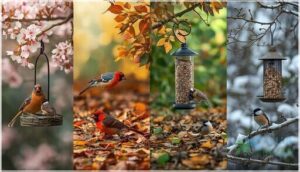
Supporting wild birds year-round goes beyond simply filling feeders—it requires intentional choices that respect their natural behaviors and nutritional needs. A few strategic adjustments to your feeding routine can make the difference between helping birds thrive and inadvertently undermining their health.
Here are three essential practices that will strengthen your role as a responsible steward of your local avian community.
Rotating Feeder Locations by Season
Why stick to one spot all year when bird feeding patterns shift with the seasons? Rotating feeder placement across your yard—every few months—follows seasonal migration and habitat diversity preferences while reducing disease buildup at any single site.
You’ll support more species by matching feeders to microhabitats birds favor during spring nesting, summer foraging, autumn pre-migration, and winter survival periods.
Avoiding Harmful Foods Like Bread
Convenience tempts many backyard birders to toss bread, yet this filler disrupts avian nutrition and bird health. Moldy bread harbors aspergillus fungi, baker’s yeast causes intestinal distress, and empty calories displace energy-rich foods birds need for seasonal bird care.
Consider these bread alternatives for food safety:
- Sweetcorn and peas – digestible carbohydrates without malnutrition risk
- Soaked oats – gentle on digestive systems
- Mealworms – protein-dense healthy snacks that support true avian nutrition and health
Encouraging Natural Foraging Behaviors
You’ll support bird diversity and foraging strategies by scattering smaller feeders at different heights rather than relying on one central station. Multiple feeder placement sites—paired with seasonal bird feeding breaks—push birds to explore natural foods and strengthen avian ecology.
This approach honors wildlife conservation by preventing over-reliance on provisioned meals, maintaining the investigative bird behavior essential to healthy wild populations.
Frequently Asked Questions (FAQs)
Do birds eat more during specific moon phases?
You won’t see dramatic shifts in daytime bird feeding based on moon phases. Food availability, weather, and daylight drive their visits far more than lunar cycles, despite occasional nighttime activity changes.
How does rain affect bird feeding schedules?
Rain doesn’t stop birds from eating—but heavy rainfall patterns reduce feeder visibility by 40%, delaying morning visits and shifting peak bird activity to mid-morning or late afternoon once wet weather clears.
Should I feed birds during extreme heat waves?
Yes, but shift your focus to fresh water over food—birds need hydration more than calories during extreme heat.
Avoid high-fat foods like suet, which spoil quickly and can increase heat stress in summer bird activity.
Do urban birds have different feeding times?
City lights act like a dinner bell—urban birds often feed earlier in the morning than rural cousins, syncing their visits with human feeder schedules, light pollution effects, and the rhythm of city life.
Conclusion
Each season reshapes energy demands, each temperature swing alters metabolic needs, and each daylight shift triggers new foraging behaviors. Your role isn’t passive observation—it’s strategic intervention.
Master seasonal bird feeding times, stock feeders with purpose-matched foods, and you create refuge during winter’s harshest mornings, fuel for spring’s breeding demands, and sustained energy through autumn’s migratory push. The birds already know the schedule. Now you do too.
- https://en.wikipedia.org/wiki/Angel_wing
- https://academichelpexpress.blog/2024/08/please-use-the-bulleted-points-and-the-rubric-below-to-guide-your-work-your-pa/
- https://www.onelook.com/?loc=olthes1&w=subpoint
- https://www.sciencedirect.com/science/article/pii/S0749208123000268
- https://pmc.ncbi.nlm.nih.gov/articles/instance/9553038/bin/pone.0275964.s005.docx