This site is supported by our readers. We may earn a commission, at no cost to you, if you purchase through links.
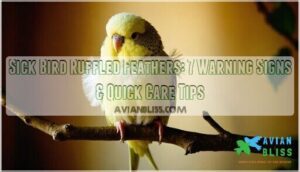 When you notice your sick bird with ruffled feathers that stay puffed up, you’re seeing a classic distress signal.
Birds fluff their feathers to trap warm air when they’re feeling unwell, cold, or stressed. This behavior often accompanies other symptoms like lethargy, loss of appetite, or breathing difficulties.
The good news? You’ve caught an early warning sign. Check your bird’s temperature, verify they’re eating and drinking, and watch for changes in their droppings or behavior.
Keep them warm and quiet while you assess the situation. Sometimes it’s just a minor chill, but persistent ruffling usually means it’s time for professional help.
Table Of Contents
- Key Takeaways
- Sick Bird Symptoms
- Bird Health Checks
- Environmental Factors
- Bird Care Essentials
- Recovery Support Tips
- Frequently Asked Questions (FAQs)
- What do birds look like when they are sick?
- What do unhealthy bird feathers look like?
- Do birds ruffle their feathers when they are cold?
- How long does feather recovery take?
- Can ruffled feathers spread to other birds?
- Are certain bird species more susceptible?
- What foods help restore feather health?
- When should I quarantine my bird?
- Conclusion
Key Takeaways
- You’ll spot trouble when your bird’s feathers stay constantly puffed up – this isn’t normal fluffing for warmth but a distress signal indicating illness, stress, or infection.
- Don’t wait and see – ruffled feathers often appear alongside other symptoms like lethargy, appetite loss, and breathing difficulties, so check your bird’s temperature and behavior immediately.
- Keep your sick bird warm and quiet while you assess the situation, but understand that persistent feather ruffling usually means it’s time for professional veterinary care.
- Prevention beats treatment – maintain proper cage hygiene, balanced nutrition with adequate vitamin A, and stable temperature control to prevent the underlying causes of feather problems.
Sick Bird Symptoms
You’ll notice ruffled feathers when your bird isn’t feeling well, as this common symptom signals everything from respiratory infections to nutritional deficiencies.
Understanding what causes this telltale sign helps you spot illness early and get your feathered friend back to their usual perky self.
Ruffled Feathers Causes
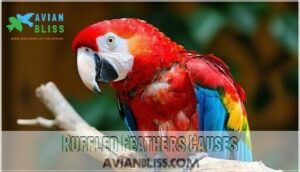
Ruffled feathers often signal trouble brewing beneath your bird’s surface.
When your bird’s feathers stay fluffed constantly, illness is likely lurking beneath the surface.
Infectious agents like respiratory viruses commonly disrupt normal feather alignment, while parasitic infestations from mites create constant irritation.
Nutritional deficiencies, particularly vitamin A shortages, weaken feather structure during molting.
Stress factors from overcrowding or environmental toxins also trigger this defensive response, making feather condition your first clue something’s wrong.
Respiratory Issues Signs
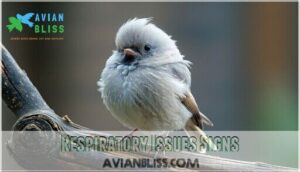
Beyond feather problems, breathing difficulties often signal serious illness.
Watch for these respiratory distress warning signs that demand immediate attention:
- Labored Breathing and Wheezing Sounds – Open-mouth breathing or audible wheezing indicates severe airway obstruction
- Tail Bobbing – Persistent tail movement with each breath shows your bird’s struggling to get enough air
- Beak Discharge – Nasal discharge, especially with foul odor, suggests bacterial respiratory infection requiring urgent veterinary care
Nutritional Deficiencies Effects
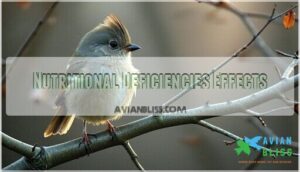
When your bird’s diet falls short, you’ll notice protein lack through brittle feathers and vitamin deficit causing dullness.
Mineral imbalance creates weak plumage structure, while malnutrition signs include increased heat loss.
Poor bird nutrition doubles infection rates—your feathered friend needs balanced dietary needs to maintain healthy plumage and strong immunity against avian illness.
Bird Health Checks
Regular health checks are your first line of defense against serious bird illness. You’ll catch problems early when they’re easier to treat, potentially saving your feathered friend’s life.
Daily Observation Tips
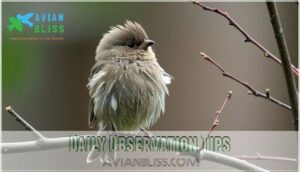
Your feathered friend deserves careful bird monitoring every day.
Watch for subtle changes that signal trouble brewing. Like a detective examining clues, your bird observation skills can catch problems early, protecting your pet’s health and happiness.
- Feather Inspection: Check for ruffled, dull, or missing feathers during morning routines
- Beak Checking: Look for cracks, overgrowth, or unusual discharge around nostrils
- Eye Examination: Watch for cloudiness, swelling, or abnormal tearing patterns
- Dropping Analysis: Monitor color, consistency, and frequency changes in waste output
Behavioral Changes Signs
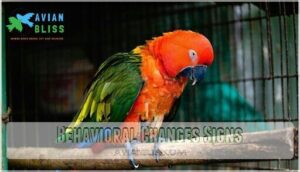
Watch your bird’s personality shift when illness strikes.
Lethargy signs include excessive sleeping and reduced activity levels.
Vocalization changes mean unusual quietness or hoarse sounds.
Feeding habits alter dramatically – appetite drops or disappears entirely.
Social withdrawal happens as birds isolate themselves from interaction.
Balance issues emerge through head tilting or trouble perching.
These behavioral changes often appear before physical symptoms, making early detection of illness possible.
Physical Examination Guide
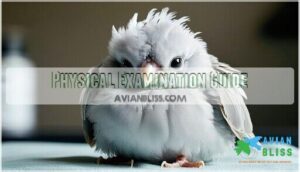
You’ll want to examine your bird systematically, starting with a visual once-over.
Check the beak for cracks or discharge, then move to an eye examination for cloudiness or swelling.
Look for skin lesions on exposed areas. Gently extend each wing to check for drooping or asymmetry.
Watch for signs of feather plucking around the head and neck. This hands-on approach reveals sick bird signs that behavioral observation might miss, using a systematic approach.
Feather Condition Assessment
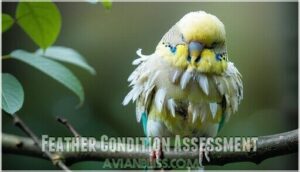
Beyond simple observation, thorough feather inspection reveals your bird’s true health status. You’ll want to examine plumage health systematically, checking for subtle changes that signal illness before symptoms worsen.
Understanding the signs of unhealthy feather problems is essential for early detection and treatment.
- Feather Inspection: Check for broken shafts, missing patches, or abnormal growth patterns during daily handling
- Plumage Health: Look for dull plumage versus the normal glossy shine that indicates proper preening habits
- Fluffed Feathers: Note if your bird stays puffed up constantly—healthy birds only fluff briefly when cold
- Feather Plucking: Watch for bald spots or damaged areas where your bird might be over-grooming from stress
- Wing Examination: Gently extend wings to check flight feathers and assess overall bird feather health condition
Environmental Factors
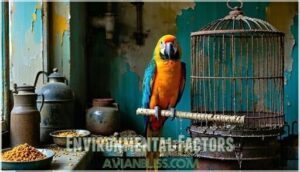
Your bird’s environment plays a vital role in feather health, and poor conditions often trigger the telltale ruffled appearance that signals illness.
Temperature fluctuations, dirty air, inadequate humidity, and unclean cages create stress that weakens your bird’s immune system and disrupts normal feather maintenance.
Temperature Control Importance
Temperature matters more than you’d think for your sick bird’s recovery.
Thermal Stress from poor Climate Control can worsen illness by 70%.
Ambient Temperature fluctuations stress weakened immune systems.
Heat Management prevents dehydration, while avoiding Cold Exposure maintains energy reserves for healing.
Effective bird care involves understanding the importance of proper bird heating systems.
| Temperature Range | Bird Response | Care Action |
|---|---|---|
| Below 65°F | Fluffed feathers, lethargy | Add gentle heat source |
| 68-72°F | Normal activity, healthy preening | Maintain steady environment |
| 73-79°F | Slightly panting, seeking shade | Improve ventilation |
| 80-85°F | Open-mouth breathing | Emergency cooling needed |
| Above 85°F | Heat stress, dehydration risk | Immediate vet care |
Humidity Levels Management
Humidity sensors help you maintain ideal air moisture levels between 50-60% for healthy feathers.
You’ll want to use a humidifier during dry seasons or install fogging systems for consistent moisture control.
Water spray bottles work for quick adjustments, but avoid over-misting your bird’s environment.
Proper humidity prevents feather loss and supports overall avian health by keeping respiratory passages clear.
Cage Cleaning Schedule
Regular cage sanitizing prevents disease outbreaks that cause ruffled feathers in sick birds.
You’ll need consistent daily cleaning and proper disinfecting methods to maintain bird hygiene effectively.
- Daily waste removal – Clean droppings, uneaten food, and soiled bedding every morning
- Weekly deep sanitizing – Use 1:10 bleach solution on all cage surfaces and cleaning tools
- Monthly perch disinfecting – Scrub and sanitize all perches, toys, and accessories thoroughly
- Bi-weekly food dish sterilization – Wash water and food containers with hot, soapy water
- Seasonal cage maintenance – Replace worn items and inspect for damage or wear patterns
Air Quality Improvement
Smart Air Purification starts with proper Ventilation Systems that reduce airborne pathogens by 80%.
Install HEPA filters and maintain them weekly to capture harmful particles affecting bird respiratory issues.
Control Humidity Control between 40-60% while monitoring Oxygen Levels.
Clean air directly improves bird health by preventing respiratory problems in your bird environment.
Maintaining a healthy bird environment is essential for overall bird well-being and preventing diseases.
Bird Care Essentials
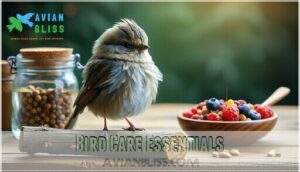
Your bird’s recovery depends on maintaining proper hydration, nutrition, and social connection during illness.
Understanding these care essentials helps you support your feathered friend through tough times.
While recognizing when professional veterinary intervention becomes necessary is crucial for the bird’s overall well-being, especially in terms of nutrition.
Hydration Methods
Water therapy starts where temperature control leaves off.
You’ll need to make certain your sick bird gets proper fluid intake through these hydration methods:
- Fresh drinking water – Change daily, use shallow dishes for easier access
- Humidifier use – Maintains respiratory moisture, aids breathing
- Electrolyte balance – Add avian-safe supplements when recommended by your avian vet
Oral hydration becomes essential during illness.
Monitor your bird’s drinking water consumption closely, as decreased fluid intake often signals declining bird health and wellness.
Nutrition Requirements
Proper nutrition acts like fuel for your sick bird’s recovery engine.
You’ll need a balanced diet with 18-20% protein to rebuild damaged tissues and boost immune function.
Vitamin needs include A for respiratory health and B-complex for stress reduction.
Mineral supplements containing calcium and phosphorus support bone strength.
Healthy foods like soft pellets and recovery formulas prevent nutrient deficiency better than seed-only diets.
A well-planned bird diet may include essential bird food supplements to guarantee the best nutrition and support overall health with a balanced diet.
Social Interaction Needs
Birds aren’t loners – they’re wired for connection. Your feathered friend needs Bird Socialization just like you need your morning coffee.
Companion Needs include daily chatter, shared activities, and understanding Flock Dynamics. Without proper bird social interaction, stress skyrockets and behavior problems emerge.
Social Learning happens through mimicking sounds, observing routines, and gentle Interaction Techniques that strengthen your bond daily.
Providing birds with social perch options can help meet their social interaction needs.
Veterinary Care Importance
Regular vet visits aren’t just check-ups—they’re your bird’s lifeline.
Professional veterinary care catches hidden illnesses in 15% of apparently healthy birds through annual screenings.
Avian experts provide specialized bird diagnosis and emergency care when seconds count.
Your feathered friend deserves medical treatment from qualified avian veterinarians who understand bird health monitoring and proper bird illness treatment for thorough bird health management.
Proper bird care requires understanding of bird vet care to guarantee a long and healthy life for your pet.
Recovery Support Tips
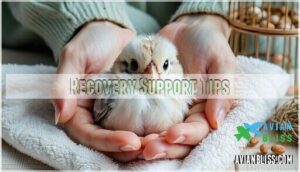
When your bird’s health takes a turn for the worse, providing proper recovery support can make all the difference in restoring their vibrant plumage and overall well-being.
You’ll need to focus on four key areas: giving medications correctly, offering gentle supportive care, helping feathers grow back healthy, and stopping future health problems before they start, which involves providing proper recovery support and stopping future health problems.
Medication Administration
When your feathered friend needs medication, you’ll become their personal pharmacist. Most bird medications require precise dosing based on body weight—typically calculated per kilogram.
You can administer drugs orally through gavage tubes, mix them in drinking water, or use nebulization for respiratory issues. Always follow prescription guidelines carefully, as underdosing leads to treatment failure while overdosing risks toxicity.
Track each dose on a medication chart and complete the full treatment duration, even if symptoms improve early. To minimize the risk of infection in birds, avian influenza prevention strategies are key to ensuring their health and well-being, and preventing treatment failure is crucial.
Supportive Care Techniques
Beyond medication, your feathered friend needs extra TLC to bounce back.
Create a cozy recovery space with warmth therapy at 80-85°F and humidified air to ease breathing.
Offer soft foods like warm oatmeal for easy digestion.
Use calming methods like dimmed lighting and quiet surroundings.
Remember, proper hydration tips include fresh water daily – your bird’s road to recovery starts with these gentle care basics.
Feather Health Restoration
Your feathered friends need gentle support during Feather Repair recovery.
Focus on humidity levels around 40-50% to prevent bird flaking and scaliness.
Proper nutrition with vitamin A helps the Molting Process naturally restore healthy bird feathers.
Watch for natural Preening Techniques returning as your bird’s energy improves.
Gentle Beak Care and allowing quiet time supports Plumage Grooming habits that reduce bird feather loss effectively.
Preventing Future Illnesses
Three effective disease prevention strategies will keep your feathered friend healthy long-term.
First, maintain bird hygiene through weekly cage cleaning and daily fresh water changes. Second, provide a healthy diet with varied nutrients beyond seeds alone.
Finally, schedule regular vet guidance appointments for preventive care and health monitoring.
By following proper bird health practices, you can substantially reduce the risk of illness in your aviary.
Frequently Asked Questions (FAQs)
What do birds look like when they are sick?
When you’re checking on your feathered friends, sick birds often look like they’re having a rough day.
You’ll notice dull, ruffled feathers that stay puffed up, making them appear bigger than usual.
What do unhealthy bird feathers look like?
Something’s wrong when you spot dull, ruffled feathers that stay puffed up constantly.
Healthy birds have smooth, shiny plumage, but sick ones show messy, lackluster feathers with missing patches or crusty discharge nearby, which can be a sign that something’s wrong.
Do birds ruffle their feathers when they are cold?
Yes, birds absolutely ruffle their feathers when cold.
They fluff up to trap warm air between feathers, creating insulation like a cozy down jacket.
It’s their natural way to stay toasty.
How long does feather recovery take?
Like a phoenix regenerating its plumage, your bird’s feathers will gradually return to normal over several weeks.
Recovery time depends on the underlying cause—nutritional deficiencies may take longer than infections to resolve completely.
Can ruffled feathers spread to other birds?
Ruffled feathers themselves don’t spread between birds, but the underlying causes often do.
Infectious diseases, parasites, and stress-inducing conditions can easily transmit through your flock, causing multiple birds to develop ruffled plumage symptoms.
Are certain bird species more susceptible?
Feathers flutter like warning flags when illness strikes – and yes, certain species face higher risks.
Pine siskins struggle most with salmonellosis outbreaks, while house finches battle eye infections more frequently than other backyard visitors.
What foods help restore feather health?
Energy-dense foods like cooked grains, millet, and nutrient-rich pellets restore feather health.
You’ll want to add vitamin A sources like sweet potato and leafy greens, plus protein from hard-boiled eggs during recovery.
When should I quarantine my bird?
Quarantine new birds for 30-45 days before introducing them to your flock. Also isolate any bird showing illness symptoms immediately to prevent disease spread among healthy birds.
Conclusion
Remember Aesop’s fable about the tortoise and the hare? Your sick bird with ruffled feathers won’t win any races, but steady attention will help them recover.
When you spot persistent feather fluffing, act quickly but calmly. Check their environment, guarantee proper nutrition, and don’t hesitate to contact your vet.
Early intervention makes the difference between a minor setback and serious illness. Your vigilance today prevents bigger problems tomorrow.
- https://www.nmhealth.org/publication/view/help/943/
- https://gadnr.org/dnr-clean-feeders-save-birds
- https://www.cdfa.ca.gov/ahfss/animal_health/pdfs/AI/BiosecurityForBackyardAndPetBirds.pdf
- https://www.iredellcountync.gov/896/Avian-Influenza-Protect-Your-Birds
- https://www.thepoultrysite.com/articles/protect-your-birds-how-to-make-the-most-of-poultry-vaccines