This site is supported by our readers. We may earn a commission, at no cost to you, if you purchase through links.
A bird with nothing to do doesn’t stay quiet about it.
Feathers get pulled, cage bars get chewed, and that once‑curious bird starts sleeping through hours it used to spend exploring.
Most owners chalk it up to a bad mood or aging, but chronic boredom tells a different story.
Birds are intelligent, social animals wired for foraging, problem‑solving, and interaction—a bare cage starves that drive completely.
Knowing the signs your bird is bored without toys can mean catching a real welfare problem before it becomes a health one.
What follows covers exactly what to watch for, and what to do about it.
Table Of Contents
Key Takeaways
- Feather plucking, excessive screaming, and cage-bar chewing aren’t bad habits—they’re your bird telling you it’s desperately understimulated.
- Chronic boredom isn’t just a mood problem; it quietly weakens your bird’s immune system, damages feather follicles permanently, and can lead to obesity.
- Rotating toys every one to two weeks and offering foraging puzzles can replicate the six hours wild parrots naturally spend problem-solving each day.
- Daily interaction—even a few minutes of training training or training— essential— to your bird’s health as fresh food and clean water.
Common Signs Your Bird is Bored Without Toys
Birds can’t tell you when something’s wrong, so their behavior does the talking.
Knowing what to look for makes all the difference, and this guide to identifying signs of stress in birds breaks down the subtle cues that are easy to miss.
toys and stimulation are missing, the signs show up quickly and clearly.
Here’s what to watch for.
Feather Plucking or Over-Preening
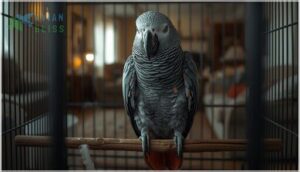
Feather plucking is one of the clearest signs your bird is struggling. Without environmental enrichment to keep them busy, birds often turn to repetitive grooming as a stress outlet, flooding their systems with stress hormones.
Before assuming boredom, though, medical screening matters—nutritional deficiencies and skin conditions can trigger the same behavior.
Veterinary treatment and a richer environment together make the biggest difference. low humidity conditions can also trigger feather plucking.
Excessive Screaming or Vocalization
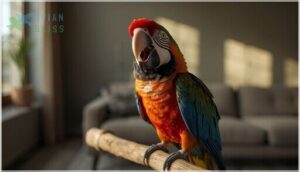
Beyond plucking, excessive screaming is another clear sign of boredom. Bored birds often yell in long, repetitive bursts—especially during quiet stretches when nothing’s happening.
Pay attention to time-of-day patterns; trigger identification gets easier when screaming happens at the same hour daily. Without bird mental stimulation, your bird’s vocalization becomes its own entertainment, making vocal training and noise desensitization harder to establish later.
Feather plucking behavior can also signal boredom.
Pacing or Repetitive Movements
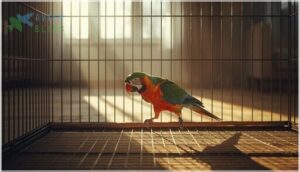
Screaming isn’t the only alarm bell. Pacing and repetitive behavior are quieter but just as telling.
Watch for body language cues like sleeked feathers, a low head, and restless tail flicks. Temporal patterns matter too—repetitive movements peak mid‑day when birds are alone the longest.
These environmental triggers and species‑specific pacing habits signal real stress, not quirky personality, and deserve your attention.
Lethargy or Sleeping Too Much
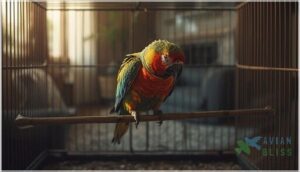
lethargy often comes with a quieter partner: lethargy. A bored bird doesn’t always make noise — sometimes it just… stops.
signs of boredom in pet birds linked to sleep and inactivity:
- Sleep cycle disruption — sleeping at odd hours, not just nighttime
- Daytime napping patterns that replace normal play and foraging windows
- motionless perching suggesting perch comfort issues or mental withdrawal
- Dull eyes and fluffed feathers pointing to hormonal imbalance indicators
- Reduced response to light exposure effects, like ignoring morning activity cues
A bird with zero mental stimulation will choose sleep over everything. That’s not contentment — it’s shutdown. Enrichment changes that.
A bored bird isn’t just unhappy — the physical effects run deeper than most owners realize, as explored in this guide to bird stress and anxiety symptoms and causes.
Destructive Chewing on Cage Bars
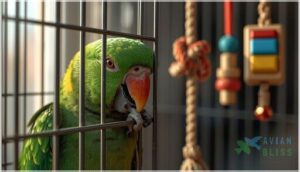
bird boredom sign: Watching your bird gnaw cage bars for 10 to 20 minutes straight is a clear bird boredom sign, not curiosity.
These chewing patterns carry real risks — beak wear from scraping hard metal, or metal toxicity if bar material hazards like zinc or old coatings get ingested.
foraging toys: Swap bars for foraging toys, and use training redirection to guide that energy somewhere safe.
Behavioral Changes Linked to Boredom
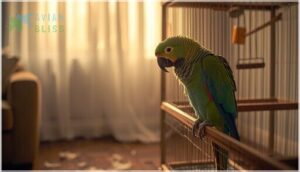
Boredom doesn’t just make your bird restless — it can actually change how they act around you. Some of these shifts are easy to miss at first, especially if you’re not sure what to look for.
Here are the behavioral changes most commonly linked to a lack of toys and mental stimulation.
Aggression or Sudden Mood Swings
A calm bird can flip to full-on aggression faster than you’d expect.
Triggered Bite Episodes often catch owners off guard, but they’re rarely random.
Boredom-driven stress builds quietly, showing up as Perch Guarding, Vocal Aggression, or sudden lunges at familiar hands.
These Mood Flip Indicators and Social Hierarchy Shifts signal real behavioral issues — your bird isn’t being mean, it’s overwhelmed.
Loss of Appetite or Interest in Food
A bored bird often stops eating the way it used to. You might notice it skipping meals, dropping food without swallowing, or ignoring favorite Nutrient-Dense Treats like nuts or fruit — classic signs of boredom in pet birds.
Depression and lethargy can suppress hunger cues entirely.
Adding Environmental Foraging Challenges, following Weight Monitoring Protocols, and scheduling a Veterinary Appetite Assessment early helps you catch bird health problems before they worsen.
Self-Isolation or Withdrawal
Some birds don’t scream their boredom — they go quiet instead. Social Avoidance is one of the subtler signs of boredom in pet birds, and it’s easy to miss. Watch for these bird behavioral issues:
- Perching Preferences shift — your bird retreats to high, hidden corners
- Vocal Silence replaces normal chatter and contact calls
- Gaze Dullness sets in — that bright, curious look fades
- Activity Timing changes — movement only happens when you leave
- Lethargy and depression deepen, weakening your bond over time
Decreased Playfulness and Curiosity
A once-playful bird that suddenly ignores its favorite toys is sending you a clear message.
Reduced interest in Exploratory Perching, Novel Foraging Challenges, and Interactive Training Games is a classic bird boredom sign and solutions worth addressing early.
When mental stimulation drops, birds skip bird enrichment opportunities entirely.
Try rotating bird foraging toys and adding Social Play Sessions to reignite curiosity and reverse these bird behavior problems.
Health Risks of Chronic Boredom
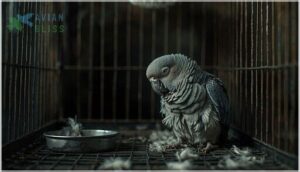
Boredom doesn’t just affect your bird’s mood — it can quietly chip away at their physical health too. When stress becomes a daily thing, the body starts to pay the price in ways you might not immediately notice.
chronic boredom can actually do to your bird over time.
Weakened Immune System
Chronic stress quietly chips away at your bird’s defenses. Without mental stimulation or foraging toys, corticosterone levels rise and stay elevated — and that’s when real trouble starts.
Without mental stimulation, a bird’s stress hormones stay elevated — and the damage builds silently
Immune organ atrophy can follow, leaving your bird less equipped to fight off infections. Gut microbiome disruption worsens things further, allowing harmful bacteria to thrive. Nutrient deficiencies from stress-related poor eating raise respiratory infection risk, making bird health fragile over time.
Long-Term Feather Damage
Feather plucking doesn’t just look alarming — it leaves lasting marks.
Repeated pulling triggers follicle scarring, and over time, those follicles stop producing feathers entirely, leaving permanent bald patches on the chest or belly.
Hyperkeratosis development can thicken the skin, raising infection risk around damaged areas.
Feather structure degradation follows too, dulling color and weakening flight.
Stress-driven destructive behavior, left unchecked, makes reversal nearly impossible.
Increased Susceptibility to Obesity
Boredom doesn’t just hurt your bird’s feathers — it also hits their waistline too. Without foraging toys or mental stimulation, birds fall into caloric overconsumption, eating out of habit rather than hunger.
That sedentary lifestyle replaces flight with stillness, and fat builds fast. Fatty liver development follows, then cardiovascular strain. Bird stress from under‑stimulation even triggers hormonal imbalance, slowing metabolism further. A bored bird is rarely a healthy one.
Why Toys and Enrichment Are Essential

A bored bird isn’t just unhappy — it can develop real health and behavior problems over time.
The good news is that the right toys and enrichment can make a huge difference.
Here’s what actually helps and why each one matters.
Importance of Mental Stimulation
Your bird’s brain never really clocks out. Mental stimulation drives cognitive development, neuroplasticity boost, and genuine stress reduction — all at once. Without daily enrichment, boredom sets in fast. Here’s what a mentally active bird actually gains:
- Sharper problem-solving skills from varied challenges
- Calmer behavior through reduced corticosterone levels
- Stronger bonding enhancement during interactive sessions
Mental engagement isn’t optional — it’s foundational.
Role of Foraging and Puzzle Toys
Think of foraging toys as your bird’s daily job. In the wild, parrots spend up to six hours on Natural Foraging Time — searching, chewing, and problem‑solving. Puzzle toys replicate that. Start simple, then use Puzzle Difficulty Scaling as confidence grows.
Follow Material Safety Guidelines, stick to a Toy Rotation Schedule, and watch the Cognitive Enrichment Benefits unfold: less screaming, calmer moods, and real engagement.
Benefits of Physical Activity
Movement does more than burn energy — it shapes your bird’s entire health picture. Regular physical activity promotes Weight Management, Muscle Strength, and Heart Health, while also boosting Respiratory Efficiency.
Flight, climbing, and play all count as bird exercise, and each session contributes to genuine Stress Reduction.
Bird enrichment that encourages movement mirrors natural bird foraging behaviors, making it essential to lasting bird wellbeing.
Social Interaction and Bonding Opportunities
Connecting with your bird daily makes a real difference. Training Sessions as short as two to three minutes build trust through positive reinforcement.
Daily Talking helps your bird feel safe and heard.
Supervised Playtime and Out-of-Cage Exploration satisfy their need for social interaction and curiosity.
For highly social species, Companion Pair Housing can cut anxiety substantially, making enrichment feel complete.
How to Prevent Boredom in Pet Birds
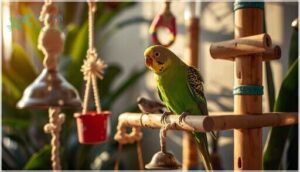
The good news is that boredom in birds is very preventable. A few simple changes to your bird’s daily routine can make a real difference. Here’s what actually works.
Rotating and Introducing New Toys
Even the best toys lose their magic if they never change. A simple toy rotation schedule — swapping out a third to half of the cage toys every one to two weeks — keeps your bird curious and mentally sharp.
- Use gradual toy introduction for nervous birds.
- Track preferences to guide enrichment plans.
- Run a quick safety inspection every swap day.
Creating a Stimulating Cage Environment
Your bird’s cage is its whole world — so make it worth exploring.
Clear flight lanes let your bird move freely without obstacles in the way.
Add perch variety at different heights for climbing and balance.
Sensory enrichment like varied textures, soft sounds, and rotating safe objects keeps curiosity alive.
Smart light management facilitates a natural daily rhythm, easing bird boredom signs and solutions into your routine naturally.
Encouraging Out-of-Cage Activities
Your bird needs more than a cage — out-of-cage time is where real enrichment happens.
A solid Playstand Design gives your bird a safe base for exploring while you supervise. Combine that with these essentials:
- Step-Up Training daily in short, calm sessions
- Flight Sessions across short distances, building gradually
- Human Games like target training or gentle ball toss
- Always apply Safety Precautions — remove cords, secure exits, isolate other pets
Bird mental stimulation thrives outside the cage.
Tailoring Enrichment to Bird Species and Preferences
No two birds are wired the same. A macaw needs heavy wooden chew blocks and multi-step puzzle feeders, while a budgie does better with lightweight seagrass and paper streamers.
Watch your bird closely — preference observation methods, like noting which toys get touched first, reveal a lot.
Match species-specific toys to natural behaviors, follow material safety guidelines, and rotate enrichment regularly to keep bird mental stimulation fresh and meaningful.
Frequently Asked Questions (FAQs)
How do I know if my bird is bored?
Your bird’s Feather Condition, Vocal Patterns, and Activity Levels tell you everything.
Watch for feather plucking, pacing, or unusual quiet — these signal poor mental stimulation and a real need for Environmental Variety.
What does a bored budgie look like?
A bored budgie often shows feather discoloration, wing drooping, perch avoidance, tail bobbing, and eye dullness.
Recognizing these budgie behavioral changes early makes all the difference in preventing deeper feather-related stress behaviors.
Can boredom in birds be mistaken for illness?
Yes, it absolutely can. Feather plucking, lethargy, and pacing share serious symptom overlap with illness.
Veterinary assessment and medical screening help distinguish stress-driven bird behavior issues from true avian health problems.
How often should I interact with my bird daily?
Daily interaction duration depends on species-specific timing. Small birds need one to two hours, while macaws and cockatoos require up to four hours.
Morning and evening sessions work best for consistent bonding.
Do birds get bored more at night or daytime?
Daytime wins, hands down.
Your bird’s brain is wired for daylight activity, so boredom peaks during those hours.
Nighttime rest patterns naturally quiet things down, making daytime the window that truly matters for circadian enrichment timing.
Are some bird species more prone to boredom?
Absolutely.
Species susceptibility varies widely.
African Greys and cockatoos have intense cognitive demands and social flock needs, making bird boredom far more likely when their wild foraging ratio and activity span aren’t matched in captivity.
What age do birds start showing boredom signs?
Like a clock set early, boredom can tick in sooner than you’d expect.
Juvenile onset varies by species, but many birds show signs as early as eight to twelve weeks old.
Conclusion
plant starved of sunlight, a bird without stimulation quietly wilts from the inside out.
The signs your bird is bored without toys aren’t random—they’re urgent messages worth listening to. Feather damage, withdrawal, and restless pacing all point to the same unmet need.
A few thoughtful toys and daily interaction can genuinely change your bird’s quality of life. Don’t wait for the warning signs to get louder before you act.
- https://oneloveanimals.org/blog-birds/do-birds-get-bored-why-mental-stimulation-is-a-must/
- https://www.furrycritter.com/pages/articles/birds/signs_of_bored_bird.htm
- https://enviroliteracy.org/is-my-bird-bored/
- https://animalcompanionsblog.com/other-pets/identifying-boredom-in-pet-birds-signs-to-watch-for-and-proven-solutions-to-keep-them-engaged/
- https://www.petmd.com/bird/behavior/how-tell-if-your-bird-unhappy-or-stressed-and-what-do