This site is supported by our readers. We may earn a commission, at no cost to you, if you purchase through links.
 A simple bird identification guide for kids transforms backyard birdwatching into an exciting treasure hunt.
You’ll want to focus on three key features: size (is it robin-sized or crow-sized?), color patterns (bright red cardinal versus gray mockingbird), and habitat preferences (does it perch on feeders or hop on the ground?).
Start with common species like robins, blue jays, and cardinals since they’re large, colorful, and patient enough for little observers.
The National Geographic Kids Bird Guide and Merlin Bird ID app make perfect learning companions, turning smartphone cameras into identification tools.
Remember, every expert birdwatcher started by spotting their first robin—and there are surprising tricks that make even tricky species easy to identify.
Table Of Contents
- Key Takeaways
- Birding Basics
- Kid Friendly Guides
- Bird Identification Tips
- Engaging Kids Outdoors
- Frequently Asked Questions (FAQs)
- Is the Audubon Bird Guide free?
- How to classify birds for kids?
- What is a bird checklist?
- What time of day are birds most active?
- How do I attract birds to my backyard?
- What should I do if I find an injured bird?
- How can weather affect bird watching success?
- Whats the difference between migration and year-round birds?
- Conclusion
Key Takeaways
- Start with the basics: You’ll want to focus on three key features when identifying birds – size (compare to familiar birds like robins or crows), color patterns (bright red cardinals versus gray mockingbirds), and where they hang out (feeders versus ground hopping).
- Choose kid-friendly tools: You’ll find success with the National Geographic Kids Bird Guide and Merlin Bird ID app, which transform your smartphone into an identification tool and make learning feel like a treasure hunt rather than homework.
- Begin with common backyard species: You’ll build confidence faster by starting with large, colorful, and patient birds like robins, blue jays, and cardinals before moving on to trickier species.
- Get outdoors and practice: You’ll develop sharp observation skills by taking bird walks, sketching what you see, and participating in citizen science projects like eBird that turn your hobby into real scientific contributions.
Birding Basics
You’ll discover that successful bird identification starts with observing three fundamental characteristics: size, shape, and behavior patterns that distinguish one species from another.
Start with size, shape, and behavior—your three keys to unlocking every bird’s identity in the wild.
Understanding these basic elements, combined with proper field guide usage and simple identification techniques, transforms confusing bird encounters into exciting moments of scientific discovery.
Common Bird Species
Start your bird identification journey by spotting these common backyard birds that visit local habitats year-round.
These species offer perfect practice for young birders learning identification basics.
Five Common Backyard Birds to Know:
- Red-winged Blackbird – Males flash bright red shoulder patches during territorial displays
- Chipping Sparrow – Small brown bird with distinctive rusty cap and clear breast
- Red-eyed Vireo – Olive-green songbird with white eyebrow stripe and persistent singing habits
- Carolina Chickadee – Tiny acrobat with black cap, white cheeks, and cheerful personality
- Carolina Wren – Rusty-brown climber with loud, musical songs and upturned tail
Simple Identification Techniques
Once you know common birds in your backyard, mastering Key Bird Traits becomes your next adventure.
Focus on size first—is it robin-sized or sparrow-tiny? Notice Visual Birding Cues like color patterns and beak shape.
Bird Behavior Clues reveal feeding habits, while Habitat Identification shows where species prefer living. Song Identification helps distinguish similar-looking birds through unique calls.
| Identification Method | What to Look For | Kid-Friendly Example |
|---|---|---|
| Size Comparison | Compare to familiar birds | "Big as a crow or small as a tennis ball?" |
| Shape & Silhouette | Body outline and posture | "Does it sit upright like a robin?" |
| Color Patterns | Distinctive markings | "Red breast like a stop sign!" |
Using Field Guides
Through careful selection, you’ll find bird identification guides that work like trusted companions rather than intimidating textbooks.
Traditional field guides often overwhelm kids with complex guidebook jargon and layout intimidation.
Choose guides featuring:
- Simplified descriptions without confusing technical terms
- Visual engagement through colorful photos and illustrations
- Portable guides that won’t weigh down backpacks
- Species organized by common sightings near home
- Interactive elements like checklists and fun facts.
These bird identification for beginners resources transform learning into an adventure with interactive elements.
Kid Friendly Guides
You’ll find kid-friendly bird guides much easier to navigate than traditional field guides, which can feel like carrying an encyclopedia filled with confusing scientific terms like "auriculars" and "coverts."
These specialized resources focus on common backyard species with colorful photos, simple descriptions, and lighter formats that won’t weigh down your backpack during outdoor adventures, making them a great choice for backyard species.
National Geographic Kids Guide
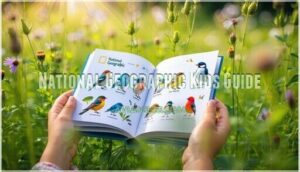
The National Geographic Kids Bird Guide of North America stands out with its vibrant illustrations quality and smart species selection of 100 birds.
You’ll love how the layout appeal organizes birds by habitat rather than confusing scientific names.
Fun facts about feeding habits and songs boost kid engagement, making bird identification for kids feel like an adventure. It’s perfect for young bird watchers starting their birding journey.
Stokes Beginner’s Guide
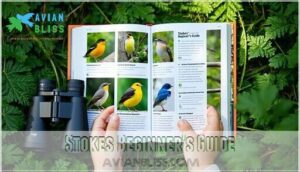
The Stokes Beginner’s Guide stands out with its brilliant color organization system that makes bird identification for kids surprisingly simple.
You’ll find dozens of full-color photographs showcasing plumage differences between males and females, plus range maps for each species.
This compact guide’s beginner friendliness and guide portability mean it fits perfectly in backpacks, while visual engagement keeps young birders excited about their discoveries.
Merlin Bird ID App
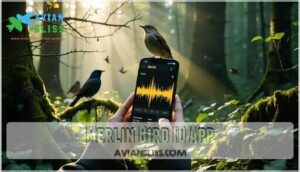
Cornell’s Merlin Bird ID app transforms your phone into a pocket-sized bird expert. Kids love its three identification methods that make birdwatching feel like a game.
Turn your smartphone into the ultimate birding buddy that fits right in your pocket!
Merlin Features that make bird identification simple:
- Sound ID records and identifies bird calls instantly
- Photo ID recognizes species from your snapshots
- Offline Use works without internet connection
The app’s accuracy rivals professional field guides. Users can also find Merlin Bird ID products online.
Bird Identification Tips
You’ll quickly discover that observing a bird’s size and overall shape provides the most reliable clues for accurate identification, much like recognizing friends from across the playground by their silhouettes.
Learning to sketch what you see, even with simple stick-figure birds, sharpens your observation skills and helps you notice important details like beak shape, tail length, and wing proportions that distinguish one species from another, which is crucial for accurate identification.
Size and Shape Recognition
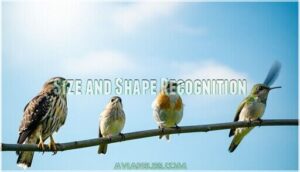
Typically, you’ll want to master size and shape recognition first when learning bird identification skills for kids.
Compare a bird’s relative size to familiar objects like a sparrow or robin.
Notice the body shape – is it round or sleek?
Study the beak shape, tail shape, and wing shape carefully.
These features help distinguish different bird species identification for kids effectively.
Silhouette Identification

From a distance, bird silhouettes reveal amazing secrets about species identification.
You’ll notice distinct silhouette shapes like rounded robins versus sleek hawks soaring overhead.
Watch flight patterns—some birds flap constantly while others glide gracefully.
Different habitats offer clues too, as waterbirds show unique profiles compared to forest dwellers.
These bird identification skills help kids recognize species before seeing detailed field marks, using silhouette shapes and flight patterns.
Drawing Birds for Detail

After mastering bird silhouettes, sketching plumage takes your observation skills to the next level.
Drawing birds forces you to notice feather detail, capturing postures, and maintaining proportional accuracy that photos often miss.
This artistic expression becomes a powerful bird identification tool for children, revealing wing bars, tail patterns, and beak shapes that make kids birds identification experts through hands-on practice.
To further refine these skills, consider exploring a bird drawing tutorial.
Engaging Kids Outdoors

You’ll discover that taking your bird identification skills outdoors transforms screen time into active exploration, where real observations help you connect with local ecosystems while contributing to meaningful scientific research.
Getting outside with binoculars, field guides, and a curious mindset turns your neighborhood into a living classroom where every walk becomes an opportunity to spot new species and document their behaviors, helping you develop a deeper understanding of the natural world and your place within it, through active exploration.
Bird Walks and Observations
Through woods and meadows, bird walks transform kids into nature detectives.
You’ll discover how seasonal changes affect bird behavior while exploring different habitats.
Pack observation tools like binoculars and notebooks for record keeping during your birdwatching adventures.
These outdoor experiences make bird identification exciting for kids, turning every trail into a living classroom where young birders develop sharp eyes and patience.
Citizen Science Projects
When you’re ready to make your bird watching count, citizen science projects turn your hobby into real research.
Programs like eBird and Christmas Bird Count let you contribute data collection for species distribution studies.
Your observations help scientists track habitat monitoring and conservation efforts, which is amazing how your backyard birdwatching sessions can support community engagement in bird education worldwide.
Regional Bird Guides
Looking at your backyard, you’ll spot different birds than your friend across the state.
Regional bird identification guides focus on local species you’re actually likely to see. These habitat-specific guides highlight seasonal patterns and migration routes unique to your area.
Endemic bird guides showcase birds found nowhere else, making bird watching for kids more rewarding and successful, which can lead to a more successful experience.
Binocular Reviews and Guides
Good binoculars transform your child’s birdwatching experience from squinting frustration to crystal-clear discovery.
Magnification Explained: 8×32 binoculars work best for kids—lightweight yet powerful. Lens Coatings reduce glare, while wider Field of View helps track moving birds.
Consider Ergonomics for small hands and explore Budget Options under $50. Check out a detailed binocular review before purchasing.
Quality birdwatching equipment for kids makes bird identification for children substantially easier and more enjoyable.
Frequently Asked Questions (FAQs)
Is the Audubon Bird Guide free?
You’ll need to pay for the Audubon Bird Guide app, unlike Merlin Bird ID which costs nothing.
The Audubon app typically runs about twenty dollars, but it offers thorough species data and professional-quality photographs.
How to classify birds for kids?
A kindergarten class sorts birds by size—big like eagles, medium like robins, small like chickadees.
You’ll group them by color, habitat, and behavior too.
This simple system helps young birders organize nature’s feathered friends.
What is a bird checklist?
A bird checklist tracks which species you’ve spotted during your birding adventures.
You’ll mark off each new bird you identify, creating a personal record of your discoveries.
It’s like collecting stamps, but with feathered friends instead!
What time of day are birds most active?
Early risers claim birds are most active at dawn, and they’re absolutely right.
You’ll spot the most feathered friends during the first two hours after sunrise and again before sunset when they’re busy feeding.
How do I attract birds to my backyard?
Set up feeders with sunflower seeds, suet, and nyjer.
Provide fresh water in shallow dishes or birdbaths.
Plant native trees and shrubs for shelter. You’ll create an irresistible backyard buffet that’ll have feathered friends flocking to your yard.
What should I do if I find an injured bird?
Like a fragile feather in the wind, you’ll want to act quickly but carefully.
Don’t touch the bird directly—call your local wildlife rehabilitator or veterinarian immediately for proper guidance and care.
How can weather affect bird watching success?
Weather dramatically impacts your birding adventures.
Rain drives birds to shelter, while sunny mornings bring active feeding.
Wind masks bird calls, but calm days reveal clear songs.
Cold fronts trigger migration waves, creating spectacular viewing opportunities.
Whats the difference between migration and year-round birds?
Before smartphones existed, you’d spot different birds seasonally.
Migration birds travel vast distances twice yearly, appearing only during spring and fall passages.
Year-round residents stay put, letting you observe them consistently throughout all seasons, as they are year-round residents.
Conclusion
Scientists estimate that children who learn bird identification develop observation skills 40% faster than those who don’t engage with nature regularly.
This simple bird identification guide for kids provides everything you’ll need to transform curious youngsters into confident birdwatchers.
Armed with field guides, smartphone apps, and basic identification techniques, your children will discover that backyard birding offers endless adventures.
Start with common species, practice size comparisons, and watch as each successful identification builds their confidence and deepens their connection to the natural world around them, fostering a sense of backyard birding and confident birdwatchers.
- http://www.10000birds.com/what-is-an-empidonax-flycatcher.htm
- http://www.barnesandnoble.com/w/the-young-birders-guide-to-birds-of-north-america-bill-thompson-iii/1104512945
- http://www.thebirdshed.com/cg-0316818127.html
- https://www.allaboutbirds.org/bird-id-skills-field-marks/
- https://www.youtube.com/watch?v=hflq6XIHVlw&feature=youtu.be&pid=1266&__hstc=266496273.3e346b34ea5c43f0c91f2bc8b0544143.1400264731934.1427417149314.1427740485709.242&__hssc=266496273.20.1436383030545&__hsfp=2137696023