This site is supported by our readers. We may earn a commission, at no cost to you, if you purchase through links.
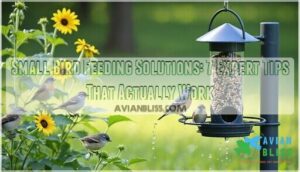 You’ll find success with small bird feeding solutions by starting with black-oil sunflower seeds in tube feeders placed 5-10 feet from shelter.
These seeds attract finches, chickadees, and nuthatches while remaining affordable and widely available. Position feeders at eye level for easy monitoring, use squirrel baffles to protect your investment, and maintain clean stations every two weeks.
Fresh water sources nearby double your visitor count, while native plants provide natural food supplements.
Weight-activated mechanisms keep larger birds from monopolizing resources, ensuring smaller species get their fair share. Strategic placement and proper seed selection create thriving feeding stations that transform ordinary backyards into bustling bird communities, with smaller species getting their fair share.
Table Of Contents
- Key Takeaways
- Small Bird Feeding Basics
- Attracting Small Birds
- DIY Bird Feeders
- Small Bird Feeding Tips
- Advanced Feeding Solutions
- Frequently Asked Questions (FAQs)
- What is the 5 7 9 rule for bird feeders?
- How do you make homemade bird feeders for small birds?
- How do you feed only small birds?
- How often should I refill small bird feeders?
- What weather conditions affect small bird feeding?
- When is the best time to start feeding?
- How do I attract specific small bird species?
- What should I do if birds stop visiting?
- Conclusion
Key Takeaways
- Start with black-oil sunflower seeds in tube feeders – you’ll attract 70% of small bird species while keeping costs manageable and ensuring easy availability at most stores.
- Position feeders 5-10 feet from natural shelter – you’ll balance safety from predators with accessibility, while morning sun exposure helps birds spot food and afternoon shade prevents spoilage.
- Use weight-activated mechanisms and cage feeders – you’ll prevent larger birds and squirrels from monopolizing resources, ensuring chickadees, finches, and nuthatches get their fair share.
- Maintain clean feeding stations every two weeks – you’ll prevent mold formation and disease transmission while adding fresh water sources nearby to double your visitor count.
Small Bird Feeding Basics
You’ll succeed at feeding small birds when you understand the three foundational elements that determine your backyard’s appeal to these delicate visitors.
Mastering seed selection, feeder types, and strategic placement creates an irresistible feeding station that attracts finches, chickadees, and other small species.
While keeping larger birds and squirrels at bay, this setup ensures a welcoming environment for the desired species, making your backyard a haven for small birds.
Choosing Right Bird Seed
When feeding small birds, quality seed types make all the difference between attracting diverse species and watching expensive mixes get tossed aside.
You’ll want to focus on seeds that meet their specific nutritional needs rather than buying cheap wild bird feeding blends filled with unwanted fillers.
platform feeders suit ground-feeding birds but require frequent cleaning.
- Black oil sunflower seed attracts over 70% of feeder species with its soft shell and high energy content
- Hulled sunflower seeds work perfectly for small-billed birds who can’t crack tough shells
- Nyjer seed draws finches and goldfinches with its oil-rich nutrition and tiny size
Selecting Feeder Types
Tube feeders attract chickadees, finches, and nuthatches with multiple perches and small ports that discourage larger birds.
Hopper feeders offer covered storage while platform feeders provide open feeding spaces for ground-feeding species.
Nyjer feeders target goldfinches specifically, while suet feeders nourish woodpeckers.
Choose feeder types based on your target bird species’ feeding behaviors and preferences.
Some bird enthusiasts use peanut feeders to attract blue jays, nuthatches, and woodpeckers.
Feeder Placement Strategies
Position your small bird feeders 10-15 feet from natural cover, balancing accessibility with safety from predators.
Consider sunlight exposure – morning sun helps birds spot food while afternoon shade prevents seed spoilage.
Wind protection extends feeding time, and good visibility factors let you monitor activity.
Strategic spatial distribution across your backyard creates multiple feeding zones, attracting diverse small birds while reducing competition.
To minimize risks, consider safe window distances for optimal safety.
Attracting Small Birds
You’ll attract more small birds to your yard by offering the foods they naturally crave and creating a safe environment that meets their basic needs.
Smart garden design and predator awareness make the difference between an empty feeder and a bustling bird buffet.
Using Natural Foods

Beyond bird seed mixes, nature provides abundant options for attracting small birds to your backyard.
Native plants offer sustainable seed sources while wild berries create natural feeding stations that birds instinctively recognize.
You’ll discover these natural approaches often outperform commercial bird feeders:
- Native wildflowers – Sunflowers and coneflowers provide rich seed sources
- Berry-producing shrubs – Elderberry and serviceberry create year-round insect buffet zones
- Water features – Shallow birdbaths attract species seeking drinking and bathing spots
Creating Bird Friendly Gardens

Transform your yard into a haven by choosing Native Plants that attract up to 19 times more insects than non-natives, providing essential food for small birds.
Create layered plantings with canopy trees, shrubs like serviceberry and elderberry, plus groundcovers that offer year-round fruit and Shelter Options.
Add reliable Water Sources and avoid chemicals completely—pesticide-free gardens support 2-3 times greater bird diversity.
Avoiding Predators
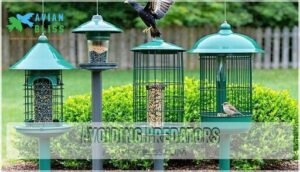
Position feeders strategically using protective cages and deterrent methods to shield small birds from cats and hawks.
Place feeders near shrubs for quick escape routes, but maintain clear sightlines for monitoring systems.
Choose squirrel proof feeders with weight-activated mechanisms that close when larger predators approach.
Habitat design around your backyard bird feeding station should include dense plantings within ten feet, creating natural shelter while allowing easy visibility for safety.
DIY Bird Feeders
You can build effective bird feeders using common household items like plastic bottles, milk jugs, and wooden spoons to create feeding stations that attract finches, chickadees, and other small birds.
These homemade feeders cost less than store-bought options and let you customize designs to meet specific birds’ needs in your yard, making them a great way to attract a variety of species with effective bird feeders.
Making Simple Feeders
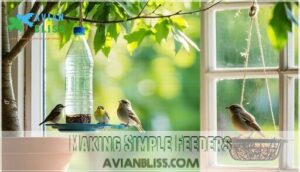
You’ll discover that simple feeder construction requires minimal materials yet delivers maximum bird attraction results.
Create effective feeders using these basic approaches:
- Bottle Feeders: Cut feeding holes in plastic bottles and add perches
- Plate Feeders: Use shallow dishes elevated on pedestals for ground-feeding species
- Window Feeders: Attach suction-cup platforms directly to glass surfaces
- Suet Feeders: Drill holes in logs or use mesh bags for high-energy feeding
These feeders can be purchased as pre-made options.
These bird feeder types accommodate various backyard bird feeding preferences while maintaining simple construction methods.
Using Recycled Materials
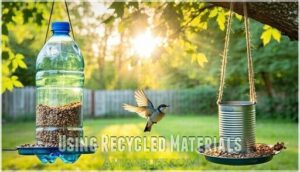
You’ll transform everyday items into effective bird feeders with minimal effort.
Plastic bottle feeders offer clear seed visibility, while tin can feeders provide durability for heavier seeds.
| Material | Best For | Prep Time |
|---|---|---|
| Plastic Bottles | Thistle, millet seeds | 10 minutes |
| Tin Cans | Sunflower seeds | 15 minutes |
| Milk Jugs | Mixed seed blends | 12 minutes |
| Yogurt Containers | Nyjer seeds | 8 minutes |
| Coffee Cans | Peanuts, suet | 20 minutes |
These sustainable materials create functional bird feeder types that rival store-bought options, supporting your bird feeding guide while reducing waste and utilizing everyday items to make effective bird feeders.
Adding Roofs and Trays
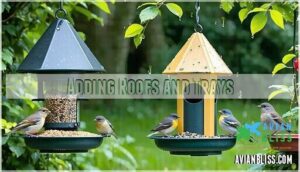
Something special happens when you add roofs and trays to your DIY feeders.
Roof benefits include weather protection that keeps seeds dry and fresh, preventing spoilage that wastes money and harms birds.
Tray types range from simple platforms beneath suet feeders to specialized seed catchers for finch feeders, including platform style feeders which are open and flat.
Installation tips: angle roofs slightly for drainage and secure trays firmly underneath to ensure effective installation.
Small Bird Feeding Tips
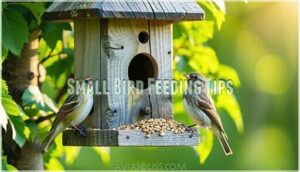
You’ll find that keeping your feeders properly maintained makes all the difference in attracting small birds year-round.
Regular cleaning and smart pest management guarantee your backyard becomes a reliable food source that small birds can count on, which is crucial for maintaining a reliable food source.
Filling and Cleaning Feeders
You’ll typically need to refill feeders every 2-3 days, depending on bird activity and weather conditions.
Empty feeders completely before adding fresh seed to prevent mold formation, especially in humid climates.
Store extra seed in airtight containers away from moisture and pests.
Clean feeders weekly with a 10% bleach solution, focusing on seed ports where bacteria accumulates.
Check suet feeders, hummingbird feeders, and finch feeders more frequently during hot weather when spoilage accelerates.
Maintaining Feeder Hygiene
Beyond preventing mold and removing debris, you’ll need a routine cleaning schedule to keep feeders safe.
Clean hummingbird feeders every three days with hot water and mild detergent, while oriole feeders require weekly maintenance.
Scrub thoroughly, rinse completely, and let dry before refilling.
Position a nearby water source for birds to drink and bathe, which reduces contamination at feeding stations, and helps with overall cleaning.
Dealing With Pests
Unwelcome visitors turn your bird sanctuary into a buffet line. Strategic pest identification and deterrent methods protect both your feeder investment and feathered friends through safe solutions and smart predator control.
Birds also play a key role in natural pest suppression.
- Position oriole feeders and squirrel proof feeders 8-10 feet from trees to prevent jumping access
- Install metal baffles above and below feeders for 95% effectiveness in blocking climbing pests
- Add cayenne pepper to seed mixtures – birds can’t taste capsaicin but mammals avoid it
- Use seed trays and maintain weekly cleanup routines to eliminate ground-level attractions
- Choose weight-activated feeders that close when squirrels or larger pests trigger the mechanism
Advanced Feeding Solutions
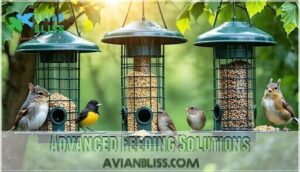
When basic feeders aren’t enough to keep larger birds and squirrels away from your small bird treats, you’ll need specialized equipment designed for selective feeding.
These advanced solutions use clever mechanisms like weight activation, protective caging, and barrier systems to guarantee only your target species can access the food.
Using Weight Activated Feeders
Weight-activated feeders revolutionize bird feeding tips by using adjustable springs that close feeding ports when squirrels climb aboard.
You’ll calibrate these squirrel proof feeders to accommodate specific bird weight ranges while blocking heavier intruders.
The mechanical seed flow control requires no power, and weather protection features guarantee reliable operation.
Regular maintenance frequency involves simple cleaning without complex calibration methods adjustments, making it an easy-to-use bird feeding solution.
Installing Cage Feeders
Cage feeders protect your small birds from larger, unwelcome visitors while guaranteeing safety and accessibility.
Follow these installation steps for best results:
- Cage size: Select cages with 1.5-inch openings that accommodate small birds but exclude larger species
- Bar spacing: Ensure uniform gaps prevent bird entrapment while allowing easy access
- Mounting options: Use sturdy poles or hanging systems that support the feeder’s weight
- Weather protection: Position cages under overhangs or add covers for bird feeder maintenance
- Bird safety: Check regularly for sharp edges or damaged bars during routine inspections
To maintain a healthy environment, consider using automatic feeder dispensers.
Proper cage feeder placement creates secure feeding zones where small birds thrive.
Utilizing Squirrel Proof Feeders
Advanced squirrel proof feeders combine multiple feeder mechanisms like weight-activated ports and baffle designs to outsmart persistent squirrel behavior.
These systems deliver exceptional cost analysis benefits by eliminating seed waste, while proper bird feeder placement and maintenance guarantee consistent performance.
Strategic location challenges require positioning feeders away from jump points for maximum effectiveness.
Frequently Asked Questions (FAQs)
What is the 5 7 9 rule for bird feeders?
The 5-7-9 rule helps create a feeding station that doesn’t overwhelm your feathered visitors.
You’ll place feeders five feet from cover, seven feet from walkways, and nine feet from windows to prevent collisions, following the 5-7-9 rule.
How do you make homemade bird feeders for small birds?
You’ll create fantastic feeders using pine cones, peanut butter, and birdseed.
Simply coat pine cones with peanut butter, roll them in seeds, then hang from branches using string or wire for delightful backyard entertainment.
How do you feed only small birds?
Use cage feeders with small openings or weight-activated perches that close when heavier birds land.
Choose tube feeders with 25-inch perch spacing and nyjer seed dispensers.
You’ll successfully attract finches, chickadees, and wrens while deterring larger species, using these methods to attract the desired birds.
How often should I refill small bird feeders?
Small birds consume about 20% of their body weight daily in seeds.
You’ll need to refill feeders every 2-3 days during peak feeding seasons like winter and spring breeding periods.
Check daily and top off when half-empty to maintain freshness.
What weather conditions affect small bird feeding?
Wind, rain, snow, and extreme temperatures substantially impact bird feeding patterns. You’ll notice fewer visitors during storms and cold snaps, while mild weather brings increased activity to your feeders.
When is the best time to start feeding?
Timing matters more than you’d think when starting your backyard bird buffet.
You’ll want to begin feeding during late fall or early winter when natural food sources become scarce and birds need reliable energy.
How do I attract specific small bird species?
Different bird species prefer specific seeds, feeders, and habitats.
You’ll attract goldfinches with nyjer seeds in tube feeders, cardinals with sunflower seeds at platform feeders, and chickadees with suet feeders placed near trees for cover.
What should I do if birds stop visiting?
When your feathered friends mysteriously vanish, don’t panic!
Check if you’ve cleaned feeders recently, replaced old seed, or if predators are lurking nearby.
Weather changes and natural food sources also affect visits substantially, which can be a key factor to consider when wondering what happened to your feathered friends.
Conclusion
Sarah noticed her tiny goldfinches struggling to reach the large feeder while aggressive blue jays dominated the station.
After switching to small bird feeding solutions with appropriately sized tubes and weight-activated perches, her yard transformed into a haven for chickadees, nuthatches, and finches.
Success comes from understanding that smaller birds need different strategies than their larger counterparts.
When you implement these targeted feeding methods, you’ll create an environment where delicate species thrive alongside natural food sources and proper shelter placement.
- https://scvbirdalliance.org/bird-feeders
- https://tempest.earth/resources/types-of-bird-feeders/
- https://www.wilddelight.com/resources/feeder-guide/
- https://www.farmstore.com/blog/feeding-feathered-friends-a-comprehensive-wild-bird-feeder-guide
- https://www.mountunion.edu/documents/academics%20section/centers/nature%20center/nc%20education%20resources/bird%20feeder%20fact%20sheet.pdf