This site is supported by our readers. We may earn a commission, at no cost to you, if you purchase through links.

yellow warbler perches two feet away, and you freeze. The color registers—bright, unmistakable—but then doubt creeps in.
yellow-rumped? Wilson’s? Prairie? Most birders hit this wall early, staring at a bird that won’t hold still while memory fails them completely.
The difference between frustration and confidence usually comes down to knowing which marks actually matter. Supercilium, wing bars, flank streaks, beak shape—songbird field guide markings aren’t just academic labels.
They’re a precise visual language, and once you learn to read it, every bird becomes a puzzle with real answers.
Table Of Contents
- Key Takeaways
- Key Songbird Field Guide Markings
- Identifying Songbirds by Markings
- Top Field Guides for Songbird Markings
- Practical Songbird Identification Techniques
- Frequently Asked Questions (FAQs)
- How to read a field guide?
- How do weather conditions affect songbird marking visibility?
- Can songbird markings indicate geographic subspecies differences?
- How do predators use songbird markings for targeting?
- Do captive songbirds retain their natural field markings?
- How do hybrid songbirds display mixed plumage markings?
- Conclusion
Key Takeaways
- A handful of structural marks — wing bars, supercilium, breast streaks, and beak shape — do most of the heavy lifting when you’re trying to nail a songbird ID in the field.
- Age, season, and lighting all change how a bird looks, so a single field mark never tells the whole story on its own.
- Pairing a trusted field guide with a sound ID app like Merlin closes the gap between a maybe and a confident match.
- The faster you learn to read plumage like a visual language, the more instinctive — and accurate — your identifications become.
Key Songbird Field Guide Markings
Every bird carries its story in plain sight — you just need to know where to look.
From wing bars to eye rings, songbird markings are nature’s field guide — each pattern a clue waiting to be read.
Every bird carries its story in plain sight — you just need to know where to look
A handful of key markings do most of the heavy lifting for confident identification.
Here’s what to pay attention to first.
Plumage Color Patterns and Contrasts

Plumage color patterns are your first field marks — the visual cues that separate species before you even raise your binoculars.
Scaled plumage creates a reptile-like texture; barred patterns cut across feathers in bold stripes. Breast band contrast draws the eye immediately.
Uniform color effects flag cardinals from a distance.
Mottled juvenile feather coloration fades fast, so catch it early.
Learn these, and bird identification clicks.
The thermoregulation function of plumage helps birds maintain temperature.
Wing Bars, Eye Stripes, and Supercilium

Once you’ve clocked the color, look for structure.
Wing bar formation comes from pale feather tips on the coverts — two white bars identify Northern Parula even after molt.
Eye stripe variability tells you a lot too: broad and dark in some flycatchers, thin and aligned with the lore in others.
Supercilium function goes beyond looks — those stiffened feathers rise during displays.
Bar contrast levels and marking visibility together sharpen every ID. Understanding contrast wingbar patterns aids precise warbler identification.
Breast, Belly, and Flank Streaks

Now look lower — breast streaks are where sparrow IDs really split apart.
Streak Shape Variation tells the story fast: Song Sparrows carry bold chevrons that coalesce into a central dark spot, while Lincoln’s Sparrows show fine, creamy-washed Streak Positioning limited to the upper breast.
Juvenile Streak Clarity differs too — young birds wear blurry, indistinct marks, unlike sharp adult flank streaks.
Streak Color Contrast and Streak Seasonal Shift enhance everything.
Beak Coloration and Shape

Once you’ve clocked the streaks, shift your eyes forward — the beak tells a different story.
Bill shape alone separates whole feeding guilds. Conical Beak Types like cardinals and grosbeaks crush seeds; Thin Pointed Beaks on warblers tweeze insects from leaves. Bicolored Bill Patterns, Vibrant Beak Pigments, and Seasonal Beak Shifts all sharpen bird identification fast.
Top beak field marks to know:
- Conical, seed-cracking bills — Cardinals, finches, sparrows
- Slender insect-tweezers — Warblers, parulas, thrushes
- Bicolored patterns — Dark upper, pale lower mandible
- Vibrant pigments — Cardinal’s red-orange signals peak health
- Seasonal shifts — Goldfinch bills brighten in the breeding season
Head Markings and Facial Patterns
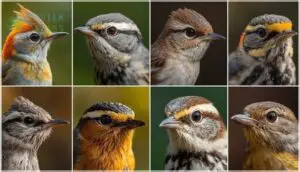
The face is where identification gets precise. Supercilium Variations alone separate look‑alike warblers—notice how a Dusky Warbler’s stripe narrows sharply in front versus Radde’s broader, softer sweep. Eyering Types, Malar Stripe Patterns, and Eyeline Contrast add layers fast.
Crown Markings clinch the deal: a Golden‑crowned Kinglet’s fiery orange cap is unmistakable. facial patterns, eye stripes, and plumage color patterns are your sharpest field marks.
Identifying Songbirds by Markings

Markings tell you a lot, but context tells you even more.
The same bird can look completely different depending on its age, the season, or the light hitting its feathers.
Here’s what to watch for when those variables come into play.
Recognizing Age: Juvenile Vs Adult Markings
Age tells a story — and feathers don’t lie. Juvenile plumage shows field marks worth memorizing: soft bill texture with pale gape flanges, pale iris color shift still in progress, and wing covert fringe with buff‑tipped edges.
- Tail feather length runs 20–30% shorter in juveniles
- Iris color shift completes by late summer
- Bill texture stays matte, not glossy
- Throat streak density covers roughly 50% of the throat
- Wing covert fringe appears buff‑edged, not clean like adult plumage
Seasonal Changes in Plumage
Seasons rewrite a songbird’s wardrobe twice a year — and knowing why helps you ID birds year‑round. Breeding plumage brightening happens through two mechanisms: prealternate molt timing in late winter and feather abrasion effects that wear away dull tips, exposing vivid color beneath.
| Season | What You’ll See |
|---|---|
| Breeding | Bolder streaks, brighter yellows, richer contrasts |
| Winter | Muted, camouflage‑friendly tones dominate |
Molting hormone cues trigger these shifts predictably.
Impact of Lighting on Marking Visibility
Light rewrites field marks right before your eyes. Overcast clarity is your best friend — soft, diffused light reveals true plumage patterns without shadow distortion, muddying the details. Harsh sun glare blows out pale belly markings.
Backlit halos outline shape but hide breast streaks entirely. For frontlight contrast, morning light sharpens wing bars and supercilia, maximizing the impact of lighting on bird identification.
Differentiating Similar Species by Markings
Similar species trip up even experienced birders. These five field marks cut through the confusion:
- Field marks first — check wing bar contrast and plumage patterns before anything else.
- Habitat cues — species recognition sharpens when you note where a bird feeds.
- Behavioral posture — a Hermit Thrush’s upright stance separates it from look-alikes.
- Geographic range — overlapping ranges demand understanding bird markings more carefully.
- Song variation — when detailed illustrations fail, sound confirms identity instantly.
Top Field Guides for Songbird Markings
A good field guide is worth its weight in feathers — it’s the difference between a confident ID and a frustrating maybe.
The right one matches your region, your skill level, and how you like to learn.
Here are five guides worth keeping in your bag.
1. Kaufman Field Guide Birds North America
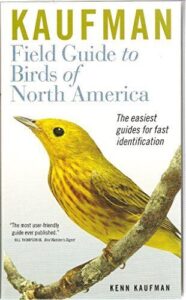
The Kaufman Field Guide to Birds of North America is one of the smartest tools you can carry in the field. Fits easily in a bag at just 4.75 by 7.5 inches and weighs under a pound.
Inside, 392 pages cover every regular North American species, organized by visual appearance — not taxonomy. That means similar-looking songbirds sit side by side for fast comparison.
Color-coded tabs, facing-page layouts, and lifelike photos showing male, female, and juvenile plumage make quick identification genuinely achievable.
| Best For | Beginner to intermediate birders who want a reliable, easy-to-use field guide they can toss in a bag and actually use on the trail. |
|---|---|
| Page Count | 390 pages |
| Language | English |
| Species Coverage | North American birds |
| Skill Level | Beginner to experienced |
| Visual Content | Colorful photos |
| Portability | Backpack-sized |
| Additional Features |
|
- Photos show males, females, and juveniles side by side — so you’re not guessing when the bird doesn’t match the “standard” look
- Organized by visual similarity rather than taxonomy, which makes finding a match way faster in the field
- Durable flexibound cover holds up well in rough weather
- At around 570g, it’s not exactly lightweight — might feel bulky on longer hikes
- Coverage per species is pretty brief, so serious birders may want something more in-depth alongside it
- English only, which limits who can use it
2. Carving Realistic Songbirds Step-by-Step Guide
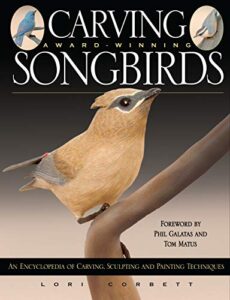
Field guides don’t always come in book form.
Lori Corbett’s Carving Award-Winning Songbirds takes a different approach — and for birders who want to truly understand plumage, it’s surprisingly useful.
Working through its 256 pages, you study wing bars, breast streaks, and facial patterns as physical forms you actually replicate.
Over 850 photos break down markings like supercilium and flank streaks in close detail.
When you can carve a marking, you’ll never misread it in the field again.
| Best For | Bird carvers at any skill level who want step-by-step guidance on creating realistic, competition-worthy songbirds. |
|---|---|
| Page Count | 256 pages |
| Language | English |
| Species Coverage | Songbirds focus |
| Skill Level | All skill levels |
| Visual Content | 850+ photos, 100 illustrations |
| Portability | Reference book |
| Additional Features |
|
- Packed with over 850 photos and 100 illustrations, so you can actually see what each technique looks like before you try it.
- Covers everything from texturing and painting to legs and feet, with paint mixing charts to take the guesswork out of color matching.
- Works as a long-term reference guide, not just a one-time read — great for coming back to as your skills grow.
- Leans heavily on power carving tools like grinders and woodburners, so hand carvers may find a lot of it doesn’t apply to them.
- The tools and materials recommended can get pricey, which adds up fast on top of the book’s cost.
- Some sections get pretty technical, which might feel overwhelming if you’re just starting out.
3. South America Passerine Songbird Field Guide
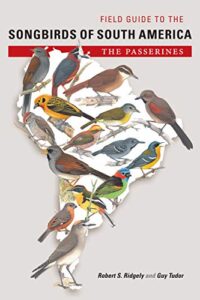
South America is a different beast entirely — nearly 2,000 passerine species packed into one continent.
Ridgely and Tudor’s guide addresses that complexity well.
You get 121 color plates illustrating over 1,500 species, with Guy Tudor’s paintings capturing plumage contrasts in real detail.
Range maps sit opposite the plates, so you’re not flipping back and forth mid-sighting.
Can’t carry the full 2.9 pounds? Split the plates from the text. That alone cuts field weight by over 70%.
| Best For | Serious birders and ornithologists who want the most thorough reference available for identifying South America’s passerine species. |
|---|---|
| Page Count | 760 pages |
| Language | English |
| Species Coverage | ~2,000 species |
| Skill Level | Intermediate to advanced |
| Visual Content | 121 color plates, 160 illustrations |
| Portability | Heavy, 2.9 lbs |
| Additional Features |
|
- Over 1,500 species illustrated across 121 color plates — Guy Tudor’s paintings are genuinely detailed and reliable for field ID
- Range maps sit right next to the plates, so you’re not hunting through the book mid-sighting
- Nearly 2,000 species covered with habitat, abundance, and range info — hard to beat for depth
- Around 500 species aren’t illustrated, so you may need a backup guide for some sightings
- At 2.9 pounds, it’s a workout to carry — not exactly pocket-friendly in the field
- The layout can feel a little awkward to navigate, especially if you’re flipping between text and plates on the go
4. Stokes Field Guide Birds North America

North America has its own density problem — 853 species, to be exact.
The Stokes Field Guide manages that scale without overwhelming you. Don and Lillian Stokes pair over 3,400 photos with range maps and behavioral notes, so you’re reading the whole picture, not just a single field mark.
The downloadable CD adds 600 vocalizations from 150 species — useful when plumage alone won’t settle the question.
It’s heavy at 3 pounds, but the depth justifies the weight at your desk.
| Best For | Birdwatchers and nature enthusiasts who want a thorough, stay-at-home reference for identifying and learning about North American birds. |
|---|---|
| Page Count | 816 pages |
| Language | English |
| Species Coverage | 853 species |
| Skill Level | All skill levels |
| Visual Content | 3,400+ color photos |
| Portability | Heavy, 3.05 lbs |
| Additional Features |
|
- Covers 853 species with over 3,400 color photos, range maps, and behavioral notes — hard to beat for depth
- The downloadable CD with 600 bird sounds is a great bonus when you need to ID by ear
- Written by Don and Lillian Stokes, two names birders actually trust
- At 3 pounds, it’s not something you’ll want to haul on a trail or backpacking trip
- Not every North American species makes the cut, so there are gaps
- The size and weight make it more of a desk reference than a true field guide
5. Sibley North American Bird Guide
Where the Stokes leans on photography, the Sibley Guide earns its reputation through illustration.
David Sibley painted over 6,600 images covering 810 species and 350 regional populations — that’s serious coverage in one volume.
Every species gets length, wingspan, and weight measurements, plus full voice descriptions.
Range maps use red, blue, purple, and yellow to show seasonal movement clearly.
At 544 pages and 2.55 pounds, it’s a desk-weight reference, but the comparison layouts make it worth keeping close.
| Best For | Birders who want a comprehensive, illustration-based reference for identifying North American species at home or at the desk. |
|---|---|
| Page Count | 544 pages |
| Language | English |
| Species Coverage | 810 species |
| Skill Level | Novice to experienced |
| Visual Content | 6,600+ illustrations |
| Portability | Heavy, 2.55 lbs |
| Additional Features |
|
- Over 6,600 hand-painted illustrations covering 810 species and 350 regional populations — more visual depth than most guides out there
- Every species includes length, wingspan, weight, and full voice descriptions, so you get the full picture in one place
- Color-coded range maps clearly show seasonal movement, migration routes, and rare sightings at a glance
- At 2.55 pounds, it’s heavy enough that most birders will leave it at home rather than take it into the field
- Range maps, while detailed, may feel overwhelming for beginners still learning how to read them
- The illustration-only approach means you won’t get the photographic realism some birders prefer for real-world ID comparisons
Practical Songbird Identification Techniques

Knowing what to look for is half the battle.
The other half is building habits that make identification feel automatic, not stressful. Here are four practical techniques that sharpen your skills in the field.
Using Field Guides and Mobile Apps
Your two best tools are a good field guide and Merlin Bird ID on your phone.
Field guides give you illustrated comparisons, offline map integration, and interactive range maps that confirm what’s possible in your area.
Merlin adds app custom filters, crowdsourced photo validation, and user data sync across devices.
Together, these bird identification techniques — including interactive flashcards for practice — turn uncertainty into confident, accurate IDs.
Observing Songbird Behavior and Habitat
Watching behavior unlocks what markings alone can’t tell you. A bird’s foraging strategies, perching preferences, and flight patterns reveal identity fast.
- Territorial Songs ring from exposed perches at dawn — follow the sound.
- Nesting Microhabitats narrow your search; sparrows nest low, canopy species go high.
- Foraging zones separate species sharing the same tree.
Behavior is your second field guide.
Practicing Identification in Different Environments
Switching habitats sharpens your eye faster than any book can.
In open fields, Open Field Contrast makes field marks pop — bold stripes, flank streaks, everything.
Move into the understory, and Understory Camouflage hides those same details instantly.
Canopy Visibility drops at dawn, when Dawn Lighting flattens colors, and Urban Light Pollution muddies pale bellies at night.
Use field guides, mobile apps, and habitat clues together.
Leveraging Bird Song and Sound for Confirmation
Sound confirms what your eyes catch first. A bird’s vocalization is its fingerprint — pitch pattern analysis, rhythm signature matching, and call duration cues together nail the ID.
- Use spectrogram overlay techniques in Merlin or Song Sleuth for visual confirmation
- Apply regional dialect comparison when White-crowned Sparrows sound slightly “off
- Cross-check songs against Macaulay Library recordings
- Sharpen bird ID skills by pairing songbird behavior with vocalization
Frequently Asked Questions (FAQs)
How to read a field guide?
Think of a field guide as a map legend. Field marks, range map interpretation, seasonal color codes, habitat icons, and measurement units are your symbols — learn them once, and every illustration starts talking back to you.
How do weather conditions affect songbird marking visibility?
Weather rewrites what you see.
Rain‑induced streaks fake markings, fog contrast loss dulls field marks, overcast enhancement sharpens them.
Wind feather ruffling hides flanks.
Sun glare washout fades supercilia.
Learn the light first.
Can songbird markings indicate geographic subspecies differences?
Yes — same species, wildly different looks. A Song Sparrow in coastal California flaunts sharp black streaks, while desert Southwest birds show pale, rufous-washed regional plumage variation.
Geographic throat coloration, habitat-linked flank streaks, and elevation-driven crown markings all whisper subspecies identity.
How do predators use songbird markings for targeting?
Raptors exploit field marks as targeting cues.
Wing bar tracking guides pursuit flights, chest patch targeting locks onto luminance contrast, and eye stripe exploitation directs precise strikes — predator visual contrast and forehead badge detection turn your bird’s markings against it.
Do captive songbirds retain their natural field markings?
Mostly, yes — the blueprint holds.
Captive songbirds retain their core field marks, but Diet‑Induced Fading and Stress‑Related Feather Quality can dull the contrast, making avian identification trickier than a field guide suggests.
How do hybrid songbirds display mixed plumage markings?
Hybrid songbirds blend parent traits unpredictably.
Throat Patch Genetics, Facial Color Blends, and Wing Bar Intermediates create mosaic patterns.
Tail Feather Mosaic and Underpart Streak Variability make standard field marks unreliable — experience matters most here.
Conclusion
A beginner sees a flash of yellow and walks away, uncertain. You see a supercilium, clean wing bars, and unstreaked flanks—and walk away with a name.
That’s what songbird field guide markings actually give you: not just labels, but a reliable way to read what’s in front of you.
The more you practice, the faster the puzzle solves itself. Every bird you identify correctly builds the instinct that makes the next one easier.
- https://www.allaboutbirds.org/news/bird-id-skills-field-marks/
- https://blog.mybirdbuddy.com/post/how-to-identify-birds-plumage
- https://guloinnature.com/birdwatching-basics-part-2-field-marks/
- https://www.basicsofbirding.com/blog/how-to-identify-birds-looking-for-key-field-marks
- https://avianreport.com/bird-plumage/