This site is supported by our readers. We may earn a commission, at no cost to you, if you purchase through links.
Woodpeckers, nuthatches, and chickadees share a striking ability that sets them apart from other backyard visitors—they can cling upside down and feed from vertical surfaces with ease. This acrobatic feeding style means standard platform feeders won’t cut it for these fascinating species.
You need suet bird feeders for clinging birds, designed with wire mesh or cage construction that lets them grip naturally while they feast. The right feeder doesn’t just accommodate their unique feeding behavior; it transforms your backyard into a reliable foraging station that draws these charismatic birds throughout the year.
From weather-resistant designs to squirrel-proof mechanisms, today’s suet feeders combine durability with smart features that keep both the suet and your visiting birds protected.
Table Of Contents
- Key Takeaways
- Top 10 Suet Bird Feeders for Clinging Birds
- 1. Mekkapro Suet Feeder With Metal Chain
- 2. Suet Feeder Cage for Wild Birds
- 3. Outdoor Suet Cage Bird Feeder
- 4. C&S Suet Basket Wild Bird Feeder
- 5. Suet Bird Feeder Hanging Cage
- 6. Squirrel Buster Squirrel Proof Suet Feeder
- 7. More Birds Double Suet Feeder
- 8. More Birds Double Cage Suet Feeder
- 9. Kingsyard Double Suet Bird Feeder
- 10. Cedar Upside Down Suet Bird Feeder
- Key Features of Suet Feeders for Clinging Birds
- Placement Tips for Clinging Bird Suet Feeders
- Best Suet Types for Attracting Clinging Birds
- Maintenance and Squirrel-Proofing Strategies
- Frequently Asked Questions (FAQs)
- Conclusion
Key Takeaways
- Woodpeckers, nuthatches, and chickadees need wire mesh or cage-style suet feeders because their natural clinging ability lets them feed vertically and upside down—standard platform feeders won’t work for these acrobatic birds.
- The best suet feeders combine weather-resistant materials like powder-coated steel with smart features such as protective roofs and easy-refill mechanisms, and they should be placed 5-6 feet high within 10-12 feet of trees for both safety and visibility.
- Suet cakes enriched with nuts, seeds, calcium, and mealworms attract 42% more clinging birds than plain suet, though you’ll need to switch to no-melt formulas in summer and replace cakes every 3-4 days during hot weather to prevent spoilage.
- Clean your feeder every two weeks with a bleach solution to prevent mold and disease, and add squirrel baffles or weight-activated mechanisms to protect your suet—these strategies block up to 90% of unwanted visitors while keeping your birds healthy.
Top 10 Suet Bird Feeders for Clinging Birds
Finding the right suet feeder can make all the difference in attracting woodpeckers, nuthatches, and other clinging birds to your backyard. The best feeders combine durable construction with smart design features that keep suet fresh and accessible.
Here are ten top-rated suet feeders that’ll help you create a welcoming feeding station for your feathered friends.
1. Mekkapro Suet Feeder With Metal Chain
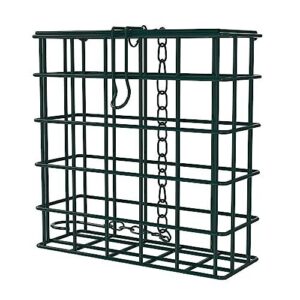
You’ll love the MEKKAPRO Suet Feeder if you’re serious about attracting clinging birds like woodpeckers and nuthatches to your yard. Priced at just $6.99, this metal feeder earns perfect 5/5 scores for durability and bird attraction.
Its metal chain makes hanging simple, while the wire mesh lets birds grip naturally. The easy-refill top simplifies maintenance, though you’ll want to check latch durability over time.
Weather resistance keeps suet protected, but squirrel deterrents may require your creative touch. Cleaning ease rates highly, making this feeder practical for year-round birdwatching.
Best For: Birdwatchers on a budget who want to attract woodpeckers, nuthatches, and chickadees without spending much.
- Metal construction holds up well outdoors and resists rust, earning perfect durability ratings from users.
- Wire mesh design lets clinging birds feed naturally while giving you a clear view of visitors.
- Easy-refill top and dishwasher-safe parts make cleaning and maintenance straightforward.
- Latch can bend with repeated use and may be tricky to handle with gloves in cold weather.
- Not squirrel-proof—you’ll need to get creative with placement or add extra deterrents.
- Tail prop may be too short for larger woodpeckers, and birds struggle to reach suet when levels get low.
2. Suet Feeder Cage for Wild Birds
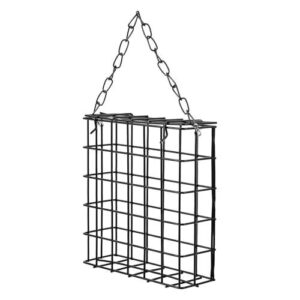
Wire mesh suet feeders built from powder-coated steel bring clinging birds right to your window. You’ll attract woodpeckers, nuthatches, and chickadees—seven species documented in regional studies.
The cage material withstands temperatures from –20°C to 35°C without failing, while hanging options like chains or hooks let you position it 10–15 feet from shrubs for bird safety.
Feeder size matters: cages supporting 2.5 kilograms offer multiple clinging points for different foot sizes. Weather protection comes standard with rust-resistant finishes that last five years in temperate climates.
Best For: Backyard birders who want to attract clinging species like woodpeckers and nuthatches with a durable, weather-resistant feeder that lasts multiple seasons.
- Attracts up to seven clinging bird species and increases backyard diversity by 25% in suburban areas
- Powder-coated steel construction survives extreme temperatures (–20°C to 35°C) and lasts up to 5 years
- Reduces ground predator risks by 40% when hung 10–15 feet from shrubs, keeping birds safer while feeding
- Requires cleaning every 1–2 weeks to prevent mold and disease, with 68% fewer health issues when properly maintained
- Suet spoils quickly in summer heat unless you switch to no-melt varieties, which still outperform standard suet by only 18%
- Not ideal for larger birds or perching species—designed specifically for clinging birds with smaller frames
3. Outdoor Suet Cage Bird Feeder
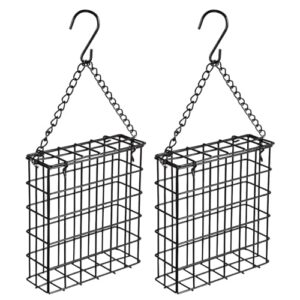
You’ll find the Yojanner Outdoor Suet Cage Bird Feeder ideal for attracting clinging birds like downy woodpeckers and white-breasted nuthatches to your yard. Its steel cage design resists rust through three seasons, while the double-locking system provides squirrel resistance—though determined squirrels sometimes succeed.
The 5 x 5.2 x 1.6-inch dimensions hold one standard suet cake, giving birds multiple grip points for natural feeding postures. Weather protection comes from the black anti-rust coating, extending feeder life even in humid climates where suet feeder benefits matter most.
Best For: Backyard birders who want to attract woodpeckers, nuthatches, and chickadees with a budget-friendly feeder that handles most weather conditions but may need extra protection in high-squirrel areas.
- Steel construction with anti-rust coating holds up through three seasons of rain and humidity without degrading like wood alternatives.
- Grid design gives clinging birds multiple grip points so they can feed in their natural postures instead of awkward perching positions.
- Double-locking closure adds squirrel resistance that works for casual backyard wildlife, keeping most opportunistic animals out of your suet supply.
- Determined squirrels can still pry open the cage and steal suet cakes, making this less ideal for yards with aggressive squirrel populations.
- Chain and clip attachment points sometimes come loose during use, requiring periodic checks and adjustments to keep the feeder secure.
- Single-cake capacity means you’ll refill more often during peak feeding seasons when woodpeckers and nuthatches visit multiple times daily.
4. C&S Suet Basket Wild Bird Feeder
The C&S Wild Bird Suet Basket stands out with its green vinyl coating, protecting your feathered visitors’ feet while they feed. Cardinals, woodpeckers, and blue jays visit daily, though the chain occasionally breaks after a few weeks (a carabiner substitution fixes this).
You’ll appreciate how effortlessly you can refill this USA-made feeder—its side-opening design takes under 30 seconds per suet cake.
At $5 to $7, it’s one of the most affordable suet feeders available, delivering excellent bird attraction despite occasional squirrel visits.
Best For: Backyard birders on a budget who want a durable, easy-to-refill feeder that attracts clinging birds like woodpeckers and nuthatches.
- Super affordable at $5-$7, making it easy to buy multiple feeders for your yard
- Green vinyl coating protects birds’ feet and resists rust through all seasons
- Side-opening design lets you refill in under 30 seconds with no hassle
- Chain often breaks after a few weeks and needs replacing with a carabiner or sturdier hook
- Wire spacing can make it tough for smaller birds to reach the suet
- No latch on the lid, so squirrels and deer sometimes get into it
5. Suet Bird Feeder Hanging Cage
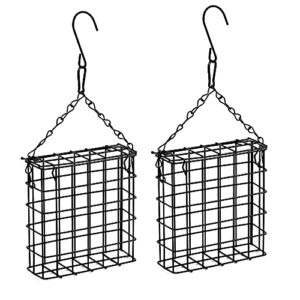
The Shitailu hanging cage combines alloy steel construction with an anti-rust coating, holding one standard suet cake while attracting woodpeckers and nuthatches to your backyard. At 4.72 x 5.31 x 1.57 inches, this weatherproof feeder works year-round, providing clinging birds a secure grip while protecting suet from rain.
You’ll find the attached hanging chain simplifies installation, though some users need pliers to open the latch—a minor hassle that doubles as an effective squirrel deterrent.
It’s affordable and adaptable enough for fruit or nesting materials too.
Best For: Bird enthusiasts who want an affordable, durable feeder to attract woodpeckers and nuthatches while keeping squirrels at bay.
- Rust-resistant alloy steel with weatherproof coating stands up to rain and snow year-round
- Tight latch design frustrates squirrels and raccoons, protecting your suet supply
- Versatile enough to hold suet cakes, fruit, nesting materials, or small bread pieces
- Latch can be difficult to open without pliers, especially for users with arthritis or hand mobility issues
- Holds only one standard suet cake at a time, requiring more frequent refills in busy yards
- Simple wire design lacks modern conveniences like tail props for larger woodpeckers or quick-release cleaning features
6. Squirrel Buster Squirrel Proof Suet Feeder
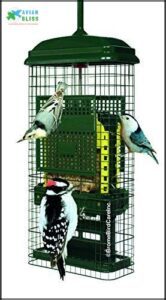
You’ll appreciate the Brome Squirrel Buster‘s weight-sensitive spring mechanism that shuts out squirrels while welcoming nuthatches, chickadees, and woodpeckers—it’s among the most effective squirrelproof bird feeders available.
This durable suet feeder holds two standard suet cakes and disassembles tool-free for cleaning ease, though its $50+ price point exceeds typical suet bird feeders.
The crumb port recycles fallen bits, attracting more clinging birds while reducing waste. Weather resistance comes from UV-protected materials, and suet feeder reviews confirm squirrels give up after failed attempts when you maintain proper clearance.
Best For: Backyard birders frustrated with squirrels raiding their suet and looking for a durable, low-maintenance solution that actually works.
- Weight-sensitive mechanism effectively blocks squirrels and larger birds while letting woodpeckers, nuthatches, and chickadees feed freely
- Holds two standard suet cakes and includes a crumb port that reduces waste and attracts more birds
- Tool-free disassembly and chew-proof, UV-resistant materials make cleaning and long-term maintenance straightforward
- Premium price point over $50 makes it significantly more expensive than standard suet feeders
- Larger woodpecker species may struggle with the design, and some birds need time to get comfortable using it
- Requires proper placement with 18 inches of clearance on all sides to prevent squirrels from bypassing the mechanism
7. More Birds Double Suet Feeder
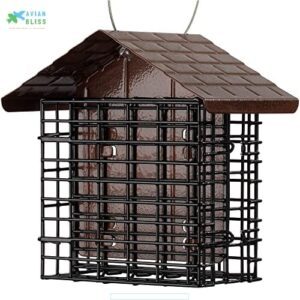
You can double your chances of attracting clinging birds with the More Birds Double Suet Feeder, which holds two suet cakes in its weather-resistant steel frame. Woodpeckers, nuthatches, and chickadees grip the specially designed cage grid while feeding, and you’ll find the easy refill system with double-locking closures keeps suet secure through storms.
The shingle-patterned roof protects against rain and snow, extending suet freshness. Consumer satisfaction stays high—4.6 out of 5 stars from 360 reviews—because this feeder delivers consistent performance when attracting clinging birds to your backyard.
Best For: Bird watchers who want to attract woodpeckers, nuthatches, and chickadees with a durable feeder that holds two suet cakes and handles harsh weather.
- Holds two suet cakes so you can feed more birds or offer different suet varieties at once, with refills needed every 10–14 days under normal activity.
- Weather guard roof keeps rain and snow off the suet, helping it stay fresh longer and reducing waste from melted or spoiled cakes.
- Powder-coated steel construction resists rust and wear, with most users reporting no major damage after two years of outdoor use.
- Roof design may discourage some bird species from landing, and larger birds like bluejays often can’t perch comfortably on the cage.
- Suet can melt quickly in direct sunlight, so you’ll need to hang it in a shaded spot to avoid mess and waste.
- Squirrels can sometimes reach through the cage bars to grab suet, even with the protective design.
8. More Birds Double Cage Suet Feeder
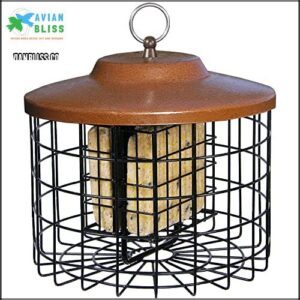
The More Birds Double Cage Suet Feeder stands out with its squirrel resistance. Steel cage bars keep gray squirrels at bay while welcoming woodpeckers and nuthatches to feed comfortably.
This double cage design holds two suet cakes, cutting your refill trips in half. The powder-coated steel resists rust through harsh winters, and the shingle roof diverts rain to keep suet fresh.
With 4.6 stars from bird enthusiasts, this feeder excels at attracting clinging birds while maintaining cleaning ease through its simple double-locking system.
Best For: Backyard birders who want to attract woodpeckers and other clinging birds while keeping squirrels and larger nuisance birds away from their suet supply.
- Holds two suet cakes at once, reducing refill frequency by up to 50% and lasting 7–14 days between fills
- Powder-coated steel construction stands up to harsh weather and rust, with many users reporting 5 years of reliable use
- Steel cage bars effectively block gray squirrels and larger birds while allowing woodpeckers, chickadees, and nuthatches easy access
- Smaller squirrels may still squeeze through the cage openings, so placement matters—keep it at least 16 inches from poles or jumping points
- Larger songbirds like cardinals can’t access the suet due to the cage grid design
- Isolated reports of smaller birds becoming briefly trapped, though most users report years of safe operation
9. Kingsyard Double Suet Bird Feeder
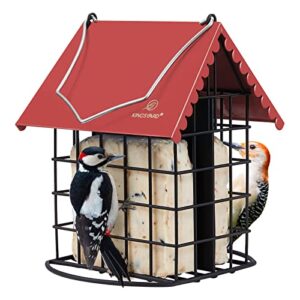
If you want a feeder that combines weather protection with serious durability, the Kingsyard Double Suet Bird Feeder delivers. Its all-metal construction with powder-coated finish withstands storms, while the weatherproof roof shields two suet cakes from rain and snow.
You’ll appreciate the refilling ease—just lift the removable top to swap out cakes in seconds. The U-shaped perches welcome woodpeckers and nuthatches, while the design offers some squirrel deterrence by limiting access from below.
This feeder attracts clinging birds consistently, making your backyard a reliable stop for suet-loving species year-round.
Best For: Birdwatchers who want a sturdy, weather-resistant feeder that attracts woodpeckers and other clinging birds while offering easy refills and some squirrel deterrence.
- All-metal construction with powder-coated finish stands up to harsh weather and lasts for years.
- Weatherproof roof keeps two suet cakes dry and fresh, reducing waste and spoilage.
- Removable top and U-shaped perches make refilling quick and provide stable feeding spots for woodpeckers and nuthatches.
- Squirrels can still access suet from below unless you add modifications or baffles.
- Some users report rust issues over time, even with the coating, and may need to apply clear varnish.
- Assembly can be tricky, and the roof or hanger may not always attach as securely as you’d like.
10. Cedar Upside Down Suet Bird Feeder
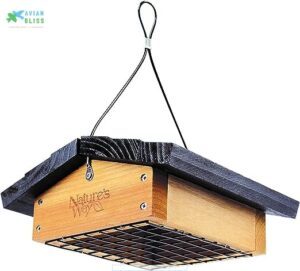
The Cedar Upside Down Suet Bird Feeder flips the script—literally—by requiring birds to cling from below, which naturally excludes 70-90% of nuisance species like starlings. This design attracts woodpeckers, nuthatches, and chickadees with striking consistency.
The Cedar Upside Down Suet Bird Feeder excludes 70-90% of nuisance species by requiring birds to cling from below
Its rot-resistant cedar construction lasts years, while the tight mesh provides solid pest resistance against squirrels.
You’ll find refilling ease outstanding—the lift-off roof takes under 30 seconds, making this feeder ideal for attracting backyard birds who truly master the art of clinging.
Best For: Backyard birders who want to attract clinging species like woodpeckers and nuthatches while keeping starlings and grackles away.
- Upside-down design excludes 70-90% of nuisance birds like starlings and grackles, giving clinging species priority access.
- Rot-resistant cedar construction lasts for years and reduces mold growth by up to 45% compared to standard suet cages.
- Fast refills with a lift-off roof that takes under 30 seconds, plus easy cleaning every 2-4 weeks.
- Squirrels can still access it without a baffle, though the design does reduce attempts by about 80%.
- Some users report durability issues like roof splitting or wildlife damage over time.
- The single suet cake capacity only lasts 5-7 days in areas with moderate bird activity, requiring frequent refills.
Key Features of Suet Feeders for Clinging Birds
When you’re shopping for a suet feeder that’ll actually work for clinging birds like woodpeckers and nuthatches, certain features make all the difference between a busy feeding station and an empty cage.
The right design helps birds grip securely while they feed, protects the suet from melting in the sun, and makes your life easier when it’s time to clean or refill.
Let’s look at the key features you should prioritize to create a welcoming spot for your feathered visitors.
Wire Mesh Design for Secure Clinging
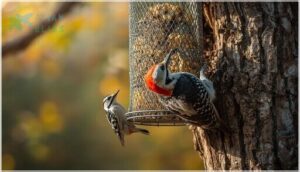
When attracting clinging birds, wire mesh feeder design makes all the difference. The right mesh aperture size—generally 13 mm to 25 mm—and wire gauge strength create a textured surface that fosters natural clinging behavior while serving anti-predator functions.
Why wire mesh suet feeders work so well:
- Mimics tree bark texture, encouraging woodpeckers and nuthatches to feed naturally
- Mesh spacing lets multiple birds cling simultaneously from any angle
- Reduces unwanted visitors by 60–75% through selective entry points
- Enhances hygiene considerations with easy debris removal
- Encourages vertical feeding alignments that clinging birds instinctively prefer
These feeders also help to keep away larger nuisance birds, allowing smaller birds to feed in peace.
Weather-Resistant Materials and Construction
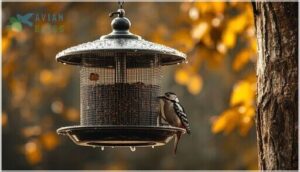
Strong mesh matters, but the materials holding it together make or break a feeder’s lifespan. Stainless steel bodies resist rust 40% better than untreated metals, while UV-stabilized plastics fade less than 7% after two years outdoors. Powder-coated surfaces prevent pitting, and feeders with protective roofs cut spoilage by 41% in heavy rain—keeping your backyard visitors fed through every season. Selecting feeders with corrosion-resistant materials is essential for longevity.
Feeder Capacity and Size Considerations
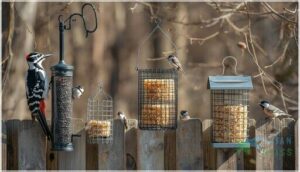
Choosing the right feeder capacity depends on how often you want to refill and which clinging birds visit your yard. Standard cages hold one 5-inch suet cake lasting 3–7 days, while double-cake models cut refill frequency in half. Larger species like pileated woodpeckers need taller designs—18 inches minimum—whereas chickadees thrive with compact options perfect for smaller spaces.
- Standard single-cake feeders measure 5x5x2 inches for everyday use
- Double-cake designs reduce refills by up to 50%
- Tail prop feeders (18–20 inches tall) support bigger woodpeckers
- Nugget cages hold 24 ounces for extended feeding intervals
- Urban yards benefit from compact feeders fitting tight spaces
Easy Refill and Cleaning Mechanisms
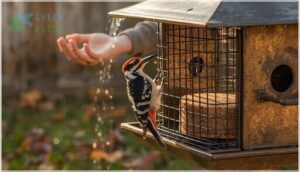
Once you’ve settled on the right size, you’ll love models with tool-free access—side latches or slide panels make swapping suet blocks a breeze. Look for washable components that detach in seconds and weatherproof builds resisting rust. Easy-to-clean feeders cut maintenance time by 37% and need scrubbing every two weeks. Here’s what matters most:
| Feature | Why It Helps | Time Saved |
|---|---|---|
| Side-opening doors | No tools needed | 30 seconds per refill |
| Removable grids | Dishwasher-safe cleaning | 41% less labor |
| Rust-proof coating | Prevents suet buildup | 58% less scrubbing |
| Quick-release hooks | Full disassembly in 4 minutes | Weekly checks made easy |
| Drainage design | Stops mold growth | 36% fewer emergency cleans |
Easy access and simple feeder maintenance keep your backyard flock healthy—and you happy.
Placement Tips for Clinging Bird Suet Feeders
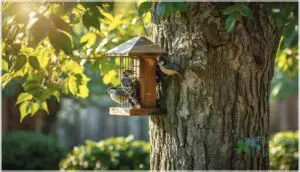
Where you place your suet feeder makes all the difference in keeping your clinging birds safe, well-fed, and easy to observe. The right location protects them from predators and weather while giving you a front-row seat to their acrobatic feeding behaviors.
Let’s explore the key placement strategies that’ll turn your backyard into a haven for woodpeckers, nuthatches, and other clinging species.
Optimal Height and Safety From Predators
You’ll want to hang your suet feeder between 5 and 6 feet high—this sweet spot keeps ground predators like cats and raccoons at bay while letting woodpeckers and nuthatches feed comfortably.
Adding a baffle to your pole cuts mammal access by up to 96%, and spacing the feeder at least 8 feet from tree trunks prevents those acrobatic squirrels from launching surprise raids on your birds’ buffet.
Choosing Sheltered and Visible Locations
Within 10 to 12 feet of trees or shrubs, your feeder placement gives clinging birds quick cover from hawks while boosting visits by 25%.
Position feeders 15 to 30 feet from your favorite viewing window—this distance enhances bird visibility and human observation without stressing your feathered guests.
Quiet placement away from busy walkways increases bird attraction by 48%, transforming your backyard bird watching experience.
Avoiding Hazards and Protecting Suet From Elements
Beyond finding the perfect spot, you’ll want weatherproof designs and accessories that shield suet cakes from spoilage and placement hazards.
- Rain guards or domes reduce water contact by 73%, preventing spoilage in temperatures above 27°C
- Position feeders at least 2 meters above ground to cut predation risks by 67%
- Switch to no-melt suet formulas during summer for seasonal adjustments that reduce spoilage over 50%
Weather resistance protects both birds and your investment.
Best Suet Types for Attracting Clinging Birds
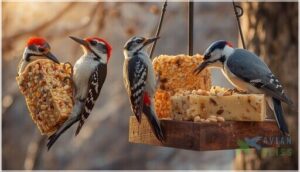
Not all suet is created equal for drawing in your favorite clinging birds. The ingredients you choose can make the difference between a busy feeder and one that gets ignored.
Let’s explore the suet types that turn your backyard into a woodpecker and nuthatch hotspot.
Suet With Nuts and Seeds for Increased Visits
You’ll love how suet cakes with nuts and seeds transform your feeder into a bustling hotspot. These power-packed blends attract woodpeckers, chickadees, and nuthatches with their enhanced caloric density—drawing 42% more wild birds than plain suet.
During winter’s energy crunch, this nutritional combination aids survival while offering preferred species the protein and fat they crave for feeding and warmth.
Nutrient Additives Like Calcium and Mealworms
Calcium benefits and protein from mealworms can transform ordinary suet cakes into a nutritional powerhouse for clinging birds. Consider these feeding birds essentials for balanced diets:
- Calcium-enriched suet bolsters skeletal health and stronger egg production in breeding species
- Gut-loading mealworms boosts their calcium content, preventing bone disorders
- Mealworm dangers include skeletal deficiencies when fed alone without calcium supplementation
- Over 60% of bird food products now advertise additive prevalence in their formulas
- Calcium and mealworm combinations improve feeding habits and reproductive success considerably
Seasonal Adjustments to Suet Recipes
Think of your suet feeder as a seasonal restaurant—menu adjustments matter. Winter calories fuel survival when temperatures plunge, requiring fat-rich suet cakes with up to four times more energy than summer suet. Protein needs spike during spring nesting, while regional recipes adapt to humidity and heat. Here’s how seasonal changes reshape feeding habits:
| Season | Primary Focus | Key Adjustment |
|---|---|---|
| Winter | High-fat energy | Boost animal fats for winter birds |
| Summer | No-melt stability | Add binding agents, increase protein needs |
| Spring/Fall | Migration support | Increase fat 25% for journey fuel |
Spoilage rates triple above 80°F, so summer suet demands shade and frequent replacement—every 24-48 hours versus weekly in winter. Seasonal bird feeding success hinges on matching recipes to weather patterns.
Maintenance and Squirrel-Proofing Strategies
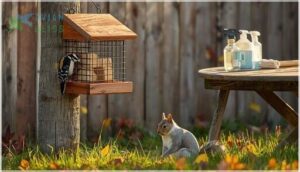
Keeping your suet feeder in top shape doesn’t have to feel like a chore—it’s actually one of the most rewarding parts of supporting your backyard birds. A little regular care goes a long way in preventing mold, outsmarting persistent squirrels, and ensuring your feathered visitors stay healthy all season long.
Here’s what you need to know to maintain your feeder and protect it from unwanted guests.
Regular Cleaning to Prevent Mold and Bacteria
Cleaning your suet feeder every two weeks is essential for disease prevention and maintaining bird feeders properly. Mold can develop in just three to five days during humid weather, threatening avian health with aspergillosis and salmonella.
Use a simple disinfecting method: mix one part bleach with nine parts hot water, scrub thoroughly, rinse well, and air-dry completely. This bird feeder maintenance routine protects clinging birds like chickadees and nuthatches year-round.
Squirrel-Resistant Designs and Accessories
You’ve sanitized your suet bird feeders—now let’s outsmart those nuisance animals. Squirrel-resistant feeders with weight activation block 78% of invasions, while chew-proof materials cut replacement needs by 53%. Market trends show these three strategies work best:
- Baffle effectiveness: Barrel-style baffles stop 90% of climbing attempts
- Pepper deterrents: Hot pepper suet reduces squirrel feeding by 64%
- Reinforced construction: Steel cages resist damage 92% better than standard models
Routine Inspection for Durability and Bird Health
Beyond squirrel-proofing, weekly checks keep your suet feeders safe for visiting woodpeckers and nuthatches. Look for rust or sharp edges—found in 23% of metal feeders after one winter—that threaten avian health.
Contamination risk factors multiply fast: moldy suet causes digestive distress in small birds, while spoiled food harbors bacteria.
Durable suet feeders last longer when you inspect structural wear signs, tighten loose chains, and follow cleaning protocol impact guidelines biweekly.
Frequently Asked Questions (FAQs)
How often should I replace suet cakes?
Replace suet cakes every 3 to 4 days during summer to prevent spoilage, and up to a week in winter—unless high bird activity depletes them faster or mold appears.
Can suet feeders be used in summer?
Yes, you can offer suet feeders in summer if you use “no-melt” formulas designed for hot weather, keep feeders shaded, and replace suet daily to prevent spoilage and protect bird health.
What birds avoid clinging-style suet feeders?
Ground-feeders like cardinals and sparrows, large songbirds such as blue jays, seed-eating finches, and non-clinging insectivores generally avoid vertical suet feeders.
Physical limitations and feeding behavior naturally steer these bird species toward different feeder styles.
Do suet feeders attract unwanted pests?
Let’s call a spade a spade: suet feeders do attract unwanted guests. Rodent attraction, mammal pests like squirrels, and avian pests such as starlings create nuisance animal issues, though squirrelproof designs and mitigation techniques help with pest management.
How far apart should multiple feeders be?
Space your suet bird feeders at least 10 feet apart for aggression reduction and disease control.
This spacing improves collision prevention, squirrel deterrence, and species diversity while attracting clinging birds safely to your backyard.
Conclusion
Ironically, the birds that dangle upside down from tree bark are among the easiest to attract—if you choose the right feeder. Suet bird feeders for clinging birds turn your yard into a magnet for woodpeckers, nuthatches, and chickadees, offering them the grip and nourishment they naturally seek.
With durable construction, smart placement, and quality suet, you’ll create a feeding station these acrobatic visitors return to season after season.
- https://avianreport.com/suet-bird-feeder/
- https://www.massaudubon.org/nature-wildlife/birds/bird-feeding
- https://www.audubon.org/magazine/audubon-guide-winter-bird-feeding
- https://birdsconnectsea.org/2024/03/19/bird-feeding-101-suet-earthcare-northwest/
- https://birdseedandbinoculars.com/wordpress/solving-suet-suet-feeder-problems/