This site is supported by our readers. We may earn a commission, at no cost to you, if you purchase through links.
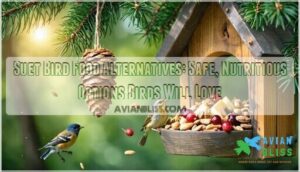 If you’re looking for suet bird food alternatives, you’ve got plenty of safe, nutritious options that birds will love.
Peanut butter is a fantastic substitute—spread it on pine cones or mix it with seeds for a high-energy treat. You can also melt lard (just like suet) and add ingredients like sunflower seeds, oats, dried fruit, or unsalted nuts.
Mealworms are another protein-packed option, perfect for insect-loving birds. Fresh fruits like apples, oranges, or berries work well, too, especially for species attracted to sweet snacks.
Get creative but skip sugary or salty foods—they’re no good for birds. Ready to wow your feathered visitors?
Table Of Contents
- Key Takeaways
- Suet Bird Food Basics
- Choosing Suet Ingredients
- Suet Feeder Placement Tips
- Alternative Bird Food Options
- Suet Feeding Best Practices
- Frequently Asked Questions (FAQs)
- What is a good alternative to bird suet?
- How to make homemade bird suet?
- What can I use to bind bird seed together?
- Is homemade suet a good bird food?
- Is jackfruit the next big meat substitute?
- How do I choose the best suet for birds?
- What birds eat suet?
- Does suet attract birds?
- Are suet cakes good for birds?
- What is a good suet alternative for birds?
- Conclusion
Key Takeaways
- Mix peanut butter with seeds or spread it on pine cones for a high-energy suet alternative birds will love.
- Use lard or coconut oil as a base and add seeds, dried fruits, or nuts to create nutritious homemade suet blends.
- Offer mealworms or fresh fruits like apples and berries to attract insect-loving and fruit-eating birds.
- Avoid sugary or salty foods and keep feeders clean to ensure birds stay healthy and safe.
Suet Bird Food Basics
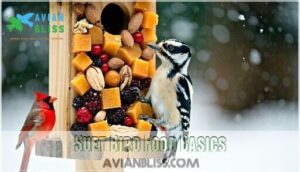
Suet is a high-energy food made from rendered animal fat, giving birds the fuel they need to stay warm and active, especially in colder months.
It’s a favorite among birds like woodpeckers, chickadees, and nuthatches, making it a must-try for backyard bird enthusiasts who want to attract a variety of birds!
High Energy Food Source
Suet is a powerhouse of energy that birds crave, especially in chilly weather when staying warm takes extra effort.
A suet-packed feeder becomes a lifeline for birds, fueling their warmth and energy during nature’s harshest, chilliest days.
As a high-energy bird food, suet’s fat content fuels their calorie richness, ensuring they meet their dietary needs, even on frigid days.
You’ll see a buzz of bird activity around suet feeders in winter—natural food can be hard to find, and your help makes a big difference.
- Provides essential fat metabolism for warmth
- Boosts winter survival when food is scarce
- Supports birds’ active lifestyles
- Pairs perfectly with suet alternatives and recipes
Essential Nutrition for Birds
Birds need a balanced diet to thrive, especially during seasonal changes.
Proper bird feeding guarantees they get dietary needs like proteins from insects, healthy fats from seeds, and essential vitamins for strong feathers.
High-energy bird food supports wild bird diets, helping them stay warm in winter.
Without balanced bird food, nutritional deficiencies can harm their overall health.
Suet alternatives provide year-round nutrition, acting as a caloric powerhouse while offering key minerals to keep them flying strong, which is essential for their overall health, and supports their need for balanced bird food, and provides high-energy support.
Types of Birds Attracted to Suet
Hang a suet feeder, and your yard becomes a hotspot for diverse bird species craving high-energy treats.
With their acrobatic moves, woodpeckers top the list—think Downy, Hairy, and Red-bellied, showcasing their famous Woodpecker Suet Preference.
Nuthatch Feeding Habits often involve scaling feeders, while Chickadee Suet Consumption is steady, especially in colder months.
Keep an eye out for seasonal visitors like Pine and Yellow-rumped Warblers.
Even larger birds, like jays, can’t resist. Starlings? They’re suet’s biggest fans—just hang feeders strategically to manage their presence and enjoy the variety of birds, including those with unique habits like Nuthatch Feeding Habits.
Choosing Suet Ingredients
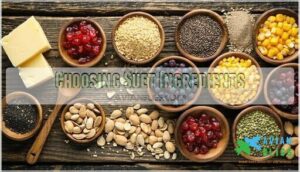
When choosing ingredients for suet, stick with natural options like animal fats, seeds, and dried fruits that mimic birds’ diets in the wild.
Stick with natural ingredients like animal fats, seeds, and fruits to create suet that birds will love and keep them thriving!
Avoid anything with added oils, salts, or sugars, since these can harm your feathered friends.
Natural Fats and Oils
You don’t need fancy suet to keep your feathered friends happy. Safe bird fats like rendered lard, beef tallow, or natural peanut butter (no sugar or oils) are fantastic binding options while mimicking their natural diet.
Plant-based alternatives, like coconut oil (solid in cooler weather), also fit the bill. But remember, soft veggie oils can risk waterproofing birds’ feathers, leaving them soggy and unsafe.
Here’s your quick checklist for homemade suet blends:
- Rendered fat alternatives like lard or tallow
- Natural peanut butter suet
- Coconut oil-based vegetarian suet
- Avoid harmful contamination risks, especially those related to oily substances.
Seeds and Grains for Nutrition
Seeds and grains pack a nutritional punch for wild birds, keeping them energized and healthy.
Sunflower seeds offer fats and proteins, while tiny Nyjer seeds fuel birds during winter chills.
Millet appeals to ground-feeding birds with digestible nutrients.
Mix these with rolled oats or cornmeal to craft balanced feeds.
Check out this handy guide:
| Seed Type | Nutritional Value | Ideal For |
|---|---|---|
| Sunflower | Fats and proteins | General bird food |
| Nyjer | High energy content | Finches, sparrows |
| Millet | Digestible nutrients | Ground feeders |
| Cornmeal/Oats | Balanced support | All bird species |
The table provides a quick reference for the nutritional value of each seed type, helping you make informed decisions about what to feed your wild birds.
Fruits and Nuts for Added Value
Adding fruits and nuts to your suet mix can turn it into an irresistible feast for birds.
Dried fruits like raisins, cranberries, and chopped apples contribute fruit nutritional value, offering natural sugars and vitamins to boost energy.
Nuts—especially unsalted peanuts, almonds, or walnuts—provide nut energy content, perfect for supporting birds during colder months or breeding season.
Rotate seasonal fruit choices like dried oranges for variety.
For freshness, focus on proper preparation and storage of your mix.
Birds love these wholesome, energy-packed treats!
Suet Feeder Placement Tips
Placing suet feeders in the right spot helps birds feel safe while keeping pests away.
Choose a location that mimics natural foraging areas, like near trees or shrubs, but keeps the feeder shaded to prevent suet from melting.
Protecting Suet From Pests
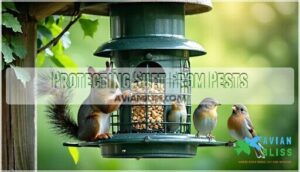
Protecting your suet from pests isn’t rocket science, but it does require some clever tweaks.
Try squirrelproof feeders or sturdy suet cages to deter sneaky critters. Keep feeders five feet off the ground and away from branches, foiling squirrel acrobatics.
Add baffles for extra security. To tackle pesky insects, clean feeders regularly.
A well-thought-out feeder design guarantees happy bird feeding while keeping unwanted guests at bay.
Mimicking Natural Foraging
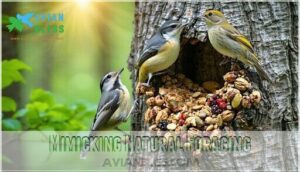
Helping birds feel at home starts with mimicking natural foraging.
Smear homemade suet or an insect-based bird food into tree bark or crevices, encouraging their natural diets.
Choose rough-barked trees or use feeders designed like logs with holes.
This habitat replication promotes foraging behavior while offering seasonal foods.
Birds love feeding this way—it’s like finding a favorite snack tucked into their usual hangout.
Bonus: it helps you bond with nature too!
Creating Pine Cone Feeders
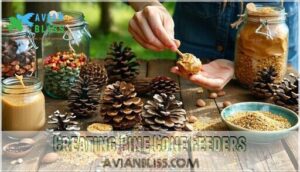
Got some extra pine cones lying around? Turn them into natural feeders that birds will love! Start by prepping your pinecones—give them a shake to remove loose debris. Next, coat them with a sticky blend of peanut butter and homemade suet (the perfect binding agent), then roll them in a colorful seed mixture. Voilà, your DIY bird food is ready!
Hang these feeders safely using sturdy string or twine. Here’s how to make the most of your effort:
- Place feeders at various heights to attract both ground feeders and perch-loving birds.
- Keep them near tree branches where birds feel secure while feeding.
- Replace old feeders often to keep ingredients fresh and nutritious.
Consider purchasing pre-made options for convenience. Your backyard birds will thank you!
Alternative Bird Food Options
You’ve got plenty of options beyond suet to keep your feathered friends happy and healthy.
From peanut butter mixes to mealworms and juicy fruits, you can offer birds a menu that’s both nutritious and irresistible!
Peanut Butter and Seed Mix
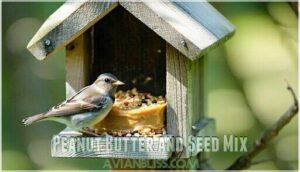
Peanut butter is a suet alternative birds can’t resist.
Mix it with birdseed to create a high-energy treat.
Choose natural, unsweetened peanut butter to avoid harmful additives.
For quality bird feeding, consider different mixes.
The right combination depends on your feathered visitors.
| Peanut Butter | Birdseed | Best For | Feeder Type |
|---|---|---|---|
| Chunky | Sunflower | Woodpeckers, Chickadees | Mesh |
| Smooth | Millet | Sparrows, Juncos | Pine Cones |
| Natural | Cornmeal | Nuthatches, Titmice | Tree Bark |
| Organic | Crushed Nuts | Cardinals, Finches | Suet Cage |
Experiment with these blends to match local birds’ preferences!
Mealworms and Live Foods
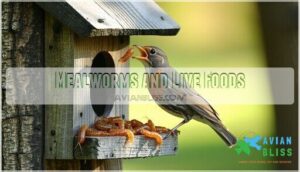
If peanut butter brings variety to a bird’s diet, mealworms are the gourmet treat many species love.
Packed with protein, mealworms support bird nutrition, especially for insect-eaters like bluebirds and woodpeckers. Offering live food benefits, they’re a go-to for bird enthusiasts.
Dried mealworms are easy to handle, while live ones can be gut-loaded (fed nutrient-rich foods) for added mealworm nutritional value.
- Store live mealworms in a fridge with apple slices for moisture.
- Serve mealworms for birds during breeding seasons.
- Mix them with seeds for insect-based bird food.
- Feed sparingly, avoiding digestive overload.
Fresh Fruits and Nectar
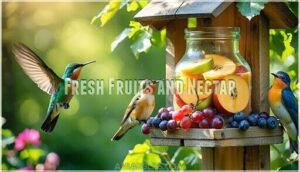
If you’re looking for suet alternatives, fresh fruits and nectar are perfect choices, especially in warmer months.
Try safe fruit choices like apples, melons, grapes, or fresh berries to attract a variety of feathered visitors.
Mix your own nectar (1 part sugar to 4 parts water) for an effortless nectar source variety.
For dried fruits like raisins, sprinkle them in feeders.
Adjust your feeder design for easy access and enjoy the show!
Suet Feeding Best Practices
If you’re feeding suet, keeping feeders clean and well-stocked helps birds stay healthy and happy.
Avoid sugary ingredients and customize your mix to match the preferences of local species for the best results.
Regular Feeder Maintenance
Keeping your suet feeders in tip-top shape doesn’t have to be complicated. Stick to regular cleaning frequency—weekly is best—to stop harmful bacteria and mold from creeping in.
Use safe detergents like mild soap and warm water, and always rinse thoroughly. For bird feeder maintenance, don’t forget to inspect for damage.
Repair any loose parts to keep pests like squirrels or raccoons at bay. Proper pest control for bird feeders includes placing them in shady spots to reduce melting and spoilage.
To maintain cleanliness, consider purchasing a specialized feeder cleaner. Follow these bird feeding tips, and you’ll keep your backyard birds happy, healthy, and flocking back for more, ensuring backyard birds are always happy and healthy.
Avoiding Sugary Ingredients
Once feeders are clean, focus on bird food ingredients that keep birds healthy.
Skip sugary options like honey, molasses, and corn syrup—these aren’t good for bird nutrition and can even harm them.
While natural sweeteners seem tempting, they’re unnecessary for birds.
Use safe alternatives like rendered beef fat, lard, or peanut butter as suet bases.
Avoid fruit dangers like sugary dried fruits soaked in syrup.
Fresh fruits are better for birds, but moderation is key.
Craft suet that offers high-calorie energy and supports bird feeding naturally.
Your feathered friends will thank you with cheerful visits.
Customizing Suet for Local Birds
Understanding local bird preferences is like hosting a potluck—know your guests! Adjust your suet recipe to meet their tastes. Regional ingredient sourcing boosts effectiveness while supporting local ecosystems.
- Add nuts and insects for woodpeckers.
- Offer seeds and high-fat bird food ingredients for chickadees.
- Mix in dried fruits for cardinals.
- Crumble suet cakes for ground feeders.
Seasonal suet recipes keep birdseed types fresh, ensuring homemade suet durability and allergy-safe suet options year-round.
Frequently Asked Questions (FAQs)
What is a good alternative to bird suet?
Ever thought about peanut butter as a suet swap?
Use natural, additive-free peanut butter spread thinly on bark or feeders.
Black oil sunflower seeds or unsalted peanuts also work wonders, keeping birds happy and healthy!
How to make homemade bird suet?
Melt one cup of lard and peanut butter together, stir in two cups birdseed, one cup cornmeal, and one cup flour.
Press into molds, freeze until firm, and voilà—your feathered friends will thank you!
What can I use to bind bird seed together?
You can bind bird seed with natural peanut butter (no additives), melted lard, or gelatin.
These create a sticky base that holds everything together.
Just mix, mold, and chill—it’s like crafting snacks for feathered friends!
Is homemade suet a good bird food?
Home is where the heart is," and for birds, homemade suet is a hearty choice.
Packed with energy-rich fats and seeds, it fuels them through cold months, attracting woodpeckers, chickadees, and more to your feeder.
Is jackfruit the next big meat substitute?
Jackfruit might be the next big meat substitute—it’s fibrous, meaty, and absorbs flavors like a sponge.
Packed with nutrients and naturally low in fat, it’s a plant-based powerhouse perfect for tacos, curries, or BBQ sandwiches, making it a great option due to its ability to be a meat substitute.
How do I choose the best suet for birds?
Think of suet as a bird’s energy bar.
Choose high-quality suet with natural fats, no additives, and bird-friendly ingredients like seeds or dried fruits.
Opt for cage feeders to keep it safe and accessible.
What birds eat suet?
Suet attracts a variety of birds, including woodpeckers, chickadees, nuthatches, jays, and starlings.
Even wrens, creepers, and cardinals stop by occasionally.
It’s like a high-energy buffet, especially in colder months!
Does suet attract birds?
Absolutely, suet is like a buffet for birds.
Its high-energy fat attracts woodpeckers, chickadees, nuthatches, and even starlings.
Especially in cold weather, suet helps birds stay warm, making it irresistible to many species, as it provides a high-energy source of nutrition.
Are suet cakes good for birds?
They’re fantastic!
Suet cakes give birds a high-energy boost, especially in cold weather.
Packed with fat, seeds, and fruits, they help birds stay warm and active, attracting species like woodpeckers, chickadees, and nuthatches to your yard, providing them with a high-energy source.
What is a good suet alternative for birds?
A great suet alternative is peanut butter mixed with cornmeal or oats.
It’s high-energy, easy to spread on tree bark, and birds love it.
Just make certain it’s natural peanut butter without added oils or sugars!
Conclusion
So, why settle for standard suet when safer, satisfying suet bird food alternatives await?
Peanut butter-packed pine cones, protein-rich mealworms, and fresh fruits offer birds a buffet of nutrition and energy.
By blending fats, seeds, and natural treats, you’ll attract a variety of feathered friends while keeping harmful ingredients at bay.
Remember, regular feeder care and thoughtful ingredient choices guarantee happy, healthy visitors.
Get creative, stay consistent, and watch your backyard transform into a bird paradise with happy, healthy visitors.
- https://www.cornellpress.cornell.edu/a-tentative-history-of-wild-bird-feeding-part-1/
- https://littlewomenatelier.com/underatinroof
- https://www.instagram.com/trimazingvlc/
- https://www.facebook.com/pebblecovefarm/?__tn__=K-R&eid=ARBU_QYKGrd6WiyI7uayjmGxgeixJpNf7DBOpJ6upBtnIjUdgtAdL9syx-8qZHooB6QUGaFKYAGFGX8M&fref=mentions&__xts__%5B0%5D=68.ARAY3kO9Am0f2e-BpbT9MMm5KaffBB7j9GBhS-Fku0T6l5Bwg9uKK0jBR0dH2OGlN8uqKYwWh-3GqD_RmMEwYtl_HRPge9jm1k9I7yRys1mDWbrOYSDQpthVkdHbGboTPep_fv4PXB1seWIy-f9oGxT2c78ohPBbmHC0m0_sCG36YtnYj8fWnlN38JVC4cHilyvvtSeXQYqc7uj08Q
- http://www.nabluebirdsociety.org/PDF/FAQ/NABS%20factsheet%20-%20Mealworms%20-%2024May12%20DRAFT.pdf