This site is supported by our readers. We may earn a commission, at no cost to you, if you purchase through links.
 Most pet bird owners make the same mistake without realizing it: they prioritize what looks good in the cage over what keeps the bird thriving. Your bird’s health doesn’t hinge on a single factor—it’s built on six interconnected foundations that work together.
You’ve probably heard conflicting advice about seeds versus pellets, or struggled to find an avian vet in your area. The truth is, keeping birds healthy requires a practical approach that balances nutrition, environment, activity, hygiene, observation, and professional care. Each piece matters, and gaps in any one area create problems down the line.
The good news? Once you understand these essentials, you’ll have the clarity to make confident decisions and actually prevent most common health issues before they start.
Table Of Contents
- Key Takeaways
- Providing a Balanced Diet for Birds
- Creating a Safe and Comfortable Environment
- Supporting Daily Exercise and Mental Stimulation
- Maintaining Hygiene and Preventing Disease
- Monitoring Bird Health and Recognizing Illness
- Scheduling Regular Veterinary Care
- Frequently Asked Questions (FAQs)
- How do I Keep my Bird healthy?
- Do birds need veterinary care?
- How do you care for a feathered bird?
- How do you keep birds away from Your House?
- What should I do if my bird eats hard food?
- How do I Make my Home safer for pet birds?
- How often should I take my bird to the vet?
- Whats the best way to socialize a new bird?
- How do I know if my bird is stressed or anxious?
- Whats the ideal temperature for my birds home?
- Conclusion
Key Takeaways
- Your bird’s health relies on six interconnected systems working together—nutrition, environment, activity, hygiene, observation, and veterinary care—and gaps in any area create cascading health problems.
- Quality pellets (60–70% of diet) with fresh produce prevent nutritional deficiencies and diseases like fatty liver disease that plague seed-only diets, which carry 40% more fat.
- Daily observation catches illness early when birds hide symptoms instinctively; weekly weight tracking and monitoring behavior changes detect problems before they become emergencies.
- Annual wellness exams with an avian veterinarian establish baseline health data and enable early detection that reduces emergency visits by 20–40%, making preventive care your bird’s most cost-effective health investment.
Providing a Balanced Diet for Birds
Your bird’s diet is the foundation of its health, and getting it right means understanding what truly nourishes them. A balanced mix of pellets, fresh foods, and carefully chosen supplements can prevent most nutritional problems before they start.
Here’s what you need to know to feed your feathered friend properly.
Importance of Pellets Vs. Seeds
Think of diet as your bird’s foundation for wellness—pellets versus seeds isn’t just preference, it’s science. Quality pellets deliver balanced avian nutrition, preventing the fatty liver disease and obesity that plague seed-heavy diets. Here’s why pellets win for long-term health:
- Pellet nutritional superiority: Fortified formulas provide complete vitamins and minerals, while seed diets create deficiencies
- Seed diet risks: Seeds pack 40% more fat, contributing to metabolic disorders in over 60% of seed-fed birds
- Waste reduction: Pellets eliminate selective feeding—birds consume their full nutrient target instead of discarding 35% as waste
Conversion strategies matter: gradually shift to 60–70% pellets while limiting seeds to 10% as treats, making sure your bird’s healthy diet fosters true vitality. Seeds alone can lead to vitamin and mineral deficiencies.
Incorporating Fresh Fruits and Vegetables
Beyond pellets, fresh produce acts as nature’s vitamin boost—your bird’s healthy diet needs that variety. Safe vegetables like kale, broccoli, and bell peppers provide vitamin A and calcium, while fresh fruits such as apples and berries deliver antioxidants. A mix of fresh fruits and vegetables ensures parrots receive diverse nutrients.
Aim for 20–40% of your bird’s daily intake, using bite-sized serving sizes suited to species. Preparation methods matter: steam vegetables lightly, remove toxic produce pits from cherries, and rinse thoroughly to avoid pesticides. These nutritional benefits support immune function and vibrant feathers.
Avoiding Toxic Foods and Harmful Treats
While fresh produce keeps your bird thriving, certain items on the toxic food list pose lethal risks—even in trace amounts. Avocado contains persin, triggering heart failure within twelve hours, and chocolate’s theobromine causes seizures and liver damage. Caffeine overstimulates the nervous system, fruit pits release cyanide, and onion induces anemia.
Key harmful foods to exclude:
- Processed treats with high salt, fat, or xylitol risk kidney failure and hypoglycemia
- Non-stick cookware releases PTFE fumes fatal within minutes; switch to safe cookware like stainless steel
- Moldy or spoiled foods harbor aflatoxins causing liver damage
Secondary poisoning from pesticide residues increases chick mortality, so preventative measures include washing all produce and reviewing treat ingredients before serving.
Using Supplements and Calcium Sources
Once you’re handling avocado and chocolate risks, mineral balance is key to keeping bones strong and eggs intact. Your bird needs 0.3% to 1.2% dietary calcium—think kale, dandelion greens, and figs—paired with a 2:1 calcium-phosphorus ratio. The importance of Vitamin D3 cannot be overstated: without it, calcium absorption plummets, leading to metabolic bone disease. Over-supplementation, however, risks soft tissue calcification, so limit doses to two or three times weekly.
| Supplement Component | Purpose & Dosing |
|---|---|
| Calcium borogluconate | Prevents egg-binding; 40 g/L for breeding birds |
| Vitamin D3 | Enhances calcium absorption; 30,000 IU/L weekly |
| Magnesium sulfate | Activates D3, maintains bone density; 2 g/L |
| Natural sources (kale, almonds) | Bioavailable minerals without overdose risk |
| Liquid supplements | Controlled dosing; mix with water 2–5 times weekly |
Natural sources like chia seeds and basil offer safer avian nutrition than fortified mixes. Breeding hens, in particular, benefit from five weekly doses, but always under veterinary guidance.
Choosing High-Quality Feed
After checking BIS certifications and ingredient labels, you’ll spot quality pellets by their minimal seed impurities—under 0.5% per type—and absence of fillers like red millet.
For nutritious seeds supporting avian nutrition, choose black-oil sunflower and hulled kernels over stale mixes.
Storage practices matter: airtight containers in cool spots extend freshness by 50%, while feeder design and feed rotation every two weeks prevent mold, keeping your balanced diet truly nourishing.
Creating a Safe and Comfortable Environment
Your bird’s home is more than just a cage—it’s their entire world. Getting the environment right protects them from hazards, reduces stress, and fosters their long-term health.
Let’s walk through the key areas that make a real difference.
Selecting The Right Cage Size and Design

Think of your bird’s cage as its personal home—not a holding cell. Cage size and placement directly impact your bird’s physical health and mental well-being, so wingspan considerations matter more than you might expect.
- Finches need at least 18″ × 30″ × 18″ with ¼″–½″ bar spacing importance for safety
- Cockatiels thrive in 20″ × 20″ × 24″ enclosures with ⅝″ bars
- Large parrots require 36″ × 24″ × 48″ minimum, allowing full wing extension
Choose rectangular shapes over round designs—they improve flight space and prevent disorientation. Cage material safety starts with stainless steel or powder-coated metals free from lead and zinc. Feature benefits include removable trays, bird-proof locks, and adequate door size for stress-free handling. Safe perches and toys, along with proper cage accessories, complete your setup while ensuring cage safety throughout daily use.
Cage Placement and Household Hazards

Cage location determines your bird’s safety more than most owners realize. Raise the cage to chest height in a corner—this reduces stress by 37% compared to high-traffic zones—and keeps your bird away from household hazards like toxic fumes from kitchens.
Drafts near windows or vents increase respiratory infections by 21%, while Teflon-coated cookware releases lethal fumes above 260°C. Physical risks include open water sources and electrical cords, responsible for most indoor accidents.
Cover benefits include regulating temperature swings at night, promoting better sleep in a safe environment.
Regular Cleaning and Disinfection
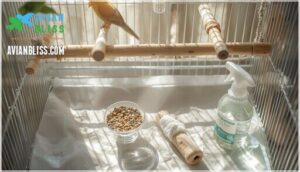
Your bird’s health hinges on consistent cage hygiene—and the numbers prove it. Daily removal of waste and uneaten food prevents bacterial buildup that causes 85% of nutritional and hygiene-related illnesses in pet birds.
Weekly deep cleaning of perches, dishes, and toys, combined with monthly disinfection using bird-safe products, greatly reduces disease transmission. Diluted bleach soaks outperform soap alone for pathogen elimination.
This routine protects your bird’s respiratory system and overall well-being far more effectively than sporadic cleaning ever could.
Ensuring Proper Ventilation and Lighting

Your bird’s respiratory health depends on proper airflow and light cycles—two environmental pillars you can’t overlook. Maintain ventilation systems that keep airspeed between 0.25–0.50 m/s to prevent toxic fumes from accumulating while avoiding excessive drafts. Humidity control between 50–70% reduces ammonia buildup and respiratory disease risk.
Provide a 16-hour light and 8-hour dark cycle using UVB lighting (296–316 nm wavelength) to support vitamin D₃ synthesis. Add 20–30 minutes of natural sunlight two to three times weekly.
These ventilation systems and lighting spectrum adjustments work together to create stable air humidity and temperature conditions your bird needs to thrive.
Providing Safe Perches and Toys
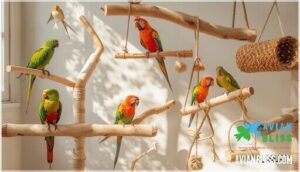
Your bird’s feet are constantly working—perching, gripping, balancing—so the surfaces they land on matter more than you might think. Natural wood perches like maple, birch, and manzanita offer varied diameters and textures that prevent pressure sores and support healthy circulation. Avoid cement or sandpaper-coated perches; they’re linked to painful foot infections like bumblefoot, which affects up to 35% of captive parrots in poor conditions.
Rotate toys weekly using bird-safe materials—untreated wood, stainless steel, or sisal rope—to keep your bird mentally engaged and prevent boredom-driven feather plucking. Size matters too: small components pose choking hazards for large parrots, while oversized toys risk trapping smaller birds.
Clean wooden accessories by scraping or lightly sanding rather than soaking, which traps moisture and bacteria. Use diluted bleach (one tablespoon per gallon) for plastic or cement toys weekly. This consistent routine reduces respiratory and foot infections, keeping your bird’s enriching environment truly safe.
Supporting Daily Exercise and Mental Stimulation
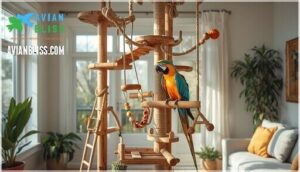
Your bird’s health depends just as much on staying active as it does on eating right. In the wild, birds are constantly flying, foraging, and exploring—and your feathered friend needs those same kinds of activities indoors.
Let’s look at some practical ways to keep your bird physically and mentally engaged every single day.
Encouraging Flight and Physical Activity
Flying strengthens your bird’s heart and muscles while boosting aerobic capacity by up to 24%. Indoor aviaries with sustained flight space—at least 1.5 times your bird’s wingspan—let them build endurance safely.
Start with supervised 5–10 minute sessions, gradually extending to 45 minutes daily. Balanced wing trimming preserves flight control. Flight obstacles and varied perches increase engagement, reducing boredom-related stress by 60%.
Regular exercise prevents obesity and fatty liver disease while releasing endorphins that improve mood and social behavior.
Offering Puzzle Toys and Foraging Opportunities
While flight builds aerobic strength, your bird’s mind needs equal attention. Wild parrots forage 4–6 hours daily, but captive birds without enrichment spend barely an hour on this activity—leaving them bored and stressed.
Puzzle toys and foraging enrichment close that gap. Here’s what works:
- Cognitive challenge: Puzzle feeders increase foraging duration 2–2.5 times, keeping birds mentally engaged
- Behavioral improvement: Feather-damaging parrots show measurable improvement in feather condition within weeks
- Natural instinct: Hidden foods and problem-solving tasks tap into your bird’s hardwired foraging drive
The payoff? Up to 70% reduction in destructive behaviors like feather plucking. Your bird’s brain stays sharp, stress hormones drop, and boredom becomes history.
Rotating Toys to Prevent Boredom
Think of it like this: a toy loses its charm the moment your bird masters it. That’s why rotation works. Swapping toys every 1–2 weeks reignites interest—research shows birds engage 25–35% more with fresh objects than static cages.
Rotating between foraging, puzzle, and chew toys prevents habituation while supporting cognitive growth. The bonus? Each rotation is a safety check. Inspect for frayed edges, loose threads, or wear before reintroduction. Clean toys with bird-safe soap before returning them to the cage.
This simple practice reduces destructive behaviors by 30% and keeps boredom—and stress—at bay.
Mimicking Natural Habitats Indoors
Your indoor setup should echo the forest, not a showroom. Start with natural lighting—birds exposed to full-spectrum UVB for 4–6 hours daily maintain healthy vitamin D3 levels, which directly bolsters calcium metabolism and feather quality.
Position perches at varying heights with multiple diameters to mimic tree-branch gradients. Add safe plants like bamboo palm to reduce airborne particles, then layer in foraging toys and puzzle feeders that occupy 60–80% of their activity time.
Include natural wood branches for climbing, rotate fresh produce weekly, and run misting sessions twice weekly. This habitat enrichment doesn’t just fight boredom—it builds resilience and mirrors what they’d naturally experience.
Maintaining Hygiene and Preventing Disease
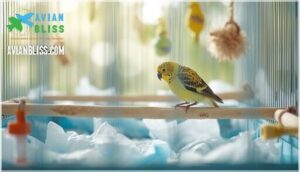
Your bird’s health depends on keeping their living space clean and disease-free.
In this section, we’ll walk you through practical hygiene routines and biosecurity steps that actually work. From daily spot-cleaning to introducing new birds safely, these practices are your first line of defense against illness.
Daily and Weekly Cage Cleaning Routines
Your bird’s cage is basically a home—and just like yours, it needs regular cleaning to stay healthy. Here’s the reality: dirty cages breed pathogens like Salmonella and Coccidia, which spread through fecal matter and debris.
Daily cage cleaning routines:
- Replace cage liners (newspaper works great) to monitor droppings and prevent bacterial buildup
- Wash food and water dishes in hot, soapy water or the dishwasher to eliminate contaminants
- Spot-clean droppings, seed hulls, and feather debris from cage surfaces and bars
Weekly deep-cleaning involves disassembling everything—bars, trays, accessories—using mild soap and hot water. Apply bird-safe disinfectants (diluted white vinegar or chlorhexidine) and let them contact surfaces for 10–15 minutes before rinsing thoroughly. This frequency reduces airborne microbial load and prevents respiratory infections. Dry completely before reassembly to avoid mold. Remove your bird first—those fumes matter.
Cleaning Perches, Dishes, and Toys
Between cage cleanings, your perches, dishes, and toys need targeted attention. Wipe perches twice weekly with a damp cloth; monthly, scrub them with hot soapy water or sanitize natural wood by baking at 175°C for an hour. This perch sanitization prevents bacterial buildup on your bird’s feet.
For dishes, choose stainless steel or ceramic over plastic—they resist bacterial adherence better. Wash daily with bird-safe detergent and disinfect weekly with diluted bleach. Replace any dish contaminated with droppings immediately to avoid cross-contamination.
Rotate toys weekly and clean whenever soiled. Plastic toys go in the dishwasher on sanitize; wooden toys get hand-cleaned and oven-dried at 121°C. Toss damaged toys instantly—they’re ingestion hazards. Separate cleaning tools per cage prevents disease spread between birds.
Using Bird-Safe Cleaning Products
Within your cleaning arsenal, skip household products like bleach and ammonia—they’re respiratory hazards for birds. Your best bet? White vinegar diluted 1:2 with water combats bacteria without toxic fumes. Hydrogen peroxide and grapefruit seed extract work similarly well.
These safe disinfectants eliminate 85–95% of pathogens while your bird breathes easy. Always relocate birds during cleaning, guarantee good ventilation, and let surfaces air-dry. Avoid aerosols entirely—they concentrate toxins dangerously in your bird’s unidirectional airway system.
Quarantine Procedures for New Birds
Think of quarantine as your bird’s temporary protective bubble—it’s non-negotiable for flock health. You’ll need to isolate new arrivals in a completely separate room for at least 30 days, with a veterinary test around day 14. Here’s why this matters:
- Isolation Duration: Federal guidelines mandate minimum 30–60 day quarantine depending on species susceptibility and stress adaptation
- Testing Protocols: USDA veterinary staff conduct cloacal swabs for avian influenza and Newcastle Disease; negative results are required before integration
- Facility Sanitation: Dedicate separate feeders, waterers, and equipment to quarantine areas; disinfect daily using bird-safe products to prevent pathogen spread
Owner education is key—handle quarantined birds last, after your healthy flock, and use dedicated protective clothing. This biosecurity habit prevents disease introduction and reduces outbreak risk by up to 70%. Your new bird will adapt better with stress reduction through consistent routines and calm handling during this critical period.
Biosecurity Measures for Multi-Bird Homes
Your flock’s safety hinges on preventing pathogens from sneaking in through the back door. Implement strict biosecurity: separate new birds for 30–60 days with dedicated equipment, disinfect surfaces daily using bird-safe products, and limit visitor access—studies show this cuts cross-flock infections by 60–80%.
Handle quarantined birds last, wear dedicated clothing for bird areas, and keep different species apart. These habits aren’t just precautions; they’re your frontline defense against disease spreading through your home.
Monitoring Bird Health and Recognizing Illness
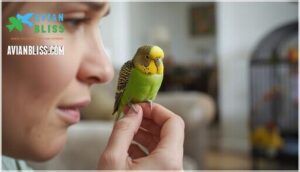
Catching health problems early makes all the difference with birds—they’re skilled at hiding illness, so you’ve got to stay vigilant. The good news is that you don’t need fancy equipment or training to spot trouble; simple daily observation and basic monitoring go a long way.
Let’s walk through what to watch for and how to catch issues before they become serious.
Daily Observation of Behavior and Appearance
You’re watching your bird closely—that’s where health monitoring starts. Birds hide illness well, so daily observation catches problems early.
Birds hide illness skillfully, so daily observation is your most powerful tool for catching health problems early
Watch for behavioral red flags like reduced movement, hunched posture, or drooping tail. Check plumage condition for dull or matted feathers. Notice facial cues: partially closed eyes, swelling, or discharge signal distress.
Track vocal changes and social withdrawal. Examine droppings for color or consistency shifts. These physical symptoms and eating habit changes tell you when something’s off.
Tracking Weight and Eating Habits
Now comes the numbers part. Weigh your bird weekly at the same time each morning, before food hits the bowl—this gives you consistency. A gram-accurate digital scale works best for smaller species. Birds can lose 10% of their body weight before showing obvious signs of trouble, so catching weight trends early matters.
Watch what your bird actually eats daily. Seed-heavy diets spike obesity risk, while reduced intake often signals problems brewing beneath the surface. Body condition scoring—feeling the keel bone to assess muscle—pairs perfectly with weight tracking. Together, they tell you whether your bird’s metabolism is staying balanced. Flag any weight swing over 5% from baseline or eating changes exceeding 15% for veterinary follow-up.
Identifying Signs of Illness Early
Now that you’ve got weight and eating patterns down, it’s time to catch the red flags before they become emergencies. Birds are masters at hiding illness—they’ve evolved to mask weakness so predators don’t target them. That instinct works against you as a pet owner, which is why behavioral changes matter most.
Watch for lethargy or unusual positioning at the cage bottom. Fluffed-up feathers staying that way throughout the day signal trouble in over 70% of cases. Silent birds that normally vocalize, increased daytime sleeping, or hiding spells often precede visible symptoms. Check respiratory indicators too: open-beak breathing, tail bobbing, or any wheezing demands immediate veterinary attention.
Dropping abnormalities—watery, discolored, or foul-smelling feces—rank among the most reliable illness markers. Posture changes like leaning to one side or sitting low can indicate neurological issues. Poor feather condition or self-plucking outside molting seasons suggests stress or parasites. A 5% weight loss within 48 hours during acute illness is possible, so those weekly weigh-ins you’re already doing become critical early warning signs.
The takeaway: daily observation catches problems when treatment succeeds most. Your veterinarian needs these behavioral details during checkups.
Common Health Issues in Pet Birds
Now that you understand early warning signs, it’s time to recognize what actually ails your bird. The most common culprits—respiratory infections, nutritional deficiencies, parasitic diseases, behavioral disorders, and zoonotic diseases—account for the majority of avian health problems you’ll encounter.
Respiratory infections alone represent 30–40% of clinical cases. Aspergillosis from mold exposure and psittacosis from bacterial pathogens top the list. Seed-only diets drive nutritional deficiencies like vitamin A and calcium shortages, increasing atherosclerosis risk by 60%. Gastrointestinal parasites and fungal infections affect up to 20% of pet birds annually. Behavioral issues stem from boredom and social isolation.
Here’s what matters most:
- Respiratory problems: Open-mouth breathing, tail bobbing, or wheezing require immediate veterinary care
- Gastrointestinal issues: Watery droppings, regurgitation, or diarrhea signal parasites or yeast infections
- Feather destructive behavior: Self-plucking beyond molting seasons indicates stress or underlying illness
- Weight loss and appetite changes: Combined with behavioral shifts, these predict serious systemic disease
Your daily observations catch these before they escalate. That’s your edge against rapid deterioration.
Scheduling Regular Veterinary Care

Your bird’s health depends on more than just good food and a clean cage—it needs regular professional oversight. An avian veterinarian can catch problems early, often before you notice symptoms, and establish a baseline for what’s normal for your specific bird.
Let’s walk through how to make veterinary care a cornerstone of your bird’s wellness routine.
Importance of Annual Wellness Exams
Your bird’s health depends on catching problems early—and here’s the thing: birds hide illness until it’s late. That’s why annual wellness exams matter so much. During these checkups, your vet performs thorough health screening with blood work and fecal analysis to detect issues you’d never spot at home.
Regular vet checkups establish baseline health data, so subtle changes get caught before they become emergencies. Early detection through preventive care can reduce emergency visits by 20–40%.
Plus, behavioral assessment and nutritional counseling during these visits prevent common problems like fatty liver disease. It’s an investment that pays dividends in your bird’s longevity and quality of life.
Finding an Avian Veterinarian
Finding a qualified avian veterinarian takes some detective work, but it’s worth the effort. Start by searching the Association of Avian Veterinarians‘ "Find-a-Vet" tool, which lists over 1,000 board-certified specialists across 40 countries. Look for ABVP certification—it means your vet has logged six years of full-time avian practice and passed rigorous exams.
When you’ve narrowed your list, request a clinic tour. Top practices welcome walkthroughs showcasing treatment areas and diagnostic equipment. Ask whether they see avian patients regularly (ideally 10–20% of caseload) and maintain separate exam rooms.
Many clinics now offer telemedicine consultations—convenient for routine follow-ups or second opinions when in-person visits aren’t immediately necessary. Check membership longevity and reviews; established practices with strong credentials provide confidence for your bird’s ongoing care.
Emergency Preparedness and First-Aid Steps
When disaster strikes, preparation isn’t optional—it’s your bird’s lifeline. Build an Emergency Kit containing a transportable cage, two-week food supply, vaccination records, and first-aid essentials like gauze, tweezers, and styptic products for bleeding control. Maintain evacuation plans with pet-friendly shelter locations and your avian veterinarian’s contact information readily available.
- Stock your kit with bottled water, airtight food containers, and bird identification labels for each crate
- Practice basic first-aid: apply gentle pressure to wounds, use hemostatic agents for broken feathers, and stabilize injuries with non-adhesive bandages before veterinary transport
- Monitor post-emergency recovery closely—watch for stress behaviors like feather plucking, reduced appetite, and delayed illness onset over the following weeks
Your preparedness today determines your bird’s tomorrow.
Frequently Asked Questions (FAQs)
How do I Keep my Bird healthy?
Keeping your bird thriving means balancing four essentials: proper nutrition with quality pellets and fresh produce, a spacious cage with varied perches, daily mental stimulation through toys, and regular veterinary check-ups.
Monitor weight and behavior closely—early detection prevents most health crises. Make preventative care your bird wellness routine’s foundation.
Do birds need veterinary care?
Absolutely. Your bird needs regular veterinary care—think of it like preventive maintenance for their health. Annual wellness exams catch problems early, from nutritional deficiencies to infections.
With specialized avian medicine and developed diagnostics available, routine vet visits greatly extend your bird’s lifespan and quality of life. Don’t wait for emergencies.
How do you care for a feathered bird?
Bird care hinges on a balanced diet—60-70% pellets plus fresh produce—plus spacious housing, daily exercise, and rigorous hygiene.
Regular vet checkups catch problems early. Your feathered friend thrives when you prioritize preventative care and consistent monitoring.
How do you keep birds away from Your House?
While pest birds can damage property, keeping them away differs from maintaining your own flock’s health. Physical barriers like spikes and netting offer 90%+ deterrent effectiveness with 10-15 year lifespans, though costs range from $40-$2000 depending on application.
Visual deterrents and wire systems provide humane solutions for specific applications like rooftops and ledges, preventing birds from accessing household hazards while protecting your safe bird environments.
What should I do if my bird eats hard food?
If your bird swallows hard food or foreign objects, keep it calm and warm while you assess for distress signs like labored breathing. Don’t induce vomiting. Remove visible objects carefully with sterilized tweezers only if accessible.
Monitor droppings closely for abnormalities. Seek immediate veterinary assessment—radiography can detect ingested items, and prompt intervention prevents serious complications like obstruction or toxic poisoning.
How do I Make my Home safer for pet birds?
Household hazards kill an estimated 72 million birds annually in the U.S.—a staggering reminder of why safety matters. Make your home bird-safe by eliminating toxic exposures like lead and zinc. Use only stainless steel or powder-coated cage materials. Replace unsafe toys with safe alternatives. Secure windows and ceiling fans. Remove toxic plants and household toxins like cleaning products. Maintain proper ventilation to prevent toxic fumes from non-stick cookware. Your vigilance directly protects your bird’s life.
How often should I take my bird to the vet?
Healthy adult birds need annual wellness exams with an avian veterinarian. Juvenile birds require checkups every 3-4 weeks until about 4-5 months old, then annually. Senior birds may need exams every 6 months.
Species differences and pre-existing conditions influence frequency—your vet can tailor a preventative care schedule for your bird’s specific needs.
Seek urgent symptoms like respiratory distress or abnormal droppings immediately.
Whats the best way to socialize a new bird?
Start with gradual acclimation in a quiet room, using treats and positive reinforcement to build trust. Establish consistent routines, offer environmental enrichment through toys and foraging, and schedule short, regular social interactions. Use positive reinforcement training with 5-10 minute sessions.
Quarantine new birds for 30-45 days to confirm health and safety before introducing them to your flock.
How do I know if my bird is stressed or anxious?
Your bird’s stress shows up in multiple ways. Watch for vocalization changes—increased screaming or sudden silence. Feather damage, social withdrawal, and stereotypic behaviors like pacing are red flags.
Dropping changes, including watery or darker droppings, signal distress. These indicators help you create a stress-free environment and support mental wellbeing.
Whats the ideal temperature for my birds home?
Aim for 65°F to 80°F (18°C–27°C)—that’s your bird’s sweet spot. Temperatures below 50°F invite cold stress and hypothermia, while heat above 85°F risks heatstroke.
Monitor twice daily with a thermometer, keep your bird away from drafts and direct sun, and watch for huddling or panting as signs of temperature trouble.
Conclusion
Your bird’s health isn’t built on shortcuts—it’s constructed from six interconnected foundations working in concert. Like a building that crumbles when one pillar fails, gaps in diet, environment, activity, hygiene, observation, or veterinary care create cascading problems.
Mastering tips for keeping birds healthy means understanding these aren’t separate tasks but a unified system. Start where you’re, strengthen each area intentionally, and you’ll watch your bird thrive in ways that surprise you. The clarity you gain today becomes the confidence you need tomorrow.