This site is supported by our readers. We may earn a commission, at no cost to you, if you purchase through links.
 You’ll find several types of bird baths for your backyard that attract different species.
Pedestal baths stand elegantly on columns, while hanging versions save space and deter predators.
Ground baths appeal to robins and thrushes that prefer foraging at soil level.
Deck-mounted options attach directly to railings for up-close viewing.
Materials matter too—concrete offers stability, copper develops natural patina, resin provides lightweight durability, and ceramic delivers vibrant colors.
The best bird baths include shallow areas (1-2 inches deep) with textured bottoms for secure footing.
Bird-watching becomes a daily pleasure when you understand which features make feathered visitors feel most at home, with a focus on secure footing and up-close viewing.
Table Of Contents
- Key Takeaways
- Bird Bath Types
- Bird Bath Materials
- Bird Bath Features
- Bird Bath Placement
- Bird Bath Maintenance
- Frequently Asked Questions (FAQs)
- What type of bird bath do birds like best?
- What are the disadvantages of a bird bath?
- Should a birdbath be in sun or shade?
- What is the best material for a birdbath?
- Why do you put marbles in a bird bath?
- What can I use instead of a bird bath?
- What to know before buying a bird bath?
- How do I prevent algae growth in bird baths?
- Are heated bird baths safe for birds?
- What is the optimal height for a bird bath?
- Conclusion
Key Takeaways
- Choose shallow baths with textured bottoms and gradual slopes to attract various birds and ensure their safety.
- Place your bird bath in partial shade for cooler water, slower evaporation, and reduced algae growth.
- Use durable materials like concrete, resin, or copper to handle weather changes and minimize maintenance.
- Add perches, rocks, or water movement features like bubblers to make your bird bath more inviting and functional.
Bird Bath Types
You’ll find several bird bath designs to choose from, including pedestal, hanging, ground, and deck-mounted styles that each attract different bird species to your backyard.
When selecting the perfect bird bath, consider your garden’s size, visibility preferences, and the specific birds you’re hoping to attract with your water feature, which can help create a backyard oasis.
Pedestal Bird Baths
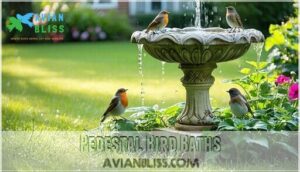
Pedestal bird baths stand as classic backyard centerpieces with their elevated bowl and decorative stand.
Here’s an engaging blockquote in the same tone as the paragraph:
Elevated and elegant, pedestal bird baths create timeless focal points that transform ordinary gardens into avian sanctuaries.
You’ll find these timeless designs in materials ranging from weather-resistant concrete to lightweight resin.
Their height considerations keep birds safe from ground predators while offering you perfect viewing opportunities.
When selecting one, make certain proper base stability to prevent tipping in wind or during enthusiastic bird gatherings.
Many retailers offer various styles and materials for these baths.
Garden placement matters—position yours where birds feel secure but you can still enjoy the show.
Hanging Bird Baths
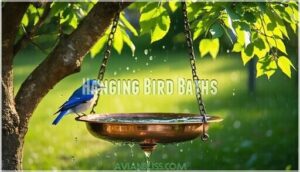
While pedestal models offer stability, hanging bird baths bring flexibility to your backyard bird watch setup.
These suspended water sources can be hung from tree branches, hooks, or shepherd’s staffs at various heights. The swaying motion might concern you, but birds actually adapt quickly.
Consider hanging materials like copper or resin for durability, and make certain easy refilling access. Position them high enough for squirrel prevention while maintaining your viewing pleasure.
Many retailers offer various hanging options for purchase.
Ground Bird Baths
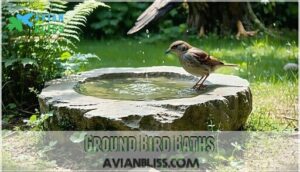
While hanging bird baths appeal to confident feathered friends, ground bird baths cater to shy birds that prefer staying close to earth.
These shallow basins with natural indentations create a comfortable bathing experience for ground-dwelling species.
You’ll notice they’re not just for birds—they attract insects like butterflies and even mammals occasionally, and Hawks have shown preference for massive ground water features too.
Place your backyard bird bath in sheltered spots to maximize wildlife visitors.
Deck-Mounted Bird Baths
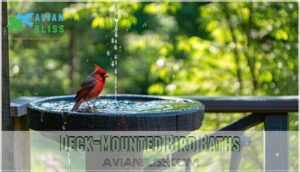
A convenient solution for limited spaces, deck-mounted bird baths attach directly to railings or deck edges.
These space-efficient designs bring birds closer for intimate viewing while maximizing your outdoor area.
Most models feature railing compatibility with adjustable clamps ensuring bird safety and material durability in various weather conditions.
Consider adding a solar powered fountain to attract more birds, creating a wildlife hotspot without sacrificing valuable backyard space, and you’ll appreciate how these practical additions transform your deck into a unique outdoor area with intimate viewing experiences.
Bird Bath Materials
You’ll find bird baths crafted from various materials including copper, concrete, resin, and stainless steel, each offering specific benefits for both birds and your garden aesthetic.
The material you choose affects durability, maintenance requirements, and visual appeal, with copper providing natural antimicrobial properties while concrete offers stability against wind and weather, including stability.
Copper Bird Baths
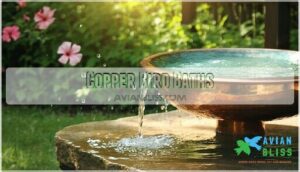
The gleaming allure of copper bird baths offers more than just aesthetic appeal for your backyard.
These stunning designs develop a beautiful patina over time while providing natural antimicrobial properties that help keep water cleaner longer.
You can even find various styles available to match your garden decor.
- Copper’s antimicrobial properties naturally inhibit algae growth, reducing maintenance
- The evolving patina creates unique designs that enhance your garden’s character
- Despite higher costs, copper bird baths typically outlast other materials with minimal upkeep
Concrete Bird Baths
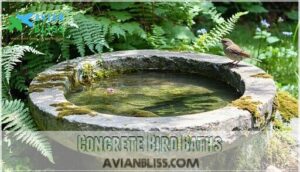
While copper bird baths offer antibacterial benefits, concrete bird baths bring unmatched durability to your backyard sanctuary.
These heavyweight champions withstand years of weather exposure and won’t blow over in strong winds. Concrete bird bath designs range from classic to contemporary, with textures that give birds secure footing.
They’re a bit pricier upfront but will outlast most other materials—making them a cost-effective investment for serious bird watchers, offering unmatched benefits in the long run.
Resin Bird Baths

While concrete offers classic appeal, resin bird baths bring lightweight practicality to your backyard.
These affordable alternatives mimic stone or ceramic at a fraction of the cost and weight.
Resin durability impresses in various weather conditions, though they may fade over time.
The plastic bird bath construction guarantees safety for curious birds while allowing intricate designs.
You’ll appreciate how easily these garden bird baths can be moved and cleaned throughout the seasons.
Polyresin options are also weather-resistant, guaranteeing longevity and performance, which ensures longevity.
Stainless Steel Bird Baths
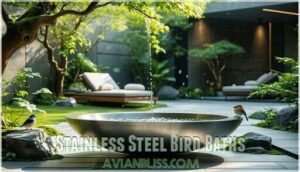
Many homeowners choose stainless steel bird baths for their exceptional durability and modern aesthetics.
These metal bird bath types won’t rust or corrode, making maintenance a breeze compared to other bird bath materials.
Though they cost more upfront, their longevity makes them cost-effective, and the smooth surface is easy to clean but can get hot in direct sun, so placement affects bird safety.
Backyard bird baths in stainless steel complement contemporary garden designs perfectly.
Bird Bath Features
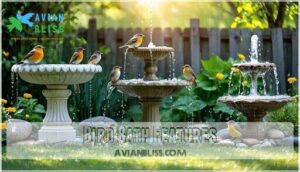
You’ll find that specific features like water depth, movement mechanisms, and strategically placed rocks can transform your simple bird bath into an irresistible avian oasis.
The right combination of these elements guarantees they’ll attract a greater variety of feathered visitors and also see that they’ll return regularly for both drinking and bathing needs.
Water Depth and Movement
Birds flock to water features that feel safe and inviting.
The ideal bird bath depth shouldn’t exceed 2-3 inches, with shallow edges (½ inch) sloping toward the center.
This shallow water safety guarantees even small species can bathe confidently.
Adding drippers and bubblers creates water movement that attracts birds’ attention from afar while deterring mosquitoes.
The gentle sound of moving water mimics natural sources birds instinctively trust, creating a sense of water movement.
Rock or Branch Additions
Adding a few rocks or branches to your bird bath isn’t just for show—it serves essential purposes for your feathered visitors.
Natural perches provide safe landing spots and allow birds to ease into the water gradually.
Different rock textures and branch types create varying depths and comfortable perches for birds of all sizes.
These modifications also help prevent algae buildup by creating water movement as birds hop around.
Shaded Location Importance
Just as adding rocks and branches creates comfort zones, placing your bird bath in the shade offers multiple benefits for your feathered visitors.
When considering bird bath placement, shade matters for:
- Bird comfort – prevents uncomfortable water temperature spikes during hot days
- Slower evaporation rates – keeps your water source for birds available longer
- Reduced algae growth – cooler conditions slow unwanted green buildup
- Extended material durability – protects basins from sun damage
- Improved bird traffic – birds naturally prefer cooler, sheltered bathing spots
Consider placing the bird bath near shrubs for cover and safety, as this will enhance the overall bird bath experience by providing a sheltered environment.
Cleaning and Maintenance
The secret to a thriving bird bath lies in consistent maintenance. You’ll need to stay vigilant against common issues that affect water quality and bird health.
The maintenance tasks required to keep a bird bath healthy and safe for birds are outlined in the following table:
| Maintenance Task | Frequency | Tools Needed | Bird Health Benefit |
|---|---|---|---|
| Water changes | Every 1-2 days | Garden hose | Water sanitation |
| Scrubbing basin | Weekly | Brush, vinegar | Algae prevention |
| Disinfecting | Monthly | Bird bath cleaner | Disease control |
| Winter care | Seasonal | Heater/cover | Year-round hydration |
Regular bird bath maintenance isn’t just about aesthetics—it’s essential for mosquito control and keeping your feathered visitors healthy. By following these maintenance tasks, you can ensure your bird bath remains a safe and welcoming spot for birds all year round.
Bird Bath Placement
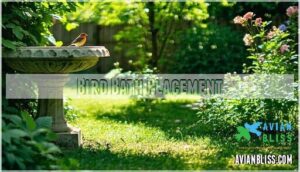
You’ll want to position your bird bath where birds can easily spot it but predators can’t easily access it.
Finding the perfect location balances visibility with safety and guarantees your feathered visitors will feel comfortable enough to stop for a drink or splash, which is crucial for their well-being and safety.
Positioning for Visibility
When selecting your bird bath location, consider both ideal viewing angles and garden aesthetics.
I’ll create an engaging blockquote based on that paragraph about bird bath location selection. Here it is:
Position your bird bath where nature’s theater meets your perfect viewing spot—creating harmony between avian comfort and your enjoyment.
Place it where you can easily observe from your favorite window or patio spot.
You’ll want to balance human perspective (for those perfect photographic angles) with bird safety.
Position the bath 10-15 feet from dense shrubs, giving birds a quick escape route while maintaining visibility for your backyard bird watching enjoyment.
This will allow you to enjoy the birds from a distance, and also provide them with a sense of security.
Avoiding Predator Hotspots
While strategically placed bird baths give you a front-row seat to nature’s show, safety must be your top priority.
Place your bird bath away from shrubs where cats might hide, but close enough to trees for quick escape routes.
A height advantage of 3-5 feet deters ground predators, while motion detection lights can scare away nighttime hunters.
Birds need to feel safe before they’ll visit your backyard oasis. Consider shallow water depths for bird safety.
Surrounding Environment Consideration
Now that you’ve protected your feathered visitors from predators, consider what’s around your bird bath.
The surrounding environment greatly impacts bird comfort. Position your bird bath where plants offer some cover without blocking flight paths.
Watch sun exposure—afternoon shade prevents water from overheating. Consider wind exposure (birds dislike being blown around) and human activity levels.
A thoughtfully placed bath surrounded by native plants creates the perfect bird-friendly oasis they’ll return to daily.
Accessibility for Birds
While environmental surroundings protect your birds, their ability to easily access water is equally important.
Different bird species need varying access points based on their size. Incorporate gentle slope gradients and textured surfaces in your bird bath to help birds maintain stable footing.
Multiple levels accommodate various bird sizes, from finches to cardinals. Both ground bird bath options and elevated designs should maintain safe distances from predator hiding spots.
Remember, ideal bird bathing and drinking happens when water depth stays between 1-2 inches.
Bird Bath Maintenance
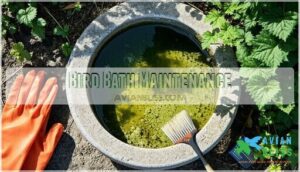
You’ll need to clean your bird bath every few days to prevent harmful algae growth and mosquito breeding, which can transmit diseases to your feathered visitors.
Regular maintenance guarantees that birds have access to fresh water but also extends the lifespan of your bird bath, regardless of which stunning style you’ve chosen for your backyard sanctuary.
Regular Water Changes
Now that you’ve found the perfect spot for your bird bath, keeping it filled with fresh water is your next mission.
Change the water every 1-2 days to prevent mosquito breeding and algae growth.
Dirty water can harbor harmful bacteria that affect birds when they’re drinking or bathing.
Your feathered friends will thank you with more frequent visits to their clean bird bath water sources.
Basin Cleaning and Disinfecting
Scrub your bird bath weekly to prevent algae buildup that can harm your feathered visitors.
Use a stiff brush and a 9:1 water-to-vinegar solution for safe disinfecting without harsh chemicals.
Remove mosquito eggs by emptying completely between cleanings.
Follow a frequency schedule of deep cleaning every two weeks, with daily rinses during summer to maintain bird bath sanitation.
Bird bath sanitation doesn’t need to be complicated—just consistent to keep your avian friends healthy.
Winterizing and Freezing Prevention
During winter’s harsh grip, protecting your bird bath from freezing becomes essential.
Choose freeze-resistant materials like resin or plastic, or invest in a heated bird bath to maintain open water.
Bird bath heaters and de-icers safe for avian visitors prevent complete freezing without harmful chemicals.
For budget-friendly options, try water thawing techniques such as floating a tennis ball on the surface or applying simple insulation methods around the basin’s exterior.
Attracting Desired Wildlife
Now that your bird bath is protected from winter’s chill, you’ll want to focus on attracting specific birds to your backyard.
Moving water is a powerful magnet for wildlife—it draws almost as many birds as food does!
Place your bird bath near native plants and trees to create a complete ecosystem support system.
You’ll enjoy wildlife photography opportunities as you observe fascinating bathing behavior right outside your window.
Frequently Asked Questions (FAQs)
What type of bird bath do birds like best?
Birds prefer shallow bird baths with rough surfaces, gradual slopes, and placed in shaded, predator-free areas.
You’ll attract more feathered friends by including perches nearby and keeping the water fresh daily.
What are the disadvantages of a bird bath?
Your feathered friends’ watering hole requires significant upkeep with daily cleaning to prevent disease spread.
You’ll need to refill it regularly, deal with algae growth, and might attract unwanted pests like mosquitoes.
Should a birdbath be in sun or shade?
Place your birdbath in partial shade to prevent water from overheating and evaporating too quickly.
Morning sun is beneficial, but afternoon shade keeps the water cooler and more inviting for your feathered visitors.
What is the best material for a birdbath?
You’ve likely wondered which material will last longest in your yard.
Concrete and ceramic offer durability while copper provides natural antimicrobial properties.
For the best value, choose resin or stone with textured surfaces that birds can grip.
Why do you put marbles in a bird bath?
Marbles in your bird bath create shallow drinking spots and prevent drowning for smaller birds.
They also add visual appeal, attracting more feathered visitors while reducing mosquito breeding by disturbing the water surface, which can be considered a key benefit, and also provides visual appeal.
What can I use instead of a bird bath?
You can use shallow bowls, plant saucers, or even upturned lids as alternatives to bird baths.
Make certain they’re stable, have a gentle slope, and are filled with fresh water to attract birds.
What to know before buying a bird bath?
Before buying a bird bath, consider size, depth, and material for bird safety and easy cleaning.
Think about placement—shade is ideal—and maintenance needs.
Shallow designs with gradual slopes attract diverse birds while preventing drowning.
How do I prevent algae growth in bird baths?
Scrub your bird bath weekly with a brush and a vinegar-water mix to remove algae.
Place it in shade to slow algae growth, and change water every 1-2 days to keep it clean.
Are heated bird baths safe for birds?
Heated bird baths are safe when used properly.
They prevent water from freezing, ensuring birds can drink in winter.
Choose models with thermostats and place cords securely to avoid hazards.
Always keep them clean and unplug if damaged.
What is the optimal height for a bird bath?
A bird bath works best at a height of 2 to 3 feet.
This keeps birds safe from predators while allowing easy access.
Place it near shrubs or trees for cover, but not too close.
Conclusion
Picture your backyard as a haven for birds, bustling with activity around thoughtfully chosen bird baths.
By exploring different types of bird baths for your backyard—whether elegant pedestals, space-saving hanging designs, or natural ground setups—you’ll attract a variety of visitors.
Combine durable materials like copper or resin with features like shallow water and textured surfaces for safe footing.
Careful placement and maintenance guarantee an inviting space.
With these steps, bird-watching becomes a delightful experience.