This site is supported by our readers. We may earn a commission, at no cost to you, if you purchase through links.
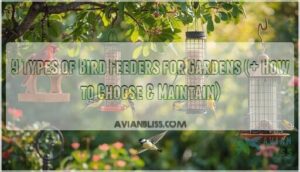
A flash of red at the kitchen window, the cheerful chatter of chickadees in the morning, or the unexpected arrival of a striking goldfinch—these moments start with choosing the right feeder. Most gardeners grab whatever looks good at the store and wonder why they only see sparrows or why squirrels have turned their yard into an all-you-can-eat buffet.
The truth is different feeder types attract entirely different birds, and matching your setup to the species you want makes all the difference. Whether you’re hoping to welcome finches, woodpeckers, or hummingbirds, understanding how hopper feeders differ from tube feeders or why suet cakes work magic for certain species transforms your garden into a genuine wildlife haven.
Table Of Contents
- Key Takeaways
- Most Popular Types of Bird Feeders
- Which Feeders Attract Which Birds
- Choosing The Right Feeder for Your Garden
- Squirrel-Proofing and Bird Feeder Protection
- Best Bird Feeders for Gardens: Top 10 Picks
- 1. Squirrel Proof Bird Feeder for Outdoors
- 2. Squirrel Be Gone Home Bird Feeder
- 3. Lyric Nyjer Seed Wild Bird Food
- 4. Kingsyard Thistle Bird Feeder for Finches
- 5. Birds Choice Suet Feeder Tail Prop
- 6. Ground Bird Feeder Tray Platform
- 7. Peanut Wreath Wild Bird Feeder
- 8. Amzey Dried Mealworms for Chickens Birds
- 9. Songbird Essentials Ultimate Oriole Feeder
- 10. Hummingbird High View Feeder Red
- Bird Feeder Maintenance and Feeding Tips
- Frequently Asked Questions (FAQs)
- Conclusion
Key Takeaways
- Matching feeder types to specific bird species makes the biggest difference in who visits your garden—tube feeders attract finches and chickadees, suet feeders bring woodpeckers and nuthatches, while platform feeders welcome cardinals and jays.
- Squirrel-proofing requires layered defenses including weight-activated mechanisms, pole-mounted baffles positioned 4-5 feet high and 10-12 feet from jumping points, and durable metal construction that resists chewing.
- Regular cleaning every two weeks for seed feeders and every 3-5 days for nectar feeders prevents deadly disease spread, while proper seed storage and limited quantities stop mold growth that can kill birds through aspergillosis.
- Strategic placement between 5-8 feet high, within 10-12 feet of protective cover, and either within 3 feet or beyond 30 feet of windows creates safe feeding stations that balance predator protection with collision prevention.
Most Popular Types of Bird Feeders
Choosing the right bird feeder starts with understanding what’s available and what works best for your space. Each type of feeder has a different function and attracts specific bird species to your garden.
Here are the nine most popular feeders you’ll want to think about.
Hopper Feeders
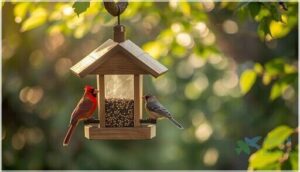
Hopper feeders are the workhorse of backyard bird feeding. You’ll recognize them by their house-shaped design with a seed chamber that dispenses food continuously. They hold anywhere from two to ten pounds of seed, which means fewer trips out to refill.
Their roofs offer solid weather protection, keeping seed dry for days. Cardinals, jays, chickadees, and finches visit regularly.
To guarantee freshness, it’s best to store birdseed properly. Clean them every two weeks to prevent mold growth.
Tube Feeders
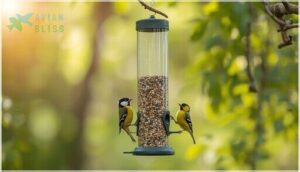
If you want a feeder that’s easy to hang and keeps seed dry, tube feeders are a smart choice. Their port design suits small songbirds like finches and chickadees. With weather resistance and clear tubes, you’ll spot visitors easily. Goldfinches are commonly attracted to these feeders.
Tube feeders handle a range of seed variety, and cleaning methods are straightforward—just remove the cap and rinse. Bird accessibility is excellent.
Tray and Platform Feeders
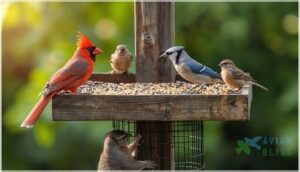
Tray or platform feeders welcome more species than most feeder types, from grosbeaks to sparrows. You’ll spot cardinals and jays landing with ease.
The trade-off? Seed waste and weather vulnerability increase. Pest access is common unless you use baffles. Species imbalance happens when dominant birds take over.
Cleaning frequency matters—wash every two weeks to prevent disease from droppings.
Nyjer (Thistle) Feeders
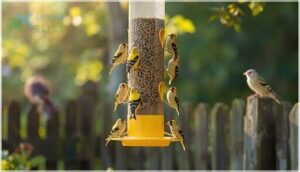
Small finches love nyjer feeders—you’ll see goldfinches clinging to mesh tubes in bright yellow flocks. These feeders use tiny ports that finches access easily while keeping larger birds and squirrels away. Nyjer seed packs high oil content (around 35%) that fuels energetic finches through winter. The seed’s small hulls reduce ground waste dramatically, and its specialized design naturally deters pests.
Nyjer feeders with tiny ports let goldfinches feast on high-fat seed while naturally blocking larger birds and squirrels
- Golden finches perching upside-down on mesh sleeves
- Tiny black seeds spilling minimally beneath the feeder
- Purple finches competing for prime feeding spots
- Squirrels ignoring the feeder after failed attempts
- Pine siskins visiting daily during migration season
Suet Feeders
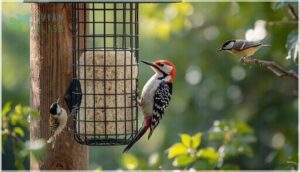
When woodpeckers arrive, you’ll know your suet feeder‘s working. These high-fat cakes attract nuthatches, chickadees, and wrens year-round while boosting winter survival rates considerably.
Choose cage-style or upside-down designs for squirrel deterrence. Clean your suet feeder every two weeks with diluted bleach to prevent disease spread.
Switch to no-melt suet types during summer, and watch bird diversity flourish in your garden.
Nectar Feeders
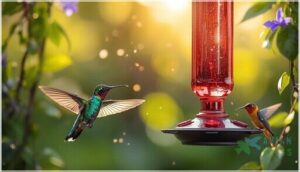
Among garden favorites, nectar feeders bring hummingbirds and orioles up close, thanks to bright Feeder Designs and simple Nectar Recipes—just sugar and water.
Hummingbird Feeders with ant moats or perches help with attracting hummingbirds, while Cleaning Solutions keep nectar fresh and safe.
Use Seasonal Usage to your advantage, refilling often in warm months to prevent spoilage and encourage daily visits.
Peanut Feeders
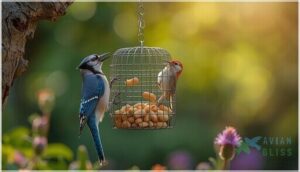
Peanut feeders turn your garden into a gathering spot for blue jays, woodpeckers, and nuthatches—birds that thrive on the protein-rich fuel peanuts provide.
Whether you choose mesh-style peanut feeder types, inshell peanuts in metal cages, or a DIY peanut bird feeder, these designs attract specific birds while resisting squirrels.
Cleaning peanut feeders monthly with warm soapy water keeps visitors healthy. Feeding trends data shows peanut feeders rank among the top three for species diversity.
Window Feeders
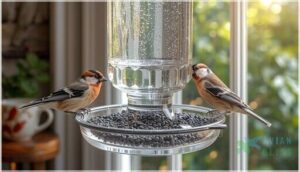
Window feeders bring chickadees, finches, and sparrows within arm’s reach of your glass, turning breakfast into a live wildlife show. These types of bird feeders attach with suction cups—reliable when cleaned properly—and reduce collision risks when placed within three feet of the pane.
The benefits of window feeders include daily observation opportunities and easier cleaning protocols. You’ll spot species that usually avoid other setups.
Ground Feeders
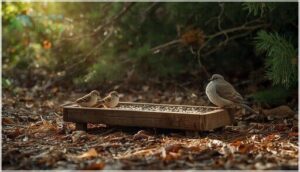
Ground feeders replicate the forest floor where sparrows, juncos, and doves naturally forage. These types of bird feeders—simple trays placed low or at soil level—require thoughtful feeder placement to balance attracting birds with managing predator risks and seed spoilage.
Consider these factors when choosing bird feeders for ground feeding:
- Weekly cleaning frequency prevents disease spread
- Elevated designs with drainage reduce mold
- Black oil sunflower and millet attract target species
- Position near cover but away from cat hiding spots
- Monitor for rodents drawn to spilled seed
Which Feeders Attract Which Birds
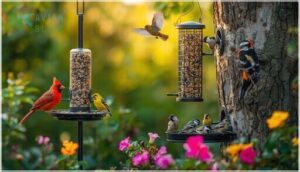
Different birds have different feeding preferences, and matching the right feeder to the right species makes all the difference in who shows up at your garden.
Some birds prefer perching high on tube feeders while others are more comfortable feeding at ground level. Understanding these preferences helps you create a bird-friendly space that attracts the species you want to see.
Feeders for Songbirds (Finches, Chickadees, Sparrows)
Tube feeders and nyjer (thistle) feeders are your best choices for attracting finches, chickadees, and smaller songbirds. These seed feeders keep food dry and fresh while offering easy access.
If you’re aiming for attracting specific bird species like goldfinches, nyjer’s tiny seeds and specialized openings provide excellent sparrow deterrence.
Focus on feeder hygiene and strategic feeder placement to support healthy winter feeding and increase visits year-round.
Feeders for Woodpeckers and Nuthatches
Suet feeders offering high-energy suet cake types draw woodpeckers like Downy, Hairy, and Red-bellied year-round. Nuthatches and chickadees cling while feeding, benefiting from the essential fats.
Choose durable feeder material options like wood or weather-protected plastic. Placement strategies near tree trunks work best, matching natural woodpecker behavior.
Even cardinals and juncos scavenge suet scraps below, showing how one feeder aids in attracting different bird species across your garden.
Feeders for Hummingbirds and Orioles
Nectar feeders with tube or bottle designs and feeding ports let hummingbirds sip easily. Platform styles with shallow dishes and perforated covers help in preventing bees while simplifying cleanup. Ant moats create water barriers that stop pests.
- Specialized oriole feeders hold fruit, oriole jelly, and nectar with built-in ant protection
- Bright orange and red colors improve attracting orioles and hummingbirds to your space
- Smart feeder placement near flowers boosts visits from both species
- A simple nectar recipe (four parts water to one part sugar) works for hummingbird feeder selection and oriole feeders alike
Feeders for Blue Jays, Cardinals, and Larger Birds
Larger birds like blue jays and cardinals need more room to dine. Hopper feeders and tray platform feeders offer sturdy perches and material strength to support their weight. These feeder types resist squirrels while holding sunflower seeds, peanuts, and safflower.
Your placement strategy matters too. Position feeders where bigger birds feel safe landing, and you’ll see more visits.
Feeders for Ground-Feeding Birds
While hopper feeders serve the treetop crowd, some birds prefer eating where they naturally forage—on the ground. Pigeons, doves, and robins visit open tray platform feeders placed low or directly on soil.
Here’s what ground feeder design should include:
- Drainage solutions with mesh bases prevent mold in wet conditions
- Elevated feeders or covered placement offer predator protection
- Seed variety like mixed blends and mealworms match their natural diet
Tray placement near cover keeps visitors safe while they feed.
Choosing The Right Feeder for Your Garden
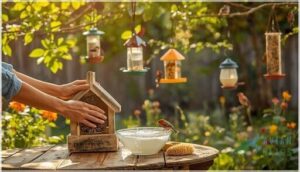
Picking the right bird feeder isn’t just about what looks nice in your yard. You need to think about how well it holds up to weather, how easy it’s to keep clean, and whether it’ll actually work for the birds you want to attract.
Let’s walk through the key factors that’ll help you choose a feeder that works for both you and your feathered visitors.
Feeder Material and Durability
Your feeder’s material determines how long it lasts for your backyard birds. Metal feeders last 5 to 10 years or more with minimal maintenance. Plastic options cost less but usually need replacing after 1 to 3 years. Wood offers natural beauty but requires regular sealing to prevent rot.
| Material | Lifespan | Maintenance Needs |
|---|---|---|
| Metal (Stainless Steel/Aluminum) | 5-10+ years | Low – easy cleaning |
| Plastic/Recycled Plastic | 1-5 years | Moderate – frequent scrubbing |
| Wood | 2-4 years | High – sealing required |
| Copper/Composite | 10+ years/Lifetime | Minimal care needed |
Different bird feeder styles suit various garden aesthetics. Metal and copper provide antimicrobial surfaces that keep food cleaner. Recycled plastic feeders reduce environmental impact while lasting up to five times longer than wood. Types of bird feeders in composite materials resist UV damage and moisture without constant upkeep.
Weather and Squirrel Resistance
When winter weather arrives and squirrels start eyeing your seed supply, your feeder choice matters more than ever. Material weatherproofing and climate resilience keep food fresh through storms while squirrel deterrents protect your investment.
- Sloped roofs and drainage holes reduce moisture by 80% after heavy rain
- Weight-activated squirrelproof feeders cut unauthorized access below 5%
- Baffle effectiveness stops 87% of squirrel attempts when properly installed
- UV-resistant materials maintain integrity for 36+ months in direct sunlight
- Combined squirrelproof feeder designs retain 20-25% more seed than standard models
Ease of Cleaning and Maintenance
How often will you realistically scrub that feeder? Cleaning frequency matters because mold prevention starts with smart material choice and feeder design. Opt for feeders with removable parts and wide openings that won’t require elaborate tool selection.
Rotating feeders during cleaning and maintaining bird feeders becomes simple when you choose models designed for quick disassembly. Types of bird feeders vary in maintenance demands, so prioritize ease from the start.
Feeder Size and Seed Capacity
Seed weight capacity shapes how often you’ll haul out the ladder. Hopper feeders generally hold 2 to 5 pounds, while tube styles manage 1.5 to 4.5 pounds depending on design.
Space for birds matters too—cramped feeders mean squabbles and wasted seed. Match seed type compatibility with your local visitors’ preferences, and you’ll spend less time refilling and more time watching your feathered guests thrive.
Placement and Accessibility
You’ll want your feeder around 5 to 6 feet off the ground—best height for bird feeder placement that keeps cats at bay while staying accessible. To prevent window collisions, maintain at least 10 feet of distance from glass.
Position it 10 to 12 feet from shelter like shrubs, balancing predator deterrence with quick escape routes. Keep water access nearby, about 10 to 15 feet away.
Squirrel-Proofing and Bird Feeder Protection
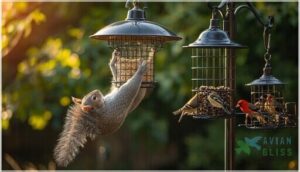
Squirrels can empty a feeder faster than you can say “backyard bandits,” which is why protecting your bird seed matters just as much as choosing the right feeder.
The good news is you don’t have to surrender to these furry acrobats. Here are proven ways to keep squirrels out while making sure your feathered friends still get their fill.
Squirrel-Proof Feeder Designs
Squirrel-proof bird feeders use kinetic mechanisms like weight-sensitive spinning perches that gently toss squirrels off without harming them. The Yankee Flipper spins at high speed when triggered, achieving over 99% effectiveness.
Design durability matters too—look for metal construction and replaceable parts.
These squirrel-proofing bird feeders work best when you combine smart bird feeder design with proper placement strategies, keeping squirrel safety in mind.
Using Squirrel Baffles and Guards
Beyond kinetic feeders, baffles offer a passive defense that works beautifully when installed right. Traditional dome-shaped baffles exceed 90% effectiveness—some claim 99%—while cone designs perform nearly as well.
Pole-mounted baffles need at least 4-5 feet of ground clearance and 8 feet from jumping points. Hanging versions should sit 5 feet high and wobble slightly.
Squirrel agility matters; larger critters sometimes outsmart single barriers, so layering your squirrel-proofing strategies helps protect feeders reliably.
Strategic Feeder Placement to Deter Squirrels
Even with the best squirrel baffle, placement matters enormously. You’ll want feeders 10-12 feet from trees, fences, or launch points—squirrels jump surprisingly far. Mount them 5-7 feet high following distance guidelines that account for squirrel mobility and habitat proximity.
Integrated strategies work best: combine height, horizontal spacing, and physical barriers. Squirrelproofing feeders isn’t about one trick; it’s layering defenses so your backyard birds actually get fed.
Other Wildlife Considerations
Squirrels aren’t your only visitors. Feeders attract raccoons, cats, and rats—rodent presence spikes 25% near feeding stations. Bird droppings spread invasive species through seeds, while disease transmission accelerates when wildlife congregates.
Predator attraction increases around poorly placed setups, disrupting bird habitat and ecosystem impacts. Beyond squirrelproofing feeders with a squirrel baffle, you’re managing a whole backyard ecosystem that requires thoughtful stewardship.
Best Bird Feeders for Gardens: Top 10 Picks
After covering how to protect your feeders from squirrels and other critters, you’re probably ready to shop. The market offers hundreds of bird feeders, which can make choosing the right one overwhelming.
Here are ten proven options that combine durability, ease of maintenance, and the ability to attract a wide variety of birds to your garden.
1. Squirrel Proof Bird Feeder for Outdoors
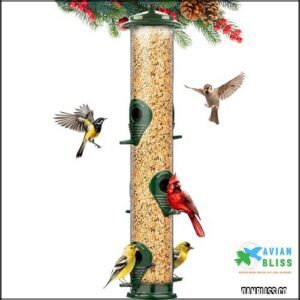
If you’re battling persistent backyard bandits, the Gray Bunny squirrel-proof bird feeder delivers where others fall short. Its weight-activated mechanism and chew-proof metal construction demonstrate 80-90% squirrel-proof effectiveness while accommodating finches and songbirds at six feeding ports.
The 4-cup capacity holds your seed mix without constant refills. Strategic placement 5-6 feet high with a squirrel baffle maximizes protection.
Material durability shines through powder-coated metal that weathers storms and discourages gnawing. You’ll notice increased seed consumption as birds feed undisturbed, fostering natural bird behavior in your wildlife garden.
Best For: Bird lovers battling persistent squirrels who want a durable feeder that actually keeps seed available for finches and songbirds.
- Weight-activated mechanism with 80-90% effectiveness blocks squirrels while allowing smaller birds to feed at six ports simultaneously
- Chew-proof powder-coated metal construction withstands weather and gnawing better than plastic alternatives
- 4-cup capacity reduces refill frequency and the lift-lid design makes cleaning straightforward
- Some users report squirrels still finding ways to access seed despite the locking mechanism
- Rust can develop on the lid underside and base over time in wet conditions
- Seed debris gets trapped between the plastic cylinder and base, creating cleaning hassles
2. Squirrel Be Gone Home Bird Feeder
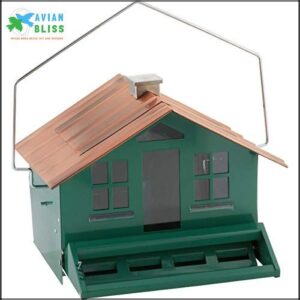
With an 8-pound capacity and weight-activated perches, the Perky-Pet Squirrel Be Gone feeder is a reliable choice among squirrel proof bird feeders in a market projected to reach $1.8 billion by 2032. Consumer preferences favor its rust-resistant metal construction and multiple feeding ports, though some users note design flaws where seeds collect at the bottom.
You’ll appreciate how proper placement with a squirrel baffle enhances squirrel resistance while minimizing ecological impact through reduced seed waste and cleaner feeding stations.
Best For: Bird enthusiasts who want a high-capacity feeder that keeps squirrels out while attracting multiple species like cardinals, finches, and woodpeckers to their backyard.
- Weight-activated perches effectively prevent squirrels from accessing seeds, with adjustable springs to accommodate different bird sizes.
- Large 8-pound capacity means less frequent refilling, and the rust-resistant metal construction with powder coating ensures long-lasting durability.
- Easy to maintain with a removable lid and large opening for quick refills and cleaning, plus versatile mounting options for hanging or pole placement.
- Seeds can get stuck in the hollow space at the bottom of the feeder, leading to waste and potential mold issues if not cleaned regularly.
- Squirrels may still access the feeder if hung from trees or shepherd’s hooks without proper baffles, reducing its effectiveness.
- The metal design, while durable, may attract larger animals like bears and requires strategic placement at least 5 feet above ground for optimal squirrel resistance.
3. Lyric Nyjer Seed Wild Bird Food
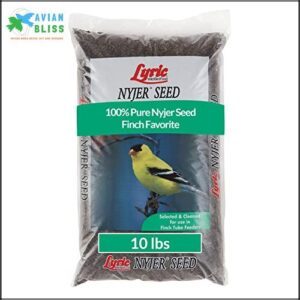
When you choose Lyric Nyjer Seed, you’re selecting carefully cleaned and sterilized thistle that won’t sprout beneath your feeders. This tiny black thistle seed attracts American Goldfinches, Purple Finches, and Pine Siskins with its high oil content and protein-rich nutrition.
The 10-pound bag runs around $31 and works best in specialized nyjer feeders with small ports that prevent waste. You’ll notice finches clinging upside-down while feeding, and the seed quality stays fresh longer thanks to Stay Fresh packaging technology that preserves nutritional benefits.
Best For: Birders who want to attract colorful finches like goldfinches and siskins to their yard with a high-quality, no-sprout seed that works in specialized feeders.
- High oil and protein content provides excellent nutrition for finches, especially during winter months when they need extra energy.
- Sterilized and carefully cleaned to prevent sprouting under feeders and minimize debris or waste.
- Stay Fresh packaging keeps the seed nutritious longer, and squirrels typically ignore it, reducing feeder competition.
- Requires specialized nyjer feeders with small ports, which means you can’t use it in standard open-tray bird feeders.
- At around $31 for 10 pounds, it’s more expensive than many other bird seed options, especially if you have high feeder traffic.
- Needs frequent refilling and regular feeder cleaning since the seed can retain moisture and attract heavy use from finches.
4. Kingsyard Thistle Bird Feeder for Finches
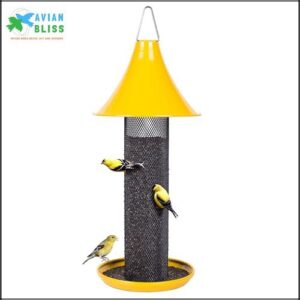
The Kingsyard Thistle Bird Feeder holds three pounds of nyjer seeds in a metal mesh tube that finches genuinely adore. You’ll attract goldfinches, chickadees, and siskins with six perches that accommodate their social feeding habits.
The all-metal construction with weatherproof roof ensures bird feeder durability through harsh seasons, and the design naturally deters unwanted visitors without extra accessories.
Garden wildlife management becomes simpler when you understand finch feeding habits—they’ll cling to the mesh while extracting thistle seed benefits that provide essential oils and protein.
Best For: Bird enthusiasts who want to attract finches and other small songbirds while keeping squirrels at bay without constant maintenance.
- Holds 3 pounds of seed with six perches, so multiple finches can feed at once without needing constant refills.
- All-metal construction with powder-coated finish resists rust and weather damage, backed by a lifetime warranty.
- Naturally deters squirrels through sturdy mesh design, reducing seed waste and unwanted visitors.
- Only works with thistle/Nyjer seed, so you can’t use it for other seed types or attract a wider variety of birds.
- Small top opening may let rain in, and tiny drainage holes can cause seeds to clump and go to waste.
- May need a separate squirrel baffle in areas with persistent squirrel problems for full protection.
5. Birds Choice Suet Feeder Tail Prop
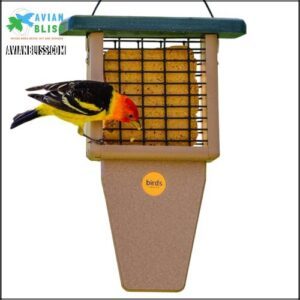
Woodpeckers need vertical support when they feed, and the Birds Choice Suet Feeder Tail Prop delivers exactly that. This recycled plastic design holds one suet cake while providing a resting surface that mimics tree bark. The vinyl-coated grid with stainless steel screws won’t crack or fade through years of weather exposure.
Choosing the right bird feeder means understanding species behavior—woodpecker attraction increases dramatically when tail prop benefits support natural feeding postures. You’ll attract chickadees, nuthatches, and bluebirds alongside your woodpeckers. The easy-refill top simplifies maintenance during busy winter months.
Best For: Birdwatchers who want to attract woodpeckers and other clinging birds with a durable, eco-friendly feeder that supports natural feeding behavior.
- The tail prop design mimics natural tree bark, giving woodpeckers a comfortable place to rest while they feed, which dramatically increases visits from larger species like pileated and red-bellied woodpeckers.
- Made from weatherproof recycled plastic with stainless steel screws and a vinyl-coated grid, so it won’t crack, fade, or rust even after years of outdoor use.
- The sliding top makes refilling super easy, even when you’re wearing gloves in cold weather, and the single-cake design keeps maintenance simple.
- Not squirrel-proof, so you may need to add baffles or other deterrents if squirrels are common in your yard.
- The hanging cord attachment can be a weak point, with some users reporting it detaches from the body over time.
- Bears and other large animals can damage the feeder, and the top piece may pop off if not secured properly during refills.
6. Ground Bird Feeder Tray Platform
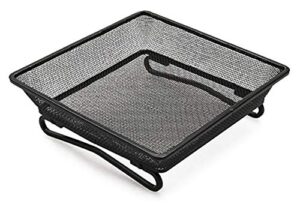
When doves, sparrows, and juncos land in your yard, they’re not looking to perch—they want the ground. The Aelean Ground Bird Feeder Tray Platform welcomes these natural foragers with an 8-by-8-inch metal mesh that drains water and prevents seed spoilage.
This feeding station attracts 89% of feeder-visiting species, from chickadees to cardinals, creating a wildlife-friendly gathering spot.
The rust-resistant black finish withstands weather without fading, while the mesh materials allow easy cleaning between refills. Garden feeder placement at ground level mimics how birds naturally feed, turning your space into a thriving sanctuary.
Best For: Birdwatchers who want to attract ground-feeding species like doves, sparrows, and juncos while supporting a diverse range of birds in small garden spaces.
- Attracts up to 89% of feeder-visiting bird species thanks to the open platform design that mimics natural ground-foraging behavior.
- Metal mesh bottom allows water to drain quickly, preventing seed spoilage, mold growth, and the mess that comes with standing water.
- Rust-resistant and weather-resistant construction holds up through seasons without fading or deteriorating.
- The 8-by-8-inch size is smaller than some buyers expect, limiting seed capacity and requiring more frequent refills every few days.
- Attracts squirrels, raccoons, and other wildlife along with birds, which can dominate the feeder and consume food quickly.
- Mesh can arrive crushed during shipping and may be difficult to reshape, plus the non-removable basket makes thorough cleaning less convenient.
7. Peanut Wreath Wild Bird Feeder
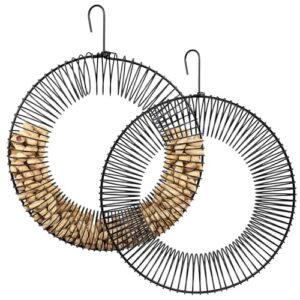
When blue jays and woodpeckers arrive to claim their prize, the Peanut Wreath Wild Bird Feeder becomes your backyard’s buffet centerpiece. This rust-resistant steel design holds 1.25 pounds of peanuts—enough to keep busy beaks fed for days.
Feeder Durability Tests prove its powder-coated finish withstands rain and snow without compromising Wildlife Nutrition Tips that make peanuts essential winter fuel.
Garden Feeder Placement at 5 to 6 feet encourages safe visits while Bird Attraction Methods showcase its wreath shape, allowing easy access for backyard birds mastering various Peanut Feeder Designs across Types of Bird Feeders for year-round bird feeding.
Best For: Birdwatchers who want to attract woodpeckers, blue jays, and other nut-loving birds with a durable, high-capacity feeder that can handle harsh weather.
- Holds up to 1.25 pounds of peanuts, reducing how often you need to refill even with frequent visitors like blue jays.
- Rust-resistant steel with powder coating stands up to rain and snow season after season.
- Wreath design makes it easy for birds to grab peanuts from any angle while giving you great views of feeding activity.
- Birds may need a few days to get used to the feeder before they start visiting regularly.
- Peanuts can get lodged at the bottom, making it harder for birds to reach the last few pieces.
- Smaller bird species might struggle to access peanuts compared to larger birds like woodpeckers and jays.
8. Amzey Dried Mealworms for Chickens Birds
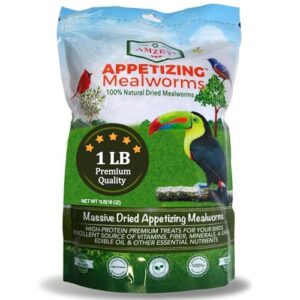
High-protein nutrition transforms bird feeding when you switch to Amzey Dried Mealworms for Chickens Birds. This sustainable feed delivers 50% protein without preservatives—essential for backyard birds rebuilding strength after migration or harsh weather.
You’ll notice bluebirds and robins eagerly visiting your mealworm feeder since protein supplements support healthier plumage and energy levels. The 1-pound package stores easily without refrigeration, making feeding strategies simple year-round.
Bird health improves when natural bird seed blends with these nutrient-dense treats, creating balanced meals that honor what wild birds actually need.
Best For: Backyard bird enthusiasts and poultry owners looking for a high-protein, shelf-stable treat that attracts insect-eating birds like bluebirds and robins while supporting healthier plumage and energy levels.
- Contains 50% protein with no preservatives or additives, providing essential nutrients that help birds recover from migration and maintain strong immune systems.
- No refrigeration needed and long shelf life make storage simple, so you can keep a convenient supply on hand year-round.
- Attracts a wide variety of birds including bluebirds, robins, and woodpeckers, while also working as a nutritious supplement for chickens and poultry.
- The zip-lock packaging can be unreliable, making it harder to keep the mealworms fresh after opening.
- Some picky eaters may not take to dried mealworms right away, especially if they’re used to other feed types.
- Mealworms can break during shipping or storage if not handled carefully, reducing their appeal to birds.
9. Songbird Essentials Ultimate Oriole Feeder
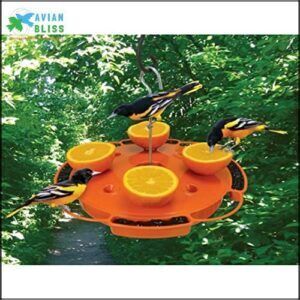
You can transform your garden into an oriole habitat with the Songbird Essentials Premier Oriole Feeder that offers nectar, jelly, and orange halves simultaneously. This 12-inch feeder holds 32 ounces of nectar—twice what typical models offer—while its built-in ant moat protects food from invaders.
The bright orange design naturally assists in attracting birds like orioles and bluebirds to your yard. Feeder durability comes from rust-resistant components and dishwasher-safe plastic that simplifies maintenance.
Large perches accommodate multiple visitors, making this combo approach ideal for serious oriole feeding throughout spring and summer.
Best For: Backyard birders who want to attract and keep orioles around by offering nectar, jelly, and fresh oranges all in one easy-to-maintain feeding station.
- Holds 32 ounces of nectar and four orange halves—double the capacity of typical feeders—so you refill less often and keep orioles from leaving your yard.
- Built-in ant moat surrounds the feeder to keep ants away from the food, protecting your nectar and jelly investment.
- Dishwasher-safe plastic and rust-resistant hardware make cleaning simple and ensure the feeder holds up through multiple seasons.
- Large 12-inch size can lead to wasted jelly and nectar if you don’t have enough oriole traffic to consume it before spoilage.
- Plastic construction isn’t squirrel-proof and some users report the material getting damaged or destroyed by persistent squirrels.
- The cover doesn’t always stay securely attached to the base, which can be frustrating during refills and cleaning.
10. Hummingbird High View Feeder Red
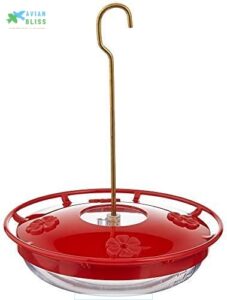
While orioles favor bold feeding stations, hummingbirds need something different. The Aspects HummZinger HighView feeder offers a raised perch that lets these tiny birds rest comfortably while drinking from four ports.
Its 12-ounce capacity and bright red cover excel at hummingbird attraction without artificial dyes in your nectar quality mix. The built-in ant moat provides bird safety by blocking crawling pests.
Feeder durability comes from unbreakable polycarbonate construction that withstands weather and frequent cleaning. Smart feeder placement at five to six feet high encourages visits throughout the season.
Best For: Backyard bird watchers who want a durable, easy-to-maintain feeder that attracts hummingbirds while keeping ants and bees away.
- Built-in ant moat and leak-proof design keep the feeding area clean and pest-free without extra hassle.
- Raised perch and four feeding ports let multiple hummingbirds feed comfortably at once, making for better viewing.
- Unbreakable polycarbonate construction holds up to weather and frequent cleaning, so it lasts season after season.
- Higher price point compared to basic feeders, though the quality backs it up.
- Lid can crack if you press down too hard during cleaning or refilling.
- Needs regular cleaning to prevent mold, and filling to the 8-ounce mark helps keep bees from reaching the nectar.
Bird Feeder Maintenance and Feeding Tips
Keeping your feeders clean and well-stocked isn’t just about attracting more birds—it’s about keeping them healthy. A dirty feeder can spread disease faster than you’d think, while stale seed just goes to waste.
Here’s what you need to know about maintaining your feeders throughout the year.
Cleaning Frequency and Methods
Think of feeder sanitation as your frontline defense for bird health.
Cleaning schedules depend on feeder type: nectar feeders need attention every 3-5 days, while seed feeders require cleaning every two weeks in summer and weekly during winter for disease prevention.
Soak all parts in a 1:9 bleach solution for 10 minutes, scrub thoroughly, and let them dry completely before refilling.
Preventing Seed Spoilage and Mold
Spoilage control starts with proper seed storage in airtight containers kept cool and dry. Fill feeders with only a one- or two-day supply to prevent mold growth, especially during humid weather.
Moldy seed poses serious bird health risks, including fatal aspergillosis. Check feeders weekly for clumping or musty odors, and remove any spoiled seed immediately.
Regular feeder sanitation and smart seed storage tips work hand-in-hand to protect your feathered visitors.
Refilling Schedules by Feeder Type
Different feeders demand different refill intervals based on feeder capacity and bird activity levels. You’ll quickly notice patterns once your backyard guests settle into their routines.
- Tube feeders often need daily attention in busy seasons
- Hopper feeders usually last 3-5 days between fills
- Tray feeders require refills every 1-2 days due to exposure
- Suet feeders hold up for two weeks in cool weather
- Hummingbird feeders need fresh nectar twice daily when hot
Adjust your schedule based on seed spoilage risks and feeder maintenance needs.
Safe Placement and Predator Prevention
For maximum predator deterrence, position feeders 5 to 8 feet high and within 10-12 feet of protective shrubs. Baffle installation blocks climbing predators, while landscaping strategies like clearing low vegetation create open escape zones.
Window safety matters too—place feeders within 3 feet or beyond 30 feet from glass to prevent collisions. Squirrelproofing bird feeders with physical barriers and cleaning and maintaining feeders regularly keeps your backyard haven safe for visiting birds.
Seasonal Adjustments for Feeding Birds
As seasons shift, so do your birds’ nutritional needs. Winter supplements like suet and high-fat seeds support cold-weather survival, while summer’s lighter feeding demands nectar and mealworms. Adjust your seasonal diet offerings during bird migration periods.
Rotate feeders to match climate adaptation patterns, and keep squirrel-proofing bird feeders, cleaning and maintaining feeders, and preventing seed spoilage as year-round priorities when choosing bird seed.
Frequently Asked Questions (FAQs)
How much does a quality bird feeder cost?
Like shopping for a reliable pair of boots, Quality Factors in bird feeders span Budget Options from $20 to $150, with Material Costs and Feeder Price Range varying by type—tube and hopper feeders average $30-$
Can bird feeders attract unwanted pests or rodents?
Yes, bird feeders can attract rodents like mice and rats, plus squirrels, raccoons, and even bears. Spilled seed draws pests, so regular feeder sanitation and prompt cleanup help control unwanted visitors.
What seeds should I avoid in feeders?
Skip cheap bird seed blends loaded with milo, oats, wheat, and canola—birds toss these filler seeds aside. Also avoid moldy or treated seed.
Stick with black-oil sunflower seed and nyjer for healthier, waste-free feeding.
Do bird feeders need permits or regulations?
Most backyard bird feeding doesn’t require permits. However, local ordinances and HOAs may impose feeder restrictions regarding placement, size, or cleanliness.
Always check your area’s regulatory compliance rules before installing feeders.
How far should feeders be from windows?
Choosing the right spot feels like threading a needle between danger and safety.
Place feeders within three feet of windows or beyond ten feet to minimize collision risk zones and keep birds safer from window reflection dangers year-round.
Conclusion
If you build it, they’ll come“—and with the right types of bird feeders for gardens, they truly will. Matching feeders to your favorite species, placing them thoughtfully, and maintaining them regularly transforms your yard into a thriving sanctuary.
Start with one or two feeders suited to your local birds, keep them clean, and watch your garden come alive with wings, song, and color you never expected.
- https://www.alliedmarketresearch.com/bird-feeder-market-A16887
- https://www.wbu.com/products/hopper-feeders
- https://www.thegoodboutique.com/inspiration/the-environmental-impact-of-conventional-bird-feeders
- https://pmc.ncbi.nlm.nih.gov/articles/PMC4592493
- https://www.green-feathers.co.uk/blogs/news/the-best-materials-for-bird-feeders