This site is supported by our readers. We may earn a commission, at no cost to you, if you purchase through links.
Your backyard parrot’s sudden lethargy isn’t just a bad day—it could signal a bacterial infection that, left unchecked, threatens not just your bird’s life but also your own health.
Avian pathogenic E. coli alone accounts for 57.5% of bacterial infections in birds, turning routine husbandry lapses into life-threatening crises. These microscopic invaders spread through contaminated surfaces, respiratory aerosols, and even from parent to chick through infected eggs.
Understanding avian bacterial infections means recognizing the interplay between pathogens, environmental triggers, and your bird’s immune defenses—knowledge that transforms you from a worried owner into an effective guardian of your feathered companion’s health.
Table Of Contents
Key Takeaways
- Avian pathogenic E. coli dominates bacterial infections at 57.5% prevalence, with transmission occurring through contaminated surfaces, respiratory aerosols, and vertical routes from parent to chick through infected eggs.
- Poor husbandry practices—infrequent cage cleaning, high stocking density, and inadequate waste disposal—create environmental conditions that dramatically increase bacterial infection risks by weakening immunity and promoting pathogen proliferation.
- Early detection through monitoring respiratory symptoms (nasal discharge, labored breathing) and digestive signs (green diarrhea, weight loss) enables timely intervention, while advanced diagnostics like PCR and CT imaging confirm specific pathogens for targeted treatment.
- Effective prevention combines daily biosecurity measures (sanitation, quarantine protocols, vector control) with vaccination programs that reduce antibiotic dependence by 50%, though zoonotic risks require coordinated surveillance since 99% of avian E. coli strains show multidrug resistance.
Causes and Transmission of Avian Bacterial Infections
Understanding what causes avian bacterial infections and how they spread is your first line of defense in protecting your birds. These infections don’t appear out of nowhere—they result from specific pathogens, environmental conditions, and transmission pathways that you can learn to recognize and control.
Let’s explore the key factors that put your birds at risk and how these infections move through avian populations.
Common Bacterial Pathogens in Birds
When you’re identifying bacterial pathogens in your birds, understanding the usual suspects makes all the difference. Avian pathogenic E. coli leads the pack at 57.5% prevalence, while Salmonella risks account for roughly 12% of infections. You’ll also encounter Pasteurella impact in about 6% of cases. Don’t overlook Chlamydia psittaci and emerging pathogens like Bordetella avium, which affects over 22% of turkeys.
The diagnosis and treatment of these infections often involve understanding bacterial disease management.
Environmental and Husbandry Risk Factors
Your birds’ environment sets the stage for infection more than you might realize. Poor husbandry conditions—like keeping cages inside instead of outside, cleaning only weekly rather than daily, and inadequate waste disposal near water sources—dramatically increase bacterial risks. High bird density compounds these problems by creating stress factors that weaken immunity.
Water contamination in eutrophic environments, combined with lax biosecurity and husbandry practices, creates the perfect storm for pathogen proliferation. High stocking densities can also induce stress and compromise immune organ development, raising disease susceptibility.
Vertical and Horizontal Transmission Routes
Understanding how bacterial pathogens spread through your flock requires knowing two key transmission routes. Vertical transmission occurs when infected breeders pass bacteria to offspring through eggs—Salmonella Pullorum can persist in egg whites for four weeks, while Mycoplasma gallisepticum transmits in ovo. Horizontal transmission happens through respiratory aerosols, contaminated surfaces, and direct bird-to-bird contact.
Three critical control strategies target these routes:
- Breeder screening programs identify infected parent stock before they can transmit pathogens vertically to chicks
- Hatchery hygiene protocols include disinfection of equipment and environments to break transmission chains
- Quarantine measures isolate infected birds, preventing horizontal spread through your entire population
Transmission efficiency varies by pathogen—avian reovirus shows 100% horizontal transmission to co-housed birds within 28 days, making route-specific interventions essential for effective disease control.
Role of Contaminated Food and Water
Contaminated food and water serve as primary bacterial reservoirs in your aviary. Salmonella thrives on spilled birdseed at feeders, while fecal-oral routes promote pathogen spread through shared water bowls. Campylobacter persists in broiler environments, and Aspergillus grows on damp feed.
These foodborne pathogens and waterborne diseases create environmental contamination that amplifies transmission routes. Implementing strict hygiene practices—regular disinfection of feeding stations and water sources—represents effective risk mitigation against bacterial infections.
Impact of Stress and Immunity on Susceptibility
Stress hormones fundamentally compromise your bird’s immune response, making bacterial infections far more likely. When corticosterone levels rise, the hypothalamic-pituitary-adrenal axis triggers immunosuppression that weakens host defenses and disrupts the protective microbiome.
Your bird faces elevated infection risk through these mechanisms:
- Reduced lymphocyte proliferation and antibody production
- Impaired macrophage function limiting pathogen clearance
- Compromised gut barrier integrity enabling bacterial invasion
- Shifted microbiome favoring endotoxin-producing strains
- Enhanced pathogen shedding increasing transmission rates
Managing environmental stressors strengthens immunity against avian bacterial infections.
Clinical Signs and Diagnosis in Birds
Recognizing bacterial infections early can make all the difference in your bird’s outcome. The signs aren’t always obvious—they can range from subtle changes in breathing or appetite to more alarming symptoms affecting multiple body systems.
Let’s walk through what to watch for and how veterinarians confirm these infections through examination and diagnostic testing.
Respiratory and Digestive Symptoms

When bacterial pathogens invade your bird’s body, they commonly target two primary systems. Respiratory infections often produce nasal discharge, labored breathing, conjunctivitis, and coughing—particularly with pathogens like Bordetella avium. Meanwhile, digestive tract involvement causes green diarrhea, weight loss, and anorexia. Recognizing these patterns helps you identify avian bacterial infections early.
| System Affected | Common Symptoms |
|---|---|
| Respiratory system | Nasal discharge, coughing, sneezing, dyspnea |
| Respiratory system | Conjunctivitis, sinusitis, ocular discharge |
| Digestive tract | Green to yellow-green watery diarrhea |
| Digestive tract | Weight loss, reduced appetite, lethargy |
| Both systems | Decreased productivity, secondary infections |
Systemic and Neurological Manifestations
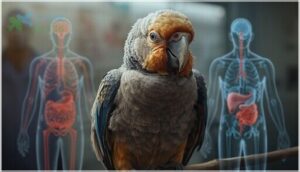
When infections spread beyond localized tissues, your bird may develop systemic disease with anorexia, depression, and polyuria—clear signs of organ dysfunction.
Neurological complications like torticollis, tremors, or paralysis signal CNS invasion, often linked to virulence factors that breach the blood-brain barrier.
These clinical signs indicate immune compromise and dramatically increase mortality rates, sometimes approaching 100% in severe outbreaks.
Clinical Examination Procedures
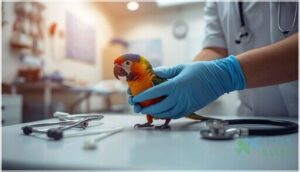
Your vet begins a physical assessment with careful observation—posture, breathing patterns, and alertness reveal bacterial infection symptoms before any testing starts.
Thorough clinical techniques involve:
- Gentle palpation of crop and coelomic cavity detecting inflammation
- Sample collection via choanal, cloacal, and conjunctival swabs for lab diagnostics
- Auscultation identifying abnormal respiratory sounds
- Documentation enabling interpretation/monitoring throughout treatment
Clinical signs and physical examination guide diagnosis, while diagnostic methods confirm the pathogen behind your bird’s illness.
Imaging and Advanced Diagnostic Methods
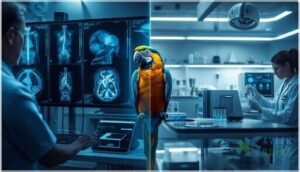
When clinical signs point to bacterial infection, sophisticated diagnostic methods pinpoint the exact pathogen. Radiographic imaging uses your bird’s unique air sac system for organ contrast, while computed tomography reveals hidden respiratory lesions.
Molecular diagnostics like PCR detect bacterial DNA with precision, surpassing traditional cultures. Bioimaging techniques and refined serology complete the diagnostic testing arsenal, enabling accurate pathogen identification in birds.
These molecular testing tools transform guesswork into targeted treatment.
Prevention Strategies and Biosecurity Measures

Preventing bacterial infections in your birds isn’t about reacting after the fact—it’s about building systems that stop disease before it starts. Smart biosecurity combines practical daily habits with strategic interventions that reduce pathogen exposure and strengthen your flock’s natural defenses.
Let’s walk through the core prevention strategies that form the foundation of effective disease management in avian populations.
Sanitation and Environmental Controls
You can’t fight what you can’t see, but you can control where bacteria thrive. Cleaning floors twice weekly and disinfecting equipment cuts transmission risks by up to 87%.
Installing footbaths, bird netting, and controlling rodents all limit pathogen exposure. Water sanitation through chlorination and proper litter control greatly reduce bacterial loads.
Strong biosecurity measures—quarantine procedures, limited visitor access, and strict hygiene protocols—form your first line of defense against infection.
Vaccination and Prophylactic Interventions
Beyond sanitation, vaccination programs offer powerful disease prevention. Bacterial vaccines cut antibiotic use nearly 50% while improving flock health—inactivated formulas make up 85% of avian vaccines targeting pathogens like E. coli and Salmonella.
Emerging advances in aerosol delivery and in ovo methods boost vaccine effectiveness. Combined with prebiotics and probiotics as alternative prophylaxis, these preventive measures strengthen biosecurity measures and deliver impressive economic impact, returning up to $6.60 per dollar invested.
Waste Management and Vector Control
Proper waste disposal methods protect your birds from disease vectors lurking in contaminated environments. Carcass composting and sanitary landfill management limit bacterial spread—but poor husbandry conditions invite trouble when wildlife accesses waste sites, transferring pathogens back to your flock.
Effective vector control targets multiple life stages:
- Reduce vector breeding habitats around poultry housing
- Control egg and larval stages with insect growth regulators
- Apply targeted chemical treatments when necessary
- Maintain water system hygiene to prevent bacterial proliferation
- Implement biological controls using natural predators
Leachate pathogen persistence in improperly managed landfills creates environmental contamination by birds, while eutrophic conditions from wastewater promote deadly bacterial outbreaks. These biosecurity measures form your frontline disease control strategy.
Quarantine and Isolation Practices
After addressing waste and vector concerns, your next safeguard is strong quarantine protocols and isolation techniques. Newly arrived birds require 30–60 days in dedicated, sanitized quarantine rooms with independent ventilation and air filtration.
Daily monitoring and strict biosecurity measures—like disinfecting bedding, using physical barriers, and sterilizing equipment—limit disease spread, forming a cornerstone of effective disease control and prevention in avian populations.
Monitoring and Early Detection Programs
Once you’ve isolated infected birds, regular disease surveillance catches problems before they spiral. Early detection through diagnostic testing saves your flock and your bottom line. Here’s how monitoring programs work:
- Biosensor technology delivers rapid, on-site results within minutes, enhancing real-time response.
- Data integration tracks infection patterns across farms, enabling adaptive strategies suited to seasonal risks.
- Wild bird role surveillance warns of pathogen threats from migratory flyways.
- Combined antigen-antibody tests distinguish active infections from past exposures.
- Economic impact drops dramatically when biosecurity measures include routine screening.
Treatment Approaches and Antimicrobial Use
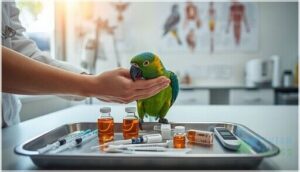
When your bird shows signs of a bacterial infection, swift and appropriate treatment can make the difference between recovery and serious complications. The right approach depends on the specific pathogen, your bird’s overall health, and how far the infection has progressed.
Let’s look at the key treatment strategies you’ll need to understand as you work with your avian veterinarian.
Antibiotic Options and Administration
Selecting the right antibiotics means matching the drug to the infection. Common options include tetracyclines like doxycycline for chlamydiosis, fluoroquinolones such as enrofloxacin, and aminoglycosides like amikacin for systemic infections.
Administration routes vary—oral works well for gastrointestinal issues, while injectable forms deliver higher bioavailability when needed.
Combination therapies tackle severe bacteremia effectively, though dosage guidelines and resistance monitoring remain essential for successful antimicrobial therapy.
Natural Antimicrobial Alternatives
Essential oils from oregano, thyme, and cinnamon offer antimicrobial properties that combat multidrug resistance in your birds.
Herbal extracts like turmeric and garlic provide antibacterial effects while supporting gut bacteria balance. Probiotic use enhances immune boosting without compromising growth.
These natural antibiotics for birds work through the antimicrobial properties of herbs, creating alternatives when conventional treatments face resistance challenges.
Treatment Duration and Monitoring Response
When treating bacterial infections, antimicrobial therapy is generally administered for 45 days, though budgerigars may require only 30 days. Chlamydiosis treatment duration varies accordingly.
Monitor your bird’s clinical examination closely—respiratory symptoms, appetite, and activity levels signal treatment success. Laboratory testing, such as PCR, confirms clearance.
During extended antibiotic treatment, probiotic supplementation is essential to prevent gut dysbiosis. Owner compliance is critical, as interrupted courses can lead to antibiotic resistance.
Managing Antibiotic Resistance
Antimicrobial resistance threatens your bird’s future treatment options. Misuse and overuse of antibiotics in poultry—especially critically important drugs—fuel resistance transmission through contaminated environments and cross-species spread.
Your role in stewardship programs matters:
- Demand veterinary oversight before antibiotic use to prevent inappropriate dosing
- Support biosecurity impact through strict hygiene, reducing prophylactic dependency
- Explore alternative therapies like probiotics, immune modulators, and bacteriophages
Regulatory efforts now restrict growth-promotion antibiotics, but responsible use starts with you.
Supportive Care and Recovery
Beyond antimicrobial therapy, your bird needs thorough supportive care to survive bacterial infections. Fluid therapy treats dehydration—subcutaneous administration works for mild cases, while severe dehydration requires intravenous routes. Nutritional support with protein-rich diets strengthens immunity and speeds recovery.
Environmental management reduces stress, and adjunctive therapies like nebulization help respiratory cases. Monitoring progress closely ensures you catch complications early, improving overall avian health outcomes.
Zoonotic Risks and Ecological Impacts
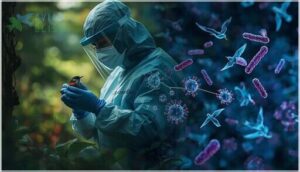
Avian bacterial infections don’t just affect birds—they can pose real risks to human health and ripple through entire ecosystems. Understanding which pathogens cross species barriers helps you protect yourself, your birds, and the broader environment.
Let’s examine the zoonotic threats, ecological consequences, and coordinated strategies that connect avian health to our own.
Zoonotic Bacterial Pathogens in Birds
Birds harbor diverse zoonotic bacterial pathogens with significant transmission potential to humans. Among 212 zoonotic wild-bird-associated pathogen species, bacteria comprise 43.4%, making them the dominant group.
Chlamydia psittaci is found in approximately 17% of pigeon populations, while Campylobacter species reach a 24% prevalence. Escherichia coli and Salmonella each affect about 17-18% of wild birds, highlighting substantial bacterial reservoir dynamics and wildlife health risks. These findings underscore the need for ongoing surveillance within avian bacterial diversity studies.
Public Health Implications
These zoonotic pathogens create real public health risks you shouldn’t ignore. People with occupational exposure—poultry workers, veterinarians—face the highest infection rates, though anyone handling birds can be affected.
Disease surveillance programs have collected over 500,000 wild bird samples since 2006, tracking zoonotic disease patterns and informing infection control strategies.
Antibiotic resistance complicates treatment, making global health policies increasingly focused on the zoonotic potential these bacteria carry.
Effects on Poultry Industry and Wildlife
Economic losses from bacterial disease outbreaks hit the poultry industry hard—mortality rates can exceed 50% in affected flocks, with production dropping from reduced weight gain and poor egg quality.
Wildlife populations aren’t spared either; wild birds serve as reservoirs for pathogens like Salmonella and Pasteurella, creating cycles of disease transmission that threaten both ecological balance and nearby farms.
That’s why biosecurity measures matter.
Disease Surveillance and Control Efforts
Since 2006, over 500,000 wild bird samples have been collected through national surveillance programs targeting avian influenza, Salmonella, and other zoonotic pathogens. Rapid detection technologies now identify airborne viruses in under five minutes—critical when containment zones must be established within 24-48 hours.
Resistance monitoring reveals troubling trends: 99% of avian E. coli strains show multidrug resistance, making coordinated wildlife surveillance and outbreak containment essential for public health protection.
Nearly all avian E. coli strains resist multiple antibiotics, demanding urgent coordinated surveillance to protect public health
One Health Approach to Avian Bacterial Infections
Managing these resistance patterns requires cross-sector collaboration between veterinary, medical, and environmental health teams. The One Health approach integrates surveillance across wild birds, poultry operations, and human populations—tracking zoonotic transmission before outbreaks escalate.
Legislative frameworks now mandate joint task forces and training platforms that harmonize diagnostic protocols. Unified action plans strengthen disease control while protecting environmental health through coordinated monitoring and rapid response systems.
Frequently Asked Questions (FAQs)
How do seasonal changes affect bacterial infection rates?
Seasonal changes influence avian bacterial infections through Migration Patterns, Breeding Cycle shifts, and Flock Density variations.
Temperature Influence and Humidity Effects alter disease transmission rates, with autumn and late summer showing peak prevalence in wild and domestic birds.
Can probiotics help prevent avian bacterial diseases?
Yes, probiotics can help prevent avian bacterial infections by strengthening immune responses, maintaining gut bacteria balance through competitive exclusion, and reducing pathogen colonization—offering a sustainable alternative to antibiotics while supporting overall disease prevention and microbiome balance.
What role do wild birds play in spreading pathogens?
Wild birds act as bacterial pathogen reservoirs, transporting microbes like Salmonella and Campylobacter across continents through their droppings.
They’re asymptomatic carriers, making pathogen translocation routes especially concerning for zoonotic risk factors in human populations.
Are certain bird species more naturally resistant to infections?
Different avian species show distinct resistance levels to bacterial infections. Genetic factors, immune response variations, and ecological influences shape these differences.
Waterfowl and certain cranes demonstrate stronger natural defenses compared to chickens and raptors.
Conclusion
What separates a preventable illness from a tragedy? Often, it’s the difference between reactive panic and proactive vigilance. Understanding avian bacterial infections prepares you to recognize subtle warning signs, implement rigorous biosecurity protocols, and respond decisively when symptoms emerge.
Your bird’s health hinges on this knowledge—transforming everyday care routines into powerful defenses against invisible threats. Armed with these insights, you’re not just a caretaker; you’re your feathered companion’s first and best line of protection.
- https://scholar.google.com/scholar_lookup?journal=Int.%20J.%20Curr.%20Microbiol.%20Appl.%20Sci.&title=Wild%20birds%20as%20potential%20vectors%20for%20pathogen%20dissemination%20on%20migration%20routes%20in%20the%20Danube%20Delta%20Wetlands&author=M.%20Gogu-Bogdan&author=I.%20Cobzaru&author=E.%20P%C3%A1ll&author=M.%20Niculae&author=M.%20Spinu&volume=3&publication_year=2014&pages=890-897&
- https://doi.org/10.1016/j.jinf.2007.11.001
- https://pubmed.ncbi.nlm.nih.gov/18096237/
- https://pmc.ncbi.nlm.nih.gov/articles/PMC4068692/
- https://journals.plos.org/plosone/article?id=10.1371%2Fjournal.pone.0275852