This site is supported by our readers. We may earn a commission, at no cost to you, if you purchase through links.
 You’re probably wondering why birds sometimes attack humans.
Understanding bird aggression regarding humans is key to staying safe.
It’s often a mix of instinct, territoriality, and protection.
You’ll notice birds can be aggressive during nesting season or when competing for food.
By recognizing these triggers and maintaining a safe distance, you can minimize the risk of an attack.
As you learn more about bird behavior, you’ll discover simple ways to coexist peacefully, and that’s just the beginning of understanding bird aggression regarding humans.
Table Of Contents
- Key Takeaways
- Bird Aggression Causes
- Aggressive Bird Species
- Human Interactions Trigger
- Preventing Bird Attacks
- Safety Measures
- Bird Attack Warning Signs
- Managing Aggressive Birds
- Bird Attack Consequences
- Responding to Bird Attacks
- Coexisting With Birds
- Frequently Asked Questions (FAQs)
- Why is my bird aggressive towards me?
- Can birds be aggressive towards humans?
- What to do when a bird keeps attacking you?
- What is the most aggressive bird toward humans?
- Can birds recognize individual human faces?
- Do birds attack at night or only daytime?
- Are baby birds more aggressive than adults?
- Can bird aggression be inherited genetically?
- Do birds in captivity exhibit aggression differently?
- Conclusion
Key Takeaways
- You’ll find that understanding bird aggression towards humans is key to staying safe, and it’s often a mix of instinct, territoriality, and protection that triggers aggressive behavior in birds.
- When encountering aggressive birds, you should maintain a safe distance, avoid feeding them, and wear protective gear to minimize the risk of an attack, and recognizing warning signs like loud calls, aggressive postures, and swooping behavior can help you avoid trouble.
- You can reduce your risk of bird attacks by respecting their space, especially during nesting season, and avoiding sudden movements, which can provoke defensive behaviors in birds, and using visual deterrents like reflective surfaces and decoy predators can also help.
- By taking steps to prevent bird attacks, such as removing food sources, securing bins, and supporting conservation efforts, you can create a safer environment for both humans and birds, and promote a more harmonious coexistence with these amazing creatures.
Bird Aggression Causes
When birds attack humans, it’s usually not random aggression but a natural response to protect what matters most to them.
Birds attack to protect what matters most to them, a natural response to perceived threats.
Understanding these triggers helps you avoid dangerous encounters and coexist safely with our feathered neighbors.
Nesting Season
During nesting season, bird aggression ramps up as territorial birds guard their nests and chicks. You’ll notice Peak Aggression and a clear boost in Breeding Behavior.
Watch for these signs:
- Parents swooping to protect chicks
- Loud alarm calls near nests
- Sudden dive-bombing attacks
- Increased vigilance and boldness
Seasonal Variations in bird behavior mean respecting their space is key. These behaviors may be influenced by hormonal changes, which can lead to aggressive displays.
Territorial Defense
After the rush to protect nests, you’ll notice birds fiercely guarding their territory.
Territorial defense is all about keeping rivals out.
Aggressive birds use loud calls, swooping, and even pecking to protect their patch.
Territory size, defense mechanisms, and species variation all play a role—especially in urban territories, where seasonal changes can turn even small birds into bold defenders.
————–:
—————–:
—————-:
The combination of territory size, defense mechanisms, and species variation highlights the complexity of territorial defense in different environments, including urban areas where birds can become highly aggressive.
Food Competition
Ever notice birds fighting over your sandwich at the park? That’s food competition in action.
Urban Feeding and Human Provisioning change bird behavior, making them bolder. When Resource Scarcity hits, some species show dominance, leading to bird aggression and even bird attacks.
For your safety, avoid feeding birds directly—this helps prevent altered behavior and keeps everyone calm, reducing the likelihood of bird attacks.
Fear and Perceived Threat
Bird aggression often sparks when birds sense fear or a threat perception, especially if you resemble a predator or act unpredictably.
Defensive behavior kicks in fast—flapping wings or sharp calls are warnings.
Birds rely on keen cognition to judge risks. Some even show learned aggression from past encounters.
To protect human safety, recognize these bird behavior cues and avoid provoking bird attacks.
Aggressive Bird Species
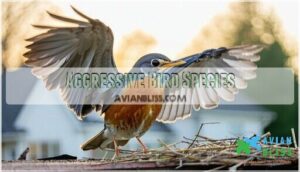
You’ll notice that some bird species, like American robins, mockingbirds, seagulls, and magpies, are more likely to show aggressive behavior toward people.
Learning about these birds helps you understand which ones to watch for and why they act this way, by gaining insight into their behavior.
American Robins
A robin’s bright chest isn’t just for show—it signals Robin Territoriality during nesting season.
You’ll notice:
- Loud calls and chest puffing near nests.
- Swooping or dive-bombing if you get too close.
- Reflection attacks on windows from mistaken rivals.
- Chasing away other birds over food.
Robins adapt well to cities, but respect their space to avoid bird aggression.
This is often due to perceived territorial intrusions, which can lead to aggressive behavior in response to mistaken rivals.
Mockingbirds
Much like robins, mockingbirds fiercely protect their nests. You’ll notice their bold swoops and sharp calls if you get too close.
Mockingbird behavior is shaped by strong nesting habits and impressive mimicry abilities. Urban mockingbirds adapt quickly, making bird-human interaction common.
Understanding these aggressive birds helps promote Mockingbird Conservation and reduces bird aggression. Here’s a quick overview:
| Trait | Description |
|---|---|
| Nesting Habits | Highly territorial |
| Mimicry Abilities | Imitates other birds |
| Urban Mockingbirds | Thrive in cities |
| Bird Aggression | Swoops to defend nests |
Seagulls
Seagulls’ boldness often surprises beachgoers.
These aggressive birds quickly learn to associate people with snacks, leading to frequent food snatching and even direct bird attacks.
Seagull behavior peaks in busy tourist spots, making public safety and bird deterrents important.
Coastal management and population control help reduce conflicts.
To avoid trouble, keep your food hidden and don’t encourage their boldness.
Magpies
During nesting season, you might notice Magpie swooping—one of the most dramatic signs of bird aggression.
These intelligent birds fiercely protect their nests, especially in urban areas, and Magpie nesting habits mean they’ll swoop at anything they see as a threat.
To avoid run-ins with aggressive birds, use Magpie deterrents, keep your distance, and respect their space during nesting season, which is crucial for maintaining a peaceful coexistence with these birds, and understanding their aggressive birds behavior.
Human Interactions Trigger

When you approach nests, feed wild birds, or spend time in urban parks, your actions can trigger defensive behaviors in local bird populations.
Changes like habitat fragmentation and increased human activity make birds more likely to see people as threats, leading to more frequent aggressive encounters.
Approaching Nests
After learning about aggressive bird species, it’s important to know that getting too close to bird nests can quickly trigger bird aggression.
During nesting season, birds rely on strong parental instincts for chick defense and egg protection.
If you cross territorial boundaries or ignore nest proximity dangers, you might face swooping, loud calls, or even pecks—nature’s way of enforcing nest protection.
Feeding Wild Birds
When you feed wild birds, you may not realize you’re stirring up bird aggression and changing their natural behaviors.
Food conditioning leads to dependency risks and behavioral changes, which can trigger more aggressive human-bird interaction.
Watch for:
- Increased competition and fighting over bird food
- Population impacts near feeding spots
- Hygiene concerns from leftover food and droppings
Choose responsible bird feeding to mitigate these issues, ensuring a healthier environment for both humans and birds, and minimizing dependency risks.
Habitat Fragmentation
When you offer snacks, birds can get bold, but habitat fragmentation causes even bigger ripples.
When human development splits up bird habitats, you see Species Displacement and Resource Scarcity.
This sparks Increased Aggression and noticeable Behavioral Changes.
Bird aggression rises as birds compete for shrinking spaces, leading to more bird-human conflicts.
Habitat loss is a major factor in this issue.
Conservation Strategies help support wildlife coexistence and restore balance in bird-human interactions.
Urbanization
Urban sprawl transforms natural landscapes into concrete jungles, forcing birds into closer contact with humans.
This habitat loss creates intense competition for limited city resources, leading to increased bird aggression and human-bird conflict.
Urban birds adapt to city life by:
- Defending smaller territories more aggressively
- Becoming bolder around humans for food access
- Nesting in buildings and urban structures
- Scavenging garbage and human food sources
- Developing heightened stress responses to urban noise
These adaptations intensify birdhuman interactions, creating more frequent birdhuman conflicts as species compete for survival in crowded urban environments, leading to increased bird aggression and human-bird conflict due to habitat loss and the need for food access.
Preventing Bird Attacks
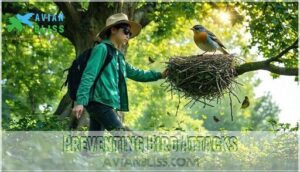
You can substantially reduce your risk of bird attacks by understanding when and why birds become aggressive.
Understand bird behavior to minimize attack risks
Simple preventive measures like maintaining distance from nests, avoiding feeding wild birds, and wearing protective gear during peak breeding season will help you coexist safely with our feathered neighbors, by taking these steps you can minimize the risk of aggressive behavior.
Maintaining Distance
Give birds space to avoid triggering their protective instincts.
Stay at least 30 feet from nests during breeding season for Safe Viewing. Maintain Territory Awareness by recognizing warning signs like aggressive postures.
Keep a Nest Buffer zone to Respect Boundaries and prevent bird attacks. This distance helps you stay calm while ensuring safe human-bird interaction through proper prevention tips and avoiding provocation tactics.
Avoiding Feeding
Beyond keeping your distance, resist the urge to feed wild birds.
Direct feeding disrupts their natural foraging patterns and creates aggressive food-seeking behaviors.
When birds associate humans with meals, they become bolder and more likely to attack when food isn’t provided.
Here’s why avoiding feeding prevents bird aggression:
- Natural Foraging – Birds maintain healthy dietary changes without human intervention
- Public Health – Reduces disease transmission risks from close human interactions
- Ecosystem Balance – Prevents overpopulation in specific areas
- Responsible Tourism – Protects both visitors and wildlife in parks
Wearing Protective Gear
After skipping the birdseed, think about protective gear for bird attack prevention.
Headgear effectiveness is high—helmets with reflective tape or cable ties cut swooping risks in half. Material choices like mesh ear covers and padded jackets shield against pecks and scratches.
You can find a specialized bird helmet online. Consider visibility concerns and cost analysis, as not all gear is budget-friendly.
Practical limitations mean no gear is foolproof, but every bit helps, emphasizing the importance of practical limitations in bird attack prevention.
Recognizing Warning Signs
After gearing up for safety, it’s smart to watch for warning signs in bird behavior.
Listen for sharp vocalization cues or sudden loud calls. Notice posture changes—raised wings or puffed feathers signal defensive behaviors.
Watch flight patterns, especially swooping or dive-bombing. Threat displays like aggressive staring or circling mean it’s time to back away.
Recognizing these signs helps you avoid trouble, by understanding defensive behaviors and being aware of warning signs.
Safety Measures

When you encounter an aggressive bird, it’s important to stay calm and move slowly to avoid escalating the situation.
Using an umbrella for protection and removing any nearby food sources can also help keep you safe, by following these steps you ensure a safe environment.
Staying Calm
When you face aggressive birds, your best tool is a calm mind.
Stay calm and focus on control breathing to reduce panic.
Mental preparation helps you use avoidance strategies and understand bird behavior.
Calm communication—speaking softly or moving gently—can ease tension.
Remember, preventing bird attacks often starts with your reaction.
Avoiding bright colors startles birds and can help prevent unwanted attention.
Keeping cool gives you the upper hand in tricky situations, and using calm communication can significantly reduce the likelihood of bird attacks.
Moving Slowly
Once you’ve managed to stay calm, focus on slow movements.
Birds pick up on sudden actions, so a Calm Retreat works best. Gradual Evasion, like quietly stepping back, helps in Minimizing Threat.
Avoid eye contact, as it can be seen as a challenge. Slow movements show you’re not a danger, Avoiding Provocation and respecting defensive behaviors.
Understanding bird behavior keeps you safer, and using techniques like Gradual Evasion can help in minimizing threats.
Using Umbrellas
Whether you’re strolling through a park during nesting season or just minding your business, carrying an umbrella can make all the difference.
The “Umbrella Effectiveness” as a Bird Deterrent is no myth—birds see it as a defensive posture.
Choose a neutral umbrella color, maximizing Portability Factor, to boost protection, promote bird attack prevention, and encourage bird attack avoidance during sudden bouts of bird aggression.
You can even purchase a specialized deterrent umbrella for enhanced protection.
Removing Food Sources
Birds are quick to spot a free meal, and leftover food can turn a peaceful park into a battleground.
To cut down on bird aggression and improve bird management, try these steps:
- Secure bins tightly to reduce spillage.
- Support Urban Cleanup efforts.
- Avoid feeding birds, encouraging a natural diet.
Public Awareness helps keep bird attacks in check, which is crucial for bird management.
Bird Attack Warning Signs
You can spot the early signs of a bird attack if you know what to look for, like loud calls, aggressive body language, or sudden swooping.
Recognizing these warning signals helps you avoid getting too close and keeps both you and the birds safe.
Loud Vocalizations
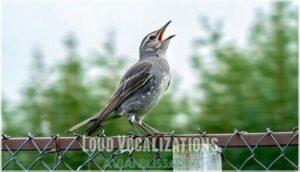
Anticipation builds when you hear sudden, sharp vocalizations—these are classic bird aggression warning signs.
Vocalization intensity ramps up as birds use alarm calls to signal threats. Context matters: some species have unique bird communication signals, while others share common warning signs.
Pay attention to these bird warnings—they’re not just noise, but clear cues to give space.
| Vocalization Intensity | Species Specificity | Alarm Calls |
|---|---|---|
| High | Mockingbirds | Repeated shrieks |
| Medium | Crows | Loud caws |
| Low | Robins | Sharp chirps |
The table provides a summary of vocalization intensity and species specificity, highlighting the unique characteristics of each species’ alarm calls.
Aggressive Postures
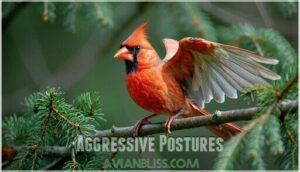
Spotting aggressive postures can help you steer clear of trouble.
Watch for wing display, feather ruffling, or sudden stance changes—these are classic warning signs of bird aggression.
Some birds add beak clacking to the mix, making their message loud and clear.
Body language speaks volumes, so if you see these physical posturing cues, give aggressive birds plenty of space to avoid trouble.
Swooping Behavior

After spotting aggressive postures, you might notice swooping—one of the clearest warning signs.
Swooping Triggers often include nesting season or entering a bird’s territory. Some species, like magpies or crows, use swooping as a defensive behavior.
Urban swooping is common, especially near parks. Understanding Species Differences and Seasonal Swooping helps you anticipate bird attacks and recognize when aggressive birds are protecting their nests.
Birds may be exhibiting territorial defense strategies to protect resources.
Dive-Bombing

After swooping comes the more dramatic move—dive-bombing. Some aggressive bird species, especially during nesting season, will plunge straight at you.
Watch for these signs:
- Sudden, steep attack trajectory from above.
- Loud warning calls before or during the dive.
- Quick retreats to a perch or nest after each pass.
Urban dive-bombing often happens for food or nest defense.
Managing Aggressive Birds
When you encounter aggressive birds, it’s important to know how to respond to keep yourself and the birds safe.
By understanding their behavior and using simple strategies, you can reduce the risk of conflict and create a safer environment for everyone.
Respecting Bird Space

When you respect territory and practice Ethical Birding, you help reduce bird aggression and bird attacks.
Avian Boundaries matter—give birds space, especially during nesting season.
Observe Don’t Disturb is a golden rule for human-bird interactions.
Coexistence Strategies like watching from afar and minimizing noise help you Minimize Impact.
Understanding bird behavior supports safer, friendlier encounters for everyone.
Avoiding Sudden Movements

When you face bird aggression, sudden moves can make things worse.
Birds notice quick motions and may see them as threats. Instead, use Gradual Movement and Slow Gestures to show Predictable Actions.
This Calm Retreat helps with bird attack avoidance. Remember, bird perception is sharp—staying calm and predictable is key for bird attacks prevention and your own safety.
Using Visual Deterrents

After avoiding sudden movements, you can boost bird aggression prevention by adding visual deterrents.
Reflective surfaces, decoy predators, and bold eye patterns help keep aggressive birds at bay.
Flag effectiveness depends on color and movement, so switch things up often.
To further protect local bird populations, consider reducing pesticide use in your yard.
Proper deterrent placement and regular changes stop birds from getting used to them, making bird attack prevention strategies and bird control more reliable.
Community-Based Programs

A strong community-based program can make a real difference in handling bird aggression.
These efforts boost program effectiveness and build neighborhood confidence. Here’s how you and your neighbors can help:
- Launch bird attack prevention programs
- Support bird community education workshops
- Promote habitat restoration
- Join bird monitoring projects
- Encourage public education on conflict resolution and human-bird interactions
By working together, a community can significantly reduce bird aggression through community-based efforts and public education.
Bird Attack Consequences

Bird attacks can leave you with more than just a scare, sometimes resulting in cuts, bruises, or even property damage.
You might also face health risks from scratches or stress, so it’s important to understand what can happen after an encounter with a stress.
Physical Injuries
You risk physical injuries from bird attacks, including claw wounds, beak punctures, and eye injuries.
Fall risks and infection rates are also concerns.
If you’re attacked, seek medical attention immediately to treat bird injuries and prevent complications from bird attack injuries.
Disease Transmission
You’re at risk of disease transmission from bird attacks, including Avian Flu and other zoonotic diseases.
Key concerns include:
- Fecal contamination
- Parasite spread
- Pathogen vectors
- Bird diseases, increasing bird attack risks and injuries.
The transmission of these diseases poses significant risks, highlighting the need for awareness of zoonotic diseases.
Emotional Trauma
You may experience Attack Anxiety or PTSD Symptoms after a bird attack, leading to Fear Conditioning and Phobia Development.
Such development can include phobias like ornithophobia, a bird phobia, affecting human-bird interactions and overall well-being.
Especially if it triggers Childhood Trauma, making you more fearful in similar situations.
Property Damage
Bird attacks don’t just threaten your safety—they can hit your wallet too.
Bird droppings corrode vehicles and building surfaces, while nesting materials clog gutters and damage roofs.
Aggressive birds protecting territories may cause structural damage to outdoor fixtures.
Garden destruction from territorial species can ruin landscaping investments.
Vehicle damage from defensive swooping incidents adds unexpected repair costs to bird encounters, which can lead to significant financial losses due to bird encounters.
Responding to Bird Attacks

When a bird targets you, it’s important to stay calm and take steps to protect yourself.
Knowing how to respond can reduce your risk of injury and help you safely leave the situation.
Seeking Shelter
If you spot bird attack warning signs or feel a rush of bird aggression, look for Immediate Cover.
Urban Shelters like bus stops and gazebos, or Natural Havens—including dense shrubs—can offer quick, Temporary Refuge.
Safe Zones protect you from swooping birds, reducing risk.
Quick sheltering is one of the best bird attack prevention strategies for bird attack safety.
Moving Away Slowly
When encountering bird aggression, you’ll want to make a calm retreat.
To do this:
- Back away slowly
- Avoid eye contact
- Keep a safe distance, this gradual evasion helps prevent further defensive behaviors, allowing for a slow withdrawal to a safe location.
Using Protective Headgear
When moving away slowly from bird attacks, consider wearing protective headgear for injury prevention.
Choose comfortable, visible materials to guarantee headgear effectiveness without visibility concerns, prioritizing safety tips and protection from bird aggression with the right protective gear.
You can find specialized bird headgear online, which is a key resource for dealing with bird aggression.
Reporting Incidents
Documentation becomes vital when bird attacks occur repeatedly in specific locations.
You should report bird incidents to local wildlife authorities, providing detailed information about the species, location, and circumstances.
This data collection helps authorities develop effective mitigation strategies and increases public awareness about problematic areas.
Proper reporting channels guarantee incidents receive appropriate attention from relevant authorities, which is crucial for public awareness and ensuring that incidents are addressed in a timely manner, ultimately leading to effective solutions.
Coexisting With Birds

You can build a peaceful relationship with birds by understanding their needs and respecting their space.
Supporting conservation efforts and practicing responsible behavior creates safer environments for both humans and wildlife, which is crucial for maintaining a peaceful coexistence.
Conservation Efforts
Bird conservation efforts play a vital role in reducing human-bird conflicts while protecting species and their habitats.
These initiatives focus on addressing root causes of aggression through thorough approaches that benefit both wildlife and communities.
Here are three key conservation strategies that help minimize bird attacks:
- Habitat Preservation – Protecting natural nesting areas reduces birds’ need to defend territory in urban spaces where conflicts with humans are more likely
- Species Protection – Monitoring vulnerable bird populations helps identify stress factors that contribute to increased aggression during breeding seasons
- Public Awareness – Educational programs teach communities about bird behavior patterns, reducing threats through informed human responses and responsible interactions
Reducing Threats through bird conservation creates healthier Ecosystem Balance.
When birds have adequate natural resources and undisturbed breeding grounds, their defensive behaviors decrease substantially.
These bird attack conservation efforts demonstrate how bird attack habitat protection directly impacts bird attack ecosystem balance, ultimately reducing the bird attack environmental impact on both species and human communities.
Habitat Protection
Preserving natural habitats reduces bird aggression by maintaining ecosystem balance and species preservation.
Urban planning that incorporates green spaces and reforestation efforts creates buffer zones between human activities and bird territories.
Conservation funding supports habitat restoration projects that minimize human-bird conflicts.
| Conservation Strategy | Impact on Bird Aggression |
|---|---|
| Protected nesting areas | Reduces territorial defense responses |
| Urban green corridors | Decreases food competition conflicts |
| Wetland restoration | Provides alternative feeding grounds |
| Native plant programs | Supports natural food sources |
| Habitat connectivity | Reduces stress-induced aggressive behavior |
The table outlines various conservation strategies and their impacts on bird aggression, including the reduction of territorial defense responses and the provision of alternative feeding grounds through wetland restoration and habitat connectivity.
Education and Awareness
You play a vital role in coexistence.
Education and awareness are key:
- Public awareness
- Bird behavior
- Coexistence strategies
- Responsible interaction, through bird aggression education and awareness, promoting wildlife education and safety.
Responsible Behavior
You can practice responsible behavior by respecting wildlife and avoiding habituation.
Ethical birding promotes coexistence strategies, reducing bird aggression.
Prioritize habitat conservation to minimize human-bird interactions and bird attacks, ensuring bird safety and behavioral understanding.
Frequently Asked Questions (FAQs)
Why is my bird aggressive towards me?
Like a guarded fortress, your bird’s aggression may stem from fear, territorialism, or protective instincts, so it’s essential you identify and address the underlying trigger to resolve the issue calmly.
Can birds be aggressive towards humans?
You may encounter aggressive birds, especially during breeding season, as they defend their nests, young, and territories, so it’s vital to maintain distance and respect their space.
What to do when a bird keeps attacking you?
What’s worse than a bird attack? Stay calm, slowly back away, and avoid eye contact to de-escalate the situation, and remove any food that might be attracting it.
What is the most aggressive bird toward humans?
You’ll find the cassowary is often considered the most aggressive bird toward humans, known for its powerful kicks and sharp claws, making it a formidable opponent.
Can birds recognize individual human faces?
You can recognize that some birds, like crows, can distinguish individual human faces, remembering and reacting to them based on past experiences.
Do birds attack at night or only daytime?
You’ll typically encounter bird attacks during daytime, as most birds are diurnal, but some nocturnal species like owls may defend their territory at night if they feel threatened.
Are baby birds more aggressive than adults?
As you navigate bird encounters, note that baby birds aren’t usually aggressive, it’s the adults defending them that can be fierce, especially during breeding season.
Can bird aggression be inherited genetically?
You’ll discover that bird aggression can be influenced by genetics, with some species being more prone to aggressive behavior due to their inherited traits and instincts.
Do birds in captivity exhibit aggression differently?
You’ll find that birds in captivity can exhibit aggression differently, often due to environmental factors, socialization, and human interaction, which can influence their behavior and stress levels substantially.
Conclusion
Generally, you’ll find that understanding bird aggression regarding humans is essential for a harmonious coexistence.
By recognizing triggers, you’re taking the first step in minimizing attacks.
You’re now better equipped to handle situations involving understanding bird aggression regarding humans, and can peacefully share spaces with these amazing creatures.
- https://www.massaudubon.org/nature-wildlife/birds/aggressive-birds
- https://birdsconnectsea.org/learn/birds-of-wa/bird-facts/american-robin/
- https://stevecreek.com/american-robins-territorial-fight-caught-in-action/
- https://ourfinefeatheredfriends.com/2016/06/05/seeing-their-reflections-triggers-aggressive-behavior-in-robins-other-birds/
- https://www.naturaliststudies.com/blog/avian-territorial-aggression