This site is supported by our readers. We may earn a commission, at no cost to you, if you purchase through links.
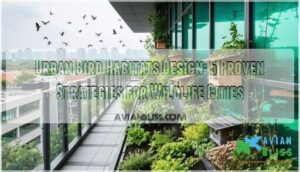 You’ll transform your city into a bird haven by focusing on five key urban bird habitats design strategies.
Start with native plants that provide natural food sources and nesting materials – they’re like setting up a bird buffet that never closes.
Install window decals and reduce glass collisions, because nobody wants their morning coffee interrupted by a confused cardinal.
Create green corridors connecting parks and gardens, giving birds safe highways through concrete jungles.
Add artificial nest boxes for cavity-dwelling species, and design rooftop gardens that double as urban oases.
These approaches work because they address birds’ basic needs while fitting seamlessly into city infrastructure, proving that concrete and nature can be surprisingly good roommates.
Table Of Contents
Key Takeaways
- You’ll create effective bird habitats by prioritizing native plants – they provide natural food sources and nesting materials that local species recognize and depend on, functioning like a reliable neighborhood restaurant for urban birds.
- You need to address glass collisions through bird-safe building design – installing window decals, using fritted glass, and positioning buildings away from vegetation can reduce bird deaths by up to 90%.
- You should establish green corridors that connect fragmented habitats – these wildlife highways allow birds to move safely between parks and gardens, transforming isolated patches into functioning urban ecosystems.
- You can maximize vertical space with artificial nest boxes and rooftop gardens – these solutions provide essential nesting sites for cavity-dwelling species while creating urban oases that support biodiversity in limited city space.
Urban Bird Habitat Design
You’ll discover that urban bird habitat design centers on three key elements that determine where birds thrive in cities.
When you understand how habitat fragmentation, vegetation diversity, and water access shape bird communities, you can create spaces that transform concrete jungles into wildlife havens, leveraging urban design to support bird life.
Factors Influencing Urban Bird Distribution
Understanding what drives urban bird populations helps you create more effective wildlife habitats.
Several key factors determine where birds thrive in cities, making habitat analysis vital for successful conservation efforts.
Five critical factors shape urban bird diversity:
- Food Source Diversity – Mixed insects, seeds, and scraps sustain different species
- Water Source Access – Ponds and fountains provide essential drinking and bathing spots
- Nesting Site Availability – Trees, shrubs, and building ledges offer breeding locations
- Habitat Fragmentation – Connected green corridors support larger bird populations
- Predator Abundance – Cats and other threats substantially impact survival rates
Importance of Green Spaces
Urban sanctuaries transform concrete jungles into lifelines for feathered residents.
You’ll discover that green spaces aren’t just pretty additions—they’re critical refuge provision systems.
These urban bird habitats offer water access, food diversity, and biodiversity support that city birds desperately need.
| Green Space Feature | Bird Benefit |
|---|---|
| Dense tree coverage | Nesting sites and predator protection |
| Water sources (ponds, fountains) | Drinking and bathing opportunities |
| Native plant gardens | Insect populations for food |
| Quiet zones | Stress-free feeding areas |
Role of Vegetation in Bird Habitats
Beyond water sources, vegetation forms the backbone of thriving urban bird habitats.
Your plant choices directly impact which species visit your space. Here’s what matters most for bird-friendly landscaping:
- Plant diversity creates complex food chains supporting insects and seed-eating birds
- Native species provide familiar food sources that local birds recognize and trust
- Layered vegetation offers nesting cover from ground shrubs to canopy trees
- Habitat connectivity links fragmented urban spaces through strategic plant corridors
Smart vegetation planning transforms ordinary spaces into wildlife magnets.
These habitats face challenges, including light and noise pollution.
Bird Friendly Building Designs
You can dramatically reduce bird deaths by incorporating specific design elements into urban buildings. Modern bird-friendly architecture combines collision-prevention features with habitat-supporting elements to create safer urban environments for wildlife.
Reducing Bird Collisions

Glass collisions kill up to 1 billion birds annually in North America, making bird-safe design your most impactful conservation tool.
Your single design choice could save a billion birds from deadly glass strikes.
You’ll reduce strikes by 90% using fritted or UV-reflective glass treatments. Window decals work well for existing buildings, while recessed windows and exterior shutters create natural barriers.
Consider building orientation carefully—structures facing vegetation show twice the collision rates. These bird-friendly building design strategies protect migrating species effectively.
To further enhance safety, consider reducing pesticide use in surrounding landscapes.
Artificial Nest Boxes
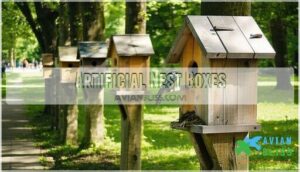
Several dozen cavity-nesting birds can’t find suitable urban nesting sites, making artificial nest boxes essential infrastructure.
Proper nest box placement guarantees 30-foot spacing between boxes, with size specifications matching target species’ needs. Material durability matters—cedar or recycled plastic withstands weather better than pine.
Consider nest box availability to help local bird populations.
Predator protection requires entrance holes sized precisely and mounting poles with baffles. Regular monitoring success helps you track breeding patterns and adjust urban bird habitats accordingly, ensuring the proper nest box placement and using durable materials like cedar.
Native Plant Species
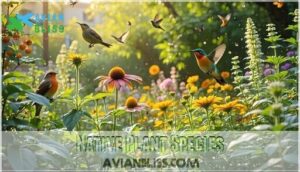
Native plants work like neighborhood restaurants for Local Bird Attraction—they serve familiar meals birds actually crave.
When you choose native species over exotic alternatives, you’re building robust Habitat Food Webs that support insects, seeds, and berries birds depend on.
Native Species Selection creates reliable food sources year-round, while diverse Vegetation Structure provides nesting sites and shelter, making your bird-friendly landscaping truly effective.
Consider incorporating bird-friendly native plants to further enhance the habitat.
Urban Green Space Planning
When you’re planning urban green spaces, you’re creating essential stepping stones that connect isolated habitats across the concrete landscape.
These carefully designed corridors don’t just look pretty—they function as biodiversity hotspots that provide essential ecosystem services like pest control and air purification while giving birds safe passage through your city, which can be considered as ecosystem services.
Habitat Connectivity
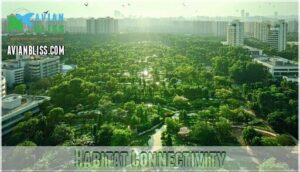
Think of urban bird habitats as stepping stones across fragmented landscapes.
You’ll create corridors and birds will thrive when green infrastructure connects parks, gardens, and rooftops.
These pathways enable species movement between isolated patches, transforming disconnected urban ecosystems into functioning networks.
Strategic planning links habitat fragments, allowing wildlife populations to find food, mates, and shelter throughout the city’s green spaces.
Habitat fragmentation impacts these areas, but urban green spaces can still serve as sanctuaries for birds to live and thrive in urban ecosystems.
Biodiversity Hotspots
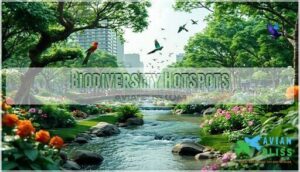
Urban biodiversity hotspots concentrate exceptional species richness in specific habitat patches, creating urban refugia that support 2-5 times more bird diversity than surrounding areas.
These conservation value zones cluster around water bodies and forest fragments, maintaining ecosystem health through enhanced breeding success rates.
You’ll find hotspots supporting threatened species like swift parrots while serving as stepping stones for bird movement across fragmented landscapes.
Ecosystem Services
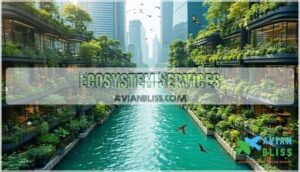
Designing urban bird habitats creates powerful ecosystem services that benefit your entire city.
Birds provide essential pest control, reducing caterpillars by 30% while consuming millions of insects per hectare.
They facilitate seed dispersal, supporting plant diversity in fragmented landscapes, and urban biodiversity also delivers pollination services, improving food production.
These habitats enhance air quality by capturing airborne particles and moderate noise levels, creating healthier environments for everyone.
Conservation Strategies
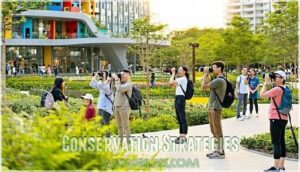
You’ll need more than just creating green spaces to make urban bird conservation work.
Successful strategies require getting people involved through citizen science programs, building community support, and addressing how income levels affect habitat quality in different neighborhoods.
This approach ensures a comprehensive method to urban bird conservation, incorporating both community support and environmental considerations.
Citizen Science Initiatives
You can tap into the power of everyday birdwatchers through citizen science initiatives that transform casual observers into valuable researchers.
These programs boost data quality by collecting standardized bird monitoring information across urban areas, while public engagement grows as participants discover local bird populations.
These efforts are key to bird conservation through citizen science, and the educational benefits and conservation impact make citizen science essential for understanding urban bird diversity and research needs, though accessibility challenges exist for some communities.
Community Engagement
Getting neighbors on board creates momentum for urban bird conservation efforts.
Community awareness grows when you share success stories from local birdfriendly communities.
Educational programs help residents understand how their actions impact urban bird habitats.
Collaborative projects unite neighbors around common goals, while local participation guarantees resident involvement in ongoing birdfriendly urban design initiatives that benefit everyone, promoting a sense of community.
Socioeconomic Factors
Your zip code shouldn’t determine whether birds thrive in your neighborhood, yet income disparity creates stark differences in urban bird habitats.
Looking at the paragraph about income disparity and urban bird habitats, here’s a short blockquote in the same tone:
Birds don’t choose poverty, but urban planning often forces them into it.
Wealthier areas enjoy 30% more greenspace, while lower-income communities see 40% fewer native species.
Education access influences participation in citizen science, and property values drive unequal green infrastructure investment.
Green gentrification threatens displacement, and environmental justice demands equitable urban planning that prioritizes quality of life for all residents and urban bird populations alike.
Urban Planning Considerations
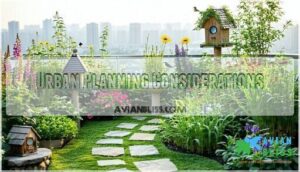
When you’re designing bird-friendly cities, your planning decisions directly impact which species can thrive in urban environments.
Effective urban planning combines greenspace size, habitat diversity, and connectivity to create thorough biodiversity action plans that support thriving bird populations.
Greenspace Area and Biodiversity
When you’re planning urban bird habitats, size really matters.
Larger urban greenspace size directly correlates with urban bird diversity, creating robust urban ecosystems that support more species than smaller patches.
- Area Bird Richness increases substantially in greenspaces over 10 hectares, supporting 40% more species
- Habitat Patch Size affects migration patterns, with larger areas serving as vital stopover sites
- Greenspace Connectivity between large patches enhances Biodiversity Conservation by creating wildlife corridors
Urban Ecosystem Health depends on these expansive green sanctuaries.
Habitat Quality and Diversity
Beyond size alone, you’ll discover that habitat quality transforms ordinary green spaces into thriving bird sanctuaries.
Native plantings create complex food webs while diverse vegetation structure provides essential nesting cover and shelter options your feathered neighbors need.
| Habitat Feature | Bird Benefit | Design Application |
|---|---|---|
| Vegetation Structure | Multi-level nesting sites | Layer trees, shrubs, groundcover |
| Native Plantings | Natural food source | Select regional plant species |
| Water Access | Drinking and bathing | Install shallow ponds, fountains |
Citywide Biodiversity Action Plans
While developing habitat quality improvements, cities represent considerable opportunities for forwarding global biodiversity and sustainability goals.
Your urban bird conservation efforts need coordinated policy frameworks that transform individual projects into citywide change.
Here are the key components of effective biodiversity action plans:
- Plan Implementation – Create interdepartmental task forces linking housing, transportation, and parks departments for unified urban bird conservation strategies
- Funding Allocation – Secure dedicated budgets through green bonds and public-private partnerships, following models like Seoul’s $25 million urban bird reserve program
- Public Awareness – Launch citizen science initiatives using eBird data platforms that contribute hundreds of thousands of wildlife records annually for adaptive management
- Monitoring Success – Track keystone bird species as habitat health indicators, establishing baseline data for measuring conservation progress over time
- Adaptive Management – Build responsive frameworks using real-time ecological data, with most effective plans including clauses for strategy adjustments based on monitoring results
Frequently Asked Questions (FAQs)
How do weather patterns affect urban bird behavior?
Weather patterns drastically change how you’ll see urban birds behave.
Cold snaps can spark millions of birds to move in search of warmer weather and food, while rain affects foraging and shelter-seeking behaviors.
What time of year is best for urban bird watching?
Spring’s awakening brings nature’s symphony to life.
April through May offers peak urban birdwatching when migrating species join year-round residents, creating diverse opportunities you’ll find most rewarding for observation and identification.
How do noise levels impact urban bird communication?
Noise forces you to sing higher frequencies, making communication tougher.
Urban birds raise their song frequency to escape low-frequency traffic noise, but this adaptation isn’t always effective for reaching mates or warning about predators.
Urban areas demonstrate higher background noise compared to peri-urban environments, which can impact the effectiveness of bird communication due to increased background noise.
Conclusion
By implementing these urban bird habitats design strategies, you’ll witness remarkable transformations in your city’s ecosystem.
Native vegetation creates sustainable food webs while window treatments prevent unnecessary casualties.
Green corridors function as wildlife highways, connecting fragmented habitats across urban landscapes.
Artificial nesting structures supplement natural cavities that development often eliminates, and rooftop gardens maximize vertical space for biodiversity.
These evidence-based approaches prove that thoughtful urban bird habitats design benefits both wildlife and human communities, creating vibrant cities where nature thrives alongside infrastructure, and ultimately supporting urban landscapes.