This site is supported by our readers. We may earn a commission, at no cost to you, if you purchase through links.
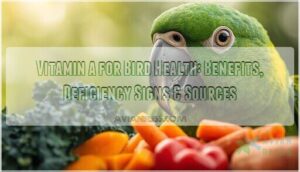
Your parrot’s raspy breathing, crusty nostrils, or sudden cloudiness in one eye might not signal an infection at all—these symptoms often trace back to a single missing nutrient that’s quietly wreaking havoc on multiple organ systems. Vitamin A deficiency remains one of the most common yet preventable nutritional disorders in captive birds, affecting everything from respiratory resilience to feather quality, yet many bird owners don’t recognize the signs until the damage becomes pronounced.
The delicate epithelial tissues lining your bird’s airways, eyes, and digestive tract depend on adequate vitamin A to maintain their protective barriers, and when those barriers break down, your feathered companion becomes vulnerable to infections, vision problems, and chronic inflammation.
Understanding which foods deliver bioavailable vitamin A, how to spot early deficiency symptoms, and when supplementation becomes necessary can mean the difference between a thriving bird and one struggling with cascading health complications.
Table Of Contents
Key Takeaways
- Vitamin A deficiency causes cascading health problems in birds by breaking down the protective epithelial barriers in airways, eyes, and digestive tracts, making them vulnerable to respiratory infections, vision loss, and chronic inflammation that many owners mistake for standalone illnesses.
- Early warning signs include crusty nostrils, watery eyes, persistent sneezing, dull or brittle feathers, and low energy—symptoms that often appear gradually but signal your bird’s mucosal defenses are compromised before serious complications develop.
- You can prevent deficiency by feeding a colorful, varied diet rich in carotenoids from foods like carrots, sweet potatoes, kale, and mangoes, which your bird’s body converts to active vitamin A as needed without the toxicity risks of over-supplementation.
- While supplements become necessary when birds refuse fresh produce or show deficiency symptoms, hypervitaminosis A from excessive supplementation causes liver damage and bone abnormalities, making veterinary guidance essential before adding any vitamin A products to your bird’s regimen.
Why Birds Need Vitamin A
Vitamin A isn’t just another nutrient on a checklist—it’s a cornerstone of your bird’s health, influencing everything from what they see to how well they fight off illness. Without adequate vitamin A, birds can develop serious problems that affect their eyes, immune defenses, feather quality, and even their ability to reproduce successfully.
Vitamin A is a cornerstone of your bird’s health, influencing vision, immunity, feather quality, and reproductive success
Let’s look at the specific ways this essential vitamin bolsters your feathered companion’s well-being.
Role in Vision and Eye Health
Vitamin A plays a foundational role in maintaining your bird’s corneal health and ocular surfaces, ensuring proper eye lubrication through adequate tear production.
Without sufficient vitamin A, the delicate tissues around the eye can undergo keratinization, compromising vision clarity and retinal function. This deficiency weakens ocular immune protection, making your bird vulnerable to infections that further threaten eye health and overall vision quality.
Immune System Support
Beyond protecting your bird’s eyes, vitamin A strengthens the avian immune system by maintaining mucosal immunity in respiratory and gastrointestinal tracts. Through retinoic acid signaling, it enhances immune cell function—supporting neutrophils, macrophages, and T helper cells while regulating cytokine production.
This thorough immune system support improves infection resistance, helping your bird fight off respiratory illnesses more effectively and recover faster when challenges arise.
The importance of rigorous scientific study, such as methodological auditing, can’t be overstated in understanding the complex interactions between nutrients and immune function.
Skin, Feather, and Tissue Maintenance
Mucosal integrity throughout your bird’s respiratory system depends heavily on vitamin A, which also drives proper keratinization—the process forming structural proteins in feathers and skin.
Adequate levels promote glossy, strong plumage and supple skin health, while deficiency leads to brittle feathers, flaky skin, and slower tissue repair after molts or minor injuries, directly impacting your bird’s comfort and vitality.
Growth and Reproductive Health
When you’re planning to breed birds or raising chicks, vitamin A status becomes even more significant—it influences gonadal function, proper embryo development through maternal transfer to eggs, and fertility outcomes. Deficiency can delay reproductive onset or disrupt molt cycles, while excess may interfere with endocrine balance, so maintaining ideal levels aids both healthy growth and development and successful reproduction without tipping into nutritional deficiencies.
- Weak hatchlings struggling to thrive despite your careful incubation
- Breeding pairs that never seem to produce viable clutches
- Delayed sexual maturity leaving you wondering what went wrong
- Poor feather quality during critical molt cycles in young birds
- Fertility issues that break your heart season after season
Signs of Vitamin a Deficiency in Birds
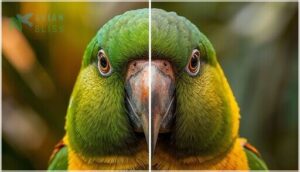
When your bird isn’t getting enough vitamin A, its body will send clear warning signals that something’s off. These signs often show up gradually, affecting everything from breathing and feathers to energy levels and eye health.
Here’s what to watch for so you can catch deficiency early and get your feathered friend back on track.
Respiratory and Nasal Issues
When your bird’s eyes start watering or you notice persistent sneezing, it’s often the first whisper that something’s wrong with their Vitamin A levels. Hypovitaminosis A weakens the respiratory tract’s protective lining, making your bird vulnerable to respiratory infections, sinus problems, and even avian pneumonia.
Here’s what to watch for:
| Respiratory Sign | What It Means |
|---|---|
| Nasal Discharge | Mucous buildup from compromised mucosal barriers |
| Persistent sneezing | Irritation in upper airways and sinuses |
| Noisy breathing | Tracheal issues from inflammation or secretions |
| Crusting around nares | Reduced integrity of nasal membranes |
| Chronic cough/wheeze | Secondary bacterial infections from poor immune system function |
Respiratory health in birds depends heavily on intact mucous membranes—and that’s where adequate Vitamin A becomes your bird’s first line of defense.
Poor Feather and Skin Condition
Your bird’s plumage care tells a story, and when Vitamin A runs low, the signs show up in dull, brittle feathers and compromised skin health. Deficiency disrupts keratinization—the process that builds strong feathers and healthy skin—leaving visible clues you shouldn’t ignore:
- Dry, flaky skin or scaly skin lesions on legs and feet
- Frayed, poorly preened feathers with excessive breakage
- Irregular molt patterns or delayed feather replacement cycles
- Poor feather quality with lackluster color and texture
Adequate Vitamin A keeps plumage vibrant and beak health intact.
Eye Problems and Vision Loss
Your bird’s ocular health depends heavily on Vitamin A, and deficiency can escalate from mild irritation to serious vision impairment. You might notice redness, excess tearing, or even keratinized surfaces resembling Bitot’s spots.
Without proper eye care, corneal ulcers can develop, compromising eyesight and inviting secondary eye infections. Severe cases may progress toward blindness causes that are entirely preventable with adequate nutrition.
Weakness and Low Energy
When your bird’s vitamin A stores run low, energy levels often plummet alongside immune system function. You’ll notice lethargy causes like decreased activity, reduced vocalizations, and low appetite that signal underlying malaise signs.
Fatigue factors tied to vitamin A deficiency create a domino effect—poor nutrition weakens overall bird health, leaving your feathered companion listless and uninterested in normal behaviors that once brought joy.
Best Dietary Sources of Vitamin a for Birds
Feeding your bird a vitamin A-rich diet doesn’t have to be complicated, but knowing which foods pack the most nutritional punch makes all the difference. The good news is that many colorful, readily available fruits and vegetables naturally contain high levels of this essential nutrient, often in the form of carotenoids that your bird’s body converts into active vitamin A.
Let’s look at the best dietary sources you can offer, along with some important considerations about what works—and what doesn’t—for different species.
Vitamin A-rich Fruits and Vegetables
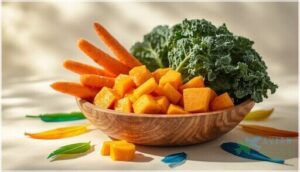
Think of your bird’s bowl as a colorful palette—vibrant produce isn’t just appealing, it’s medicinal. When you’re stocking vitamin A-rich foods for avian nutrition, these powerhouse options deliver substantial benefits:
- Carrots offer beta-carotene that converts efficiently to active vitamin A, supporting vision and immune resilience
- Sweet potatoes provide concentrated vitamin A value when cooked and diced
- Kale delivers lutein alongside carotenoids for feather and ocular health
- Mangoes and papayas add tropical variety while boosting integumentary function
Each serving strengthens your bird’s natural defenses.
Importance of Carotenoids and Beta-carotene

Carotenoids like beta carotene work behind the scenes, converting to active vitamin A when your bird’s tissues need it most. This conversion happens mainly in the intestinal lining, driven by specialized enzymes that respond to demand. Beyond vitamin A conversion, carotenoids deliver antioxidant effects that protect retinal cells and feather follicles from oxidative stress, safeguarding avian health against nutritional deficiency.
| Carotenoid Benefit | How It Aids Your Bird |
|---|---|
| Vision pigments | Enhances colored vision and retinal function |
| Immune modulation | Reduces inflammatory responses, boosts defenses |
| Feather quality | Improves pigmentation and structural integrity |
| Epithelial integrity | Maintains respiratory and ocular surface health |
Safe Inclusion of Seeds and Insects
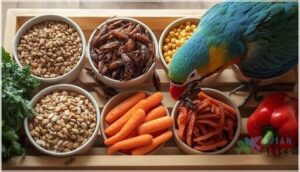
While carotenoids lead the charge, you can also weave carefully selected seeds and insects into your bird’s diet to round out vitamin A intake and overall nutrition. Seed selection matters because high-fat, low-nutrient options can skew dietary balance and promote obesity, so opt for quality mixes that support bird health without excess.
When offering insect nutrition:
- Choose commercially raised insects from reputable sources to avoid pesticide contamination
- Introduce mealworms or crickets gradually to monitor digestive tolerance
- Feed insects in moderation alongside vitamin A-rich produce to prevent nutritional imbalances
These feeding practices guarantee your bird receives protein and micronutrients without compromising skin, feather, or immune integrity that vitamin A safeguards.
Foods to Avoid and Species Considerations
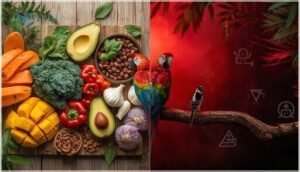
Beyond choosing the right foods, you must know what to exclude from your bird’s bowl. Avocado, onion, garlic, and caffeine top toxic food lists across species, while dairy and high-salt snacks disrupt avian nutrition. Parrots need balanced carotenoids to prevent vitamin deficiency, finches require low-fat seeds, and waterfowl face higher risks from certain ornamental plants—so tailor species diets and dietary restrictions to each bird’s unique needs for safe feeding and lasting bird health.
| Food Category | Why to Avoid | Species Most at Risk |
|---|---|---|
| Avocado, onion, garlic | Toxic compounds damage organs | Parrots, waterfowl, mixed aviaries |
| Dairy products | Digestive upset, poor tolerance | Most bird species |
| High-fat seeds (primary diet) | Nutrient imbalance, obesity | Finches, canaries, small passerines |
| Salted/processed snacks | Electrolyte disruption | All species |
| Rhubarb leaves, green potatoes | Solanine and other plant toxins | Garden-exposed birds, parrots |
Supplementing Vitamin a in Bird Diets
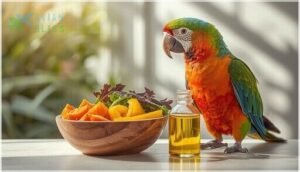
While a varied diet should be your first line of defense, there are times when vitamin A supplements become necessary to support your bird’s health. Knowing when to add supplementation, how to choose the right product, and understanding the real risks of overdoing it can make all the difference in your bird’s well-being.
Let’s walk through the key considerations that’ll help you supplement safely and effectively.
When Supplementation is Necessary
Generally, you’ll need vitamin supplementation when your bird’s diet falls short—perhaps they’re refusing fresh produce or eating mostly seeds. Vitamin A deficiency often shows up through persistent feather issues, nasal discharge, or sluggish behavior, signaling it’s time for targeted nutritional supplements for birds.
Avian nutrition experts recommend deficiency testing before starting any vitamin dosage regimen, since toxicity risks from over-supplementation can cause serious harm. Species-specific needs vary considerably, making supplementation timing a decision best guided by veterinary assessment rather than guesswork.
Choosing The Right Supplements
Once you’ve identified the need for dietary supplements, selecting safe vitamin forms becomes your next priority. Look for avian nutrition products containing retinyl palmitate or beta-carotene—both offer excellent bioavailability testing results in bird nutrition research. Here’s what matters most when evaluating supplement safety and supplement regulation standards:
- Choose formulations specifically designed for avian species, not generic multivitamins
- Verify the vitamin A activity measured in IU falls within species-appropriate ranges
- Select balanced nutrition supplements containing complementary fat-soluble vitamins
- Avoid products listing isolated retinol without supporting nutrients
- Purchase vitamin supplements only from manufacturers providing clear ingredient disclosures and veterinary endorsements
Risks of Over-supplementation (hypervitaminosis A)
Balance matters more than you might think. When excessive vitamin A accumulates in your bird’s system, hypervitaminosis A develops, triggering serious toxicity symptoms. Liver damage and bone abnormalities emerge first, while neurological effects like ataxia or head tilt follow. Here’s what you need to watch for:
| System Affected | Clinical Signs |
|---|---|
| Hepatic | Elevated liver enzymes, hepatomegaly |
| Skeletal | Bone resorption, increased fracture risk |
| Neurological | Ataxia, head tilt, lethargy |
| Metabolic | Disrupted calcium metabolism |
Hyperconcentrated dietary supplements pose the greatest risk, especially when combining multiple vitamin supplements without veterinary guidance.
Consulting Avian Veterinarians
Your avian veterinarian routinely tailors vitamin A recommendations to your bird’s species, age, and reproductive status, filling dietary gaps you might miss. They’ll assess clinical signs, review diet history, and recommend safe supplementation when whole foods aren’t enough.
Regular check-ins catch deficiency early, while bloodwork and feather evaluations confirm nutritional adequacy, ensuring your bird’s health counseling backs ideal avian nutrition without risking hypervitaminosis A.
Preventing Vitamin a Deficiency in Pet Birds
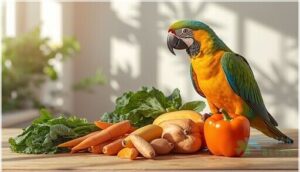
The good news is that vitamin A deficiency is entirely preventable with the right approach to your bird’s daily care. By focusing on diet variety, encouraging healthy eating habits, and staying attentive to your bird’s overall condition, you can keep deficiency at bay before it ever becomes a problem.
Let’s look at four practical strategies that will help you maintain ideal vitamin A levels in your feathered companion.
Creating a Balanced, Varied Diet
Your bird’s diet works like a nutritional safety net—the wider you cast it, the more secure their vitamin A intake becomes. To build that foundation, consider these feeding strategies:
- Plan weekly menus that rotate 6–10 different vitamin A–rich foods, from dark leafy greens to orange vegetables
- Schedule meals around natural foraging patterns to boost acceptance and nutrient balance
- Combine plant and animal-derived sources where species-appropriate, ensuring complete dietary coverage
Regular diet planning prevents deficiency while supporting overall bird nutrition and health.
Teaching Birds to Accept New Foods
Getting your bird to try new vitamin A–rich foods isn’t always straightforward, but behavioral training and food introduction strategies can help. Pair unfamiliar items with favorites, adjust texture through shredding or chopping to improve avian palatability, and offer repeated exposure over several weeks.
Positive reinforcement and observational learning from companions can expand your bird’s dietary needs, supporting better bird nutrition and overall health through dietary enrichment.
Monitoring Health and Dietary Intake
Think of monitoring as your early warning system—weekly weight monitoring and health scoring can catch nutrition deficiency before it becomes serious.
Track your bird’s dietary intake daily, inspect feather condition and skin integrity routinely, and watch for respiratory changes like discharge or labored breathing.
These practices help you assess whether your bird’s vitamin A and overall dietary needs are truly being met for peak bird wellness.
Regular Veterinary Checkups for Nutritional Health
Your avian veterinarian is your best partner in preventing nutritional disorders. Annual or semiannual checkups allow for nutrient screening through bloodwork, weight tracking, and body condition assessments that catch vitamin A imbalances before symptoms appear.
During these visits, you’ll receive customized diet planning based on your bird’s species, life stage, and health monitoring results, ensuring your checkup schedules support ideal avian health and nutrition.
Frequently Asked Questions (FAQs)
Can vitamin A help prevent feather plucking behavior?
Vitamin A promotes healthy feathers and skin integrity, which may reduce plucking driven by discomfort or irritation.
However, feather plucking behavior stems from multiple factors—stress, environment, and social dynamics—so nutrient balance alone won’t solve every case.
How long does vitamin A stay in storage?
Stored supplements usually stay potent for six to twelve months under proper storage conditions. However, vitamin A stability declines faster with heat or light exposure. This makes regular feed analysis essential to confirm actual potency claims.
Do different seasons affect vitamin A needs?
Yes, your bird’s vitamin A needs can shift with the seasons—molting periods, shorter days affecting nutrient utilization, and colder weather boosting immune demands all influence requirements, making dietary adjustments important for preventing vitamin deficiency in birds year-round.
What cooking methods preserve vitamin A content best?
Steaming methods and gentle cooking with simmering techniques preserve vitamin A best, since this fat-soluble nutrient degrades under high heat.
Microwave heating also works well for vitamin A-rich foods, preventing vitamin deficiency when you’re preparing meals.
Can vitamin A improve breeding success rates?
Good nutrition fuels reproduction, and adequate Vitamin A promotes avian reproductive health by maintaining epithelial integrity in the reproductive tract.
However, research shows limited direct evidence that supplementation alone consistently boosts bird fertility, egg quality, or nest success rates.
Conclusion
Picture your bird’s body as a fortress: vitamin A builds the walls—those epithelial barriers in airways, eyes, and gut—that keep invaders out. Without it, those defenses crumble brick by brick, opening doors to infection and decline.
You’ve learned the warning signs, discovered the foods that fortify, and understand when supplements bridge the gap. Now you hold the blueprint to strengthen those walls before they weaken, ensuring your feathered companion thrives behind impenetrable defenses.
- https://www.allthingsbirds.com/blogs/news/pet-bird-food-guide-everything-you-should-know
- https://www.linkedin.com/posts/bohdanlukianets_tasks-study-research-activity-7373377539521667072-UTEi
- https://www.sciencedirect.com/science/article/pii/S2949916X23000464
- https://www.scribd.com/document/683678057/Academic-Research-Manual-V1-1-April-2016
- https://www.studocu.com/en-za/messages/question/7372130/the-comprise-a-rigorous-and-systematic-process-with-explicit-steps-so-that-impartial