This site is supported by our readers. We may earn a commission, at no cost to you, if you purchase through links.
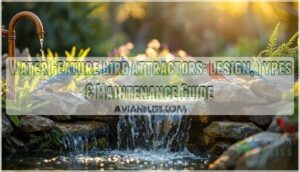
The splash of water can turn a quiet garden into a bustling bird sanctuary, drawing in species you might never otherwise see. Water feature bird attractors work because they tap into something birds can’t resist: the sight and sound of fresh, accessible water.
While a simple dish might bring in a few visitors, features that incorporate movement—whether through drippers, fountains, or gentle streams—can boost bird activity by up to 60%. The difference lies in how birds perceive their environment. Moving water creates ripples that catch sunlight and produces sounds that carry across surprising distances, signaling safety and refreshment to birds flying overhead.
Designing an effective water feature means understanding depth, placement, and maintenance routines that keep the water clean while maximizing its appeal to the widest range of species.
Table Of Contents
Key Takeaways
- Moving water features can boost bird activity by up to 60% compared to still water because the sound carries over 50 meters and rippling surfaces catch sunlight, creating multi-sensory signals that birds perceive as safe water sources from a distance.
- Proper water feature design requires depths of 1-2 inches for safety, placement at least 10 feet from dense shrubs for predator visibility, and non-slip surfaces like textured concrete or stone to give birds secure footing while bathing.
- Regular maintenance—replacing water every 2-5 days, weekly basin scrubbing, and quarterly pump care—prevents mosquito breeding cycles and extends equipment life by up to 250%, keeping your water feature functional and attractive to birds year-round.
- Integrating native plants near water features increases bird species diversity by 15-37% and supports over 530 caterpillar species that provide essential food during nesting season, transforming your garden into a complete habitat rather than just a watering station.
How Water Features Attract Birds
Water is as essential to birds as food and shelter—they need it daily for drinking, bathing, and maintaining healthy feathers. The secret to drawing them in isn’t just offering water, though; it’s how you present it.
Let’s explore why certain water features work better than others and what makes birds choose your garden over the neighbor’s.
Importance of Water for Bird Survival
Water isn’t just a convenience for birds—it’s a survival necessity. Avian physiology demands daily replenishment since birds lose water rapidly through respiration and excretion. Without adequate hydration, their blood volume drops, compromising heart and kidney function.
Birds need water daily to survive—without it, their blood volume drops and vital organs fail
By creating bird-friendly habitats with quality water sources, you’re supporting everything from daily drinking needs to critical breeding cycles, making your garden a true sanctuary for attracting birds with water. Providing a consistent fresh water supply is vital for their overall health and survival.
Role of Sound and Movement in Attracting Birds
Beyond offering hydration, your water feature becomes a beacon through auditory bird cues and visual motion impact. The sound of dripping or splashing reaches birds over 50 meters away, while rippling surfaces catch their attention through integrated sensory cues.
These attraction mechanisms explain why moving water benefits your garden—behavioral bird responses show visits can increase 60% compared to silent features. Solar powered fountains and bird bath fountains utilize these natural instincts, attracting birds to gardens through multi-sensory appeal.
The presence of a moving water feature greatly enhances the attractiveness of a garden to birds.
Comparison of Moving Vs. Still Water for Bird Visitation
You’ll notice striking differences when comparing these options. Moving water benefits your birdfriendly habitats through:
- Species diversity increases up to 50% compared to still sources
- Visitation frequency jumps 2.5 times higher with water movement for birds
- Mosquito control improves by 90% through constant circulation
- Water cleanliness requires 40% less maintenance effort
- Behavioral preferences show woodland species exclusively visit moving features
This bird bath design choice transforms attracting birds to gardens.
Popular Water Feature Types for Birds
You have plenty of choices for water features that birds can’t resist. Each option offers a unique way to bring movement, sound, and freshness to your garden—qualities that transform a quiet yard into a lively avian gathering spot.
Let’s explore the most popular types and what makes each one effective for attracting feathered visitors.
Classic Birdbaths and Pedestal Designs
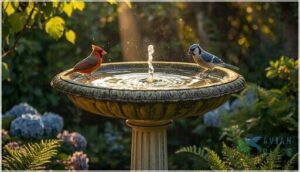
If you’re looking for timeless elegance in your garden, pedestal birdbaths remain the benchmark—accounting for 47% of premium sales and attracting over 46 bird species.
These elevated designs blend historical styles with avian safety, positioning birds three to four feet high where they can spot predators.
Cast stone and concrete guarantee material durability, while antique finishes satisfy your aesthetic preferences without sacrificing the functional habitat birds need.
Solar-powered Fountains and Eco-friendly Options
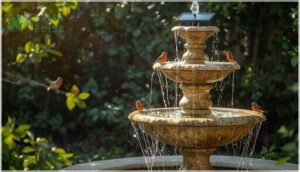
Solar-powered fountains utilize green technology innovations to create bird-friendly habitats without adding a penny to your electricity bill. These eco-friendly designs combine solar panel efficiency with sustainable materials like recycled ceramic and natural stone.
Water conservation methods through recirculating systems keep every drop in motion. You’re incorporating water elements that run entirely on sunshine, attracting birds while honoring the planet.
Garden Ponds, Streams, and Waterfalls
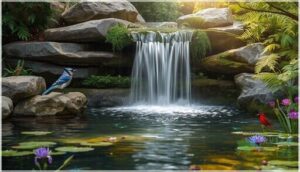
Garden ponds create thriving aquatic habitats that boost bird visits by up to 89%. Managed pond ecosystems with open margins and native plantings sustain diverse species, while waterfall designs and trickling streams produce the movement and sound that birds find irresistible.
Cascading rock waterfalls become avian magnets, drawing obligate insectivores like swallows. Through thoughtful stream landscaping and garden hydrology, you’re cultivating spaces where over 800 invertebrate species flourish—feeding the birds you hope to welcome.
Bubblers, Drippers, and Water Wigglers
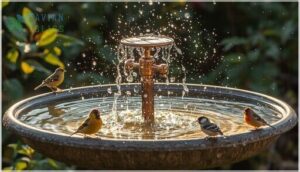
Movement transforms your bird bath into a beckoning oasis. Bubblers, drippers, and water wigglers create ripples that increase species visitation rates by 50% while controlling mosquito larvae through constant agitation. These bird bath motion accessories trigger bathing behavior changes you’ll notice immediately.
Installation user trends confirm their appeal:
- Solar wigglers operate continuously without wiring
- Copper drippers attract warblers with rhythmic sounds
- Bubblers double daily bathing events
- Environmental benefits include chemical-free water management
Designing Bird-Friendly Water Features
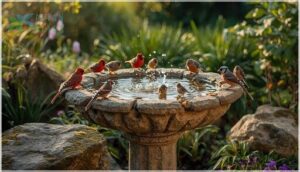
Creating a water feature that truly welcomes birds requires more than just filling a basin with water. The design choices you make—from depth and surface texture to materials and location—directly influence which species will visit and how safely they can interact with your feature.
Let’s explore the essential elements that transform an ordinary water feature into a thriving avian sanctuary.
Choosing Safe Water Depths and Non-slip Surfaces
Bird safety starts with proper water depth—aim for 1 to 2 inches to accommodate most species without drowning risk. Non-slip surfaces prevent accidents, making your bird bath design both functional and welcoming.
You’ll want slip-resistant materials like rough concrete or textured terra-cotta that give birds secure footing. Add small rocks or pebbled surfaces to your bird bathing area for extra grip.
Selecting Natural Materials for Integration
When you choose natural materials like basalt stone or untreated wood, you’re creating a water feature that feels like it belongs. These eco-friendly touches blend seamlessly with your garden design while boosting bird visits by up to 37% when paired with native landscaping.
- Natural stone and rock fountains provide secure perches and increase visitation
- Wood accents and logs offer landing spots, raising bird diversity by 15%
- Gravel substrate with native plants mimics shorelines, attracting more species
Best Placement for Visibility and Bird Safety
Think of your water feature as a bird’s oasis—but only if they can see trouble coming. Position your bath or fountain at least ten feet from dense shrubs, creating predator-free zones while still offering nearby bird escape routes.
This visibility strategy lets birds watch for threats from all angles, making your backyard bird watching spot truly safe. Open sightlines mean more visitors and longer, relaxed bathing sessions in your birdfriendly habitat.
Integrating Native Plants and Habitat Elements
Once you’ve established safety, pair your water feature with native plant selection to create real habitat structure design. Native oaks alone support over 530 caterpillar species—critical insect population support for nesting birds.
Positioning berry-producing shrubs near shallow basins doubles down on attracting birds, as they find both water and food. This water feature pairing strategy increases bird species richness while promoting garden biodiversity through elevated wildlife activity.
Maintenance Tips for Healthy Water Features
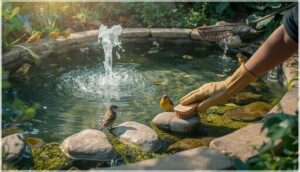
A water feature that’s neglected becomes more of a problem than a benefit—cloudy water drives birds away, and standing water invites mosquitoes you don’t want around.
Keeping your setup clean and functional doesn’t require hours of work, but it does need consistent attention throughout the year.
Here’s what you need to focus on to maintain a healthy, bird-friendly water feature that works season after season.
Cleaning Routines to Prevent Algae and Mosquitoes
Staying ahead of algae and mosquitoes means establishing cleaning schedules that protect both birds and your garden sanctuary. Water purification starts with simple, consistent routines that interrupt mosquito breeding cycles while controlling unsightly growth:
- Replace water every 2–5 days to prevent mosquito larvae from maturing in standing water.
- Scrub basins weekly using a stiff brush with mild soap or diluted vinegar for thorough algae control.
- Add bubblers or fountains to create movement that naturally discourages mosquito egg-laying while maintaining water features birds love.
Maintaining Pumps, Filters, and Recirculating Systems
Beyond weekly basin scrubs lies the mechanical heart of your water feature: pumps and filters that keep circulation healthy. Weekly pre-filter cleaning can extend pump life from two years to seven—a 250% boost in system upkeep that translates directly into energy savings and lower maintenance costs.
| Task | Frequency | Impact |
|---|---|---|
| Pre-filter cleaning | Weekly | Extends pump efficiency 250–300% |
| Impeller vinegar treatment | Quarterly | Adds 2 years to pump life |
| O-ring replacement | Annually | Prevents leaks, adds 1–2 years |
| Intake debris inspection | Monthly | Gains additional operational year |
Check intake screens monthly and treat impellers quarterly with vinegar to prevent calcium buildup—simple steps that keep water circulation strong while protecting your investment in pond design and water feature installation.
Seasonal Care for Year-round Bird Attraction
Water quality and bird health shift with the calendar, so your seasonal cleaning routine should follow suit. When you shift into winter, heated baths prevent ice formation below 32°F, keeping water accessible during vital cold months. Spring migration demands daily scrubbing to prevent disease transmission, while summer requires changes every two to three days to control mosquitoes.
Year-round maintenance keeps bird-friendly habitats thriving:
- Winter: Place heated baths in sunny spots and refill twice daily during peak demand
- Spring/Summer: Empty and scrub basins daily, replacing water before algae forms within 24–48 hours
- Fall: Remove leaf debris frequently and inspect infrastructure before the first frost
Attracting birds to your yard means adapting care as temperatures change, supporting both resident species and migrants passing through your creating bird-friendly gardens.
Essential Accessories for Easy Upkeep
With automatic fillers and deicing systems, you’ll spend less time refilling and more time watching cardinals splash at dawn. Self-filling bird baths reduce manual labor greatly, while pump filters and solar-powered fountains maintain clarity between cleanings.
Essential bird bath accessories include:
| Accessory Type | Primary Benefit |
|---|---|
| Water heaters | Year-round access during freezing conditions |
| Cleaning tools | 95% algae removal with vinegar solutions |
| Mosquito dunks | 98% larvae reduction in fountain pumps |
These bird bath water features simplify bird bath maintenance considerably.
Enhancing Your Garden With Water Features
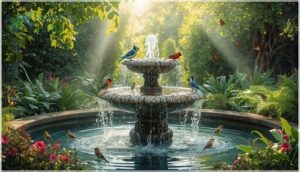
Water features do more than just bring birds to your backyard—they transform your entire garden into a living ecosystem. When you add moving water to your landscape, you’re creating a space that sustains wildlife while giving you a front-row seat to nature’s daily routines.
Let’s explore how these features can enhance both the ecological value and the everyday enjoyment of your outdoor space.
Boosting Biodiversity and Supporting Wildlife
Installing a water feature transforms your garden into a thriving wildlife conservation hub. Studies document a 26% rise in biodiversity metrics when you introduce clean water sources.
You’ll attract birds while supporting ecosystem services—pollinators like bees and butterflies find hydration, amphibians establish colonies, and you’re fundamentally practicing habitat restoration in your own backyard.
Even small features strengthen urban ecology by creating bird-friendly habitats that link fragmented wildlife corridors.
Creating Tranquil and Visually Appealing Spaces
Serenity becomes tangible when you design water features with visual harmony in mind. Water landscaping transforms outdoor living spaces into retreats—reflecting pools mirror sky and foliage, while fountain soundscapes mask urban noise.
You’ll find that creating tranquil garden spaces elevates both garden aesthetics and your well-being. Strategic placement near seating enhances garden ambiance, while eco design principles using natural stone achieve smooth blending with your existing habitat elements.
Observing and Identifying Visiting Bird Species
You’ll discover that bird species tracking becomes seamless when you position water feature cameras near your installations. Automated identification tools now recognize visiting avian species with exceptional accuracy, documenting seasonal patterns and bird behavior analysis throughout the year.
Morning hours reveal the most backyard birds—hummingbirds, finches, and warblers frequent moving water, transforming your bird habitat into a vibrant bird watching station that deepens your connection to local wildlife.
Sustainable Practices for Eco-friendly Gardening
Your bird-friendly habitats can showcase eco-gardening principles that protect wildlife while reducing environmental impact. Sustainable water features paired with native plants create green landscaping that conserves resources and promotes soil regeneration naturally.
Consider these eco-friendly practices for your garden pond design:
- Install rainwater harvesting systems to collect up to 2,000 gallons annually for water conservation
- Select native plants requiring 75% less fertilizer than non-native species
- Apply mulching techniques reducing water evaporation by 70%
Frequently Asked Questions (FAQs)
What water temperature do birds prefer year-round?
Birds gravitate toward water matching ambient air temperatures—roughly 36°F to 40°F in winter with heating, staying below 75°F during summer. This balance prevents freezing while reducing dehydration risks, keeping your birdfriendly habitats welcoming year-round.
Can water features attract unwanted wildlife or pests?
Yes, stagnant water draws mosquitoes and other pests. Proper circulation, weekly cleaning, and mosquito prevention tactics like adding fish or Bti dunks help maintain ecosystem balance while deterring unwanted insects and wildlife effectively.
How much does installing a water feature cost?
Regarding installing water features, the price tag can run the gamut. Most homeowners invest between $1,100 and $7,500, though simpler birdbaths start around $40 while elaborate custom designs exceed $14,
Conclusion
Think of your garden as a telegraph station, sending out ripples of light and sound that birds decode from miles away. Every water feature bird attractor you install becomes a beacon in their daily search for survival and safety.
The effort you invest in thoughtful design, proper placement, and consistent maintenance doesn’t just bring beauty to your space—it creates a lifeline that transforms your backyard into a thriving refuge where wings find rest and water flows freely.
- https://www.outdoorartpros.com/blogs/news/how-does-water-movement-in-a-bird-bath-benefit-birds
- https://extension.psu.edu/water-for-wildlife-bird-baths-and-backyard-ponds/
- https://www.perkypet.com/articles/how-to-choose-the-perfect-bird-bath-or-water-feature-for-birds
- https://pmc.ncbi.nlm.nih.gov/articles/PMC10682877/
- https://meridianbirdremoval.com/water-features-attract-birds/