This site is supported by our readers. We may earn a commission, at no cost to you, if you purchase through links.
Your backyard’s a layered habitat. Multiple species are there right now. Most people miss them—they lack observational frameworks and taxonomic reference points.
Bird populations vary by region, habitat structure, and migratory timing. Species identification requires visual pattern recognition and acoustic familiarity.
Online databases like eBird map real-time sighting data. Mobile apps offer instant field verification. Local birding groups provide mentorship and guided observation sessions.
You’ll learn species-specific behaviors, feeding preferences, and seasonal movement patterns. Native plantings and strategic feeder placement increase encounter rates. Window collision prevention and habitat preservation support local populations.
Your property can become a documented observation site, contributing to regional conservation datasets.
Table Of Contents
- Key Takeaways
- How to Find Birds Living in Your Area
- Identifying Local Bird Species
- Common Backyard Birds by Region
- Attracting and Supporting Local Birds
- Protecting Birds and Their Habitats Locally
- Frequently Asked Questions (FAQs)
- How do I find out what birds are in my area?
- How can I identify a bird in my yard?
- What are some common birds in Hawaiʻi?
- How do I identify a bird in my yard?
- What birds are common in Tennessee?
- What birds can you identify near your home?
- What time of year do birds migrate through Virginia?
- How do I identify juvenile birds versus adults?
- Which birds are most active during dawn and dusk?
- What diseases commonly affect backyard birds in Virginia?
- Conclusion
Key Takeaways
- Use eBird and mobile apps like Merlin to access real-time local bird sightings, migration data, and instant species identification through photo uploads or audio recordings.
- Join local Audubon chapters or birding groups for mentorship, guided walks, and participation in citizen science projects that contribute to regional conservation datasets.
- Attract and support birds by installing species-specific feeders, providing shallow water sources, planting native vegetation, and creating safe nesting spaces with proper predator protection.
- Prevent bird deaths in your yard by applying window collision patterns, keeping cats indoors, avoiding rodenticides, and reducing nighttime lighting during migration seasons.
How to Find Birds Living in Your Area
You don’t need to wander aimlessly hoping to spot a bird. Free online tools and local networks put real-time sighting data right in your hands. Here’s how to pinpoint exactly what’s flying through your neighborhood.
Once you’ve narrowed down your target species, you can use proven techniques to identify different bird species with the right equipment and field marks.
Using Online Platforms Like EBird
Within moments, you’ll access sightings from thousands of observers. eBird Features display regional checklists showing which species appear near you—historical records and real-time reports combined. Filter by date, habitat, rarity. Each entry includes count, observation method, field notes.
Before heading out, make sure you have the right bird supplies for wild birds like binoculars, field guides, and notebooks to document your observations accurately.
Your submissions fuel Citizen Science datasets. Species Mapping reveals migration pulses. Online Checklists guide identification. Bird Tracking transforms casual watching into scientific contribution—freedom through shared discovery.
Platforms like eBird and Project FeederWatch in Nevada turn your backyard sightings into valuable conservation data that tracks population trends and protects local habitats.
For more on using eBird, explore this helpful.
Leveraging Mobile Birding Apps
Your smartphone transforms into a field ornithologist’s toolkit. Mobile ID apps like Merlin Bird ID deliver instant Species Identification through photo uploads or Bird Calls—automatic tagging suggests matches. Real Time Maps pinpoint nearby sightings within minutes. Offline Mode caches regional databases when cell service fades. eBird mobile syncs observations instantly.
Key App Features include:
- GPS-tagged sighting records
- Audio recording and comparison
- Heat maps showing hotspots
- Downloadable regional packs
- Community-driven alerts for rare birds
Many birders further elevate their experiences with that offer offline functionality, travel planning, and conservation resources.
Joining Local Bird Watching Groups
Beyond apps, you’ll find the Birding Community through local clubs. Check Audubon chapters or county naturalist societies for guided walks—mentors pair with newcomers. Membership Benefits include rare-sighting networks, Conservation Roles in habitat work, and Community Outreach events. Group Leadership posts field trip schedules; RSVP before your first outing. Birding Events range from dawn surveys to photo potlucks.
Many clubs also organize trips timed to major migration routes when waterfowl and shorebirds pass through regional wetlands.
| Access Points | What You’ll Do | Why Join |
|---|---|---|
| Nature centers, wildlife refuges | Morning walks, twilight surveys | Build ID skills, contribute eBird data |
| Audubon chapters, county societies | Habitat restoration, field mentoring | Network with experts, track rare birds |
| Online directories by ZIP | Social gatherings, photo shares | Strengthen conservation impact locally |
| Park department calendars | Species spotting, note-taking practice | Gain confidence, improve life lists |
Exploring Community Science Projects
Community science transforms your field notes into conservation impact. eBird stands out—your observations feed collaborative research tracking migration shifts and population trends. Look for citizen science projects that match your schedule: Christmas Bird Counts need one-day volunteers, while breeding-bird surveys ask for seasonal commitment. Data collection protocols stay simple; project management teams handle the rest. Community engagement sharpens your ID skills as you contribute to real wildlife conservation.
- Sign up for eBird to log sightings year-round
- Join Christmas Bird Count for annual December surveys
- Participate in Great Backyard Bird Count each February
- Monitor nest boxes through NestWatch programs
- Report banded birds to Bird Banding Laboratory
Identifying Local Bird Species
Once you’ve spotted a bird, the real puzzle begins—figuring out what you’re looking at. You’ll need to notice the right details, tune your ear to their voices, and know where to turn for quick answers.
Here’s how to crack the code on any bird that crosses your path.
Recognizing Common Visual Features
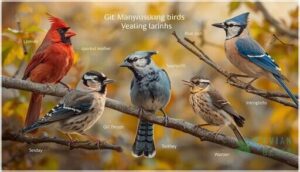
You’ll crack bird identification wide open once you study plumage patterns—those barred or spotted feathers visible from a distance. Color variations on the crown and cheek patches distinguish similar species fast. Check beak shapes for feeding clues, then scan wing bars and tail spots.
Once you’ve nailed the basics, detailed bird identification guides can help you submit accurate sightings that fuel real conservation research.
Visual cues like body proportions and feather textures reveal family groups. Master these ornithology basics and bird watching tips sharpen instantly.
Using Bird Sounds and Calls

Why do cardinals sound so different from hawks? Bird Call Analysis and Sound Identification reveal species recognition when plumage stays hidden. Recording audio clips trains your ear for vocal learning patterns.
- Dawn chorus peaks 30–60 minutes before sunrise, capturing peak bird song patterns
- Merlin Bird ID’s Sound ID feature analyzes real-time calls through your phone
- Repeated short phrases help distinguish species like song thrushes cycling through unique notes
- Walking the same route weekly sharpens your ear to regular soundscapes
Master these bird identification techniques and eBird submissions become straightforward.
Utilizing Field Guides and Apps
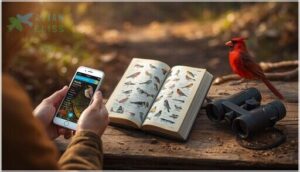
Digital guides and birding apps transform species databases into mobile identification tools you carry everywhere. Merlin automatically suggests matches from uploaded photos, while eBird’s regional filters narrow possibilities to local lists.
Pocket-size field guides still excel for quick flips during active bird watching sessions. Specialty volumes covering single families sharpen your bird identification techniques when common field tools leave questions unanswered.
Common Backyard Birds by Region
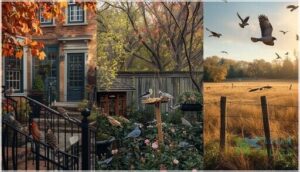
Your backyard isn’t just a patch of grass—it’s a rest stop on ancient flight paths and a buffet for birds shaped by where you live. Urban sidewalks, suburban hedges, and rural fence lines each host their own regulars, plus seasonal travelers passing through on biological schedules older than your street.
Here’s what you’re likely to spot depending on your landscape and the time of year.
Birds Frequently Seen in Urban Areas
You’ll find exceptional urban avifauna thriving right outside your window. House sparrows and pigeons dominate city cores, while starlings create stunning murmurations at dusk. American crows forage boldly on rooftops, and robins patrol park edges with characteristic tail-flicks.
These feathered neighbors adapt brilliantly to city wildlife challenges. Log your bird sightings on eBird to track species identification patterns and discover how bird-friendly cities support diverse populations year-round.
Typical Suburban and Rural Birds
Your suburban yard and rural property host a completely different roster than city streets. Northern Cardinals flash red at feeders while Red-tailed Hawks patrol roadsides in Loudoun County. Edge Habitat Use draws edge specialists to yards with mixed trees and lawn:
- Eastern Bluebirds nest in boxes over open fields
- Carolina Wrens tuck into porch nooks
- House Finches arrive in small flocks
- Downy Woodpeckers hammer bark for insects
- Tree Swallows hunt over pastures
Rural Bird Diversity and Suburban Bird Behavior reflect your landscape’s structure.
Seasonal and Migratory Visitors
Your yard sits squarely under the Atlantic Flyway, channeling millions of warblers, thrushes, and raptors twice each year. Migration patterns peak late April through early May, then again mid-September to mid-October.
Track seasonal changes on eBird to time your bird sightings—White-throated Sparrows arrive in October, and Dark-eyed Juncos winter through April.
Flyway conservation and habitat restoration depend on safe stopovers supporting these traveling bird species during critical refueling windows.
Attracting and Supporting Local Birds
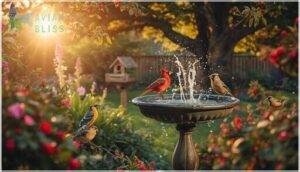
You don’t need a wilderness to bring birds closer—your own yard can become their favorite stop. The right setup turns casual visitors into regular residents, giving you front-row seats to their daily routines.
Here’s how to roll out the welcome mat with feeders, water, and shelter that actually work.
Choosing The Right Bird Feeders and Food
You’ll boost bird species visits by matching feeder styles to your local birds. Consider these essentials for successful bird watching and bird identification:
- Tube feeders work for finches and chickadees seeking black oil sunflower seed
- Hopper feeders attract cardinals and grosbeaks with their platform design
- Suet cages draw woodpeckers and nuthatches to high-fat offerings
Smart feeder placement and squirrel proofing with baffles keeps seed selection available for birds, not pests, supporting bird conservation efforts right in your backyard.
Providing Water Sources and Bird Baths
You’ve stocked feeders—now water clinches the deal. Bird bath design matters: shallow basins 1–3 inches deep with textured surfaces prevent drowning and slipping. Bath placement near shrubs offers escape cover for bird watching moments, while moving water catches attention and blocks mosquito breeding.
Fresh water aids bird hydration and species conservation. Clean your bath every few days; wildlife conservation starts with simple, consistent maintenance.
Creating Safe Nesting and Shelter Spaces
Water alone won’t sustain breeding populations—nest box design and predator control determine fledging success. Mount boxes 6–8 feet high on metal poles with baffles; use 1.125-inch holes for chickadees, 1.5-inch for bluebirds.
Birdhouse placement near native plantings offers shelter creation zones.
Habitat preservation through layered shrubs bolsters wildlife conservation efforts. Ornithology research confirms: ecological research shows safe nesting drives species conservation.
Protecting Birds and Their Habitats Locally

You’ve already brought birds to your yard—now it’s time to keep them safe. Real protection means tackling the hazards right outside your door, getting involved beyond your fence line, and rethinking what you plant.
Here’s how to turn your space into a true refuge.
Reducing Threats in Your Yard
Your backyard can be a death trap or a sanctuary—the choice is yours. Prevent window collisions by applying dense patterns following the 2-by-2 rule. Keep cats indoors to support cat management and species conservation. Skip pesticide risks by choosing snap traps over rodenticides. Dim nighttime lighting during migration seasons. Clear yard hazards like netting and standing water. These habitat preservation steps directly advance bird conservation efforts and ecological research.
Your yard becomes a sanctuary when you prevent window strikes, keep cats indoors, avoid rodenticides, and clear hazards like netting
Participating in Local Conservation Efforts
Your voice matters in wildlife conservation efforts. Join conservation groups like the Northern Virginia Bird Alliance for habitat projects and monitoring. Five proven participation strategies:
- Christmas Bird Count (December 14–January 5)
- Great Backyard Bird Count each February
- Climate Watch surveys targeting range shifts
- Project FeederWatch structured observations
- Donation strategies funding restoration work
Community science and citizen science projects turn everyday observations into bird conservation efforts that protect regional populations.
Promoting Native Plant Landscaping
Beyond conventional landscaping, native plant benefits deliver direct habitat preservation through ecosystem restoration at the yard scale. Your garden design tips should prioritize bird-friendly shrubs hosting regional caterpillars—landscapes with seventy percent native biomass support local species while advancing wildlife conservation.
Layered hedgerows create feeding corridors. This biodiversity approach transforms ecological research into practical bird conservation efforts, linking your property to broader habitat networks that sustain migratory and resident populations.
Frequently Asked Questions (FAQs)
How do I find out what birds are in my area?
The field notebook of ornithology now fits in your pocket. eBird’s digital atlas maps every local species through millions of bird sightings, revealing migration patterns and regional guides that serious bird watchers consult daily.
How can I identify a bird in my yard?
Compare size to sparrows or robins, study beak shape and wing patterns, then match observations using Merlin or All About Birds.
Recording bird identification details on eBird helps confirm local species.
What are some common birds in Hawaiʻi?
The early bird catches the worm, but in Hawaiʻi, you’ll spot house finches, zebra doves, and common mynas near feeders.
Native ʻapapane thrive in high forests, while red-crested cardinals brighten urban parks across island ecosystems.
How do I identify a bird in my yard?
Start with bird size estimation—sparrow, robin, or crow scale. Note beak shape analysis and wing pattern recognition. Use Merlin or eBird species identification tools to match your sightings instantly.
What birds are common in Tennessee?
You’d think a landlocked state would limit birding, but Tennessee boasts over 420 species. Northern Cardinals, American Robins, and Blue Jays dominate year-round, while Ruby-throated Hummingbirds visit seasonally.
What birds can you identify near your home?
You can identify Northern Cardinals, Blue Jays, House Finches, and Downy Woodpeckers through backyard bird sightings.
Use eBird or Merlin to confirm species by noting beak shapes, feather identification, and nesting sites in home habitats.
What time of year do birds migrate through Virginia?
Virginia’s flyways pulse hardest during spring’s March-through-June drama and fall’s August-to-November spectacle.
Peak migration floods eBird with sightings as seasonal shifts drive species north or south—check bird forecasts to catch these migration patterns live.
How do I identify juvenile birds versus adults?
Check plumage patterns—juveniles show streaked, duller feathers. Bill shapes differ; young birds often display fleshy gapes. Notice behaviors like persistent begging.
Track feather molting stages.
Document bird sightings on eBird to explore species variations and size differences systematically.
Which birds are most active during dawn and dusk?
Crepuscular birds own the twilight hours—robins belt out the dawn chorus while nightjars and nighthawks chase insects at dusk.
Log these twilight hunters on eBird during peak activity, roughly one hour flanking sunrise and sunset.
What diseases commonly affect backyard birds in Virginia?
Mycoplasma conjunctivitis—Finch Eye Disease—spreads fast at crowded feeders, while Salmonellosis hits flocking species hard.
Trichomoniasis infects throats; Avian Pox creates wart-like growths.
West Nile Virus strikes raptors through mosquitoes.
Report clusters via eBird for wildlife monitoring.
Conclusion
Your yard’s a living field guide. Every species you document adds precision to regional datasets. What birds live in my area isn’t passive curiosity—it’s active ecological participation.
Strategic habitat modification, consistent observation protocols, and community science integration transform casual interest into conservation impact. Native plantings attract target species. Feeder placement controls sighting frequency. Window collision prevention protects populations.
You’re not just watching birds. You’re building verifiable occurrence records that inform habitat management decisions.