This site is supported by our readers. We may earn a commission, at no cost to you, if you purchase through links.
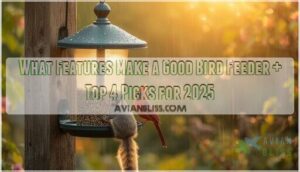
Most backyard bird feeders fail within their first season—not because birds won’t use them, but because they’re poorly designed from the start. A cheap feeder might attract cardinals and finches initially, but squirrels raid it daily, rain ruins the seed, and you’re scrubbing mold every other week.
What features make a good bird feeder comes down to durability, pest resistance, and maintenance simplicity. The right feeder keeps seed fresh and dry, stands up to weather extremes, and actually prevents the squirrel takeovers that turn bird-watching into frustration.
I’ve tested dozens of designs across different climates and bird populations, and the standout models share specific features that make them worth the investment.
Table Of Contents
Key Takeaways
- A quality bird feeder requires durable, weatherproof materials like metal mesh with rust prevention and UV-resistant plastic that withstand extreme conditions for at least five years without cracking or corroding.
- Squirrel-proof designs using weight-activated perches, caged barriers with narrow openings, and anti-climbing baffles prevent seed theft and keep feeding ports accessible only to songbirds.
- Easy maintenance through removable components, wide lids, and smooth interiors prevents mold growth that kills birds, while proper seed protection using covered hoppers with ventilation keeps feed dry and fresh.
- Strategic feeder placement 5-10 feet from windows and 5-8 feet high, combined with biweekly cleaning schedules and feeder rotation every few weeks, maximizes bird safety while preventing disease outbreaks and parasite accumulation.
Essential Features of a Good Bird Feeder
A good bird feeder protects seed from the weather, keeps squirrels away, and makes refilling and cleaning straightforward. You need construction that won’t crack in winter storms and features that actually work when birds show up at dawn.
Here are the five must-have features that separate feeders that last from ones you’ll replace next season.
Durable Materials and Weather Resistance
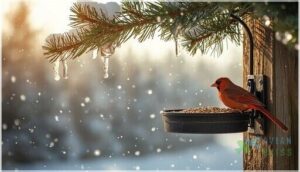
You need materials that won’t quit when winter hits. Look for metal mesh with rust prevention coatings and UV-resistant recycled plastic that holds up in weatherproof tests—these durable materials resist corrosion and sun damage for at least five years. Powder-coated steel and waterproof coatings keep moisture out, while sealed hoppers slow water penetration by 30%.
A squirrel-proof feeder starts with construction that outlasts the elements. When designing a bird feeder, consider using science writing techniques to guarantee the product description is clear and concise.
Squirrel-Proof and Pest-Resistant Designs
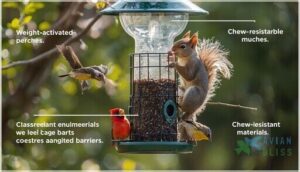
Squirrel baffles and weight-activated perches shut down freeloaders fast. When a squirrel lands, mechanisms triggered by weight thresholds close feeding ports before any seed disappears. Caged designs with small openings block rodents while songbirds slip through easily. Hardened, chew-resistant housings resist gnawing, and anti-climbing baffle systems create angled barriers that stop pests from reaching your seed supply. Squirrel-proofing works.
Effective scientific writing involves using clear research methods to present findings.
Easy Cleaning and Maintenance
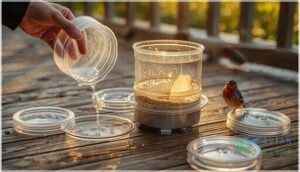
After keeping squirrels out, feeder hygiene becomes your next priority. Look for fully removable components that disassemble quickly for thorough washing—wide lids prevent seed spillage during cleaning.
UV-stabilized plastics or corrosion-resistant metals fight mold, while smooth interiors stop residue buildup cold. Maintenance schedules stay simple when feeder maintenance tips include draining basins that speed drying.
Easy-to-clean designs protect seed freshness and keep your visiting songbirds healthy.
Proper Seed Protection and Dispensing
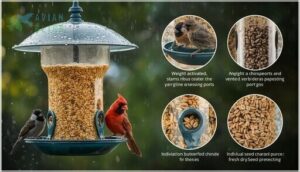
Your feeder’s real job is keeping seed dry and fresh—mold kills birds fast. Look for covered hoppers with ventilation slots that let moisture escape without letting rain in.
Keep seed dry and fresh with covered hoppers and ventilation slots—mold kills birds fast
Weight-activated dispensing limits waste by releasing seed only when birds perch, while angled ports prevent spillage during wind gusts.
Tube feeder designs with individual seed channels stop clogs and keep sunflower seed flowing smoothly—even a squirrel baffle won’t help if your seed goes rancid.
Stable Mounting and Placement Options
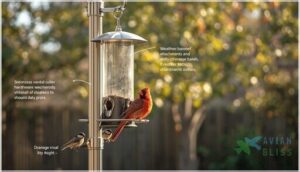
Beyond the feeder itself, secure fastening makes or breaks your bird feeder selection. Stainless steel hardware resists rust in rain while distributing wind load across multiple attachment points—critical when you’re adding a squirrel baffle above the feeder.
Smart placement strategies position feeders where squirrel deterrents actually work and birds feel safe approaching.
| Mounting Techniques | Feeder Stability | Bird Safety |
|---|---|---|
| Pole-mount with anti-rotation collar | Weatherproof multi-point attachment | 10–12 feet from cover |
| Shepherd’s crook with tamper-resistant base | Quick-release for maintenance | Clear flight paths |
| Tree-limb cable system | Weight-rated hardware | 5+ feet from windows |
| Wall-bracket with drainage vents | Level placement on slopes | Avoid high-traffic zones |
Choosing The Best Feeder for Your Birds
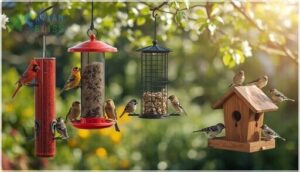
Not all bird feeders work the same way, and the birds in your yard have strong preferences. The style you choose determines which species will visit and how much maintenance you’ll actually do.
Here’s how to match the right feeder to the birds you want to attract.
Feeder Styles: Tube, Hopper, Tray, Window, Nyjer
Different feeder designs serve different purposes in your backyard setup. Here’s what you need to know about the main styles:
- Tube feeder – A central reservoir with multiple ports that keeps seed dry and secure
- Hopper feeder – Large container with protected feeding area and roof
- Tray feeder – Open platform that attracts the widest variety of seed-eating birds
- Window feeder – Mounts on glass for breathtaking, up-close wildlife viewing
- Nyjer feeder – Specialized design for small finches using thistle seeds
Matching Feeders to Bird Species Preferences
You’ll notice each bird species has its own feeder personality. Cardinals and chickadees flock to hopper designs with sturdy perches, while finches gravitate toward tube feeders offering nyjer seed. Ground-foraging doves prefer platform trays where they can see all around.
By matching feeder designs to bird behavior and species preferences, you’ll boost species diversity and create a backyard birding setup that truly delivers.
Seed Type Compatibility
You can’t just toss any seed into any bird feeder and hope for the best. Black oil sunflower seeds work in most tube and hopper feeders, drawing chickadees and nuthatches. Nyjer seeds need fine-mesh tube designs for finches. Cardinals prefer safflower in sturdy hoppers, while millet suits tray feeders for ground-feeders like doves.
Match your seed types to compatible feeder designs for best results.
Attracting a Variety of Birds
Want to turn your yard into a hotspot for bird diversity? Set up multiple feeder types at different heights to welcome species with varied bird behavior. Stock each with seed variety—sunflower, nyjer, suet—and position them near water sources within 10 to 15 meters.
Three keys to richer backyard birds:
- Mix tube, hopper, and tray bird feeders to suit different feeding styles
- Rotate feeder placement seasonally to reduce competition among bird species
- Keep fresh water nearby for bird feeding tips that actually work
Smart and Eco-Friendly Bird Feeder Innovations

Bird feeders have come a long way from simple wooden boxes hanging in trees. Today’s designs blend smart technology with thoughtful engineering to keep squirrels at bay, protect seeds from the elements, and even identify the birds that visit your yard.
Here’s what sets the newest feeders apart from the rest.
Weight-Activated and Caged Squirrel Deterrents
Squirrel behavior fuels advancements in deterrent materials and cage designs. Weight-activated systems close feeding ports when squirrels land—field tests show up to 80% less seed loss. Proper weight calibration matters: set thresholds around 1–2 ounces for small birds while blocking heavier pests.
Caged bird feeders with narrow bars and squirrel baffles provide reliable squirrel-proofing without excluding your target species.
| Deterrent Type | How It Works | Effectiveness |
|---|---|---|
| Weight-Activated | Spring-loaded gates close under pressure | 60–85% seed protection |
| Caged Design | Narrow vertical bars block squirrel reach | High for small songbirds |
| Baffle System | Physical barrier prevents climbing access | Reduces squirrel visits |
Weatherproof and UV-Resistant Construction
Material durability determines how long your bird feeder withstands sun and storms. Aluminum, stainless steel, and powder-coated finishes resist corrosion and fade prevention better than basic plastics. UV protection keeps colors vibrant and prevents brittleness—look for UV-stabilized materials rated for 5–10 years outdoors.
Waterproof coatings and sealed seams block moisture, reducing mold risk. Weatherproof, corrosion resistance features turn squirrel-proof, ecofriendly bird feeders into lasting backyard investments.
Eco-Friendly and Recycled Materials
Beyond durability, consider what your feeder is made from. Recycled plastics, sustainable woods from certified forests, and reclaimed metal components lower your environmental footprint while supporting wildlife conservation. Bamboo and other renewable resources offer fast-growing, low-impact alternatives to conventional materials.
Choosing eco-friendly designs turns your backyard into a statement—green materials protect birds and the planet they depend on.
Smart Feeders With Camera Technology
Modern smart bird feeders bring wildlife surveillance straight to your phone. Camera integration with WiFi connectivity delivers real-time bird monitoring and feeder analytics right from your couch. Smart sensors capture high-resolution footage—some models even identify visiting species automatically.
Here’s what sets smart bird feeders apart:
- Motion-triggered recording saves battery and storage space
- Night vision cameras document nocturnal visitors you’d otherwise miss
- Live streaming lets you watch birds feed from anywhere
These innovations transform casual bird watching into serious, data-rich observation.
Top 4 Bird Feeders for Your Backyard
You’ve got plenty of feeder options out there, but some stand out for their smart features, durability, and ability to attract a wide range of birds.
The four feeders below combine proven design with modern technology or classic reliability.
Here’s what makes each one worth considering for your backyard setup.
1. Birdbuddy Solar Smart Bird Feeder Camera

If you want a smart bird feeder that runs on solar power and brings bird watching technology into your backyard, the Birdbuddy stands out. This WiFi connectivity-enabled unit captures 5MP photos and 2K video, with AI-driven bird identification that sends real-time alerts to your phone.
The feeder design uses weather-resistant ABS plastic, and camera quality stays sharp at 2.6-inch focus. Smart features include slow-motion recording and battery backup.
Smart bird feeder reviews consistently praise its reliability, though squirrels occasionally test its durability.
| Best For | Bird enthusiasts who want to identify and photograph backyard visitors without constant manual monitoring, especially those with reliable sunlight for solar charging. |
|---|---|
| Camera Resolution | 5MP photos, 2K video |
| Power Source | Solar + rechargeable battery |
| Material | ABS plastic |
| AI Bird Identification | Yes |
| Weather Resistance | Yes |
| Connectivity | 2.4 GHz Wi-Fi, Bluetooth |
| Additional Features |
|
- AI identification sends real-time alerts when birds arrive, with 5MP photos and 2K video capturing clear footage for species tracking and sharing.
- Solar-powered design with battery backup means fewer charging interruptions, though cloudy weather may require more frequent recharges.
- Easy setup with app connectivity lets you stream live footage, review visit history, and learn about each bird’s habitat and behavior.
- Squirrels can damage the front panel or charging cord, potentially requiring repairs or replacements over time.
- Premium features and photo storage require a subscription, adding ongoing costs beyond the initial purchase price.
- Limited to 2.4 GHz Wi-Fi only, which may need a separate extender if your home network runs on 5 GHz.
2. Birdfy Smart Bird Feeder Camera

The Birdfy Feeder 2 Pro delivers a dual-lens system that sets smart bird feeders apart—one wide-angle 1080p lens for bird tracking and one 2K close-up for detailed wildlife monitoring.
You’ll get AI-powered species identification and real-time notifications through WiFi connectivity. Camera quality stays reliable across temperatures from 14°F to 113°F, and the 9,000 mAh solar-powered battery keeps camera features running.
Smart sensors trigger recording when birds arrive, though smart bird feeder reviews note that cold weather occasionally affects solar charging performance.
The weatherproof feeder design uses 20% recycled materials.
| Best For | Bird enthusiasts who want high-quality video capture and AI species identification without constantly recharging their feeder. |
|---|---|
| Camera Resolution | 2K + 1080p dual-lens |
| Power Source | Solar + 9,000 mAh battery |
| Material | PC, ABS, Metal |
| AI Bird Identification | Yes |
| Weather Resistance | Weatherproof (14°F-113°F) |
| Connectivity | 2.4GHz WiFi |
| Additional Features |
|
- Dual-lens camera system captures both wide-angle tracking shots and detailed 2K close-ups of visiting birds
- Solar-powered 9,000 mAh battery reduces maintenance and keeps the feeder running in most conditions
- AI identification helps you learn which species visit your yard with real-time notifications
- Solar panel struggles to maintain charge during cold weather or extended cloudy periods
- Some users report connectivity issues and camera performance problems that need troubleshooting
- Portrait camera quality doesn’t match the main lens, and the device needs regular cleaning to work properly
3. Birdkiss Smart Bird Feeder Camera
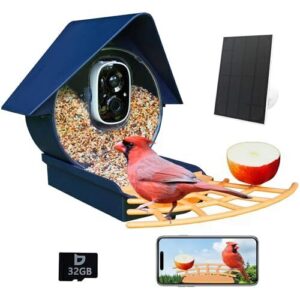
The Birdkiss combines bird feeder features with integrated camera technology for hands-on bird watching experiences. You’ll capture 1080P HD footage through a 135° wide-angle lens with night vision capabilities, and smart sensors trigger motion detection when birds arrive at the seed container.
AI identification processes each visitor through Wi-Fi connectivity and sends notifications to your phone. The included 32GB SD card stores footage locally, while the solar panel maintains battery life.
Camera features work within weatherproof housing that manages outdoor conditions year-round.
| Best For | Bird enthusiasts and nature lovers who want to identify and document backyard visitors without sitting outside for hours. |
|---|---|
| Camera Resolution | 1080P HD |
| Power Source | Solar panel + battery |
| Material | Plastic |
| AI Bird Identification | Yes |
| Weather Resistance | Waterproof |
| Connectivity | 2.4GHz Wi-Fi |
| Additional Features |
|
- AI identifies bird species automatically and sends alerts when they show up at the feeder
- 1080P camera with night vision captures quality footage in any lighting condition
- Solar panel keeps it running without constantly swapping batteries
- Only works with 2.4GHz Wi-Fi, which limits placement options if your router’s far away
- Motion sensors can trigger false alerts from wind or falling leaves
- Cloud storage usually costs extra beyond what the SD card holds
4. Wild Wings Cedar Bird Feeder Tray

Cedar feeders bring durability and simplicity to backyard bird watching. The Wild Wings Cedar Tray uses rot-resistant cedar wood and stainless steel screws that handle outdoor conditions without corroding. Its perforated tray design drains water to keep seed fresh and prevent mold growth.
The wide, open surface attracts cardinals, grosbeaks, and woodpeckers that prefer platform feeding. You’ll find the removable Fresh Seed tray makes cleaning straightforward.
Bird attraction increases when you position this feeder near natural cover while maintaining clear sightlines for monitoring wildlife gardening results.
| Best For | Backyard birders who want a low-maintenance platform feeder that attracts ground-feeding species like cardinals and woodpeckers while handling outdoor weather conditions. |
|---|---|
| Camera Resolution | N/A |
| Power Source | N/A |
| Material | Cedar wood |
| AI Bird Identification | No |
| Weather Resistance | Outdoor use |
| Connectivity | N/A |
| Additional Features |
|
- Cedar wood and stainless steel construction resist rot and corrosion for long-term outdoor use
- Removable perforated tray drains water to keep seed fresh and makes cleaning simple
- Open platform design attracts a wide variety of bird species from multiple angles
- Small seeds can fall through the drainage holes in the tray
- Requires regular cleaning every couple weeks to prevent mold in humid conditions
- Squirrels and other wildlife may access the open feeding surface easily
Tips for Placement and Maintenance Success
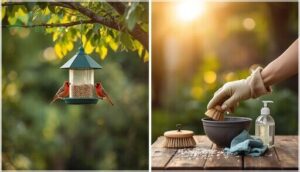
Setting up your bird feeder is only half the work—where you put it and how you care for it matters just as much. The right spot keeps birds safe while letting you watch them easily, and regular upkeep prevents mold and disease.
Here’s what you need to know to keep your feeder working well all season long.
Ideal Feeder Location for Safety and Visibility
Where you hang your bird feeders can mean life or death for backyard visitors. Position feeders 5–10 feet from windows to cut collision risk, and mount them 5–8 feet high so you can watch safely while keeping predators at bay. Leave 10–15 feet of open sky around each feeder—this visibility range gives birds escape routes when danger appears.
Preventing Spoiled Seed and Mold
Mold-contaminated seed threatens bird health more than most backyard enthusiasts realize. When seed moisture climbs above 13%, mold colonies establish within days, reducing safe feed by up to 70%. You can prevent spoilage with these proven methods:
- Store seed in airtight containers with desiccants to control humidity
- Position feeders in sunlit, well-ventilated spots
- Switch to lower-oil seed types during humid months
- Avoid overfilling—spilled seed accelerates mold growth
- Choose weatherproof bird feeders with sealed compartments and integrated venting
Regular feeder maintenance tips and smart seed moisture control keep your feeding stations safe year-round.
Cleaning Schedules and Best Practices
A consistent cleaning schedule protects birds from deadly disease outbreaks at your feeders. Deep-clean every two weeks during peak seasons with hot water and mild soap, then sanitize quarterly with a 1:10 bleach solution. Always wear gloves and scrub all surfaces—ports, perches, and trays collect dangerous droppings fast.
Dry feeders 24 hours before refilling to prevent mold growth.
| Sanitation Methods | Frequency |
|---|---|
| Hot water + mild soap scrub | Every 2 weeks |
| Diluted bleach sanitization (1:10) | Quarterly |
| Replace contaminated seed immediately | As needed |
Rotating Feeders to Support Bird Health
Beyond routine scrubbing, feeder rotation promotes bird health in surprising ways. Move your tube feeders and suet feeders every few weeks to prevent overuse hotspots where parasites and mold accumulate.
Rotation mechanics expose fresh seed surfaces, slowing spoilage while encouraging bird diversity across stations. This simple shift reduces aggression, improves seed freshness, and makes health monitoring easier—especially with multiple nyjer feeder setups.
Frequently Asked Questions (FAQs)
How often should I refill my bird feeder?
Your feeder type and local bird activity determine refilling frequency. Tube feeders need refills every 2–4 days, while hopper feeders last 5–7 days. Monitor seed consumption to prevent spoilage.
Whats the best feeder height from the ground?
You’ll want your feeder 5 to 6 feet above ground—high enough to keep seed dry and deter ground predators, but low enough that smaller birds feel safe and you can clean it easily.
Should I take feeders down during migration seasons?
You don’t need to remove feeders during migration. Keep them up but clean them weekly to prevent disease spread.
Regular feeder maintenance promotes bird health and ecological balance while migrants pass through.
Conclusion
Your backyard could become a ghost town—or a thriving wildlife hub. The difference lies in choosing what features make a good bird feeder: durable construction that survives storms, squirrel-proof mechanisms that actually work, and designs you can clean without cursing.
Skip the bargain bins. Invest in feeders built to last, place them strategically, and maintain them consistently.
You’ll watch cardinals, finches, and chickadees return season after season, transforming your space into their trusted sanctuary.