This site is supported by our readers. We may earn a commission, at no cost to you, if you purchase through links.

Your backyard feeder attracts dozens of grateful birds each morning, but that innocent slice of avocado toast you tossed outside could kill them within hours. Birds metabolize foods differently than humans—what seems harmless to us can trigger cardiac arrest, seizures, or organ failure in our feathered companions.
Avocado, chocolate, onions, and even apple seeds contain compounds that disrupt avian respiratory and circulatory systems, often with fatal results.
Understanding which common household foods pose dangers helps you protect both pet birds and wild visitors from accidental poisoning, while simple preparation methods and safe alternatives help your birds thrive without hidden risks.
Table Of Contents
Key Takeaways
- Common household foods like avocado, chocolate, onions, garlic, and raw beans contain compounds that cause cardiac distress, organ failure, or hemolytic anemia in birds, often with fatal results.
- Toxins affect birds differently than humans because avian metabolism processes substances through unique pathways that can quickly lead to respiratory failure, seizures, or kidney damage from seemingly harmless foods.
- Proper food preparation—thoroughly cooking beans, removing apple seeds and fruit pits, washing produce, and keeping all toxic substances in sealed cabinets—prevents accidental poisoning in both pet and wild birds.
- Early recognition of poisoning symptoms like labored breathing, tremors, or sudden appetite changes requires immediate veterinary care, as quick action determines whether your bird recovers or suffers irreversible harm.
What Foods Are Toxic to Birds?
You might be surprised by how many common foods can seriously harm or even kill your bird. Some of these items sit right in your kitchen, looking harmless but carrying risks like cardiac distress, organ failure, or toxic reactions.
To keep your feathered friend safe, check out this complete list of toxic foods birds should never eat before offering any treats.
Let’s look at the specific foods that pose real dangers to both pet and wild birds.
Some common kitchen items can seriously harm or even kill birds, so it’s worth knowing which foods to avoid feeding birds before you fill your feeders.
Common Toxic Foods for Pet and Wild Birds
Understanding avian toxicology is crucial for protecting your feathered companions from food poisoning. Many common foods can be harmful to birds, including avocado, which damages respiratory and cardiac systems in various species. Chocolate and caffeine are also dangerous, as they can cause seizures and even death.
Other everyday items like onions, garlic, and salt can also pose serious risks, so adopting healthy bird eating habits means being mindful of what you offer your pet.
Onions and garlic trigger hemolytic anemia by destroying red blood cells, while raw beans contain phytohemagglutinin, leading to severe digestive distress. Additionally, apple seeds and fruit pits release cyanogenic compounds when ingested, posing a significant risk.
Bird nutrition demands vigilance, as toxicology research plays a vital role in guiding wildlife conservation efforts.
How Toxins Affect Avian Health
When toxins enter your bird’s body, they trigger a cascade of metabolic reactions that can overwhelm natural defenses. Toxic substances disrupt critical pathways:
For example, persin in avocado can damage a parrot’s heart and lungs, which is why understanding which fruits are safe for your bird is essential for prevention.
- Neurotoxin effects cause tremors and coordination loss by interfering with neurotransmitter regulation
- Cardiac distress emerges from electrolyte imbalances leading to arrhythmias
- Hepatic failure occurs when the liver can’t process compounds through cytochrome P450 enzymes
- Renal damage manifests as dehydration and electrolyte disruption
- Gastrointestinal hemorrhage results from severe mucosal injury
Avian detox mechanisms vary widely across species, affecting toxin metabolism efficiency and survival outcomes.
Recognizing Symptoms of Poisoning
Recognizing poison alerts early can save your bird’s life. Watch for sudden appetite changes, labored breathing, or unsteady gait—these toxicity signs demand emergency care.
Lethargy, tremors, and decreased vocalization often signal toxic exposure from harmful foods or substances. If you spot these avian health warnings, contact your veterinarian immediately.
Quick action and proper avian first aid make the difference between recovery and tragedy.
When your bird shows signs of poisoning, immediate veterinary care can mean the difference between life and death
Dangerous Fruits, Vegetables, and Seeds
Some of the most dangerous foods for birds hide in plain sight on your kitchen counter. Fresh produce seems harmless, but certain fruits, vegetables, and seeds contain compounds that cause serious harm to avian systems.
Here’s what you need to remove from your bird’s reach immediately.
Apple Seeds and Fruit Pits
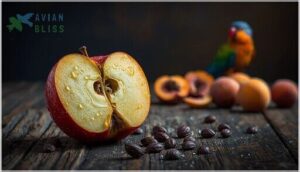
Apple seeds contain amygdalin, a compound that releases cyanide during avian digestion. While a single seed won’t usually harm your bird, repeated exposure increases risk. Fruit pits pose choking and blockage hazards.
Proper fruit preparation means thorough pit removal and washing to reduce pesticide exposure. Offer apples as occasional treats, not nutritional staples—maintaining nutrient balance requires bird-specific foods for ideal avian health and wellness.
Consulting an experienced avian veterinarian helps ensure your bird’s diet includes the right balance of nutrients tailored to their species.
Avocado (fruit, Skin, Pit, Leaves)
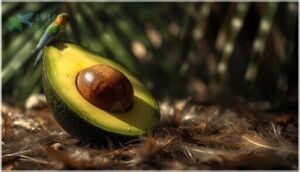
Avocado toxicity stems from persin, a compound concentrated in leaves, bark, and peel that disrupts bird digestion. Even the fruit flesh poses serious risk to parrots and cockatiels, causing respiratory distress and fluid accumulation. The pit creates choking and blockage hazards.
Unlike other harmful foods for birds, avocado allergies aren’t the issue—persin itself damages cardiac tissue, making all avocado parts dangerous for bird nutrition and diet.
Tomato Leaves and Green Parts
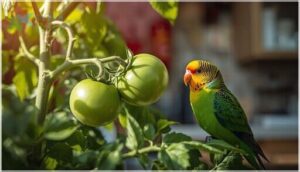
You won’t see signs right away, but green tomato leaves carry solanine-like compounds that cause avian reactions, including gastrointestinal upset. Toxicity levels rise in stems and unripe fruit, making leaf poisoning a real concern for bird nutrition and diet.
Ripe tomato flesh is safer in small amounts, yet the green part risks outweigh any benefit. Always remove leaves and stems to protect avian health and wellness from toxic substances. Birds shouldn’t access kitchen scraps containing these toxic foods.
Onions and Garlic
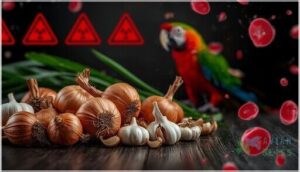
Both onions and garlic contain disulfides and thiosulfinates, toxic compounds that trigger hemolytic anemia in birds by damaging red blood cells. These toxic foods for birds cause serious avian toxicity regardless of preparation method.
Proper bird nutrition and diet means eliminating all onion and garlic exposure.
- Raw onions pose the highest risk for onion allergy and bird anemia
- Cooked forms still contain enough toxins for garlic poisoning
- Dried onion powder concentrates harmful substances
- Food safety for birds requires complete avoidance
Raw and Dried Beans
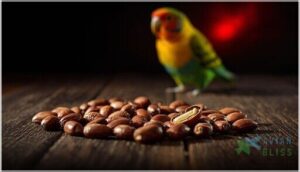
Raw dried beans harbor phytohaemagglutinin, a lectin that causes severe hemagglutinin effects in birds. This toxin triggers vomiting, diarrhea, and potential organ failure, making raw bean risks and dried bean hazards critical concerns for avian diet safety.
Even small amounts of these toxic foods for birds can be fatal. Thorough cooking destroys phytohaemagglutinin, but uncooked beans remain dangerous food hazards and toxicity threats requiring complete elimination from bird nutrition and diet.
Household Foods and Substances to Avoid

Your kitchen holds more dangers for birds than you might realize. Everyday items you enjoy without a second thought can cause serious harm to your feathered companions.
Let’s look at the common household foods and substances that should never reach your bird’s beak.
Chocolate and Caffeine
Never share chocolate or caffeinated treats with your feathered friend. Theobromine and caffeine toxicity trigger severe cardiac distress in birds, causing rapid heartbeat, arrhythmias, tremors, and seizures. Even a small bite of chocolate can be fatal depending on your bird’s size.
These toxic foods overwhelm avian systems quickly, leading to respiratory failure and death. Keep all chocolate and caffeine completely out of reach.
Alcohol and Salty Snacks
Alcohol poisoning causes catastrophic organ failure in birds, triggering vomiting, respiratory distress, and death. Salty snacks create equally serious problems through bird dehydration and avian kidney damage. These toxic foods should never be accessible to your bird.
Your bird faces three major risks from toxic snack effects:
- Salt toxicity leads to excessive thirst and kidney strain
- Alcohol depresses organ systems rapidly
- High sodium causes irreversible tissue damage
Food safety means keeping these substances completely away from your feathered companion.
Dairy Products and Bread
Dairy products cause digestive distress in birds due to lactose intolerance, making them unsafe treats despite seeming harmless. Bread offers zero nutritional value and fills your bird’s stomach without meeting dietary needs. These toxic foods create malnutrition over time.
Choose dairy-free, bird nutrition-focused alternatives like fresh fruits and unsalted nuts for safe treats that support proper food safety practices.
Cooking Fats and Oils
Cooking fats pose serious cooking fat risks beyond simple toxic foods concerns. Oil toxicity develops when greasy residues coat feathers, impairing flight and temperature regulation, while excessive consumption triggers fatty liver disease and avian obesity.
Protect your bird’s health with proper food safety practices:
- Never share fried foods or pan drippings containing toxic substances
- Avoid bacon grease high in fatty acid poisoning potential
- Focus on bird nutrition through fresh produce instead of cooking fats
Safe Bird Feeding Practices

Keeping your bird safe doesn’t mean you have to second-guess every meal. A few simple habits can protect your feathered friend from accidental poisoning while making sure they get the nutrition they need.
Here’s how to prepare food safely, avoid common mistakes, and offer healthy alternatives your bird will love.
Proper Preparation of Fruits and Vegetables
You can protect your bird from toxic foods through careful fruit washing and vegetable peeling. Scrub produce under cool water for 20-30 seconds to remove pesticide residue.
Core extraction and seed removal are critical—apple seeds contain cyanide. Remove tomato stems and green parts. Peel avocado completely, as skin and pit cause cardiac distress.
These simple steps guarantee food safety and proper bird nutrition.
Cooking Beans Thoroughly
Raw or undercooked beans contain phytohaemagglutinin, a toxin that can kill your bird within hours of consumption. Boil dried beans for at least 10 minutes to eliminate this toxic compound. Discard the cooking water, as it holds the removed toxins.
Canned beans are safe alternatives—they’ve already been processed at high temperatures. These bean preparation tips guarantee food safety while preserving essential nutrients for ideal bird nutrition.
Keeping Harmful Foods Out of Reach
Store all toxic foods in secure cabinets with childproof latches to prevent accidental exposure. Never leave chocolate, avocado, onions, or raw beans on countertops where your bird can access them.
Inspect feeding areas daily and remove fallen fruit pits or seeds immediately.
Use clearly labeled containers for hazardous items, ensuring toxic substances stay completely out of reach during meal prep and storage.
Providing Healthy, Bird-safe Alternatives
Nutrient balance forms the foundation of bird health. Replace toxic foods with fresh options that support avian medicine standards and safe feeding practices:
- Commercially prepared pellets – These provide balanced diets and should form 80% of daily intake for ideal bird nutrition.
- Fresh leafy greens – Kale and spinach supply essential minerals.
- Safe berries – Blueberries and raspberries offer antioxidants as healthy treats.
- Cooked legumes – Thoroughly prepared lentils provide protein.
- Plain whole grains – Quinoa supports food safety without additives.
Tips for Preventing Bird Food Toxicity
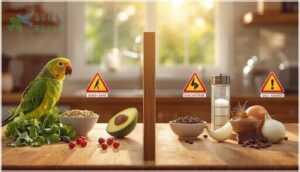
Keeping your bird safe from toxic foods requires more than just knowing what to avoid. You need a clear plan to protect your feathered companion from accidental exposure and guarantee proper nutrition every day.
Here are three essential strategies to prevent food toxicity in your bird.
Creating a Safe Feeding Environment
You can’t build a fortress around your bird, but you can turn your home into a space where danger doesn’t lurk in the kitchen cabinets or on the counter. Store toxic foods in sealed containers where curious beaks can’t reach them. Keep your feeding stations clean to prevent bacterial growth, and always provide fresh water daily.
| Safety Area | Action to Take |
|---|---|
| Food Storage | Seal toxic substances in locked cabinets |
| Feeder Safety | Clean dishes daily with hot water |
| Water Quality | Replace drinking water every 24 hours |
| Avian Hygiene | Remove uneaten food within 2 hours |
| Toxic Foods | Keep chocolate, avocado, onions away from bird areas |
Monitoring Your Bird’s Diet
Tracking what your bird eats isn’t about paranoia—it’s about catching problems before they become emergencies. Keep a simple log of daily food intake, watching for changes in appetite or droppings that signal digestive health issues. Note any new foods introduced, as food allergies can appear suddenly.
Monitor body weight weekly to prevent bird obesity, and guarantee nutrient balance meets your bird’s dietary needs—different species require different ratios of pellets, vegetables, and treats for ideal avian medicine outcomes.
Consulting Avian Veterinarians for Guidance
When dietary questions arise, avian veterinarians offer expert guidance that goes beyond guesswork. They provide medical risk assessments before introducing new foods, create tailored feeding plans based on your bird’s species and health status, and confirm safe preparation practices to prevent toxic exposures. Scheduling regular nutrition consultations facilitates:
- Early detection of dietary imbalances affecting bird health
- Rapid diagnosis when toxicity prevention fails
- Species-specific avian nutrition recommendations
- Safe food handling techniques in pet bird care and health
- Evidence-based veterinary medicine protocols for avian medicine concerns
Frequently Asked Questions (FAQs)
Can birds eat cooked rice or pasta safely?
Plain cooked rice or pasta can be offered as an occasional treat, but these grains lack essential nutrients your bird needs.
Limit portions and always pair them with balanced pellets, fresh vegetables, and safe fruits.
Are artificial sweeteners like xylitol dangerous for birds?
While xylitol toxicity remains understudied in avian species, bird metabolism differs markedly from mammals.
Sugar substitutes like xylitol and other artificial sweeteners pose uncertain risks to bird health, so avoid feeding toxic substances and prioritize food safety.
What spices and herbs are toxic to birds?
Onion, garlic, chives, and leeks cause hemolytic anemia and respiratory distress. Nutmeg toxicity leads to seizures. Saffron risks cardiac arrhythmias. Cinnamon dangers include digestive irritation.
Avoid spice blends and herbal poisoning risks altogether.
Can birds safely consume human vitamin supplements?
Human vitamin supplements pose serious supplement risks to birds. Vitamin toxicity from excess Vitamin A or D can cause liver damage and kidney failure.
Always seek veterinary guidance on avian supplements and bird nutrition.
Are moldy or spoiled foods more toxic to birds?
Yes, spoiled foods are more hazardous than fresh ones. Moldy seeds and produce harbor mycotoxins that cause rapid fungal poisoning, triggering vomiting, diarrhea, and organ damage in birds exposed to these toxic substances.
Conclusion
A neighbor once watched her beloved parakeet collapse after nibbling chocolate cake left on the counter—a preventable tragedy that still haunts her years later.
Your awareness of what foods are toxic to birds creates an invisible shield around every feathered life you touch. One mindful choice—removing that avocado peel, cooking those beans thoroughly—means the difference between a thriving flock and an empty perch.
Protection starts with knowledge, but it lives in your daily actions.
- https://www.harrisonsbirdfoods.com/
- https://lafeber.com/pet-birds/foods-toxic-pet-birds/
- https://www.merckvetmanual.com/special-pet-topics/poisoning/food-hazards?query=foods%20that%20are%20toxic%20to%20birds
- https://x.com/godofprompt/status/1990526288063324577
- https://www.sciencedirect.com/science/article/pii/S0749208123000268