This site is supported by our readers. We may earn a commission, at no cost to you, if you purchase through links.
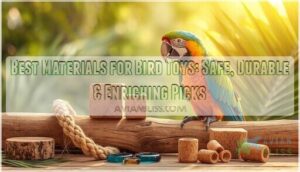
A bird that spends its day chewing through a toy made with zinc hardware or chemically treated wood isn’t playing—it’s being slowly poisoned.
It’s an uncomfortable truth many bird owners discover too late.
The materials inside your bird’s cage matter as much as the food in its dish, yet toy safety rarely gets the same attention.
Knowing what materials are best for bird toys means the difference between genuine enrichment and a hidden health risk.
The right choices—untreated woods, natural fibers, food‑grade plastics—keep your bird mentally stimulated and physically safe.
Table Of Contents
Key Takeaways
- Untreated woods like pine, balsa, and manzanita are your safest bet for bird toys, but steer clear of cherry, yew, or any pressure-treated lumber — they can cause serious harm fast.
- Zinc hardware and lead paint are hidden dangers in many toys, so always check that the clips, hooks, and any metal parts are stainless steel before they go near your bird.
- Natural fibers like hemp, sisal, and cotton rope keep birds mentally sharp, but check them daily — loose strands longer than three inches are a strangulation risk and need to be trimmed or replaced right away.
- A healthy toy setup balances about 60% natural materials with 40% bird-safe synthetics like food‑grade plastic or acrylic, giving your bird both the mental challenge of shreddable items and the durability of longer‑lasting ones.
Best Materials for Bird Toys
Choosing the right materials for your bird’s toys matters more than most people think.
Safe, bird-friendly materials make all the difference, and this guide to engaging bird toys breaks down exactly what to look for.
The wrong pick can cause real harm, while the right one keeps your bird busy, safe, and mentally sharp.
Here’s a look at the materials that consistently earn high marks for safety and enrichment.
Safe Wood Options
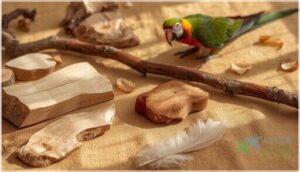
Wood is one of the safest, most natural materials you can use for bird toys — but not just any wood. Untreated, kiln‑dried options are your best bet.
Pine softness makes it perfect for small or timid birds just learning to chew. Balsa lightness suits nervous birds, while willow flexibility encourages shredding. For strong chewers, manzanita hardness holds up beautifully.
Always choose birdsafe, untreated wood. Apple wood density makes it ideal for medium to large bird toys.
Natural Fibers and Ropes
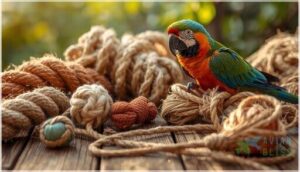
Natural fibers work just as well as wood for keeping birds busy.
rope fiber types, stick with hemp, sisal, jute, cotton, or seagrass — all safe materials for DIY bird toys and nontoxic bird toy materials your bird can chew freely.
species-specific rope, larger parrots need thicker hemp, while budgies do better with softer jute.
Build a simple maintenance routine: check daily for fraying management, trim loose strands, and always confirm dye safety by rinsing colored rope under water first.
Stainless steel perches are also a safe, non‑toxic option for bird toys.
Bird-Safe Plastics and Acrylics
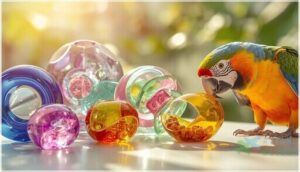
Plastic and acrylic toys are a smart step up from natural fibers when you need something tougher. Bird-safe acrylic and food-grade plastics hold up well and are easy to sanitize.
- Acrylic Thickness — choose at least 3/16 inch for medium to large birds
- Polycarbonate Clarity — lets birds see treats inside foraging toys, encouraging natural behavior
- BPA-Free Materials — modern polycarbonate is commonly labeled BPA-free for safe chewing
- Food-Grade Plastics — polypropylene and HDPE resist bacterial buildup and don’t flake
- Stainless Steel Hardware — always pair acrylic plastic or plastic chains with rust-proof clips
Untreated Leathers and Plant Materials
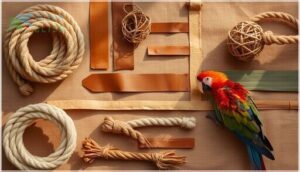
When you move beyond plastics, untreated leathers and plant materials bring a whole new layer of texture and engagement.
Vegetable tanned leather strips are the only bird-safe choice — no dyes, no chrome, no coatings. Pair them with untreated palm leaf, seagrass, or natural vine foraging pieces for satisfying plant fiber shredding activity.
| Material | Key Benefit | Safety Note |
|---|---|---|
| Vegetable leather texture | Eco leather durability for beak work | Must be undyed, unfinished |
| Untreated palm leaf | Easy plant fiber shredding | Fully dry before use |
| Seagrass rope | Grip and foraging structure | Inspect for fraying regularly |
| Natural vine foraging balls | Encourages chewing and exploring | Source pesticide-free only |
| Natural rope (sisal/cotton) | Safe weaving and hanging | Replace when threads loosen |
Materials to Avoid in Bird Toys
material that looks harmless actually is — seriously hurt your bird. Knowing what to avoid is just as important as knowing what’s safe.
Some woods, finishes, and synthetic coatings can be toxic to birds, so brushing up on safe and unsafe perch materials for pet birds could genuinely save your bird’s life.
Here are the main materials you’ll want to keep out of your bird’s toy box.
Toxic Woods and Treated Lumber
Some woods look perfectly fine but can seriously harm your bird.
Yew toxicity is fast and severe — it affects the heart almost immediately. Cherry releases cyanide compounds when chewed. Black walnut contains juglone, which builds up over time.
Arsenic leaching from older pressure-treated lumber and copper preservatives in modern treated woods both pose real risks. Pressure-treated dust alone can be dangerous.
Stick to confirmed natural woods only.
Hazardous Metals and Paints
Even the shiniest toy can hide real dangers. Lead Paint Risks are serious — old painted items chip, and birds swallow toxic flakes fast. Watch for these hidden threats:
- Zinc Galvanized Hazards — galvanized hardware slowly poisons through daily chewing
- Nickel Allergy Triggers — cheap plated clips cause toxic reactions
- Zinc toxicity — damages liver and kidneys over time
- Lead — causes seizures and sudden decline
Always choose stainless steel.
Unsafe Glues and Adhesives
Glues and adhesives are some of the sneakiest bird toy safety hazards out there. VOC fumes from spray adhesives and solvents can overwhelm a bird’s lungs quickly.
Polyurethane risks are real — expanding foam swells inside the stomach and often needs surgery. PVA toxicity can damage the liver.
Hot glue hazards include plastic fumes and gut‑blocking chunks. Skip all unsafe materials. Use wire or rope ties instead.
Synthetic Fabrics and Foams
Synthetic fabrics and foams look soft and cozy — but they’re quietly dangerous. Acrylic fibers and polyester shred into sharp microplastics that your bird can inhale or swallow.
Foam fragment hazards are real: chunks cause fatal blockages. Synthetic fiber shedding wraps around toes and cuts off circulation.
Watch out for:
- Crop impaction risks from swallowed synthetic pieces
- Flame retardant fumes off-gassing from treated foam
- Microplastic inhalation from fraying fabric toys
Stick to nontoxic materials instead.
Safety Guidelines for Bird Toy Materials
Choosing the right materials is only half the battle — knowing how to use them safely is what really protects your bird. Simple guidelines can make a big difference between a toy that enriches and one that puts your bird at risk.
Here’s what to keep in mind before you build or buy.
Non-Toxic and Food-Grade Standards
Not all bird-safe labels mean the same thing. Look for materials that meet FDA Migration Limits — meaning they don’t leach harmful chemicals into your bird’s environment.
Food-Grade Dye Criteria ensures colors come from safe, non-toxic materials. Acrylic Copolymer Standards and Silicone Leach Testing confirm plastics stay stable. Heavy Metal Thresholds keep lead and cadmium out of reach.
These standards are your baseline for truly bird-safe materials.
Proper Sourcing and Cleaning
Where you get your materials matters just as much as what you get. Supplier Certification and Batch Traceability help you confirm that safe materials for bird toys are untreated, pesticide-free, and honestly labeled.
- Buy from avian‑specialist vendors who publish material origins
- Follow a weekly Cleaning Frequency with mild soap or diluted vinegar
- Match your Sanitizer Selection to each material — wood, plastic, or rope
- Store extras in dry Storage Conditions to prevent mold before use
Checking for Sharp Edges and Small Parts
Once your materials are clean and sourced well, run your hands over every toy before it goes in the cage. Edge inspection techniques catch what your eyes miss — burrs, splinters, lifted wood grain. Use hardware sharpness checks on hooks and clips.
For small part identification, make sure bells, beads, and clasps cannot be swallowed. Loop size evaluation keeps toes and necks safe.
Monitoring for Wear and Fraying
Even after that hands-on check, your job isn’t done.
Daily visual checks are your first defense — a quick scan each morning catches fraying before it becomes dangerous.
Keep a simple inspection schedule and watch for these warning signs:
- Rope fibers longer than 3 inches
- Deep bite grooves in wood
- Torn seams or loose fabric threads
- Rust or bent metal hardware
- Moisture-damaged or splintered wood pieces
Once wear crosses your replacement thresholds, swap it out immediately.
Durability and Enrichment Value
Not all toy materials are created equal — some are built to last, while others are meant to be torn apart (and that’s a good thing).
The right material does more than survive your bird’s beak; it keeps their mind busy and their instincts sharp. Here’s what to look for regarding durability and enrichment value.
Chew-Resistant Vs. Shreddable Materials
Not all toys are built to last — and that’s actually by design. Chew-resistant materials like thick acrylic and stainless steel offer real material longevity, supporting beak health through safe, repeated use.
Shreddable options like pine or palm leaf satisfy destruction instincts but need frequent replacement.
Balancing both types gives your bird variety, mental stimulation, and better cost efficiency over time.
Textures and Shapes for Engagement
Variety keeps birds curious — and texture plays a bigger role than most people realize. Rough bark and spiral perches challenge beaks naturally, while multi-level platforms build coordination.
Here’s what engages birds most:
- Movable beads and natural fibers reward grip strength
- Foot toy textures sharpen dexterity through daily handling
- Bird toy material texture and shape spark exploration
- Safe materials with durable, rough surfaces support beak health
Materials for Foraging and Mental Stimulation
Foraging toys do more than entertain — they keep bird’s mind sharp. The right materials turn playtime into problem-solving.
Foraging toys sharpen a bird’s mind by turning playtime into purposeful problem-solving
| Material | Foraging Use | Why It Works |
|---|---|---|
| Cholla Wood | Hide seeds in holes | Porous, chewable, durable |
| Cardboard Puzzles | Layered foraging boxes | Easy to shred, refillable |
| Hemp Rope | Knot-based hideouts | Natural, mold-resistant |
| Pine Cone | Stuff nuts in slots | Free, shreddable, engaging |
| Coconut Husk | Peel fibers for treats | Long-lasting, bird toy material safety approved |
Safe materials like natural rope and cardboard make enrichment simple.
Suitability for Different Bird Species
Not every bird plays the same way — and the materials you choose should reflect that.
- Small birds like budgies need size-specific chew options such as balsa for safe demolition.
- Medium birds benefit from beak strength matching with basswood or poplar.
- Large parrots need habitat-inspired textures like manzanita or coconut husk.
- Activity level needs guide whether you reach for shreddable or durable bird‑safe materials.
Where to Source Safe Materials
Finding safe materials doesn’t have to feel like a guessing game. Once you know what to look for, the right sources become pretty obvious. Here’s where to start your search.
Reputable Pet Supply Stores
Finding safe materials doesn’t have to feel overwhelming.
Specialty retailers like Planet Pleasures, Bonka Bird Toys, and My Safe Bird Store follow strict store certification standards — sourcing untreated wood, natural fibers, and bird‑safe material lists you can trust.
Chewy also offers solid customer service policies and return guarantees.
These stores make it easy to shop confidently, knowing every item meets real bird toy material safety guidelines.
DIY and Natural Material Suppliers
DIY suppliers give you full control over what goes into your bird’s toys — and the best ones are refreshingly transparent about it.
- parrotJOY offers Custom Kit Assemblies with cork, balsa, and bamboo cutlery pieces — all biodegradable, no glues or dyes.
- A Bird Toy provides Bulk Pricing on natural rope, balsa fries, and cardboard foraging flats.
- Northern Parrots uses Sustainable Harvesting practices, sourcing air-dried wood from certified forests.
Preparing and Storing Materials Safely
Once materials are clean and dry, storage matters more than most people realize. Keep wood and fibers in airtight storage bins — humidity control is essential, so aim for below 60 percent.
A simple labeling system by material type saves time. Follow a regular inspection schedule to catch pests or mold early, and discard anything questionable immediately.
Bird toy safety guidelines start long before your bird ever touches the toy.
Eco-Friendly and Sustainable Options
Choosing eco-friendly toys isn’t just good for the planet — it’s good for your bird too. Look for brands that prioritize:
- Bamboo Growth Cycle materials that regrow in 3–5 years
- Cork Regeneration — harvested without cutting the tree down
- Upcycled Offcuts of wood and natural rope from small Etsy makers
- Seagrass and vegetable tanned leather free from synthetic chemicals
- Biodegradable Packaging and Renewable Harvest Practices throughout
Eco-friendly toys mean fewer toxins, less waste, and a happier bird.
Frequently Asked Questions (FAQs)
What is the 60/40 rule for birds?
Think of it as a recipe for balance: roughly 60% natural materials like wood and fiber, and 40% safe man-made pieces like acrylic and stainless steel.
What to use to make bird toys?
You can use wood, natural rope, bird-safe plastics, and untreated leather. Stick to non-toxic options like pine, sisal, or cotton — your birdsafe materials list starts with simple, safe, natural fibers.
How often should bird toys be replaced?
Replace toys every one to two months—but check weekly. Damaged rope, cracked plastic, or rusty metal? Swap it out that day.
Match your replacement schedule to your bird’s species wear rate and chewing habits.
Can birds develop allergies to toy materials?
Yes, birds can develop allergies to toy materials.
Immune response signs include sneezing, feather plucking, and scaly skin.
Species sensitivity varies, so watch your bird closely and swap suspect materials immediately.
Are secondhand toys safe for parrots?
Secondhand toys can carry hidden risks — chemical residue, bacterial contamination, and physical damage are real concerns.
A thorough physical damage inspection and strict cleaning protocol steps help, but material identification challenges make caution essential.
Do toy materials affect bird droppings?
Absolutely — toy materials can show up in your bird’s droppings.
Dye Color Changes, Zinc Toxicity Effects, Lead Poisoning Signs, and Fiber Impaction Issues are all real Dropping Consistency Indicators worth watching closely.
Should toy materials vary by bird age?
Toy materials should absolutely vary by age. Young birds need soft balsa and cardboard for safe beak development.
Adults need growth durability. Seniors benefit from senior chew softness to protect aging jaws.
Conclusion
It’s no coincidence that the healthiest, most playful birds tend to share one thing in common—owners who paid close attention to what materials are best for bird toys. Every wood scrap, fiber strand, and plastic ring adds up to something bigger than a toy.
It builds trust. Your bird can’t read a label or spot a warning sign. That responsibility belongs to you—and the fact that you’re here means you’re already getting it right.
- https://www.birdful.org/what-materials-are-safe-to-make-bird-toys/
- https://www.ropewarehouse.co.uk/blog/news/what-rope-is-safe-for-bird-toys
- https://parrotsupplies.co.za/blogs/chloes-story/the-ultimate-guide-to-bird-safe-toys-and-accessories-for-your-parrot
- https://todaysveterinarypractice.com/exotic-medicine/lead-and-zinc-toxicity-in-birds/
- https://bestfriends.org/pet-care-resources/how-pick-safe-bird-toys