This site is supported by our readers. We may earn a commission, at no cost to you, if you purchase through links.
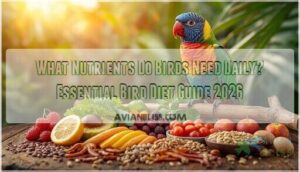
A bird’s diet is far more intricate than a scoop of seed suggests. Each feather, muscle twitch, and bright-eyed chirp runs on a microscopic balance of proteins, fats, vitamins, and minerals that shifts with species, age, and season.
Parrots need controlled fat levels to keep their plumage radiant, while canaries depend on steady protein for clean molts. Miss one essential and the signs appear fast—dull feathers, weak eggshells, sluggish flight.
Understanding what nutrients birds need daily isn’t guesswork; it’s the foundation of their health, behavior, and lifespan, shaped bite by bite in every meal you offer.
Table Of Contents
- Key Takeaways
- Essential Daily Nutrients for Birds
- How Nutrient Needs Vary by Bird Species
- Protein, Calcium, and Key Mineral Requirements
- Vitamins Vital for Bird Health
- Recommended Foods for Daily Bird Nutrition
- Frequently Asked Questions (FAQs)
- What is the most important nutrient for birds?
- What is a miracle meal for birds?
- How often should birds be fed each day?
- What are the signs of overfeeding in birds?
- Do birds need dietary changes during molting?
- How can stress affect a bird’s nutritional needs?
- What role does gut health play in nutrient absorption?
- Conclusion
Key Takeaways
- Birds need a balanced daily mix of proteins, carbohydrates, fats, vitamins, minerals, and clean water to support metabolism, feather quality, and long-term health.
- Nutrient needs vary by species, age, size, and activity level—parrots require more controlled fat, while canaries need steady protein for molting.
- A diet built around 50–70% pelleted food, supplemented with fresh fruits, vegetables, and clean water, prevents deficiencies and obesity.
- Watch for signs of imbalance such as dull feathers, weak shells, or lethargy, which signal protein, vitamin, or mineral shortfalls requiring dietary adjustment.
Essential Daily Nutrients for Birds
To keep your bird healthy and full of energy, it’s important to know what key nutrients it needs each day. Every bite your bird takes plays a role in how it grows, moves, and stays active.
For extra guidance on balancing variety with nutrition, this guide to choosing a high-quality birdseed mix for cockatiels explains how different seeds support energy and overall health.
Here’s a quick look at the daily essentials that make up a balanced avian diet.
Proteins and Amino Acids
Protein fuels every feather and muscle your bird builds. Meeting daily protein requirements promotes Bird Muscle Growth, feather renewal, and strong immune function. Focus on Amino Acid Balance and Protein Digestion with these sources:
- Quality pellets (12–20% protein)
- Cooked egg or mealworms
- Seeds plus greens
- Supplemental soy or pea protein
Missing amino acids? Watch for fatigue, dull feathers, or poor growth—classic Amino Acid Deficiency signs. For more context on how daily diet helps prevent, see current avian veterinary guidance.
Carbohydrates for Energy
Once you’ve covered protein, you still need steady carb energy sources to keep your bird going all day. Daily carb intake from grains, pellets, and fruits feeds avian metabolism, powers bird brain function, and maintains normal behavior and body heat.
In practical bird nutrition, carbohydrates sit at the center of carbohydrate metabolism in birds, energy storage systems, and overall nutritional requirements. For many pet birds, pellets can provide that complement these carbohydrate sources as part of a complete daily ration.
Fats and Essential Fatty Acids
After carbohydrates fuel daily energy, fats step in as a dense power source. Birds need about 4–12% dietary fat for healthy metabolism and bright plumage.
Balance matters—Omega-rich foods like flax or safflower help meet fatty acid requirements. Linoleic acid promotes skin and feather health, keeping fat metabolism and fatty acid balance on track.
Vitamins and Minerals
After fats handle energy reserves, vitamins and minerals fine-tune every part of Bird Nutrition. Think of them as maintenance workers keeping systems running smoothly. A steady Vitamin Balance maintains feather quality, bone strength, and mineral absorption.
Include these key nutritional components of bird food:
- Vitamin A for immune health
- Vitamin D3 for calcium use
- B-complex for energy
- Mineral Supplements for trace needs
- Dietary Minerals for strong bones
Importance of Clean Water
Clean water is just as essential as food for avian health. It aids digestion, temperature regulation, and Feather Care.
For more guidance on balancing hydration with proper nutrition at every life stage, visit the complete avian nutrition guide.
Meeting daily Hydration Needs prevents dehydration and poor nutrient absorption. Regular Water Purification keeps bacteria out, protecting immune balance.
Fresh, toxin-free water completes bird nutrition, meeting essential nutritional requirements and sustaining strong metabolism, plumage, and digestion.
How Nutrient Needs Vary by Bird Species
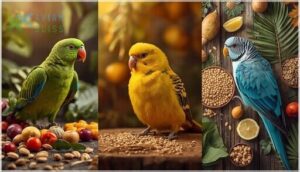
Not all birds eat the same way—or need the same mix of nutrients to stay healthy. A parrot’s diet looks nothing like that of a tiny canary or active parakeet.
Here’s how those needs shift between common species and what that means for daily feeding.
Differences Among Parrots, Parakeets, and Canaries
Ever notice how parrots, parakeets, and canaries eat so differently? Their Parrot Size Variations, Beak Shape Differences, and Feather Coloration reflect unique metabolisms and species-specific dietary needs.
- Parrots need balanced fat for active Social Behavior and vivid plumage.
- Parakeets thrive on lower-fat grains.
- Canaries rely on protein for steady Molting Patterns and lasting avian health through proper bird nutrition.
Wild Vs. Pet Bird Nutritional Requirements
Wild foraging drives a tough energy balance — wild birds burn through calories fast and self-regulate shifting protein levels.
Indoors, pet bird care demands tighter avian nutrition control. Higher nutrient concentration per gram compensates for less movement.
That dietary flexibility keeps avian metabolism stable while supporting bird health management and long-term nutritional requirements.
Factors Affecting Dietary Needs (Age, Size, Activity)
Age, size, and daily hustle all reshape your bird’s avian dietary needs and nutritional requirements. Juvenile lifestages need higher protein and calories than adults, while seniors do better on leaner diets with targeted Nutrient Adjustments.
Small species with faster Metabolic Rates burn food quickly, so Size Variations and Activity Levels should guide your feeding management from perches to playtime.
Protein, Calcium, and Key Mineral Requirements
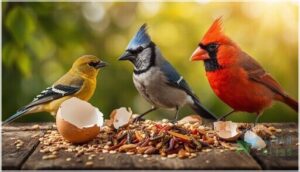
Protein and minerals power everything from strong flight muscles to healthy eggshells. Birds need the right balance each day to stay active and grow properly.
Here’s what to know about their daily protein, calcium, and key mineral needs.
Daily Protein Needs and Sources
Think of protein as the building block behind every feather, muscle, and egg. Most pet birds thrive on diets with 12–20% dietary protein, depending on species and activity.
Complete Protein Sources—like quality pellets, eggs, or insects—supply essential Amino Acids for proper Bird Nutrition.
Maintain Protein Balance using varied foods, not unnecessary Dietary Supplements, to support ideal protein quality.
Calcium and Phosphorus Balance
Strong bones and solid Eggshell Formation depend less on sheer calcium and more on Mineral Balance between calcium and phosphorus in avian diets.
Aim for an overall calcium phosphorus ratio around 1.5–2:1 by pairing higher Phosphorus Intake from seeds with leafy greens, cuttlebone, or Calcium Supplements so daily dietary calcium safely maintains Bone Health without tipping into excess.
Minerals for Bone and Egg Health
That balance between calcium and phosphorus goes hand in hand with Trace Elements that shape Bone Metabolism and Eggshell Strength. Zinc, manganese, copper, and magnesium fine-tune how dietary calcium is absorbed and used. Each plays a quiet but essential role:
- Zinc builds shell carbonate
- Manganese aids matrix formation
- Copper strengthens bone collagen
Consequences of Deficiencies
Get these minerals off balance, and you’ll see real trouble in your bird’s health. Nutritional deficiencies like protein deficiency weaken muscles and slow molting, while mineral imbalance softens bones. Here’s how malnutrition hits hard:
| Deficiency | Key Signs | Health Impact |
|---|---|---|
| Protein Deficiency | Thin feathers, weight loss | Weak immunity, poor breeding |
| Vitamin A Issues | Crusty nostrils, dull eyes | Respiratory infections |
| Iodine Shortage | Neck swelling, noisy breathing | Metabolism slowdown |
| Dehydration Effects | Sunken eyes, thick droppings | Kidney stress |
Meet avian nutrition dietary needs to dodge these pitfalls.
Vitamins Vital for Bird Health
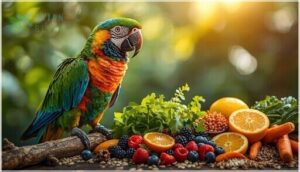
Vitamins might be small in amount, but they carry huge weight in a bird’s health. They keep feathers bright, bones strong, and the immune system steady.
Here’s what the most important ones do and how to keep your bird getting enough each day.
Roles of Vitamin A, D3, E, and K
Vitamins do the behind-the-scenes work that keeps your bird thriving. Vitamin A sharpens bird vision and strengthens soft tissues. D3 drives calcium absorption for solid beak strength. E and K act as immune boosters and protectors of feather health.
These vitamin interactions prevent nutritional deficiencies and keep avian nutrition balanced with proper vitamin and mineral supplementation for birds.
Vitamin Supplementation Guidelines
When your bird’s regular feed already covers most vitamin needs, adding more isn’t always safer—it’s riskier. Vitamin dosage depends on diet type, species, and life stage.
Pellet-fed birds usually skip supplements, while seed-heavy eaters may need full-spectrum formulas.
Keep toxicity risks low by following labels and vet-approved vitamin and mineral supplementation for birds.
Signs of Vitamin Deficiency in Birds
Subtle clues often reveal a nutritional imbalance long before sickness sets in. Birds low in Vitamin A show flaky skin lesions, dull feathers, and Beak Problems, while chronic shortages trigger sneezing or other Respiratory Issues. Feather Plucking or eye discharge may follow.
Balanced bird nutrition with proper vitamins and minerals—and smart dietary supplements—protects avian health.
Recommended Foods for Daily Bird Nutrition
Feeding your bird isn’t just about filling the bowl—it’s about giving them the right balance every day. The foods you choose shape their health, feathers, and energy levels.
Feeding your bird is about balance, because every meal shapes its health, feathers, and daily energy
Here’s what to include in your bird’s daily menu to meet all their nutritional needs.
Commercial Pellets Vs. Seed-Based Diets
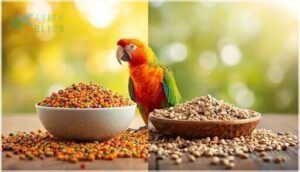
Ever wonder why pelleted diets outperform seed-based ones? High-quality pellets offer full Pellet Nutrition in every bite, avoiding the nutritional imbalance common with mixed seeds. They simplify Feeding Habits and prevent Bird Obesity linked to fatty Seed Mixes. For ideal Dietary Balance, aim for 50–70% pellets daily and monitor weight regularly.
- Pellets guarantee consistent nutrient intake.
- Seeds often lack key vitamins.
- Pellet diets cut obesity risk.
- Gradual transitions prevent refusal.
Fresh Fruits and Vegetables to Include
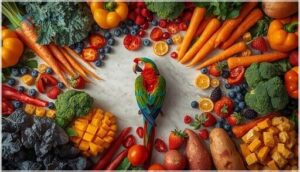
Think of Fresh Produce as your daily insurance policy for avian health and solid bird nutrition. Aim for plenty of Vegetable Variety—dark leafy greens, broccoli, bell peppers, carrots, and sweet potato—then use Fruit Rotation with berries, melon, apple, or mango in smaller amounts.
This mix of fresh fruits and vegetables gives Healthy Snacks, better Nutrient Balance, and bolsters your long-term nutrition planning and dietary needs.
Safe Treats and Foods to Avoid
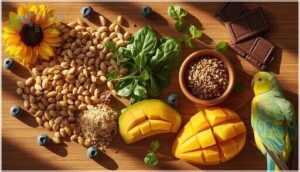
You’re smart to prioritize Treat Portion Control—keep treats under 5% of daily intake to dodge Nutrient Imbalance Risks.
Safe Seed Options like sunflower bits or pine nuts shine as rewards, alongside tiny cooked grains.
Skip the Toxic Food List: avocado, chocolate, caffeine. Hazardous Human Foods such as salted nuts or seasoned beans wreck avian dietary needs.
Stick to high-quality pellets, fresh fruits, and vegetables in your nutrition planning for birds.
Daily Feeding Amounts for Common Species
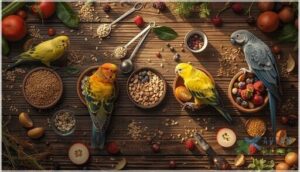
Think of Daily Ration Plans as your Bird Portion Control toolkit: for budgies, aim for about 15–16 grams of total food plus 3–4 grams of higher‑value treats within a balanced diet and structured Feeding Schedules.
Build Avian Meal Management around Species Nutrition: canaries usually take 1–2 teaspoons daily, lovebirds 45–60 grams, while African greys thrive on pellet‑based daily feeding amounts that respect species-specific dietary needs and the nutritional management of different avian species and overall bird nutrition.
Frequently Asked Questions (FAQs)
What is the most important nutrient for birds?
Let’s get this out of the way: the true MVP in bird nutrition is water.
Bird hydration drives Water Intake, Daily Moisture, Avian Electrolytes, Nutrient Balance, and even how well protein, calcium, vitamins, and minerals meet daily avian dietary needs and nutrient requirements.
What is a miracle meal for birds?
A “miracle meal” for birds is a branded soft food that works as a Bird Nutrition Supplement and Avian Diet Solution, boosting protein, vitamins, Feather Growth Tips, Healthy Beak Care, and overall bird nutrition alongside a balanced diet, high-quality pellets, fresh fruits and vegetables, and clean water.
How often should birds be fed each day?
Feeding schedules should mirror natural foraging strategies. Most healthy adult parrots, parakeets, and canaries do best with a meal frequency of once or twice daily.
Splitting daily rations between morning and late afternoon ensures steadier nutrient timing, supporting bird nutrition, protein requirements, and dietary needs. Clean water should always be available.
What are the signs of overfeeding in birds?
Overfeeding shows up as Weight Gain, Exercise Intolerance, and Digestive Issues. Behavioral changes like food guarding and reduced play, along with eventual health complications such as obesity or fatty liver, mark nutritional excesses that threaten long-term avian health.
Do birds need dietary changes during molting?
Yes, molting absolutely calls for Dietary Adjustments because nutrient requirements change. Molting nutrition should focus on Feather Growth with higher protein supplements to support protein and amino acid balance in birds, plus extra calories for higher energy requirements and overall feather health during this intense molt phase.
How can stress affect a bird’s nutritional needs?
Stress Nutrition gets tricky because stress ramps up Energy Demand while many birds actually eat less, so they start pulling from body fat and risking Protein Loss, vitamin Needs gaps, Electrolyte Balance shifts, and quiet nutritional deficiencies that drive serious bird health issues without careful dietary management.
What role does gut health play in nutrient absorption?
A bird’s gut microbiome plays a crucial role in shaping intestinal health by balancing digestive enzymes and intestinal microflora, strengthening gut barrier function, and boosting nutrient uptake.
Healthy digestive health fosters efficient nutrient absorption and overall avian physiology through smart dietary management.
Conclusion
Maybe this sounds too complicated for a small bird, but nutrition is where health begins. When you understand what nutrients do birds need daily, choosing pellets, fresh foods, and safe treats stops being guesswork.
Adjust protein, fats, and calcium as your bird ages, molts, or lays. Watch feathers, droppings, and energy as daily feedback.
With each bowl you fill, you’re quietly shaping stronger bones, sharper behavior, and a longer, steadier life for you both, daily.
- https://www.thenaturaldogonline.com/content/pet-bird-nutrition
- https://todaysveterinarynurse.com/nutrition/avian-nutrition/
- https://pangoo.biz/amino-acids-feed-additives/
- https://petfoodpassion.co.uk/2025/02/12/when-and-how-to-use-supplements-for-cage-and-aviary-birds/
- https://www.msdvetmanual.com/bird-owners/disorders-and-diseases-of-birds/nutritional-disorders-of-pet-birds